
For most first-time Spain trips, May, June, September and October are the best months to visit. They make it easier to combine city walks, outdoor meals and several regions without building the entire itinerary around midday heat. Choose late spring for longer-feeling days, early fall for a city-and-coast balance, and winter for a culture-focused trip.
Spain is not one weather forecast. A week split among Barcelona, Madrid and Seville asks something different of you than a week on Ibiza. The real decision is which places you want to enjoy outdoors, how many transfers you can tolerate and whether beach time or city time matters more.
When Should You Visit Spain?
I would start with your nonnegotiable experience, then pick the month. Spain's official seasonal weather guide describes spring and autumn as its milder seasons, while July and August bring the highest temperatures. That broad pattern is useful, but it does not tell you how to divide your nights between a northern city, an inland capital and an island.
If this is a first visit with a mix of architecture, food and a little coast, I favor May or late September. If your idea of a holiday is mostly swimming and long lunches by the sea, summer may be worth the tradeoff. If you would rather linger in museums and restaurants than spend time at a beach, winter deserves a serious look. The same seasonal tradeoff applies to other Mediterranean journeys; compare our guide to Greece by season if you are deciding between the two.
My planning rule: Protect your favorite hours of the day. A hotel with a lovely address will not rescue an itinerary that puts a long outdoor tour at the hottest part of an August afternoon.
January Through March
January
Plan for art, food and cities rather than a classic beach stay. Madrid and Barcelona can anchor a satisfying cultural trip, but pack for cool weather and occasional rain. Spain's tourism board notes that winter is colder and wetter, especially in the north. I would choose a walkable hotel location over an elaborate resort setup if your days revolve around museums and meals.
February
February works for travelers who like unhurried city days and do not need pool weather. Leave space between timed visits rather than filling every hour. A good winter itinerary has a comfortable base, a few reservations you care about and room to move an outdoor plan if the forecast changes.
March
March begins to open up the possibilities, but it is still a transitional month. I would build a city-and-Andalusia journey around flexible layers, not assume every day will feel like summer. If you add an island, make it a scenic or culinary stop unless warm-water beach time is optional.
April Through June
April
April makes sense for cities and countryside, with a rain contingency. It is a lovely time to put longer walks into the plan, then keep an indoor alternative for the occasional shower. For Seville, AEMET's historical climate normals show a much gentler spring than its summer. A normal is not a forecast, so check conditions again close to departure.
May
May is my first choice for a trip that connects Madrid, Andalusia and Barcelona. You can usually plan meaningful outdoor time without treating shade as the itinerary's main attraction. Choose fewer bases and better rooms over trying to claim every famous city in one week. If a special guide or experience matters, make that decision before choosing a hotel purely for its photographs.
June
June suits travelers adding a Mediterranean coast or island stay after the cities. I would put the longest outdoor sightseeing days earlier in the trip or earlier in the day. For an island finale, compare not just room category but the actual position of the property relative to the coves, restaurants and pace you want. A stunning view can be a poor trade if every evening requires a long transfer.
July Through September
July
July is a beach-forward decision for me, not the default for a long inland sightseeing circuit. Spain's tourism board says summer days commonly exceed 30 degrees Celsius, while the north tends to be milder. If your calendar only allows July, consider the northern coast or a coastal base, and schedule city walks for mornings and evenings rather than stacking them at midday.
August
August is the month I would avoid for a first trip centered on Seville and other inland outdoor stops. AEMET's Barcelona climate records also show warm summer conditions there, though it is a different experience from inland Andalusia. Beach travelers may still love August. The mistake is expecting the same day plan to work for both a city tour and an island retreat.
September
September brings the strongest compromise for many city-and-coast itineraries. Early in the month, I would still treat heat seriously in the south. Later in the month, a Barcelona and island pairing can be appealing if you want time outdoors without making the trip exclusively about the beach. Confirm the exact seasonal operations of the hotel and experiences you choose rather than assuming every summer offering remains available.
October Through December
October
October is excellent for a culture-first route that includes Madrid and Andalusia. I would add Barcelona if you have enough nights to enjoy it, not merely to check a box. Expect shorter-feeling days than in spring and keep a weather alternative for a long outdoor experience. Spain's tourism board notes that autumn mornings and evenings can call for layers.
November
November is a good choice if your trip is about food, museums, architecture and time together, not a guaranteed beach afternoon. I would prioritize a hotel whose public spaces and neighborhood you actually want to spend time in. For an anniversary, that might mean fewer transfers and a more comfortable room rather than adding a third city.
December
December suits a deliberate city break with room for winter weather. It is not my pick for a Balearic swimming trip, though the islands have a different quieter appeal. Spain's official winter Balearics guidance highlights landscapes, food and walking instead of promising a summer-style beach experience. Check holiday opening details individually as they can change.

Barcelona, Ibiza and the Beaches
Barcelona is a city first. Spain's tourism board describes its architecture, museums, food and waterfront, so I would choose May, June, September or October for a trip with substantial walking. An August visit can still work if you accept heat and make the indoor and outdoor hours intentional. A beach afternoon there is a bonus, not a substitute for a separate island stay if the sea is the main event.
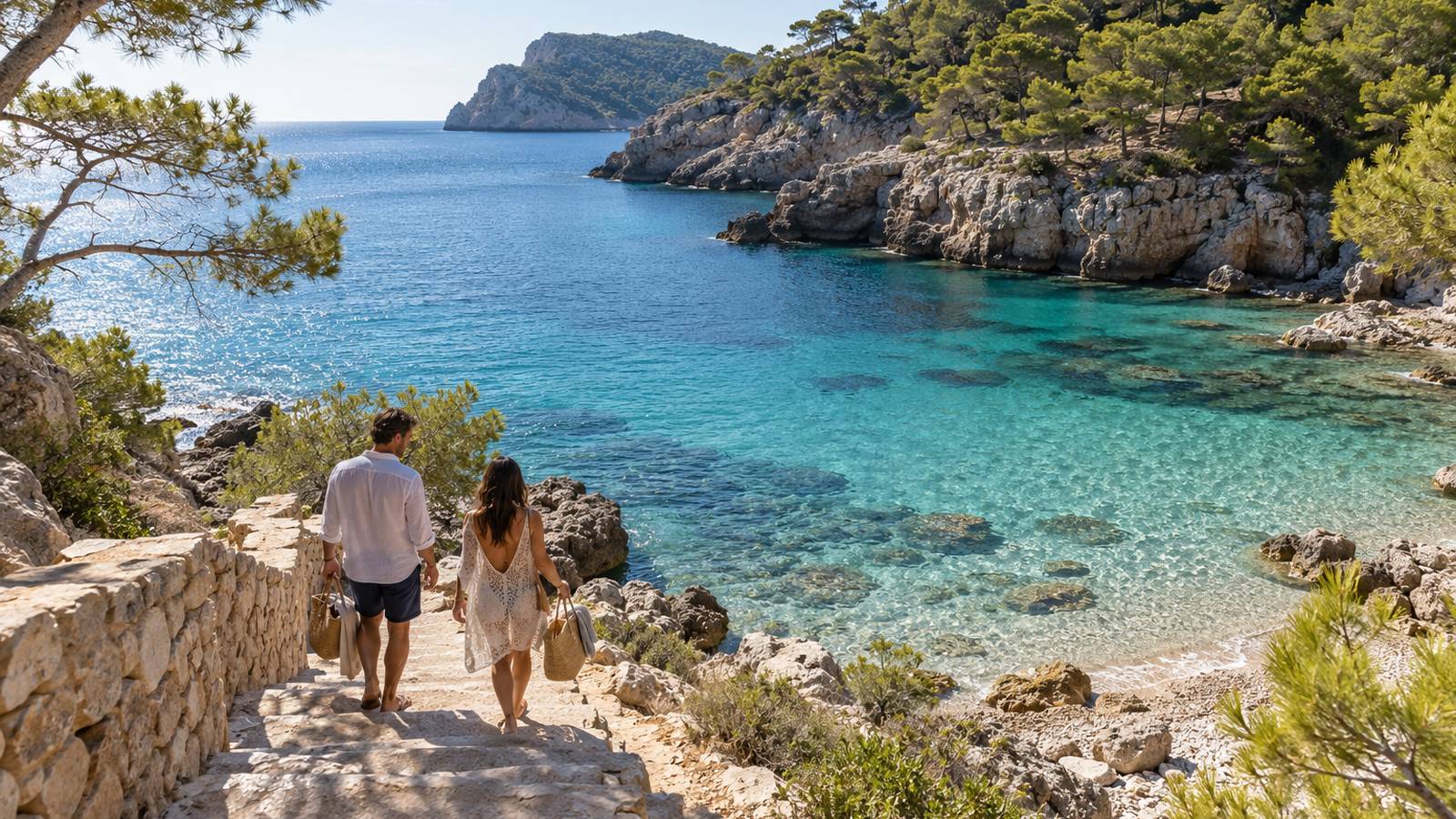
For Ibiza, summer makes sense when swimming, boats and outdoor dinners lead the plan. Spain's Ibiza destination guide
- Mostly cities: Favor late spring or early fall and choose hotels that reduce daily transit.
- Mostly beaches: Favor summer, then verify the specific resort's seasonal offerings.
- Food and art: Consider late fall or winter, with an indoor plan for rainy days.
Combining Spain With Portugal, Morocco or Italy
For Spain and Portugal, I would first decide whether you want two capitals, two coastlines or a city-and-wine journey. Spring and early fall are a sensible starting point for a walking-heavy plan, but the route matters more than the country count. Ask how many nights you will actually have after international flights and transfers. Three short hotel stays can eat the relaxed hours you hoped to gain.
Spain and Morocco require even more deliberate pacing because you are adding a different country and travel formalities. If your Morocco plan includes desert time, the Moroccan tourism office's seasonal guidance
For Spain and Italy, spring or autumn can work well for a city-focused itinerary, but resist building a greatest-hits sprint. If Italy is a true priority, give it meaningful nights and account for the flight or rail transfer as part of the trip, not a free day. The season should support the activities you want in both places, not just the first arrival city.
Build a Trip With Room to Breathe
From the United States, do not let the arrival day carry your most important experience. Give yourself a comfortable landing, then put the guided visit or special meal on a later day. I like to work backward from the moments that would make you disappointed to miss the trip: perhaps architecture in Barcelona, a private art visit in Madrid or several slow nights by the sea.
Seven days is enough for a satisfying Spain trip if you choose one region or two well-connected bases. It is not enough to experience every region, tack on Portugal and still feel rested. An arrival, a departure and each hotel change all consume time. Rail can be useful on certain city pairs, but verify current schedules and transfer details before treating a connection as effortless.
Room upgrades deserve the same scrutiny. A larger room is worthwhile when you plan to spend time in it or when the location saves repeated travel. For a trip built around early starts, I would often choose the more convenient hotel over a prettier property farther away. The best upgrade is the one you will feel every day.
What Does a Spain Trip Cost?
Pricing for a premium multi-city Spain trip cannot be accurately estimated from a single published rate. A seven-night itinerary for two people with city hotels and private guiding is not the same product as a seven-night island resort stay, and the hotel rates, international airfare and private services needed to assemble either trip change by date and availability. Giving you a dollar range without a specific route and current supplier quotes would be false precision.
The actual total trip cost for a couple can vary significantly with travel dates and season, trip length, number of travelers, the cities or islands, hotel and room category, airfare, ground transportation and transfers, private tours, dining, level of luxury and current availability. An estimate based on a sample itinerary would be a planning reference, not a quote or a guaranteed price. I would first agree on the route and hotel standard, then price the pieces that matter to your experience.
Frequently Asked Questions
What is the worst time to visit Spain?
There is no universally bad month. July and August are a poor fit for a walking-heavy inland itinerary if you dislike heat, while winter is a poor fit for a classic Balearic beach trip. Match the season to the actual places and activities rather than ruling out a whole country.
Is November a good time to visit Spain?
Yes, for culture, food and a slower city itinerary. Plan for cooler days and possible rain, especially in the north. I would not choose November if warm-water island time is nonnegotiable.
Is seven days enough for Spain?
Yes, for one area or two compatible bases. Keep one arrival day and one departure day in mind, then ask whether another transfer would add more than it takes away. I would usually protect two meaningful stops over three rushed ones.
Which month offers better value for a Spain trip?
There is no reliable single lowest-priced month for a specific premium itinerary. Airfare, hotel category, destination, holiday dates and availability move independently. If you are date-flexible, compare complete itineraries in a few months rather than treating one low hotel rate as the price of the whole trip.
What is the prettiest city in Spain?
That is a matter of taste. Barcelona makes sense for architecture and the Mediterranean setting; Seville for its Andalusian streets and slower evenings; Madrid for art and urban energy. Tell me which feeling you want the trip to have, and the answer gets much more useful.
What is the 97 rule in Spain?
I would not base a travel plan on a supposed "97 rule" without knowing what the term is meant to describe. For entry and length-of-stay questions, use the U.S. State Department's Spain travel guidance and the relevant official consular rules instead. Requirements can change, and travelers are responsible for meeting the rules that apply to their citizenship and route.
Plan the Spain Trip You Actually Want
Explore Effortlessly designs custom journeys that connect the season, hotel locations, transfers and experiences into a trip with a sensible rhythm. As an ASTA Verified Travel Advisor, I would rather ask what your ideal day feels like than hand you a list of cities. If you are considering other destinations with different seasonal windows, our month-by-month guide to visiting Egypt and guide to the Maldives seasons can help frame the comparison.
Tell us your dates, the travelers joining you and the experiences you care most about. Start Planning My Spain Trip.
For more thoughtful travel ideas, join the Explore Effortlessly newsletter.
About the Author
Hi, I'm Karrah Kazravan, owner and lead travel advisor at Explore Effortlessly, an award winning Miami agency serving clients nationwide. I design custom journeys for busy travelers who want confident recommendations and thoughtful coordination. I have traveled to more than 67 countries across all seven continents and am a Nexion Circle of Excellence Top 5% advisor, ASTA Verified Travel Advisor, Certified Travel Associate, and CLIA Accredited Cruise Counselor.