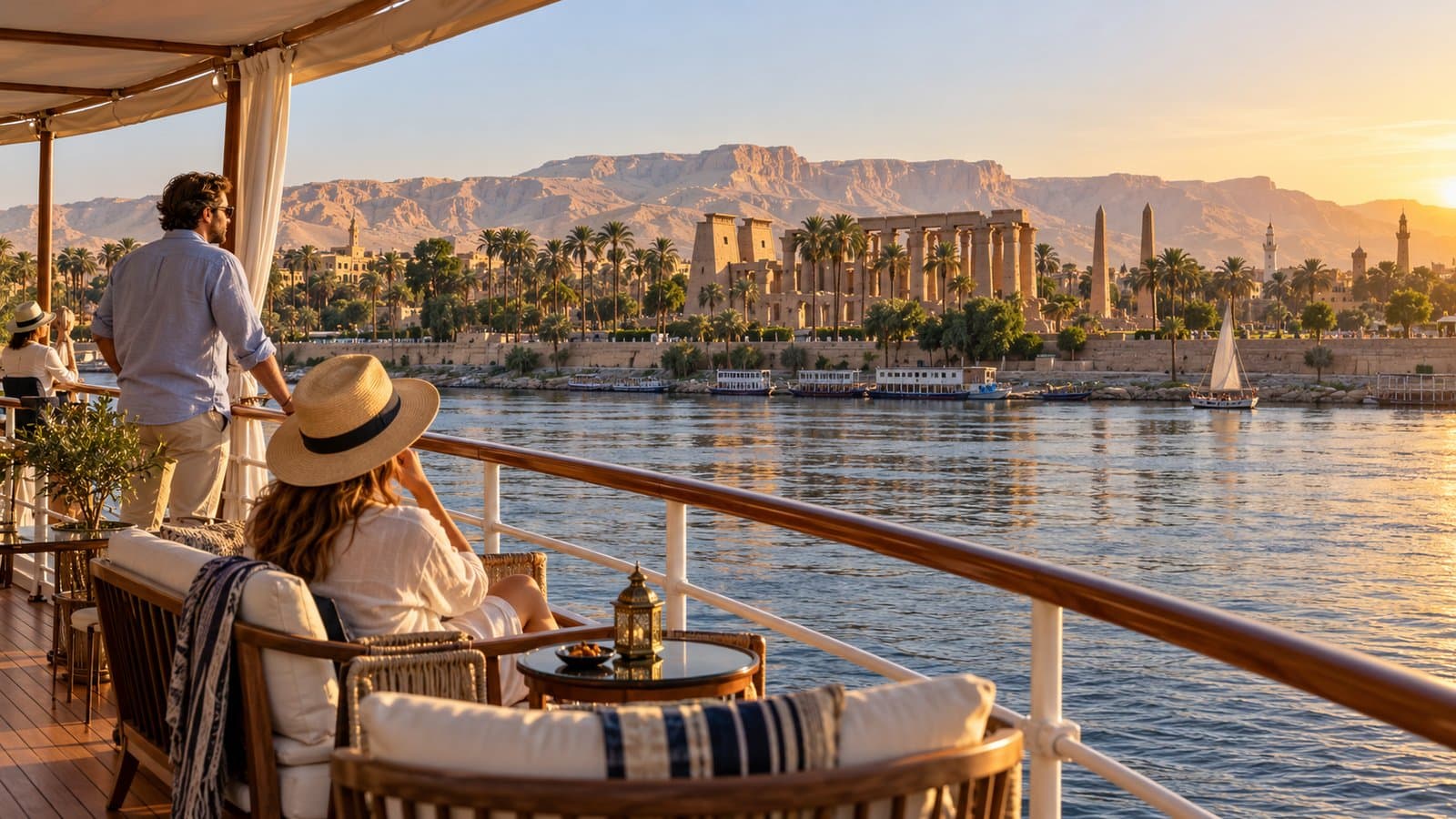
October through April is the best time to visit Egypt for a Cairo, Luxor and Aswan itinerary; I would start with November or February. Those months make long sightseeing days more appealing than the summer heat. Your ideal dates still depend on whether the trip centers on Nile temples, a river cruise or time at the Red Sea.
The hard part is not choosing a month from a weather chart. It is fitting together outdoor archaeological sites, a comfortable Nile sailing, the right hotels and transfers, and enough breathing room to enjoy them. I would rather give you two satisfying days in Luxor than a checklist that sends you straight from an airport to a temple.
The short answer by travel style
Egypt's official visitor guidance on seasons describes mild winters and hotter, drier summers, with the south warmer than the Mediterranean coast. Its Nile cruise guidance recommends October through May for sailing between Luxor and Aswan. For a first trip built around monuments, I narrow that broad window to late autumn through early spring.
If you're weighing Egypt against another autumn escape, the seasonal guide to visiting Greece may help clarify the difference: Egypt's southern sightseeing is most comfortable when many Mediterranean beach itineraries are winding down. That is a trip-design comparison, not a promise about any particular week's weather.
| Travel priority | Months I would consider first | The tradeoff to discuss |
|---|---|---|
| Cairo and Nile antiquities | November, February, March | Milder touring, but dates and room or cabin choices still need checking. |
| A Nile cruise with time outdoors | October through April | October and April can feel warmer in the south. |
| Red Sea time plus historic sites | October, November, March, April | Choose the beach and Nile sequence around your tolerance for heat. |
| Summer calendar constraint | June through August | Reconsider long midday temple visits; an Egypt-only monuments trip is a poor fit for heat-sensitive travelers. |
Those are planning judgments, not fixed temperature guarantees. Compare the forecast shortly before departure and build a guide-led itinerary that can adjust the order of outdoor visits.
Egypt month by month from January through March
January
January is an appealing choice when your top priority is walking the Giza Plateau and Luxor's archaeological sites without the intensity of summer. The official tourism board describes winter as generally mild and southern destinations as sunny. Pack a layer for evenings and an early start rather than assuming every hour will feel like a beach day.
I would put Cairo first, then move south for several nights rather than trying to treat the Nile as a rushed add-on. A room or cabin with a pleasant place to sit matters more on this kind of trip than another decorative upgrade you will barely use.
February
For many first-time travelers, February offers the balance I like best: time outdoors in Luxor and Aswan, plus a Cairo stay without designing the entire day around shade. It is also a sensible month for a Nile cruise, which the tourism board recommends during its broader October-to-May window.
Build one unhurried afternoon into the cruise portion. A shore program can look wonderfully complete on paper, but travelers who never enjoy the river between sites miss half the point of being aboard.
March
March suits travelers who want a warmer feel without deliberately choosing the height of summer. I would keep the most exposed walks early in the day as the season moves toward spring, and treat any forecast as a reason to change pacing, not cancel the experience.
For a traveler comparing Egypt with a broader Asia trip, our guide to Vietnam's best seasons shows why a single month rarely tells the whole story when a journey covers multiple regions.
Egypt month by month from April through June
April
April can still work, particularly if you want antiquities with a little more warmth, but I would ask how much midday walking you actually enjoy. The tourism board's cruise window reaches into May, yet a comfortable sailing day does not automatically make a long exposed site visit equally comfortable.
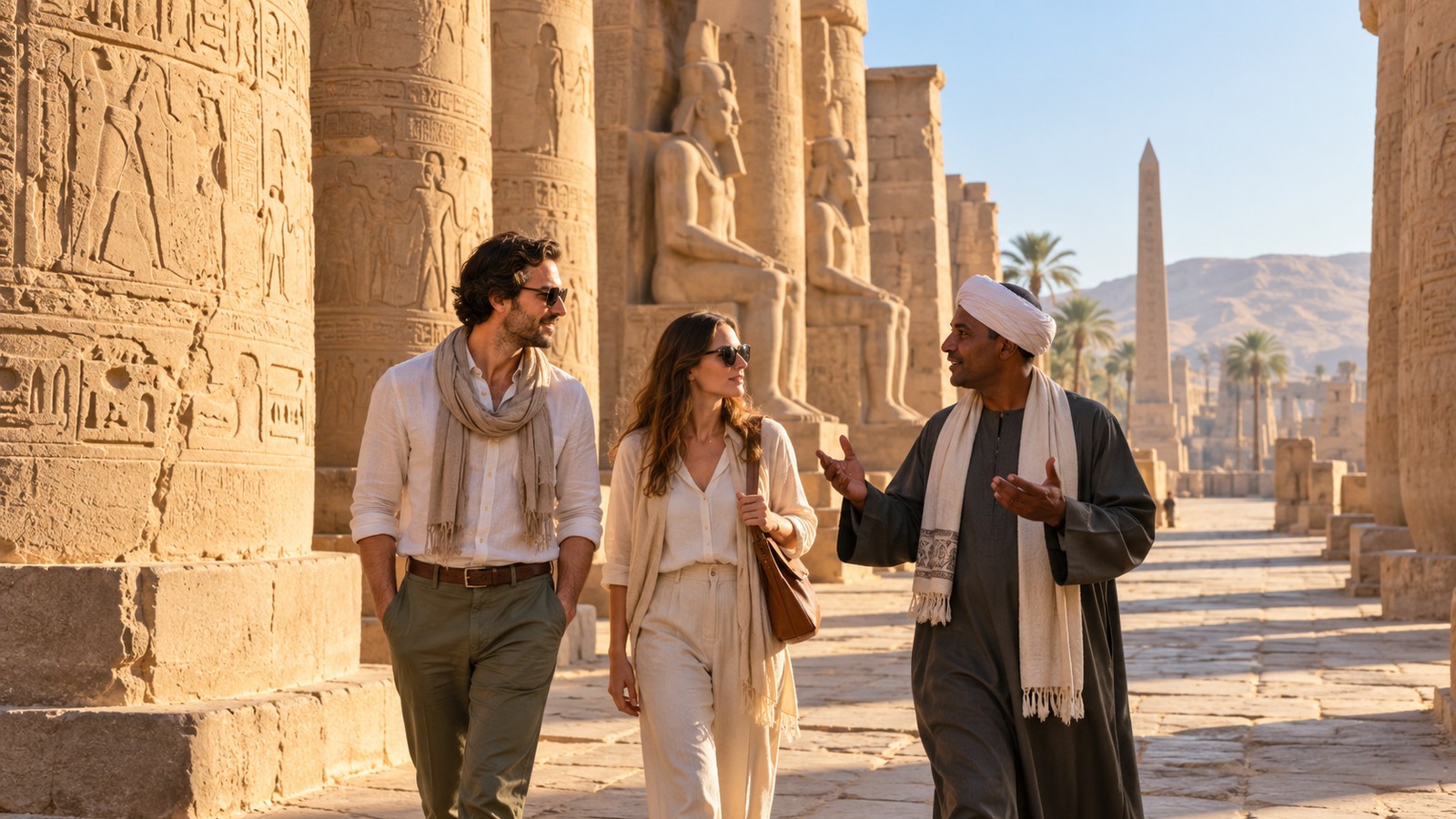
Spring is when I become more protective of the schedule. Make the private guide's time count with an early focus on one or two sites, a proper break, and a second visit only when the day's conditions and your energy allow.
May
May is a more selective choice for a Cairo and Nile journey. The official visitor guide places it at the start of the hotter season. For a heat-sensitive traveler, I would not chase a date solely because a cabin appears available.
If May is the only window, rethink the ratio of city and temple time to river or resort time. A trip can be excellent without insisting on every tomb, every temple and an ambitious beach detour in the same week.
June
June calls for an honest conversation about heat tolerance. The tourism board describes summer as hot and dry, particularly in the south. I would avoid stacking lengthy outdoor archaeological visits in the middle of the day and consider whether this is the right season for the specific Egypt trip you want.
Someone committed to a summer vacation may be happier with a different destination than with a compromised version of their dream Nile itinerary. I would rather say that upfront than sell an impressive-sounding schedule that feels exhausting in practice.
Egypt month by month from July through September
July
For a monument-heavy trip, July is the month I would question most firmly. The risk is not that Egypt lacks things to do, but that the southern outdoor sites that brought you there may be least pleasant during the hot season. I would prioritize a different date if your schedule allows it.
Egypt's Mediterranean coast has a different summer pattern from the Nile Valley, according to the tourism board. That does not make a north-coast beach vacation a substitute for Cairo, Luxor and Aswan. Decide which trip you actually want before picking flights.
August
August presents much the same problem for an Upper Egypt archaeological circuit. An early guided visit and a long midday break can make an unavoidable trip more workable, but neither changes the season.
If you are combining multiple generations, ask every traveler about walking tolerance and heat, not just the person making the booking. A beautiful cruise cabin cannot repair a day that asks too much of someone on shore.
September
September is a transition worth discussing rather than assuming it is already cool. I would inspect the proposed daily program closely, especially the order of Luxor and Aswan visits, and keep expectations flexible around the forecast.
The better question is not whether September is possible. It is whether the particular journey, with its hours outdoors and available hotels, deserves your travel time compared with October or November.
Egypt month by month from October through December
October
October is when I start actively recommending a classic Egypt itinerary again. It falls within the tourism board's preferred Nile cruising window and is a good candidate if you want a little more warmth than midwinter. Earlier October dates may still feel hot in the south, so build the itinerary around comfort rather than a calendar label.
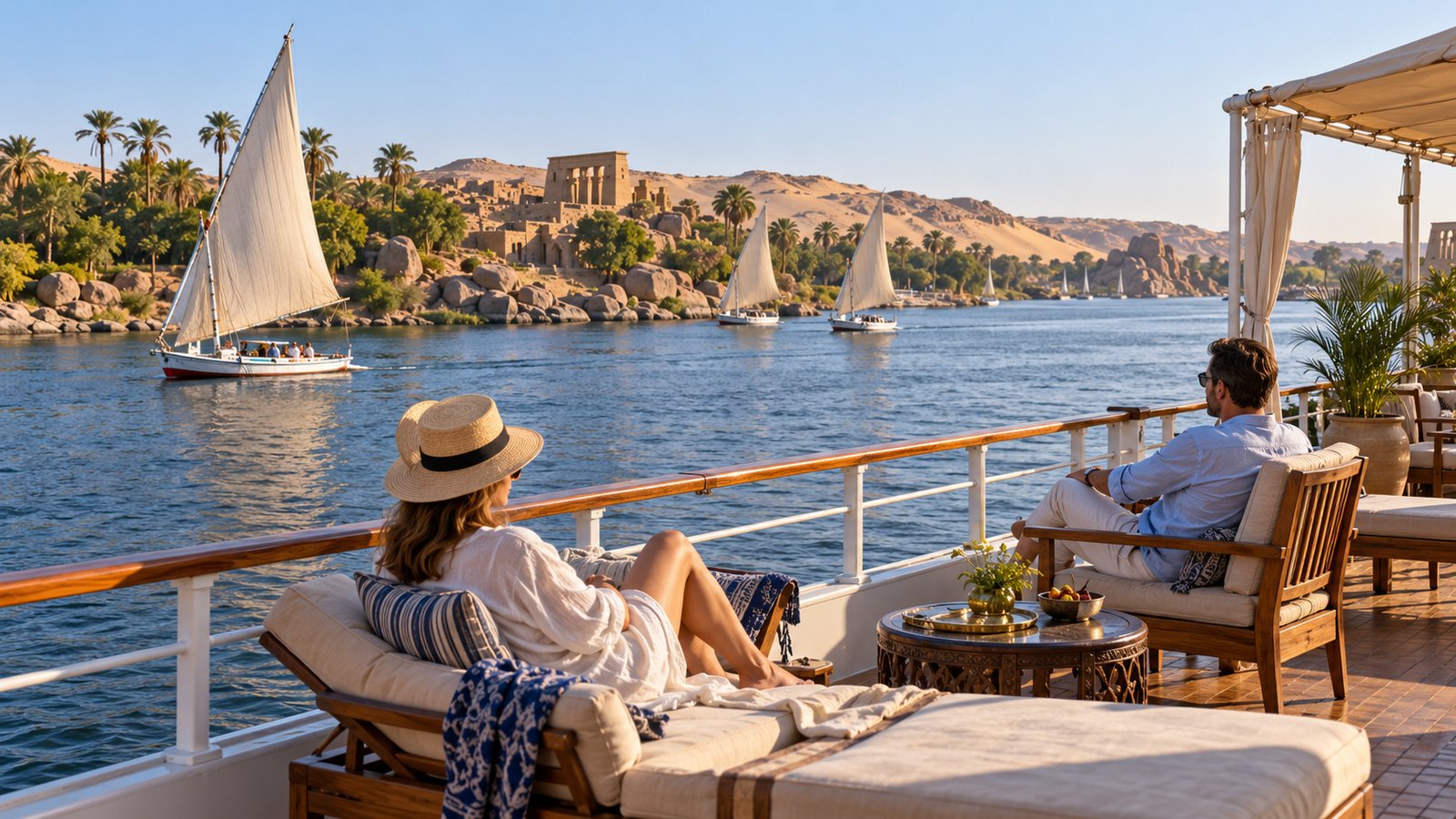
Choose between a longer river sailing and extra hotel nights on the basis of what you value. If you like quiet time between guided visits, the ship deserves room in the schedule; if museums and neighborhood dining matter more, give Cairo its own space.
November
November is my strongest all-around pick for a first journey pairing Cairo with Luxor and Aswan. The official tourism board counts it within the moderate winter and Nile cruise season. It is the month I would consider before adjusting for your specific dates, cabin preferences and travel companions.
A November itinerary should still leave a margin around internal transfers. The practical luxury is not a frantic series of premium rooms; it is arriving with enough energy to enjoy the guide you chose and the place you came to see.
December
December is a strong option for travelers who like gentler sightseeing weather and can dress for cooler evenings. I would check the precise holiday dates and the actual room and cabin inventory before assuming any advertised starting rate will apply.
Do not force a beach finale if your main pleasure is the history. A better final night might be a well-located hotel that makes departure simpler. If the Red Sea is the emotional center of the trip, give it enough nights to feel like a stay, not a transfer stop.
Choose the month around the route, not the other way around
Cairo and Giza, Luxor, Aswan and the Red Sea solve different travel problems. Egypt's tourism board maps the major historic stops and identifies distinct Red Sea resort areas. I start with your nonnegotiable experiences, then decide what can fit without turning the route into a daily relocation.
For a first-time trip from the United States, I favor enough nights to see Cairo and the Nile comfortably. The tourism board says Luxor-to-Aswan cruises typically take four to five days, depending on direction. That leaves little room for Cairo if your whole vacation is only a week. My preferred trip shape is a Cairo stay, a cruise or thoughtfully paced land segment, and optional extra nights at the end.
How I would spend the worthwhile upgrades
- Private guiding: Put the expert where a site visit would otherwise feel like a blur, rather than buying more attractions.
- Better-positioned stays: Select a hotel for the part of the itinerary it serves, not just a dramatic photo of the lobby.
- Cabin choice: Ask how much time you will actually spend enjoying the river view and outdoor space before paying for more room.
- Transfer planning: Align flight, hotel and ship handoffs so the best sightseeing hours are not consumed by logistics.
The route also has to respect current safety guidance. The U.S. State Department Egypt advisory identifies areas where U.S. travelers should not travel, and its guidance can change. Travelers are responsible for reviewing the latest advisory and meeting all entry requirements before departure.
What an Egypt trip typically costs
For a premium Egypt journey of roughly eight to thirteen days that includes Cairo and a Nile cruise, a useful published-price planning range is about $7,500 to $17,500 per person before international airfare. As a reality check, published examples reviewed in October 2026 include Abercrombie & Kent's Egypt in a Week from $7,695, its longer Ultimate Egypt journey from $17,495, and Viking's 2027 Pharaohs & Pyramids listing from $9,999 per person. These are different trips, not interchangeable quotes or a promise that your dates will match their entry prices.
Your actual trip cost can vary significantly with the number of travelers, travel dates and season, length and route, hotel and riverboat or cabin category, airfare, private transportation and transfers, guiding and experiences, dining inclusions, level of luxury and current availability. The range is not a quote or a guaranteed price. I would first choose the itinerary you want, then compare what each option actually includes rather than ranking attractive headline fares.
Frequently Asked Questions
Is it safe to go to Egypt right now?
No advisor can guarantee safety. The U.S. State Department's Egypt advisory currently calls for increased caution nationally and says not to travel to specified areas, including the Northern and Middle Sinai Peninsula and Egyptian border areas. Review its latest area-by-area guidance close to departure, discuss the route with your advisor, and make your own informed decision. Conditions can change.
Which month costs less for an Egypt trip?
There is no dependable nationwide lowest-price month for the kind of custom trip I design. Travel dates, ship and cabin inventory, hotel category and inclusions can outweigh the month on a calendar. I would compare actual like-for-like proposals, then judge the savings against the comfort tradeoff of a hotter sightseeing day.
How many days do I need for Cairo and a Nile cruise?
I would plan roughly ten to twelve days for an unhurried first visit, depending on flights and whether you add the Red Sea. Egypt's tourism board says a typical Luxor-to-Aswan cruise itself takes four to five days. Allocate Cairo its own nights and leave room for transfers rather than pretending the cruise is the whole trip.
Should I bring toilet paper to Egypt?
I would carry a small personal supply of tissues for sightseeing days and hand sanitizer in your day bag. Restroom facilities can differ from one stop to another, and a little preparation is easier than making a minor inconvenience the story you remember. Ask your guide about the facilities on the day's route.
Do U.S. travelers need a visa for Egypt?
Yes, the U.S. government entry guidance for Egypt says U.S. citizens need a visa and identifies Egypt's official e-visa portal. Rules and procedures can change. You are responsible for checking your passport, visa and all applicable entry requirements before traveling.
Plan the Egypt trip that actually fits you
At Explore Effortlessly, I use the season as one decision among many: where you want to linger, how much guided time feels right, and which transfers and hotel choices protect your energy. If November fits your calendar, excellent. If February gives you better dates or a better cabin, I would rather build around that than follow a one-size-fits-all ranking.
Tell me what you most want to feel on this trip, then we can shape Cairo, the Nile and any coast time around it. Start Planning My Egypt Trip.
For more destination decisions and planning ideas, join my travel newsletter. You can also compare our month-by-month Maldives travel timing guide and Thailand travel seasons by month if you are considering a different winter escape.
About the Author
Hi, I'm Karrah Kazravan, owner and lead travel advisor at Explore Effortlessly, an award winning Miami agency serving clients nationwide. I design custom journeys for busy travelers who want confident recommendations and thoughtful coordination. I have traveled to more than 67 countries across all seven continents and am a Nexion Circle of Excellence Top 5% advisor, ASTA Verified Travel Advisor, Certified Travel Associate, and CLIA Accredited Cruise Counselor.