
The best time to visit Vietnam for a first, multi-region trip is March or April. Hanoi is more comfortable than in midsummer, central Vietnam is coming into its sunnier stretch, and the south is generally still in its drier season. If your priority is a Phu Quoc beach stay or a northern walking trip, I would choose different dates.
The tricky part is that a single weather forecast does not describe the whole country. Your Hanoi stay, Hoi An beach days and Ho Chi Minh City finale can feel like three different trips. Choose a month for the experiences you care about most, then build the route around it. If you are comparing Southeast Asian trips, our month by month Thailand timing guide is a useful companion.
The Short Answer by Region
Vietnam's official regional climate guide calls March through May the strongest overall window, but that is not a promise of identical conditions from north to south. I favor March for a classic Hanoi, Hoi An and southern Vietnam itinerary. April works beautifully for central coast time, provided you are comfortable with increasing heat.
| Trip priority | Consider | Trade-off |
|---|---|---|
| North, center and south in one trip | March or early April | Conditions still differ by stop |
| Hanoi and northern scenery | September through November, or spring | Central-coast rain risk rises in autumn |
| Hoi An and central-coast sun | March through August | Late spring and summer can be hot |
| Ho Chi Minh City and Phu Quoc | December through April | Northern Vietnam can feel cool or misty |
My planning rule is simple: protect the least flexible part of your trip first. I would sort the decisions in this order:
- Anchor experience: Choose your beach stay, bay cruise or northern walking days before filling the rest of the map.
- Weather trade-off: Check the other regions on your route for that same month.
- Movement: Leave room to adjust a bay departure when weather affects the water.
Vietnam Month by Month
These are planning patterns, not a prediction for your departure. Vietnam's north, center and south do not share one neat dry season. I would read the month that fits your calendar, then compare it with the region-specific choices below.
January
Choose the south and Phu Quoc if sunshine is the main goal. Hanoi and Ha Long Bay can be cool and misty, while Hoi An may still be wet. This is a strong time for a southern-focused anniversary or a city-and-island pairing, not my first pick for guaranteed-feeling central-coast beach days.
February
The south remains attractive for outdoor time, and central Vietnam begins to improve, though timing within the month matters. Northern mornings can still call for layers. Lunar New Year, or Tet, moves on the calendar, so check your exact dates before committing to a dense itinerary. Vietnam Tourism advises planning services early when a trip coincides with the Tet holiday.
March
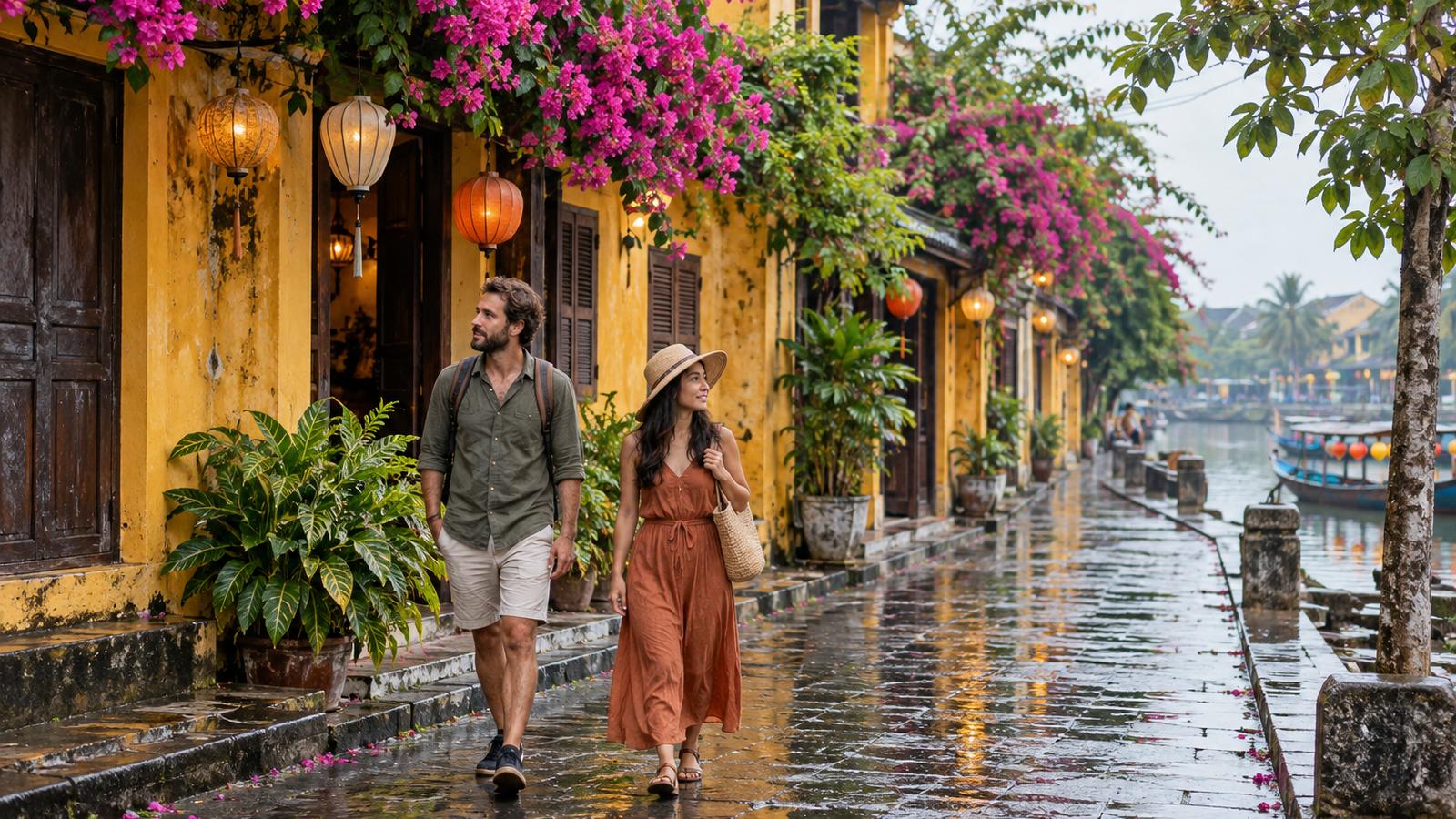
This is my leading choice for a first visit across several regions. Hoi An is moving into its sunnier season, the south is typically dry and Hanoi is transitioning toward warmer days. Give the central coast enough nights to enjoy it instead of treating it as a transfer stop.
April
Central Vietnam is a particularly appealing anchor, with Hue and Hoi An well placed for sightseeing and coast time. The south can become hotter, and Hanoi warms too. I would prioritize slower mornings and a hotel location that makes an afternoon break easy rather than stacking full-day sightseeing every day.
May
Central Vietnam can still suit a beach-forward journey. Southern rains begin to enter the picture, while Hanoi turns warmer. A shower need not ruin a city visit, but do not promise yourself an identical weather experience at every stop. If your calendar points to May, I would give the central portion the most space.
June
Hoi An and the central coast remain in their generally sunny stretch, but heat deserves respect. Hanoi becomes humid and rainy, and southern showers are more likely. Pick a comfortable room and plan outdoor visits earlier in the day. This is a better choice for travelers happy to make the center their main event.
July
Central beach time is the appeal, not a nationwide weather jackpot. Hanoi is hot and rainy, and Phu Quoc enters its stormier season. I would not place a nonnegotiable Phu Quoc beach finale at the end of a July trip. Keep the itinerary narrow and spend less time moving between regions.
August
The center can still work for sun, though heat persists. North and south have more rain to consider, and Phu Quoc is not my preferred beach bet. A private guide and well-located hotel can make hot sightseeing days more manageable, but they cannot change the weather.
September
Hanoi begins its more comfortable autumn period. The trade-off is the center: Hoi An's rainy season starts, and storms can affect plans. I would build a northern cultural trip rather than force in a central beach stay simply because it appears on a standard route.
October
Northern Vietnam is attractive for city walks and landscapes. Central Vietnam has a meaningful rain and flooding risk, especially around Hoi An and Hue. The south is still in its wet-season pattern. October can be wonderful with a north-first itinerary and flexible routing, but it is a poor month to assume every coastal stop will behave.
November
Hanoi can be lovely, while Ho Chi Minh City moves toward its drier stretch. It is the central section that demands scrutiny: Hoi An can still see heavy rain and flooding. If you want the north and south, November is worth discussing. If Hoi An is the emotional centerpiece, I would rather move the date or change the sequence.
December
Look south for sun: Ho Chi Minh City and Phu Quoc are compelling together. Northern days are cooler and often misty, and the central coast may still be rainy. A Phu Quoc resort stay makes more sense here than trying to give every region the same amount of time.
Choose the Experience Before You Choose the Month
For Hanoi and northern landscapes, I like autumn for comfortable sightseeing, with spring another good option. For Ha Long Bay, Vietnam Tourism identifies April through June and September through November as stronger chances for pleasant skies, while warning that storms can occasionally affect cruises. I would leave a little breathing room around a bay departure rather than connect it to an inflexible international flight.
For Hoi An and Hue, favor spring into summer and accept that the hottest months may call for shorter excursions. Autumn rain is not a mere inconvenience if your dream is long beach afternoons. For Ho Chi Minh City, December through April is usually the simpler dry-season choice. Phu Quoc aligns well with a southern winter itinerary, while July through September is much stormier.
What is the biggest itinerary mistake? Choosing a month because one destination looks perfect, then copying a north-to-south route without checking the other stops. The best upgrade is often not a grander room. It is one fewer hotel change, a well-timed transfer, or an extra night where the experience matters most.
Sun, Beaches and the Right Coast
If you want sun in March, a central Vietnam stay paired with southern sightseeing is a strong combination. If your dates fall in December or January, I would look more seriously at Phu Quoc than Hoi An for a beach finish. July calls for the opposite instinct: central coast rather than the island.
Be specific about the resort experience. A room with a view may be lovely, but a better-located property can save daily transfer time, and a quieter room category may matter more than a photogenic pool. Ask what you want your afternoons to feel like. That answer should shape both your destination and your hotel shortlist.

No beach month is weatherproof. Check conditions close to departure and leave a meaningful alternative for days when the sea or sky does not cooperate. If you are also weighing other far-flung beach escapes, our guide to choosing Fiji travel dates shows why a single seasonal label is rarely enough.
Pairing Vietnam With Cambodia
For a combined Vietnam and Cambodia journey, I would start with November through February if Cambodia's temples and Vietnam's southern stops are the priority. The Cambodian Ministry of Tourism climate overview places its dry season from November through April, with December and January the cooler months. That makes a southern Vietnam and Cambodia pairing especially logical.
For a trip that must also include Hoi An, March deserves consideration as a compromise: Cambodia remains in its dry season, while central Vietnam moves into a brighter period. April can be hotter in Cambodia. I would not add a country just to make the map look impressive. Each border crossing, flight and hotel change needs to earn its place in your vacation.
Planning the Journey From the United States
If you are coming from the United States, choose dates around the longest-stay experience, not around the first city that appears on a flight search. I prefer an itinerary with a gentle arrival and only a few meaningful bases. A one-night stop that exists solely to check a box can consume more energy than it adds value.
For a north-to-south journey, think about where to enter and leave before you commit to hotels. Domestic flights can connect distant regions; Vietnam's tourism authority notes that overland journeys between major cities can take much longer than many visitors expect. I would rather use that saved time for a slower Hoi An stay or a private guide in Hanoi than spend it in another transfer queue.
Entry rules can change. U.S. travelers should review the current U.S. State Department Vietnam guidance and the destination's official requirements before travel. Each traveler is responsible for meeting passport, visa and other entry rules. I would check these early, particularly if adding Cambodia or a stopover.
What a Premium Vietnam Trip Costs
For a roughly 11- to 14-night private, multi-stop Vietnam trip, published premium land itineraries show starting prices around $6,000 to $14,000 per person, based on two travelers sharing. These are examples of different trip designs, not a fixed market tariff. International airfare is typically separate in those examples; exact inclusions differ.
Your actual trip cost can vary significantly with the number of travelers, travel dates and season, trip length, route, hotel and room category, domestic and international airfare, private transportation and transfers, guided experiences, dining inclusions, level of luxury and current availability. A high-end villa, a more elaborate bay stay or a Cambodia extension changes the picture. This estimate is not a quote or a guaranteed price.
I would decide first where spending improves the experience. A good guide on your most important sightseeing days and a sensible location at each base often matter more than upgrading every room. If you are traveling for a milestone, make room for the part you will actually remember instead of buying a string of rushed premium stays.
Frequently Asked Questions
What are the best and worst months to visit Vietnam?
For a broad north-center-south itinerary, March and April offer the best overall compromise. There is no universally worst month: July and August make a Phu Quoc beach trip riskier, while October and November call for extra caution around Hoi An. Match the dates to your chosen regions rather than the country name alone.
Is November a good time to visit Vietnam?
Yes for a north-and-south route, especially if you enjoy Hanoi walks and can tolerate the south's transition out of its wet season. I would be more careful about centering the trip on Hoi An, where rain and flooding can affect a fixed itinerary.
Is $1,000 enough for two weeks in Vietnam?
That is not a realistic planning assumption for the private, multi-stop journey discussed here. Published premium land-trip starting prices are substantially higher before international flights. If your budget is fixed, decide which experiences matter most rather than building an itinerary that depends on implausibly low costs.
Can I wear red in Vietnam?
There is no practical trip-timing decision to make around a clothing color. I would focus on respectful attire appropriate to the places you plan to visit, the heat, rain and any specific venue guidance. If you have a particular ceremony or site in mind, check its own rules before departure.
When is the best time for Ho Chi Minh City and Phu Quoc?
December through April is the clearest shared window for a dry-season city-and-island itinerary. Phu Quoc is stormier from July through September, while Ho Chi Minh City sees wet-season showers from May through November. The exact week still matters.
Make the Calendar Work for Your Trip
There is no prize for seeing all of Vietnam in one sweep. The better trip gives your favorite places the right season and enough time to enjoy them. If you are weighing multiple long-haul destinations, our Australia month by month planning guide is another reminder that geography beats a single blanket answer.
Explore Effortlessly designs custom journeys for busy travelers who want thoughtful choices about seasons, hotels, guides and connections. Tell me which experiences matter most and what dates you can actually travel. Then we can shape a route that makes sense for you, not a generic map. Start Planning My Vietnam Trip.
For more considered travel ideas, join the Explore Effortlessly newsletter.
About the Author
Hi, I'm Karrah Kazravan, owner and lead travel advisor at Explore Effortlessly, an award winning Miami agency serving clients nationwide. I design custom journeys for busy travelers who want confident recommendations and thoughtful coordination. I have traveled to more than 67 countries across all seven continents and am a Nexion Circle of Excellence Top 5% advisor, ASTA Verified Travel Advisor, Certified Travel Associate, and CLIA Accredited Cruise Counselor.