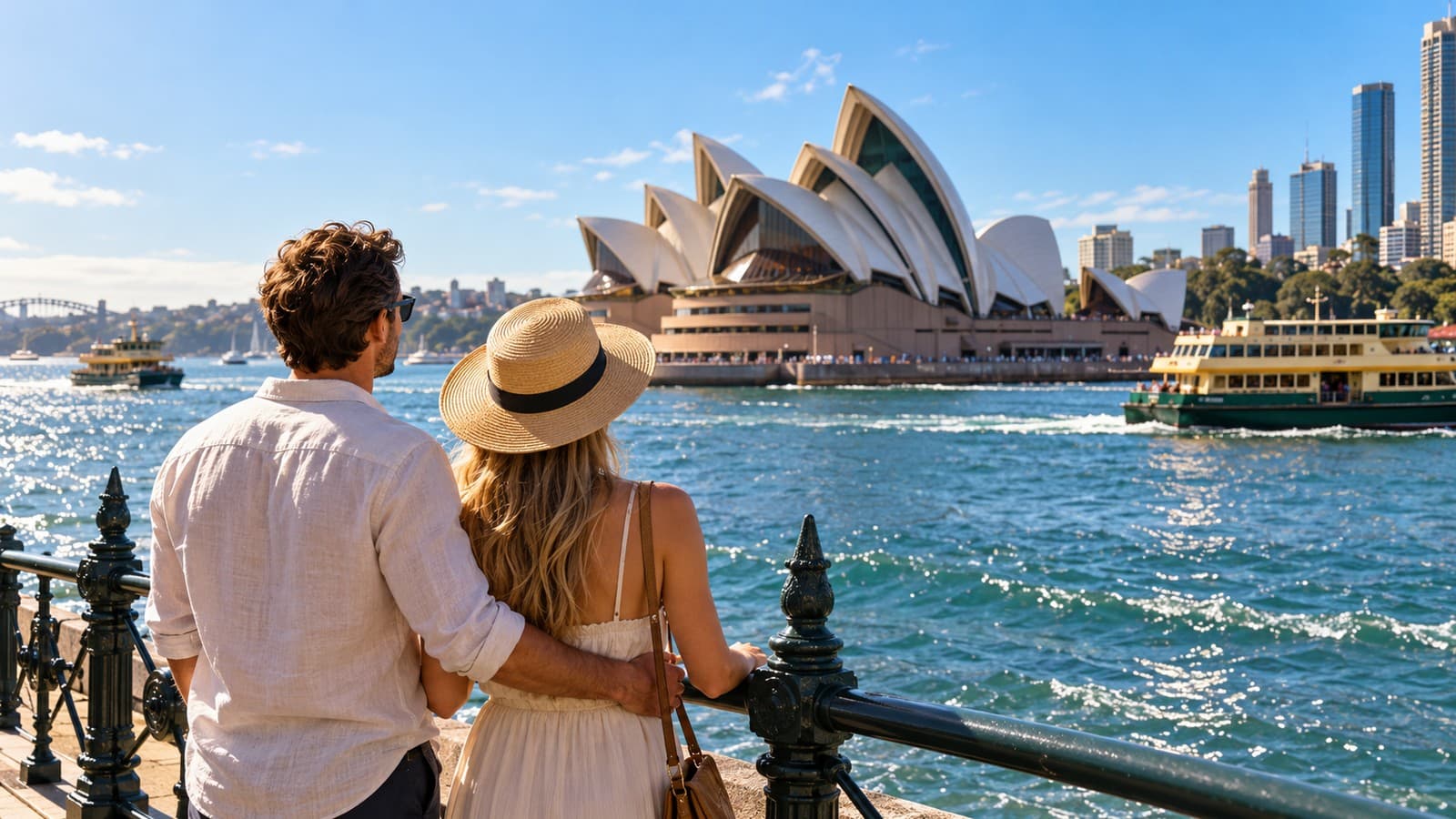
September and October suit a first Australia trip that combines Sydney, the Red Centre and the tropical north. The south is in spring, while the north is generally still in its drier season. If your trip is mainly Melbourne, Tasmania or southern beaches, March and April deserve equal consideration. There is no single best month for every itinerary.
Australia looks deceptively simple on a calendar. A lovely week in Sydney can coincide with uncomfortable heat around Uluṟu or a very different season around Cairns. The useful question is not just when to go, but which places you want to connect without spending your best days in transit or compromising the experience you came for.
Choose the month around your hardest-to-schedule stop
I start with the part of the journey that is least flexible. For a Red Centre walk, Uluṟu-Kata Tjuṯa National Park identifies May through September as the most comfortable period, with usual daytime maxima of 20°C to 30°C. For Kakadu, the park says most visitor sites are open in the May to October dry season, although access can change. Sydney and Melbourne have a broader comfortable window, so I fit the cities around the landscape experience rather than the other way around.
The official guide to Australian seasons distinguishes the southern four-season calendar from the northern wet and dry seasons. That distinction is more valuable than a nationwide temperature average. If you are also weighing another Southern Hemisphere journey, my month by month New Zealand guide helps clarify where the seasons overlap and where they do not.
- City and coast: Keep the south as your anchor in autumn or spring.
- Desert walks: Give the Red Centre the cooler part of the itinerary.
- Reef and north: Check the dry-season window and live access before committing to transfers.
| Travel priority | My preferred window | What to watch |
|---|---|---|
| Sydney, Melbourne and southern touring | March to April or September to November | Spring weather in Melbourne can change quickly. |
| Red Centre walking | May to September | Winter nights can be cold; summer afternoons can be very hot. |
| Cairns and the tropical north | May to October | The wet season can affect outdoor plans and access. |
| Kakadu sites | May to October, subject to current access | Individual sites may open or close with conditions. |
January and February favor the southern coast
These are summer months across much of southern Australia. I would build a January or February itinerary around Sydney, Melbourne and perhaps Tasmania rather than insisting on a strenuous Red Centre walking schedule. Sydney's waterfront and coastal time can be appealing, but a warm day is not a reason to assume the same conditions inland.
The contrast matters: Uluṟu's park reports that daytime temperatures from October through March regularly exceed 35°C. The tropical north is also in its wet season, with the possibility of heavy rain and changed access. For a family tied to summer dates, I would select fewer regions and preserve flexible outdoor time instead of promising a perfect-weather sweep of the country.
March and April offer a gentler southern itinerary
Autumn is my recommendation if you want city time, meals and scenic touring in the south without making swimming the center of the trip. Sydney's autumn is generally milder, while Melbourne cools from summer. Plan layers for mornings and evenings rather than packing only beachwear.
April also begins to make more sense for the Red Centre than the height of summer, but do not treat it as a guarantee of cool afternoons. The park's published average maximum at Yulara is 29.9°C for April. If walking is your priority, May is a more conservative choice. This is where moving a departure by a few weeks can improve the trip more than upgrading a room.
May and June suit the north and the Red Centre
May is a particularly useful hinge month. Northern Australia's dry season is beginning, and the Uluṟu park's preferred walking window starts. I like a Sydney arrival followed by the Red Centre and tropical Queensland, with enough nights in each place to avoid turning every other day into a transfer day.
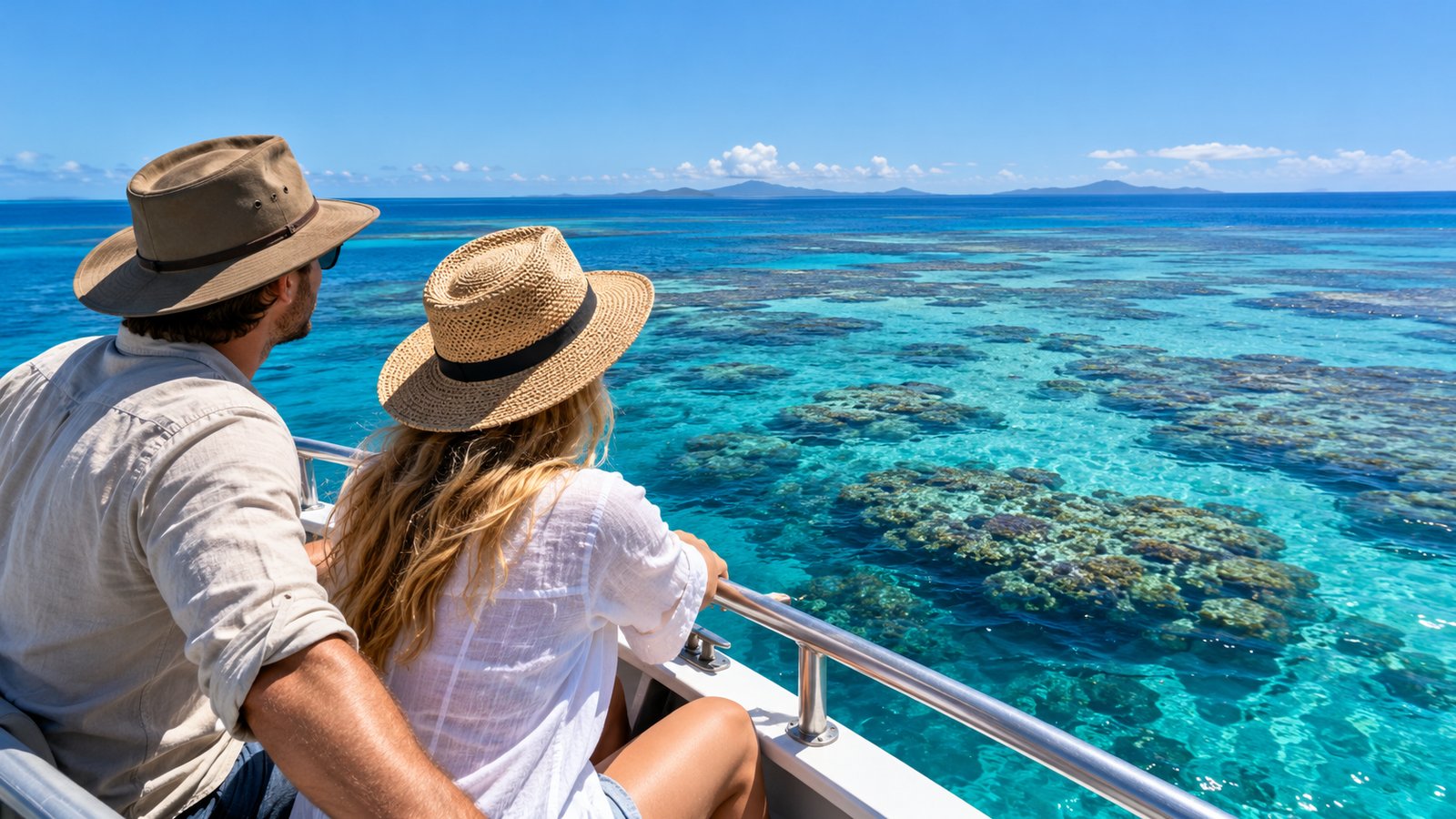
June brings cooler southern city days, which can be welcome if galleries, dining and urban neighborhoods matter more than beach time. It is also a strong candidate for reef and northern touring. Check the current destination conditions and the particular excursion before fixing a tight sequence of flights; seasonal norms are not a day-by-day forecast.
July and August reward a north-first plan
Midyear is the logical time to prioritize the tropical north, Kakadu and the Red Centre. For a traveler who values a reef day and guided nature experiences, I would place those first, then add a shorter southern city stay rather than expecting Sydney or Melbourne to feel like summer. Uluṟu's park notes that winter nights can be very cold even when the days suit walking.
These months also coincide with strong interest in the north. Choose the locations and room categories that matter to you early, especially if the property itself is part of the experience. I would spend for a better-located base and a sensible guide or transfer before adding a rushed extra destination. A scenic view does not compensate for a schedule that leaves no time to enjoy it.
September and October are the best all-round compromise
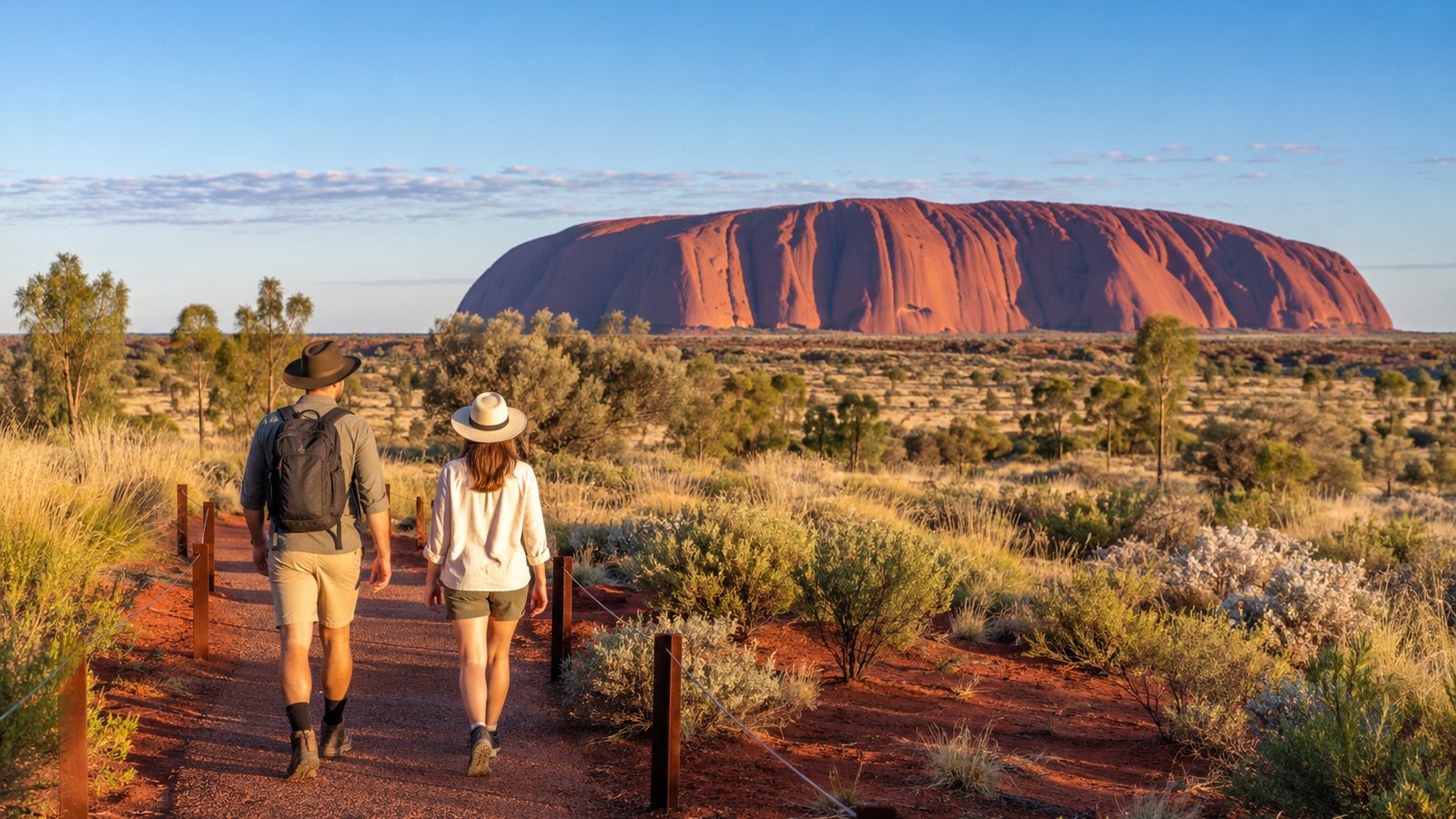
September is spring in Sydney and Melbourne, but the far north is generally still within its dry-season window. That makes it my strongest starting point for a first journey spanning city, desert and reef. The Uluṟu park's seasonal guidance names May to September for comfortable walking; September is also one of its usual wildflower months. Put desert walks earlier in the day and keep a layer for the evening.
For a temperature reference rather than a forecast, the Bureau of Meteorology's major-city climate table lists average September maximum temperatures of 21.1°C in Sydney and 16.6°C in Melbourne. October averages rise to 23.0°C and 19.3°C respectively. Melbourne is more changeable, so do not schedule every outdoor highlight on one unmovable afternoon. In the Red Centre, October's Yulara average maximum reaches 32.3°C, which is why I prefer September if walking is central.
The best room upgrade here is often not the grandest suite in every stop. I would pay attention to location and arrival timing: a Sydney hotel that lets you explore easily, a Red Centre stay that gives you a calm morning start, and a north Queensland base that fits the actual reef excursion you want. Three well-connected stays will usually feel richer than five hotel changes.
November and December depend on your north-south split
November is spring across the southern cities, not autumn. Sydney's climate is warming, and Melbourne is moving toward summer; the north is transitioning toward its wetter season. If you want a city-led trip, November can work beautifully. If Kakadu access or northern outdoor touring is the reason for traveling, I would look earlier and confirm the current conditions rather than relying on a seasonal label.
December is summer in Sydney and Melbourne. I would use it for southern waterfront time, dining and a measured holiday itinerary, not for a plan that assumes the desert or tropical north will behave the same way. Australia's tourism authority identifies December to February as a high-demand travel period, so the exact dates and available accommodation can change what feels like good value. For a December city trip, prioritize the experiences you care about and leave room for a weather alternative.
Pairing Australia with New Zealand changes the answer
For a combined Australia and New Zealand journey, I favor late spring or early autumn if the aim is comfortable city and scenery time in both countries. Tourism New Zealand identifies September to November as spring and March to May as autumn. But a New Zealand South Island landscape trip and a tropical Queensland reef trip do not share identical weather priorities. A combined trip needs a choice about which experience leads.
If New Zealand is the centerpiece, make room for its changing conditions and do not bolt on too many Australian stops. If Australia is the priority, two or three thoughtfully selected Australian regions plus one focused New Zealand segment is more satisfying than collecting airports. The climate differences also affect packing, transfers and the number of genuinely usable days. See my guide to planning Fiji by season if you are comparing a tropical extension rather than another multi-region tour.
What an Australia Trip Costs
Pricing for a custom Australia trip cannot be accurately estimated from the travel month alone. A Sydney and Melbourne city stay is a different product from a journey combining premium hotels, the Red Centre, a private guide and a reef experience. Published room or excursion prices also do not establish a defensible total for a whole trip, so I would rather be candid than give you a made-up range.
Your actual trip cost can vary significantly with the number of travelers, travel dates and season, trip length, which regions you include, hotel and room category, airfare within Australia and internationally, ground transfers, guides, experiences, dining and current availability. An itinerary-specific estimate is not a quote or a guaranteed price. We can discuss the tradeoffs that matter to you before building a realistic proposal.
Frequently Asked Questions
What are the best months to travel to Australia?
For a first trip mixing Sydney, the Red Centre and the north, I would start with September. October is appealing if your plans lean more toward Sydney and the tropical north than long desert walks. March and April are excellent alternatives for a southern-focused itinerary. Match the month to your actual stops, not an Australia-wide weather claim.
What is Sydney like in September?
September is spring. The Bureau of Meteorology's long-term major-city table gives Sydney an average maximum of 21.1°C, which is useful for planning layers and outdoor time, not a prediction for your dates. Check the Bureau's current warnings and alerts closer to departure. Melbourne in September is cooler and can feel more changeable, so pack accordingly.
Is November a good time for northern Australia?
It depends on the activity. November is a fine time for a southern city trip, but it is less predictable for northern access. Kakadu National Park's visitor guidance explains that tropical-summer flooding can close attractions. If a particular site is essential, check current access and favor the dry season. Do not build a nonrefundable sequence around a site that may be closed.
Can I combine Australia and New Zealand in the same season?
Yes, especially in spring or autumn, but the regional climate differences still matter. Tourism New Zealand's seasonal guide shows its spring and autumn windows. Give each country enough time to be more than a stopover and decide which landscapes are nonnegotiable before choosing dates.
Plan the trip around the experiences that matter
At Explore Effortlessly, we design custom journeys around the stops you actually care about, then work through the sequence of hotels, flights, ground transfers and experiences. I would rather recommend the right three-region trip than squeeze in a fourth destination simply because it fits on a map. The initial consultation is where we learn your priorities and shape a sensible direction.
If you are still comparing seasons for other journeys, these guides to choosing the right Greece travel season and planning Thailand around seasonal weather offer the same decision-first approach. When Australia is the one you want, Start Planning My Australia Trip.
For thoughtful trip ideas in your inbox, join the Explore Effortlessly newsletter.
About the Author
Hi, I'm Karrah Kazravan, owner and lead travel advisor at Explore Effortlessly, an award winning Miami agency serving clients nationwide. I design custom journeys for busy travelers who want confident recommendations and thoughtful coordination. I have traveled to more than 67 countries across all seven continents and am a Nexion Circle of Excellence Top 5% advisor, ASTA Verified Travel Advisor, Certified Travel Associate, and CLIA Accredited Cruise Counselor.