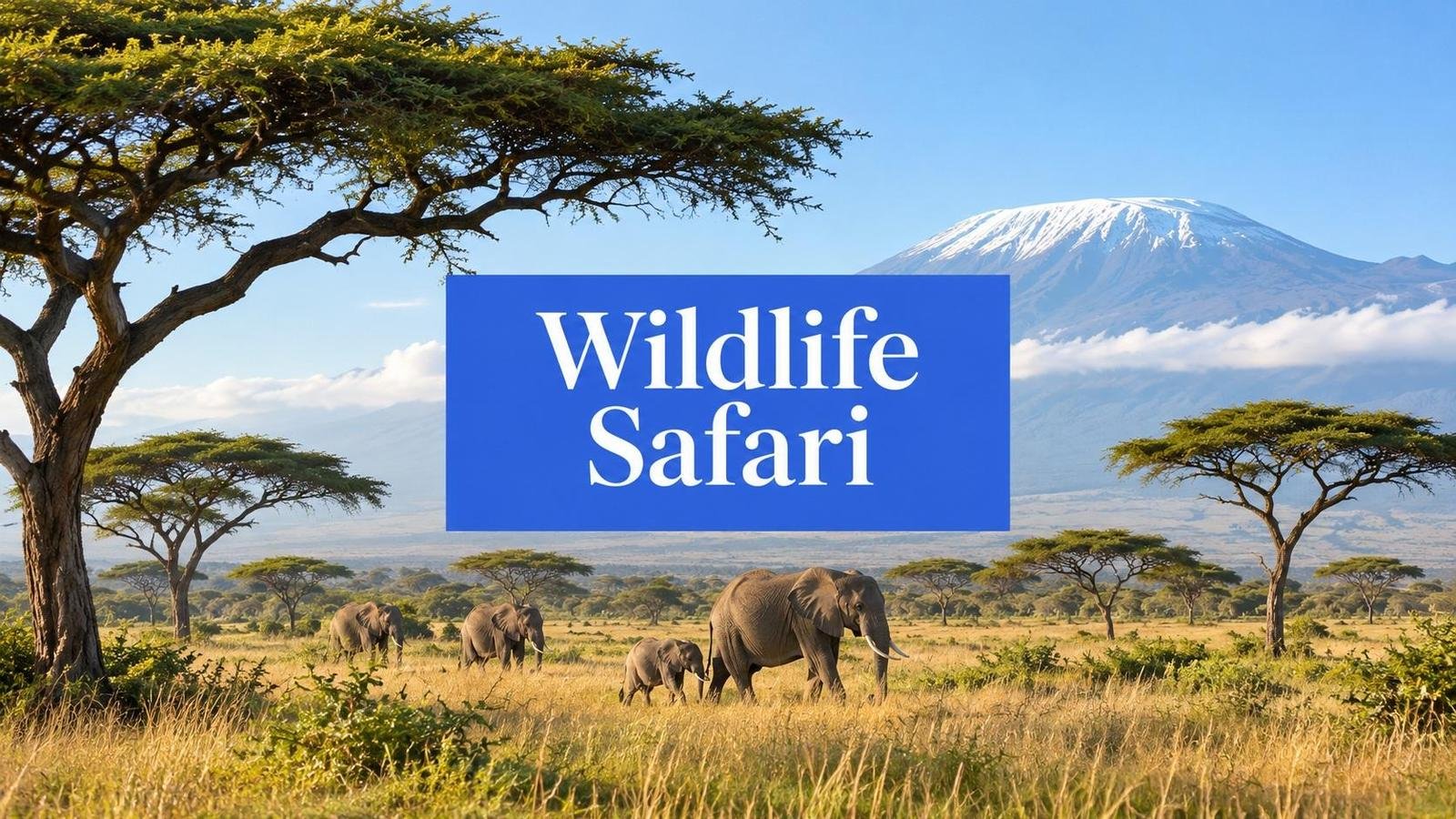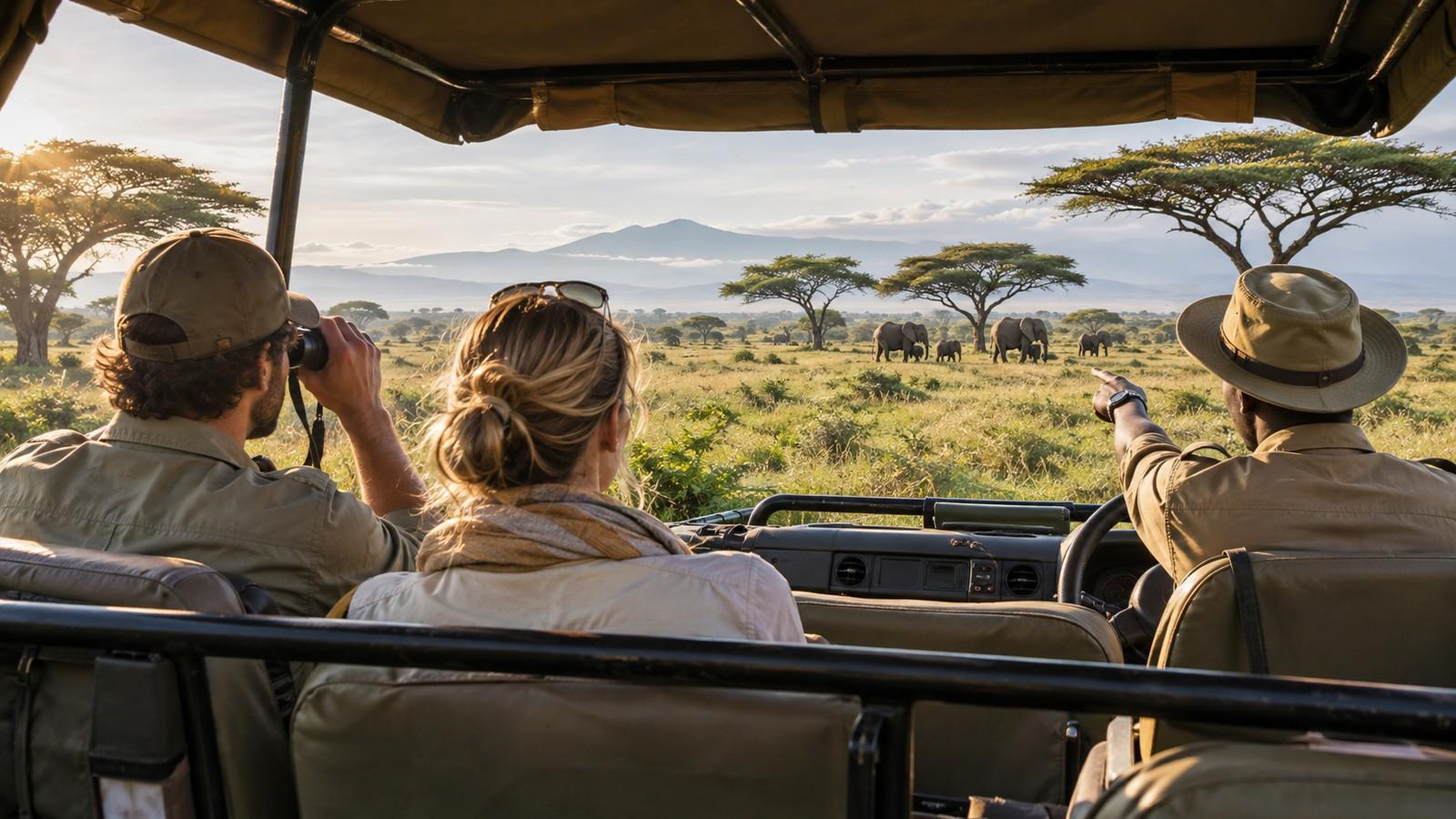
My starting recommendation for the best country for an African safari is South Africa for a balanced first trip, Kenya or Tanzania for open-plains wildlife, Botswana for a wetlands-focused journey, and Zambia for walking safaris. The right choice depends on your dates, preferred pace, and what you want your days to feel like.
You can fall in love with five countries before choosing a single camp. Then the practical questions arrive. Which region fits your vacation window? Should you prioritize wildlife drives or variety? Will those beautiful lodges work together without losing too much time in transit?
I would choose the safari experience first, then the country, and only then the room. A wonderful suite cannot fix the wrong location. Here are five countries I would put on a luxury safari shortlist, with a different reason to choose each one. The order is a planning starting point, not a claim that one country's wildlife is better than another's.
1. South Africa for a Balanced First Safari
I would start with South Africa if you want safari to be a central part of your trip without making every day about wildlife viewing. My preferred structure for that traveler is a focused safari stay with time elsewhere in the country, rather than a string of camps that deliver similar days.
For the Kruger region, seasonality deserves attention. SANParks' guide to Kruger's climate identifies April through September as the dry season, with warm days and cold nights. It explains that thinner vegetation and limited water sources traditionally make winter wildlife viewing more productive. I would consider that window first when easier visibility matters more than greener scenery.
What I would prioritize
Choose the specific reserve and guiding arrangement before comparing bathroom photos. I would ask about vehicle sharing, where drives take place, how the airstrip transfer works, and whether the room layout suits your group. A family suite and two separate rooms solve different problems, particularly when someone wants an early night.
South Africa is my first conversation for a couple whose interests are not identical. If one person wants every possible wildlife drive while the other wants more downtime, I would build around that difference. My guide to choosing safari wildlife encounters can help you identify which experiences deserve the most weight before choosing the country.
2. Kenya for the Classic Savanna Experience
Kenya belongs near the top of your list if the picture in your mind is open grassland and wildlife watching. The Kenya Tourism Board's overview of the Maasai Mara describes its grasslands, Big Five wildlife, and association with the Great Migration. That is useful context, not a promise of particular sightings on your dates.
I would choose Kenya when the safari itself is the emotional centerpiece of the trip. Rather than adding another country simply because it looks nearby on a map, I would first look at how to give your chosen area enough time. Three nights is my starting planning preference for a camp stay, with longer considered when you want photography time or a slower rhythm.
Reserve access matters more than the address
A camp described as being in the Mara region does not tell you everything you need. I would confirm its exact location, the areas included in its drives, any separate access charges, and how far the experience you care about is from camp. If a conservancy stay is proposed, ask for its specific activity and vehicle rules rather than assuming they apply everywhere.
Kenya also rewards a clear conversation about your tolerance for movement. I would compare a single well-chosen base with a two-camp combination before approving extra flights. More locations are worthwhile only when they add something you genuinely want, rather than another check-in and a similar view.
3. Tanzania for a Wildlife-Focused Journey
I would put Tanzania first when you want the safari to carry most of the itinerary. The UNESCO description of Serengeti National Park documents its expansive savanna and the annual movement of wildebeest, gazelles, and zebras followed by predators. For a traveler drawn to the scale of the plains, that landscape is part of the reason to go.
The planning question is not simply which Serengeti camp looks best. It is which location makes sense for your travel window and wildlife priorities. I would ask for a clear explanation of why each proposed camp belongs in that season's route. An attractive property name is not enough.
Resist the temptation to cover everything
My preference is a Tanzania itinerary with room to settle into the days. If adding another park means repeated early departures and long transfer days, I would compare that addition with another night in a place you already care about. Variety is valuable, but so is an afternoon when you do not have to repack.
This is also where I would separate a wildlife-led camp choice from a lodge-led one. A polished cottage, a tented suite, and an exclusive-use home are not interchangeable purchases. Start by deciding how much privacy, outdoor living, and shared social space you want, then check those exact features in the proposed category.
4. Botswana for Wetlands and a Different Daily Rhythm
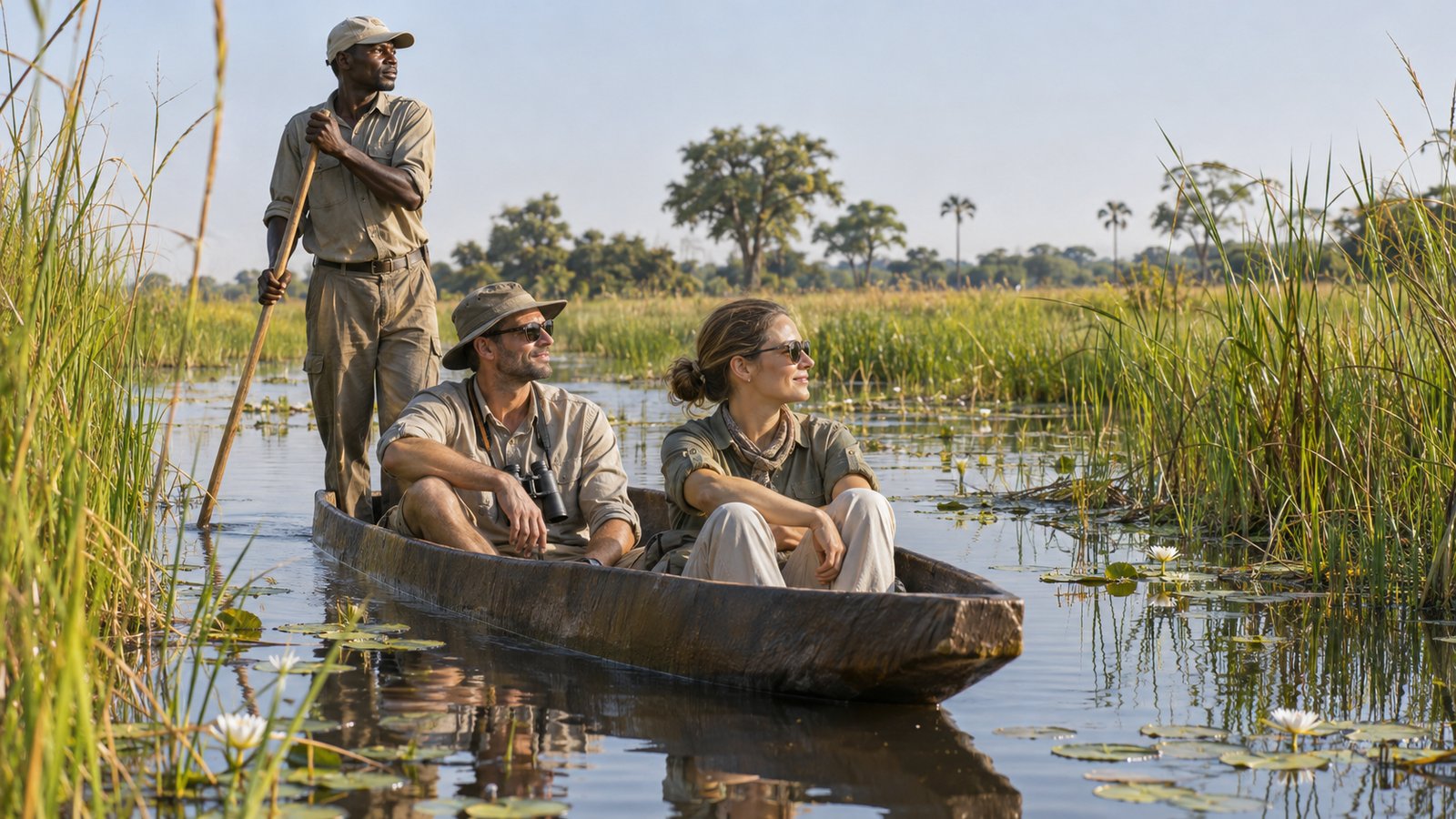
Botswana would be my first recommendation to explore if you want the safari to include a wetland landscape, not just another series of drives. The Botswana Tourism Organisation describes the Okavango Delta's wetland and dryland setting. I would use that contrast to shape a trip around different experiences rather than collecting camp names.
Water needs its own planning conversation here. UNESCO's explanation of the Okavango Delta describes permanent swamps, seasonal floodplains, and floodwater arriving during Botswana's dry winter season. Local rainfall alone does not tell you what the water experience will be like at a particular camp.
Ask what your exact camp can deliver
I would verify whether mokoro outings, boating, walking, or drives are offered at your proposed camp and during your dates. Never assume every Delta property has every activity. Water conditions and the camp's setting need to support the experience you are choosing it for.
For a two-camp trip, I would look for a meaningful contrast in habitat or daily activities. Two beautiful properties are not automatically a good pairing. If both deliver nearly the same experience, I would consider fewer moves and a longer stay instead. For me, the worthwhile upgrade is time and a stronger match, not simply a bigger room.
5. Zambia for Travelers Who Want to Walk
Zambia is the country I would discuss early with travelers who are curious about experiencing the bush on foot. Zambia Tourism's South Luangwa overview identifies the park with the origins of the walking safari. That gives it a distinct place on this shortlist, rather than making it an interchangeable alternative to the savanna trips above.
I would choose a walking-focused itinerary because you enjoy the idea of observing smaller details and learning from a guide at ground level. I would not recommend it simply because walking sounds more adventurous. Your comfort with heat, uneven ground, and the proposed walk length should shape the plan.
Match the walking to your group
Ask for the exact activity structure, participation requirements, and alternatives before deciding. A short guided walk and an itinerary built around moving between camps on foot are different commitments. For a mixed-interest couple, I would favor a proposal that explains what happens when one person prefers a drive or a quiet morning.
My starting preference is to keep this trip focused rather than bolting it onto an already crowded regional itinerary. A walking-led journey deserves its own pace. I would also confirm seasonal camp operations for the travel year before becoming attached to a particular combination.
Compare the Countries by Your Priorities
If several countries still sound right, that is normal. I would narrow the choice by asking which tradeoff you would most happily make. Do you want variety beyond safari, the broad-plains setting, water-based possibilities, or more time on foot? Those answers are more useful than a generic global ranking.
| Country | My starting recommendation | What I would resolve first |
|---|---|---|
| South Africa | A first safari within a more varied trip | Safari duration and the connection to other stops |
| Kenya | A classic savanna-focused experience | Exact camp location and wildlife-area access |
| Tanzania | A journey centered on expansive wildlife landscapes | Camp location for your dates and transfer pace |
| Botswana | A wetland-focused safari with contrasting activities | Camp-specific water conditions and activities |
| Zambia | A walking-focused safari | Walking requirements and seasonal camp operation |
I would not treat this table as a scorecard. A traveler who dislikes frequent flights may need a different route from someone happy to move for a particular landscape. Your best country is the one where the actual itinerary fits you, not the one with the most enthusiastic description.
Match the Season and Route Before Choosing Camps
If the Great Migration is your priority, start with timing rather than a hotel shortlist. The Kenya Tourism Board's guide to the Great Migration describes a year-round movement across the Mara and Serengeti ecosystem, with July through October associated with the Mara River crossing period. I would use that as a broad planning window, never as an appointment with a crossing.
Then compare the journey door to door. I want to see your arrival airport, overnight plan, onward transport, airstrip, and final camp transfer together. When a connection looks tight, I would rather discuss a buffer night than let the map make the decision. Exact schedules and baggage rules must be checked against the services proposed for your trip.
- Choose fewer bases: My starting preference is three or four nights in a camp before adding another move.
- Upgrade for a reason: Consider a private vehicle when your group wants a distinct pace, subject to the property's terms and availability.
- Check the room details: Confirm bedding, steps, cooling arrangements, bathroom layout, and distance from shared areas.
- Protect recovery time: Avoid making the first full safari day carry every expectation after a long international journey.
I would begin the planning conversation as soon as your dates and main priorities are clear, especially if you need several rooms together or a specific room layout. There is no universal lead time that makes every camp available. A shortlist needs to be tested against real inventory, not treated as a promise.
What a Luxury African Safari Costs
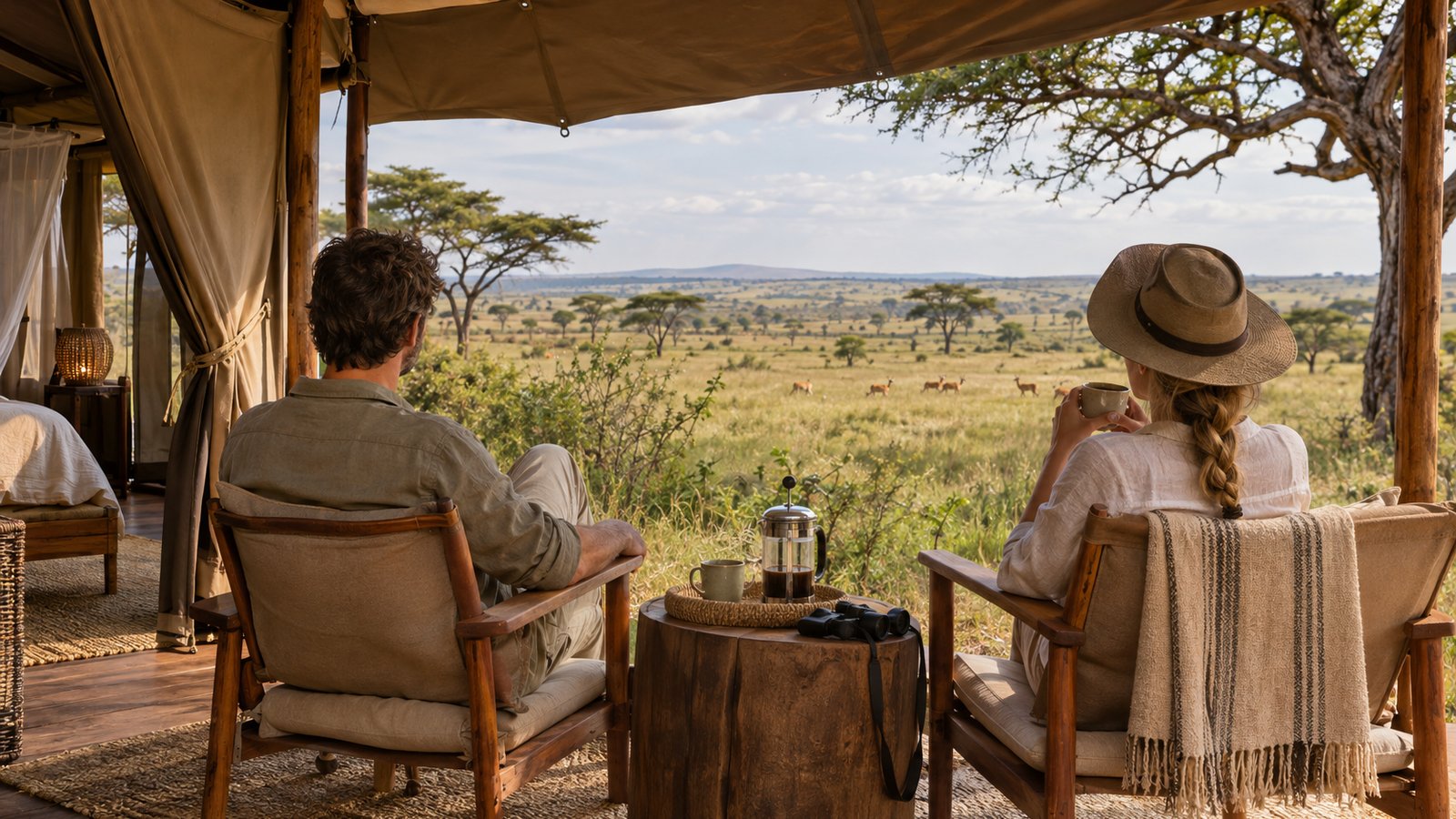
There is no defensible single total for all five countries before choosing your route and accommodation level. To give you a verified high-end benchmark, seven nights at the published 2027 adult sharing rates for Singita Faru Faru, Sabora, or Sasakwa in Tanzania work out to approximately $16,500 to $26,300 per person for the lodge stay, depending on property and season. This is a specific upper-luxury comparison, not an Africa-wide average.
Those examples use standard accommodation rates, not promotional discounts. The published inclusions cover accommodation, meals and beverages, scheduled game drives, and specified return airstrip road transfers. Wildlife fees, tourism and carbon levies, travel to the properties, wellness treatments, and additional experiences are separate. International airfare, other hotels, gratuities, and insurance are not included in that lodge-only estimate.
Your actual trip cost can vary significantly with the number of travelers, travel dates and season, length, country and itinerary, camp or suite category, private-use arrangements, airfare, transportation and transfers, tours and experiences, dining inclusions, level of luxury, and current availability. The benchmark is not a quote or a guaranteed price. A complete trip across these choices cannot be accurately estimated until those pieces are specified.
I would compare complete proposals on the same basis rather than rank countries by one advertised nightly rate. For a more detailed budgeting framework, use my guide to African safari trip costs alongside the specific inclusions and exclusions in your proposal.
Frequently Asked Questions
Which country is best for a first African safari?
South Africa is my starting recommendation if you want safari within a varied vacation. I would consider Kenya or Tanzania first if the open-plains experience is the main reason for traveling. Botswana or Zambia may be a stronger match when wetlands or walking matter most. First-time status alone should not decide the destination.
Is a jungle safari the same as an African safari?
Not necessarily. The Serengeti plains, the Mara grasslands, and the Okavango wetlands represent different settings, not one interchangeable jungle experience. I would ask what you want to see and how you want to explore before responding to a request for the world's best jungle safari. The landscape is part of the choice.
Why is white clothing discouraged on safari?
White stands out against natural surroundings and is difficult to keep clean in dusty conditions. andBeyond's safari packing advice recommends neutral, earthy colors and distinguishes vehicle outings from nature walks, where blending in matters more. Follow your camp's activity-specific instructions rather than treating every safari as having the same dress rule.
Should I choose the biggest safari park?
I would not choose by size. First clarify whether a comparison means a national park, a broader ecosystem, or a multi-country itinerary. Those are different things. More land on a map does not answer whether your camp, season, or transfer plan fits the experience you want.
Which African safari company is best?
I would not give one operator a universal ranking across these different trips. Compare the exact camps, guiding arrangements, room categories, activities, and transport in the proposal. A familiar name is useful context, but it is not a substitute for checking how your particular journey works.
Choose Your Safari with Explore Effortlessly
You do not need to arrive with the country decided. Bring your dates, who is traveling, the wildlife or landscapes you care about, and the compromises you do not want to make. Explore Effortlessly can connect those priorities with a custom safari plan and coordinated arrangements.
Before you inquire, my guide to planning an African safari can help organize the decisions. Once the route takes shape, review what to pack for your safari against your confirmed camp and transport instructions. I would rather help you choose a few things well than build a journey around every appealing possibility.
Start Planning My Safari and tell me what you want your days in Africa to feel like.
For more thoughtful trip ideas, join the Explore Effortlessly newsletter.
About the Author
Hi, I'm Karrah Kazravan, owner and lead travel advisor at Explore Effortlessly, an award winning Miami agency serving clients nationwide. I design custom journeys for busy travelers who want confident recommendations and thoughtful coordination. I have traveled to more than 67 countries across all seven continents and am a Nexion Circle of Excellence Top 5% advisor, ASTA Verified Travel Advisor, Certified Travel Associate, and CLIA Accredited Cruise Counselor.