You're probably in the same place most safari clients start. You know you want Africa. You know you want it done well. Then the tabs multiply. Kenya or Tanzania. Botswana or South Africa. Tented camp or lodge. Fly-in or drive. Private guide or shared vehicle. Suddenly a bucket-list trip starts to feel like a full-time project.
That's exactly why safari planning needs strategy before it needs romance. The difference between a trip that feels effortless and one that feels overbuilt usually comes down to a few early decisions. Get those right, and the rest follows. Get them wrong, and even a beautiful property can't fix a rushed, fragmented itinerary.
Your Guide to Planning a Seamless African Safari
A safari isn't hard because the idea is complicated. It's hard because the details are. Remote camps, internal flights, transfer timing, park rules, luggage limits, seasonality, and pacing all matter more here than they do on a standard luxury vacation. If you are combining safari camps with another destination, my multi-stop journey planning guide helps you think through the handoffs.
Busy professionals often make the same mistake. They start with the dream image instead of the trip design. One minute it's elephants at sunset. The next it's a spreadsheet with five countries jammed into a short trip and no room to breathe.
Here's the framework I'd use if you asked me how to plan an African safari without wasting time:
- Start with the trip purpose: Honeymoon, family celebration, milestone birthday, or a first safari changes everything.
- Choose one region well: For first-timers, a focused itinerary usually beats a country-hopping circuit.
- Prioritize access, not just scenery: The difference between a public park and a private conservancy can shape the entire experience.
- Set realistic budget expectations early: Luxury safari pricing is driven by season, wildlife access, camp level, and transfer style.
- Respect the logistics: Bush flights, soft luggage rules, and remote-area coordination aren't side notes. They are the trip.
If the Great Migration is part of your vision, it helps to understand the timing and movement patterns before you choose dates and camps. A strong starting point is this guide to planning around the Great Migration in Africa.
Practical rule: A safari should feel curated, not crowded.
The First Step Defining Your Safari Dream
Before you look at a map, define what you want this trip to feel like.
That sounds obvious, but it's often overlooked. They ask where to go before they ask what kind of experience they want. That's backwards. A honeymoon safari and a multigenerational safari might both happen in East Africa, but they should not be designed the same way.
Start with the why
Ask yourself a few direct questions:
- Who is traveling: A couple, extended family, or a small private group?
- What matters most: Big game, privacy, photography, conservation, lighter adventure, or a property with a strong spa and pool scene?
- How do you travel best: Slow and immersive, or active with several moving parts?
- What kind of luxury do you want: Classic canvas-and-lantern safari atmosphere, or sleek design with a plunge pool and polished wine list?
These answers narrow the field fast. They also stop you from booking based on reputation alone.
Decide your pace honestly
Safari days start early. Transfer days take longer than people expect. And the best camps are often in places that are gloriously remote.
If you want calm, don't build a trip that demands constant movement. If you love variety, choose different ecosystems with intention, not because the map makes them look close.
The best safari itineraries feel edited. Every stop earns its place.
Choosing Your Destination and Season Wisely
You land in Africa for a long-awaited safari and spend the first two days in road transfers, crowded sightings, and the wrong weather window. That mistake starts here, with destination and timing. Get these choices right and the rest of the trip becomes much easier to design well.
East Africa for scale, drama, and the classic safari image
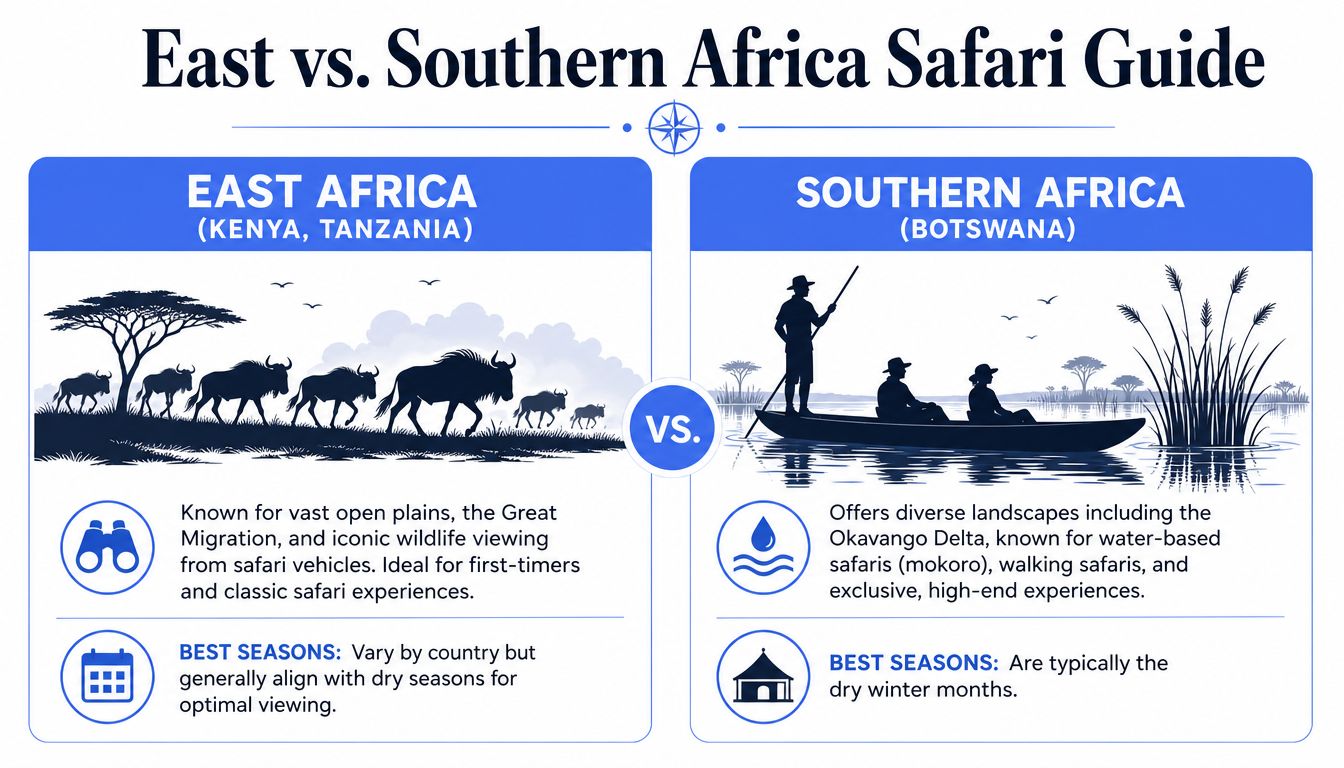
Kenya and Tanzania deliver the safari many travelers have in mind before they ever book. Open plains, large herds, strong predator action, and a sense of visual grandeur that feels unmistakably African.
For a first luxury safari, East Africa works best if you stay disciplined. Pick one country. Build around two or three areas that do different things well. Do not try to cram Kenya, Tanzania, gorillas, and the beach into one short trip just because they all sit on the same side of the continent.
If the Great Migration is part of your vision, plan it with precision rather than relying on broad seasonal clichés. This guide to timing the Great Migration in Africa is a useful starting point, but the crucial decision is not just month. It is which region of the ecosystem gives you the experience you want, river crossings, calving season, or big herd movement.
Southern Africa for exclusivity, variety, and stronger logistics
Southern Africa usually suits travelers who want a more polished logistical flow and a broader mix of experiences within one trip.
South Africa is the easiest entry point if you want safari paired with wine country, Cape Town, or a shorter travel schedule. Botswana is for clients who value low-density tourism, fly-in camps, and a more private bush experience. Zambia is a smart choice for returning safari travelers who highly value guiding quality and a camp rhythm that feels less produced.
This is also where fly-in safaris often come into their own. Instead of losing full days to rough road transfers, you use light aircraft to move efficiently between remote camps. You see more. You waste less time. And the trip feels calmer, not busier.
Season decides the quality of the experience
Month matters almost as much as country.
Dry season, often July through October in many major safari regions, is the easiest place to start if your priority is concentrated wildlife viewing. Water is scarce, vegetation is thinner, and animals are easier to find. A safari seasonality overview from Discover Africa explains why these drier months are so consistently strong for game viewing across several top regions (best time to go on safari by destination).
Peak season is not automatically the best choice for every luxury traveler, though. Shoulder months can be the smarter buy if you prefer sharper value, fewer vehicles, and access to higher-tier camps for the same overall budget. Green season can also be outstanding for photographers, birders, and travelers who care as much about atmosphere and light as they do about ticking off species.
Private conservancy versus national park
This decision shapes the trip more than many first-time safari travelers realize.
National parks give you scale, famous names, and in some cases superb wildlife density. They also come with rules designed for public access. Private conservancies usually offer a more flexible safari. That can mean off-road driving where permitted, night drives, guided walks, fewer vehicles at sightings, and a day planned around your interests instead of park operating patterns.
For luxury clients, that difference is often decisive. If you want privacy, better photographic positioning, and the freedom to stay out after dark when the bush changes character completely, prioritize conservancies and private reserves. Use national parks selectively, usually for marquee ecosystems or a specific seasonal event.
The best itineraries often combine both. Use a major park for scale and headline wildlife. Then shift to a private conservancy or reserve for intimacy, access, and a far better guiding format. That is how experienced safari planners turn a good trip into one that feels intelligently designed.
Selecting Your Safari Style and Accommodation
Accommodation shapes the mood of the entire safari. Don't treat it as a backdrop.
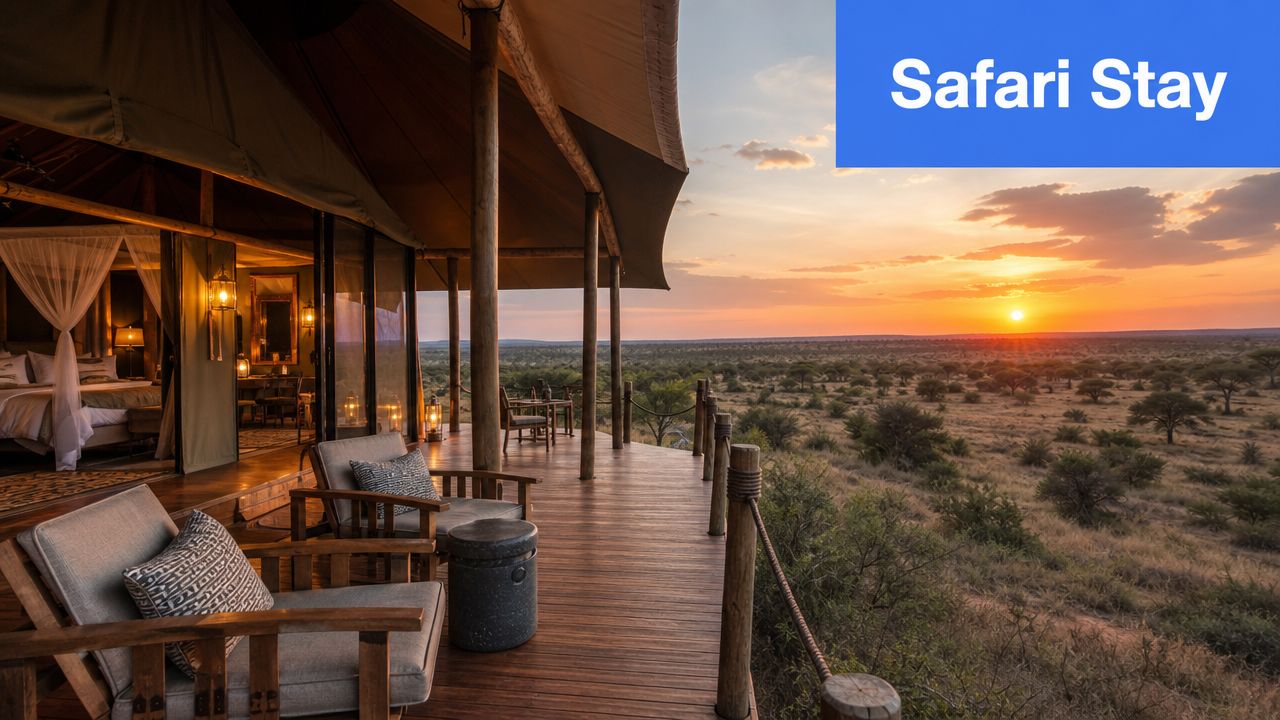
The word “camp” can mean polished nostalgia with Persian rugs and brass fittings. It can also mean a contemporary hideaway with floor-to-ceiling views and a plunge pool. Both can be luxurious. They just appeal to different travelers.
For a closer look at what a fully designed high-end safari can include, this overview of a luxury African safari tour is useful context.
The main accommodation personalities
| Style | Best for | What it feels like |
|---|---|---|
| Classic tented camp | Traditionalists, honeymooners, first-timers who want atmosphere | Romantic, textured, deeply connected to the bush |
| Contemporary safari lodge | Design-minded travelers, wellness-focused couples | Architectural, spacious, often more resort-like |
| Private villa or exclusive-use house | Families, celebrations, small groups | Flexible, private, ideal for custom timing |
| Intimate owner-run camp | Returning safari travelers, serious wildlife lovers | Personal, guide-driven, less performative luxury |
Match the property to the traveler
A family with varied ages usually benefits from flexibility, private use options, and space between rooms. A honeymoon couple may care more about privacy, quiet, and beautiful transitions from game drive to dinner. A photography-focused traveler may care less about spa design and more about vehicle positioning, guide skill, and where the camp sits relative to wildlife corridors.
The best camp isn't the most expensive one. It's the one built for the way you travel.
Your safari style is also about activities
Some travelers want the classic vehicle-based safari and little else. Others want variety built into the experience:
- Mokoro safaris: Best for travelers drawn to Botswana's water-based perspective.
- Walking safaris: Ideal for clients who care about guiding, tracking, and a deeper sense of place.
- Hot air ballooning: A strong fit for milestone trips and first safaris that want one cinematic moment.
- Private vehicles: Better for photographers, families, and anyone who doesn't want to compromise on pace.
Luxury is not one look. It's alignment. The right property, in the right setting, with the right activity mix, creates that effortless feeling clients are after.
Crafting the Perfect Itinerary and Pace
You land in East Africa after a long international flight, spend one night in a city hotel, then start a chain of road transfers, regional flights, and camp changes every 48 hours. By day five, the trip feels like logistics with wildlife in between. That is how expensive safaris disappoint.
The best luxury itineraries are restrained. They protect your time, reduce friction, and give each place enough room to deliver.
Why less usually delivers more
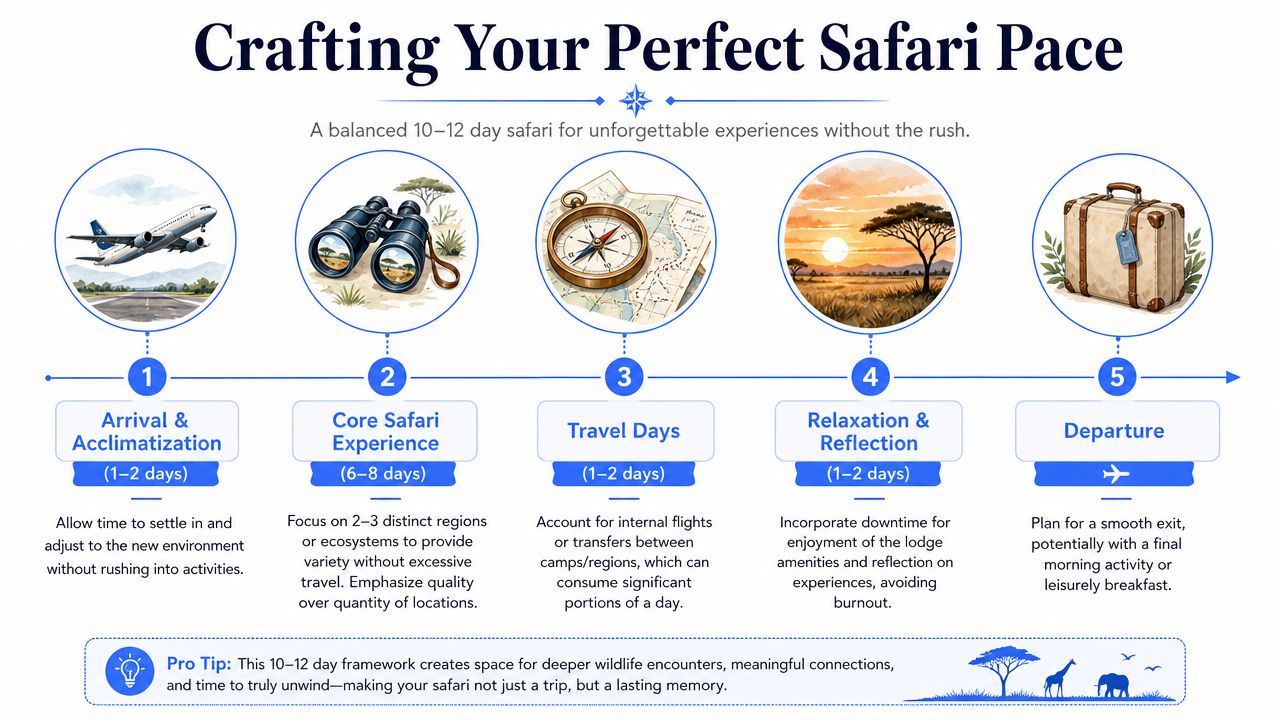
For most first-time luxury safari travelers, I recommend 9 to 11 nights with 2, at most 3, camps. Stay at least 3 nights in each location. Four is often better.
That structure gives you what matters. Time to settle in with a guide, understand the terrain, adjust to early starts, and stop treating every game drive like a race. It also leaves room for the unexpected, which is where the best safari moments usually happen.
A rushed itinerary does the opposite. You keep packing, keep moving, and keep arriving just as you should be relaxing into the place.
The case against country collecting
Do not try to cover multiple safari countries on a first trip unless the routing has a clear purpose and enough time behind it. “Kenya plus Tanzania plus gorillas plus Cape Town” sounds impressive on paper. In practice, it usually means airport lounges, baggage limits, and wasted daylight.
One country done properly is stronger than a thin sampler of four. You get better guiding continuity, fewer flight variables, and a trip that feels coherent rather than stitched together. If you want variety, create it within one country by combining two different ecosystems or pairing a national park with a private conservancy.
That distinction matters at the luxury end. A national park gives you scale and classic scenery. A private conservancy gives you flexibility, lower vehicle density, and activities that are often restricted in the park itself, such as off-road driving, night drives, and more private wildlife viewing. The smartest itineraries use both.
A good safari has rhythm. Arrive, settle, immerse, shift once, immerse again, then leave without feeling rushed.
Build around transfer logic, not just a wish list
Safari maps can be deceptive. Two camps that look close may require a bush flight, a road transfer, and half a day of movement. That is why itinerary design starts with aviation and road access, then works back to wildlife goals.
Fly-in safaris usually win for high-end travelers because they protect the one asset you cannot replace. Time. They also reduce fatigue and make it realistic to combine remote, high-quality camps without turning the trip into a transport exercise. The trade-off is baggage discipline and tighter timing, which an experienced advisor plans for from the start.
Road transfers still have their place, especially in areas where the drive itself adds value. But if a long drive exists only because the routing is inefficient, cut it.
Privacy changes the pace of the trip
If you care about photography, family flexibility, or not waiting for strangers at every sighting, book a private vehicle where it counts. In many top camps and reserves, that option is priced separately. For example, private vehicles at Singita properties are offered at an additional daily rate, with details varying by lodge and season on the Singita safari rates and inclusions pages. On shared drives, smaller camps and low guest-to-vehicle ratios usually produce a better experience than large properties moving many guests at once.
The same rule applies to camp size. Smaller camps generally feel calmer, move faster, and protect the sense of exclusivity clients expect at this level. A camp with eight to twelve guests creates a very different atmosphere from one with several dozen.
The headline is simple. Fewer moves, smarter routing, and the right mix of park and conservancy will improve your safari more than adding another stop ever will.
Budgeting Booking and Health Essentials
A luxury safari budget is set by access, privacy, and logistics. The fastest way to overspend is to chase a lower nightly rate while accepting weak routing, too many camp changes, or long ground transfers that drain the trip.
For a high-end safari with strong camps, light-aircraft transfers between remote areas, and at least some private guiding, expect roughly $1,000 to $2,500 per person per day, excluding international flights (luxury safari cost range). Below that range, compromises usually show up in the wrong places. Inferior locations, crowded vehicles, or awkward transfer days.
What matters is where the money goes. I would rather see a client stay one night less and book the right conservancy or concession than stretch the trip with weaker properties. In luxury safari planning, access beats quantity almost every time.
Build the budget around the items clients forget
Nightly camp rates are only the visible part of the spend. The overlooked costs are usually charter or scheduled bush flights, premium park or conservancy fees, private vehicles, premium drinks, laundry exceptions, spa treatments, and gratuities.
Tipping deserves its own line in the budget. Camps are remote, staff standards are high, and trying to sort gratuities at the end without a plan is clumsy. Ask your advisor for a property-by-property tipping framework before you pay the final balance, and carry the right mix of cash if the camps recommend cash tipping. Do not leave this to guesswork.
International flights also need attention early. If you are using business class and specific carriers or routing matter to you, book long-haul air as soon as safari dates are firm. The best safari itinerary can still be undermined by poor international flight timing, forced overnights, or weak baggage protection on separate tickets.
Book the right trip early
The best luxury safari inventory goes first. That is especially true for migration periods, festive season, and the top small camps in private conservancies and low-density concessions. If you want specific camps, preferred room categories, and clean flight connections, start early and confirm early.
As a rule, reserve prime safari dates 9 to 12 months out. For Christmas, New Year, and gorilla trekking, start earlier. Waiting does not create negotiating power at the top end of the market. It limits choice and forces compromises that are expensive to fix later.
This is also where an advisor earns their fee. Good advisors do more than secure a room. They hold the right space, coordinate internal flights, match cancellation terms across suppliers, and protect the trip from avoidable friction.
Handle visas, vaccines, and insurance in the right order
Health and entry requirements are simple if you address them early. They become a mess when clients leave them until tickets are issued and camps are confirmed.
Check passport validity first, then visa rules, then vaccination and malaria guidance for each country on the itinerary. Use official government sources and your travel clinic, not forum advice. Requirements change, and cross-border itineraries can have different entry rules from a single-country safari.
Travel insurance should be purchased with the safari deposit, not the week before departure. On a luxury safari, you want coverage that matches the actual value of the trip, including charter flights, medical evacuation, cancellation, and baggage delays on multi-flight itineraries.
One practical final step. Review baggage rules before you buy the last pieces for the trip, especially if your itinerary includes bush flights. A detailed safari packing list for fly-in trips will help you avoid buying luggage that will be rejected at the airstrip.
Packing Photography and Conservation Insights
Luxury safari packing should be edited, not ambitious.
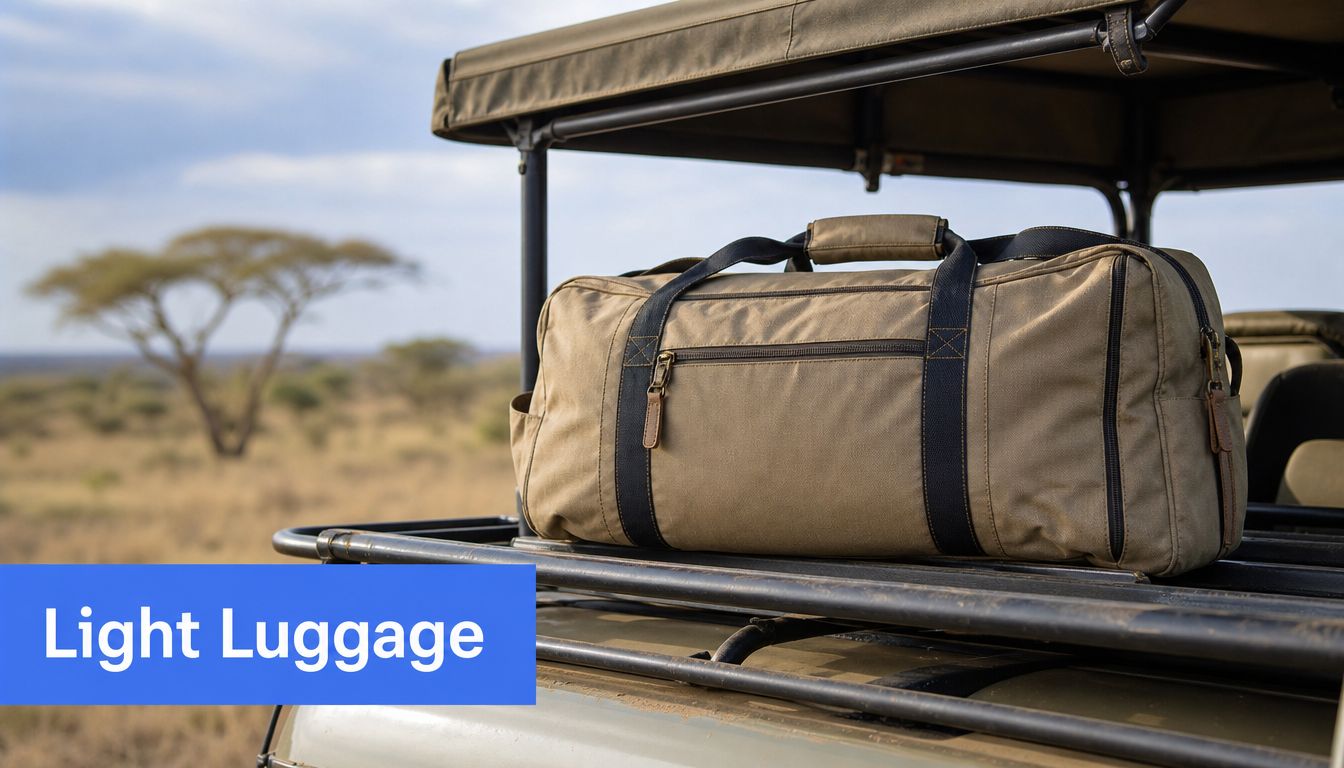
Most luxury fly-in safaris use small aircraft, and the luggage rule is strict. The allowance is 30 lbs, or approximately 13.6 kg, per person, and it needs to be in soft-shelled luggage (fly-in safari luggage rules). Hard cases and oversized wardrobes are how you start a safari in a bad mood.
If you want a practical starting point, use a dedicated safari packing list.
What to pack instead of overpacking
Choose neutral, washable pieces that layer easily. Think function with polish, not outfit changes for every drive.
- Soft duffel first: If the bag itself doesn't comply, nothing else matters.
- Neutral tones: Better for the environment and easier to repeat.
- Light layers: Morning drives can feel very different from midday.
- Simple footwear: One practical pair usually does more work than several stylish ones.
Pack for movement, dust, and small aircraft. Not for a fashion rotation.
Photography and meaningful travel
If photography is central to the trip, say that at the planning stage. That can shape camp choice, vehicle setup, and guide pairing. A standard game-drive seat and a photography-led safari are not the same product.
The final layer is conservation. The best luxury safaris aren't just beautiful. They are rooted in ecosystems and communities that need thoughtful tourism to remain protected. Choosing operators and camps with serious conservation practices gives the trip more weight. You're not only consuming the experience. You're helping sustain it.
Frequently Asked Questions About Safari Planning
How long should a first safari be
Plan for at least 10 days if you want the trip to feel worthwhile, with many experts recommending a minimum of 8 days at absolute minimum. That timing helps with long-haul travel recovery and gives you enough nights in each location to settle in rather than skim.
Should I combine multiple countries on my first trip
Usually, no. A focused single-country safari is almost always better than a rushed multi-country circuit. You'll spend less time in transit and more time enjoying the experience.
Is a private conservancy worth it
For many luxury travelers, yes. Conservancies can offer off-road access, night drives, and a more exclusive rhythm than public parks. If you value privacy and flexibility, this is one of the most important decisions you'll make.
Do I need a private vehicle
Not always, but it's worth serious consideration for families, photographers, honeymooners, and anyone who doesn't want their day shaped by strangers' preferences. If you stay with a shared vehicle, keep group size in mind and avoid setups that feel crowded.
How early should I book
For peak safari dates, plan on 6 to 12 months in advance. For gorilla trekking or holiday travel, 12+ months is the safer move. The best camps don't wait around.
Are luxury safaris suitable for families with children?
Absolutely, when planned correctly. I would check each camp’s family room layout, game-drive rules and private-vehicle policy before deciding where to stay. Singita Ebony Lodge, for example, welcomes children of all ages and has family suites, but a guide decides whether children can join game activities. Its private-vehicle rules also depend on family size and the children’s ages. Confirm each property’s current policy before committing.
What support should I expect
A well-planned safari should include vetted local operators, clear transfer coordination, document backups that are accessible offline, and on-the-ground support through trusted partners. That doesn't make travel risk-free. It does make it more organized and far less stressful.
If you want a safari that feels polished from the first flight to the final bush breakfast, work with an advisor who understands the moving parts. Plan my luxury trip with Explore Effortlessly. I work with clients nationwide through virtual consultations and design bespoke itineraries built around your pace, priorities, and preferred level of luxury.
Hi, I'm Karrah, owner, founder, and lead travel advisor at Explore Effortlessly, a luxury award winning travel agency based in Miami.
I specialize in designing bespoke, high touch itineraries to bucket list destinations around the world. Every trip is curated with intention, insight, and smooth logistics from start to finish.
From luxury cruises and private villas to honeymoons, safaris, and once in a lifetime journeys, my role is to simplify the planning process while elevating every detail.
If you'd like more luxury travel planning insight, join the newsletter here.