If you're deciding what to pack for an African safari, start with a soft-sided duffel that fits strict bush-flight limits, often 15 kg (33 lb) in East Africa and 20 kg (44 lb) in Southern Africa, including carry-on and camera gear. Add breathable neutral layers, sun and insect protection, reliable medications, optical gear, and one warm insulating layer.
You'll use nearly everything from the first cool departure before sunrise to the dusty hours in an open vehicle, the quiet pause at a remote lodge, and dinner after sunset. The smartest safari wardrobe isn't a large one. It's a compact collection of pieces that can handle heat, wind, dust, laundry logistics, and changing plans without sacrificing comfort or polish.
This guide focuses on the items that matter most, then adjusts them for safari style, season, altitude, lodge laundry, and fly-in transfers. If you're researching safari packing essentials, keep the central rule in mind: pack for the drive, not just the destination.
The essentials at a glance:
- Soft-sided luggage: Choose a crushable duffel that meets your specific aircraft restrictions.
- Layered clothing: Neutral, breathable pieces work from cool mornings to warm afternoons.
- Protection: Pack sunscreen, a wide-brimmed hat, sunglasses, and insect repellent.
- Health supplies: Keep prescriptions, basic medications, and your medical documentation accessible.
- Field gear: Bring binoculars, protected camera equipment, and a compact day pack.
- Advisor support: I work with clients nationwide through virtual consultations, matching your packing plan to the actual route, camps, transfers, and season.
For a safari itinerary and logistics plan that fits your needs, contact Explore Effortlessly to plan your luxury trip.
1. Neutral-Toned, Lightweight Performance Clothing
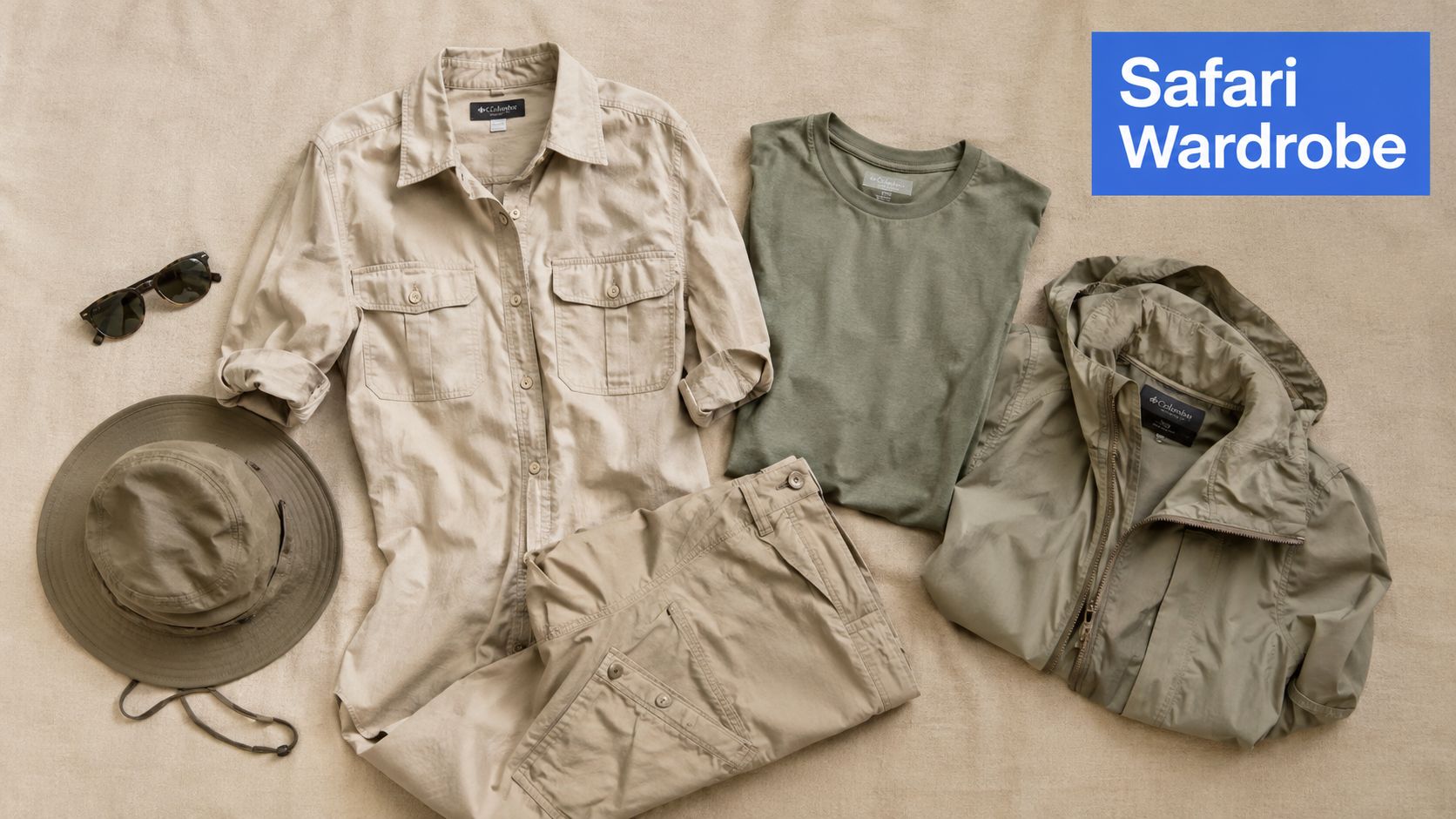
Safari clothing should look polished at the lodge and function in an open vehicle. Choose soft grays, taupes, khakis, muted greens, and other earth tones that sit in the environment. Avoid dark blue and black, which safari guidance associates with tsetse flies, and skip camouflage, which can create problems in some southern African destinations. Neutral safari colors can help reduce insect attraction and heat absorption.
Select breathable shirts, lightweight trousers, and shorts that tolerate dust and repeated wear. Merino blends, technical cotton, and quick-drying performance fabrics are practical choices, but the best fabric depends on your itinerary and skin sensitivity. Long sleeves and full-length trousers are especially useful on early and evening drives, when the air is cooler and insects are more active.
Build a compact safari wardrobe
You don't need a separate outfit for every lodge dinner. Most properties keep evenings relaxed, and lodge laundry can reduce the amount you carry. Pack pieces that coordinate, resist wrinkles, and can move from a game drive to lunch without looking overly technical.
- Shirts: Bring lightweight long-sleeve and short-sleeve options in neutral tones.
- Bottoms: Choose comfortable trousers, shorts, or convertible styles with secure pockets.
- Evening layer: Add a neutral cardigan, fleece, or soft-shell layer for cool air and interiors.
- Footwear: Closed walking shoes are appropriate for camp and walking activities, while sandals can be useful at relaxed lodges.
Practical rule: Build a capsule wardrobe, not a costume. Safari style should feel comfortable, understated, and ready for dust.
2. Premium Binoculars and Telephoto Lens Setup
Wildlife rarely performs at arm's length. A lion may rest beyond the vehicle, a leopard may appear in shadow, or a bird may sit high in a distant tree. Binoculars give you a better view without asking the guide to reposition the vehicle, while a telephoto lens lets you photograph details without carrying an oversized kit into every activity.
A practical binocular specification for safari is 10×42, and a reliable field torch should provide at least 200 lumens, according to safari gear guidance from The Safari Store. Choose binoculars that feel comfortable in your hands and that you can use quickly. Swarovski and Zeiss are respected options, but a well-fitted pair from another reputable manufacturer can still serve you beautifully.
Protect the equipment from dust
Camera gear needs a packing strategy of its own. Use a padded, weather-resistant insert, keep lens caps attached, and carry a microfiber cloth and lens-cleaning kit. A camera harness or secure clip is more practical than repeatedly reaching into a bag on a bumpy drive.
If you're using a mirrorless or DSLR camera, select one telephoto lens that matches your style rather than bringing every lens you own. A longer lens can be useful for distant wildlife, but it also adds weight and may compete with clothing under a strict aircraft allowance.
- Binoculars: Keep them in your day pack or around your neck, never buried in checked luggage.
- Camera body: Carry it in a padded insert with a spare battery accessible.
- Lens care: Pack cleaning cloths and a protective case because dust is persistent.
- Power: Confirm charging arrangements for each camp before departure.
For a route centered on exceptional wildlife viewing, explore African safari planning for the Great Migration before deciding how much camera equipment to bring.

3. High-SPF Sunscreen and Lip Protection
Sun protection belongs in your day pack, not at the bottom of your luggage. Open vehicles expose your face, hands, neck, and arms for hours, and the combination of sun, wind, and dust can leave skin uncomfortable before lunchtime.
Choose a broad-spectrum sunscreen with at least SPF 30, and bring a formula you already know your skin tolerates. An EPA-registered insect repellent containing 20–30% DEET or 20% picaridin is also recommended in safari health guidance, with those concentrations providing several hours of protection per application. Increasing DEET above 30% doesn't add useful protection, according to safari first-aid guidance.
Make reapplication easy
A facial sunscreen stick is easier to use in a vehicle than a lotion bottle. Add lip balm with sun protection, a wide-brimmed hat, and polarized sunglasses. If you'll spend time at a lodge pool or on the coast after the safari, choose products with environmental considerations appropriate to the destination and activity.
Keep a small sunscreen and lip balm within reach during every drive. Your guide may stop for an extended sighting, and the vehicle's shade can change as the day progresses.
Sun protection is a comfort item as much as a health item. Apply it before departure, then keep it accessible for the rest of the day.
For travelers refining a sensitive-skin routine, this guide to the best body sunscreen for dark spots may help you compare options before departure.
4. Lightweight, Packable Down Jacket or Insulating Layer
A safari day can begin in cool air and end in warm sunshine. South Africa illustrates the range clearly. Summer afternoons can average around 31°C (88°F) and may reach 40°C (104°F), while winter mornings can fall to about 9°C (48°F) before warming to roughly 25°C (77°F) later in the day, as outlined in safari climate and packing guidance.
That range makes a packable insulating layer more useful than a bulky sweater. Choose a lightweight down jacket or synthetic alternative that compresses easily and can be worn over a long-sleeve shirt. Synthetic insulation is the better choice if your itinerary includes humid conditions or a higher chance of unexpected rain. Down performs well in dry cold but loses efficiency when wet.
Keep warmth close at hand
Put the jacket in your carry-on or day pack for the first morning. You shouldn't have to open your main duffel on a dark airstrip or ask a driver to retrieve it while everyone else is ready to depart.
A fleece or soft-shell can work well for travelers who prefer a less compressible but versatile layer. At high-altitude destinations, including the Mt. Kenya region or Drakensberg Mountains, keep a warm layer with you even during warmer seasons.
The right layer also supports luxury travel expectations. It keeps you comfortable during a pre-dawn transfer, looks presentable at breakfast, and takes up far less room than several heavy garments.
5. Prescription Glasses, Backup Pair, and Specialty Eyewear
Dust, wind, glare, and remote locations make eyewear a priority. If your glasses break or disappear, replacement may not be straightforward, particularly between bush flights and remote camps. Pack your primary pair, a backup pair, and sunglasses that suit your vision needs.
Prescription sunglasses are the cleanest solution for travelers who need correction. Clip-on lenses can work well when you want to keep your regular frames, while polarized lenses reduce glare on open drives. Choose frames that sit securely and don't pinch when worn for long periods.
Pack every vision essential in your carry-on
Keep a hard case, cleaning cloth, and lens cleaner with your medication and travel documents. Don't place your only pair in checked baggage. If you wear contacts, bring glasses as well, along with sufficient lenses and solution. Dust can make contacts uncomfortable, and switching to glasses gives your eyes a break.
A backup pair doesn't need to be fashion-forward, but it should be current and comfortable. Order it early enough to test the fit and prescription at home. Neutral frames in tortoiseshell, gray, or muted brown coordinate easily with safari clothing and won't dominate photographs.
Your eyewear is field equipment. Treat it like the binoculars, not like an accessory you can replace at the next airport.
Consider how often you'll move between vehicles, airstrips, boats, and lodges. A secure case protects the lenses during transitions and prevents small scratches from becoming a daily irritation.
6. Lightweight Sleepwear and Quick-Dry Undergarments
Luxury lodges provide comfortable beds and excellent linens, but sleeping conditions vary by region, altitude, tent design, and season. Lightweight merino or technical sleepwear gives you more control than traditional cotton pajamas, especially when nights feel warm or mornings are cool.
Quick-dry undergarments and socks also reduce the amount you need to carry. Lodge laundry is helpful, but service policies vary, and undergarments may not always be included. Pack enough for a comfortable rotation and plan to wash a small item yourself if needed.
Choose fabrics that earn their space
Merino wool regulates temperature and resists odor, while technical synthetics dry quickly in humid conditions. Cotton feels familiar, but it can hold moisture and become uncomfortable during warm nights or active days.
A practical sleep and undergarment kit might include:
- Underwear: Select lightweight, breathable pieces that dry easily.
- Socks: Bring comfortable pairs suited to closed walking shoes and camp conditions.
- Sleepwear: Choose a thin technical or merino set rather than bulky pajamas.
- Between-activity clothing: Add comfortable shorts or relaxed trousers for lodge downtime.
Lodge laundry is one of the best ways to keep luggage manageable, but don't assume every property handles every garment. Confirm the service before departure and pack a small amount of detergent if you prefer to wash personal items privately.
A bespoke itinerary helps here. A single lodge stay creates different packing needs from a multi-camp route with repeated air transfers, and your clothing plan should reflect that difference.
7. Specialized Safari Hat or Wide-Brimmed Hat
An open vehicle exposes your face and neck to sun, wind, and dust. A wide-brimmed hat offers more coverage than a baseball cap, particularly at the back of the neck and around the ears. Choose a neutral, crushable style with a secure retention system so it doesn't lift away when the vehicle moves.
Tilley hats are a practical example because they're durable and packable. Outdoor Research and Arc'teryx also make lightweight hats designed for outdoor conditions. The brand matters less than the fit, coverage, breathability, and ability to survive being packed.
Make it vehicle-ready
Test the hat before travel. You should be able to look through binoculars, turn your head, and settle into a vehicle seat without the brim constantly blocking your view. An adjustable chin strap or elastic retention cord is useful when wind picks up.
Avoid bright colors, oversized logos, and reflective trim. Subtle colors make it easier to observe wildlife without creating visual distractions. A second casual hat can be purchased locally if you want a change for lodge time, but your primary protective hat should travel with you from home.
A hat that blows off during the first drive is a souvenir, not a packing success.
Keep the hat accessible rather than compressing it beneath shoes and toiletries. If it loses its shape, gentle reshaping and air-drying usually work better than aggressive ironing or heat.
8. Premium Insect Repellent and Malaria Prophylaxis
Insect protection needs to work alongside clothing, not replace it. Use repellent on exposed skin and around clothing edges, then wear long sleeves and trousers during early and evening activities. A familiar product is preferable to an untested formula that could irritate your skin far from home.
Choose an EPA-registered repellent with 20–30% DEET or 20% picaridin, concentrations identified in safari health guidance as providing several hours of protection. Reapply according to the product directions, particularly after swimming or heavy sweating. Test products on a small area of skin and be mindful that DEET can affect some synthetic fabrics and finishes.
Treat malaria prevention as a medical decision
Malaria prophylaxis depends on your destinations, health history, medications, and itinerary. Discuss the route with a qualified medical professional before departure rather than choosing medication based on a generic packing list.
Pack repellent wipes for quick touch-ups in a vehicle and keep one bottle in your carry-on. Check the rules for carrying liquids and aerosols on your flights, then confirm what each lodge supplies so you don't duplicate unnecessary toiletries.
Mosquito nets, screened rooms, and lodge practices can support your routine, but they don't replace personal protection. Your clothing, repellent, and medical advice should work together.
9. Compact Medical Kit and Prescription Medications
Your medical kit should be personalized, compact, and easy to reach. Pack prescription medications in their original labeled containers and keep them in carry-on luggage. Include copies of prescriptions and a physician's letter when appropriate, particularly if you carry controlled or specialized medication.
A useful kit can include wound-care supplies, pain relief, an antihistamine, motion-sickness medication, antacids, and an anti-diarrheal product. Add rehydration supplies if your physician approves them. Remote locations make improvisation inconvenient, so bring products you've used before and understand how to take.
Separate daily medication from the main duffel
Use a small pouch for daily medications, then keep a backup supply in a separate protected location. Don't place everything in checked baggage. If a bag is delayed, your essential medication should remain with you.
Altitude deserves advance planning for itineraries involving the Mt. Kenya region or Ethiopian highlands. Speak with your physician about altitude-related concerns several weeks before departure, especially if you have an existing medical condition or take regular medication.
For a more detailed planning reference, review this safari packing list from Explore Effortlessly, then adjust it with your physician's advice and your actual route.
Medical priority: Prescriptions, documentation, eyewear, and basic first aid belong in your carry-on. They don't belong in the bag you hope arrives later.
Keep personal medical details private and organized. Your travel advisor can help flag remote transfers, camp changes, and timing considerations, but medical decisions should remain between you and your healthcare professional.
10. Lightweight Day Pack and Secure Travel Pouches
A compact day pack earns its place on every drive, walk, and lodge transfer. Choose a lightweight design with secure closures and enough room for binoculars, sunscreen, sunglasses, a water bottle, a layer, and personal essentials. A neutral gray, khaki, or forest green color coordinates with your wardrobe and looks appropriate at both a remote camp and an upscale lodge.
A comfortable fit matters more than branding. Test the pack with your likely load before leaving home, and keep heavier items close to your back. Interior dividers or packing cubes prevent binoculars, chargers, and sunscreen from shifting around.
Keep documents separate
A slim travel pouch can hold your passport, cards, and cash while moving through airports or between properties. RFID-blocking options from brands such as Pacsafe and TravelON may appeal to travelers who prefer organized storage, but the most important feature is that the pouch stays secure and remains under your control.
Don't leave the day pack unattended in a vehicle or public area. Carry it during activities, and use a protective insert if it holds camera equipment. A lightweight pouch also makes it easy to move only the essentials from your main duffel into the vehicle each morning.
When your itinerary involves several camps, luggage planning becomes part of the travel design. Explore luxury African safari trips with the transfer sequence, camp style, and activity level in mind before selecting your bags.
10-Item Safari Packing Comparison
| Item | Implementation Complexity | Effectiveness / Quality | Resource Requirements | Expected Outcomes | Ideal Use Cases & Tips |
|---|---|---|---|---|---|
| Neutral-Toned, Lightweight Performance Clothing | Low, select neutral technical pieces | 3/5, highly effective for comfort & stealth | Moderate cost; lightweight and low bulk | Improved comfort, reduced wildlife disturbance, versatile wear | Game drives & lodge evenings; pack 5–7 shirts, 3–4 bottoms; invest in 2–3 premium pieces |
| Premium Binoculars and Telephoto Lens Setup | Medium, gear handling and learning curve | 3/5, critical for viewing & pro photography | High cost and weight; rentals available | Dramatically enhanced sightings and image quality | Rent via lodge if possible; bring protective case, harness, and cleaning kit |
| High-SPF, Reef-Safe Sunscreen and Lip Protection | Low, routine application; frequent reapplication | 3/5, essential skin protection | Low–Moderate cost; lightweight, TSA-friendly | Prevents sunburn, sun damage; maintains trip continuity | SPF50+ reef-safe; bring face stick & lip balm; pack 2 bottles for multi-week trips |
| Lightweight, Packable Down Jacket or Insulating Layer | Low, choose appropriate fill (down vs synthetic) | 3/5, highly effective for mornings/evenings | Moderate–High cost; minimal packed volume | Keeps you warm on early drives and high-altitude lodges | Pack in carry-on; prefer synthetic (PrimaLoft) if humid or rainy |
| Prescription Glasses, Backup Pair, and Specialty Eyewear | Medium, sourcing backups and prescription sunglasses | 3/5, essential for safe, comfortable viewing | Moderate cost; small weight/space impact | Ensures uninterrupted vision and better spotting | Bring primary + backup, polarized lenses, protective case, cleaning supplies |
| Lightweight, Moisture-Wicking Sleepwear & Quick-Dry Undergarments | Low, select merino/technical fabrics | 3/5, high comfort and odor control | Moderate cost; very lightweight | Better sleep, fewer laundry cycles, lasting freshness | Pack merino or quality synthetics; 4–5 underwear, 2–3 socks recommended |
| Specialized Safari Hat or Wide-Brimmed Hat with Retention | Low, choose brim/retention style | 3/5, highly effective sun/dust protection | Low–Moderate cost; crushable and packable | Protects scalp/face, reduces glare and dust irritation | Tilley or equivalent; use chin strap, neutral colors, hand-wash to preserve shape |
| Premium Insect Repellent & Malaria Prophylaxis | Medium, medical consultation for prophylaxis | 3/5, critical for disease prevention | Moderate cost; some prescription requirements | Reduces bite-related discomfort and malaria risk | Bring DEET/picaridin (20–30%); consult physician on prophylaxis; reapply often |
| Compact Medical Kit and Prescription Medications | Medium, pre-travel medical planning required | 3/5, vital for remote travel safety | Low–Moderate cost; carry-on friendly | Enables immediate treatment of common ailments; peace of mind | Pack prescriptions in original bottles, physician letter, month's supply, basic wound care |
| Lightweight, Durable Day Pack and Secure Travel Pouches | Low, select size and security features | 3/5, highly useful for daily comfort & safety | Moderate cost; 15–20L ideal, lightweight | Hands-free carry, organized essentials, improved security | Neutral 15–20L pack; use RFID pouch, pack heavy items close to back, test comfort pre-trip |
Leave Room for the Experience
Pack in this order. Place medications, travel documents, essential eyewear, and one warm layer in your carry-on. Put camera equipment in a protected insert that stays accessible, then use a soft-sided duffel for clothing and nonessential items wherever the itinerary includes bush flights or vehicle transfers.
Luggage rules can be strict. Many East African safari operators and light-aircraft routes cap total baggage at 15 kg (33 lb), while Southern African routes commonly allow 20 kg (44 lb), and those totals may include hand luggage and camera equipment, according to safari luggage guidance from Aardvark Safaris. Some itineraries also limit soft bags to 60 liters or less, so confirm the exact allowance before purchasing luggage.
Your list should match the actual trip, not a generic checklist. A fly-in safari needs a different weight strategy from a single-lodge stay. A walking safari calls for more attention to footwear, while a highland itinerary needs stronger insulation and weather protection. Lodge laundry, transfer timing, vehicle space, and the season all matter.
The regional climate range reinforces the need for layers. Commonly cited average maximum and minimum conditions are around 25°C and 10°C in Kenya, 26°C and 16°C in Tanzania, 28°C and 10°C in Botswana, and 27°C and 9°C in South Africa's Kruger region, as summarized in safari packing climate guidance. Pack for the morning departure, midday heat, and evening return, not for one average temperature.
Before departure, I'll help you confirm luggage limits, seasonal conditions, lodge laundry, inter-camp transfers, and the practical differences between a classic game-drive safari, walking itinerary, beach extension, or multi-country journey. Explore Effortlessly works with clients nationwide through virtual consultations, coordinating trusted in-destination partners and suppliers for on-the-ground support while I manage the planning and logistics before departure.
Frequently asked questions
What luggage is best for an African safari?
A soft-sided, collapsible duffel is the most practical choice for itineraries involving small aircraft and safari vehicles. Hard-sided suitcases may not fit some aircraft cargo holds, so confirm the specific dimensions and weight allowance before you travel.
What colors should I wear on safari?
Choose neutral earth tones such as khaki, taupe, muted green, and soft gray. Avoid dark blue and black because safari guidance associates them with tsetse flies, and avoid camouflage or highly reflective clothing.
Do safari lodges provide laundry service?
Many lodges offer laundry, but policies vary and personal undergarments may be excluded. Confirm the service before departure and pack quick-drying clothing that can be rotated comfortably.
Do I need binoculars on safari?
Yes. Binoculars help you observe wildlife at a distance and reduce your dependence on borrowing a guide's equipment. A 10×42 pair is a practical field option, as noted in safari packing guidance from The Safari Store.
Should I bring malaria medication?
Malaria prophylaxis is a medical decision based on your destinations and health history. Consult a qualified healthcare professional before travel and follow their advice for medication, repellent, and other precautions.
Advisor note: The best packing list is the one built around your flights, camps, activities, and season. Your itinerary should decide what comes with you.
About Karrah
Hi, I'm Karrah, owner, founder, and lead travel advisor at Explore Effortlessly, a luxury award winning travel agency based in Miami.
I specialize in designing bespoke, high touch itineraries to bucket list destinations around the world. Every trip is curated with intention, insight, and logistics from start to finish.
From luxury cruises and private villas to honeymoons, safaris, and once in a lifetime journeys, my role is to simplify the planning process while elevating every detail.
I'm a Circle of Excellence Advisor and Top 5 percent at Nexion, as well as a CLIA Accredited Cruise Counselor. I work with clients nationwide through virtual consultations, planning and managing complex travel details with trusted in-destination partners and suppliers.
Join the Explore Effortlessly newsletter for practical luxury travel guidance and destination inspiration.
Explore Effortlessly designs and manages luxury African safaris around your travel style, season, camp transfers, luggage restrictions, and comfort preferences. Visit Explore Effortlessly to begin a virtual consultation and turn your packing list into a well-managed safari itinerary.