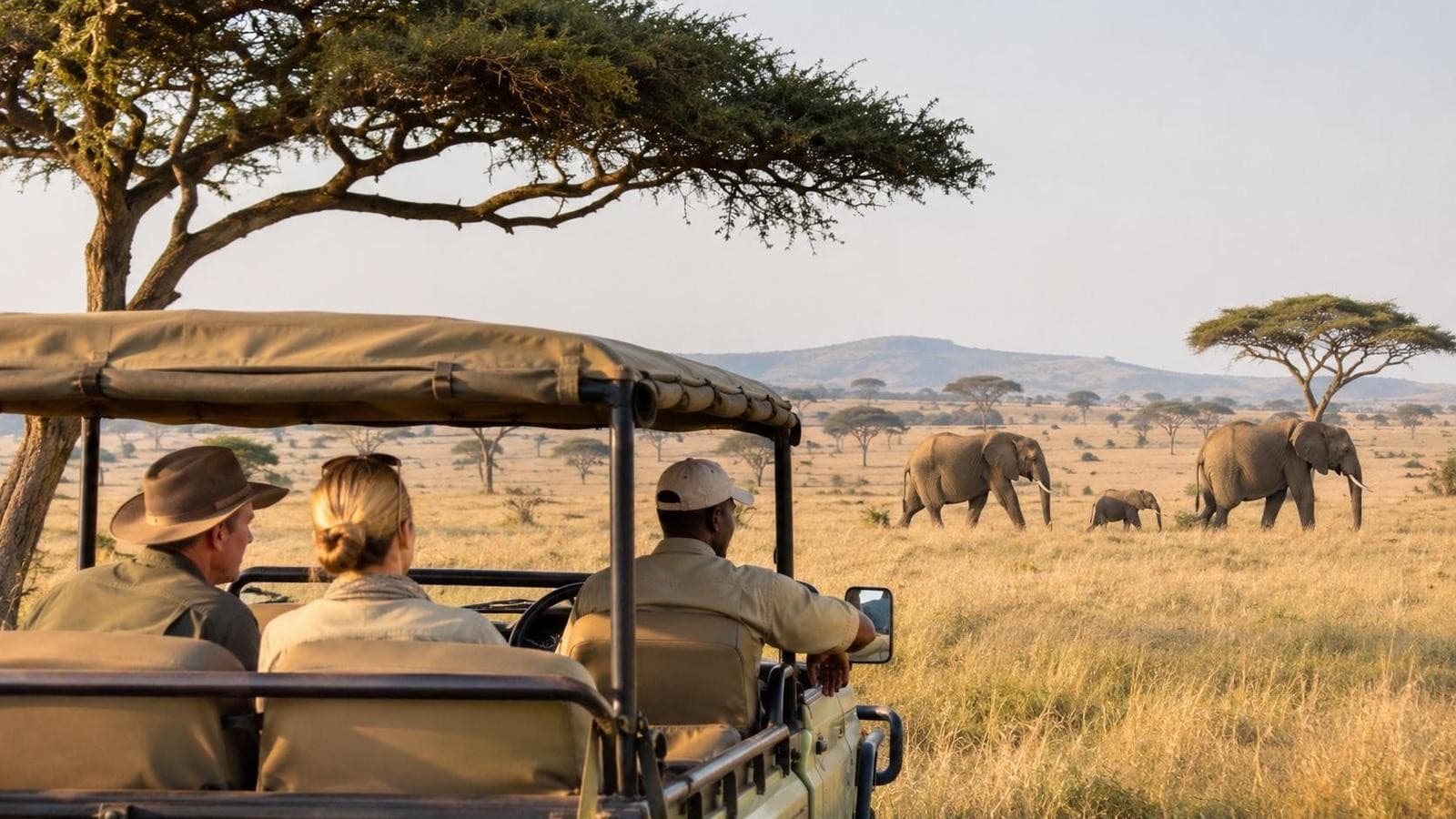
The right African wildlife safari starts with the encounters you want, then matches the habitat, season and camp to them. I would shortlist Tanzania for migration-focused plains, South Africa's Kruger for a Big Five introduction, or Botswana's Okavango Delta for a combination of land and water experiences. None comes with promised sightings.
The hard part is that beautiful lodge photographs do not tell you what a wildlife day will actually feel like. You might picture quiet time watching elephants while your proposed itinerary revolves around long drives and constant camp changes. Before comparing suites, decide what you want to watch and how you want to spend your time.
Start With the Wildlife Moment You Want
I like to begin with a small wish list rather than a long species checklist. Are you drawn to great herds on open plains, the patience of looking for big cats, or the changing perspective of waterways and woodland? Those are different trips, even when every accommodation option looks equally inviting.
Then tell me what matters beyond the animals. A photographer may want control over stopping time. A couple celebrating an anniversary might prefer an unhurried afternoon at camp. A family needs to discuss activity ages, attention spans and vehicle arrangements before falling in love with a particular property.
- Your main interest: Choose one defining experience and two secondary interests.
- Your viewing style: Decide how much vehicle time, waiting and early activity you genuinely want.
- Your nonnegotiables: Identify mobility needs, privacy preferences and comfort requirements before choosing rooms.
For the wider sequence of flights and accommodation, our guide to planning your first African safari gives you the broader framework. Here, the priority is making the wildlife experience itself fit you.
Compare Habitats Before Comparing Countries
A country name is too broad to describe your safari. The more useful question is which landscape and viewing approach deserve your limited nights. I would compare a short list of complementary experiences instead of trying to rank every famous park in Africa.
| Wildlife priority | Area to consider | Decision to make first |
|---|---|---|
| Migration herds and open plains | Serengeti ecosystem, Tanzania | Match the camp area to your travel period rather than choosing by room photographs. |
| A Big Five introduction | Kruger National Park, South Africa | Compare the guiding, accommodation location and permitted activities of your exact stay. |
| Wetlands alongside land-based viewing | Okavango Delta, Botswana | Check whether each camp can offer the land or water activities you want. |
This is a starting shortlist, not a claim that these are the only worthwhile safari destinations. If the experience you want cannot be delivered comfortably in the time available, I would change the route rather than squeeze another country into it.
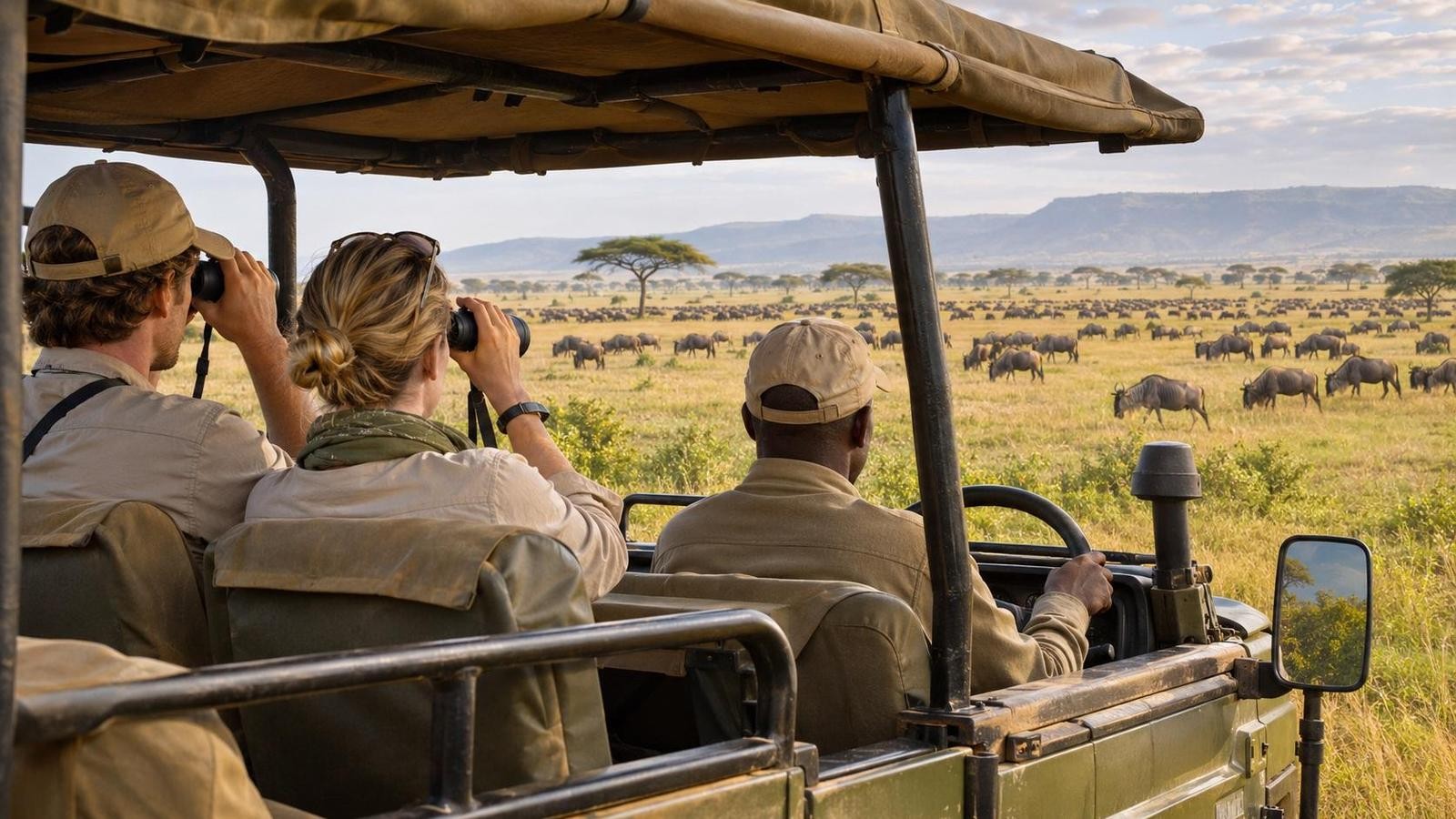
Choose the Serengeti for a Migration-Focused Safari
Tanzania's official Serengeti National Park overview describes both the migration and the park's wider wildlife. The important planning distinction is between visiting the Serengeti and choosing a camp positioned for the migration experience you have in mind. Those are not automatically the same thing.
The Tanzania tourism authority explains that migration movements depend on annual rainfall. That is why I would treat a seasonal map as a planning guide, not an appointment with a river crossing. A trip built around one exact spectacle leaves very little room for nature to behave differently.
Calving season or a crossing-focused trip?
TANAPA highlights January and February for calving, while its broad dry-season guidance runs from June through October. Use that to start the conversation, then narrow the actual area and camp. A southern-plains trip and a northern river-focused stay need different location decisions. Neither should be sold as a guaranteed wildlife performance.
My recommendation is to choose an area you would still enjoy without the headline moment. Would watching grazing herds, looking for predators and spending time with a knowledgeable guide satisfy you even without a crossing? If yes, you are building a much healthier set of expectations.
Choose Kruger for a Big Five Introduction
In South Africa, Kruger offers a clear starting point for travelers whose wish list centers on lion, leopard, elephant, rhino and buffalo. SANParks identifies these species in its guide to Big Five wildlife viewing. Their presence does not mean you will see every one during your stay.
I would choose the exact accommodation and guiding arrangement before deciding this is the right fit. Staying within the national park is not interchangeable with staying at a lodge in a neighboring private reserve. Ask which land your drives actually use and which rules apply there. Do not assume that a description saying Greater Kruger answers either question.
Winter can be attractive for viewing because reduced vegetation and drier conditions can help visibility, as SANParks explains in its winter guidance. But I would still prioritize your dates, guide arrangements and comfort over a blanket claim that one month is always best.
For a South Africa wildlife safari package, ask for the driving and transfer days to be shown separately from the nights at your lodge. I want you to understand how much of the itinerary is genuine viewing time before adding a city or coast extension.
Choose the Okavango for Contrasting Perspectives
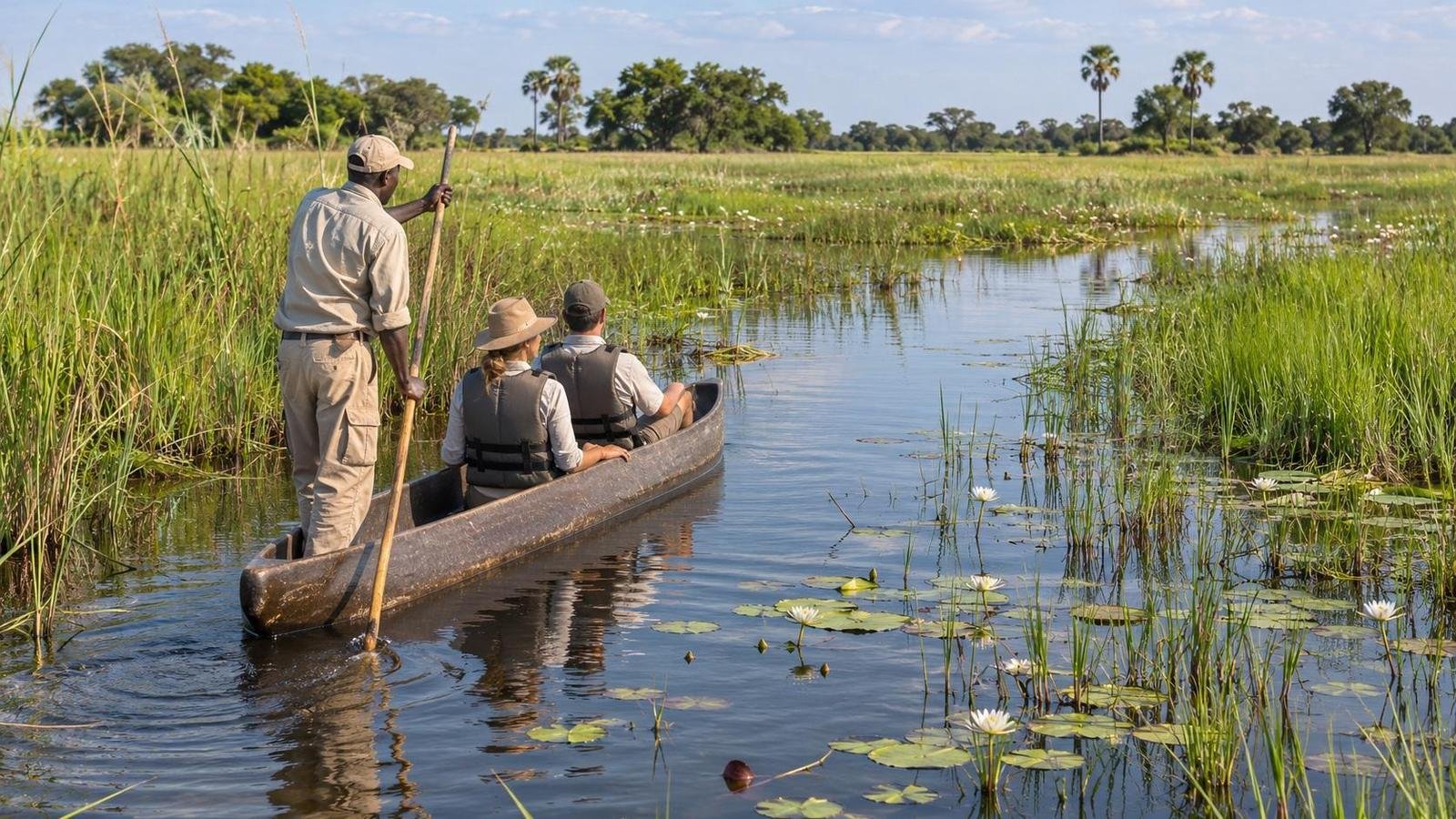
The Botswana Tourism overview of the Okavango Delta describes a landscape of wetlands and drylands, with game drives, boating and mokoro experiences among its activities. It also makes an important qualification: activities differ from camp to camp.
That distinction should guide your shortlist. If being on the water is central to your dream, do not accept a generic Delta label as confirmation that your chosen camp offers it during your dates. If your priority is substantial time on game drives, ask the same specific questions about land-based viewing.
I would consider pairing camps only when the second stay adds a genuinely different environment or activity. Two attractive camps do not automatically create a better safari. The transfer needs to earn its place through a difference you will actually appreciate.
This option suits travelers who want variety in how they experience a landscape, not only variety in their hotel rooms. Keep any water activity subject to the camp's current conditions, operating arrangements and guide decisions.
Spend on Guiding and Viewing Freedom First
If I had to choose between a larger suite and a vehicle arrangement that suits your interests, I would examine the vehicle first. A private vehicle is worth discussing when your group wants different stopping times, a quieter rhythm or a photography-led day. It buys flexibility, not better-behaved wildlife.
Ask what private actually means. Is the vehicle reserved for your party throughout the stay or only for selected activities? Is it included with your accommodation category or separately priced? Does your group have a dedicated guide? The answers should appear in the proposed arrangements, not remain assumptions.
Responsible viewing also matters more than proximity. Kruger's official visitor rules prohibit off-road driving and feeding or disturbing animals, and require visitors to remain in vehicles except in designated areas. Other reserves have their own rules, so permissions need to be checked for the actual property and location.
My planning rule: Choose a safari you can enjoy without asking a guide to chase, crowd or manipulate wildlife for a photograph.
Protect Time to Watch Instead of Collecting Camps
For an initial planning conversation, I would sketch six safari nights across no more than two camps, then adjust for the destination and your interests. That is my pacing recommendation, not a minimum stay rule or a promise about what six nights will produce.
Ask for the itinerary to show the arrival time, transfer method and realistic first activity at each camp. A short-looking flight on a route map is not the whole transfer. You also need the connection, airstrip arrangements and onward drive to work together.
I would protect an arrival buffer when an international flight connects into a remote safari. The right solution depends on the actual schedule, but I do not like an itinerary whose success requires every connection to be perfect. A comfortable first night can be more valuable than another destination.
For families, agree on what happens if one person skips an activity. Ask about supervision requirements, room arrangements and any activity-specific age limits. A thoughtful safari should suit the people traveling, not just the person who made the original wish list.
Match the Room to Your Wildlife Day
Compare the room you would actually receive, not a property's most dramatic photograph. I would ask about the distance to the main area, steps, bathroom setup, cooling, outdoor space and whether an escort is required after dark. Confirm each detail for the exact category.
A tented suite is not a precise standard of comfort. Before choosing one over a lodge room, ask about enclosure, ventilation and the practical layout. Light sleepers should discuss their concerns explicitly instead of assuming that a high room rate answers every comfort question.
A private pool may be a lovely addition if you intend to spend substantial afternoons in your room. It would not be my first upgrade if it displaced the location or guiding arrangement that brought you to Africa. I want the room to support the safari, not consume the whole decision.
Pack for the Aircraft and Prepare for the Destination
Check the baggage rules of every flight before buying luggage or choosing camera equipment. For example, Safarilink's published safari baggage allowance is 15 kilograms per person, including hand baggage, in soft bags, with exceptions for specified routes. That is an airline example, not a rule for every safari flight.
I would prioritize binoculars, layers, sun protection, suitable footwear and the personal essentials you cannot easily replace. Then check laundry arrangements with the camp before adding more clothing. Our guide to what to pack for safari helps organize that conversation without turning your bag into an expedition supply closet.
Health preparation is destination-specific. The CDC's South Africa travel health guidance identifies Kruger among malaria transmission areas and recommends discussing prevention with a medical professional. Have a travel-health clinician review your full route, not only your international arrival airport.
Health guidance, entry rules and operational conditions can change. Travelers are responsible for meeting the requirements for their nationality, destinations and transit points. I would review those alongside the itinerary, rather than treating them as a task for the week of departure.
What an African Wildlife Safari Costs
For a specific top-tier Tanzania example, allow roughly $14,000 to $21,000 per person sharing for six safari nights in accommodation and its included services, before additional charges and transport into the region. This is based on published 2027 standard adult rates at Singita Faru Faru, Sabora and Mara River Camp, not an average for all African safaris. It is not a quote or a guaranteed price.
Those published rates range from $2,355 to $3,430 per adult per night, depending on the property and travel period. The six-night arithmetic is $14,130 to $20,580 before exclusions. The listed inclusions cover accommodation, meals and beverages, twice-daily game drives and applicable airstrip road transfers. Taxes included in the published room rate do not mean every levy is included.
Wildlife, park or concession charges, tourism and carbon levies, transport to and from the safari region and additional experiences need separate attention. Do not treat this accommodation example as the total trip cost. International airfare, connecting transport, overnight hotels, personal insurance, gratuities and a private vehicle where separately charged need to be accounted for. Camp operating periods also differ, so the lowest seasonal rate is not available at every camp throughout the year.
Your actual pricing can vary significantly with the number of travelers, dates and season, trip length, country and itinerary, lodge and room category, level of luxury, flights, transfers, private guiding, activities, dining inclusions and current availability. I would compare itemized proposals on the same basis. Our guide to African safari costs can help you identify the moving parts before we develop your route.
Frequently Asked Questions
Which country is best for an African wildlife safari?
There is no useful single winner without knowing your wildlife priorities. I would begin with Tanzania for a migration-focused plains experience, Kruger in South Africa for a Big Five introduction, or Botswana's Okavango Delta for contrasting wetland and land-based viewing. Then test the exact camp and season against your preferences.
Is a wildlife safari the same as a jungle safari?
Not in the itineraries discussed here. Open Serengeti plains, Kruger viewing areas and the Okavango's wetland-and-dryland mix are different environments, not one generic jungle experience. If you mean a forest-focused wildlife trip, say that at the start so the destination and activity recommendations can change.
Can an African wildlife safari package include everything?
Do not assume it does. A package may include accommodation, meals, selected drinks and activities while excluding flights, conservation charges or private vehicles. Ask for inclusions, exclusions, transfer arrangements and the exact room category in writing. Compare the whole proposed trip rather than its headline nightly rate.
Can you guarantee seeing the Big Five or a river crossing?
No. A guide and a well-chosen location can support a thoughtful wildlife experience, but animals are not scheduled attractions. I would rather build enough time and variety into your safari that one missing sighting does not define the trip.
How early should I start planning?
Start once you know your likely dates and main wildlife priorities, particularly if you need several rooms or a specific accommodation category. I would check the camp and transport pieces together before treating either as settled. There is no single lead time that ensures availability everywhere.
Build the Safari Around What Matters to You
At Explore Effortlessly, we design custom safari journeys by connecting your wildlife interests with appropriate camps, room categories, flights, transfers and pacing. I want to understand the experience you are hoping for before recommending where to stay.
If the Serengeti is emerging as your strongest fit, our guide to a Serengeti safari explores that next decision in more detail. When you are ready to develop your own route, share your dates, travelers and wildlife wish list: Start Planning My Safari.
For more thoughtful travel ideas, join the Explore Effortlessly newsletter.
About the Author
Hi, I'm Karrah Kazravan, owner and lead travel advisor at Explore Effortlessly, an award winning Miami agency serving clients nationwide. I design custom journeys for busy travelers who want confident recommendations and thoughtful coordination. I have traveled to more than 67 countries across all seven continents and am a Nexion Circle of Excellence Top 5% advisor, ASTA Verified Travel Advisor, Certified Travel Associate, and CLIA Accredited Cruise Counselor.