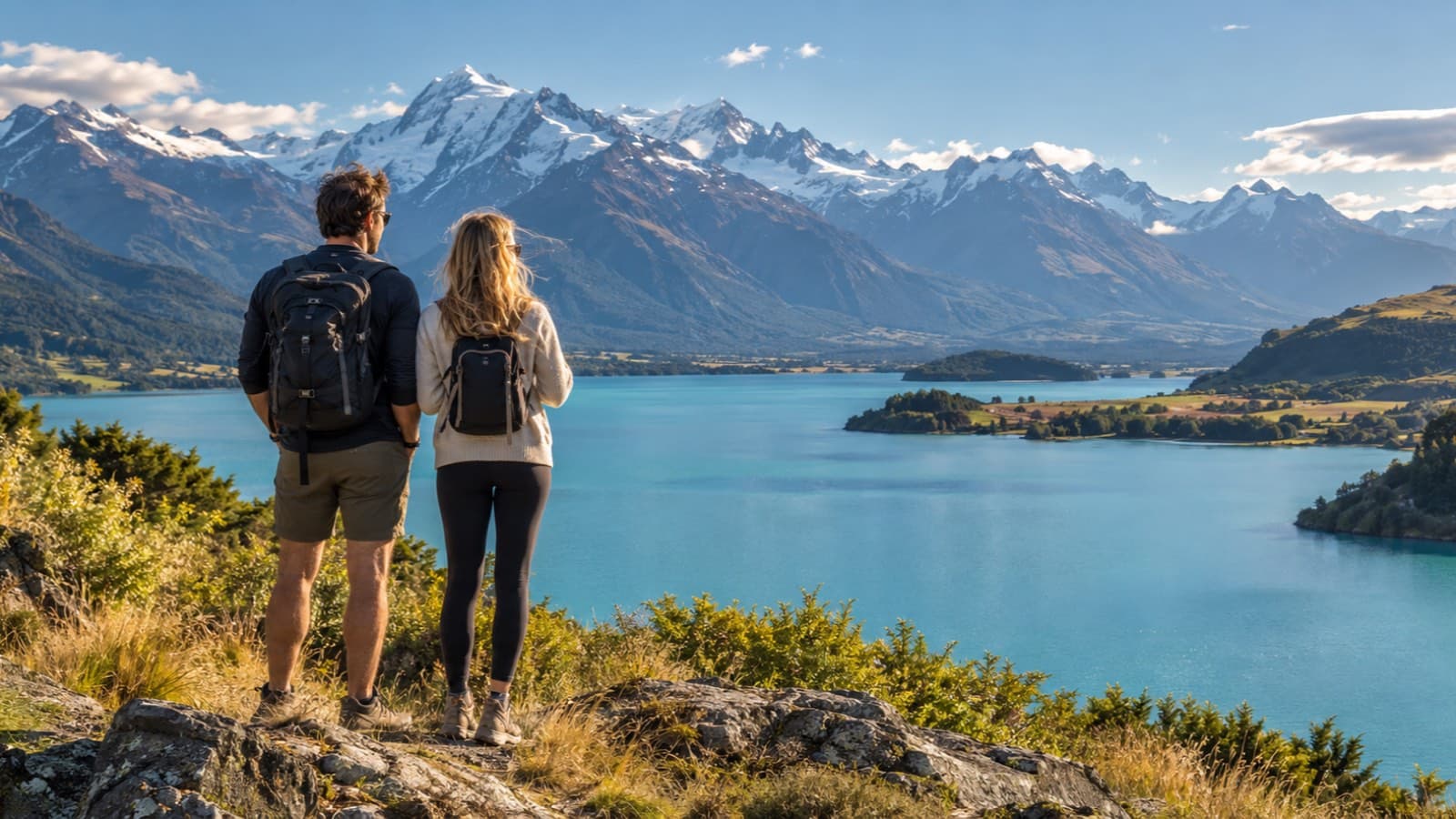
March and November are my first picks for the best time to visit New Zealand if you want a multi-region trip with room to breathe. Choose January or February for the warmest outdoor season, June through August for skiing, and autumn or spring when you can accept some weather flexibility in exchange for a quieter rhythm.
The hard part is not choosing a month from a calendar. It is deciding whether your North Island coast, South Island mountains, wine stops and Fiordland plans make sense together in the same week. A sunny forecast in Auckland tells you little about an alpine day near Queenstown. If you are weighing another South Pacific trip, my guide to Fiji's seasonal tradeoffs makes the contrast clearer.
I start with what you want to feel on this trip: unhurried outdoor time, snow, food and wine, or a mixture. Then I pick regions and leave breathing room for weather. No single month is ideal for every New Zealand itinerary.
The best season depends on the journey
New Zealand's seasons run opposite to those in the Northern Hemisphere. Tourism New Zealand's climate guide describes summer as the busy season, autumn and spring as quieter shoulder seasons, and ski areas as the winter exception. Summer brings the strongest case for beaches and long outdoor days. It also asks for earlier decisions about rooms, transport and experiences.
| Travel window | What it suits | Tradeoff to plan around |
|---|---|---|
| December to February | Beach time, long days and a broad outdoor itinerary | Peak-season demand and less flexibility on sought-after stays |
| March to May | Wine regions, walking and a gentler pace | Cooling evenings, especially inland and farther south |
| June to August | Queenstown or Wānaka ski-centered travel | Shorter, colder days and weather-dependent alpine movement |
| September to November | Spring landscapes and a flexible two-island route | More variable conditions and possible rain |
NIWA's overview of New Zealand's climate explains why a single temperature does not settle the question: the far north is much warmer than the alpine south, and the mountain ranges create sharply different rainfall patterns. I would choose the season first, then build an actual route rather than treating the country as one weather zone.
January through March
January
January is a strong choice if your wish list centers on coastal stays, long evenings and active days. It is part of summer's high season, so a trip built around a particular room category or a limited-availability experience needs early attention. I would not compress Auckland, a North Island retreat and several South Island stops simply because daylight is generous.
If you have two weeks, decide which setting matters most. One or two substantial South Island bases give you more time outdoors than a string of single-night arrivals. Keep room for a change of weather even in summer.
February
February still belongs to summer, and NIWA identifies January or February as the country's usual warmest month. Tourism New Zealand gives a national summer daytime average of 20 to 25°C, not a promise for every town or day. Summer does not mean the same temperature in Auckland and Queenstown.
I like February for a trip where a North Island coastal stop is paired with South Island scenery, provided you are comfortable with summer demand. Make the southward move intentional. A flight and a transfer can eat into the day you imagined spending beside a lake.
March
March is the bridge between summer and autumn. Tourism New Zealand notes that early autumn can still bring warm days, with cooler evenings and fewer crowds than high summer. That balance makes March appealing for vineyard time, scenic walks and a thoughtful mix of the two islands. It is not a guarantee of dry weather, especially in Fiordland.
For a milestone trip, I would rather add a second night near Queenstown or in a wine region than add a distant stop simply to say you saw it. A comfortable March itinerary lets the landscape set the pace.
April through June
April
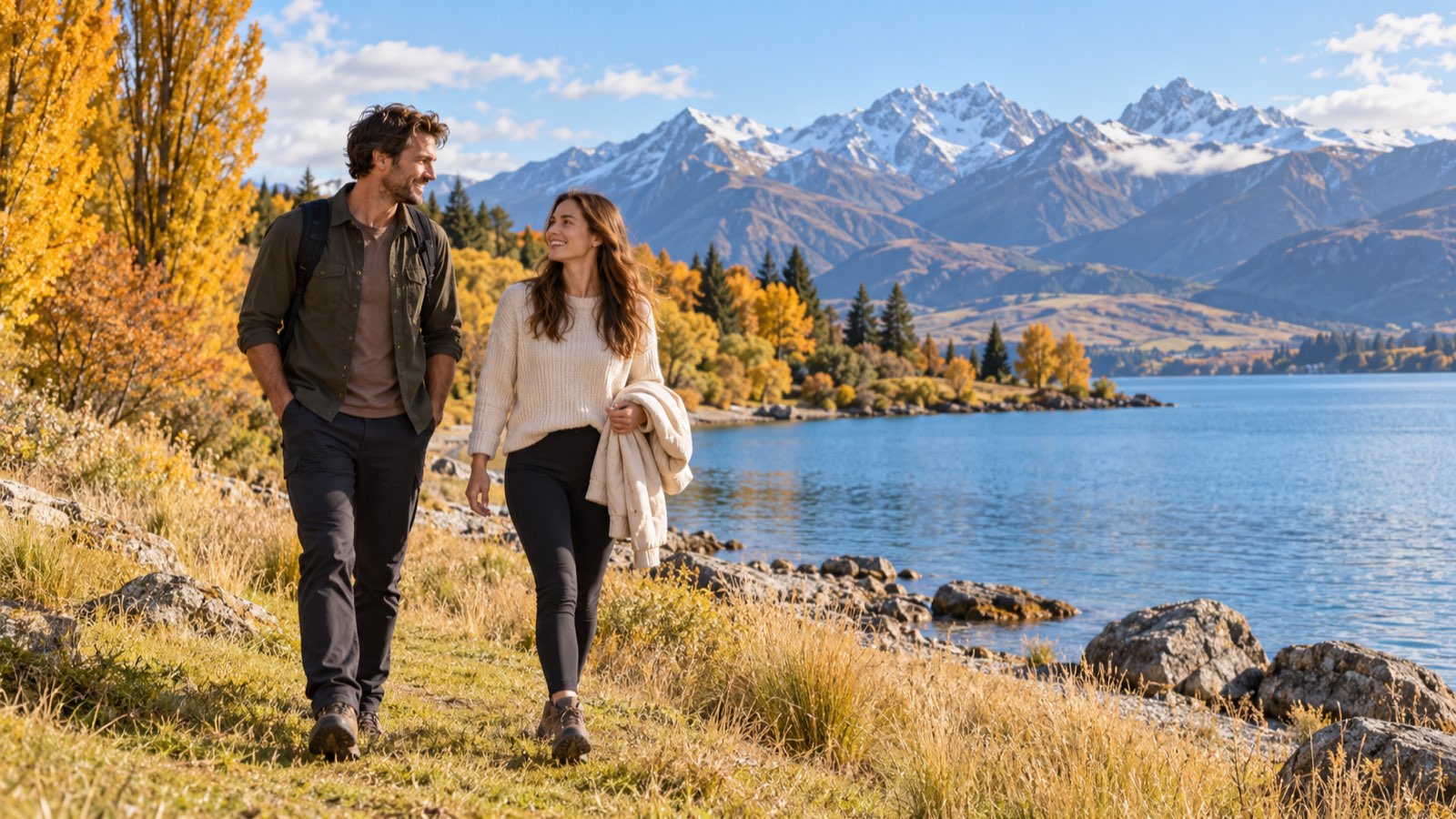
April is attractive when you care more about relaxed exploration than warm beach days. Autumn color and cooler walking weather make the South Island especially tempting, while evenings call for a different wardrobe from February. I would favor a few longer stays, with a wine stop or a scenic drive between them.
If a specific walk is central to the trip, check the operating season and conditions rather than assuming every trail behaves alike. The Department of Conservation's Milford Track information currently lists its Great Walks season from November through April and explains that weather can affect the route. A guided scenic outing and the multi-day track are very different commitments.
May
May can work beautifully for travelers who like cooler landscapes and less emphasis on outdoor schedules. I would not make a demanding alpine hike the only reason for the trip. Instead, build around accessible scenery, food and wine, and comfortable places where an indoor afternoon is welcome rather than disappointing.
This is where an upgraded room with a view can matter more than another excursion. If the weather turns, the place you come back to becomes part of the experience. Check what the room actually faces and what is included rather than paying for a category name alone.
June
June marks the start of winter. Tourism New Zealand says many ski fields open in June, while the heaviest snowfall is usually in July and August. If skiing is your main goal, I would choose dates based on the specific mountain's current operating information, not a generic promise that winter automatically means deep snow.
For a non-skier, a winter trip can still be rewarding, but the route should be narrower. Pick a couple of regions and make transport decisions with winter road conditions in mind, especially if mountain areas are involved.
July through September
July
July is generally the coldest month in New Zealand, according to NIWA. If you are dreaming of a snow-focused stay, Queenstown and Wānaka are natural South Island bases; the North Island's Central Plateau is another winter-sports area. The question is not simply where there is snow. It is how much of the trip you want to center on it.
I would anchor a winter itinerary around one ski region, with enough nights to absorb a poor-weather day. A well-positioned stay and a practical transfer plan are worth more than a long list of distant activities.
August
August continues the main snow-sports window. It works for travelers who genuinely want mountain time and are happy to dress for winter. If your priority is leisurely coastal exploration and vineyard afternoons outside, save that version of New Zealand for another season.
Consider your tolerance for driving in winter conditions before choosing a self-drive itinerary. An arranged transfer may be a more comfortable choice for certain mountain legs, but it does not remove the need to adapt when conditions change.
September
September begins spring, not instant summer. Expect a more changeable trip and resist making a high-altitude outing the one immovable centerpiece. Tourism New Zealand notes that spring can be rainy, even as days warm and outdoor possibilities broaden.
September suits travelers who want green landscapes and can enjoy a winery or a slower day if a mountain plan shifts. The more ambitious the route, the more useful a flexible middle day becomes.
October through December
October
October is a spring month. Queenstown is compelling for lakeside scenery with snowy mountain backdrops, while a North Island stop can balance the trip with a different landscape and warmer conditions. The official Queenstown seasons guide describes spring's mix of renewed greenery and mountain snow. I would choose October for visual variety, not because it promises settled weather.
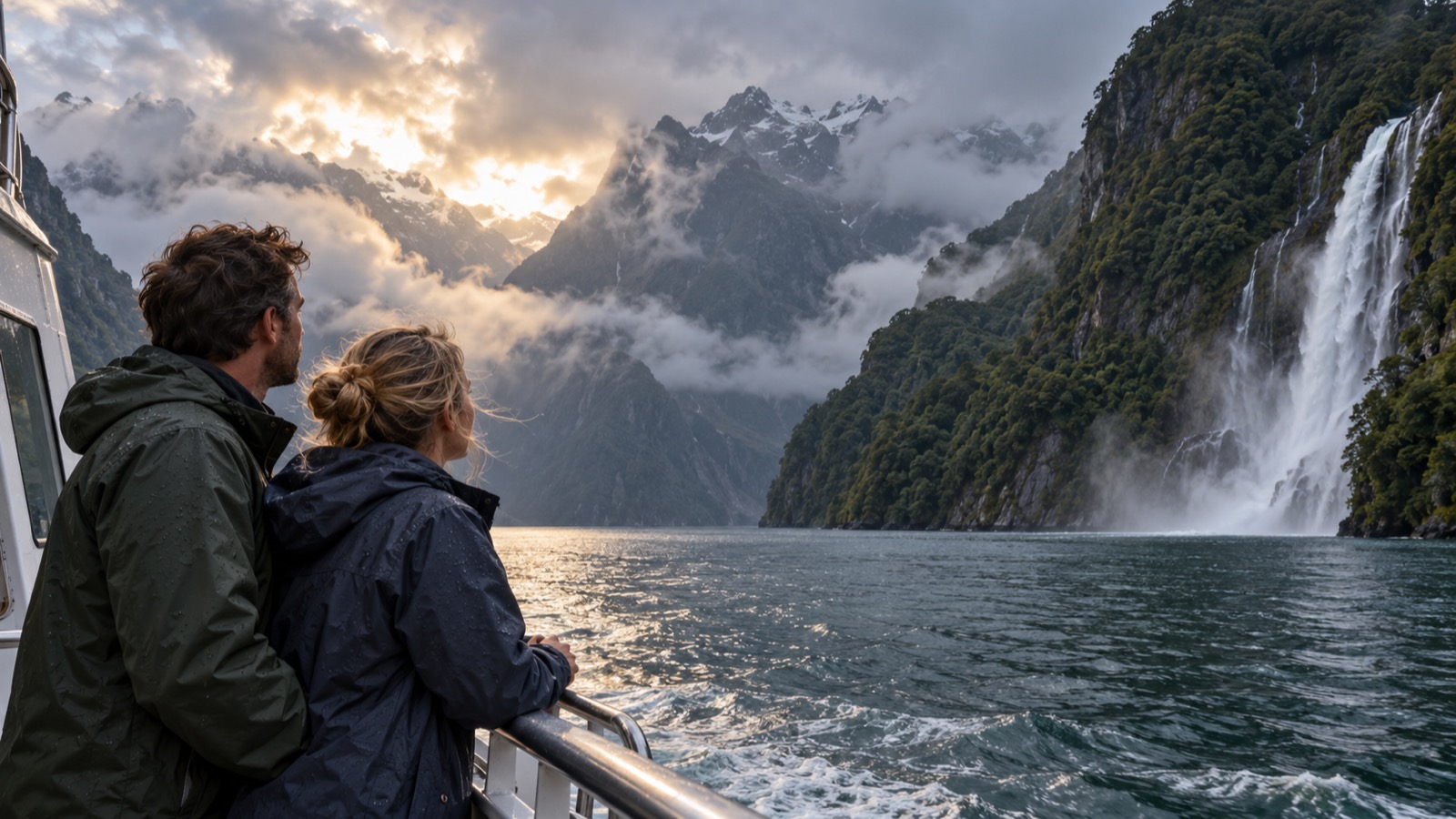
Fiordland deserves its own weather margin. If a multi-day Milford Track walk is your must-do, note that the DOC Great Walks season starts in November; do not confuse that with shorter, separately operated sightseeing experiences. Check current conditions and availability before building flights around any single outing.
November
November is my favorite spring candidate for a two-island journey that can flex. Tourism New Zealand describes spring as warming but prone to rain. Plan for layers and an alternate outdoor day. You can give the South Island proper time without making every hour depend on clear skies.
Choose your main experience first: a walk, a wine-focused route, or a scenic stay. Then let transfer days serve that goal. A room category with a genuine outlook can be a worthwhile upgrade if you plan to spend time there; it is less valuable if you are constantly in transit.
December
December moves into summer. It is a lovely choice for long outdoor days, but the holiday period belongs to the busy season. Decide early which destinations and accommodations actually matter, particularly if you need connecting rooms or a specific suite.
I would protect the last part of the trip from an overloaded schedule. A final slow stay makes more sense than racing from a remote excursion straight to the international departure. The weather and the transport pieces deserve their own space.
New Zealand temperatures and regional differences
Is New Zealand hot or cold? Both answers can be true on one itinerary. Tourism New Zealand's seasonal city ranges show Auckland at about 17 to 24°C in summer and 7 to 15°C in winter, while Queenstown is about 9 to 23°C in summer and minus 1 to 8°C in winter. These are seasonal city ranges, not a month-by-month forecast. A national average by month in Celsius would hide the regional contrast you need for packing and route design.
Snow falls mainly in mountainous areas such as the Southern Alps and the North Island's Central Plateau. NIWA says it rarely falls in coastal areas of the North Island, so do not plan on snow in Auckland. Higher ground and Fiordland can feel very different from a city forecast on the same day.
For a trip that crosses regions, pack adaptable layers and keep outdoor plans responsive to the local forecast. The Department of Conservation's weather guidance warns that conditions can change rapidly, including in parks and mountain areas. That is a reason to plan wisely, not a reason to avoid the country.
How I would pace a premium two-island trip
I would pick two or three meaningful bases before choosing individual experiences. For a first visit, that might mean one North Island setting and two South Island settings, with the exact combination shaped by your interests. A traveler who wants wine and scenery needs a different route from someone who wants ski days or a multi-day hike.
- For outdoor summer: Keep January or February focused on a few places and decide sought-after rooms early.
- For an all-around introduction: Give March or November a look, but leave a flexible day for weather-sensitive plans.
- For winter mountains: Build around one ski base in July or August rather than treating the country as a snow itinerary.
- For a special stay: Spend fewer nights in transit and more time enjoying a room, view or guide you chose deliberately.
Do not choose every transfer by the shortest theoretical travel time. Airport time, a private vehicle leg, check-in and a scheduled activity can make a seemingly efficient day feel chopped up. My planning rule is to place the hardest movement between, not inside, the days you most want to remember.
When the timing goes wrong
The worst time to visit New Zealand is the wrong season for your fixed priority, not a universally bad month. A June trip built around warm coastal days is a mismatch. An October trip built around a guaranteed multi-day Milford Track departure is also a mismatch when the listed Great Walks season begins in November.
Another mistake is allowing one photograph to define the whole itinerary. A sunny lake image cannot tell you what conditions will be like in Fiordland. If one outing matters enormously, give it room in the schedule and check the latest operator and conservation notices close to travel.
My planning rule: Pick the month for the experience you cannot move, then build the rest of the trip around its weather and transfer realities.
What a New Zealand trip costs
For a roughly two-week, multi-region New Zealand journey, published sample itineraries currently span about $11,000 to $30,000 per person for in-country arrangements. That is an illustrative range, not a standard package: examples reviewed include a 15-day highlights self-drive starting at $10,960 per person and a 14-day high-end self-drive starting at $29,890 per person. Their inclusions differ, and international airfare is not included in those examples. This estimate is not a quote or a guaranteed price.
Your actual trip cost can vary significantly with the number of travelers, dates and season, length, the regions and route, the hotel or lodge and room category, airfare, vehicles or private transfers, guides and experiences, dining inclusions, the level of luxury and current availability. A scenic flight or a remote lodge changes the equation more than choosing one month over another in isolation. I would price the itinerary you actually want before making a false comparison between two sample trips.
Frequently Asked Questions
What is the number one attraction in New Zealand?
There is no single official number-one attraction that is right for every traveler. If your heart is set on Fiordland, make that the route's anchor and allow for its weather. If wine, Māori cultural experiences or alpine time matters more, your personal highlight belongs somewhere else. I would not build a major trip around a popularity ranking.
What is New Zealand like in February?
February is summer and usually one of the warmest months. It is a strong choice for outdoor travel, but summer is also the busy season. Plan your priority rooms and experiences with that demand in mind, and remember that conditions still differ by region.
What can I do in New Zealand in March?
March works particularly well for a mix of scenic walking, wine-region time and comfortable multi-stop travel. Early autumn can retain warm days, but evenings cool as you move south or inland. I would give each base enough time to enjoy it rather than filling every day with a transfer.
What is the weather like in November?
November is spring: generally warming, but still changeable and sometimes rainy. It can be a rewarding window for a flexible itinerary. Check the local forecast for your particular region instead of relying on a national seasonal description.
Where should I go in October?
Queenstown for spring lake and mountain scenery is a compelling option, combined with a North Island base if you have enough time. Choose the second stop for your interests rather than collecting destinations. A trip centered on a Milford Track walk should be scheduled against the DOC season and current track conditions, not assumed possible because it is spring.
Plan the version that fits you
New Zealand rewards good editing. I can help you decide which season fits your priorities, compare places to stay, and coordinate the rooms, transfers and experiences into a trip with time to enjoy them. At Explore Effortlessly, we begin with an initial consultation and design a custom journey around the decisions that matter to you, not a checklist of famous stops.
If another shoulder-season destination is on your shortlist, see my month-by-month guide to visiting Greece or guide to Iceland's seasonal choices. Those comparisons help clarify what you value most before we settle on New Zealand.
Start Planning My New Zealand Trip.
For more thoughtful travel ideas, join the Explore Effortlessly newsletter.
About the Author
Hi, I'm Karrah Kazravan, owner and lead travel advisor at Explore Effortlessly, an award winning Miami agency serving clients nationwide. I design custom journeys for busy travelers who want confident recommendations and thoughtful coordination. I have traveled to more than 67 countries across all seven continents and am a Nexion Circle of Excellence Top 5% advisor, ASTA Verified Travel Advisor, Certified Travel Associate, and CLIA Accredited Cruise Counselor.