
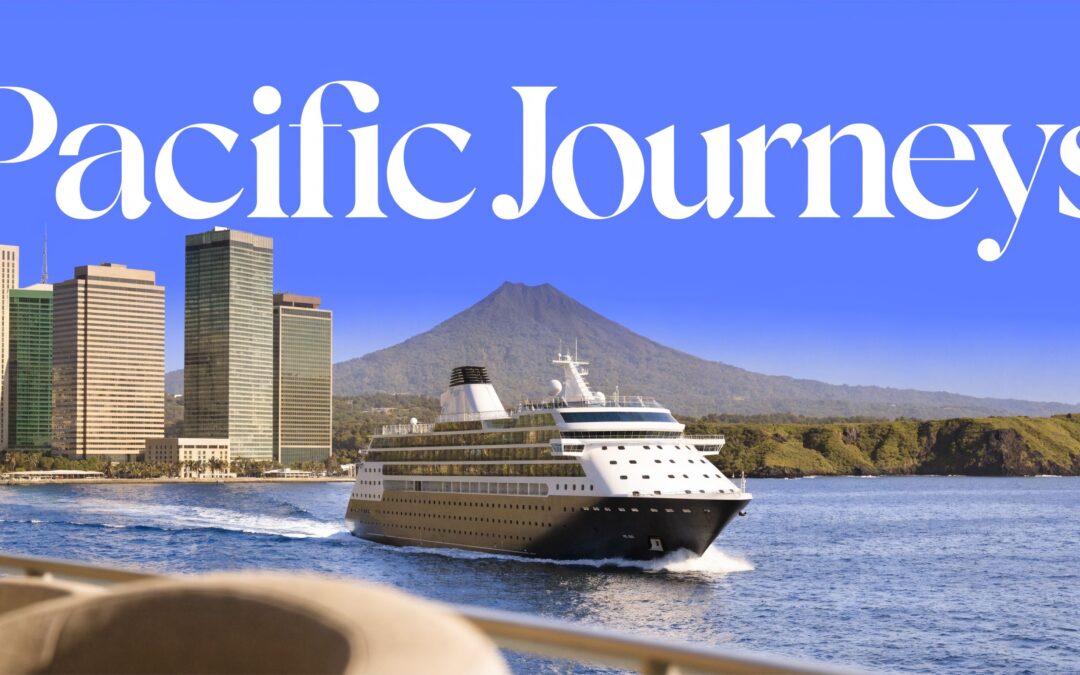
You’re probably looking at Hawaii and thinking two conflicting things at once. I want the islands, and I do not want the airport chaos that usually comes with piecing together a big trip. That is exactly why cruising to hawaii from vancouver appeals to a certain kind of traveler. It gives you the romance of a real ocean voyage, then delivers you into Hawaii with your unpacking done once.
It also is not a casual, last-minute booking. These sailings are niche, seasonal, and far better when someone plans the full journey around them instead of treating the cruise as a standalone transaction. The difference shows up in your suite choice, your pacing, your private touring, and how smoothly you move from Vancouver harbor to your final night in Hawaii.
Your Guide to Cruising from Vancouver to Hawaii
You check into a waterfront hotel in Vancouver, hand over your bags the next morning, and settle into a suite built for a week of open Pacific views before Hawaii even appears on the horizon. That is the right way to approach this route.
A Vancouver to Hawaii sailing works best for travelers who want the crossing itself to feel polished, spacious, and well paced. These voyages usually operate as repositioning cruises on a seasonal schedule, with several uninterrupted sea days and one-way routing that rewards careful planning. The cruise fare is only one part of the decision. Your suite, your pre-cruise timing, your arrival plans in Hawaii, and the quality of your shore days matter just as much.
Book this trip for the experience of traveling well across the Pacific.
If you enjoy long breakfasts on your veranda, uncrowded spa mornings, attentive service, and the anticipation that builds over days at sea, this route delivers something a nonstop flight never will. If your priority is checking off a different island activity every few hours, choose a different Hawaii trip. This sailing rewards travelers who appreciate space, rhythm, and a stronger sense of arrival.
Key takeaways
- These sailings are seasonal: You need to plan around a limited window, not a year-round departure pattern.
- Your suite matters more here: Several sea days make balcony location, cabin size, and onboard privileges worth paying for.
- One-way logistics shape the whole trip: A smart plan includes a Vancouver hotel stay, luggage strategy, and a clean post-cruise Hawaii departure or resort extension.
- Private shore planning pays off: Hawaii is far more satisfying with customized touring, a driver-guide, or a well-chosen small excursion instead of default bus trips.
My recommendation is straightforward. Do not shop this route by fare alone. Book it if you want a refined Pacific crossing, then build the trip around comfort, timing, and the kind of onshore access that turns a good cruise into a seamless luxury journey.
Understanding Vancouver to Hawaii Repositioning Cruises
These sailings are more than just transport. They are purposeful crossings built around the cruise line’s seasonal ship movements, and that is exactly what gives them their appeal.
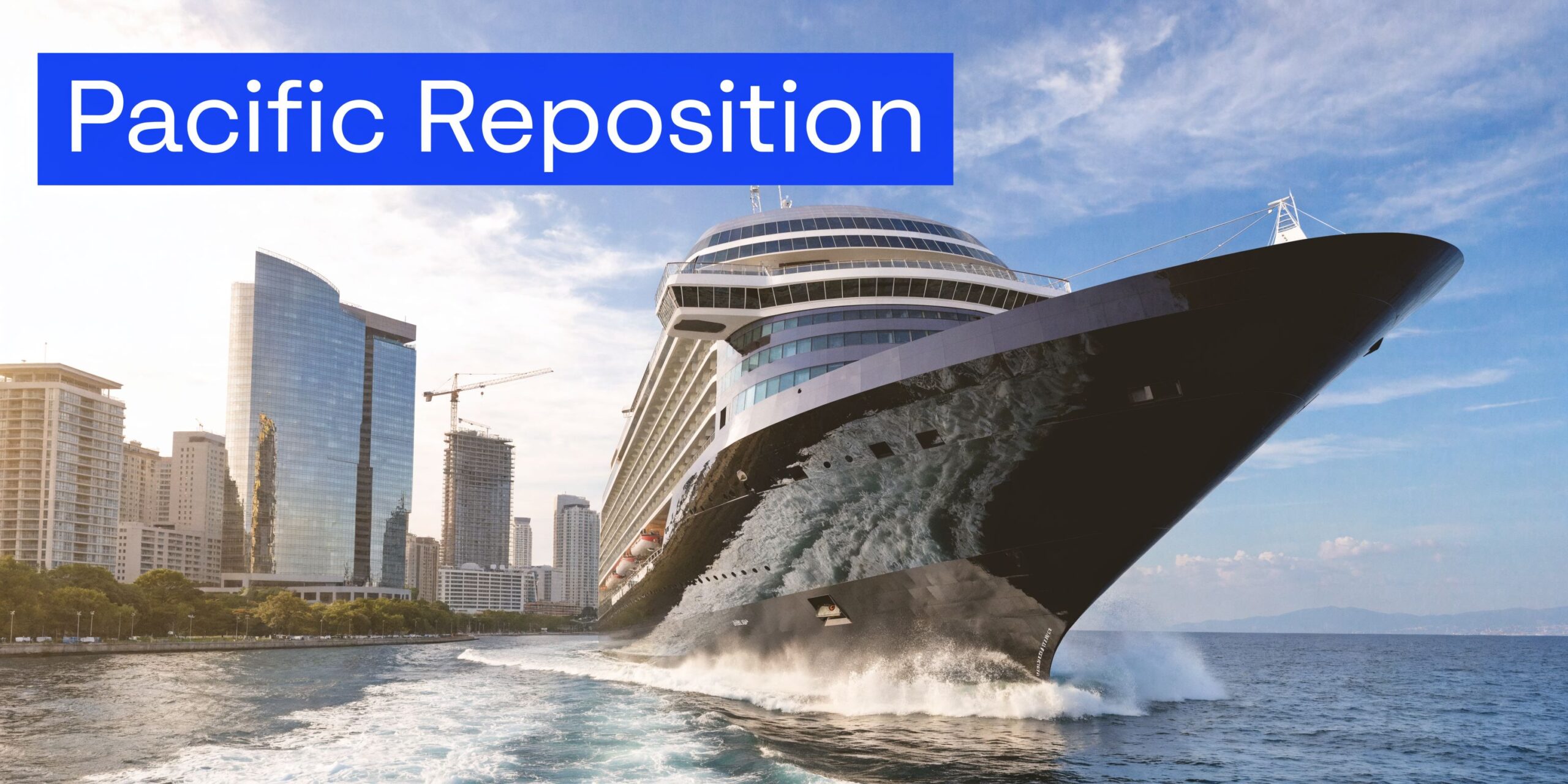
A ship finishes its Alaska season, then heads south for Hawaii or other warm-weather deployments. Travelers who know what they are looking at can book that one-way crossing. The window is limited. The atmosphere is different. You get a voyage that feels intentional rather than repetitive.
Why these cruises stand out
This purposefulness makes the itineraries feel special.
You are not boarding a ship built around nonstop port churn. You are booking a refined Pacific passage with time to settle in, reset your pace, and enjoy the ship properly. That is exactly why I treat these sailings as a luxury planning exercise, not a simple cruise booking.
The right client usually loves them. The wrong client gets restless by day two.
Why I recommend them selectively
Repositioning cruises reward travelers who enjoy the rhythm of sea days and who will use the ship well. That usually means couples, celebratory travelers, experienced cruisers, and clients booking higher-category accommodations where the suite becomes part of the trip itself.
Five sea days are not a drawback. They are the product.
That changes how I plan the voyage. I focus on suite position, wind exposure, service level, dining access, spa routines, and how the crossing flows into Hawaii once you disembark. If you want to start exploring options before we map the ports in detail, this guide to places to go in Hawaii is a useful starting point.
Advisor take: Book this route if you want a calm, polished crossing with time to enjoy your suite, the ocean, and a more graceful arrival in Hawaii. Skip it if you want constant activity and minimal time onboard.
What the route usually feels like
The departure is urban, sleek, and scenic. Vancouver gives you a memorable sailaway with mountains, glass towers, and a sense of occasion.
Then the Pacific takes over.
That middle stretch is the defining feature of the trip. Days become quieter. Service feels more personal because you are no longer rushing off the ship every morning. Clients who book well tend to settle into breakfast on the veranda, longer lunches, a standing dinner reservation, and one or two rituals that make the crossing feel private.
The finish is dramatic. The air softens, the light changes, and the first sight of the islands delivers a real sense of arrival. Common calls often include Oahu, Maui, the Big Island, and sometimes Kauai, with Honolulu frequently serving as the main arrival point. For clients already thinking ahead to private water-based touring on the Big Island, I often suggest reviewing the best Kona boat tours for cruise ship passengers before we narrow down the best port day plan.
Who should book this itinerary
Choose this route if you want the crossing itself to feel luxurious, not just the destination. It works especially well for travelers who value privacy, slower pacing, and advisor-managed details.
| Best fit | Probably not the best fit |
|---|---|
| Travelers who enjoy sea days | Travelers who need nonstop off-ship activity |
| Couples planning a romantic trip | Groups focused on maximum island hopping |
| Clients comfortable with one-way travel | Travelers who only want roundtrip simplicity |
| Guests who will use the suite and ship | Travelers who see the cabin as a place to sleep |
My recommendation is clear. Book a Vancouver to Hawaii repositioning cruise for the crossing, then build the trip around the suite, the onboard routine, and the quality of your arrival in Hawaii. That is how this niche route becomes an outstanding luxury journey.
Navigating Your Hawaiian Island Itinerary
The crossing is elegant. The islands are where the trip turns personal.
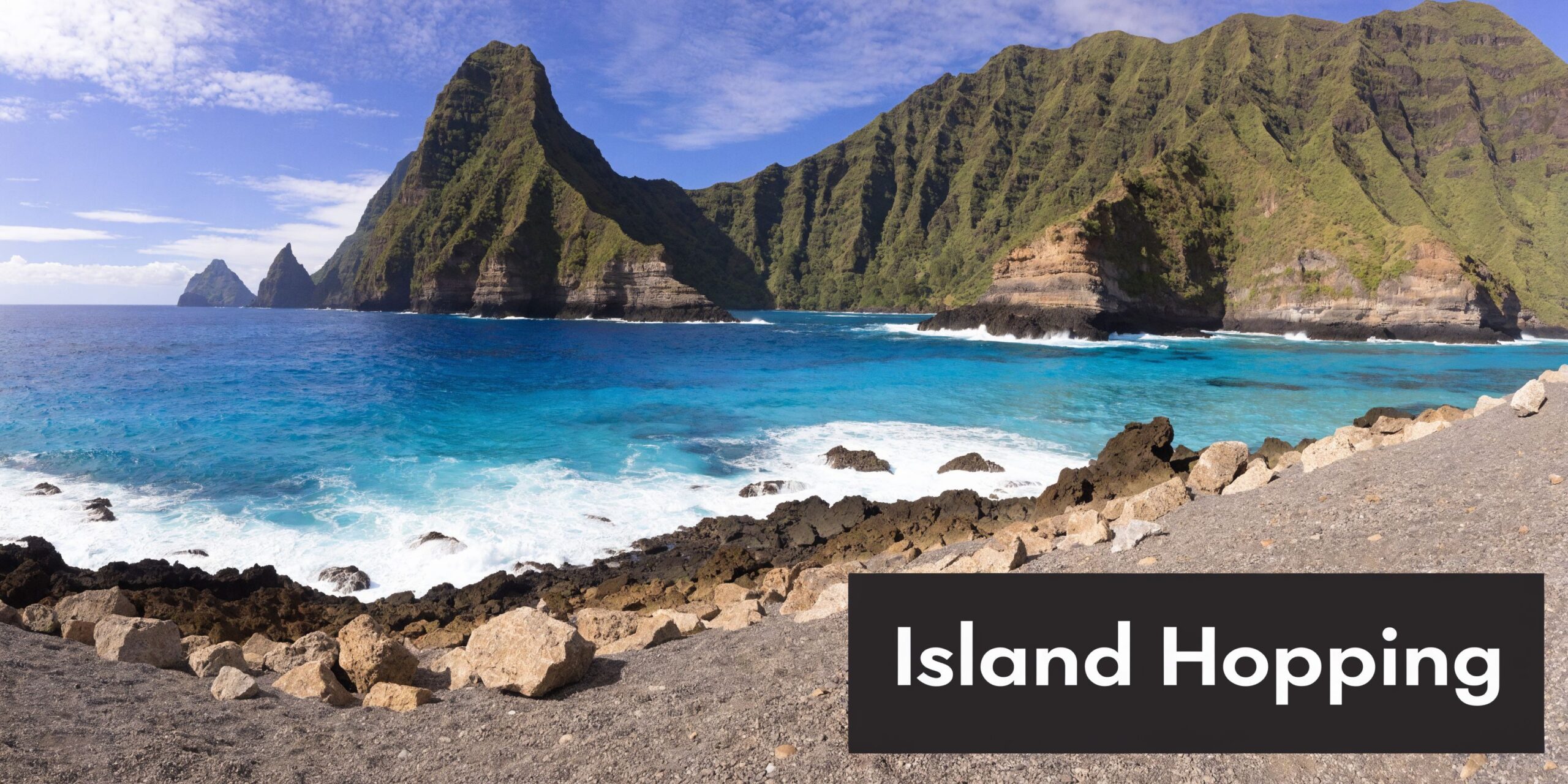
A lot of travelers waste Hawaiian port days by booking whatever excursion still has space. Bad idea. Hawaii deserves better than a generic bus tour. On this route, your ship time is already serene and structured. Your island days should be curated.
Start with the Big Island
The Big Island gives you contrast. In one day, you can move from lava-shaped terrain to coffee country to calm bays. Kona is especially appealing for travelers who want marine life, a polished beach-town feel, or a private day on the water. If you want ideas beyond the usual cruise line offerings, this guide to best Kona boat tours for cruise ship passengers is a useful place to start.
I usually steer clients toward one strong theme for a Big Island day: Coffee and scenery. Snorkeling and coastline. Volcano-focused touring if the port and timing line up. Trying to do everything is how you end up enjoying nothing.
Oahu deserves more than a transfer
Many travelers treat Honolulu as a simple endpoint. That is lazy planning.
Oahu can be the smartest place to add extra nights after the cruise because it is easy logistically and layered experientially. You can do history, food, surfing, shopping, beach time, or recover at a high-end resort and let the trip breathe before flying home. If you are deciding whether to extend your stay, this guide to https://exploreeffortlessly.com/places-to-go-in-hawaii/ is a good starting point for thinking through which island fits your style best.
Maui and Kauai reward a premium suite strategy
Here's my opinion: If your itinerary includes scenic moments or a coastline-focused approach, your suite matters as much as your port plan.
Maui can be active and ambitious. Kauai is more visual. For places like that, a private balcony stops being a nice extra and becomes part of the experience. You do not want to fight for rail space when the coastline is the show.
Best use of budget: Upgrade the cabin first, then scale excursions around it. On a route with extended sea time and scenic island approaches, the room is part of the destination.
My recommendation for island planning
Do this instead of overbooking yourself:
- Choose one anchor experience per port: A private guide, a sailing outing, a culinary experience, or a beach club style day.
- Leave margin: Hawaiian ports are more enjoyable when you are not rushing from stop to stop.
- Build in a land extension: A one-way cruise becomes much more satisfying when you add time ashore at the end.
That is how the itinerary feels polished instead of pieced together.
Choosing Your Suite for the Ultimate Pacific Crossing
If you remember one thing from this article, make it this: Do not book an interior room for this itinerary unless price is your only priority.
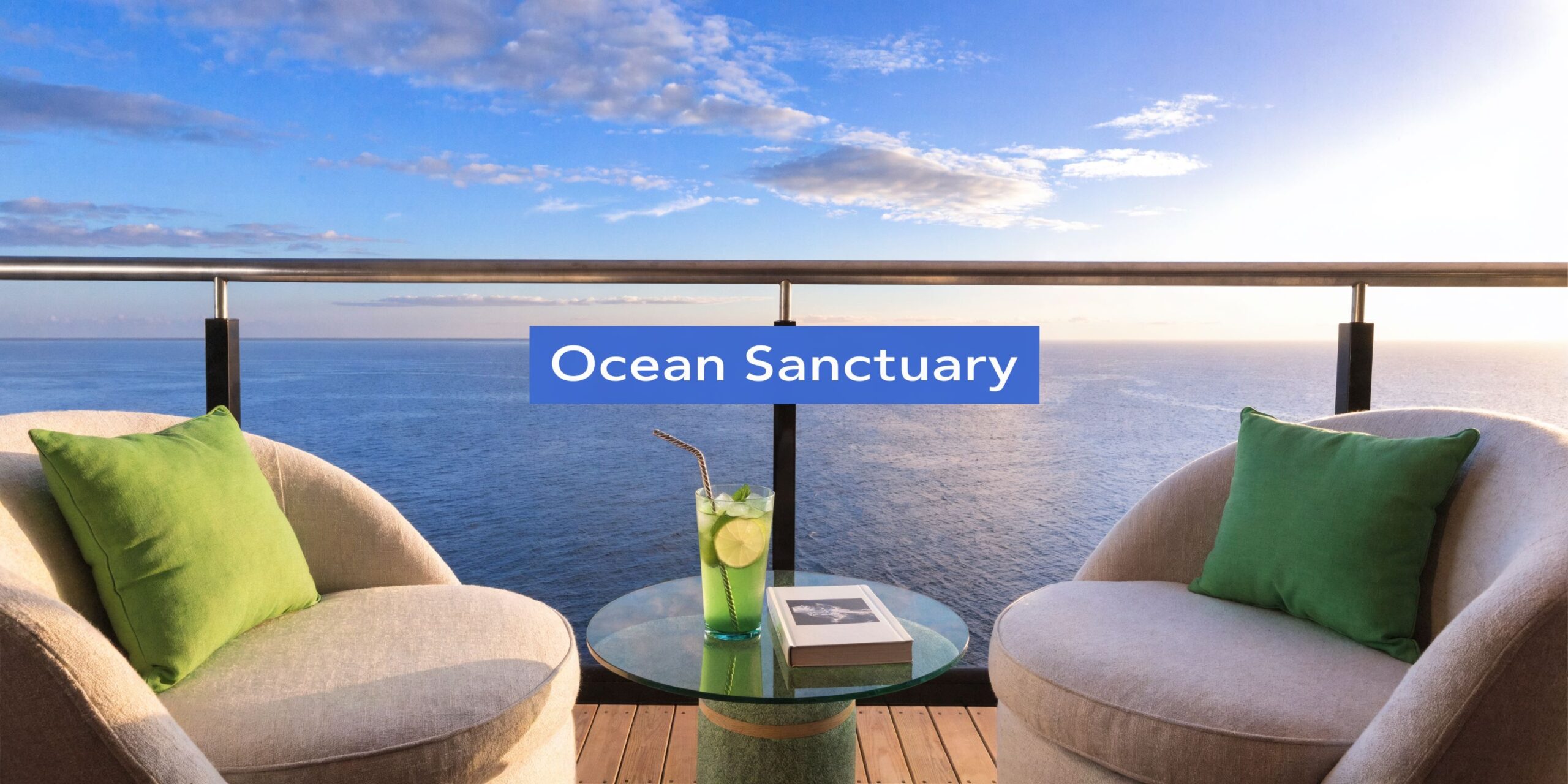
This route is sea-day heavy by design. Your room is not just where you sleep. It is where you have breakfast while the Pacific rolls by, where you read in the afternoon, and where you watch Hawaii appear. That changes the math.
Why a suite is worth it here
On a short cruise, I can make an argument for a smaller cabin if you are off the ship all day. On this route, that logic falls apart. Five days at sea demand space, light, and privacy.
A premium suite gives you:
- A private retreat: Especially useful on larger ships where public spaces can feel busy.
- Better outdoor access: Your balcony becomes your front-row seat to the ocean.
- Higher-touch service: Concierge support, suite dining, and priority handling matter more on a longer crossing.
- A calmer experience: Less queueing, less crowding, and fewer compromises.
Which style of luxury works best
Some travelers want a large contemporary ship with suite enclaves and lots of dining and entertainment. Others want an all-suite, more intimate luxury vessel. Both can work beautifully, but they create very different trips.
If you want the most amenities, a larger ship with a suite complex can be ideal. If you want a quieter, more refined onboard atmosphere, a luxury line is often the better fit. Knowing the ship matters more than loyalty to a brand. A badly located balcony on the wrong deck can be a bigger mistake than choosing the “wrong” line.
For a broader comparison of upscale options, see https://exploreeffortlessly.com/best-luxury-cruise-lines/.
Motion and comfort matter on the Pacific
If you are at all sensitive to motion, this is not the itinerary to wing it. Mid-ship placement usually wins. Higher is not always better. And on the luxury end, stabilization technology can make a real difference.
On Silversea’s Silver Whisper Vancouver to Honolulu voyage, the ship’s zero-speed stabilizers can cut roll by 85% in Pacific swells, enabling 95% onboard dining uptime, according to Silversea’s voyage details. For travelers who worry about open-ocean motion, that is not a minor detail. It is exactly the kind of specification that affects whether the crossing feels restorative or irritating.
Advisor take: On a Pacific crossing, I prefer a well-located balcony or suite over almost any flashy onboard add-on. Space and placement outperform gimmicks.
What I look for when selecting a cabin
I do not choose suites by category name alone. I look at the actual deck plan and the traveler’s habits.
A few priorities usually guide the decision:
- Mid-ship if motion is a concern
- A balcony with genuine usability
- Distance from noise zones
- Easy access to suite-only amenities if applicable
- A view worth paying for on scenic approach days
That is the difference between buying a room and selecting the right one.
A Sample 12-Night Luxury Voyage Itinerary
A sample itinerary makes this route easier to understand because the sailing has a clear rhythm. Departure, Crossing, Island reward.
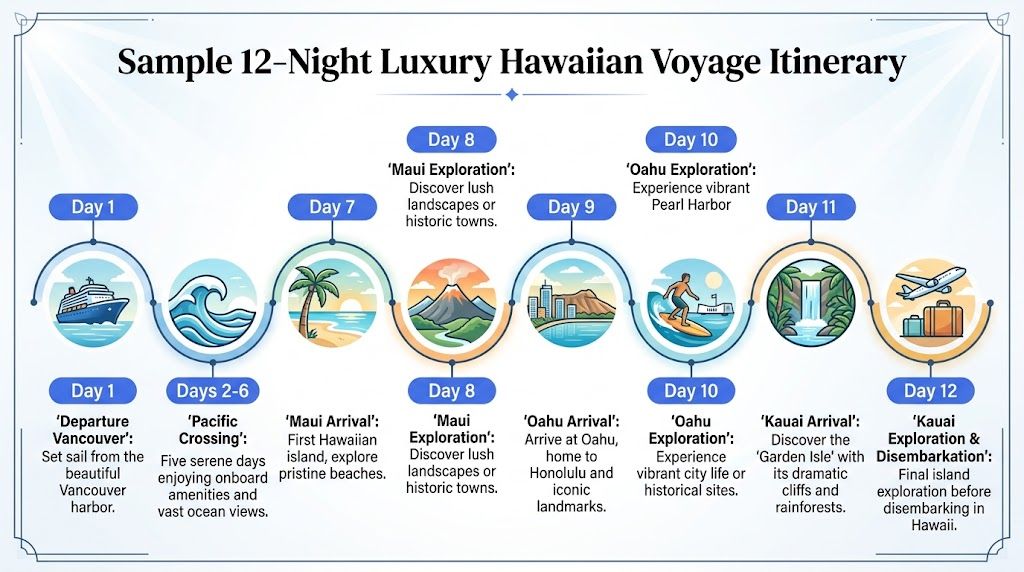
One strong example is Royal Caribbean’s 12-night Hawaii cruise from Vancouver on Anthem of the Seas. That itinerary includes a Seattle stop and then a long Pacific stretch before Hawaii. Royal Caribbean notes that the sailing includes a stop in Seattle for U.S. preclearance, which reduces customs delays in Hawaii, and five consecutive sea days at speeds of 20-22 knots to cover the roughly 2,800 nautical mile crossing efficiently on its Anthem of the Seas itinerary page.
How that pacing works in real life
Here is why that structure works so well.
- Day 1 feels ceremonial. You board in Vancouver, settle into your suite, and let the trip begin properly.
- Day 2 gives you a practical Seattle call that also breaks up the transition.
- Days 3 through 7 are your true crossing days. This is when specialty dining, spa appointments, reading on your balcony, and slow afternoons make sense.
- Day 8 brings Hawaii into focus with Kailua Kona.
- Day 9 resets the pace with another sea day.
- Day 10 shifts into visual drama with scenic cruising along the Napali Coast.
- Day 11 delivers Honolulu.
- Day 12 and beyond can be either disembarkation logistics or, preferably, the start of a land extension.
Why this style of itinerary works so well
The onboard and ashore experiences support each other. The sea days create anticipation. Hawaii then feels earned, not rushed.
That is why I like this style of trip for travelers who want both structure and softness. You get enough ship time to enjoy the luxury you paid for, then enough island time to make the destination feel real.
Curating Your Perfect Days at Sea and on Shore
Luxury on this route comes from pacing. Not excess. Not trying to do everything. Pacing.
The smartest travelers treat sea days and port days differently. At sea, you want rhythm. In Hawaii, you want intention.
Build a real plan for sea days
Many travelers underplan sea days, then complain they were bored. That is avoidable.
I prefer a loose framework, not an overscheduled calendar. Think of your crossing in layers: One or two specialty dinners, one spa afternoon, one lounge or sundeck you return to daily. Maybe a fitness class if that is your style. Maybe none if your whole point is decompression.
A polished sea-day strategy usually includes:
- Dining reservations made early: The best restaurants and times go first.
- Protected downtime: Leave open blocks for the balcony, the pool deck, or a long lunch.
- One indulgence you would skip at home: A treatment, tasting, or private relaxation ritual.
- Evening structure: Cocktails, dinner, show, or wine on the veranda.
Best practice: Plan enough that the days feel effortless, but not so much that the ship starts feeling like a conference agenda.
Port days should feel private, not generic
Hawaii is too beautiful for cookie-cutter touring. Travelers either elevate the trip or flatten it here.
The right shore day depends on your preferences, but I usually push clients toward one memorable, high-quality experience rather than several smaller ones. A private driver and guide often outperform larger excursions because you control the pacing. So does a carefully selected water-based outing, a culinary experience, or a scenic day that avoids the obvious crowds.
Match the excursion style to the island
A better framework is to ask what each island does best.
| Island feel | Better approach |
|---|---|
| Volcanic and dramatic | Scenic touring with a guide |
| Coastal and marine-focused | Private or small-group boat experience |
| Urban and cultural | Food, history, or custom city touring |
| Lush and visual | Scenic drives and low-stress exploration |
The point is not to fill every hour. The point is to return to the ship or your resort feeling like you touched the place, not like you checked a box.
Essential Logistics for Your Vancouver to Hawaii Cruise
A one-way Pacific cruise works beautifully when the logistics are handled early. When they are not, this kind of trip can become annoying fast.
Arrive in Vancouver early
I always recommend arriving at least a day before embarkation. Vancouver is too important a departure point to leave to same-day flight luck.
A pre-cruise night gives you a calmer start, time to recover from travel, and a better embarkation morning. It also protects the entire trip from a delayed flight or missed connection.
Pack for two moods
This itinerary begins cooler and ends tropical. That means your wardrobe should do both.
Bring clothing for:
- Embarkation and sea days from Vancouver: layers, light knits, and comfortable deck wear
- Warm Hawaiian ports: resort wear, swimwear, sun protection, and breathable clothing
- Evening dining: polished outfits that still travel well
- Activity days: shoes and pieces that can handle walking, light adventure, or coastal conditions
If you want a starting framework, this packing guide at https://exploreeffortlessly.com/what-to-bring-on-a-cruise/ is practical and easy to adapt.
Do not ignore motion planning
Even travelers who are fine on shorter itineraries can notice the Pacific more. That does not mean the trip is uncomfortable. It means you should be smart.
If you are prone to motion sensitivity, prepare before you board. This guide on best seasickness medicine for a cruise is a helpful overview of common options and when travelers tend to use them.
Plan the ending before you book the beginning
This is the mistake I see most often. People get excited about the sailing and forget the trip ends in Hawaii, not Vancouver.
That means you should decide early whether you want:
- A direct flight home from Honolulu
- A post-cruise resort stay on Oahu
- An island extension beyond Oahu
My strong preference is some form of post-cruise extension if your schedule allows. You just crossed the Pacific. Give yourself time to enjoy the landing.
Plan Your Bespoke Hawaii Cruise with Explore Effortlessly
Hi, I’m Karrah, owner, founder, and lead travel advisor at Explore Effortlessly, a luxury award winning travel agency based in Miami.
I specialize in designing bespoke, high touch itineraries to bucket list destinations around the world. Every trip is curated with intention, insight, and seamless logistics from start to finish.
From luxury cruises and private villas to honeymoons, safaris, and once in a lifetime journeys, my role is to simplify the planning process while elevating every detail.
I work with clients nationwide through virtual consultations, and this kind of one-way Pacific cruise is exactly the sort of trip that benefits from expert planning. The sailing itself is only one piece. The right suite, the best pre-cruise timing, post-cruise island strategy, and shore experiences are what turn it into a seamless luxury journey.
My credentials include Circle of Excellence Advisor, recognized as a leading advisor at Nexion, and CLIA Accredited Cruise Counselor. That means you are not guessing your way through ship selection, cabin placement, and cruise logistics.
If you want this trip done properly, start with a planning conversation.
For more luxury travel insight and ideas, join the newsletter here:
Sign Up Here
Frequently Asked Questions About Hawaii Cruises
Are Vancouver to Hawaii cruises roundtrip
Usually, no. Most are one-way repositioning voyages. That is part of their appeal, but it also means your air and hotel planning need to be handled carefully.
When is the best time to book cruising to hawaii from vancouver
These sailings are seasonal and tied to ship repositioning, so the best opportunities generally appear in spring and fall. I recommend booking as soon as the right itinerary opens if you want the best suite categories and the smoothest overall plan.
Is this a good cruise for first-time cruisers
Sometimes. If you already know you enjoy slower travel and time at sea, yes. If you think a cruise should mean constant port stops, start elsewhere. This route is best for travelers who want the voyage to feel substantial.
Which Hawaiian islands might I visit
Common stops can include Oahu, Maui, the Big Island, and sometimes Kauai. The exact mix depends on the specific sailing and line.
Is a balcony really worth it
Yes. On this itinerary, more than on many others. The Pacific crossing and Hawaiian scenic moments make private outdoor space far more valuable than it would be on a shorter, more port-heavy cruise.
Should I add nights in Hawaii after the cruise
I strongly recommend it if your schedule allows. A one-way sailing feels much more complete when you stay on for a few nights and enjoy Hawaii without the clock of embarkation or disembarkation hanging over you.
If you’re ready to make cruising to Hawaii from Vancouver feel seamless instead of complicated, Explore Effortlessly can design the full journey around the sailing, from suite selection to private island touring to your post-cruise stay.