You're comparing a Tuscan villa with a Santorini terrace, saving reception ideas late at night, and discovering that your guest list has become a travel project of its own. Meanwhile, residency rules, translated documents, room blocks, transport, and vendor contracts are waiting for decisions before the beautiful details can safely move forward.
The smartest way to plan destination weddings in Europe is to treat the celebration as two linked projects. The first is legal compliance, including the choice between a legally recognized civil ceremony and a symbolic celebration. The second is the guest journey, from arrival and accommodation through welcome events, wedding day movement, and departure. When those tracks stay aligned, romance has room to breathe.
Plan a European Wedding Around the Experience You Want
A couple may fall for a spectacular venue, then discover that its ceremony rules, access limits, or guest logistics conflict with the celebration they planned. Start by defining the experience, then test each destination and legal pathway against it before reviewing venue contracts.
I ask couples to establish five priorities:
- Setting: vineyards, coast, mountains, a historic city, or a private estate?
- Pace: a leisurely residential weekend or an energetic itinerary filled with events?
- Culinary program: long family-style dinners or a polished cocktail reception?
- Cultural depth: local architecture, regional food, wine, music, and traditions woven through the schedule?
- Party energy: an intimate dinner with dancing, a late-night celebration, or one part of a longer European holiday?
These choices connect directly to legal and financial decisions. A civil ceremony may be legally binding yet limited to a municipal setting, approved hours, or specific documents. A symbolic ceremony allows more creative control, but the couple must complete the legal marriage elsewhere. Neither option carries more meaning by default. Choose according to the destination's rules, guest priorities, and the amount of administration you want during planning.
Practical rule: Confirm the destination and legal pathway before signing a venue contract.
Let the same priorities shape the budget. A cliffside property may provide the desired atmosphere while adding transport coordination, weather planning, and more complicated guest movement. A villa buyout can bring everyone together, yet its contract may need to address accommodation availability, meal service, staffing, and privacy. The lower venue fee is not always the lower overall cost.
Explore Effortlessly can coordinate destination strategy, guest travel, accommodation planning, and local planning relationships from one brief. That keeps legal requirements, vendor choices, and the guest journey connected instead of forcing the couple to solve each decision separately. I work with clients nationwide through virtual consultations, so planning does not depend on living near the destination.
Choose the Right European Region and Season
The right European region should pass two tests: it must support the wedding experience you want, and it must keep the guest journey practical. Tuscany suits couples seeking vineyard views, villa living, generous meals, and a relaxed multi-day rhythm. The Amalfi Coast delivers stronger coastal drama, but steep roads, restricted venue access, and transfer timing require careful planning.
The French Riviera offers polished venues and a cinematic setting. Provence favors countryside estates, markets, gardens, and slower outdoor dinners. The Greek islands provide bright sea views and visual impact, while mainland Greece can offer easier access to historic sites and larger guest movements. The Algarve and Mallorca combine coastal warmth with resort infrastructure, although high-season demand can reduce availability and raise costs.
Mountain destinations create a different celebration. The Swiss and Dolomite Alps suit couples who value dramatic scenery, refined hospitality, and an itinerary shaped by nature and regional culture. Historic cities such as Florence, Seville, and Dubrovnik work well when architecture and walkability matter, but urban restrictions may affect outdoor music, vehicle access, and late-night events.
| Region | Signature Setting | Best Months | Planning Notes |
|---|---|---|---|
| Tuscany | Villas, vineyards, gardens | Shoulder seasons and warmer months | Confirm accommodation, meal service, and transport across rural roads |
| Amalfi Coast | Clifftop terraces and sea views | Shoulder seasons and warmer months | Steep access and guest transfers require careful choreography |
| French Riviera | Coastal estates and polished venues | Shoulder seasons and warmer months | Check municipal rules, event curfews, and high-season availability |
| Provence | Gardens, estates, and countryside | Shoulder seasons and warmer months | Outdoor plans need a clear weather alternative |
| Greek islands | Sea views, terraces, and island properties | Warmer months | Ferry, flight, and arrival coordination can shape the guest experience |
| Algarve and Mallorca | Coastal resorts and private estates | Shoulder seasons and warmer months | Compare resort access with exclusive-property privacy |
| Alps | Mountain scenery, chapels, and lodges | Season depends on the type of scenery or terrain you want | Build around weather, transfers, and guest mobility |
| Historic cities | Palaces, courtyards, and civic architecture | Shoulder seasons and warmer months | Urban access, noise rules, and ceremony permissions need early review |
Seasonality affects far more than the ceremony backdrop. It changes daylight, outdoor dining comfort, floral availability, traffic, flight options, and the time guests need to reach the venue. A shoulder-season date can provide a calmer atmosphere and more venue flexibility, but the weather plan must include a workable indoor option.
Shortlist two regions and test each against shoulder-season conditions, guest access, and the destination's legal pathway. Then confirm the region before signing a venue contract. Build the guest itinerary around arrival points, transfer distances, and mobility needs, not only the ceremony view.
Southern Europe remains a strong choice for international celebrations. In Italy, international couples represented 70% of destination weddings, compared with 80% in Greece and 75% in Portugal, according to CBI's destination-wedding research. Explore Effortlessly uses this regional comparison alongside venue access, seasonal conditions, and guest logistics to shape a destination shortlist that supports both compliance planning and a high-touch guest experience.
Handle Legal Requirements and Permit Checklists
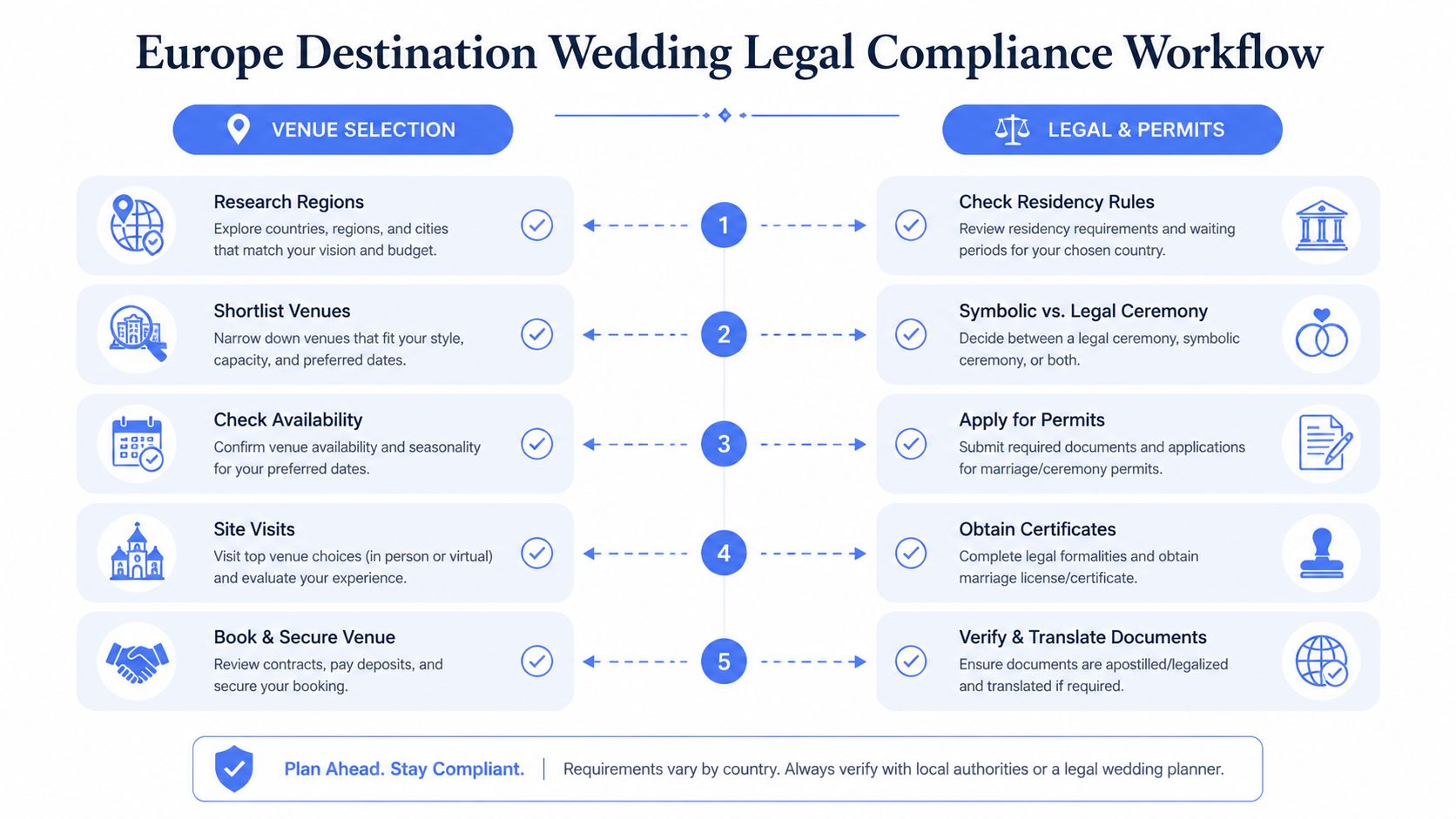
A venue can be perfect on paper and unusable for a legal ceremony. Confirm the destination's marriage pathway before signing, because residency rules, document requirements, and municipal approvals can determine the format, timeline, and property you select. Treat the wedding as two linked projects: legal compliance and a high-touch guest journey.
France shows why early verification matters. Couples generally need about 40 consecutive days of residency in the commune before a civil ceremony, as outlined in this destination wedding permit requirements guide. Spain can be more restrictive for couples without an existing local connection. One partner may need to be a Spanish resident for two years for a civil marriage, a requirement discussed in this guide to marriage abroad and Spanish residency rules. If that route affects family planning, review how to obtain Spanish citizenship separately.
Italy often requires several days to weeks of preparation, translated documents, and apostilled paperwork submitted well before the ceremony. Greece is frequently more accessible for couples seeking a lower-residency pathway, but registration still matters. The marriage must be recorded with the Vital Statistics Office in the city where the ceremony takes place, within 40 days after the ceremony, according to this European marriage requirements guide.
Build the document track first
Requirements vary by nationality and destination. Set up one working file with:
- Identity documents: Passports and certified copies.
- Civil records: Birth certificates and proof of single status.
- Previous marriages: Divorce decrees or death certificates when relevant.
- Authentication: Apostilles where required.
- Language compliance: Certified or sworn translations.
- Local filings: Forms, notices, permits, and municipality submissions.
Start collecting documents 4 to 8 weeks before submission. For higher-complexity destinations such as France, plan 12 or more months ahead, since residency and civil-registry checks can affect both the ceremony plan and the guest itinerary. Use the destination wedding planning checklist to keep legal deadlines, vendor commitments, transfers, and guest communications in one planning system. Explore Effortlessly handles these tracks together, so a legal constraint is addressed before it becomes a costly guest or venue problem.
A symbolic European ceremony often gives couples more control. Complete the legal marriage at home, then create the celebration abroad around the setting, vows, rituals, and guest participation you want. Citizenship planning and marriage registration remain separate legal questions, so confirm each with the appropriate specialist rather than assuming one establishes the other.
Build a Luxury Wedding Budget With Fewer Surprises
A European wedding budget needs two linked plans: the couple's spending and the guest journey. A venue quote rarely shows the full cost. Add accommodation, transfers, legal paperwork, pre-wedding meals, farewell events, and the staffing required for a multi-day celebration before approving the design. If the wedding party wants its own trip before Europe, I would use our San Diego bachelor party planning guide to shape a separate group itinerary.
Separate couple-facing costs from guest-facing costs. The couple may cover the venue, reception, photography, entertainment, attire, and core hospitality. Guests may pay for flights and rooms, but those expenses still shape attendance, room-block performance, and the quality of the weekend. I recommend modeling both sides before signing a venue contract.
| Category | Share of Budget | Typical Range | Notes |
|---|---|---|---|
| Venue and accommodation | Variable | Destination-dependent | Ask about buyouts, minimum stays, room-block terms, and exclusivity |
| Food and beverage | Variable | Destination-dependent | Review minimums, service charges, VAT, and multi-day meals |
| Floral and production | Variable | Destination-dependent | Include ceremony setup, lighting, power, furniture, and weather alternatives |
| Photography and entertainment | Variable | Destination-dependent | Clarify travel supplements, equipment, overtime, and backup plans |
| Attire and beauty | Variable | Destination-dependent | Plan for transport, steaming, alterations, and humidity or mountain conditions |
| Legal and documents | Variable | Destination-dependent | Include certificates, apostilles, translations, and registrar fees |
| Guest travel and lodging | Variable | Destination-dependent | Model arrival patterns, room blocks, transfers, and payment deadlines |
| Pre- and post-event hospitality | Variable | Destination-dependent | Welcome dinners, activities, brunches, and additional nights can reshape the total |
Read every proposal for costs outside the headline figure. VAT, tourist taxes, vendor travel supplements, ceremony setup fees, extra furniture, overtime, and multi-day meal packages can materially change the final invoice. Room blocks require the same attention. A shift in guest numbers can affect contracted inventory, payment deadlines, and cancellation penalties.
Current market guidance places a typical European destination wedding at approximately €15,570 to €27,160 before guest travel and lodging, with visas and apostilles excluded, according to this European destination wedding cost guide. Italy shows the scale of the regional market, with about €803 million in sector turnover during 2023, more than 2.4 million wedding-related overnight stays, and an average of 60.7 participants per event, as reported in the CBI's Italy and Europe market report.
Spend first on what guests feel, including reliable transport, a capable local planner, comfortable accommodation, excellent food, and a weather-continuity plan. Add decorative detail after the experience works without it.
Use this framework for the average cost of a destination wedding before selecting design details. Explore Effortlessly handles venue comparisons, guest logistics, and budget coordination directly, helping the legal requirements and guest experience stay aligned. Approve a budget envelope early, then reserve a separate contingency for legal corrections, transport changes, and added hospitality.
Follow a Milestone-Based Wedding Planning Timeline
A strong timeline works backward from the wedding date and forward from the destination's legal rules. It isn't a decorative checklist. It protects the decisions that become difficult to reverse, especially the venue date, residency pathway, accommodation strategy, and guest travel plan.
The couple's planning track
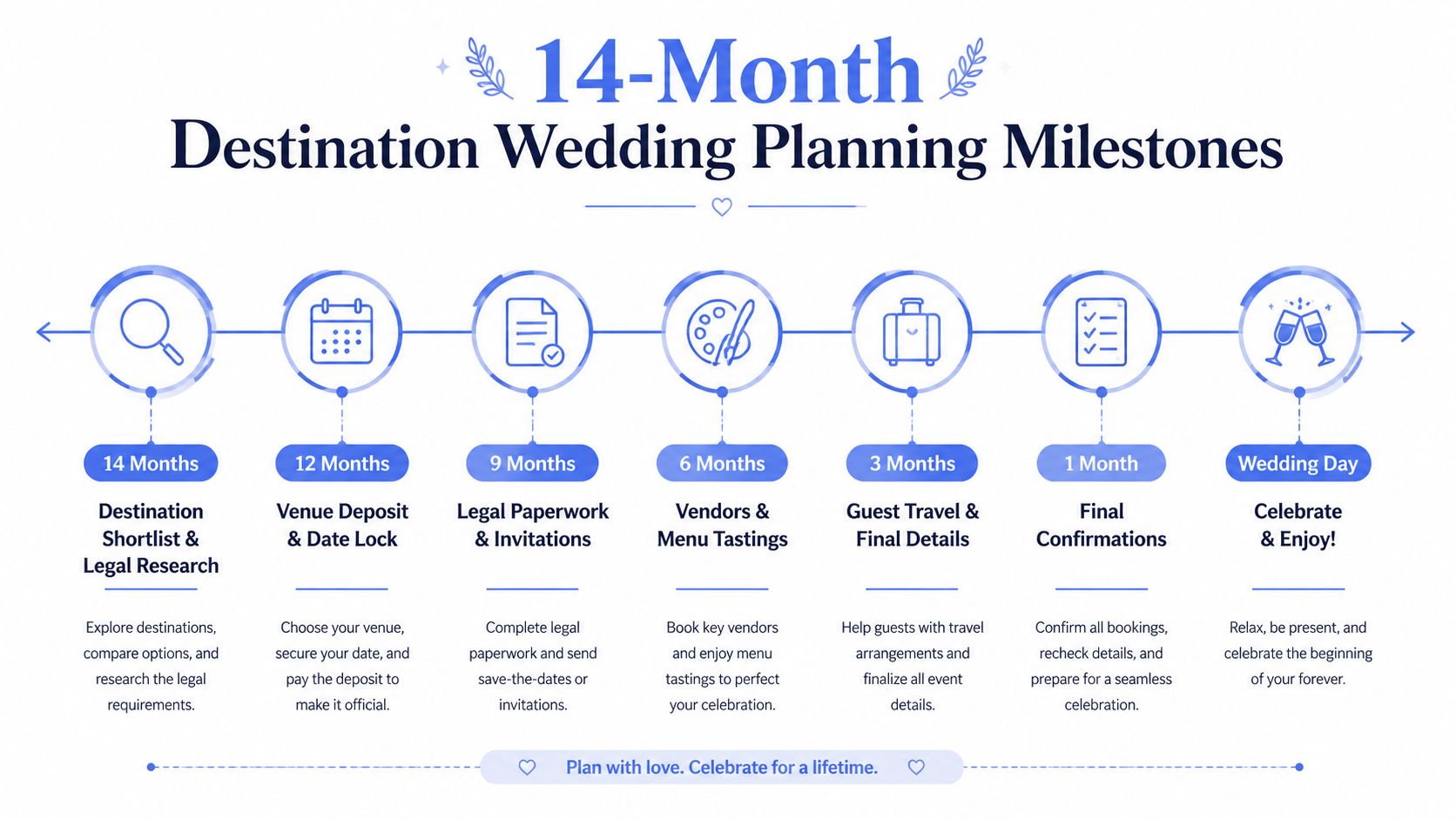
At 12 to 14 months, shortlist regions, verify legal feasibility, identify the ceremony type, and engage the planning lead. This is also the right stage to compare a civil ceremony abroad with a symbolic celebration after completing the legal marriage at home.
Around 9 to 10 months, place the venue on hold or secure the contract, confirm whether accommodation is required, and begin gathering civil documents. Don't spend heavily on stationery or décor before the municipality and venue agree that your chosen ceremony format can proceed.
At 6 to 7 months, secure the core vendor team, negotiate accommodation blocks, confirm transport requirements, and begin menu development. For Mediterranean peak dates, including June, July, and September Saturdays, couples should expect to plan 12 to 18 months ahead, as noted in this destination wedding timeline guide.
The guest track
Guest communication should run alongside the planning calendar:
- Early communication: Share the destination, expected travel pattern, and accommodation approach once the date is credible.
- Travel guidance: Give guests clear information about passports, visas, arrival airports, rail connections, and transfer plans.
- Accommodation decisions: Explain room categories, payment deadlines, minimum stays, and whether guests can extend independently.
- Arrival coordination: Collect flight details, dietary needs, mobility considerations, and preferred transfer windows.
- Final month: Send a concise itinerary with meeting points, attire guidance, weather notes, and emergency contact procedures.
At 4 to 5 months, finalize guest communications, travel logistics, rooming details, and event transportation. In the final quarter, focus on menu tastings, production drawings, seating, music transitions, vendor confirmations, and an on-site rehearsal.
Shoulder-season dates may provide more flexibility, but flexibility isn't a reason to delay legal review. The milestone calendar should be based on the strictest requirement in the project, not the easiest one. That approach keeps design decisions exciting instead of allowing them to become expensive distractions.
Design Ceremony, Reception, and Guest Experiences
The design stage should answer one question: how does each guest move through the celebration without feeling managed? The answer changes dramatically with the property, guest count, terrain, and ceremony format.
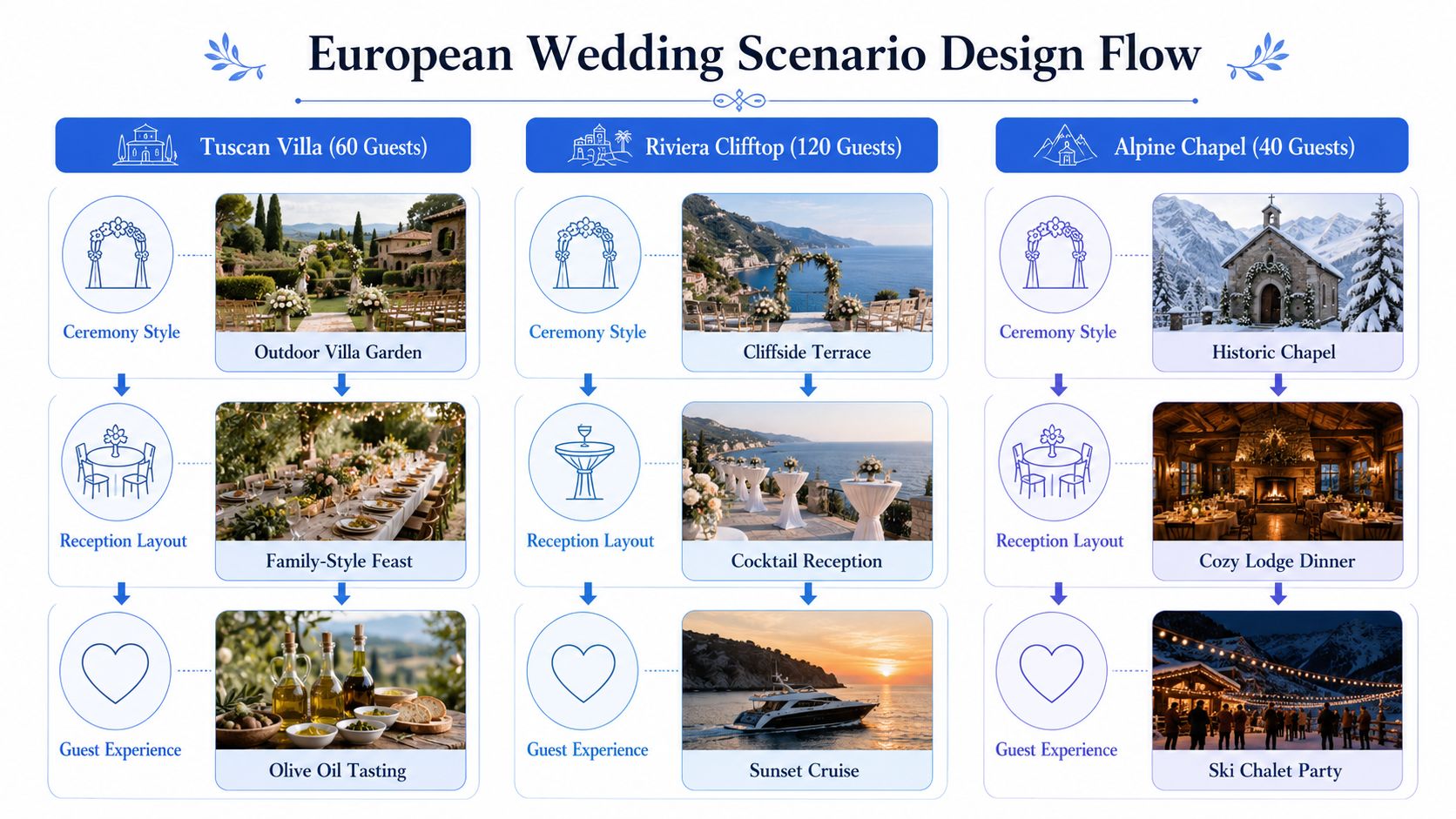
A 60-guest Tuscan villa wedding can feel residential and generous. Guests might gather in the garden for a symbolic ceremony, move to a shaded terrace for aperitivo, and settle into a family-style dinner under the evening sky. A welcome dinner introduces the regional food program, the wedding day keeps movement within one property, and a farewell brunch gives everyone time to reconnect before departures.
A 120-guest Riviera clifftop celebration needs more choreography. The ceremony may take place on a terrace, with cocktails positioned nearby so guests don't retrace the same route. Shuttles need timed departures, older relatives need comfortable access, and the reception plan must account for wind, stairs, loading restrictions, and the possibility that a sunset cruise or off-site event requires a separate transport window.
A 30-guest Greek island micro-wedding can be intimate without feeling underproduced. A symbolic ceremony at a private property might lead to a long dinner, with a smaller welcome gathering and a relaxed farewell swim or brunch. The guest list is compact, but ferry schedules, arrival days, luggage handling, and document timing still deserve professional attention.
Make the property work for the people
The venue should support the emotional rhythm of the day. A garden ceremony followed by a distant reception can create unnecessary guest movement, while a property with several terraces may allow a natural progression from vows to cocktails to dinner. Weather contingencies should preserve that rhythm, not send guests into a generic indoor room at the first sign of rain.
Guest count also changes the service model. Smaller groups may benefit from a single long table and highly personal menu, while larger celebrations need stronger wayfinding, seating logic, sound coverage, and transport staging. Families with dietary requirements, different mobility needs, or language preferences should be considered during the layout phase, not after the floor plan is finished.
Some couples extend the experience through a private villa or residence. A guide to Europe vacation homes for extended stays can be useful when comparing residential privacy with hotel-based convenience. The right choice depends on staffing, meal service, housekeeping, transport, and how much togetherness your guests enjoy.
Why Full-Service Planning Makes Europe Feel Effortless
A European destination wedding becomes manageable when one person owns the connections between decisions. The venue, municipality, planner, caterer, transport company, accommodation partners, and guests all work on different timelines. Without a central coordinator, the couple becomes the messenger, translator, contract reviewer, and escalation point.
Full-service planning brings the workstreams into one managed workflow:
- Region selection: Match the atmosphere and access requirements to the season and legal pathway.
- Legal compliance: Track documents, translations, apostilles, municipal submissions, and registration deadlines.
- Budget modeling: Separate venue costs, guest travel, accommodation, hospitality, taxes, and production.
- Timeline scheduling: Place each decision according to the destination's actual lead times.
- Guest experience design: Coordinate arrivals, rooming, transfers, meals, activities, ceremony flow, and departures.
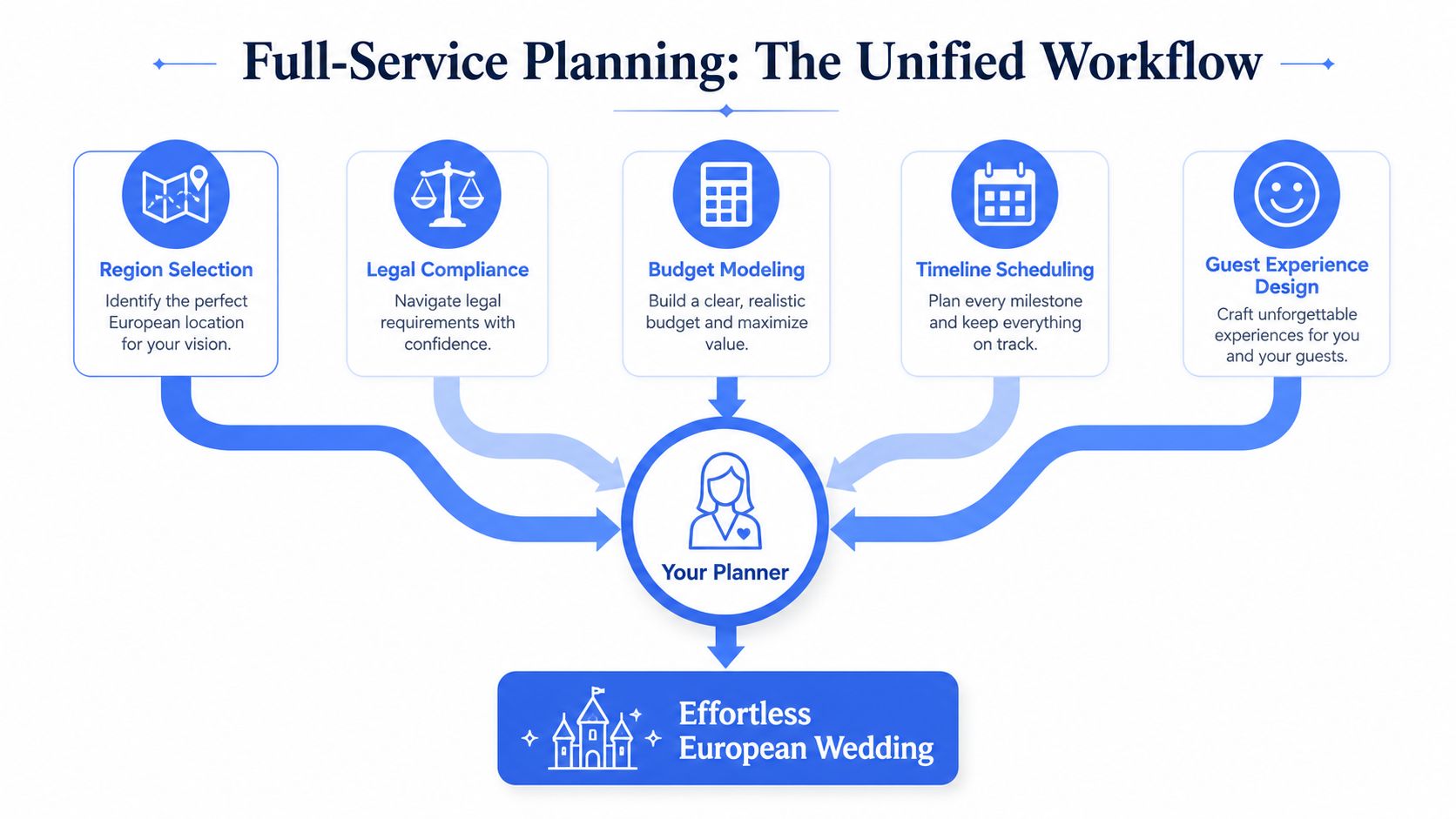
The value isn't limited to saving research time. A strong planning lead catches conflicts before they reach the couple. A venue's outdoor-music restriction may affect the reception schedule. A document correction may change the civil ceremony timeline. A weather alternative may require different furniture, lighting, transport, and staffing. When those changes remain within one coordinated system, the guest experience can stay coherent.
Explore Effortlessly handles destination wedding travel strategy, accommodation coordination, guest logistics, and planning communication before departure. Trusted in-destination partners and suppliers provide on-the-ground support, while I coordinate the broader planning and logistics before guests travel. I work with clients nationwide through virtual consultations, and my credentials include Circle of Excellence Advisor, Top 5 percent at Nexion, and CLIA Accredited Cruise Counselor.
After an initial consultation, the useful deliverables should be concrete:
- A regional shortlist matched to season, access, and legal feasibility
- An indicative budget envelope that includes the commonly omitted layers
- A milestone calendar for legal, venue, vendor, and guest decisions
- Vetted local vendor introductions aligned with the selected experience
- A coordinated travel and accommodation strategy for the guest list
A European wedding deserves more than a beautiful setting. It needs a plan that respects the law, protects the budget, and gives guests a weekend they can enjoy.
Advisor perspective: The most effortless wedding is the one where the couple gets to make meaningful choices while someone else manages the dependencies.
Explore Effortlessly designs high-touch European destination weddings around legal feasibility, luxury travel, guest logistics, and a cohesive multi-day experience. Visit Explore Effortlessly to begin a virtual consultation, and join the Explore Effortlessly newsletter for thoughtful luxury travel guidance.