You're engaged, your group chat is already naming countries, and somewhere between “Should we do Italy?” and “Do people really have to stay at the same resort?” the romance gets replaced by logistics.
That's normal.
Most couples don't struggle with the vision. They struggle with the mechanics. A destination wedding sounds simple until you realize you're not planning one event. You're coordinating a wedding, a hosted travel experience, guest accommodations, airport arrivals, rooming lists, event flow, and sometimes legal paperwork in another jurisdiction. That's why so many busy professionals start with excitement and hit overwhelm fast.
An Introduction to Effortless Destination Weddings
You choose a stunning resort, send the save-the-dates, and expect the property to keep everything on track. Then the questions start. Which airport should guests use? Who is handling room requests? What happens when half the group lands before check-in and the ceremony timeline collides with vendor setup?
That is the moment destination weddings stop feeling romantic and start feeling operational.
A destination wedding works well when one experienced person is managing the details before they become expensive mistakes. I see the same pattern all the time. A couple picks the location first, assumes the hotel will cover the full experience, and later learns the on-site team is only handling a narrow slice of the event. Guest bookings are fragmented. Arrival schedules are unclear. Ceremony timing has not been checked against transfers, setup windows, or local requirements.
An advisor-led approach changes everything at this stage.
Luxury destination weddings are not hard because the vision is unclear. They become hard because no one has combined the wedding plan with the travel plan early enough. Busy professionals feel this fast. They do not have time to answer guest questions at midnight, compare room categories across three properties, and chase vendors in another country while trying to enjoy their engagement.
The first mistake is treating travel like a sidebar. It drives the entire guest experience and shapes the event itself.
The second mistake is leaving communication loose and informal. Guests need one clear booking path, one reliable source of information, and firm guidance on where to stay, when to arrive, and what to expect. Without that structure, you get delays, split bookings, repeated questions, and preventable stress.
A well-run destination wedding usually starts with five decisions made early and made correctly:
- A destination and venue that fit the guest profile, not just the couple's mood board
- An accommodation plan that keeps the group organized
- A single communication system for booking and updates
- A budget that accounts for both events and travel realities
- A lead advisor overseeing timing, guest movement, and the full experience
That is the difference between a pretty ceremony and a well-managed celebration that feels polished from the first arrival to the final farewell.
The Big Picture What a Destination Wedding Really Involves
If you're asking how do destination weddings work, the simplest answer is this. They work like a hybrid of a wedding and a group trip.
That distinction matters because couples often budget, schedule, and communicate as if they're planning a local one-day celebration. That's the wrong model. A destination wedding is a hosted multi-day experience. One industry source says these weddings are typically planned over 13 to 18 months, usually host 50 to 70 guests, and often unfold over 4 to 5 nights in the destination, which is why the format functions more like a travel project than a single event booking, according to Paradise Weddings' destination wedding statistics.
It's smaller, but it's not simpler
A smaller guest list sounds easier on paper. Sometimes it is. Often it just shifts the complexity.
Instead of managing a large hometown crowd for one evening, you're managing a smaller group across several days. That means arrivals on different flights, varied room categories, meal counts, transfer schedules, and multiple hosted touchpoints. The wedding itself may be more intimate, but the operations behind it are far more layered.
If you want a useful real-world example of how place shapes the guest experience, take a look at this overview of a successful destination wedding in Harrison Hot Springs. It's a good reminder that the setting isn't just scenery. It affects flow, mood, and logistics.
What destination weddings actually include
Most destination weddings involve more than the ceremony and reception. In practice, couples are usually building a weekend rhythm that may include:
- Arrival day hospitality with check-ins, welcome amenities, or casual meetups
- Core wedding events such as the ceremony, cocktail hour, and reception
- Departure touchpoints like a farewell brunch or relaxed final gathering
That's why I tell clients to stop asking, “Where do we want to get married?” and start asking, “What experience are we hosting?”
If the answer is “a beautiful trip with the people we actually want there,” then a destination wedding probably fits.
The Planning Timeline A Phased Approach to a Flawless Event
Destination weddings go sideways when couples plan them in the wrong order. The right order fixes half the stress before it starts.
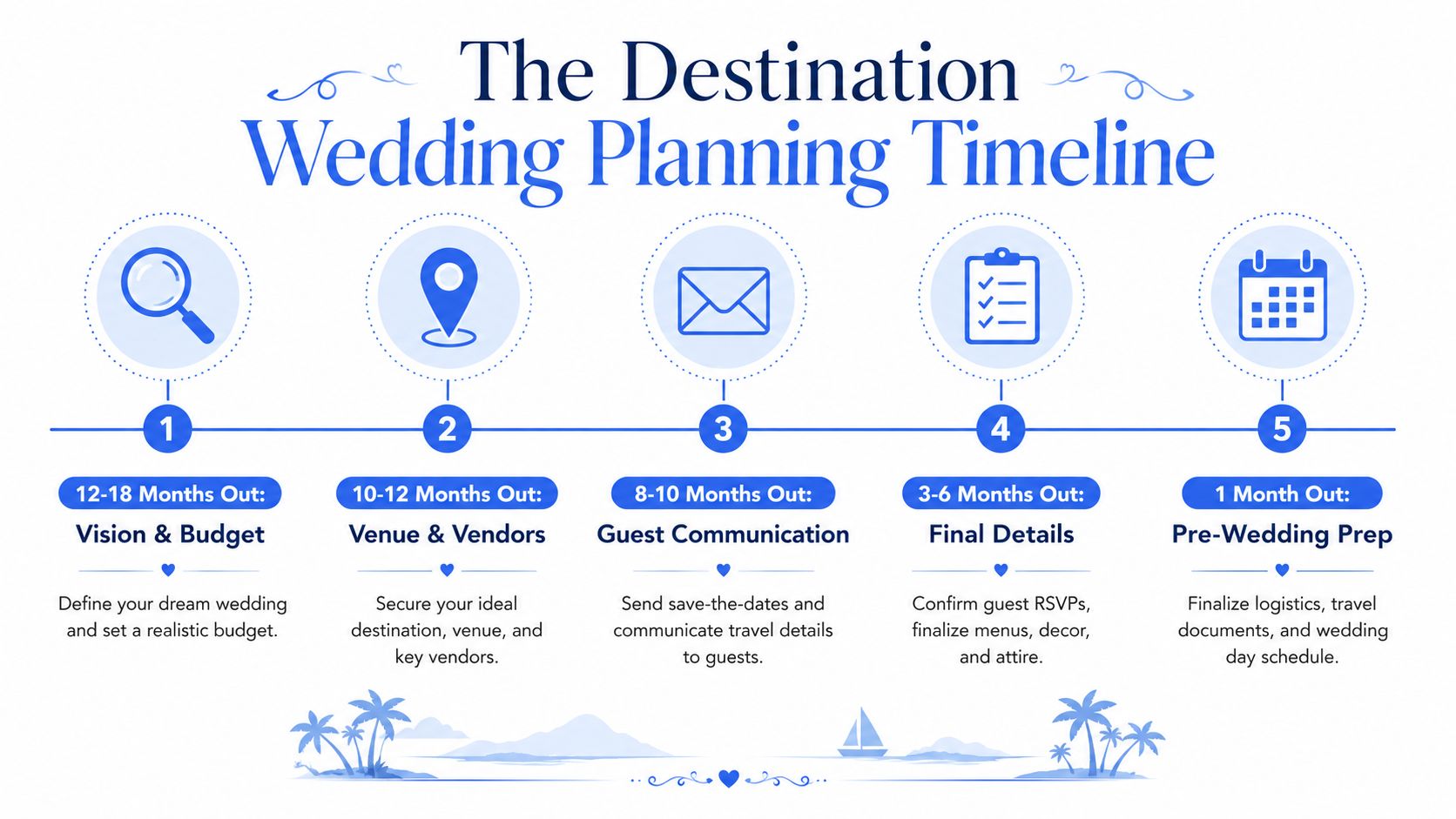
One of the clearest planning frameworks puts the venue and date lock-in at 11 to 12 months out, the room block at that same stage, and save-the-dates at 8 to 12 months in advance, because guests need serious runway to manage flights, time off, and lodging. That sequence is laid out in The Barn at Silver Oaks Estate's destination wedding guide.
Phase one focuses the vision
At the start, I want three decisions from a couple before anything gets signed:
- What kind of setting fits you
- Who absolutely needs to be there
- What level of hosting feels right
If those answers are fuzzy, every quote and venue option feels confusing. If they're clear, choices become faster.
This early stage is where many general checklists can help you see the broad moving parts. For example, Premier Marquee Hire's wedding guide is useful for understanding the wider planning rhythm, even though destination events need a more travel-heavy strategy layered on top.
Phase two locks the non-negotiables
This is the stage that controls the event.
Venue first. Always. Then accommodations. Not the other way around.
Once the date and venue are confirmed, the room block follows immediately. If you delay the accommodation strategy, you create confusion, rate volatility, and guest fragmentation. If everyone books all over the map, your transfers and event timing become far more difficult to manage.
For a deeper breakdown of sequencing, timelines, and what should happen when, this destination wedding planning timeline is the kind of resource I'd want a couple to review before making early commitments.
Phase three is guest-facing
After the core contracts are in place, guest communication starts. Not before.
At that point, guests need practical information, not vague excitement. They need to know where to stay, when to arrive, what they're expected to attend, and how much initiative they need to take themselves.
A clean guest communication system usually includes:
- Save-the-dates early enough for flight planning and PTO requests
- A wedding website with room details, itinerary notes, and deadlines
- Regular milestone updates so no one is chasing the couple for basics
Practical rule: if guests have to assemble the trip themselves from scattered texts and emails, the planning system is broken.
Final phase tightens execution
The last stretch is not the time for major decisions. It's for confirming details.
That means final timelines, arrival patterns, transfer plans, seating flow, vendor handoffs, and document checks. Calm weddings come from disciplined planning, not last-minute heroics.
Decoding the Budget Who Pays for What
In this scenario, couples either get smart or get blindsided.
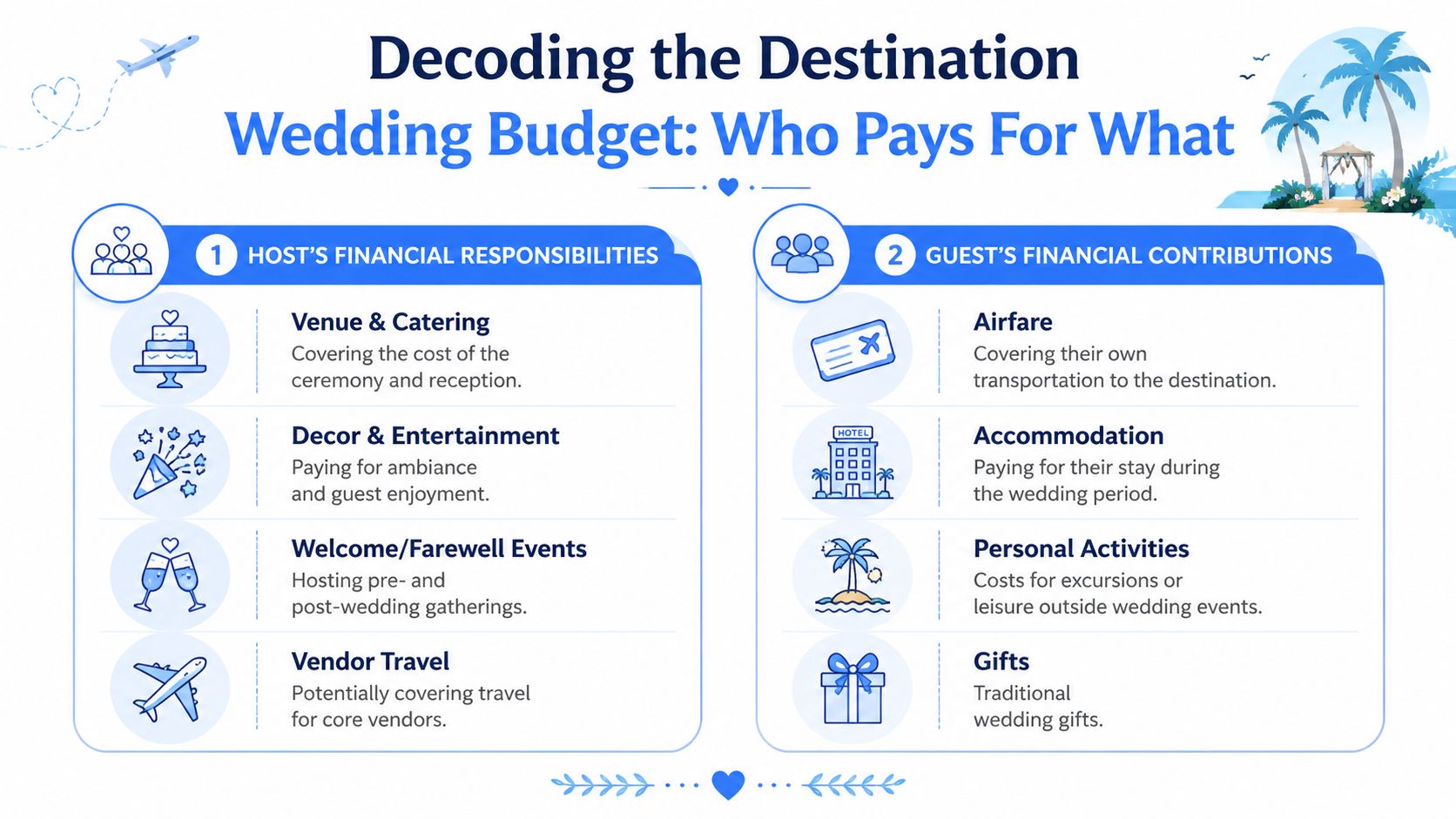
The basic etiquette is straightforward. Guests usually pay for their own travel and lodging, while the couple hosts the wedding events, and the budgeting challenge is that a smaller guest list does not automatically mean a cheaper celebration once you add welcome events, farewell brunches, and group activities. That's the practical breakdown in Easy Weddings' explanation of destination weddings.
What the couple usually covers
Hosts should expect to pay for the events they invite people to attend. That typically includes the ceremony, reception, and any additional gatherings they choose to officially host.
Here's the cleaner way to approach it:
| Couple responsibility | Why it matters |
|---|---|
| Ceremony and reception | This is the core hosted event |
| Welcome gathering | Sets the tone and rewards guest effort |
| Farewell event | Gives the weekend a polished close |
| Transportation support in some cases | Helps when venues are not walkable or arrivals are staggered |
What guests usually cover
Guests are generally responsible for getting themselves there and paying for where they stay. That's standard. It's also why couples need to choose destinations with care.
The etiquette isn't the hard part. The hard part is deciding whether you want to subsidize any of the friction points. Maybe that means helping with transfers. Maybe it means hosting an extra event. Maybe it means negotiating accommodations that give guests better value and a smoother booking path.
If you're trying to understand the financial side in more detail, this guide on the average cost of a destination wedding is a smart place to calibrate expectations before you commit to a format that looks simpler than it really is.
The expensive mistake
The biggest budget mistake is assuming intimate equals inexpensive.
It doesn't.
A destination wedding can absolutely be worth the investment. But if you host multiple events, need travel coordination, and care about guest experience, your costs move into hospitality territory fast.
The right budget isn't the lowest number. It's the number that supports the experience you actually want to host.
Curating a Seamless Guest Experience
Guests will forgive a lot. They won't forgive confusion.
That's why I care so much about the guest journey. Not because every wedding needs to feel formal, but because uncertainty creates friction. Friction lowers attendance, increases questions, and makes the whole event feel more scattered than it should.
Hospitality starts with structure
The accommodation plan is the backbone. If you don't organize where people stay, you'll spend months dealing with preventable mess.
A room block gives your group a clear booking path and keeps your guests tied to the wedding flow. It also makes transportation and communication easier because you're not coordinating pickups across a random spread of properties.
After that, everything needs one home. A wedding website works well because it centralizes the details people ask for repeatedly:
- Where to stay
- How to get there
- What to wear
- Which events they're attending
- What deadlines matter
If you're selecting the right property mix for that experience, this roundup of all-inclusive wedding resorts for destination celebrations can help clarify what kind of guest setup tends to work best for a hosted wedding weekend.
RSVP management is operations, not admin
This is the part many couples underestimate.
Planners recommend collecting RSVPs and dietary needs 2 to 3 months out, because that information directly affects catering counts, transfer schedules, and final vendor coordination, according to Garden of the Gods Resort's destination wedding planning guide.
That means RSVP management is not a cute stationery detail. It is a logistics system.
A strong guest process includes:
- Early response tracking so accommodation plans stay accurate
- Dietary collection before final catering numbers are due
- Rooming list organization so the property and transfer team can work from clean data
Guests should never need to wonder what happens next. If they're wondering, communication is late.
The best destination weddings feel relaxed because someone has already done the work to make them feel easy.
The Explore Effortlessly Difference From Overwhelmed to Effortless
Understanding the mechanics is useful. Managing them well is a separate skill.

Busy couples don't need more articles. They need someone to take ownership of the right details, in the right order, with enough taste and operational discipline to keep the celebration exceptional.
What expert management actually changes
A destination wedding doesn't become smooth because the resort is beautiful. It becomes smooth because someone is managing the invisible work:
- Destination fit based on your style, guest profile, and travel reality
- Contract coordination so your venue and accommodation terms make sense together
- Guest booking oversight so the group isn't left to improvise
- Vendor alignment across local partners, timelines, and event flow
- Legal planning support so paperwork doesn't threaten the date
This is also where a specialized advisor can spot the traps early. Some locations are gorgeous and operationally annoying. Some resorts photograph well and handle groups poorly. Some venues work for a honeymoon and not for a wedding where guests arrive across several days.
Why this matters for high-performing couples
Professionals with demanding schedules usually make the same mistake. They assume they can “stay on top of it” in spare moments.
You can, technically. You can also spend months fielding guest questions at lunch, reviewing contracts at night, and chasing details during work travel. That is not luxury. That is unpaid project management.
Explore Effortlessly plans destination weddings as an advisor-led service for clients nationwide through virtual consultations, handling the travel strategy, guest logistics, and planning coordination before departure while trusted in-destination partners support the on-site experience. Karrah is a Circle of Excellence Advisor, Top 5 percent at Nexion, and a CLIA Accredited Cruise Counselor.
Hi, I'm Karrah, owner, founder, and lead travel advisor at Explore Effortlessly, a luxury award winning travel agency based in Miami.
I specialize in designing bespoke, high touch itineraries to bucket list destinations around the world. Every trip is curated with intention, insight, and smooth logistics from start to finish.
From luxury cruises and private villas to honeymoons, safaris, and once in a lifetime journeys, my role is to simplify the planning process while elevating every detail.
Frequently Asked Questions About Destination Weddings
Are destination weddings cheaper than traditional weddings
Only if you keep the scope tight.
A smaller guest list can lower some costs, but destination weddings often become multi-day events. Welcome parties, receptions, farewell brunches, room blocks, transportation, and added coordination can erase any perceived savings. Choose a destination wedding because you want an intimate, well-hosted experience in a place you love, not because you expect a bargain.
How far in advance should you plan a destination wedding
Give yourself real runway.
The strongest destination weddings usually start 12 to 18 months out. That timeline gives you better resort and date options, more time for guest communication, and fewer rushed decisions around contracts, travel, and documentation. Couples with demanding careers benefit even more from an early start because delay creates expensive problems later.
Do guests pay for their own flights and hotel
Yes, in most cases.
Guests typically pay for their own airfare and accommodations, while the couple hosts the wedding events. Your job is to make that process clear and organized. Good guidance, a well-managed room block, and straightforward booking details do more for guest satisfaction than vague instructions and last-minute updates.
Is it better to do the legal ceremony at home
Often, yes.
Many couples handle the legal ceremony at home, then hold the wedding celebration abroad. It cuts paperwork, reduces the risk of document issues, and keeps the destination weekend focused on the experience rather than bureaucracy. The right call depends on the country, but simple usually wins.
What is the biggest mistake couples make
They underestimate guest management.
The venue gets the attention. Guest logistics decide whether the weekend feels polished or chaotic. If flights, arrivals, room bookings, transfers, and communication are handled poorly, guests feel it immediately. That is why advisor-led planning matters. It protects your time and your guests' experience.
Is a destination wedding right for every couple
No.
It is the right fit for couples who want a more intimate celebration and care about the full guest experience, not just the ceremony itself. If your priority is inviting the highest possible number of people, a traditional local wedding may serve you better. If your priority is quality of experience, a destination wedding is often the stronger choice.
If you want a destination wedding that feels polished, personal, and calm from the first planning conversation to the final guest departure, I can help design it. I work with clients nationwide through virtual consultations and handle the travel strategy, resort selection, guest logistics, and planning structure that keep the process organized and enjoyable for busy professionals.
Ready to start planning your destination wedding. Join the newsletter for more luxury travel planning insight through Explore Effortlessly updates.