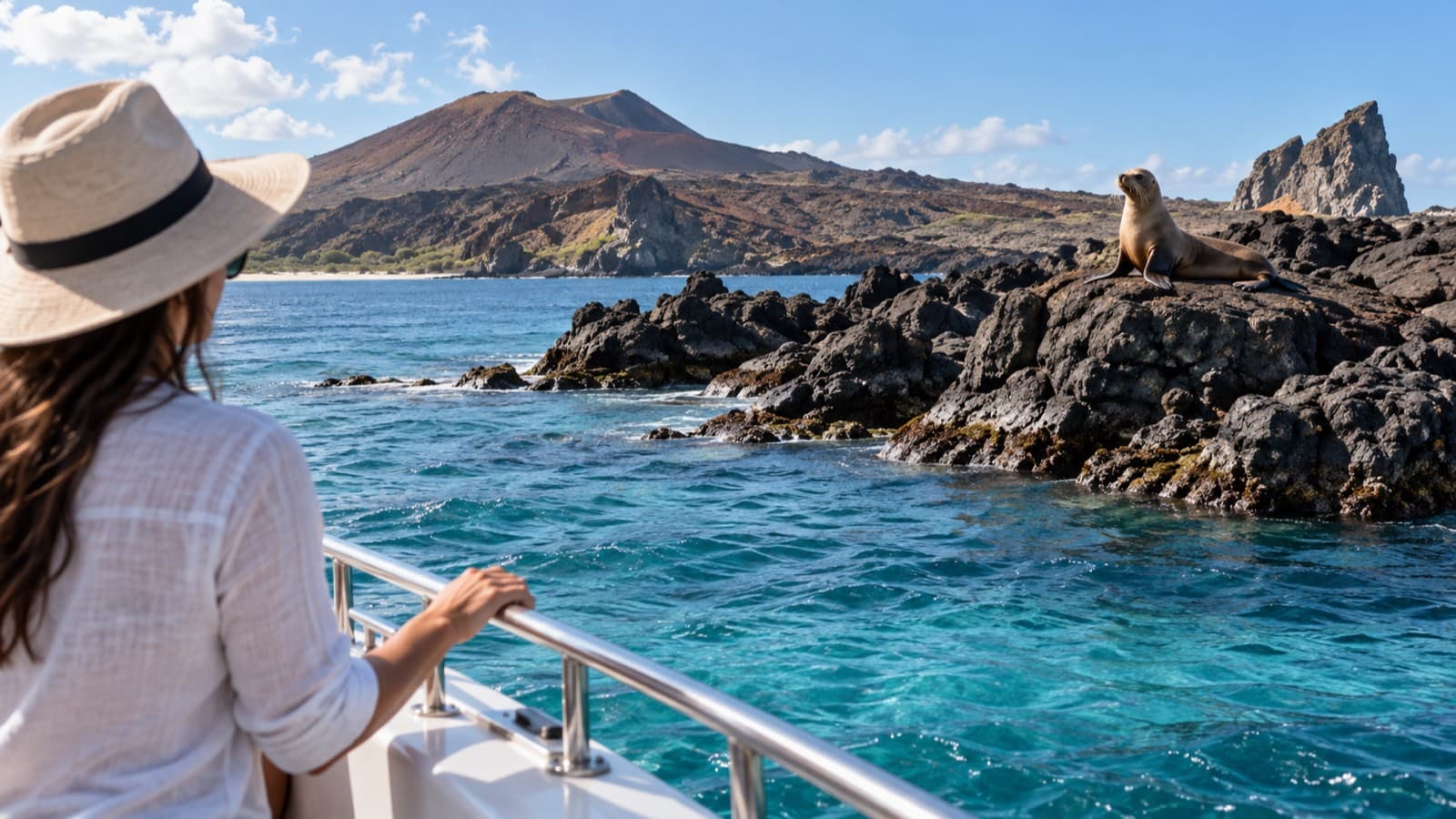
The best Galapagos cruises match the islands and daily excursions you care about with a ship you will enjoy living aboard. For a first visit, I would compare the actual landing sites, time ashore and guide-led activities before comparing suite photos. A beautiful cabin cannot make up for the wrong route.
The options can look maddeningly similar on a search page. Yet a short sailing, a full-week expedition and a land-based stay give you different days, different transfers and different levels of access. You deserve to know what changes before you choose.
Should You Cruise or Stay on Land?
Yes, there are overnight cruises around the islands. Ecuador's official Galapagos travel guide describes regulated sailings with certified naturalist guides and overnight trips ranging from three to 14 nights. A ship lets you move between islands while you sleep and follow a planned sequence of shore and water activities. For a traveler who wants varied landscapes without repeatedly changing hotels, that is a compelling format.
A land stay can suit someone who values a fixed room and unstructured evenings more than seeing a wider set of sites. It still requires careful coordination of day excursions and local transfers. I would not call either universally better. Ask yourself if your priority is a particular island and a relaxed base, or a succession of guided encounters across the archipelago.
My planning rule: Choose the daily experience first. The ship is your base, not the reason you traveled this far.
Choose the Route Before the Ship
Galapagos is not a single stop. Two departures of the same length can emphasize different islands and different walks, snorkeling sites and wildlife. Read the day-by-day program, not just the list of island names. A landing on an island is not the same as spending a full day exploring it. If European cities appeal more than island landings, my guide to choosing a Danube river cruise applies that route-first thinking to a different kind of voyage.
Ask which sites are planned, how many guided outings are offered, and how the route balances water activities with walking. An itinerary that looks fuller on paper may be the wrong fit if it asks you to move faster than you enjoy. Park conditions can change what a particular day allows, so I would treat wildlife as a possibility, not a promise.
If you love this style of nature-focused voyage, my guide to choosing the right Antarctic cruise season shows why dates and route matter more than a brochure headline.
Small Expedition Yacht or Larger Expedition Ship?
A smaller yacht can feel intimate, with a familiar group at meals and a compact ship to navigate. A larger expedition ship may give you a different range of cabin layouts and shared spaces. Neither wins by size alone. I compare how the vessel actually runs excursions, what the cabins offer and where you will spend downtime between outings.
For concrete scale, the operator describes Isabela II as carrying up to 40 guests, while the Celebrity Flora ship overview lists a 100-guest, all-suite vessel. Those are distinct onboard experiences, not a simple quality ranking. If you need a particular cabin configuration or a quieter public space, check the deck plan rather than assuming the smaller ship will suit you better.
| Decision | Lean toward a smaller yacht | Lean toward a larger expedition ship |
|---|---|---|
| Onboard atmosphere | You like a close-knit group and compact spaces. | You value more room types and distinct shared areas. |
| Cabin choice | You can be flexible about layout and position. | You want to compare several suite categories. |
| What to inspect | Guide groups, boarding method and cabin location. | Actual excursion groups, deck plan and inclusions. |
My favorite upgrade is rarely the flashiest suite. It is a cabin location and layout you will genuinely enjoy after an active day. Check stairs, sleeping arrangements, outdoor access and what is included before paying for more square footage.
What a Good Expedition Day Feels Like
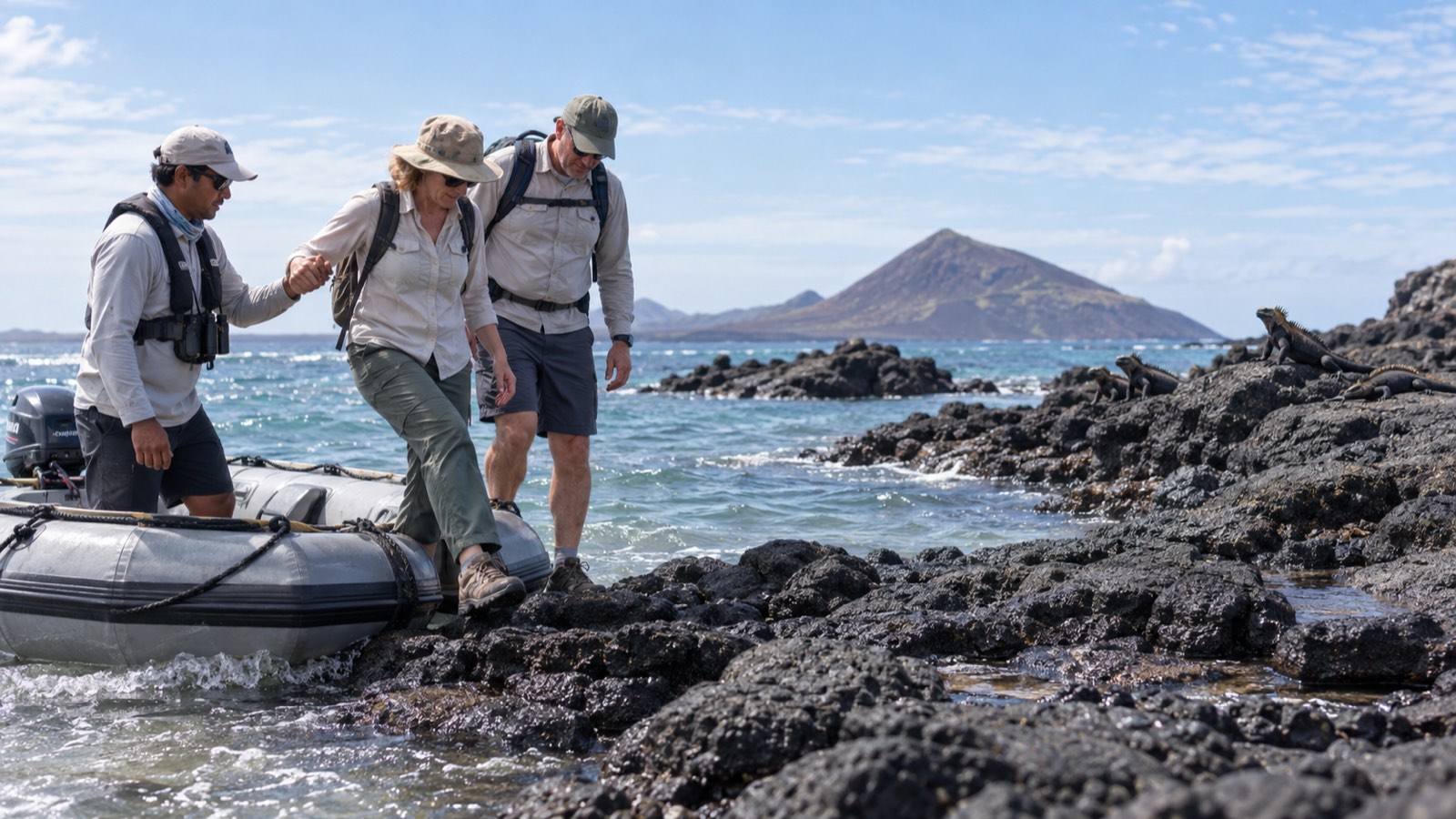
Expect the destination to set the pace. A guided walk across rock, a beach landing and time in the water demand different comfort levels. Ask how you get ashore, whether there are easier alternatives on a given day, and what the operator provides for snorkeling. Do not assume every landing or activity is suitable for every traveler.
Look at the mix across the week. If every day you have pictured is underwater but your partner prefers wildlife walks, you need an itinerary that serves both. Equally, a couple who cannot wait to snorkel should check the number and location of water outings rather than buying solely for a famous island name.
- On shore: Ask about the landing method, walking surfaces and alternative activities.
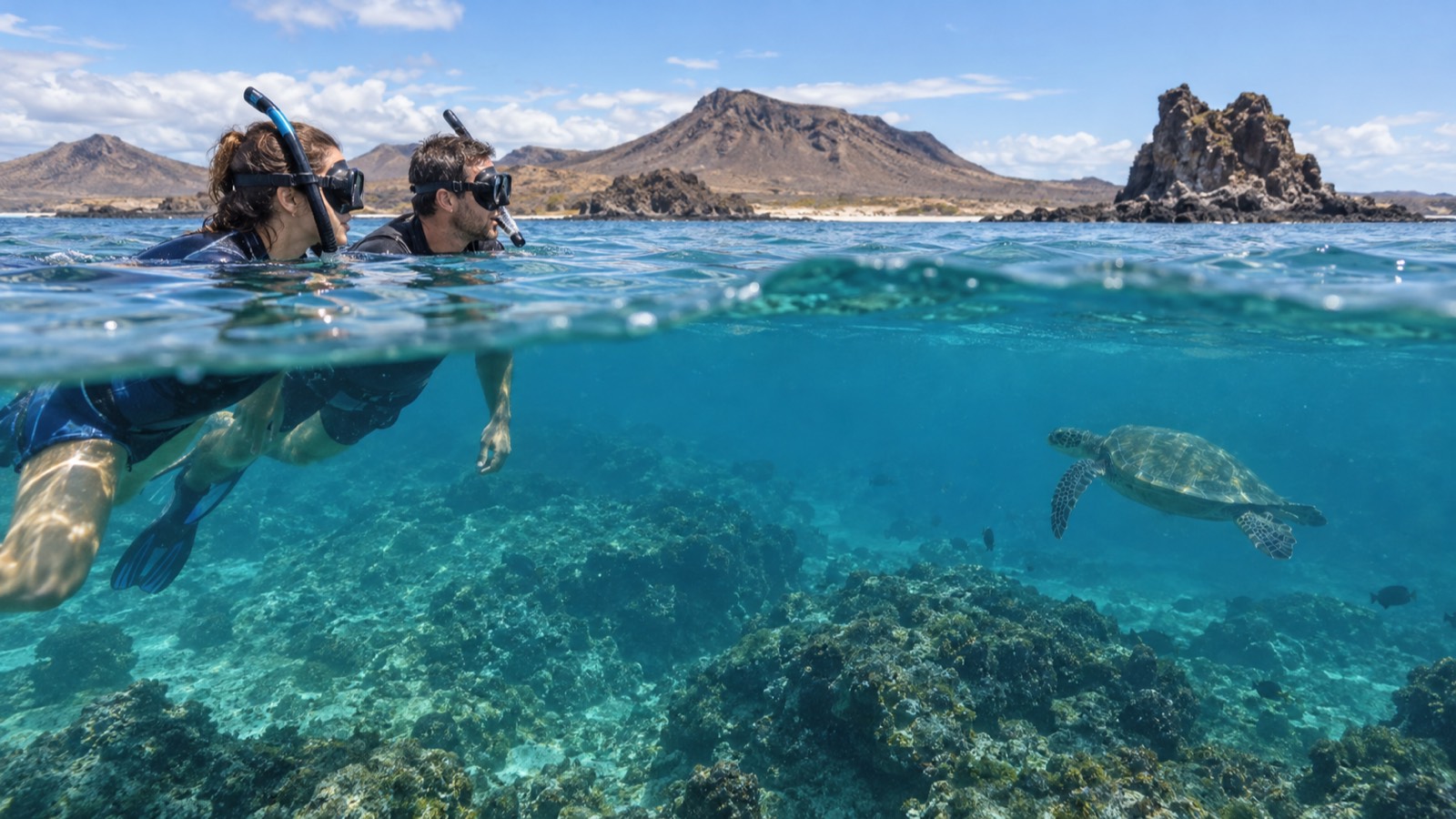
- In the water: Compare actual snorkeling opportunities and equipment inclusions.
- Back aboard: Check cabin location and the amount of time between excursions.
I would also build breathing room into the flights on either side. A distant expedition should not hinge on a tight same-day international connection. The extra night can be worth more than a cabin upgrade if it gives you a calmer start and protects the first day of the voyage.
When to Go in 2026 or 2027
There is no single best month for everyone. The Galapagos Conservation Trust's seasonal guide describes January through April as warmer, rainier months with generally calmer water. May through December bring cooler conditions, and waters can be choppier, particularly from June through September. These are patterns, not a forecast for your sailing.
If swimming comfort and a gentler sea are high priorities, I would start with the warmer months and then compare the specific route. If your dates are fixed, choose the ship and itinerary that work for those dates instead of chasing a mythical perfect week. Wildlife behavior changes with the season, and no guide can schedule an animal encounter for you.
For 2026 dates, availability can be the limiting factor; for a 2027 voyage, there is more room to compare itinerary and cabin combinations. January 2026 has already passed. If you were searching for a January voyage, compare January 2027 options rather than relying on an outdated departure listing. Published schedules and fares can change.
How to Plan a Family Voyage
The right family trip depends on the people, not just the children's ages. Ask about minimum ages, sleeping layouts, activity participation and the daily transfer into smaller boats. These are operator- and departure-specific details. A family that loves being active together may enjoy the guided rhythm; someone who needs a long pool day each afternoon may prefer a different trip.
I would compare the least adventurous person's ideal day with the actual outing schedule. If one adult wants every snorkeling opportunity and another prefers dry land, look for choice within the program. A spacious room is helpful, but the real win is a daily plan nobody has to endure.
Multigenerational travelers should settle the pace question early. Discuss walking surfaces, stairs, accessibility needs and where a traveler can comfortably opt out. Get those answers for the exact ship and route before committing. No destination is worth turning a family celebration into a forced march.
Flights, Entry Steps and the Common Timing Mistake
Galapagos trips are connected to the Ecuador mainland. Ecuador's official arrival guide says travelers reach the islands by domestic flight from Quito or Guayaquil, with Baltra and San Cristobal as the main island airports. Before the island flight, the Transit Control Card and biosecurity screening are part of the process. The Galapagos National Park's visitor arrival instructions also describe the park entry levy on arrival.
Match your flight arrival airport to the actual ship embarkation instructions. Do not copy flights from another sailing just because the cruise length matches. A pre-cruise mainland stay, island flight, local transfer and boarding time must work as one sequence. I would verify each handoff before buying an international ticket.
Entry rules, levies and flight procedures can change. Check the current official guidance close to departure, and remember that you are responsible for meeting the applicable entry and travel requirements. A responsible advisor can organize the itinerary, but cannot replace that check.
What Galapagos Cruises Cost
For a typical seven-day, six-night guided expedition, published 2027 starting fares on two comparable yacht itineraries I checked run from about $6,250 to $8,150 per person. That is a useful cruise-fare starting range, not the price of an entire trip. It is not a quote or a guaranteed price. More premium cabin categories and other vessels can cost significantly more. I would not plan an expensive international journey around a last-minute fare appearing on a search page.
Your actual trip cost can vary significantly with the number of travelers, travel dates and season, length, island itinerary, ship and cabin category, airfare, mainland hotel nights, island transportation and transfers, tours and experiences, dining inclusions, level of luxury and current availability. Ask exactly which flights, park charges and pre- or post-cruise stays are included in the proposed package. Two offers with different inclusions cannot be compared by headline price alone.
Why does it cost so much? You are comparing a regulated, guide-led expedition across remote islands, not an ordinary port-heavy ocean cruise. The cost decision I would make is what you want to protect: the right route, a comfortable cabin, enough time to explore and sensible flights. Cutting a day or booking the wrong departure to save on the headline fare may be a poor trade.
Frequently Asked Questions
What is the best way to visit the Galapagos Islands?
For a traveler who wants multiple guided island experiences with fewer hotel changes, I would start with an overnight expedition cruise. If staying in one place and setting your own evening pace matters more, compare a land-based trip. The best answer depends on your mobility, interests, time and comfort on the water.
Are there cruises to the Galapagos Islands?
Yes. Ecuador's tourism ministry describes regulated overnight cruises with naturalist guides. Compare the exact sites and activities on each itinerary, not only the vessel name or number of nights.
What is the best month for a Galapagos cruise?
There is no universal winner. January through April generally mean warmer conditions and calmer water, while cooler months can be choppier. Match the season to your swimming comfort, dates and the route you want.
Should I wait for a last-minute Galapagos cruise?
Only if your schedule and cabin needs are unusually flexible. A late opening is not useful if the itinerary misses your priorities or the island flights do not work. Compare the full travel sequence, not just a reduced fare.
Which Galapagos cruise is best for families?
One whose age rules, cabin arrangements, excursion choices and daily pace fit every person in the group. Verify those details with the operator for the particular sailing before you decide.
Plan the Voyage That Fits You
As a CLIA Accredited Cruise Counselor, I would begin with three decisions: the experiences you most want, the level of activity your group will enjoy and the cabin arrangement that makes the voyage comfortable. Explore Effortlessly can then coordinate the route, ship, flights and stays around those priorities instead of leaving you to stitch together mismatched pieces.
Still weighing different cruise styles? Read my guides to choosing cruises for food lovers, planning a longer cruise journey, and comparing premium river cruise choices. Each points to a different kind of voyage, but the same question matters: what will your days actually feel like?
When you are ready for an expedition built around your preferences, Start Planning My Galapagos Cruise.
Want thoughtful travel ideas in your inbox? Join the Explore Effortlessly newsletter.
About the Author
Hi, I'm Karrah Kazravan, owner and lead travel advisor at Explore Effortlessly, an award winning Miami agency serving clients nationwide. I design custom journeys for busy travelers who want confident recommendations and thoughtful coordination. I have traveled to more than 67 countries across all seven continents and am a Nexion Circle of Excellence Top 5% advisor, ASTA Verified Travel Advisor, Certified Travel Associate, and CLIA Accredited Cruise Counselor.