You've made it all the way to New Zealand. Surely Antarctica's just a little farther south? Pull up a map if you like, but pull up your work calendar first.
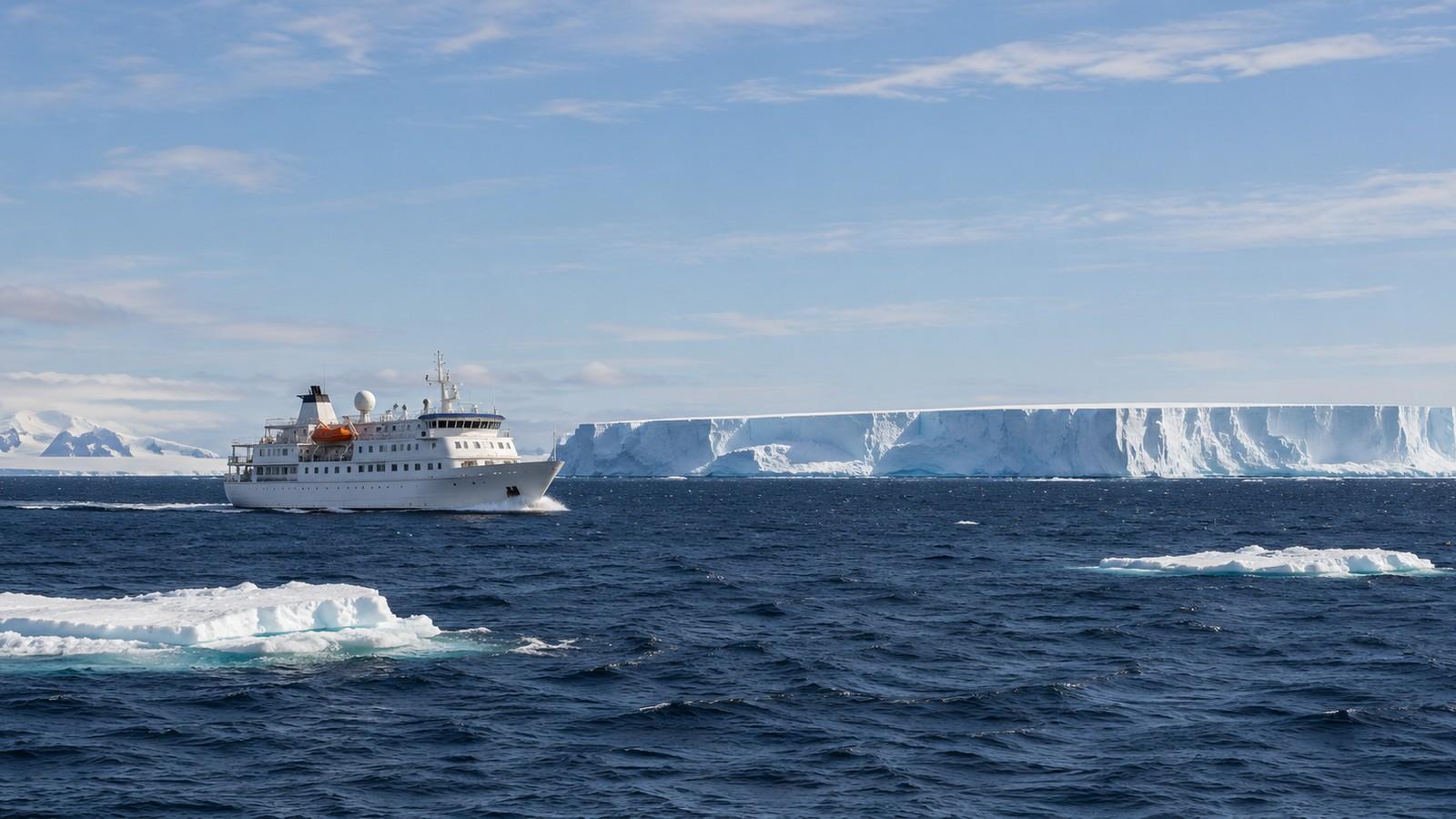
A New Zealand to Antarctica cruise is a three- to four-week Ross Sea expedition, with sailings from South Island ports such as Bluff and Dunedin. Start with January and February. And before you do anything with your flights, make sure the city on the first page is where you're supposed to meet the ship (sometimes it's where you're supposed to meet a bus).
What's hard about planning this trip isn't finding a ship with a nice suite. It's figuring out how much of that month you'll spend getting to the ice, what you'll see along the way and which of those things you'd still be happy you came for if the weather takes your favorite stop off the list.
Start with the Ross Sea, not Auckland
Pick New Zealand because you want the Ross Sea and the islands on the way. Not because you think it'll be a shortcut. Most Antarctic voyages go to the peninsula from South America, as the Antarctic Treaty Secretariat's overview of Antarctic tourism explains. A South America to Antarctica cruise is the first thing I'd compare if the continent matters more to you than the route.
For the Ross Sea, I'd put two voyages side by side. PONANT's 22-day Le Soléal expedition in January 2027 sails round trip from Dunedin. Heritage Expeditions' 28-day voyage aboard Heritage Adventurer sails from Bluff and builds in the Snares, Enderby, Macquarie and Campbell Island. PONANT's route in that example also takes in Enderby, Macquarie and the Snares. If Campbell is something you've been waiting years to see, that extra week isn't just extra ship.
| Route | Makes sense if | Think twice if |
|---|---|---|
| 22-day Dunedin Ross Sea expedition | You want the Ross Sea and several island stops, but every extra day away counts | Three weeks already feels like a stretch |
| 28-day Bluff Ross Sea expedition | You want Campbell Island as part of the trip and can give the route most of a month | You'd resent a few stretches of open water with no landing on the schedule |
| Antarctic Peninsula from South America | You mostly want Antarctica itself and need a shorter trip | Ross Island's explorer huts or the New Zealand subantarctic islands are the reason you're going |
One thing to watch when you compare years: PONANT lists a 22-day Ross Sea round trip out of Timaru in 2029. It also lists a 15-day trip out of Timaru focused on Fiordland and the subantarctic islands. Same starting point, same ship, two very different things to tell your coworkers when you get home. Look for the Ross Sea in the actual route.
The islands aren't filler
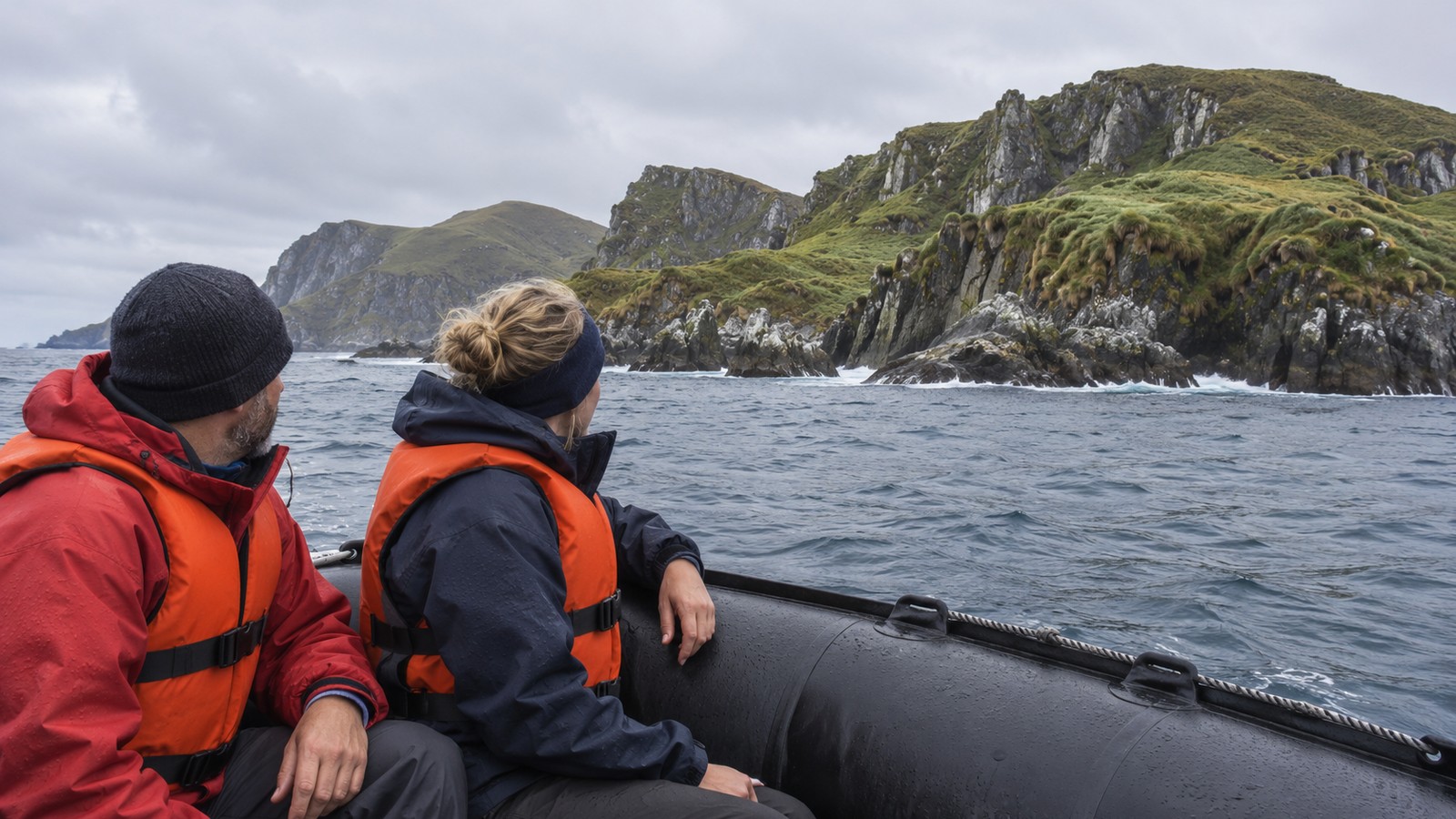
Would you be excited to spend a morning in a small boat looking at birds on a cliff? Good. You're going to like the way this trip gets south.
One reason I like the islands as a test is that seeing one and setting foot on it aren't the same outing. The New Zealand conservation department's island guidance allows tourist landings at specific sites on Enderby and Campbell, among others. The Snares are for viewing from the water, not going ashore. Don't write that morning off because it's not a landing. The view from an inflatable boat is rather different from the view at breakfast.
Macquarie Island is Australian, and it's the one I'd circle if you want a chance to see king penguins. Tasmania's parks service lists approved operators by season. That gives your ship permission to plan a visit. It doesn't give it the weather to get you ashore.
If you're already thinking, “Okay, but when do we get to Antarctica?” about every one of these stops, listen to yourself. A shorter Peninsula trip might be a much better use of your time. The islands should be half the fun of going this way, not four names you scroll past.
Pick a summer sailing, not a promised landing
January and February are where I'd look for a Ross Sea sailing from New Zealand. The pack ice limits access even in the Southern Hemisphere's summer. Heritage's 28-day plan sets aside days 11 through 22 for the Ross Sea region, not twelve guaranteed trips ashore. That difference is worth asking about before you put down a deposit.
My favorite question to ask about an expedition isn't “What's on day 14?” It's “What might we do if we can't get into the bay?” You might go out in a Zodiac instead, or look for a different place to go ashore, or have a perfectly good afternoon on deck with your binoculars. The expedition leader and captain make that call. A little calendar square with a penguin in it doesn't.
Go for polar history, not one hut
On Ross Island, Shackleton's base is at Cape Royds and Scott's Terra Nova hut is at Cape Evans. The Antarctic Heritage Trust's explorer base guide is worth reading before you go. It's one thing to see a wooden building sitting out there in all that white. It's another to know who went through that door and why.
Want to see Shackleton's hut specifically? Tell me! That matters when we're comparing routes. But if missing that one visit would ruin the whole trip for you, I'd rethink it. Go if the expedition still sounds worth taking when the hut is a maybe.
Give the South Island arrival its own days
On the Bluff voyage, you can have a hotel on the South Island and a ship somewhere else entirely. Heritage commonly starts with the group in Queenstown and coaches everyone to Bluff to embark. The voyage starting January 31, 2028, starts with a night in Invercargill instead, with an optional coach from Queenstown. That is a detail you want to notice before you're sitting in the wrong lobby in all your good travel clothes.
My move from the U.S.: give yourself two nights before the required group meet, not two nights before the ship leaves. Know when you've got to be at the hotel and get your domestic connection and car transfers sorted around that. And if you want a few days in Queenstown because you've been meaning to see it anyway, give that visit its own time (recovering from a long flight isn't a Queenstown itinerary). The guide to when to visit New Zealand is a useful read if your land plans extend beyond getting to the ship.
- Put the group hotel and meeting date on your calendar before you shop for flights.
- Keep your warm layers and anything you need on day one in your carry-on.
- Leave room after disembarkation before any flight you can't afford to miss.
On the way back, Heritage's Bluff itinerary lists transfers to Invercargill or Queenstown airports. I'd leave space before a long-haul ticket, even if the first flight of the day looks great on paper. When you get off the ship after four weeks, the last thing you want to do is spend breakfast calculating how fast a coach can go.
Traveling on a U.S. passport? Immigration New Zealand lists the U.S. under its visa-waiver arrangements, which normally require an NZeTA before you travel. Check the current New Zealand visa-waiver rules for your passport and route. It's your responsibility to meet the entry requirements, and this isn't the trip to leave the paperwork until you're packing.
Choose a cabin for the sea days
The longer Heritage itinerary has a three-day stretch at sea after Macquarie and another after the Ross Sea. Think about what you like doing after breakfast when you can't go anywhere. Lectures and a long look through the observation lounge windows sound fabulous to me. If you're already looking for the nearest exit, that's a real downside, not something a suite can fix.
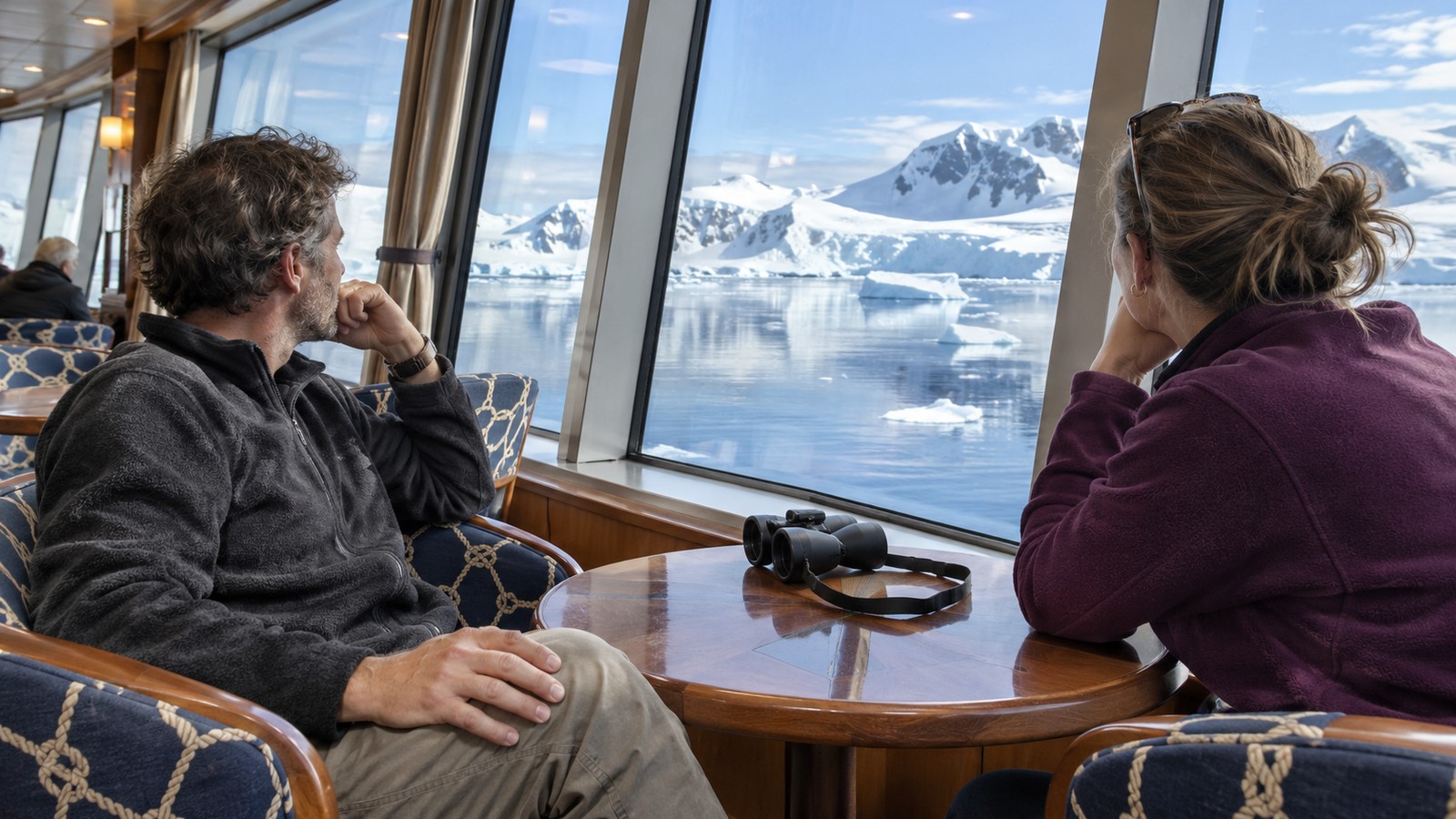
On Heritage Adventurer, the Deck 4 and Deck 5 Superior cabins have panoramic windows and the same published size. I'd pick by where the exact room sits on the Heritage Adventurer ship deck plan, not by the higher deck number. If motion is a concern, look lower and closer to the middle of the ship first. And if you know you'll spend hours in your room editing photos, look for a chair you'll actually want to sit in.
On PONANT's Le Soléal ship page, both lower and upper deck balcony staterooms are listed at 193 square feet. The Deluxe Suite is listed at 290. So what are you after, more floor space or a particular spot on the ship? If one of you likes a quiet afternoon reading while the other is busy asking a naturalist about every bird that flew past lunch, more space is a perfectly sensible splurge. A higher deck just because it's higher? Not for me.
Before you put extra money into the room, set aside what you need for the flights and arrival nights. Then decide what's worth paying for onboard. I'd take a good window, a room in the right place and a day to get over the flight before I'd pay for a bigger bathroom.
What a New Zealand to Antarctica cruise costs
For the 22- to 28-day voyages I compared, use about $32,000 to $40,000 USD per person sharing a cabin as a starting point for the expedition fare. PONANT showed a starting fare of $32,320 per person for the 22-day Dunedin trip, based on double occupancy. Heritage listed 2028 two-person Superior cabins at $38,350 and $39,600 per person on the 28-day trip. Some suites were listed above $50,000 per person before discounts. These are published examples, not a quote or a guaranteed price.
One wrinkle: if you're comparing prices over coffee with your partner, make sure the number you like is actually for two sharing. The lowest cabin price on a page can be for three people sharing, and traveling solo calls for a different set of numbers. While you're there, count the nights. A 22-day expedition fare and a 28-day one aren't buying the same trip.
Heritage lists one hotel night, scheduled transfers, meals aboard and standard excursions among its inclusions. Flights, travel insurance, gratuities and optional kayaking are extra. Put each option on the same footing before you compare: the actual cabin you can get, what you're served at dinner versus what's on a separate drinks bill, and whether the hotel and transfer you need are in the fare at all.
The total trip will move, sometimes by quite a bit, with your travel dates, cabin availability, how many are going and how much New Zealand you add. I can't put a reliable total on it without the actual sailing, airfare, extra hotel nights, private transfers and any land tours or dinners you want. Start with the ship figure, yes. Just don't stop there.
Frequently Asked Questions
When is the best time for a New Zealand to Antarctica cruise?
January or February. Pick between actual Ross Sea sailings that work with the time you can take off. I wouldn't give up a cabin that suits you just because another date looks better on a generic Antarctic Peninsula calendar.
Do you cross the Drake Passage from New Zealand?
No. The Bluff and Dunedin round trips go south through the Southern Ocean to the Ross Sea, not through the Drake between South America and the Antarctic Peninsula. If the point of avoiding the Drake is to avoid a long ocean crossing, this isn't your workaround.
Do cell phones work on a Ross Sea cruise?
Don't count on your usual mobile service at sea. Ask what satellite Wi-Fi can do on your particular ship and set expectations at home before you sail. Take the photos. Send them when you can. And please don't volunteer to run a Monday meeting from anywhere near an iceberg.
Are there hotels on this Antarctica itinerary?
Not in Antarctica on these cruises. You sleep on the ship; any gateway hotel nights are in New Zealand. Those historic huts are places you might visit, not places you're staying. Pack for outings from the ship instead, and use my Antarctica cruise packing guide to work out which layers you actually need.
Let's plan the part before the ice
If you've finally got the time for a trip like this, I want you to spend it on the part you actually care about. Tell me if that's the birds, the huts or the idea of spending an afternoon watching ice slide by with nobody asking you for anything.
At Explore Effortlessly, we match the expedition to what you want to see and build the land days, flights and transfers around where you need to be. You don't have to come to me with a favorite ship. A few dates you could make work and a good idea of why you're drawn to the Ross Sea are plenty. Start Planning My Antarctica Cruise.
Want more advice like this before you pick your next trip? Join the Explore Effortlessly newsletter.
About the Author
Hi, I'm Karrah Kazravan, owner and lead travel advisor at Explore Effortlessly, an award winning Miami agency serving clients nationwide. I design custom journeys for busy travelers who want confident recommendations and thoughtful coordination. I have traveled to more than 67 countries across all seven continents and am a Nexion Circle of Excellence Top 5% advisor, ASTA Verified Travel Advisor, Certified Travel Associate, and CLIA Accredited Cruise Counselor.