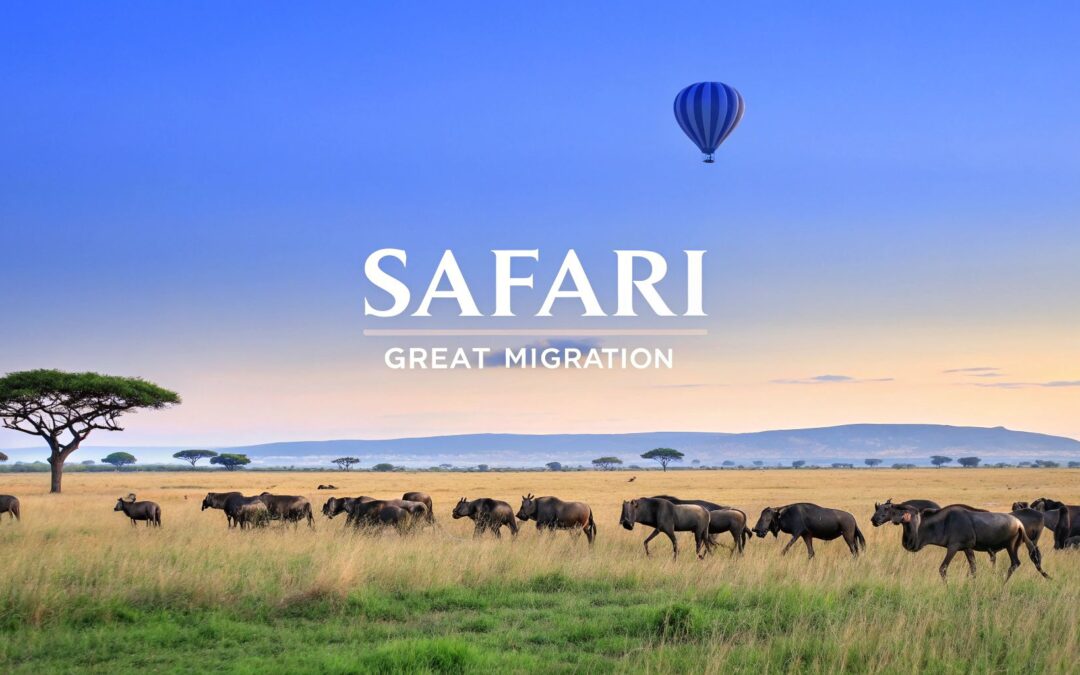
Picture a river of life, not water, flowing endlessly across the vast African plains. That, in its simplest form, is the Great Migration. This isn't a one-off event, but a continuous, year-long pilgrimage—an ancient, circular journey dictated by the rhythm of the rains. It's deservedly called 'the greatest show on Earth' for a reason; it's the largest overland mammal migration on our planet. As your travel advisor, my role is to decode this natural wonder and place you at the heart of the action.
Key Takeaways for Planning Your Safari
- Timing is Everything: The "best" time to go depends on what you want to see. July to October is for dramatic river crossings, while January to March is for the calving season in the Southern Serengeti.
- Tanzania vs. Kenya: The herds spend about nine months of the year in Tanzania's Serengeti, making it the more versatile destination for witnessing the migration.
- Accommodation Matters: Choose between permanent luxury lodges for resort-style amenities or mobile tented camps for an immersive, close-to-the-action experience.
- Plan Ahead: The best camps and private guides are booked 12-18 months in advance, especially for peak season travel.
- Work with a Specialist: The logistics of a migration safari are complex. Working with an expert ensures a seamless, perfectly timed journey tailored to you.
What Is The Great Migration?
The Great Migration is the constant, clockwise movement of nearly two million animals through the Serengeti-Mara ecosystem, a massive wilderness that straddles Tanzania and Kenya. The sheer scale is hard to comprehend. We're talking about more than a million wildebeest leading the charge, with hundreds of thousands of zebras, gazelles, and elands joining their ranks. They are all locked in a relentless, instinctive quest for fresh grazing and water.
This incredible 1,000-kilometer (roughly 600-mile) trek is a raw, dramatic story of survival. It’s a journey filled with moments of serene beauty, like thousands of newborn calves taking their first steps, and heart-pounding action, such as the legendary, crocodile-infested river crossings.
To help you visualize this incredible cycle, here's a quick overview of its key phases.
The Great Migration at a Glance
This table breaks down the year-long journey, showing you where the herds are likely to be and what you can expect to see. It’s the foundational knowledge I use to start designing your front-row seat to the action.
| Phase | Approximate Timing | Primary Location | Key Spectacle |
|---|---|---|---|
| Calving Season | January – March | Southern Serengeti & Ndutu, Tanzania | Hundreds of thousands of wildebeest are born. |
| Northward Trek | April – June | Central & Western Serengeti, Tanzania | The herds consolidate and begin their long journey north. |
| River Crossings | July – October | Northern Serengeti & Maasai Mara, Kenya | The iconic, dramatic crossings of the Grumeti and Mara Rivers. |
| Southward Return | November – December | Eastern Serengeti & Loliondo, Tanzania | The herds move back south as the short rains begin. |
Of course, the animals don't follow a strict calendar, but this gives us a reliable framework for pinpointing the action.
The Scale Of The Spectacle
It’s one thing to read the numbers, but another to truly grasp the magnitude of this phenomenon. While older estimates were more of a guess, recent counts using modern technology give us a clearer picture. A 2023 census estimated there were between 502,917 and 533,137 wildebeest. Now, add in roughly 200,000 zebras and 500,000 gazelles. The sheer density of wildlife is unlike anything else on Earth.
This entire drama unfolds across the unfenced, sweeping landscapes of Tanzania's Serengeti National Park and Kenya's Maasai Mara National Reserve. My job, as your safari architect, is to know exactly where on this immense stage the main event is happening and place you right there.
The Driving Force Behind The Journey
So, what pushes these millions of animals to undertake such a grueling, dangerous journey? It all boils down to one word: survival. The migration is driven entirely by the search for life-sustaining resources, following the seasonal rains.
- The Search for Food: The herds are on a constant chase, following the rains that sprout lush, green grasses.
- The Need for Water: Water is life, and the animals instinctively move toward reliable sources as the dry season takes hold elsewhere.
- The Calving Season: The entire cycle is geared towards returning to the southern Serengeti, where nutrient-rich volcanic soils create the perfect nursery for wildebeest to give birth, ensuring the next generation is strong enough for the journey ahead.
As a travel advisor, my role is to interpret this natural rhythm and translate it into a perfectly timed safari for you. Understanding this cycle is the first step to ensuring you're not just a spectator, but truly immersed in the most breathtaking moments of the migration.
To really do justice to what you'll witness, a little preparation goes a long way. Brushing up on some beginner wildlife photography tips can make the difference between a blurry snapshot and a photo that truly captures the soul of the migration.
Ultimately, planning a safari around this spectacle isn't just about picking a lodge; it's about intercepting a specific, powerful moment in time. And curating that perfect moment is precisely what I do for my clients at Explore Effortlessly.
Following the Herds: A Month-by-Month Guide
When it comes to the Great Migration, timing isn’t just important—it’s everything. This isn't a stationary event you can simply show up for. We're talking about anticipating the movements of nearly two million animals across a vast, unfenced wilderness. My job is to get you in the right place at the right time, decoding this ancient rhythm so you can witness the spectacle you've always imagined.
The herds are constantly on the move, chasing the rains in a colossal clockwise loop. But this isn't a fixed timetable; it's a fluid, natural phenomenon. Getting a handle on this annual cycle is the first step to crafting your perfect safari. Let's break down the journey, month by month, so you know exactly what to expect.
This timeline gives you a bird's-eye view of their year-long trek, highlighting the major events from the birth of a new generation to the life-or-death drama of the river crossings.
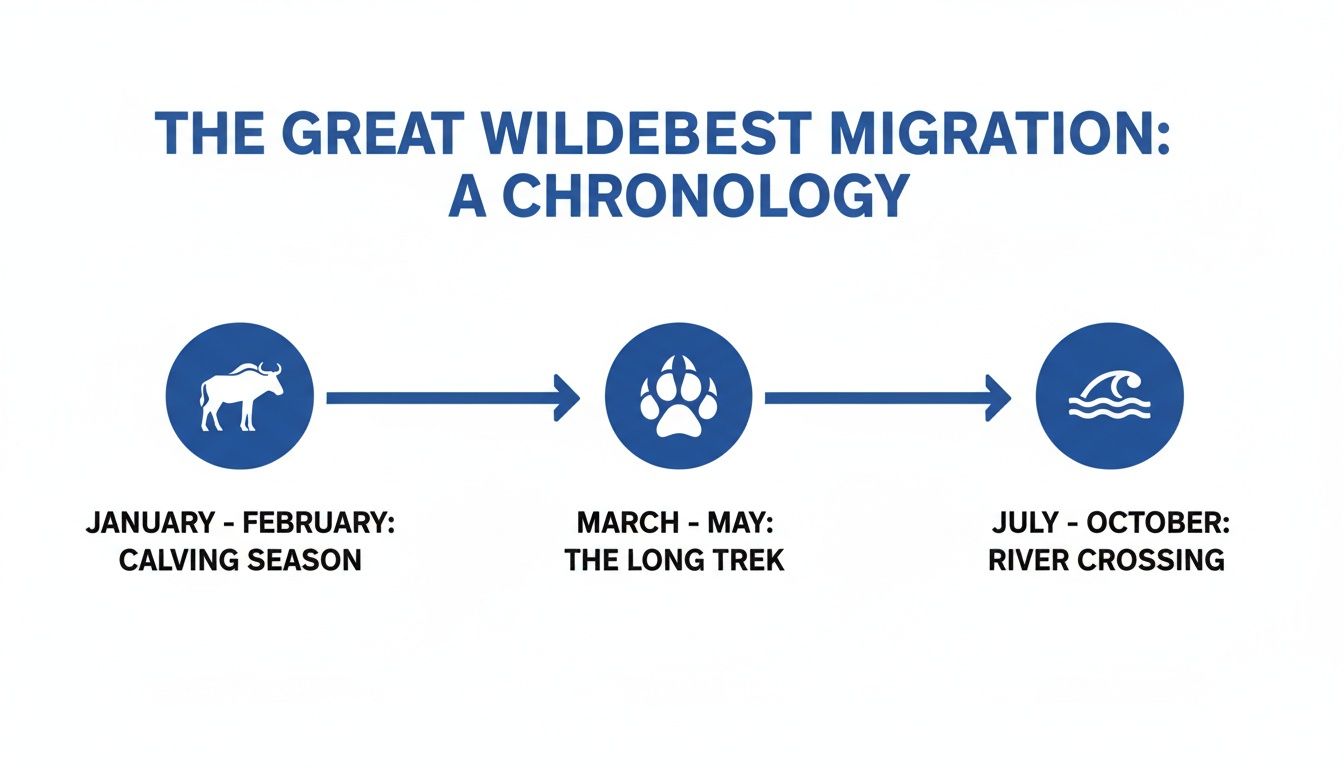
Think of this as your map to the migration, pointing you to the heart of the action no matter when you travel.
January to March: The Calving Season in the Southern Serengeti
This is a time of birth, and with it, heart-pounding drama. The great herds gather on the endless, short-grass plains of the Southern Serengeti and the neighboring Ndutu region. The land here is rich in nutrients from volcanic soil, making the grass perfect for expectant mothers.
Then, the magic happens. In an incredible display of synchronized birth, mostly during a two-to-three-week window in February, an estimated 500,000 calves are born. This sudden explosion of new life is a staggering sight, but it also rings the dinner bell for every predator in the area. The open plains offer nowhere to hide, making for spectacular hunting action from cheetahs, lions, and hyenas. It's raw, powerful, and utterly unforgettable.
April to June: The Northward Trek and the Grumeti River
As the long rains arrive in April, the southern plains begin to dry out, and a primal instinct tells the herds it’s time to move. They start their long march north, forming immense columns that can stretch for miles as they move through the Central and Western Serengeti.
People often call this the "green season." Yes, you might get a few rain showers, but they're usually brief, washing the dust from the air and leaving behind stunningly vibrant landscapes. By June, the herds face their first major hurdle: the Grumeti River in the Western Corridor. This is where you'll see the first dramatic river crossings as thousands of wildebeest contend with the Grumeti's notoriously large crocodiles.
July to October: The Legendary Mara River Crossings
This is it—the main event. This is the chapter of the migration made famous by countless wildlife documentaries. From July, the herds pour into the Northern Serengeti and push into Kenya’s Maasai Mara National Reserve, where they face their most daunting obstacle: the Mara River.
This isn't a one-off spectacle. It's a continuous, unpredictable series of crossings that can erupt at any moment over these months. Tension builds as thousands of wildebeest gather on the banks, until one courageous soul makes the leap, triggering a frantic, chaotic stampede across the croc-infested waters.
This is peak season for a reason, and it’s critical to plan far ahead. I focus on securing spots in exclusive, perfectly positioned camps—like those in the Lamai Wedge—that give you a front-row seat without the crowds.
November to December: The Return Journey South
After grazing in the Maasai Mara, the cycle turns, and the scent of rain from the south pulls the herds back home. They begin the long trek down, moving through the eastern woodlands of the Serengeti and private reserves like the Loliondo Game Controlled Area.
This is a phenomenal time for a safari great migration experience. The herds are on the move again, the "short rains" have breathed new life into the landscape, and the peak-season crowds have vanished. It feels like you have the Serengeti all to yourself.
This epic pilgrimage is a grueling test of endurance. A single wildebeest might travel 800 to 1,000 kilometers, while the entire herd collectively covers around 2,900 kilometers a year. The journey starts with a population boom—an estimated 8,000 calves are born each day in February. But the trek is unforgiving; around 250,000 wildebeest will not survive, falling to predators, exhaustion, or thirst. To delve deeper into this natural wonder, you can discover detailed insights on Asilia Africa.
By late December, the wildebeest are arriving back on the southern plains, fat and healthy, ready for the cycle to begin all over again. Each phase of this journey offers a completely different, yet equally profound, safari experience. Together, we’ll choose which chapter of this incredible story you want to witness firsthand.
Choosing Your Luxury Safari Accommodation
Where you stay on safari is so much more than just a place to lay your head. It’s your front-row seat to the wilderness, the base camp for your adventures, and the sanctuary you return to each evening. It truly shapes your entire experience of the Great Migration.
I’ve found that the best safari memories are made when the lodging perfectly matches the traveler's spirit. My job is to get to know your personal style—whether you dream of five-star elegance with a gin and tonic by the pool or a classic, under-the-stars adventure—and find the perfect fit.
In the world of luxury safaris, there are two main approaches to accommodation, and understanding them is the first step toward building your dream trip.
Permanent Lodges: An Oasis of Comfort
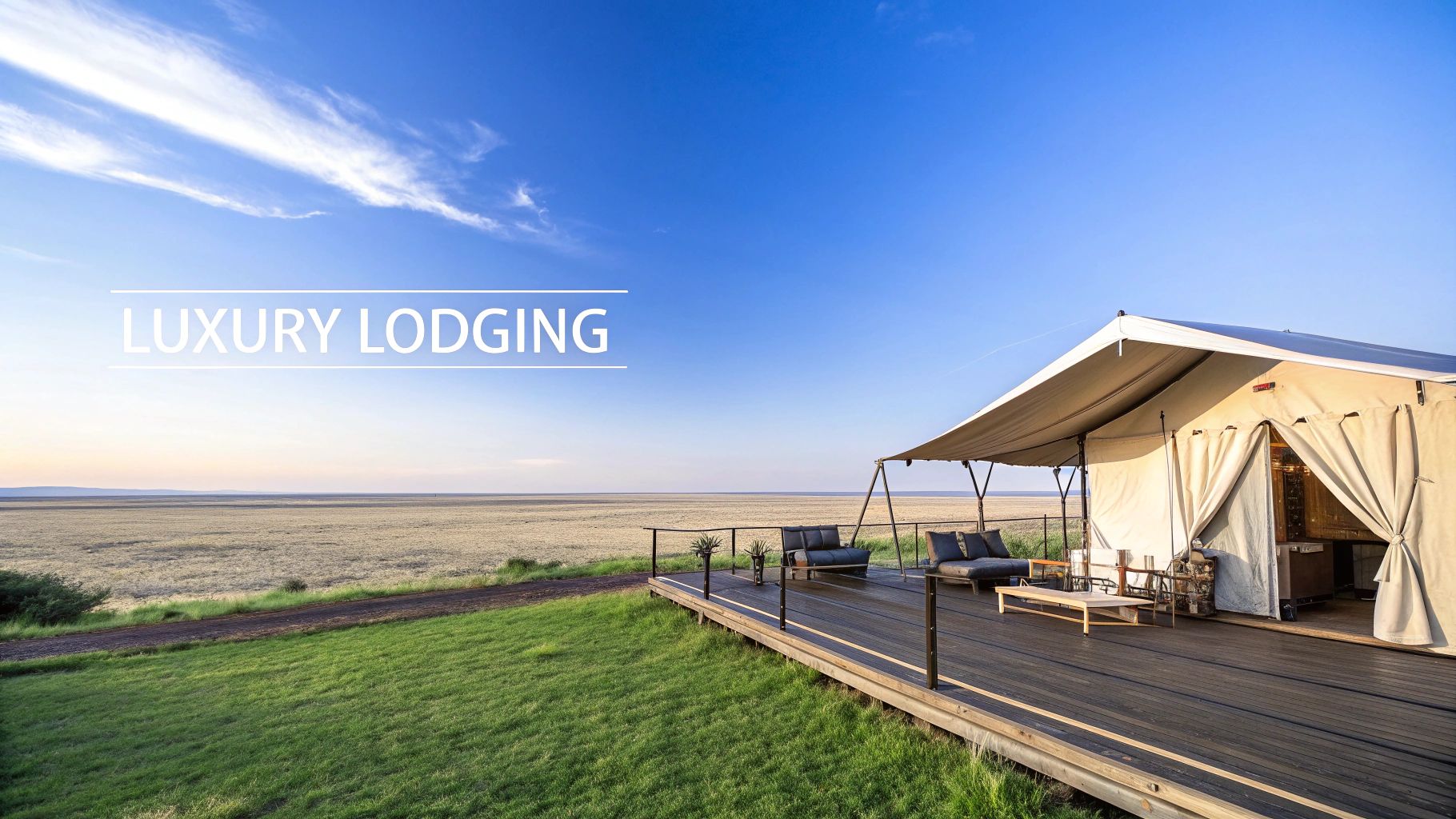
Think of permanent lodges as stunning, architecturally designed retreats that offer the absolute pinnacle of comfort. We’re talking private plunge pools, sprawling suites with breathtaking views, fine dining under the stars, and even world-class spas in the middle of the bush.
These lodges are strategically built in prime wildlife hotspots, often perched on a scenic hillside or overlooking a river that draws animals in. This means incredible game viewing can happen right from your private deck. They are perfect for travelers who appreciate extensive amenities, beautiful design, and the solid comfort of four walls after a thrilling day out in the wild.
Mobile Tented Camps: Immersive and Intimate
For anyone craving a deeper, more visceral connection to the land, mobile tented camps are simply unbeatable. Now, let’s be clear: this isn't your backyard variety of camping. This is luxury under canvas, complete with king-sized beds, proper ensuite bathrooms with hot-water showers, and a private veranda to soak it all in.
The real genius of a mobile camp is its mobility. These small, exclusive camps pack up and move several times a year, strategically repositioning themselves to be right in the thick of the Great Migration. It ensures you're always in the absolute best place at the best time.
There’s nothing quite like waking up to the sounds of the African bush, with a herd of wildebeest grazing just a stone's throw from your tent. It’s an experience that connects you to the rhythm of the wild in a way nothing else can.
Luxury Lodge vs. Mobile Tented Camp
So, which is right for you? It really boils down to what you want out of your safari. Both offer incredible luxury, just in different flavors. This table breaks down the key differences to help you decide.
| Feature | Permanent Luxury Lodge | Mobile Tented Camp |
|---|---|---|
| Location | Fixed, often with commanding, panoramic views | Moves seasonally to stay in the heart of the action |
| Atmosphere | Resort-like elegance with extensive amenities | Intimate, authentic, and completely immersed in nature |
| The Vibe | Polished comfort, service, and architectural beauty | Adventurous, wild, and incredibly close to the wildlife |
| Best Suited For | First-time safari-goers, families, and amenity lovers | Avid wildlife photographers and seasoned travelers |
Ultimately, the choice between a permanent lodge and a mobile camp shapes the feel of your safari. One offers a luxurious refuge from which to explore the wild, while the other invites the wild right to your doorstep.
Another crucial detail I always consider is whether a property is located inside a national park or on an adjacent private concession. While national parks are stunning, private concessions offer a level of exclusivity that can transform a trip. You’ll find far fewer vehicles at sightings and enjoy freedoms like off-road driving to get closer to the action, guided walking safaris, and night drives to see nocturnal predators—activities generally not allowed in the parks themselves.
Often, the very best itineraries are a blend of both. You might start with the opulence of a permanent lodge before moving to an intimate mobile camp to get deep into the migration's path. By understanding your vision, I can craft a journey that gives you the best of both worlds for a truly unforgettable adventure. Balancing these elements is a key part of planning your luxury African safari trips.
Crafting Your Bespoke Safari Itinerary
A truly exceptional safari isn't just about what you see; it's about how you experience it. It's a carefully woven tapestry of moments that go far beyond the game drives, and that’s where my expertise comes in. My job is to transform a great trip into a deeply personal, once-in-a-lifetime journey, creating a story that is entirely your own.
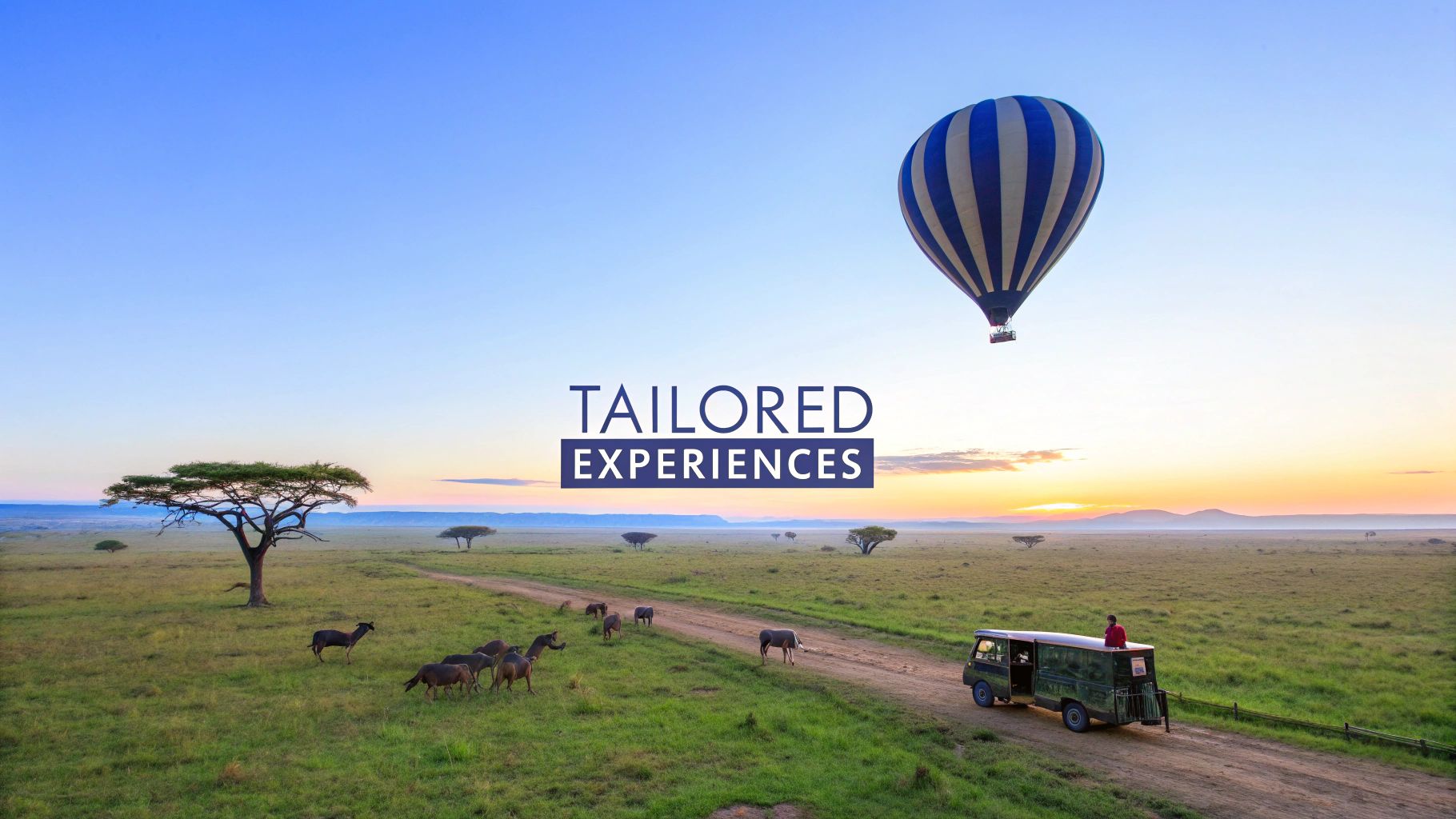
Think about starting your day floating silently in a hot-air balloon as the sun crests the Serengeti horizon. From that vantage point, the sheer scale of the plains and the immense herds below is breathtaking—a perspective few people ever get to witness. It's a moment of pure awe, often followed by a surprise champagne breakfast right in the middle of the bush.
This is the kind of detail that defines a luxury safari. It’s about building a seamless, perfectly paced adventure that not only meets but anticipates your desires.
Beyond the Vehicle Experiences
While seeing the Great Migration from a 4×4 is thrilling, the most profound memories are often made when you step out of the vehicle and connect with the landscape on a different level. I work with a network of trusted partners on the ground to arrange experiences that simply can't be found in a standard brochure.
These aren't just add-ons; they are essential threads in the fabric of the journey I design for you.
- Guided Walking Safaris: There's nothing like exploring the bush on foot with an expert naturalist and an armed ranger. You’ll learn to identify animal tracks and bird calls, engaging all your senses and noticing the intricate details of the ecosystem you’d otherwise miss.
- Private Bush Dinners: Imagine this: a table set just for you under a canopy of stars, with lanterns casting a warm glow as the sounds of the African night provide the soundtrack. A private chef prepares an exquisite meal—it's pure safari magic.
- Maasai Community Interactions: I can arrange authentic, respectful visits with local Maasai communities. It's a genuine opportunity to learn about their ancient traditions, their symbiotic relationship with the land, and their vital role in conservation today.
"Our safari was more than just a trip; it was a series of unforgettable moments. Karrah thought of everything, from the hot air balloon ride to the surprise bush breakfast. We just had to show up and be amazed." – Emily R.
Seamless Logistics for a Flawless Journey
Let's be honest: a safari of this magnitude involves some seriously complex logistics, especially when you're moving between remote camps to stay in step with the migration. My role is to handle every single one of those details behind the scenes so you can stay completely immersed in the moment, without a single worry.
This meticulous, invisible coordination is the backbone of the service I provide.
The Art of Personalized Planning
To get it right, I first need to understand you. I take the time to learn about your travel style, your passions, and what this journey truly means to you. Are you a keen photographer chasing the perfect shot? A couple celebrating a milestone? Or a family hoping to forge lifelong memories together?
This understanding is what allows me to craft a truly bespoke itinerary, moving far beyond a standard package. It could mean securing a private guide renowned for their big cat expertise or arranging for a camp to create a special menu for your dietary needs. This deep level of personalization is what elevates the entire experience. You can see more about my philosophy on my page about personalized travel itineraries.
From chartering the seamless bush flights that hop between camps to ensuring the very best private guides are reserved just for you, my goal is to deliver a perfectly orchestrated adventure that feels, in a word, effortless.
Budgeting for Your Luxury Migration Safari
Let's talk about the investment. Planning a high-end safari to witness the Great Migration is about more than just picking a few lodges; it's about crafting an extraordinary experience, and that starts with a clear understanding of the costs involved. I believe in total transparency, so let’s break down exactly what goes into the price of a world-class safari.
The final figure isn't arbitrary—it's a reflection of several key choices we can make together to perfectly match the trip to your budget and travel style.
Key Factors Influencing Your Safari Cost
- Seasonality: It's all about supply and demand. Traveling during the peak river crossing season (June to October) carries a premium. On the other hand, shoulder seasons like November or March can offer incredible value with far fewer people.
- Accommodation Style: There's a world of difference between a permanent luxury lodge—complete with a spa and private plunge pool—and an exclusive, intimate mobile tented camp that moves with the herds. Your preference here is a major factor.
- Length of Stay: It's simple, really: the more nights you spend in the wild, the higher the investment. I always recommend at least seven nights to give you enough time to truly settle in and experience the rhythm of the bush.
- Private vs. Shared Experiences: This is one of the biggest differentiators. Having your own private guide and vehicle, which is standard in the itineraries I design, gives you complete freedom to set your own schedule. It’s a completely different world from a group tour.
- Internal Bush Flights: Hopping between remote airstrips is the smartest way to travel across the vast Serengeti-Mara ecosystem. It saves you long, bumpy days on the road and puts you right back in the action where you belong.
What’s Included in a Luxury Safari
One of the first questions I'm always asked is, "What does that nightly rate actually get me?" For the caliber of safaris I plan, the pricing is designed to be virtually all-inclusive. The goal is a seamless, worry-free experience from the moment you land.
Here’s what you can generally expect to be covered:
- Luxury accommodation in top-tier lodges or camps
- All meals and most drinks (including house wines, local beers, and spirits)
- Daily game drives with an expert private guide in your own vehicle
- All national park and conservation fees
- Laundry service
- Airstrip transfers in the bush
The only things typically not included are premium brand spirits, champagne, gratuities for your guide and camp staff, and optional activities like a hot-air balloon ride over the plains.
As your travel advisor, my role goes far beyond booking rooms. I'm here to handle the intricate logistics, use my personal connections to secure special perks, and serve as your single point of contact for everything. It's about saving you time and ensuring every dollar you invest delivers maximum value.
It's fascinating to think that the massive migration we see today is actually a modern phenomenon. Before the 1970s, disease kept the wildebeest population at around 250,000. It wasn't until widespread cattle immunizations unintentionally wiped out the virus in the wildlife that the herds could explode into the millions, creating the spectacle that now supports this vital tourism ecosystem. You can learn about the migration's history on Mara Triangle to dive deeper into this incredible story.
For a well-appointed, private luxury safari great migration trip during the peak season, you should realistically budget from $1,500 to $2,500+ per person, per night. This price point opens the door to the best camps, the most experienced guides, and an absolutely flawless, exclusive adventure.
Why Work With a Safari Specialist?
Planning a trip to see the Great Migration is, to put it mildly, a complex puzzle. You’re dealing with a continent-sized stage, a constantly moving cast of millions, and a dizzying number of camps and lodges. Trying to orchestrate it all yourself is a massive undertaking, and it's easy to make a costly mistake—like booking the perfect lodge in the wrong place at the wrong time.
This is where a specialist comes in. My job is to take all that complexity off your plate. Think of me as the director behind the scenes, ensuring every detail is handled flawlessly so you can simply soak in the experience.
The Value of Deep Expertise
A great safari isn't just about booking flights and lodges; it's about weaving them together into a seamless, unforgettable story. That's what expert planning brings to the table.
It’s built on years of firsthand experience and personal relationships on the ground. This isn't something you can find in a brochure.
-
Insider Knowledge: My connections get you access to the best guides in the business—the ones who know the terrain like the back of their hand—and often come with preferred partner perks you wouldn't get otherwise.
-
Logistical Precision: I handle everything from the international flights to the tiny bush planes that hop between remote airstrips, ensuring you spend your time watching wildlife, not worrying about transfers.
-
Truly Custom Design: It all starts with a conversation. I listen to what you’re dreaming of, and then I translate that vision into a bespoke itinerary designed just for you.
Ultimately, I’m your personal advocate and architect for this journey. When you trust the planning to a bespoke travel agent, you’re not just getting a travel schedule. You’re getting the peace of mind that comes from having an expert in your corner, managing every single detail from the moment you say "go."
Ready to experience the greatest wildlife spectacle on Earth? Let's start designing your safari.
Frequently Asked Questions
Here are the answers to some of the questions I hear most often from clients as we begin planning their Great Migration safari. My hope is to give you the clarity and confidence you need to make the best decisions for your own incredible journey.
What is the best time of year to see the Great Migration?
This is the million-dollar question, and the honest answer is: it really depends on what you want to see. The migration isn't a single event; it's a year-long drama with different acts. I work with my clients to understand what part of that story excites them most.
- For high-stakes drama: Aim for July through September. This is when the herds face the life-or-death challenge of crossing the Mara and Grumeti Rivers.
- For new life: Nothing beats February. The southern Serengeti plains become a massive nursery, with thousands of wildebeest calves born each day.
Once I know what you're dreaming of, I can pinpoint the perfect time for your trip.
Should I visit Tanzania or Kenya for the migration?
While the migration path does cross into both countries, the herds spend about nine months of the year on the move within Tanzania's Serengeti, compared to just two or three months in Kenya's Maasai Mara. This gives Tanzania a huge advantage for year-round viewing opportunities. The Serengeti also offers a scale that is hard to comprehend—a truly vast, unfenced wilderness. For most clients, I recommend we focus on finding the right spot in the Serengeti that aligns with their travel dates.
How far in advance should I book my safari?
For a trip of this caliber, my advice is always to book 12 to 18 months in advance. I know that sounds like a long lead time, but there's a very practical reason for it. The most exceptional lodges and private camps are small, intimate, and perfectly positioned to be in the heart of the action. This means they get booked up incredibly fast, especially during peak moments like the river crossings (June-October) and the calving season (February-March). Planning this far out is the key to getting your first choice of camps and securing the very best private guides.
What is the difference between a private safari and a group tour?
A private safari is a completely different world from a group tour—it’s the only way I plan trips at Explore Effortlessly. It’s all about putting you in complete control of your experience. On a private safari, it's your vehicle, your expert guide, and your schedule. You set the pace. If you're fascinated by a leopard and want to watch it for two hours, you can. On a group tour, you're on a fixed timetable with a shared vehicle, which means compromising on what to see and when. For a journey that revolves entirely around your interests, nothing comes close to a private safari.
Your journey to witness the greatest wildlife show on Earth should be as seamless and spectacular as the event itself. At Explore Effortlessly, I handle every intricate detail, from securing accommodations at exclusive camps to orchestrating the complex logistics, so you can simply immerse yourself in the magic.
Ready to begin planning your bespoke safari? Plan my luxury trip