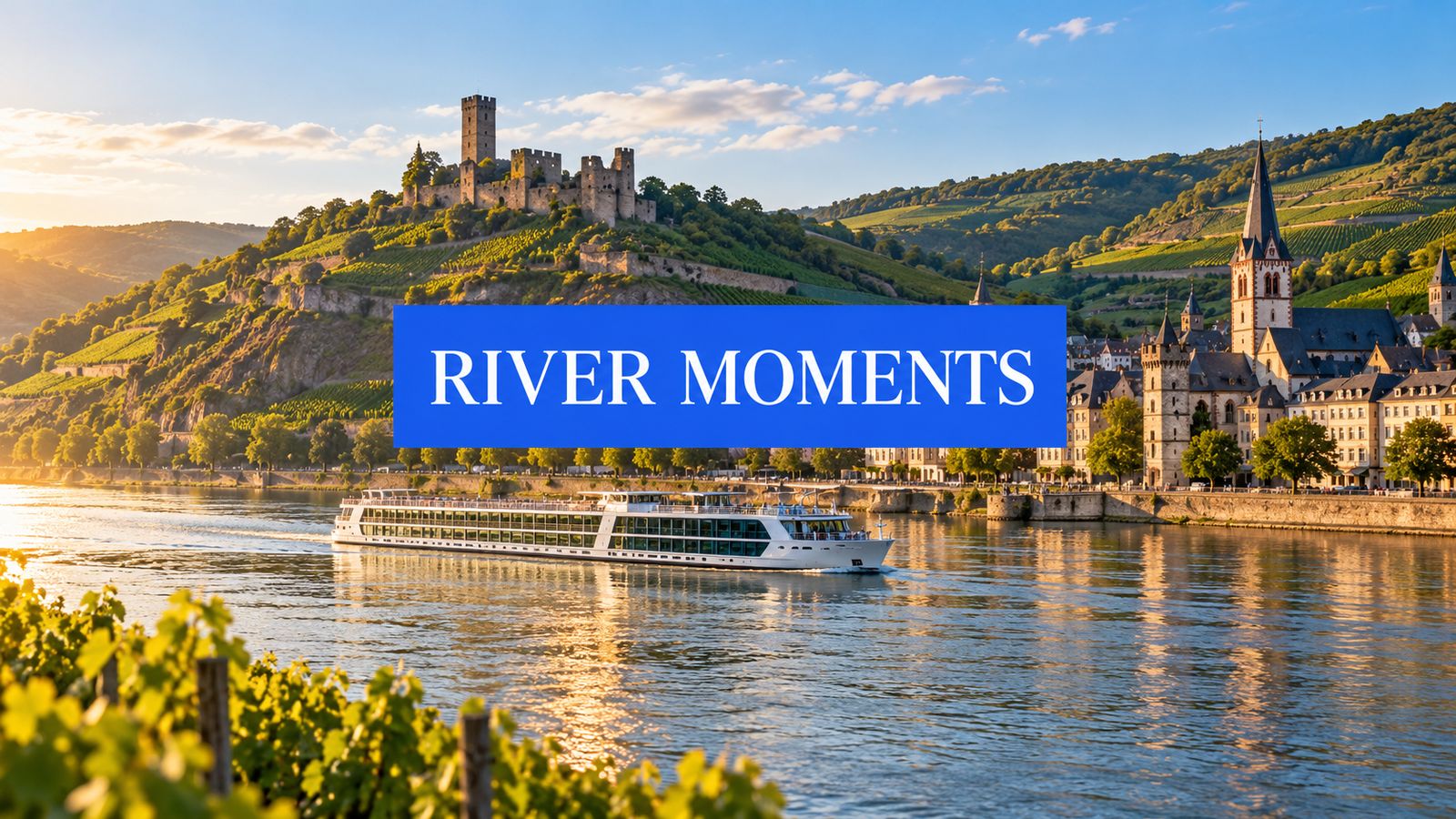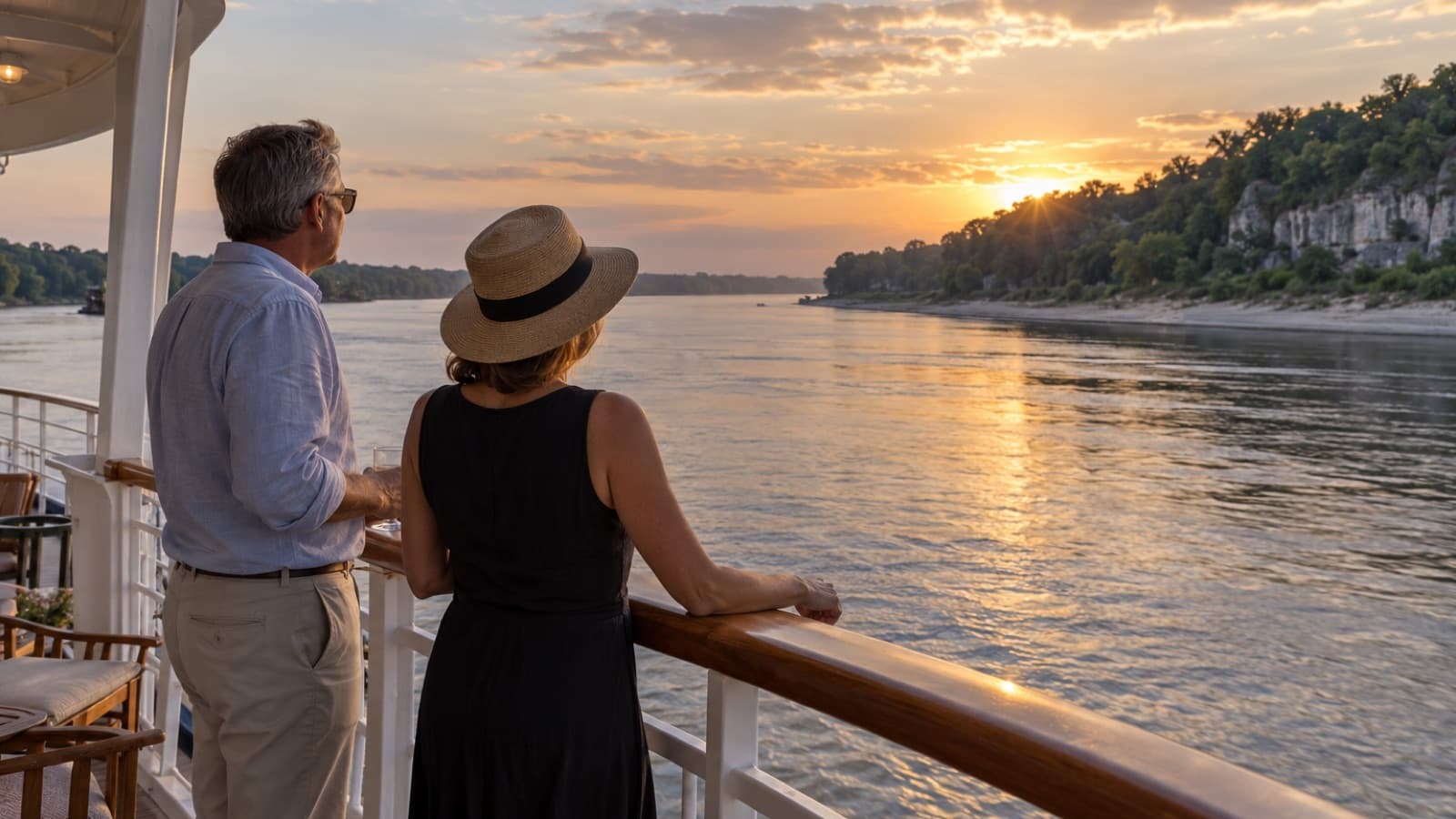
The best American river cruise is the one that matches your interests, pace, and preferred ship, not simply the most famous river. Choose the Lower Mississippi for music and layered history, the Columbia and Snake for dramatic landscapes, or the Upper Mississippi for smaller-town culture. Then compare the actual route, cabin, excursions, and travel days.
It is easy to fall for a beautiful ship photo and miss the part that shapes your days ashore. Does the itinerary give you time in the places you care about? Will your cabin feel comfortable when you want a quiet afternoon? Are the excursions you would actually take included?
I would narrow the river first, then the particular sailing. Here is how I would make that decision with you.
Start with the region, not the ship
The Lower Mississippi is my first suggestion for a traveler who wants the trip to feel rooted in American music, food, and history. New Orleans and Memphis are compelling endpoints, but look carefully at the places between them. The National Park Service's Delta heritage study traces a far more layered story than a single plantation stop could tell. I favor a sailing that leaves room for several perspectives on that history.
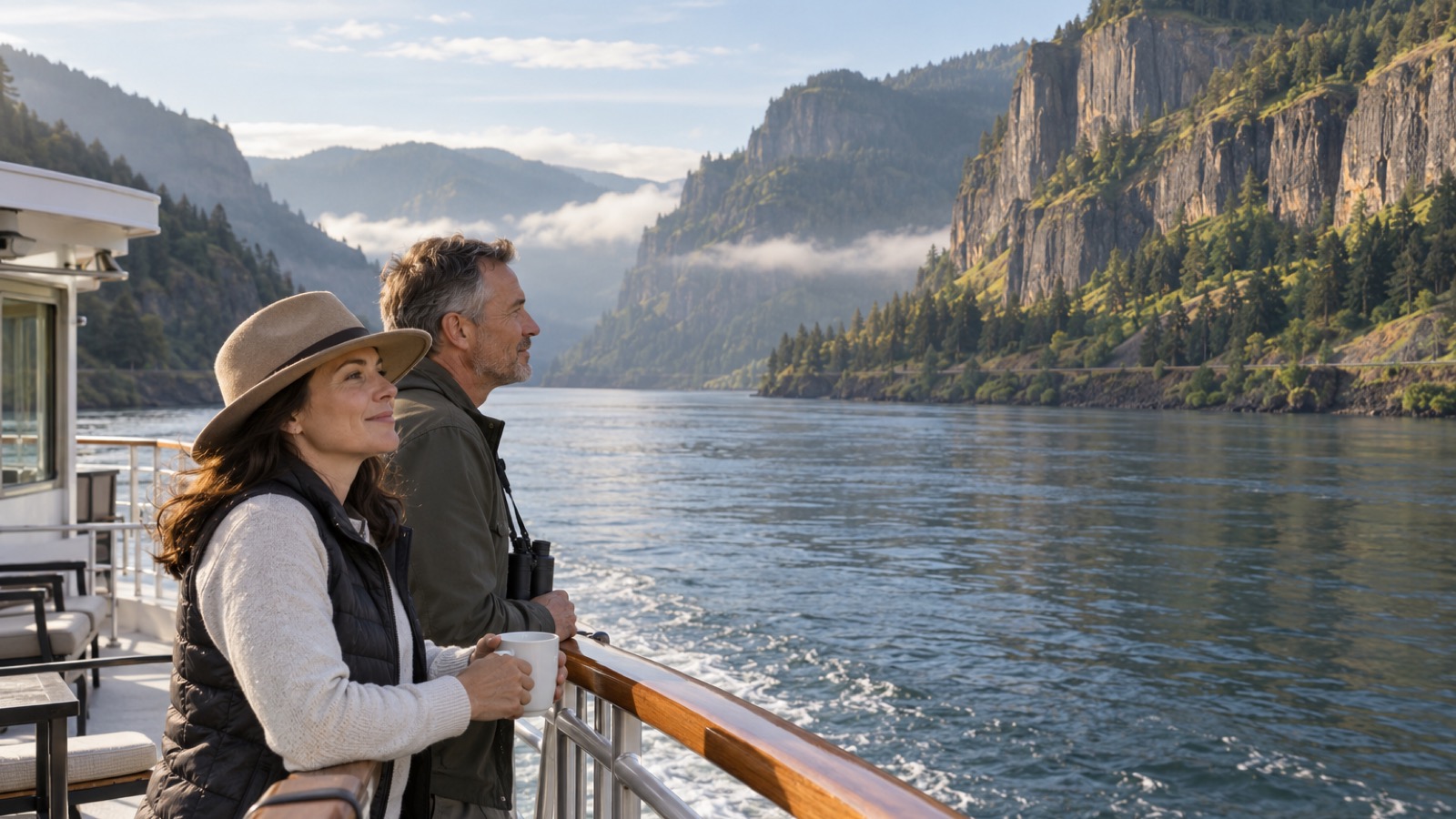
For landscape-led travel, I would compare the Columbia and Snake Rivers. The scenery and shore experiences are different from a southern history voyage. My guide to choosing a Columbia river cruise goes deeper on that choice. Do not assume every sailing reaches the same stretch of river or offers the same excursions.
Consider the Upper Mississippi if you enjoy a gentler rhythm built around river towns and local stories. A longer route can cover more geography, but more days are only useful if the stops appeal to you. Read the port sequence rather than buying the broad label “Mississippi cruise.”
Compare the experience each river actually gives you
There is no universal winner here. If your priority is jazz, regional food, and the history of the Delta, a Columbia itinerary is the wrong substitute even if its ship is lovely. If you want outdoor scenery from the deck, the opposite is true. Make the shore experience your tie-breaker.
| Region | Choose it for | Check before deciding |
|---|---|---|
| Lower Mississippi | Music, food, and complex regional history | Time in each city and the substance of the shore program |
| Upper Mississippi | River towns, local culture, and a slower-feeling route | Which ports are visits rather than brief calls |
| Columbia and Snake | Scenery and a Pacific Northwest focus | How much time is on the water versus in vehicles ashore |
A river cruise also works well as the center of a wider trip. I would rather add a purposeful city stay before or after the sailing than stack several hurried sightseeing days onto each port call. That gives the journey a beginning and an ending instead of treating embarkation as the entire vacation.
Choose a ship and cabin for how you travel
The two familiar names in this search are not interchangeable. American Cruise Lines' Mississippi ship overview shows a fleet of modern riverboats and paddlewheelers, so you still need to compare individual vessels. Viking's published description of Viking Mississippi says it carries 386 guests in 193 outside staterooms. The choice is about atmosphere and the specific route, not a blanket claim that one operator is better.
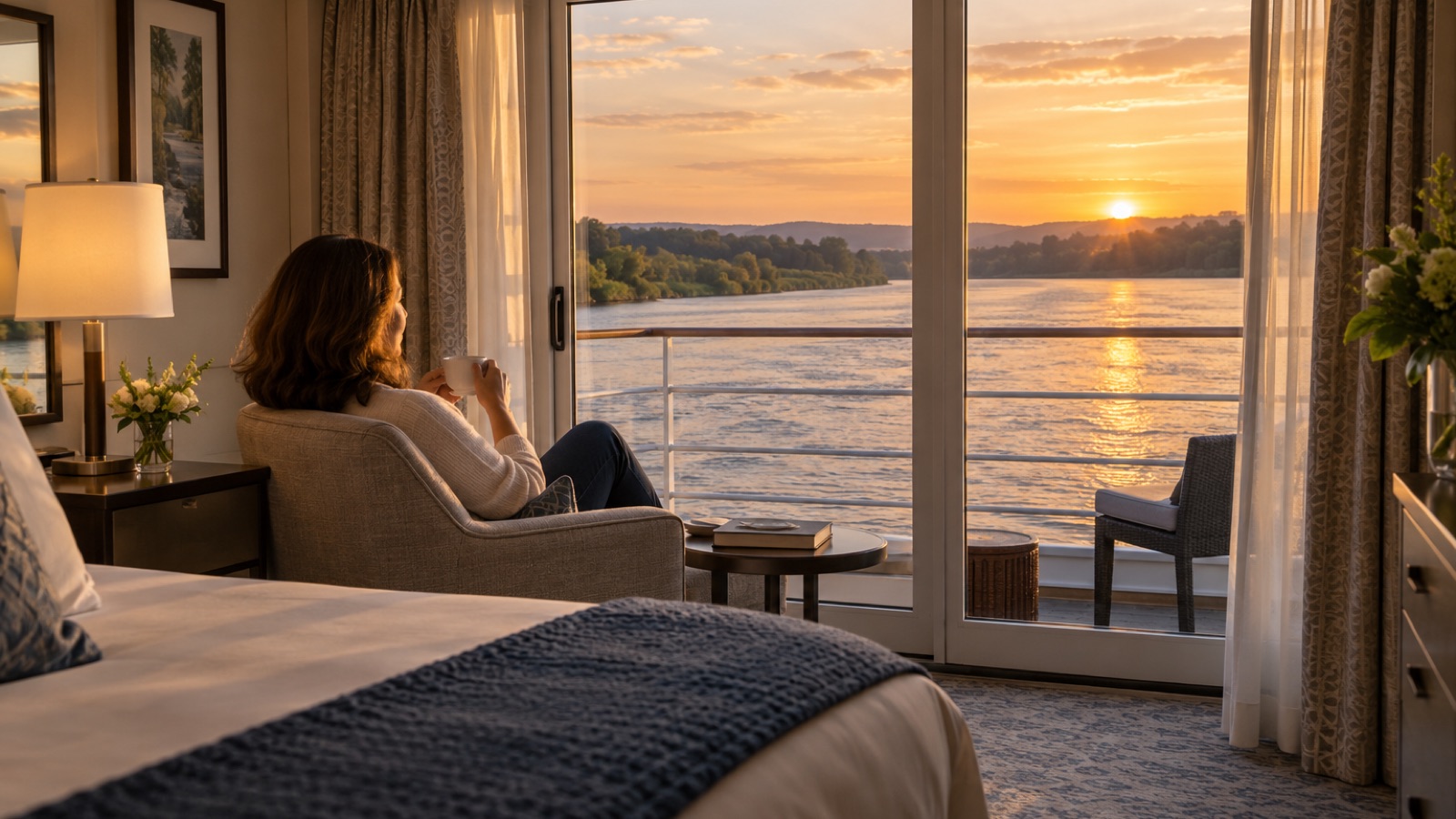
For a traveler who likes an intimate ship, I start by asking how much time they expect to spend aboard between visits. Then we look at public lounges, deck space, dining style, and the cabin category together. A big suite is not automatically a better investment if the trip is packed with shore time. On a scenery-led voyage, a private outdoor space may matter more.
What I check in the floor plan
Look beyond the cabin label. Check the bed arrangement, bathroom configuration, window or balcony, proximity to the elevator and public rooms, and whether a neighboring deck could affect quiet time. If stairs are an issue, ask about the actual ship and every shore stop rather than assuming that “accessible ship” means every gangway and excursion is suitable.
American Cruise Lines says most of its ships have elevators, but some named vessels have limited elevator access. That detail belongs in the decision before the cabin is selected. I would also ask for the current accessibility information for the precise sailing, including any mobility restrictions on the excursions you want.
Pick the season with your priorities in mind
For the Columbia Gorge, Travel Oregon's seasonal guidance points to late April through June for wildflowers, late July through August for a lower chance of rain, and mid-September through October for fall color. I would choose the sailing date around the experience you value, not assume every spring or fall week delivers the same conditions. Pack layers and make room for changing weather. If you are also considering expedition cruising, my guide to Antarctica cruise timing shows how much the sailing date can shape a very different journey.
On the Lower Mississippi, remember that NOAA's Atlantic hurricane-season climatology places the official season from June through November. That is not a prediction for your departure. It is a reason to understand cancellation terms, insurance options, and possible travel disruptions when your trip touches the Gulf Coast.
River levels and weather can also change what happens on the water. The National Weather Service's Mississippi Riverwatch publishes observations and forecasts. I never sell a port list as a guarantee. Build enough flexibility into the travel around your cruise that a changed arrival or departure does not unravel the whole plan.
Understand what “all-inclusive” means on this sailing
That phrase needs a close read. According to American Cruise Lines' current FAQ, its fare includes onboard meals, beverages, entertainment, gratuities, and port charges. It also distinguishes included Featured excursions from Premium and Signature excursions that can cost extra. The same FAQ says an airport-to-hotel transfer is not provided, even when a pre-cruise hotel stay is part of the itinerary.
For another line or a different departure, I would check the current terms rather than transfer those inclusions across brands. My comparison is the total trip, not just the headline fare: flights, pre- and post-cruise nights, transfers, your preferred shore activities, cabin choice, and the flexibility you need if plans change.
My planning rule: Compare the experiences you would actually use. An included tour has little value if it skips the place that made you choose the river.
There is no honest single “average cost” that captures an American river cruise. Sailing length, cabin, date, and inclusions vary. A current quote for two or three departures with comparable cabins and a full trip estimate tells you much more than a disconnected per-person number.
Give the travel days as much attention as the voyage
Do not make a flight on embarkation day the only path to your ship. I prefer an arrival with time to recover from delays and enjoy the departure city. Confirm the hotel-to-ship transfer, and do the same for the transfer at the far end, especially on a one-way route. A round trip and a one-way cruise may look similar on a ship page but ask very different things of your flights.
American Cruise Lines' FAQ currently describes a pre-cruise hotel stay for new bookings and says the hotel-to-ship transfer is included with it, while the airport-to-hotel leg is not. Details and eligibility can change. I would verify the current terms for your departure and put the missing leg in the plan rather than discover it with luggage in hand.
A one-way sailing can be a gift if you want to spend more time in both endpoint cities. It is less attractive if your available days are tight and the flights consume the time you hoped to spend exploring. When two sailings are otherwise close, I often recommend the one whose travel days leave you feeling less rushed.
Make the most of a 2026 or 2027 departure
The calendar year alone is not the decision. Look at the specific date, ship, cabin, ports, and time ashore. One useful example: Viking's announcement of 2027 Mississippi and Ohio voyages describes an eight-day Memphis-to-Louisville option and a longer New Orleans-to-Louisville route. These are meaningfully different trips despite sharing a ship.
For travelers with a particular cabin category, a milestone date, or limited time off, I would start looking before the itinerary becomes a last-minute compromise. Verify the current departure and availability when you are ready to inquire. Promotional terms, ship assignments, and excursions can change, so an old screenshot is not a planning document.
If you are used to Europe, compare the experience rather than assuming the same river-cruise formula applies. My guide to choosing a Viking river voyage explains the questions worth bringing to any comparison. An American sailing can be a wonderful choice on its own terms, not merely a shorter flight.
A few planning mistakes I would avoid
- Choosing by ship alone: Make sure the ports and shore experiences justify the trip for you.
- Treating included as unlimited: Identify which excursions are included and which require another payment.
- Forgetting the airport leg: Map flights, hotels, and transfers in both directions before comparing totals.
- Assuming every excursion is easy: Check walking surfaces, vehicle time, and mobility requirements for the actual departures.
- Buying a balcony by reflex: Decide how often you will use it and what the particular cabin overlooks.
I would not force a three-day or five-day sailing to stand in for a fuller river journey simply because the calendar is crowded. If you have only a long weekend, be honest about whether you want a brief river taste or the unfolding rhythm of several ports. If it is the latter, protect more time or choose a different trip.
Frequently Asked Questions
What is the best US river cruise?
For cultural depth, I would begin with the Lower Mississippi; for scenery, the Columbia and Snake. The best sailing then depends on the ports, season, ship, cabin, and available travel days. There is no single winner for every traveler.
What does an American river cruise cost?
There is no reliable universal average. Ask for a current, comparable quote for the dates and cabins you would actually choose, then include flights, hotels, transfers, and optional excursions. Be wary of comparing a short base fare to a fully planned longer trip.
Which US river cruise is best for older travelers?
Choose by your interests and mobility needs, not age alone. Compare the ship's elevator access, cabin layout, gangways, and the walking required at each port. Ask for current accessibility details for the exact vessel and shore program before making a decision.
Why can American river cruises cost so much?
You are comparing a small-ship journey with accommodation, meals, and some organized time ashore, rather than transportation alone. What is included varies, so the useful question is whether the actual route, cabin, and activities are worth the total trip investment to you.
Are there three-day or five-day American river cruises?
Short offerings can change by operator and year, and I would verify a live departure before promising a specific length. If you want several ports and unhurried time ashore, a very short sailing may not deliver the experience you have in mind.
Plan the river journey that fits you
Explore Effortlessly can compare the routes, current inclusions, cabin options, and travel days with you, then shape the cruise into a trip that makes sense from door to door. I start with the experience you want, not a stack of ship brochures. For another angle on who should sail together, see my guide to river cruises for families; for a longer voyage, read the planning guide to extended cruise journeys.
If a domestic river journey is on your mind, Start Planning My River Cruise. Tell us your preferred season, travel dates, and what you most want to experience ashore.
For thoughtful travel ideas in your inbox, join the Explore Effortlessly newsletter.
About the Author
Hi, I'm Karrah Kazravan, owner and lead travel advisor at Explore Effortlessly, an award winning Miami agency serving clients nationwide. I design custom journeys for busy travelers who want confident recommendations and thoughtful coordination. I have traveled to more than 67 countries across all seven continents and am a Nexion Circle of Excellence Top 5% advisor, ASTA Verified Travel Advisor, Certified Travel Associate, and CLIA Accredited Cruise Counselor.