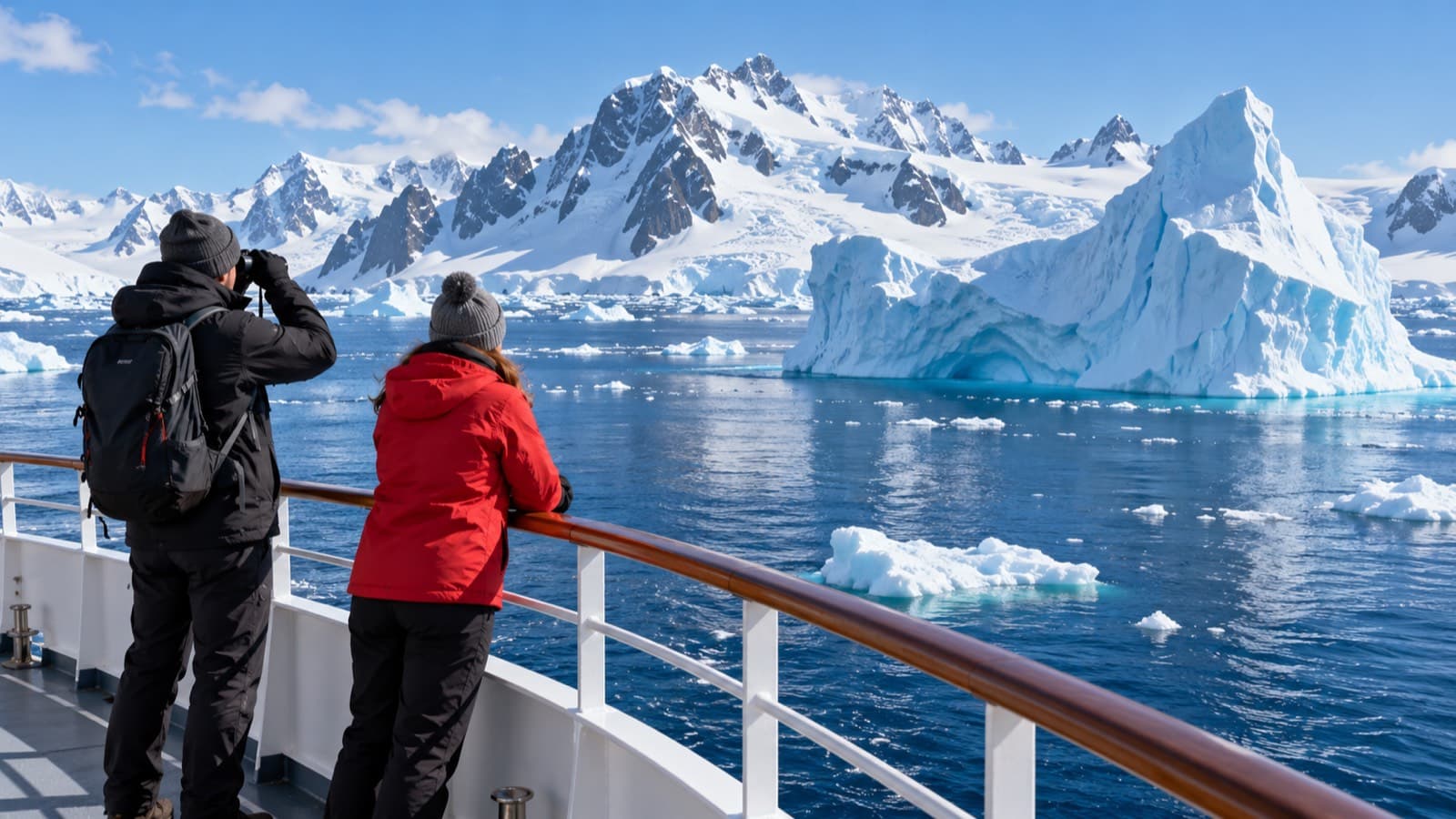
The right Antarctica cruise is a landing-focused expedition on a ship whose route, crossing style, and cabin suit your priorities. If seeing the coast from the deck is enough, a scenic cruise can work. If you want to step ashore and explore by small boat when conditions allow, choose an expedition designed for that purpose.
The hard part is not finding a beautiful photograph of ice. It is understanding what a particular voyage actually gives you: time in Antarctic waters, opportunities to disembark, the trade-off between sailing and flying across the Drake Passage, and what happens when weather changes the plan. I would decide those questions before comparing suites or promotional descriptions.
Decide whether you want to land or just look
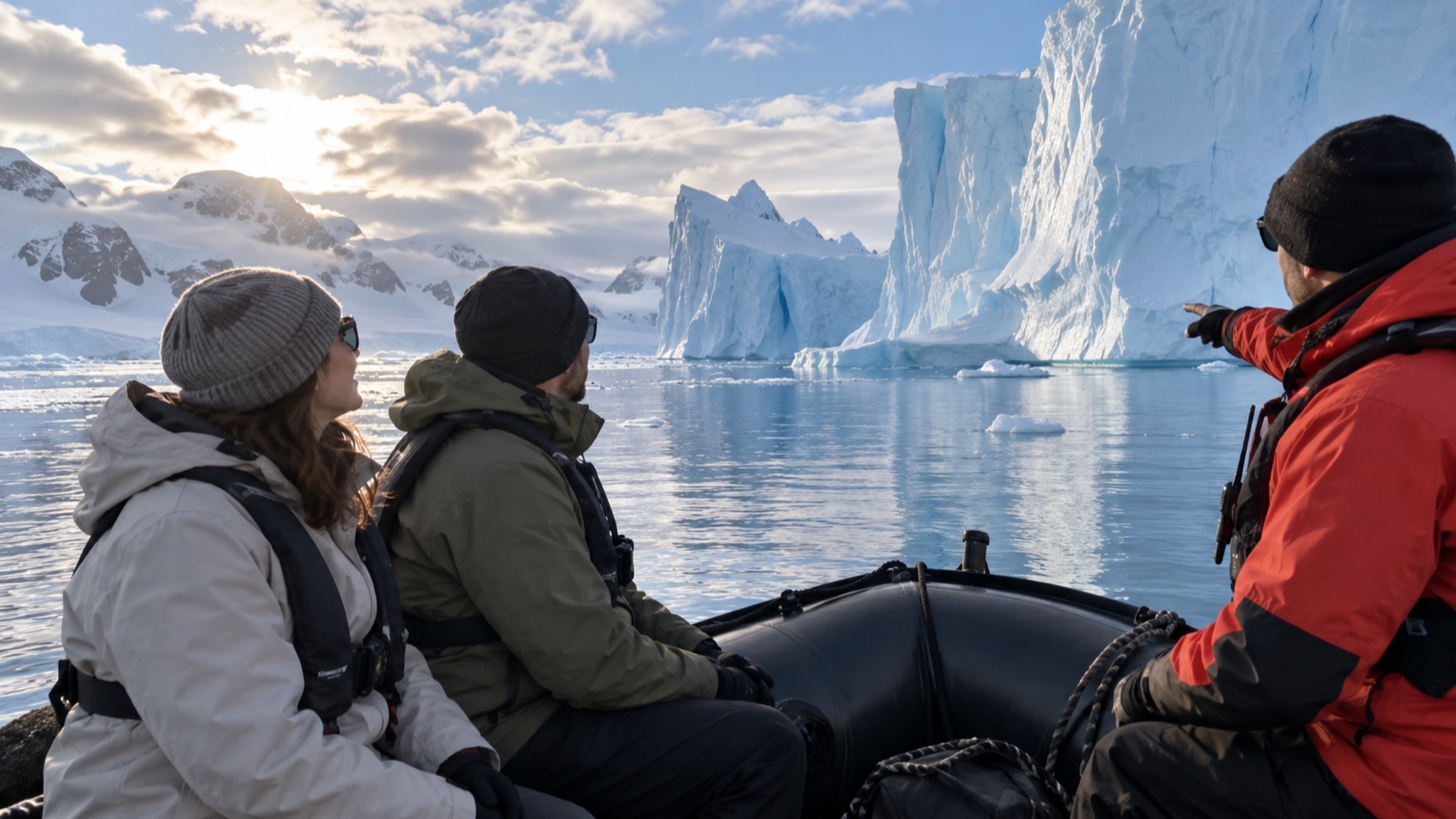
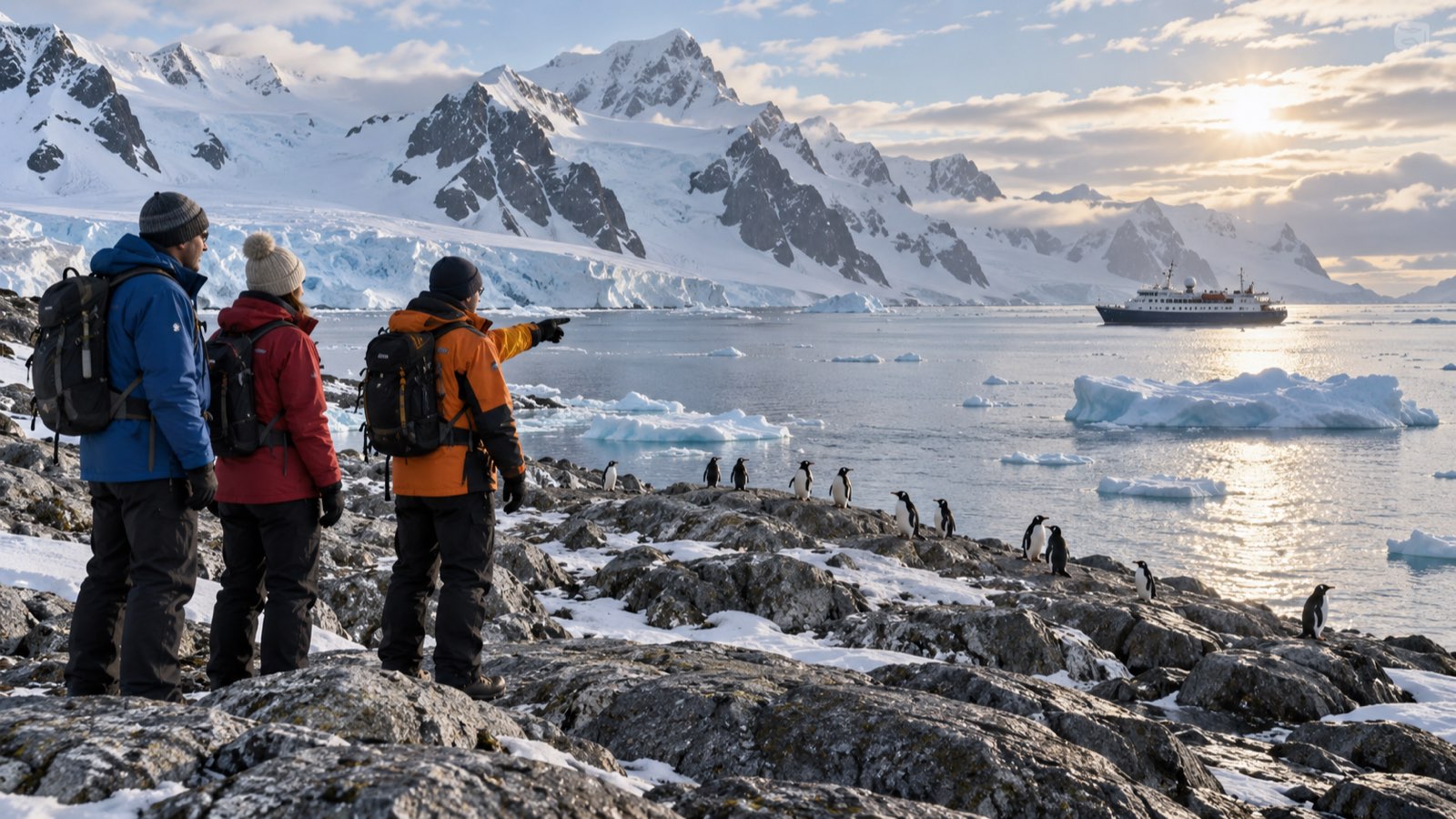
An Antarctica cruise can mean two quite different experiences. A scenic itinerary keeps you aboard for views from the ship. An expedition aims to get guests onto the water in small boats and, where permitted and safe, ashore. IAATO explains the key distinction: vessels carrying more than 500 passengers cannot land passengers in Antarctic waters. A smaller ship is not a promise of a landing, but it gives you a different kind of itinerary to evaluate.
Royal Caribbean, for example, describes its Paradise Bay call as cruising without getting off the ship. That may be a good fit if you prefer the familiar rhythm of a larger ocean voyage and are content to see the landscape from the deck. I would not choose it for someone whose defining wish is a shore visit.
| Experience | Best fit | Trade-off to check |
|---|---|---|
| Scenic cruise | You want Antarctic views as part of a broader voyage. | Confirm that you are comfortable remaining aboard. |
| Landing-focused expedition | You want a closer, guide-led encounter with the environment. | Plans can change with weather, ice, and site conditions. |
| Fly-cruise expedition | You want to reduce time at sea crossing the Drake. | Flights themselves depend on suitable weather. |
My question for you is simple: would you regret coming this far and never stepping off the ship? If yes, remove cruise-only choices from your shortlist immediately. The same distinction matters elsewhere, but Antarctica makes it especially consequential.
Compare ships by expedition experience, not chandeliers
For a luxury Antarctica cruise, comfort and exploration need not compete. Silversea describes Silver Endeavour as a polar expedition ship with Zodiacs. That is a more relevant starting point for a landing-focused traveler than the number of dining venues on a conventional ship. Still, the ship's equipment does not tell you what a particular departure will accomplish.
I compare the actual voyage details: guest capacity, expedition staffing, the planned time around the Peninsula, small-boat access, activity prerequisites, and what the fare includes. Ask how the operator manages rotations when a site limits visitors, how physically demanding shore outings are, and which activities require advance selection. Get answers for your departure, not a generic fleet description. If a remote-island voyage is also on your list, compare the route questions in my Easter Island cruise planning guide before choosing which experience suits you.
The cabin decision I would make first
Start with how you recover between outings. A well-placed cabin with comfortable sleeping space can matter more than an impressive suite feature you rarely use. Think about how readily you want to reach public viewing areas, whether stairs are an issue, and how you feel about motion at sea. Deck plans and cabin categories vary, so compare the exact ship rather than assuming every expedition vessel has the same layout.
My planning rule: Pay for a cabin upgrade because it solves a specific comfort problem, not because a larger category sounds more appropriate for a milestone trip.
Choose a route with enough real time in Antarctica
A short departure and a longer voyage may show the same word, Antarctica, in their titles but deliver very different rhythms. Count the days actually intended for Antarctic exploration, not just the total trip length. Then look at the embarkation point, how the Drake is crossed, and whether additional regions are part of the route. A route with more destinations is not automatically better if your priority is a relaxed Peninsula experience.
A seven-day Antarctica cruise deserves especially close reading. It may rely on flying one or both ways, or have fewer days available around the Peninsula. I would rather see a realistic plan with a buffer before the flight home than a tightly packed calendar that looks elegant until the weather changes. Ask what happens to missed activities and onward connections; the written terms matter more than the headline duration.
If you are deciding how much time to allocate, our guide to Antarctica expedition costs helps put voyage length and the broader trip investment in context. Longer is not automatically better. It is better when the extra days serve a place or experience you actually care about.
Time the voyage around your priorities
Antarctic tourism is centered on the austral summer. The British Antarctic Survey describes tourism visits during that season. Within it, conditions and wildlife activity change, but I would not sell any departure as a guaranteed penguin, whale, or landing experience. Nature and ice do not honor brochure schedules.
Tell your advisor what image you are hoping to bring home: a snow-rich landscape, wildlife observation, or more daylight for photography. We can use that priority to narrow departures, then evaluate the route and ship. Our Antarctica seasonal timing guide is a useful companion if the month is your first decision.
Do not choose solely because a review praises one particular sailing. An Antarctica cruise review reflects the weather and route that person encountered, not a repeatable itinerary. I put more weight on how an operator explains its contingency decisions and what its terms say when the plan changes.
Understand the Drake Passage decision
Sailing across the Drake Passage is part of the classic expedition rhythm. Flying across it can save sea time and reduce exposure to a potentially uncomfortable crossing. Neither option eliminates uncertainty. Antarctica21 explains that its Antarctic flights can be delayed by weather and describes contingency arrangements that depend on the itinerary.
For someone who values time and dislikes extended open-water sailing, I would examine a fly-cruise. For someone who wants the full sea journey and can allow more time, a sailing itinerary may feel more satisfying. The important question is not which route sounds braver. It is how much schedule flexibility you truly have at both ends.
- If you sail: Ask about sea days in the plan and prepare for variable motion.
- If you fly: Read the precise flight-delay and cancellation terms before committing.
- Either way: Leave sensible space before a critical meeting, family event, or separate trip.
Build the trip around the cruise, not the other way around
The vessel is one piece of the journey. You also need international flights, the pre-voyage arrival, a convenient hotel, transfer arrangements, appropriate gear, and a realistic return plan. I look for the points where a missed connection could jeopardize the embarkation or a weather delay could complicate the flight home. Those are the details worth solving before selecting an expensive cabin.
Ask about luggage requirements if your journey includes an Antarctic flight. Check the operator's current gear guidance, especially boots, outer layers, and items that might be provided or rented. Do not assume a packing list for one operator applies to another. Our Antarctica cruise packing list offers a starting framework, but your final checklist should follow your actual voyage documents.
The environmental rules are part of the experience, not fine print. Listen to your expedition team's briefings and follow their instructions around wildlife and landing sites. I favor operators that can explain those practices clearly, rather than ones that imply every outing will proceed exactly as pictured.
Judge the investment by the experience you receive
What does an Antarctica cruise cost? There is no single honest price without a departure, cabin, crossing choice, and definition of what is included. Expedition fares, international air, pre- and post-voyage nights, travel protection, and optional activities should be considered together. A lower headline fare may not mean a better total fit if it offers less time where you actually want to be.
I would compare proposals on the same basis: planned Antarctic days, ship and cabin, included excursions, transfers, gear arrangements, and the rules for disruption. If your search begins with an Antarctica cruise under $5,000, be especially careful not to mistake a cruise-only itinerary, a short voyage, or an incomplete trip total for a landing-focused expedition. I will not pretend a specific price threshold guarantees or excludes a good trip without seeing current departures.
The upgrade I would prioritize is usually one that changes the journey itself: a better-aligned route, additional time in the region, or a crossing choice that suits your tolerance for uncertainty. Only then would I spend on a larger cabin. The value is not a universal nightly rate; it is whether the experience matches the reason you decided to go.
Frequently Asked Questions
Which cruise line is best for Antarctica?
There is no universal winner. First decide whether you want a scenic cruise or an expedition that plans for landings. Then compare the exact ship, route, guest capacity, guiding, and terms for your departure. A line that is perfect for one traveler's comfort priorities may be wrong for someone whose goal is maximum time exploring from a small boat.
Can a US citizen go to Antarctica?
Yes. The US State Department's Antarctica travel guidance explains that Antarctica is not a country and sets out travel and expedition-notification considerations. Transit countries have their own entry rules. Requirements and advisories can change, and each traveler is responsible for meeting the rules applicable to their itinerary; confirm them with official sources before departure.
Does Royal Caribbean offer the same Antarctica experience as an expedition ship?
No. Its Paradise Bay description is a ship-based scenic experience rather than a shore visit. If the chance to land is essential to you, look instead at a landing-focused expedition and understand that even those outings depend on conditions.
Are Antarctica cruise reviews useful?
They can reveal how a traveler experienced a cabin, food, or the expedition team. They cannot predict the wildlife or weather on your own sailing. I use reviews to generate questions, then verify the answers against current ship information and the written terms.
Plan an Antarctica journey that fits you
Explore Effortlessly helps travelers sort the competing ship, route, cabin, and crossing choices into one considered plan. Our standard service includes an initial consultation. If you want more scheduled discussion and help with dining, spa, or special arrangements, VIP includes two additional scheduled calls and extended evening and weekend help for canceled flights and missed connections, without an immediate or 24-hour response promise. Clients receive supplier contacts for urgent real-time assistance.
I am a CLIA Accredited Cruise Counselor, and I would rather help you choose the experience you will actually enjoy than sell you a suite on the wrong voyage. For a related perspective on expedition trade-offs, see our Alaska cruise route and ship guide. If Antarctica is calling, Start Planning My Antarctica Cruise.
For more thoughtful travel ideas, join our travel newsletter.
About the Author
Hi, I'm Karrah Kazravan, owner and lead travel advisor at Explore Effortlessly, an award winning Miami agency serving clients nationwide. I design custom journeys for busy travelers who want confident recommendations and thoughtful coordination. I have traveled to more than 67 countries across all seven continents and am a Nexion Circle of Excellence Top 5% advisor, ASTA Verified Travel Advisor, Certified Travel Associate, and CLIA Accredited Cruise Counselor.