You're at the airport gate with five working days available, three Croatia guides open on your phone, and every one of them recommends the same rushed sequence: Split, Hvar, Dubrovnik. It looks beautiful on paper. It also assumes ferries run perfectly, flights arrive on schedule, and you'll enjoy changing hotels while jet-lagged.
A well-designed Croatia 5 day itinerary needs a sharper question than “Which sights should I see?” The better question is: Which route geometry gives you the most pleasure with the fewest logistical penalties? Croatia recorded 20.2 million tourist arrivals and 93.7 million tourist nights in commercial accommodation in 2024, with 92.2% of nights spent in seaside resorts (Croatian Bureau of Statistics). The coast is popular for good reason, but popularity makes timing and routing decisive.
Why Most Croatia 5 Day Itineraries Skip the Decisive Question
The classic Split to Hvar to Dubrovnik itinerary is scenic, polished, and often wrong for a five-day luxury trip. It gives you Croatia's most recognizable names, but it can turn a short escape into port departures, luggage handoffs, and constant watch-checking. If your main constraint is time rather than destination, my five-day Scotland itinerary planning guide shows another way to prioritize a short trip.
A marketing director landing in Split at 21:40 on a Friday after a delayed connection should not be handed a 07:00 park excursion the next morning. She needs one waterfront base, a proper breakfast, and a single evening walk through Diocletian's Palace. Adding an early excursion, catamaran, Hvar check-in, and dressed dinner to the following day protects the schedule on paper while stripping away the time that makes the trip feel luxurious.
By the time Dubrovnik arrives, the itinerary has delivered scenery, but very little unclaimed time.
The route has to match the traveler
Croatia's compact size and Adriatic position make it possible to combine historic cities, islands, and coastal drives within five days. UNESCO identifies 10 World Heritage sites in Croatia, including the Historic City of Dubrovnik, Diocletian's Palace in Split, and the Old City of Trogir (Croatia tourism dashboard). That heritage density creates temptation. It does not remove transfer time or ferry constraints.
I make the decision using three filters:
- Arrival energy: If you arrive late or cross multiple time zones, start with one base.
- Transfer tolerance: If moving luggage frustrates you, avoid a ferry-heavy sprint.
- Experience priority: Choose coastal drama, cultural depth, or food and wine. Five days cannot maximize all three.
Practical rule: A luxury itinerary should protect your best hours, not fill every available hour.
In the busiest part of summer, I favor one well-positioned base over an ambitious island chain. With flexible dates, a shoulder-season coastal plan preserves signature experiences while giving ports, old towns, and restaurants more breathing room. For a busy traveler, the decisive choice is not Split to Dubrovnik. It is whether the coast's scenery justifies its transport pressure, or whether an inland route delivers more time to enjoy Croatia.
Picking the Right Window for Your Croatia Trip
Timing in Croatia is a transport decision disguised as a seasonal preference. The busiest coastal months bring the strongest demand, while shoulder months often make the same route feel more composed. Croatia's tourism demand remained high through August 20, 2025, when officials reported 15.5 million arrivals and 79.2 million nights, both above the comparable 2024 period (Croatia Guidebook).
Peak season
Mid-June through late August suits travelers who want the fullest island rhythm, reliable swimming weather, and the broadest selection of open seasonal properties. The trade-off is crowd pressure. Popular ferry departures fill, Dubrovnik's historic center feels busiest, and major sites require more disciplined scheduling.
For July or August, my recommendation is direct: choose one base, or at most two. Put the money into a sea-view room, private transfers, and early guided access instead of spending it on a second hotel night that mainly buys another check-in.
Shoulder season
May and September into early October are my preferred windows for most busy professionals. Catamarans operate during the relevant sailing season, the Adriatic remains inviting, and the old towns generally offer more breathing room than in high summer. September is particularly effective for a polished coastal itinerary because you can combine island time with more manageable sightseeing.
Off-season
November through March changes the character of the trip. Many island hotels and seasonal venues close, but Zagreb and Istria become more compelling for travelers who prefer architecture, galleries, truffle-focused meals, and slower inland touring. You'll need to build around what's open rather than assuming the summer program continues.
| Window | Crowd Pressure | Hotel Cost Index | Ferry Availability | Best Use of 5 Days |
|---|---|---|---|---|
| Mid-June through late August | Highest on the classic coast | Highest | Broad seasonal service, with busy departures | One-base luxury stay or tightly pre-booked coastal movement |
| May and September into early October | More manageable | More favorable than peak | Seasonal island access can support a coastal plan | Two-base coastal itinerary with cultural and leisure balance |
| November through March | Lowest on many coastal sights | Seasonal availability varies | Island service and seasonal properties are limited | Zagreb, Istria, heritage, food, and inland touring |
Decision rule: If July or August dates are fixed, simplify the route. If you can shift your trip earlier or later, do it. The itinerary won't need to work as hard to feel luxurious.
Choosing Between a Coastal Loop and a Quieter Inland Route
With only five days, choose the route around your priorities, not a standard Split to Dubrovnik template. The coastal loop delivers Croatia's most recognizable stops. The inland-leaning route gives busy travelers more time at the table, in historic towns, and at one or two well-chosen hotels.
Option A, the coastal loop
A classic coastal version runs from Split to Bol to Hvar to Dubrovnik, using catamarans and a short private transfer where required. It delivers island scenery, waterfront dinners, swimming, and the Dalmatian views most first-time visitors want.
This option suits travelers whose flights are already fixed in peak season and who place iconic coastlines above long lunches or unstructured resort time. Keep the route only if those experiences justify the extra coordination.
Option B, the inland-leaning route
An inland route can begin in Zagreb, continue toward Plitvice Lakes or Istria, and finish with a brief coastal stay. Motovun, Rovinj, and Pula show a different side of Croatia through hill-town atmosphere, regional food, Roman heritage, and a slower rhythm.
Motovun works well for a truffle-focused meal and a hilltop stay. Rovinj is the strongest choice for polished coastal character without adding an island transfer. Pula earns a place for its Roman amphitheater and straightforward access to Istria's food and wine country.
The trade-off is clear. You give up the concentrated island glamour of Split, Hvar, and Dubrovnik for forests, heritage, and dining-led experiences. That is a strong exchange for travelers who value time over checking off every famous stop.
| Route shape | What it does well | Main compromise | Best fit |
|---|---|---|---|
| Coastal loop | Maximizes Adriatic scenery and island atmosphere | More ferry dependence and transit fatigue | First-time visitors with fixed summer dates |
| Inland-leaning loop | Creates calmer pacing and more varied scenery | Less island drama | Travelers prioritizing food, culture, and fewer hotel moves |
Set the ferry plan before confirming hotels. Check the intended sailing pattern, allow for port transfers and luggage handling, then book properties around those departures. For travelers who hate unpacking, Option B usually wins. For anyone who has dreamed about Hvar and Dubrovnik for years, Option A is right, provided the ferry schedule leads the booking sequence.
A Refined Five Day Coastal Itinerary Day by Day
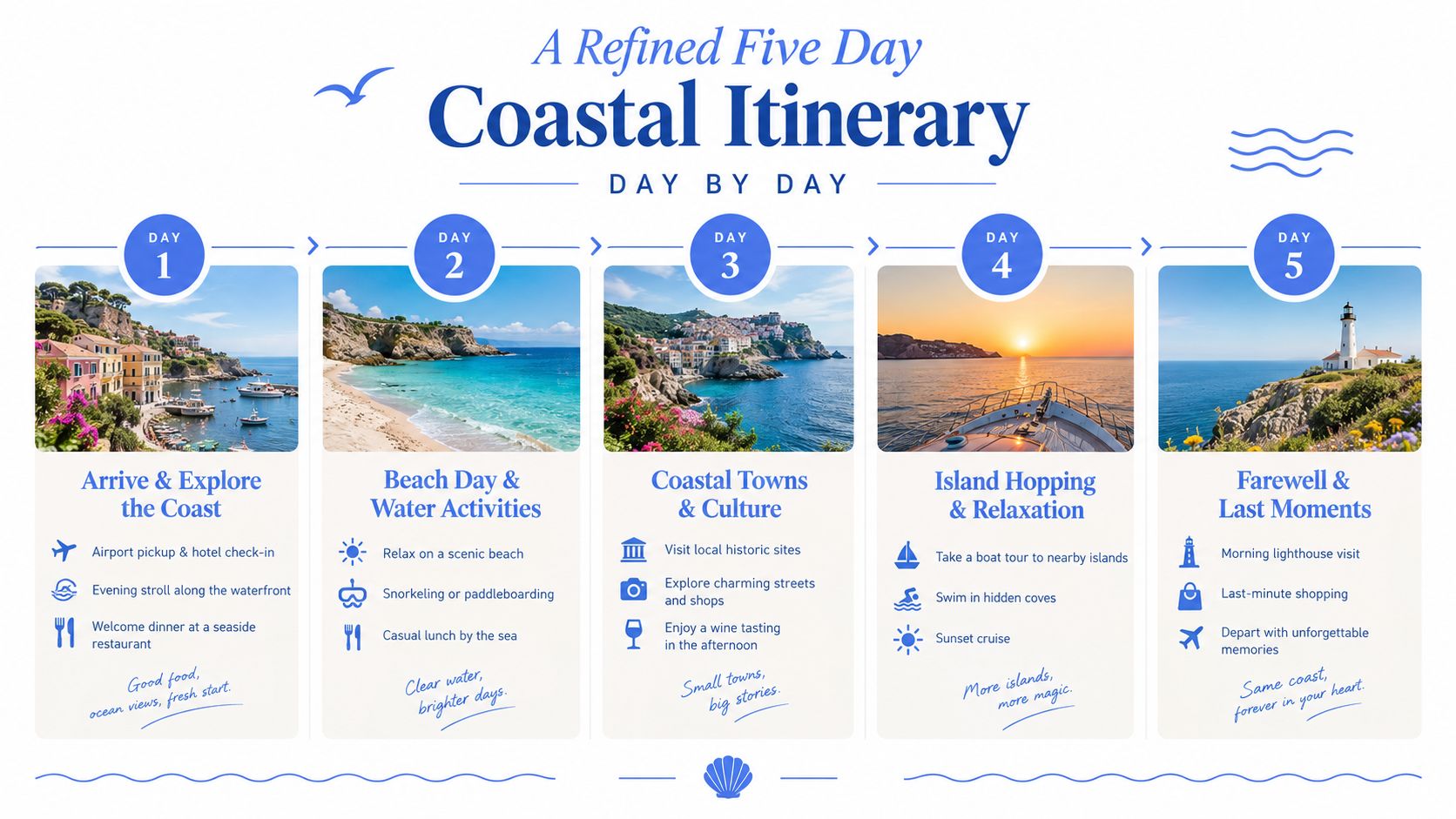
This is the version I'd use for a client who wants Split, Hvar, and Dubrovnik without pretending the route is effortless. It keeps the major transitions visible and protects the high-value experiences.
Day one, arrive in Split
Arrange a private airport transfer directly to a waterfront property near Bačvice or inside the historic center. Don't add a complicated excursion on arrival day. Settle in, walk through Diocletian's Palace with a private guide, and reserve dinner near the harbor.
A guided introduction matters here because the palace isn't a single isolated monument. It's part of the living city, with residences, cafés, lanes, and businesses woven into the historic fabric. Keep the first evening elegant and short. Jet lag has a habit of winning arguments.
Day two, Krka and onward to Hvar
Use a private driver for the approximately 1.5-hour journey from Split to Krka, with timed park entry arranged in advance. Krka works best early or late in the day, when the experience feels less like a procession. After the visit, return toward Split and board a catamaran to Hvar.
The Split to Hvar crossing takes roughly two hours on the itinerary described here. Check into your resort, take a sunset drink, and keep dinner close to the property. A late arrival deserves atmosphere, not another transfer.
Day three, private boat time
Spend the morning on a private boat to the Pakleni Islands, with lunch at a secluded konoba arranged around the day's route. Splurging makes sense here. A private boat lets you adjust the pace, avoid a rigid group schedule, and return when the light is best.
Reserve an afternoon spa appointment at the resort. If you're staying near Hvar Town, consider a quieter evening in Vrboska only if the transfer adds pleasure rather than another obligation.
Day four, Hvar to Dubrovnik
The seasonal high-speed Dubrovnik to Split connection also operates in the reverse direction, with published 2026 schedules showing multiple weekly sailings through islands including Korčula, Hvar, and Brač (Dubrovnik Online ferry information). A Hvar to Dubrovnik leg can take roughly four hours depending on the service and routing, so confirm the exact sailing before committing to a late afternoon plan.
Have a hotel transfer waiting at Gruž port. Stay in Ploče for sea views and convenient access to Dubrovnik's Old Town, rather than wasting your final evening navigating a distant resort transfer.
Day five, Dubrovnik with a clean finish
Walk the Old Town walls early, before heat and heavier foot traffic build. Follow with a private island kayaking option if conditions suit, or keep the morning cultural and use the afternoon for a leisurely lunch and suite time.
For a late flight, schedule the airport transfer with generous margin. A five-day trip should end with a calm departure, not a sprint from Ploče to the terminal.
For additional destination context before you commit to the route, review this guide to places in Croatia to visit.
Luxury Stays, Dining, and Curated Experiences to Layer In
Luxury in Croatia is less about adding every available excursion and more about removing friction. I'd rather give a client an in-suite check-in, a reliable port transfer, and one exceptional boat day than stack the itinerary with ordinary group activities.
In Split, choose a restored palace hotel within or immediately beside Diocletian's Palace if historic immersion matters most. In Hvar, a boutique cliffside resort with a private infinity pool creates the strongest retreat feeling, but a harbor-view room can be the smarter choice if you'll spend most days on the water. In Dubrovnik, a sea-view suite in Ploče offers a valuable combination of scenery and walkability.
| Destination | Stay recommendation | Signature dining | Curated experience |
|---|---|---|---|
| Split | Restored palace hotel near Diocletian's Palace | Tasting menu in Varoš | Private palace walk with flexible pacing |
| Hvar | Cliffside boutique resort or harbor-view room | Boat-access farm-to-table konoba | Sommelier-led wine pairing |
| Dubrovnik | Sea-view suite in Ploče | Cliffside seafood with a private terrace | Early walls walk or sunset yacht charter |
Where I'd spend
Spend on the room category when the view changes how you'll use the property. Butler service, private boat charters, and in-suite check-in are especially valuable for clients with little spare time. A sea-view suite in Dubrovnik is more defensible than a decorative room upgrade in a city where you'll barely be inside.
Dining should be reserved before arrival, particularly for a tasting menu in Split's Varoš quarter, a boat-access konoba on Hvar, or a cliffside seafood restaurant outside Dubrovnik. These aren't filler reservations. They anchor the day and prevent the itinerary from dissolving into last-minute compromises.
What to add carefully
If you fly through Zagreb, a morning truffle hunt can work as an inland prelude, but don't force it into the coastal plan. In Hvar, a private sommelier pairing gives you a polished evening without another transport segment. A sunset yacht charter is the right splurge for travelers who want one cinematic experience rather than several standard boat outings.
If a yacht-centered day is the priority, explore the planning considerations in this Mediterranean luxury yacht charter guide.
Ferry Logistics, Park Entries, and Booking Mechanics
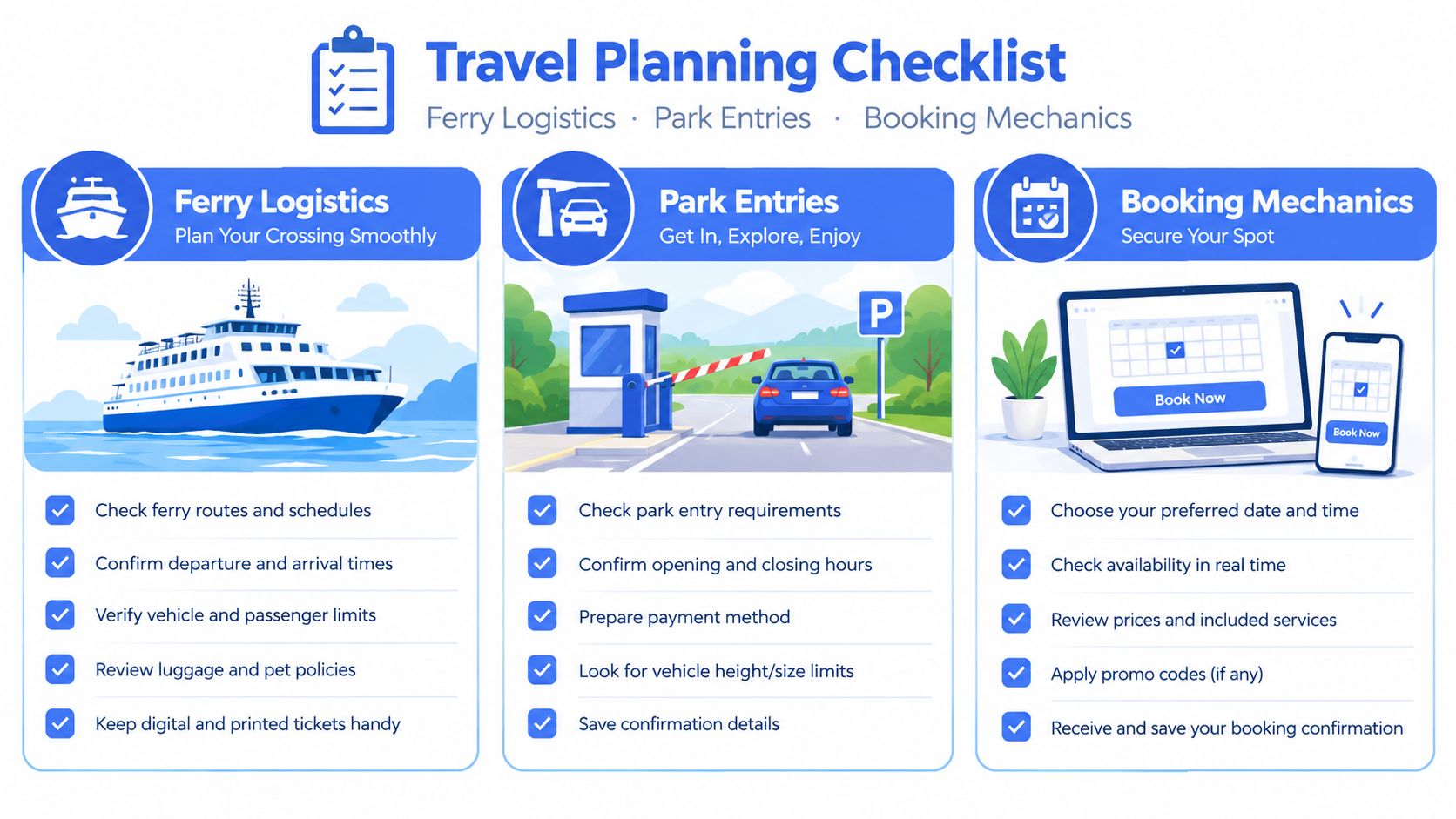
The operational details should be settled before flights and rooms are treated as final. Croatia's coastal connections are workable, but a five-day itinerary leaves little room for casual assumptions.
Ferries and crossings
Jadrolinija operates car ferries, while Krilo Fast Ferries operates passenger catamarans. Catamarans are foot-passenger only, so luggage and seat availability need attention during peak months. A published 2026 Krilo timetable lists Dubrovnik to Split at 15:30 to 20:00 and Split to Dubrovnik at 08:00 to 12:30, routing through Mljet, Korčula, Hvar, and Brač (Krilo route timetable).
A separate 2026 schedule summary lists around 17 weekly sailings, including 11 TP Line sailings and 7 Krilo Fast Ferries sailings (Dubrovnik to Split ferry schedule). Treat those departures as the skeleton of the itinerary, not an afterthought.
Krka timing
Krka's Skradinski buk area has a hard cap of 10,000 visitors at one time, according to Croatian reporting (Krka visitor limit). The park's official 2026 price sheet lists a summer after-15:00 individual adult admission of €30.00 in June, July, August, and September, and group rates require a minimum of 20 people with written notice at least 24 hours before arrival (Krka 2026 price sheet).
For travelers comparing private boating options before settling on a charter day, this resource to find boat tour operators can help clarify the range of available formats. For complex arrival and departure patterns, review the best way to book multi-city flights before selecting the first hotel.
Turning This Itinerary Into Your Own Effortless Trip
Use this plan as a starting shape, not a script. The right answer changes with your travel month, party composition, flight timing, and tolerance for moving between hotels.
Three edits usually solve the biggest planning problems:
- Make it inland: Replace the ferry sequence with Zagreb, Plitvice, or Istria if summer crowds feel like a poor fit.
- Make it nautical: Add a day in Hvar or Korčula when the boat is the centerpiece rather than transportation.
- Make it compact: Keep Split and Dubrovnik, then connect them with private transfers if your calendar leaves no margin for island logistics.
A travel advisor adds value before the trip becomes urgent. That can mean coordinating catamaran seats, aligning Krka entry timing with a private driver, reserving restaurants such as Zinfandel's or Proto, and giving you one point of contact when weather or transport disruptions alter the sequence. For travelers who want to preview destinations visually before committing, AI virtual tours for travel can also help with early-stage inspiration.
Explore Effortlessly works with clients nationwide through virtual consultations. Karrah is a Circle of Excellence Advisor, Top 5 percent at Nexion, and a CLIA Accredited Cruise Counselor, with planning focused on bespoke logistics, luxury stays, private experiences, and high-touch coordination. Trusted in-destination partners and suppliers provide on-the-ground support, while the advisor manages the planning details before departure.
A polished five-day trip doesn't try to prove how much Croatia you can endure. It chooses what deserves your time.
Explore Effortlessly can design, book, and coordinate your Croatia itinerary around your exact dates, preferred pace, ferry tolerance, and hotel style. Plan my luxury trip with Explore Effortlessly and begin with a virtual consultation for a coastal escape that feels considered rather than crammed. Join the Explore Effortlessly newsletter for more luxury travel planning guidance.