You're probably looking at Madagascar the way many of my clients do at first. As a once-in-a-lifetime destination that feels wildly different from a typical safari or beach trip, and also like a logistical puzzle you don't have time to solve yourself. That instinct is correct.
A strong tour to Madagascar delivers things few destinations can match. Lemurs moving through rainforest canopies, baobabs at sunset, jagged limestone formations that look prehistoric, and quiet beach stays that feel far removed from the usual luxury circuit. A poorly planned one delivers long waits, awkward connections, rough transit days, and expensive missteps.
The difference is never just where you go. It's how the trip is stitched together.
Your Bespoke Journey to the Eighth Continent
You land in Antananarivo after a long-haul flight, and the trip is won or lost by what happens next. The right plan gets you quickly into the bush, onto the coast, or into a quiet lodge with a top guide waiting. The wrong plan burns a day on poor connections, tired decisions, and rooms nobody should pay luxury rates for.
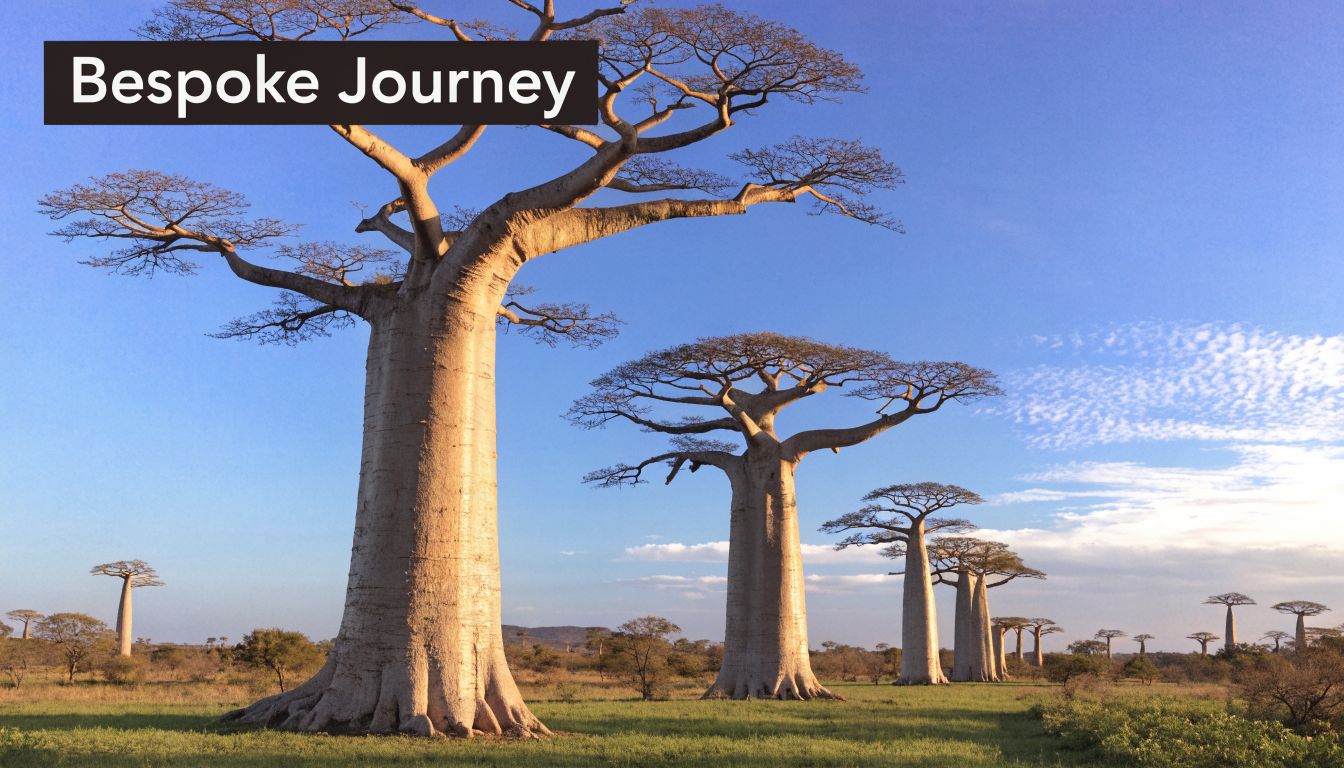
Madagascar rewards travelers who want rarity, privacy, and substance. You can start with an expert-led forest walk in search of indri, cross the highlands by private vehicle with the right driver and pacing, and finish the day with cocktails near the baobabs. That kind of trip does not happen by accident. It comes from smart routing, realistic transfer timing, and choosing lodges that work well together rather than appearing good on their own.
If you usually travel well in Europe, the Caribbean, or East Africa, adjust your approach here. Madagascar is built around access. I plan it from the ground up. Which regions pair well by charter or scheduled flight, where private road transfers are worth the extra cost, how many nights each stop needs to feel comfortable, and which guides can turn a walk into a proper wildlife experience. That is the difference between a beautiful trip on paper and a trip that runs well.
Clients who want that level of design usually start with my approach to bespoke luxury travel planning.
Key takeaways
- Build the route before choosing hotels: The best suite means little if the transfer day is poorly planned.
- Match the itinerary to your travel style: Active wildlife days, scenic drives, and beach time need different pacing.
- Keep the trip focused: Fewer regions, connected well, almost always feels better than chasing every headline sight.
- Use private support selectively: The right driver, guide, boat transfer, or charter flight can improve comfort dramatically.
Madagascar rewards clients who plan for access, pacing, and guide quality first, then layer in the beautiful places.
Why a Madagascar Tour Demands Expert Planning
The biggest mistake I see is treating Madagascar like a plug-and-play luxury destination. It isn't. It's one of those places where the planning is inseparable from the experience.
Infrastructure shapes everything
On paper, distances don't always look alarming. In practice, transfer days can be far longer and more tiring than expected. Roads, weather, and regional access can turn a simple-looking route into a day that eats the heart out of your itinerary.
That matters because luxury in Madagascar isn't just about the suite. It's about avoiding clumsy sequencing. If you connect the wrong regions in the wrong order, even a beautiful trip starts to feel like work.
For travelers who want a customized, high-touch journey instead of a patched-together route, my view is simple. Start with an advisor who understands complex itineraries and custom pacing, not a generic booking engine. That's exactly why many clients begin with bespoke travel experiences.
The hard parts aren't obvious online
Madagascar tour marketing often shows dramatic natural scenery and elegant lodge photos, but it rarely explains physical intensity clearly. That's a problem. Some of the country's marquee experiences involve narrow walkways, uneven terrain, suspension bridges, boat crossings, and very long drives.
The lack of transparency matters most for:
- Couples celebrating something major: You don't want a honeymoon built around avoidable exhaustion.
- Families with mixed mobility levels: One strong hiker in the group doesn't make the whole itinerary suitable.
- Older travelers: Comfort depends on route design and realistic activity matching.
Advisor rule: If a trip includes Tsingy, remote western circuits, or multiple parks, I want every guest's mobility, pace, and tolerance for rough roads discussed before anything is booked.
Madagascar punishes overstuffed itineraries
Clients often arrive with a list that includes rainforests, baobabs, beaches, Tsingy, marine life, and multiple remote lodges. That's understandable. The island invites ambition. If the transfers feel too demanding for this trip, my Portugal and Azores itinerary guide offers another way to think about a mainland-and-island route.
But the smartest luxury approach is selective. Fewer regions, better pacing, stronger guides, and cleaner connections produce a far better result than trying to “see it all.” Madagascar rewards depth. It does not reward checklist travel.
Local execution matters
This isn't a destination where you want to improvise permits, drivers, or transfers after arrival. You want vetted partners handling airport meets, private vehicles, park logistics, boat crossings where relevant, and backup plans when schedules shift.
That doesn't remove every variable. It does give you a trip with structure, buffer, and intelligent routing, which is what affluent travelers want when they say they want hassle-free travel.
The Best Times for Your Unforgettable Journey
When clients ask for the best time for a tour to Madagascar, I don't answer with one month. I answer with the experience they care about most. That's the only useful way to do it.
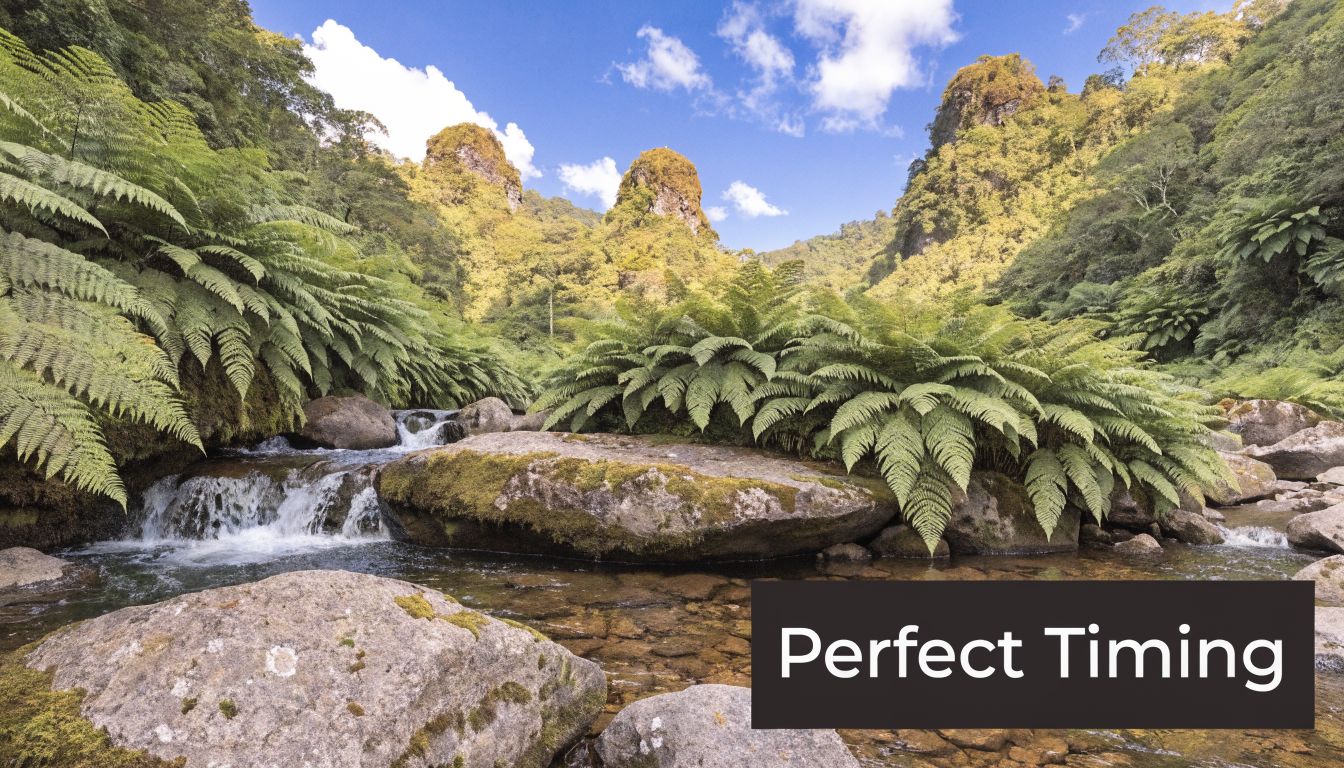
For classic touring and smoother overland travel
If your priority is a well-rounded first trip with parks, scenic drives, and strong wildlife viewing, I favor the drier stretch of the year. Roads are generally more workable, transfer days are more predictable, and your chance of an itinerary unraveling drops sharply.
This is especially relevant if you want western circuits or remote national parks. Tsingy access, in particular, depends on conditions and route planning.
For Tsingy and advanced adventure routing
Tsingy de Bemaraha is not a casual add-on. It's one of the most visually arresting experiences in Madagascar, but it demands correct timing and proper preparation. The trekking window is best in the drier period, and shoulder timing can be especially rewarding if you want strong scenery without peak-trip fatigue.
If you enjoy trips where active days are balanced by polished logistics, this is the category to think about. It's similar to how I advise safari clients to plan around ground conditions and experience priorities, not just a blanket “best month.” The same logic applies in destinations like East Africa, which is why guides such as this one on the best time for a Tanzania safari are useful as a planning mindset.
For lemurs, beaches, and soft adventure
If your dream version of Madagascar leans lighter, I'd build around one rainforest region and one coast or island stay. That gives you wildlife, varied scenery, and downtime without turning the trip into an endurance exercise.
A few timing truths matter:
- Whale watching focus: Mid-year travel can work beautifully for eastern island extensions tied to marine experiences.
- Lemur-focused journeys: Forest itineraries are strongest when weather supports regular walks and comfortable trail conditions.
- Beach add-ons: Coastal wind, rain, and sea conditions vary by region, so I match the beach finale to the season rather than forcing one fashionable island every time.
Book Madagascar by headline experience first, then fit the rest of the trip around it. Reverse that process and the itinerary gets sloppy fast.
Crafting Your Bespoke Madagascar Itinerary
The right Madagascar itinerary feels edited. Not small, not timid, just edited. You want enough contrast to feel the island's range, but not so much movement that you spend your best energy in transit.
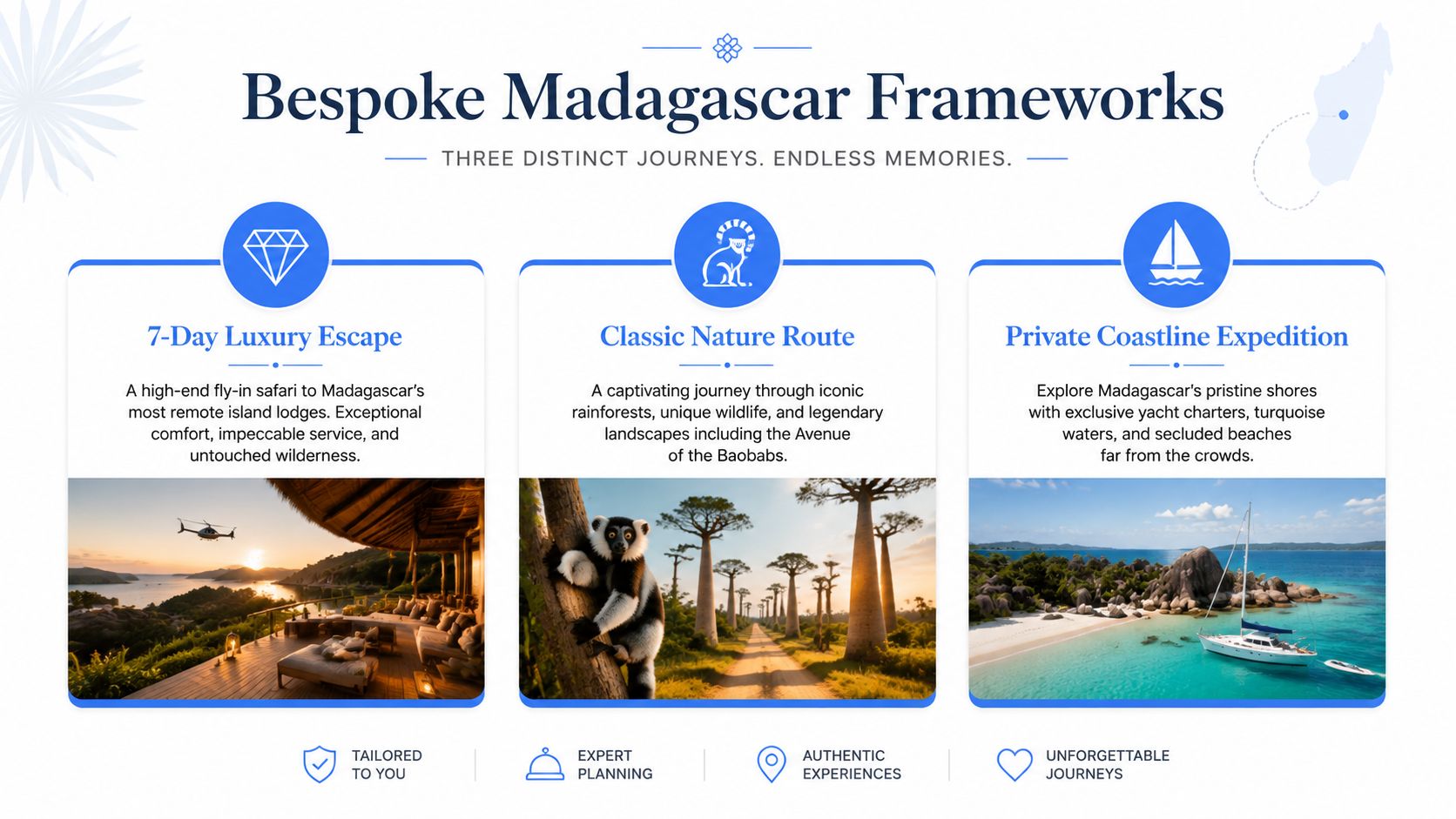
The 7-day luxury escape
This is the version I recommend for clients who want Madagascar without turning it into a full expedition. It works especially well for busy professionals folding the trip into a longer Africa journey, or couples who want a high-impact honeymoon segment.
You fly in, keep the overland component tight, and focus on one wildlife region plus one polished coastal stay. I like a rainforest area near relatively straightforward access paired with a beach retreat where the service style is intimate, not flashy.
A good rhythm for this trip looks like:
- Arrival and recovery: One calm first night with a proper airport meet and easy start the next morning.
- Forest immersion: A few nights with private guided walks, nocturnal sightings, and lodge-based downtime.
- Beach finale: Several nights with snorkeling, sailing, spa time, and no rushed checkout.
This style of trip isn't about bragging rights. It's about feeling Madagascar's magic without absorbing too much of its logistical friction.
The 10 to 14 day classic circuit
This is the sweet spot for many first-time visitors. You can combine iconic scenery, excellent wildlife viewing, and a strong sense of the country's changing geography without making the route punishing.
The classic framework usually mixes highlands, rainforest, sandstone or canyon scenery, and a satisfying finish that either slows the pace or pivots to the coast. It gives you the “different world every few days” feeling that Madagascar does so well.
Here's what makes this itinerary work:
| Component | Best use in the trip | Why it matters |
|---|---|---|
| Private vehicle with skilled driver | Main touring spine | Keeps long transit days controlled and comfortable |
| Smart lodge sequencing | Active days followed by softer stays | Prevents fatigue from building |
| Private guiding in key parks | Wildlife and interpretation | You see more, and you understand more |
| One strategic splurge | Signature lodge or charter hop | Enhances the trip where it counts most |
The best classic Madagascar itineraries don't feel rushed. They feel orchestrated.
The 14-plus day ultimate exploration
Madagascar becomes extraordinary at this point. This is not because the list grows longer, but because you can finally route the island with enough time to do the hard parts properly.
For advanced itineraries, Tsingy de Bemaraha is one of the defining experiences. The limestone pinnacles there average 30 to 50 meters high, and access requires specialized 4x4s and guided hikes. On private trips, a 1:4 guide-to-guest ratio is a smart standard for navigating the strenuous terrain and improving wildlife spotting opportunities, as described in this overview of Tsingy-focused Madagascar touring.
This is the trip for travelers who want:
- Remote scenery with drama
- Private wildlife interpretation
- Avenue of the Baobabs at the right hour, not as a rushed stop
- A pirogue or river element where conditions support it
- A beach or island finish that feels earned
The key is not adding remote places for the sake of prestige. The key is deciding which remote place belongs in your trip.
Three itinerary personalities
Some clients choose by length. The savvier ones choose by travel style.
- Low-friction luxury: Forest plus beach. Minimal complexity. Best for shorter trips and celebration travel.
- Balanced discovery: A fuller circuit with multiple environments and enough pace control to stay enjoyable.
- Expedition luxury: Tsingy, western vistas, remote lodges, and more demanding routing handled at a high level.
The wrong itinerary is usually too ambitious. The right one leaves room for weather, wonder, and a late afternoon that isn't spoken for.
Essential Logistics I Manage for You
A Madagascar trip starts going wrong long before you land. It happens when the international flight arrives too late for a domestic connection, when luggage is packed for a polished city hotel instead of a bush plane, or when a beautiful remote lodge is paired with the wrong transfer plan. My job is to prevent that.

International air strategy
I build Madagascar flight plans around timing, route integrity, and recovery options if an airline shifts its schedule. Price comes later. On a trip like this, the cheapest ticket often costs you a night at a top lodge or forces an airport hotel where none was needed.
For clients flying from the U.S., Europe, the Middle East, or Africa, I look at the full chain, not just the long-haul leg. The right gateway depends on your onward connections, preferred airline standards, and whether Madagascar is the centerpiece of the journey or one stop in a wider Indian Ocean itinerary. If you are combining countries before or after Madagascar, my guide to the best way to book multi-city flights explains the booking logic behind that decision.
Internal transfers and permits
Inside Madagascar, logistics decide the quality of the trip. I map each segment early. Which routes are worth doing by road, which should be handled by scheduled air, and where a private charter saves a full day rather than just adding flash.
That choice matters. A charter is often the difference between reaching a remote lodge in good time for a proper lunch and sunset activity, or arriving tired after an all-day transfer with the best light already gone.
I also handle the pieces clients should never have to chase themselves:
- Airport coordination: Meet-and-greet support, porter assistance, and properly timed handoffs
- Park entry planning: Permits, local guide scheduling, and confirmed access windows
- Trip documentation: Clear day-by-day briefs, baggage notes, and transfer instructions
- Activity matching: Honest guidance on hike difficulty, road conditions, and who should skip what
A luxury trip is smooth because every transfer, handoff, and fallback plan has been set before departure.
Visa and prep details
Madagascar rewards disciplined packing. I advise clients to bring soft-sided luggage where needed, keep internal flight weight limits in mind, and pack for variation rather than volume. Good walking shoes, light layers, sun protection, and a realistic approach to internal movement will improve the trip far more than an oversized wardrobe.
I also help clients sort out practical pre-departure details early, including visa prep. If you want to handle one easy admin task in advance, Free Passport Photos Online for Madagascar is a useful starting point.
Understanding the Budget for a Luxury Madagascar Tour
Madagascar can be cheaper than many luxury wildlife destinations if you travel modestly. That is not the same thing as saying a well-run luxury trip is inexpensive. It isn't.
The cost of a tour to Madagascar rises quickly when you add comfort, remote access, private guiding, and time-saving transfers. In my opinion, that's usually money well spent here because logistics have such a direct effect on trip quality.
Practical budget tiers
I use broad planning ranges early so clients understand what kind of trip they're describing.
| Tier | Starting point | What it usually includes |
|---|---|---|
| Boutique and authentic luxury | From $800+ per person, per day | Charming lodges, private vehicle support, strong guiding, focused routing |
| Premium and exclusive luxury | From $1,200+ per person, per day | Higher-end lodges, stronger pacing, more private experiences, upgraded transfer strategy |
| Ultimate and charter luxury | From $2,000+ per person, per day | Charter elements, top-tier remote stays, premium guiding, highly customized logistics |
These are planning frameworks, not fixed quotes. Season, room category, route complexity, and how much private air support you want can move the number meaningfully.
What drives the spend
Accommodation matters, but it's rarely the whole story. In Madagascar, the biggest cost drivers are often invisible in marketing photos.
The main budget levers are:
- How remote you want to go: Remote western and multi-park journeys cost more to execute well.
- How much comfort you expect in transit: Private vehicles, premium meet-and-greet handling, and smart pacing matter.
- Whether charter flying is involved: This is often the single biggest jump in trip cost.
- The guide standard: Great private guides are worth paying for in a destination this nuanced.
If you're considering charter elements, it helps to understand private jet charter costs in general terms before deciding where private air adds value.
Where I tell clients not to overspend
I don't believe in luxury for the sake of optics. Madagascar is one of the clearest examples of why.
Spend where it changes the trip:
- transfer efficiency
- the right lodge in the right place
- private guiding in wildlife areas
- a finale that allows you to exhale
Don't spend blindly just because a property calls itself exclusive. In this destination, the smartest money often goes behind the scenes.
The Explore Effortlessly Difference
Most travelers don't need more Madagascar inspiration. They need someone to make the right decisions in the right order.
That means starting with your priorities, not a generic package. Do you want a celebratory honeymoon with light adventure and a beautiful beach ending? A family trip that skips the punishing terrain and keeps wildlife front and center? A more ambitious expedition with Tsingy, remote lodges, and private charter support where it counts? Those are three completely different trips.
What working together looks like
My planning process is straightforward and high touch.
- Consultation first: We define your travel style, pace, must-haves, and absolute no-goes.
- Custom proposal next: I build an itinerary shaped around logistics, not wishful thinking.
- Refinement after that: We adjust room types, transfer style, activity level, and overall rhythm.
- Booking and coordination: I manage the moving parts before departure, while trusted in-destination partners handle on-the-ground support.
I'm a Circle of Excellence Advisor, Top 5 percent at Nexion, and a CLIA Accredited Cruise Counselor. I work with clients nationwide through virtual consultations, which means you don't need to be local to get a highly personalized planning experience.
Why clients come to me for complex trips
They're busy. They want clarity. They don't want to waste time researching ten routing options that all look fine online and only one works in real life.
Madagascar is exactly the kind of destination where expert planning pays for itself in saved time, better pacing, and fewer expensive mistakes.
Frequently Asked Questions About Madagascar Travel
What should I pack for Madagascar
Pack for variety, not vanity. You'll usually want lightweight layers for warm days, a warmer layer for cooler mornings or highland evenings, comfortable walking shoes, sun protection, and a small day bag that works for park visits.
If your itinerary includes beach time and forest time, don't overpack separate wardrobes for each. Madagascar trips work better with practical crossover pieces and soft-sided luggage.
How physically demanding are the main excursions
It depends entirely on the route. Some forest walks are manageable for many travelers with a moderate fitness level. Others, especially advanced trekking areas, are much more demanding.
One of the biggest gaps in Madagascar trip planning is that many itineraries don't explain physical requirements clearly enough. I'm direct about this with clients because it affects enjoyment more than almost anything else. If a guest has knee issues, balance concerns, or doesn't enjoy exposure or scrambling, I'd rather reroute the trip than force a marquee experience that isn't a fit.
Is Madagascar safe to visit
I never describe any destination as completely safe or risk free. Conditions can change, and travelers should always stay aware of their surroundings wherever they are in the world.
What I do recommend is planning with vetted local partners, private drivers where appropriate, and a well-organized itinerary that reduces unnecessary friction. Before departure, travelers should also review official government travel advisories and local guidance.
How is Madagascar different from a traditional African safari
Madagascar is not a substitute for East or Southern Africa. It's a different category of trip.
You don't go for the classic big-game safari rhythm. You go for endemism, unusual terrains, lemurs, baobabs, rainforests, marine add-ons, and the feeling of being somewhere that still requires real planning. It appeals to travelers who want discovery and texture, not just a polished wildlife circuit.
Madagascar is for travelers who like rare things, but still want them handled elegantly.
How far in advance should I plan
Earlier than you think. The best rooms in small lodges go first, and once you layer in flight strategy, guide availability, and region sequencing, waiting rarely helps.
For milestone trips, I prefer to start the conversation well in advance. Madagascar rewards foresight.
Is Madagascar good for honeymoons and anniversaries
Yes, if you design the trip properly. It's excellent for couples who want something more memorable than a standard island stay, but I would never build a romantic trip there with nonstop rough transfers and overly ambitious trekking.
The right honeymoon version usually combines one or two standout wildlife or scenic experiences with a softer, private coastal finish.
If you're ready to turn a complicated idea into a polished, high-touch journey, plan my luxury trip with Explore Effortlessly. I design bespoke Madagascar itineraries for busy professionals and discerning travelers who want the right route, the right pacing, and every major detail handled with care. Join the newsletter for more destination insight and planning inspiration here.
Author bio
Hi, I'm Karrah, owner, founder, and lead travel advisor at Explore Effortlessly, a luxury award winning travel agency based in Miami.I specialize in designing bespoke, high touch itineraries to bucket list destinations around the world. Every trip is curated with intention, insight, and seamless logistics from start to finish.
From luxury cruises and private villas to honeymoons, safaris, and once in a lifetime journeys, my role is to simplify the planning process while elevating every detail.