You're at the kitchen table with two tabs open, two children at very different stages, and a school calendar that leaves little room for trial and error. Disney Cruise Line promises character moments, polished entertainment, and a remarkably cohesive family experience. Royal Caribbean counters with enormous ships, more activity choices, and a fare that often leaves more room for excursions, suites, or another vacation altogether.
That's why the Disney Cruise vs Royal Caribbean decision isn't really about which line is “better.” It's about when Disney's premium pays off, when Royal Caribbean's scale wins, and how your children's ages change the answer. I'm comparing the details that affect a luxury family booking, including ship design, dining, youth programming, adult space, gratuities, private destinations, and the total value of the sailing.
Advisor's view: Choose the cruise that matches how your family wants to spend its days, not the brand with the strongest emotional pull.
When Two Great Cruise Lines Force a Real Decision
A family with one child still devoted to characters and another already asking for more freedom doesn't need a generic “best cruise line.” They need a practical recommendation. The younger child may value a character breakfast, a familiar story at dinner, and a Broadway-style production. The older child may care more about water attractions, sports, friends, and the freedom to move around the ship.
Both cruise lines can produce an excellent holiday, but they create very different rhythms. Disney is more narrative-driven and deliberately curated. Royal Caribbean feels more like a floating resort, with larger activity zones and more ways for family members to split up without running out of things to do.
That distinction matters for busy parents. A shorter Disney sailing can concentrate the experience, making character interactions, themed entertainment, and a private-island day feel easy to enjoy without building a complicated daily schedule. Royal Caribbean's larger ships reward families who want choice, but that choice requires more planning. Popular entertainment, dining reservations, and onboard attractions can create a vacation that feels wonderfully full or mildly overengineered, depending on your travel style.
Disney Cruise Line began operations in 1998, when Disney Magic first sailed on July 30, 1998. Disney Wonder entered service in 1999. Royal Caribbean dates to 1968 and launched Song of Norway in 1970, giving it a much longer operating history, as documented in Royal Caribbean's company history.
If you're overwhelmed by the number of ships and itineraries, my cruise selection guide is a useful starting point. I'd begin with three questions:
- Child age: Are your children still motivated by Disney characters, or do they want independence and adrenaline?
- Cabin strategy: Would you rather pay more for a polished, bundled experience or allocate the difference toward a larger Royal Caribbean cabin?
- Daily rhythm: Does your family prefer scheduled storytelling or a wide-open resort day?
The right choice is rarely universal. It's personal, and it becomes much clearer once those three answers are honest.
Ships, Scale, and Signature Destinations
The fleet difference shapes almost everything onboard. One recent brand profile lists Royal Caribbean with a 25-ship fleet and approximately 78,893 double-occupancy capacity, while Disney's fleet has been expanding toward 13 ships by 2030 under a revised 2026 plan. Disney's newer ships also carry about 4,000 guests, compared with roughly 2,700 guests on Disney Magic at launch. See Royal Caribbean's fleet profile for the brand's published capacity context.
Independent comparisons list Royal Caribbean at 28 ships, with flagship capacity reaching about 7,600 guests, while Disney is listed at six to seven ships, generally capped around 4,000 guests. That scale gives Royal Caribbean broader itinerary choice, more ship classes, and greater onboard activity density. Disney's smaller ships tend to feel more controlled and family-centered, which many parents experience as a luxury in itself. CruiseLobster's guide to comparing cruise ships can help you sort ship layouts and onboard features before you commit to an itinerary.
Fleet and Private Destinations at a Glance
| Brand | Ships | Classes | Signature Private Destination |
|---|---|---|---|
| Disney Cruise Line | Expanding toward 13 by 2030 under a revised 2026 plan | Magic, Dream, and Wish families | Castaway Cay |
| Royal Caribbean | 25 ships in a recent brand profile, with independent listings showing 28 | Multiple generations and ship classes | Perfect Day at CocoCay |
Disney's history is shorter, but the brand has increased capacity without abandoning its signature design language. Disney Magic and Disney Wonder carry about 2,700 guests, Dream and Fantasy carry about 4,000, and Wish-class ships also carry about 4,000, according to The Points Guy's fleet comparison.
Royal Caribbean's largest ships reach about 7,600 passengers, while Oasis-class ships generally accommodate roughly 6,600 to 7,000. That means neighborhoods, larger pools, more venues, and a greater sense of movement. It also means more walking, more decisions, and a ship that can feel closer to a destination than a traditional cruise vessel.
Private destinations reinforce the contrast. Castaway Cay is exclusive to Disney Cruise Line ships, while Royal Caribbean's comparable destination is Perfect Day at CocoCay, as explained in this private-island comparison. Disney's island experience is cohesive and branded around the line's family atmosphere. CocoCay is more attraction-led, with a broader resort and waterpark sensibility.
Onboard Experience and Atmosphere
Disney feels like a theme park with a hull. Royal Caribbean feels like a floating resort.
Disney's strongest onboard feature is consistency. Rotational dining moves your family through themed restaurants while the same wait team follows you, creating familiarity that parents appreciate after a day of managing children, sunscreen, and logistics. Character appearances are woven into the sailing rather than treated as a single appointment, and the theater productions emphasize storytelling, music, and stagecraft.
Royal Caribbean gives you more variety and flexibility. Families can use the main dining room or choose My Time Dining, then add specialty restaurants such as Chops Grille, Giovanni's Italian Kitchen, or 150 Central Park when they want a more refined meal. That structure suits families with different appetites and bedtimes, especially when grandparents or older children don't want every evening to follow the same script.
Dining and entertainment
Disney's dining is an experience in itself. The restaurants carry the brand's narrative approach, and the evening feels designed rather than assembled. Soda is included, and the entertainment often has the emotional polish parents expect from Disney theater.
Royal Caribbean spreads its appeal across more formats. Depending on the ship, families may find ice shows, aqua theater performances, Broadway musicals, pool deck programming, and more casual grab-and-go dining. The ship's scale lets one family member watch a show while another visits an activity zone, though the schedule can become demanding on a short sailing.
Practical rule: If your family wants one shared story every evening, Disney's format is easier. If everyone wants a different answer to “what should we do next?”, Royal Caribbean is stronger.
Adults need their own vacation too
Neither line offers an adults-only ship in this comparison, but both create adult retreats. Disney has Quiet Cove, adults-only areas, and the adults-focused atmosphere around Palo. Royal Caribbean offers the Solarium, bars, casino entertainment, and quieter spaces that can give parents a genuine pause.
The difference is tone. Disney's adult spaces feel like calm extensions of a highly polished family resort. Royal Caribbean's adult areas sit within a busier ecosystem, so the escape can feel more dramatic. Couples who want a romantic sailing should pay close attention to the ship, itinerary, cabin location, and dining plan rather than assuming the line alone will determine the mood.
Family Fit by Age and Travel Style
The most useful answer to “Disney Cruise vs Royal Caribbean” changes as children grow. Disney usually makes the strongest emotional and practical case for younger children, while Royal Caribbean becomes increasingly compelling once children want more autonomy, physical activity, and social variety.
Disney's Oceaneer Club and Royal Caribbean's Adventure Ocean both provide age-appropriate supervised programming, but they support different vacation styles. Disney's clubs fit the brand's imaginative, character-led environment. Royal Caribbean's larger ships can give older children more places to explore, although parents should review the specific ship's policies and app features before sailing.
Royal Caribbean has recently added a “Find My Kid” feature in its app for some public areas and staterooms, according to this feature discussion. That can change the independence equation for families with tweens and teens on a megaship. It doesn't replace family rules or supervision, but digital visibility can make a large ship feel more manageable.
Family Fit by Age and Travel Style
| Age / Travel Style | Disney Cruise Line | Royal Caribbean |
|---|---|---|
| Toddlers and young children | Strong character programming, familiar storytelling, and family-centered routines | Strong activity areas and flexible options, depending on ship |
| Children under 10 | Usually the better fit when characters and themed entertainment drive excitement | Better for families prioritizing pools, slides, and active days |
| Tweens and teens | Appealing for Disney devotees, but less activity variety on smaller ships | Stronger choice for independence, thrill attractions, and larger social spaces |
| Multigenerational families | Cohesive dining and an easy shared theme | More venues and activities for different generations to pursue simultaneously |
| Adults traveling without children | Polished adult spaces and specialty dining | More nightlife, bars, casino activity, and resort-style variety |
My candid age-based recommendation is simple. Disney is easiest to justify when children are under 10, particularly when the trip is built around characters, familiar stories, and a private-island day. Once children move past that stage, Royal Caribbean often delivers more of what they use.
The premium can be especially difficult to defend when older children want waterslides, sports, live spectacle, and independence rather than princesses or character greetings. Families planning a teen sailing should review my guide to cruises for families with teenagers before choosing the ship.
Pricing, Gratuities, and What the Premium Buys
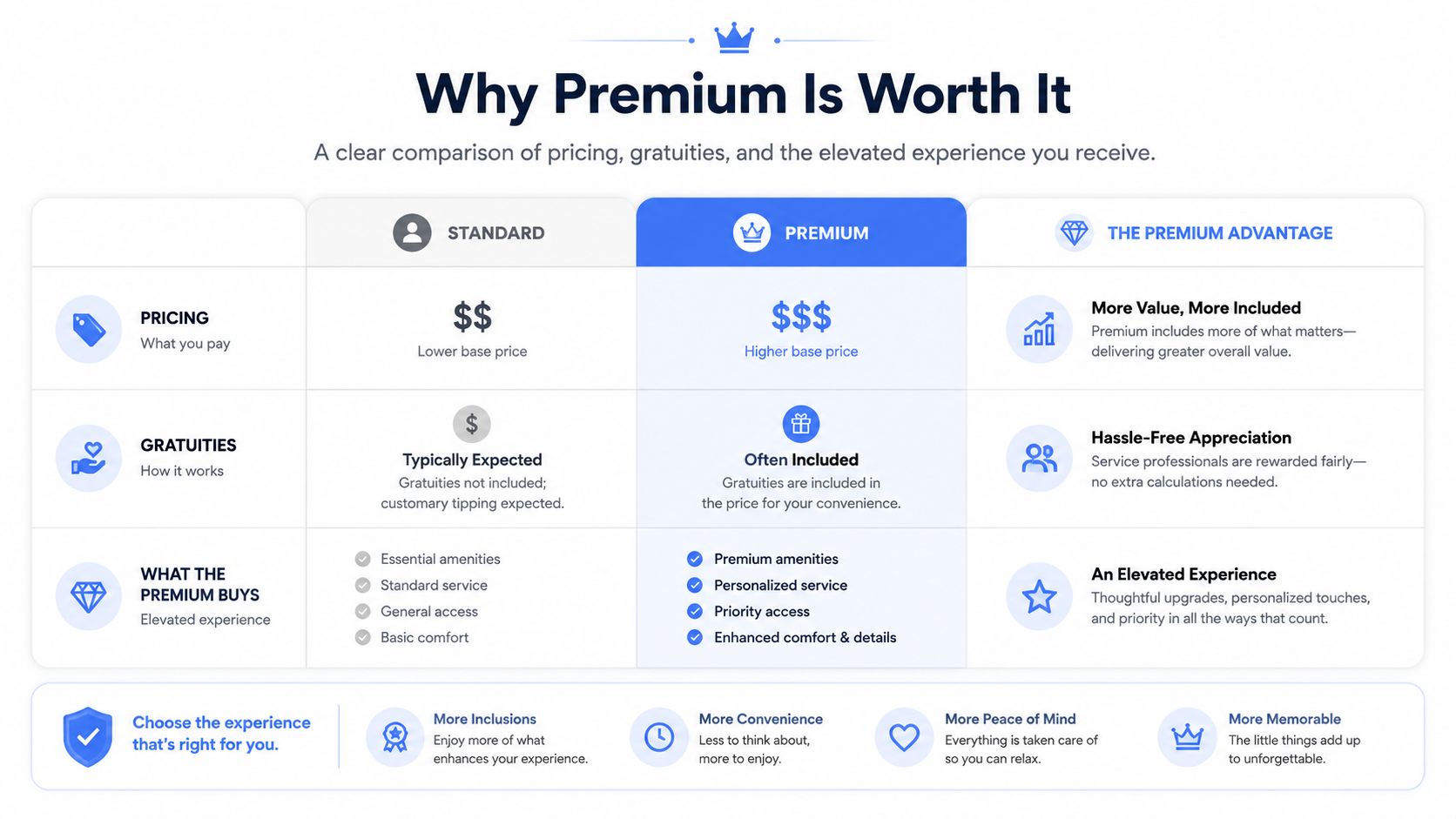
Disney's higher fare isn't imaginary. Recent comparative pricing shows a four-night family-of-four sailing starting around $3,900 to $4,200 on Disney, compared with roughly $1,200 to $1,500 on Royal Caribbean, according to comparative cruise pricing data. Another 2024 comparison placed Disney's cheapest seven-night Caribbean sailings at about $1,449 per person.
That gap buys more than a character encounter. Disney bundles a highly themed experience, rotational dining, included soda, youth programming, and entertainment in a way that reduces the number of decisions you make onboard. Royal Caribbean generally offers a lower price-per-deck-space and more activity density, but the à-la-carte model can add specialty dining, beverage packages, Wi-Fi, and selected attractions.
Gratuities also need to sit in the budget, not in the fine print. Disney's standard recommended gratuity is $16.00 per guest, per night, rising to $27.25 per guest, per night for Concierge and Suite guests, as outlined in this gratuity guide. Royal Caribbean charges $18.50 per guest per day for non-suite guests and $21 per guest per day for suite guests, with the charge applying regardless of age, according to Royal Caribbean gratuity guidance.
Where the premium makes sense
Disney's premium makes more sense when you value predictable inclusions and emotional payoff over maximum ship size. A short sailing can work well because the themed experience is concentrated, and families may use the included offerings without feeling pressure to purchase extras.
Royal Caribbean wins when your family wants to control spending. You can select a standard cabin, use included venues, and add only the experiences that matter. That can be a smart approach for families whose children care more about activity variety than branded programming.
The important comparison is not fare against fare. It's total trip cost against actual usage. If your family will pay for several Royal Caribbean add-ons, Disney's bundled structure may narrow the practical difference. If you'll mostly use Royal Caribbean's included dining and entertainment, the lower fare can remain a decisive advantage.
Suites, Shore Excursions, Loyalty, and Value Side by Side
Suite planning separates a pleasant cruise from a properly managed one, especially for families who need more space, priority access, or a quieter home base. Disney Concierge offers a polished, family-friendly suite experience with concierge support and premium accommodations. Royal Caribbean organizes its suite experience through categories such as Star, Sky, and AquaClass, with Star Class on select ships offering a more service-intensive approach.
Neither line should be chosen on suite labels alone. Cabin location, access to adult spaces, proximity to children's venues, and the ship's overall layout affect how much value you'll feel each day. A family may prefer Disney's cohesive service rhythm, while a multigenerational group may gain more from Royal Caribbean's larger suite ecosystem and broader venue selection.
Suites, Excursions, Loyalty, and Value at a Glance
| Category | Disney Cruise Line | Royal Caribbean |
|---|---|---|
| Suite experience | Concierge accommodations and elevated family service | Star, Sky, and AquaClass structures, with Star Class on select ships |
| Shore excursions | Family-friendly programming tied to Disney itineraries and private destinations | Broad activity range, including adventure-focused options |
| Private destination | Castaway Cay, exclusive to Disney ships | Perfect Day at CocoCay, a separate Royal Caribbean destination |
| Loyalty | Castaway Club recognition and repeat-cruiser benefits | Crown & Anchor Society with tier-based benefits |
| Best value pattern | Bundled, themed family experience | Activity density, itinerary breadth, and flexible add-ons |
Excursions deserve an advisor's eye. A private-island day can simplify logistics, but it still needs to match your group. Some families want a low-friction beach day. Others need a private guide, accessible transportation, or a carefully paced cultural visit. For group planning, my shore excursion service focuses on coordinating the details around the travelers, not attaching activities to a reservation.
Royal Caribbean generally rewards travelers who want to build their own package. Disney rewards repeat guests through the Castaway Club and its highly recognizable onboard experience. The better loyalty value depends on whether you prioritize future access and recognition or a lower overall cost on the next sailing.
Best-Fit Traveler Profiles and Sample Itineraries
Four scenarios make the choice much easier than a broad brand comparison.
A family with children ages four to ten
For a three or four-night Bahamas sailing from Port Canaveral, I'd usually recommend Disney. The shorter format concentrates the parts young children care about most, including character interactions, rotational dining, theater entertainment, and Castaway Cay. Parents also avoid building a complicated schedule around a very large ship.
A multigenerational group of fourteen
For a seven-night Eastern or Western Caribbean sailing, Royal Caribbean is usually the better operational choice. A larger ship gives grandparents, parents, children, and teens more ways to spend the day without forcing every person into the same activity. Dining variety also helps when one household wants a relaxed meal and another wants something more energetic.
An adults-only couple who still loves Disney
Disney can work beautifully for a couple, particularly on Disney Wish, Disney Treasure, or the adults-only Disney Destiny concept described in the planning notes. I'd prioritize Concierge, reserve Palo early, and build the trip around quiet adult spaces rather than trying to experience every family venue.
Adventure-focused adults
Royal Caribbean is the clear recommendation for adults who want a high-energy ship. Wonder of the Seas and Icon of the Seas suit travelers who prioritize major activity zones, Perfect Day at CocoCay, Category 6 attractions, surf simulators, and a lively pool culture. If shipboard activities are not your priority, compare Viking river cruises for a different pace.
| Traveler Profile | Recommended Disney Cruise | Recommended Royal Caribbean | Top Reason to Choose |
|---|---|---|---|
| Children ages four to ten | Short Bahamas sailing | Family-focused ship with strong youth spaces | Disney maximizes themed family magic |
| Multigenerational group | Larger Disney sailing if cohesion matters most | Seven-night Eastern or Western Caribbean sailing | Royal Caribbean offers more independent options |
| Adults who love Disney | Wish, Treasure, or Disney Destiny | Suite-focused sailing | Disney delivers polished themed escapism |
| Adventure-seeking adults | Disney for atmosphere, not thrills | Wonder of the Seas or Icon of the Seas | Royal Caribbean offers greater activity variety |
Book early when your dates are fixed, particularly for school breaks and high-demand cabins. Families should pre-plan dining, youth-club registration, and excursions before departure. If your sailing coincides with a busy Florida travel period, consult practical Florida spring break safety tips and check current official guidance before traveling. Situational awareness matters everywhere, and conditions can change.
My final recommendation is direct. Choose Disney Cruise Line for younger children, brand devotion, and a beautifully controlled family experience. Choose Royal Caribbean for tweens, teens, multigenerational groups, active adults, and travelers who want more ship for their money. Explore Effortlessly works with clients nationwide through virtual consultations, coordinating cruise selection, cabin strategy, dining, youth registrations, excursions, and the logistics around your sailing.
Explore Effortlessly can compare Disney and Royal Caribbean against your children's ages, preferred cabin, itinerary, and total trip budget, then manage the details before departure. Contact Explore Effortlessly to plan your luxury cruise, and join the Explore Effortlessly newsletter for thoughtful luxury travel guidance.