The first time most travelers think seriously about a festival of light Thailand trip, they're usually not chasing a calendar date, they're chasing a feeling. They want the floating candles, the lanterns lifting into the night, and the kind of memory that looks effortless from the outside. What they don't want is the part nobody posts, the crowds, the transport delays, the sold-out hotels, and the rules that can turn a dream evening into a frustrating scramble.
That's why this trip has to be planned like a luxury experience, not a casual holiday. The difference between a crowded, chaotic night and a polished, unforgettable one comes down to timing, venue choice, and where you stay. If you want the version of Thailand's light festivals that feels refined instead of stressful, start with a proper inquiry through Explore Effortlessly.
- The headline event isn't just one festival. Thailand's signature light season overlaps Loy Krathong and Yi Peng, both tied to the full moon of the 12th lunar month and usually held in November. Reference
- Chiang Mai is not the only smart choice. Bangkok, Sukhothai, and other destinations offer more elegant ways to experience the season. Reference
- The best plan depends on your tolerance for crowds. If you want privacy, comfort, and legal lantern release options, the logistics matter more than the Instagram shot.
- 2026 will be busy. Multiple sources place Loy Krathong 2026 on Wednesday, November 25, with Yi Peng 2026 on November 24–25. Reference
An Enchanting Vision A Journey to Thailand's Lights
A thousand lanterns climbing into the dark sky is the kind of scene that pulls people toward Thailand in the first place. Add candlelit floats moving across water, temple silhouettes in the distance, and the whole thing becomes one of those rare travel moments that feels both spiritual and cinematic.
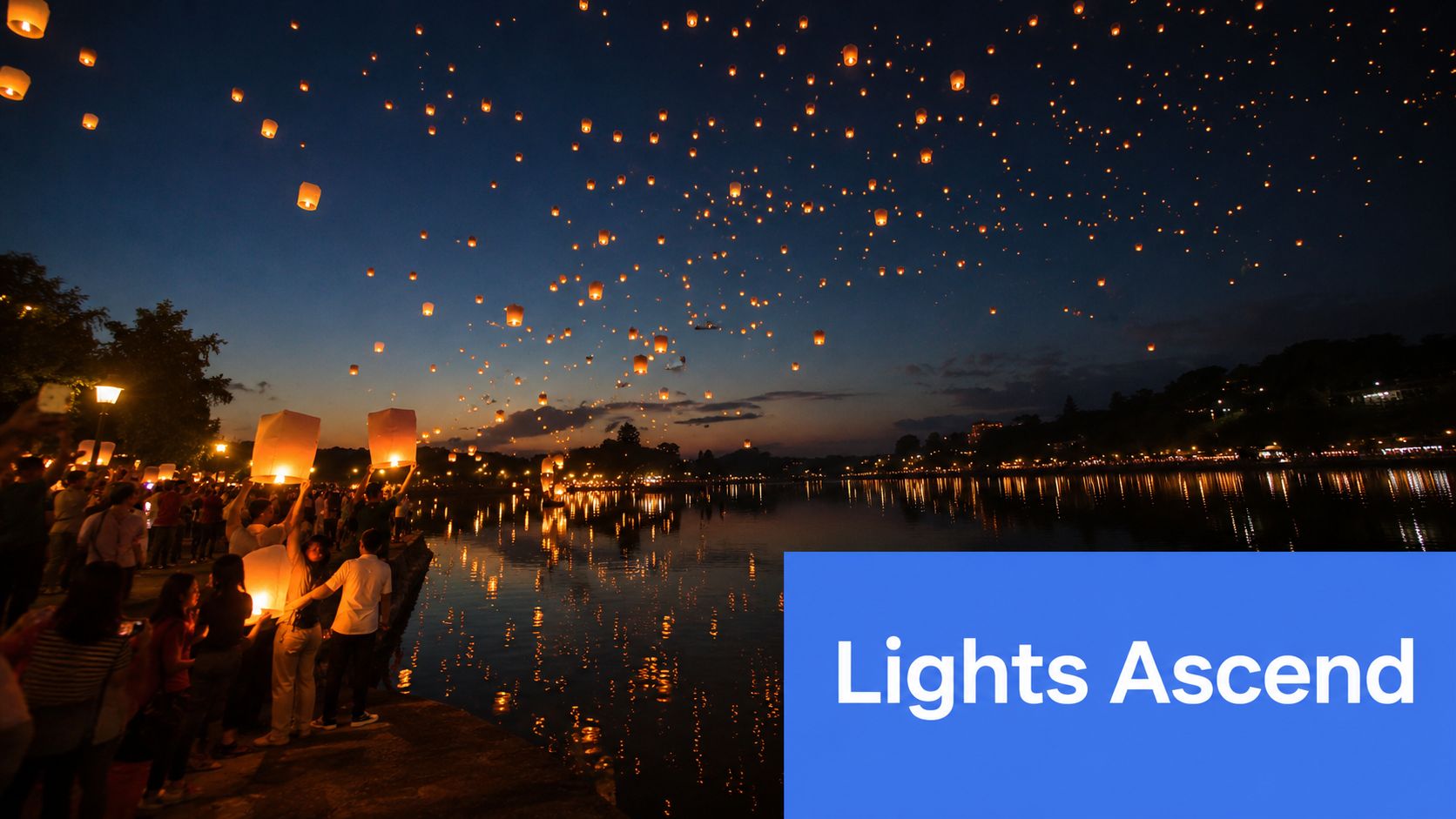
The problem is that the experience is rarely as simple as the fantasy. Dates shift because the festival follows the Thai lunar calendar, and the most famous nights pull in serious demand, especially around Chiang Mai. In 2024, Chiang Mai officially observed Loy Krathong over three days, 15 to 17 November, and 2026 listings place the festival around 25 November because the timing moves each year. Reference
The mistake I see most often
People lock in the headline city first, then try to bolt on the rest of the trip later. That's backwards. For a high-end itinerary, the right move is to decide whether you want a riverfront city stay, a northern lantern release, or a quieter cultural version of the season, then build the rest around that decision.
Practical rule: if your ideal night includes a mass lantern release, you need venue access, transfer planning, and hotel positioning sorted long before you worry about dining or photos.
For travelers who want a deeper cultural lens on the holiday, I like pairing the planning with a little background reading such as understand unique floating candle decor. It helps people see why the candle-and-water symbolism matters so much before they arrive.
If you're planning this trip for a honeymoon, milestone celebration, or a polished family itinerary, the first step isn't booking the first hotel you see. It's deciding how much crowd tolerance you have, because that decision changes everything. If you're making this a birthday trip, my 30th birthday travel ideas guide can help you weigh Thailand against other milestone experiences.
Understanding Loi Krathong and Yi Peng
Thailand's festival of light season works because two separate traditions overlap, but they are not the same event. Loy Krathong is the nationwide water festival, while Yi Peng is the northern Lanna lantern tradition centered in Chiang Mai. Both follow lunar calendars, so both shift every year instead of sitting on a fixed Gregorian date. Reference
Water and sky are different rituals
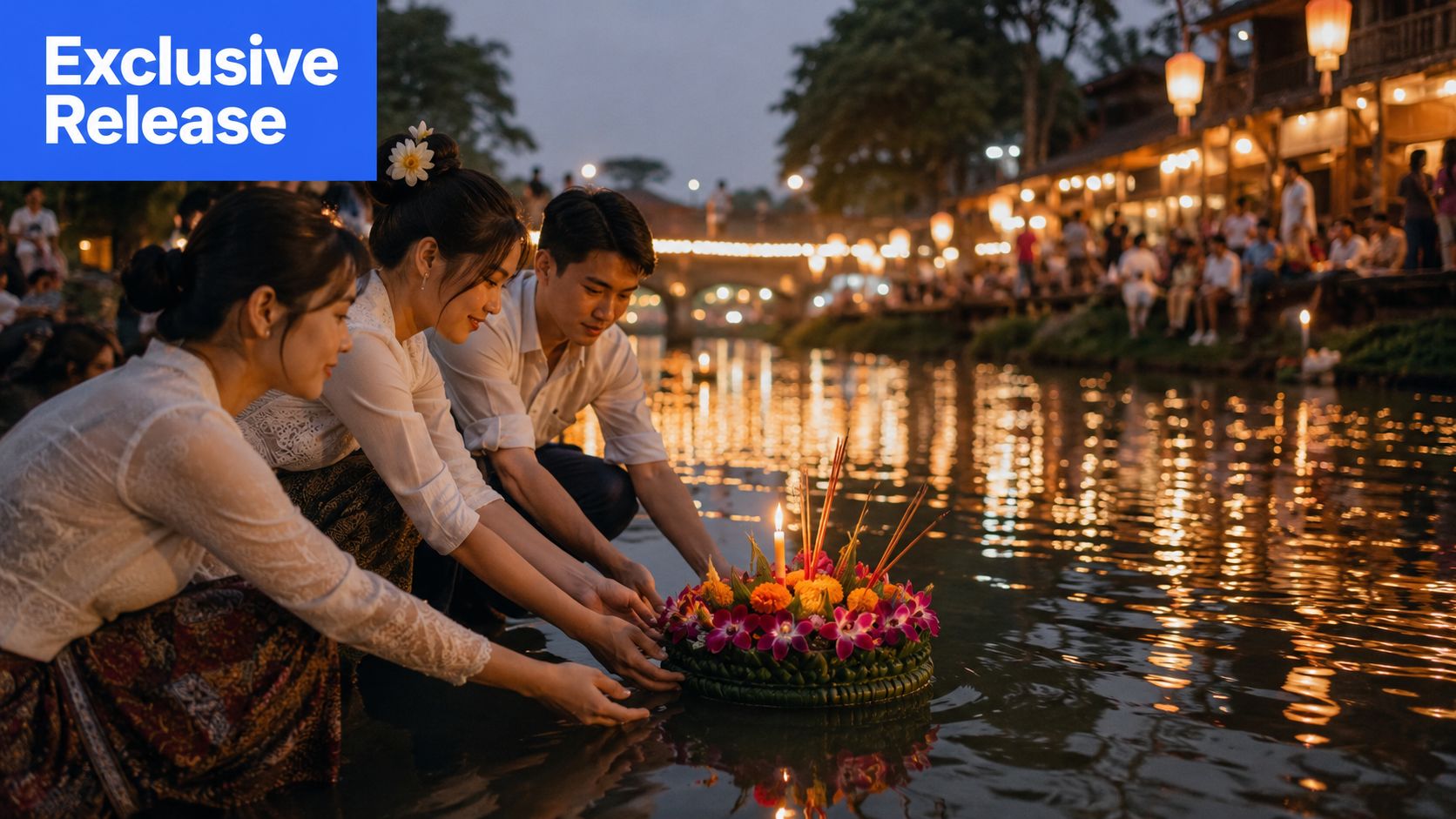
Loy Krathong is the water ceremony. People float decorated krathongs, usually on rivers or canals, as an act of gratitude and letting go. Yi Peng is the sky ceremony, where illuminated lanterns rise upward in a distinctly northern Thai tradition. In Chiang Mai, those two rituals often overlap, which is why the city draws so much attention.
That distinction is not cosmetic. Loy Krathong belongs on the water, Yi Peng belongs in the sky, and the experience you choose should reflect that. If you want the right atmosphere, the right access, and the right hotel positioning, you need to plan for one or both rituals before you touch the rest of the itinerary.
Why the calendar confuses travelers
The date changes because the festival is lunisolar, not solar. That is why 2026 listings place Loy Krathong around 25 November, while Yi Peng is projected for late November 2026.
For a cleaner visual comparison, I often suggest travelers review the festival symbols alongside the idea of understand unique floating candle decor, then map that to the actual trip plan. The cultural logic becomes much easier once you stop treating the event as one single show and start seeing it as two traditions happening in tandem.
If you want a broader cultural itinerary around this experience, I'd route you toward a curated cultural immersion travel approach instead of a one-night rush. That lets you enjoy the festival without making the whole trip hinge on one crowded evening.
Bottom line: if you only know the lantern photos, you do not know the festival yet. You need to know whether you are planning for the water, the sky, or both.
Beyond the Crowds Where to Experience the Magic
The famous Chiang Mai shots are beautiful, but they're not automatically the best way to do this trip. For many luxury travelers, the smarter decision is to step away from the most obvious crowd magnets and choose the setting that matches their pace, privacy needs, and tolerance for movement.
Bangkok is the obvious alternative, and it's a strong one. Thailand's official festival coverage shows Loy Krathong spread across multiple destinations and dates in late October and early November 2025, including Bangkok riverfront sites, which tells you something important about the direction of the season, it's becoming more distributed and easier to tailor than it used to be. Reference Along the Chao Phraya, a private river evening gives you a different mood entirely, more elegant, less compressed, and much easier to pair with a polished hotel stay.
Why I like Bangkok for certain clients
Bangkok works best for travelers who want atmosphere without the full festival crush. The river setting gives you light, movement, and excellent hotel access, while also keeping transfers simpler than a late-night dash through Chiang Mai traffic. If you're arriving in Thailand for a short trip or combining the festival with a longer Southeast Asia itinerary, Bangkok is often the more graceful choice.
Sukhothai is the opposite end of the spectrum. It's the historic heartland people think of when they want authenticity, ruins, and a more contemplative atmosphere. The pace is slower, the setting is more reflective, and the experience feels less like an event production and more like a cultural encounter.
Quietly, this is where many high-end travelers make the better choice. They skip the famous chaos and choose a setting that still gives them beauty, meaning, and room to breathe.
There's also value in spreading your festival season across more than one city. A traveler can experience a riverfront evening in Bangkok, then move north for Chiang Mai, or stay entirely in one destination and still get a complete sense of the tradition. That flexibility is exactly why advisor-led planning matters, because the “best” place isn't universal. It depends on how you want the trip to feel.
For clients who care more about smooth movement than bragging rights, the answer is usually simple, choose the destination that keeps the night elegant instead of exhausting.
The Ultimate Chiang Mai Experience Curated for You
If Chiang Mai is nonnegotiable, then treat it like a reservation-only experience, not a street festival. The city is the northern center of Yi Peng, but the main lantern release is exactly where travelers run into legal restrictions, congestion, and poor last-minute planning. The only serious way to do it well is through an officially authorized venue outside the city, where the release is legal and controlled. Reference
What the right experience feels like
The best Chiang Mai setup is calm, organized, and deliberately limited. You want comfortable seating, food that's already handled, transport that doesn't turn into a late-night taxi hunt, and a venue where the release itself is the centerpiece instead of a logistical headache. That's the difference between a meaningful memory and a frantic crowd scene.
Many premium festival packages include dinner, cultural performances, and shuttle transport, which is exactly why they book out quickly and why they're worth considering. I'm not interested in selling the spectacle as a bargain, because it isn't one. This is a memory purchase, not a casual ticket.
How I steer clients away from the wrong choice
I tell clients to stop thinking in terms of “Can I get into Chiang Mai?” and start thinking in terms of “Which official venue gives me the kind of night I want?” The answer changes depending on whether you care more about a private-feeling setting, proximity to the main ceremony, or a smoother transfer plan.
For travelers considering a wider Southeast Asia journey, it often makes sense to fold Chiang Mai into a more thoughtful route rather than a one-off detour. A dedicated Southeast Asia tours planning approach helps with that, especially when flights, hotel positioning, and festival timing all need to align cleanly.
Non-negotiable: don't assume the iconic photo spot is the best ticket. The best Chiang Mai night is the one that is legal, organized, and actually enjoyable from start to finish.
If you want the iconic release without the usual stress, that's exactly the kind of trip that benefits from having someone sort the venue choice, ground transport, and hotel strategy before you ever land.
Luxury Stays Your Sanctuary During the Festivities
Your hotel matters more during festival season than it does on a standard Thailand trip. When the streets are crowded and the evenings run late, the right property becomes your reset button, your viewing platform, and your escape hatch.
Start with location. In Bangkok, riverside hotels make sense because they keep you close to the action without forcing you into a long return transfer after dark. In Chiang Mai, a well-positioned boutique stay can turn a busy festival night into something far more manageable, especially if it's close enough to reduce late-night congestion but far enough from the loudest crowds to preserve your sanity.
What I look for before I recommend a property
I care about four things. Position, so your transfers stay short. Room layout, so you can enjoy the view instead of staring at a wall. Service consistency, because festival week exposes weak operations fast. And privacy, because a luxury trip should still feel like one.
If you like quiet after a long night out, a private pool villa is often the smartest answer. If you want to watch the light movement from your room or balcony, a river-facing suite is the better move. If you'd rather stay immersed in the cultural mood, a boutique property with its own small-scale celebration can be a far better fit than a giant branded hotel.
For travelers who want to think beyond the standard hotel checklist, I sometimes point them toward materials and comforts that influence the feel of a stay, even outside Thailand. For example, robes for cruise lines is a useful reminder that texture, comfort, and guest experience are part of luxury, not afterthoughts.
Why advisor booking makes a difference
This is also where preferred partner perks and room matching matter. A strong advisor doesn't just find a bed, they match the hotel to the exact experience you want, then shape the stay around your festival night. That can mean better room category guidance, smarter pacing, and far less guesswork.
If you want to improve your odds of securing a better-value room strategy, I'd use a dedicated how to get better hotel rates approach rather than booking at random. Festival season is exactly when poor timing costs you the most.
Planning Your 2026 Festival Trip The Advisor's Timeline
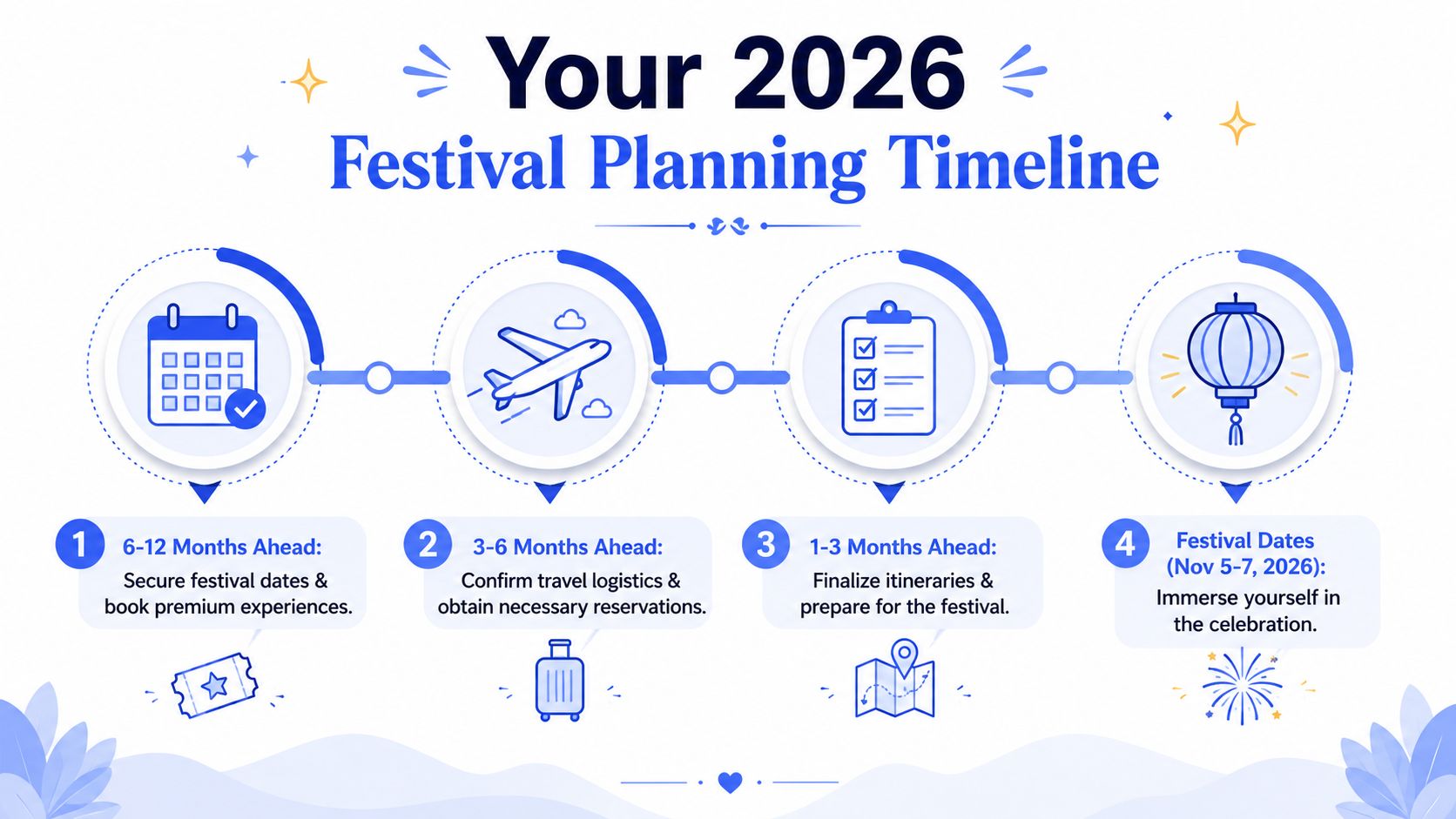
For 2026, plan around projected dates, not fixed promises. Yi Peng is projected for November 24 and 25, 2026, and Loy Krathong is projected for November 25, 2026. That overlap is exactly why serious travelers start early, secure the right access, and avoid leaving the trip to whatever is still available later. Reference
Booking order matters
Start with the festival strategy. If Chiang Mai is your target, decide whether you want a legal lantern release, a river-based evening, or both. If Bangkok or Sukhothai is the better fit, make that call early too, because the best hotel inventory and the strongest viewing positions disappear first.
Flights come next. Thailand's festival-of-light season draws heavy demand, and the government-backed Vijit Chao Phraya 2025 event shows the scale clearly, running 45 days from 1 November to 15 December 2025 and drawing more than 1.7 million visits with at least 5.5 billion baht in estimated circulation revenue. Reference That level of interest affects festival-period flights, hotel availability, and transport long before the actual nights arrive.
Then book the hotel with the event night in mind, not just the city name. A beautiful room in the wrong location creates friction all evening. Festival travel rewards travelers who plan around movement, timing, and exits, not just the property itself.
My rule of thumb: if the trip depends on a specific night, planning should start far earlier than the calendar feels necessary. Waiting until the dates are widely known usually means you are already late.
What a good timeline looks like
- Six to twelve months ahead is the time to secure dates, venues, and the best premium hotel choices.
- Three to six months ahead is when travel logistics should be finalized, including transfers and any limited-capacity festival access.
- One to three months ahead is for refining pacing, packing, and final details.
- During the festival window your only job should be enjoying the night, not fixing avoidable problems.
If you want the best version of this trip, stop treating it like a normal holiday booking. This is the point to have someone coordinate the experience from the start, so the festival feels curated instead of crowded.
Frequently Asked Questions for a Seamless Journey
What should I wear to the festival
Choose comfortable, respectful clothing that works for warm evenings and a lot of standing or walking. In Chiang Mai, bring a light layer too, because festival nights can feel cooler than people expect. Footwear matters more than glamour here, so pick shoes you can move in.
Is this a good trip for children
Yes, if you plan it carefully. Children do best when the evening stays structured, transfers are short, and you're not trying to push through the most crowded parts of the night. I'd avoid overly ambitious same-day schedules and keep the experience focused.
How much cash should I carry
Festival vendors and local arrangements often run more smoothly when you have cash available for small purchases, transport, and incidental costs. Don't assume every moment will be card-friendly. Keep it simple, keep it accessible, and don't split your funds across too many bags.
Is it safe to go
Conditions can change, so stay aware of your surroundings the same way you would anywhere you travel. I always recommend checking official government guidance and local advice before departure, and I plan with trusted in-destination partners to support the on-the-ground logistics. That's about maintaining high service standards, not pretending risk doesn't exist.
What's the biggest planning mistake
Assuming you can decide late and still get the best experience. You usually can't. The travelers who enjoy this festival most are the ones who choose the right city, the right stay, and the right venue early.
If you want a polished Thailand festival trip without the usual crowds, confusion, or rushed compromises, I can design it for you from the ground up. Visit Explore Effortlessly to start planning your luxury journey, and join the newsletter at https://exploreeffortlessly.myflodesk.com/linkinbio for more high-touch travel insight, destination ideas, and curated trip inspiration.