Most advice about an Italy and Switzerland trip is wrong for luxury travelers.
It treats the trip like a scavenger hunt. Add Milan. Add Lake Como. Add Lucerne. Add Interlaken. Add Zermatt. Add Venice if you can squeeze it in. That's how people end up spending a beautiful European vacation dragging luggage through stations, checking train apps at breakfast, and arriving at extraordinary hotels too tired to enjoy them.
The smarter approach is simpler. Cut more. Transfer less. Build around a route that flows. Then layer in the kind of stays and experiences that make the trip feel polished instead of patched together.
That matters even more here because Italy and Switzerland deliver very different energies. Switzerland's national identity is often traced to 1291, with later milestones including recognition of Swiss independence in the Treaty of Westphalia and the 1848 Constitution that laid the foundation of the modern federal state, as outlined in this history of Switzerland. Italy, by contrast, unified much later, with the process toward modern Italy beginning around 1820 and culminating in 1861, according to this overview of Italian history. You feel that contrast when you travel. Switzerland feels orderly, old, precise. Italy feels layered, expressive, and gloriously loose around the edges.
A well-designed trip should use that contrast to your advantage. It should manage your energy, not drain it. It should let you wake up to alpine light one morning and sip a late aperitivo by the lake a few days later without making the middle of the trip feel like a transport exercise.
Your Italy and Switzerland Trip Reimagined
If you're planning an Italy and Switzerland trip, stop asking how many places you can fit in. Ask how good you want the trip to feel.
Busy professionals usually don't need more options. They need someone to eliminate the wrong ones. The internet is full of ambitious sample itineraries that look excellent on a screen and feel terrible in real life. They overvalue famous stops and undervalue pacing, station proximity, room category, transfer timing, and the difference between a scenic train ride you'll remember forever and a clumsy connection that eats half a day.
Advisor view: The best itinerary is rarely the one with the most pins on the map. It's the one that protects your time and mood.
The core mistake is trying to treat both countries equally on a short trip. They don't ask for the same pace. Switzerland rewards early starts, mountain weather awareness, and tightly managed routing. Italy rewards lingering. Long lunches, elegant hotels, lakeside boat days, unhurried evenings. If you force both countries into the same rhythm, you lose the best of each.
That's why I'm opinionated about structure. I'd rather see a client do fewer stops well than “cover” both countries badly. The trip should feel composed. One mountain base, one lake base, maybe one city if it fits the route. Not four hotel changes for the sake of saying you did it.
Here's the true luxury. You don't spend weeks comparing train paths, trying to guess which town is worth two nights, or discovering too late that your scenic connector doesn't run on the day you planned. You start with the right direction, the right corridor, and the right balance of scenery and downtime. Then every decision after that gets easier.
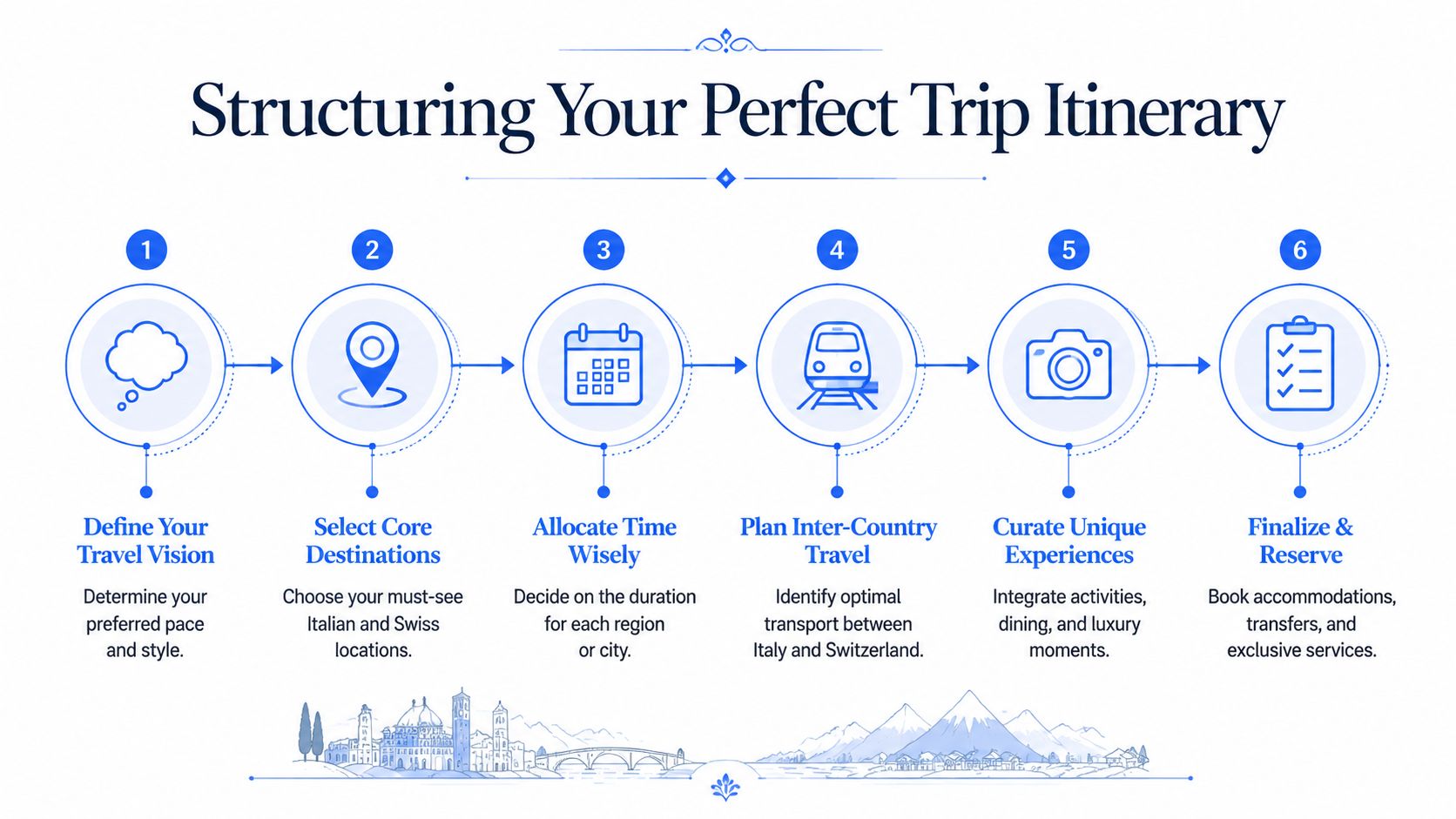
The Art of the Itinerary Structuring Your Perfect Trip
The order of your trip matters more than often recognized. Start in the wrong place and the whole journey feels slightly off.
Some travelers should begin in Switzerland. Others should absolutely not.
Start in Switzerland if you want the active portion first
This is my preferred direction for many couples and busy professionals. Switzerland tends to run on structure. Train timing matters. Mountain days usually work better when you're fresh. Weather windows can shape what you do.
Then you finish in Italy, where the pace softens. Lake Como, Milan, or another Italian finish gives the trip a graceful landing. You end with better meals, later mornings, and less pressure to optimize every hour.
This direction works especially well if you like the feeling of earning your exhale.
Start in Italy if you want an easier arrival
There's a case for reversing it. If you're flying overnight, landing in Italy can feel gentler. You can settle into a city hotel, recover with room service and a long dinner, then move into the more structured Swiss portion once you've adjusted.
I recommend this approach for travelers who hate arriving jet-lagged and immediately managing mountain logistics. It also suits clients who care more about food, design hotels, and urban culture than hiking or high-alpine sightseeing.
What I don't recommend is pretending both countries deserve equal time on a short itinerary. A common traveler rule of thumb is that 10 to 12 days is already tight for both countries, and that Switzerland alone can easily fill that timeframe, as reflected in this Rick Steves traveler discussion on Switzerland and Northern Italy. That's exactly right.
Three itinerary frameworks that actually work
Here's how I'd think about pacing.
| Trip length | Best use | Smart structure |
|---|---|---|
| 7 days | Fast, focused escape | One Swiss base and one Italian base |
| 10 days | Best balance for most clients | Two Swiss stops at most, then one Italian finish |
| 14+ days | Proper immersion | Add depth, not random extra cities |
For travelers considering Bern as a quieter Swiss city layer, this guide to top places to visit in Bern is a useful primer before deciding whether Bern fits your pace better than a more transfer-heavy mountain circuit.
My blunt recommendations by trip length
- For a 7-day trip: Keep it surgical. Choose one Swiss destination with strong rail access, then finish with Lake Como or Milan. This is not the trip for “while we're there” thinking.
- For a 10-day trip: This is the sweet spot for a well-curated Italy and Switzerland trip. You can do mountains, lake scenery, and an urban or culinary finish without feeling rushed, if the route is tight.
- For 14 days or more: Add experiences, not chaos. Use longer stays, private guides, spa time, scenic rail, and one or two special splurges. Don't fill the extra days with hotel changes just because you can.
A slower itinerary often outperforms the famous one. Comfort beats coverage, especially when you're paying for beautiful hotels you actually want time to enjoy.
Seamless Journeys Navigating Between Countries
The border between Italy and Switzerland is rarely the problem. Poor routing is.
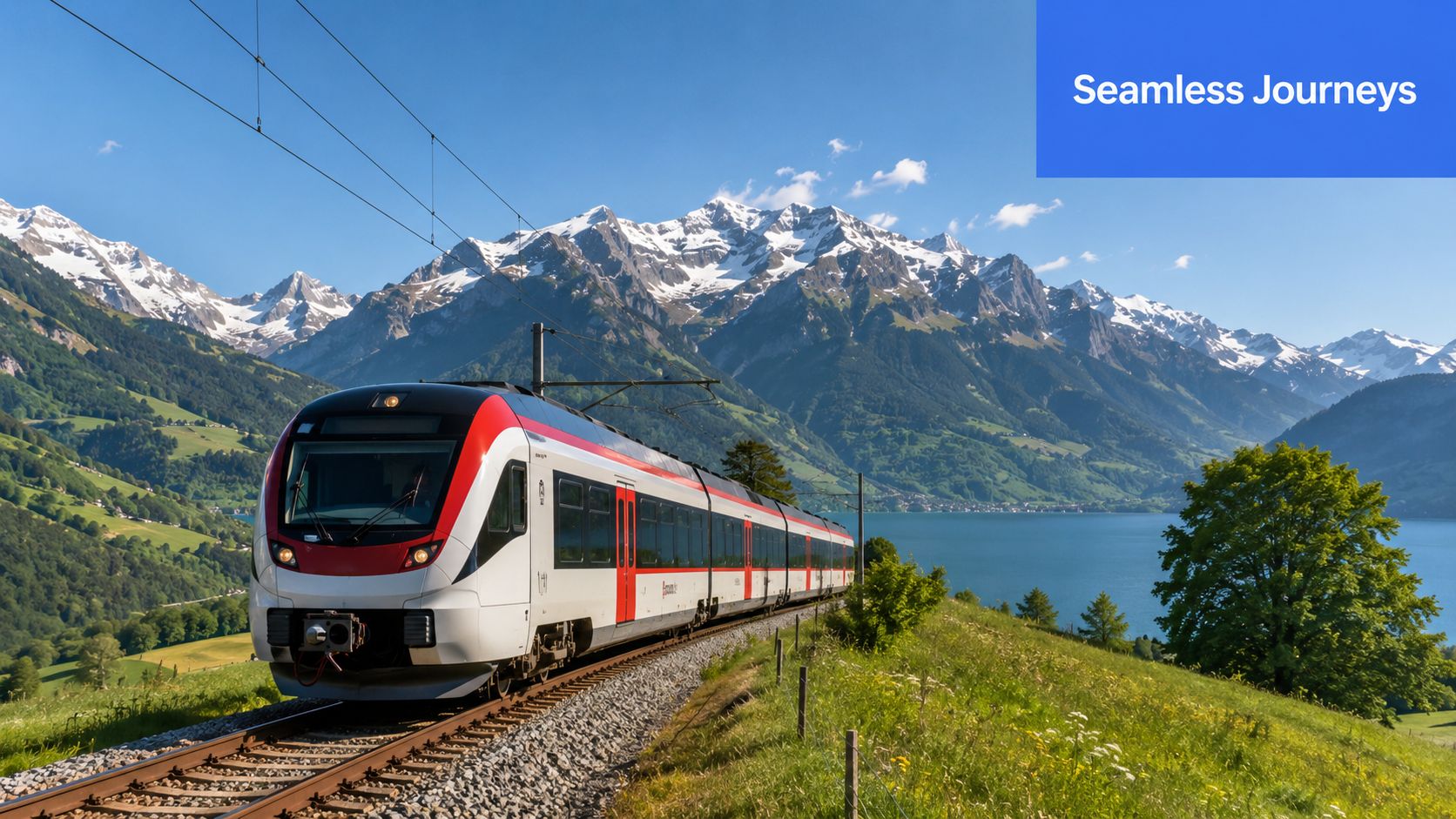
A polished trip depends on choosing the right transfer for each leg, not forcing one transport style across the whole itinerary. Rail usually gives you the best mix of comfort, scenery, and efficiency. Private drivers earn their place on short, awkward segments. Full self-drive works for a narrow slice of travelers and creates more hassle than freedom for everyone else. If you are weighing self-drive travel closer to home, compare the pacing of a Nashville to Orlando road trip before choosing your route.
Why rail usually wins
The smartest cross-border routes use Northern Italy to feed directly into Switzerland's mountain rail network. Milan, Varenna, Tirano, Chur, St. Moritz, and Zermatt can fit together cleanly if you choose the right sequence. The appeal is not only the scenery. You avoid parking logistics, reduce tiring road time, and turn a transfer day into a highlight.
The Bernina line is often the best example. It connects Italy and the Swiss Alps in a way that feels intentional rather than patched together, and the official Bernina Express route overview is the right place to confirm how that corridor operates before you commit to hotels on either side.
This is the standard I use with clients. If the train ride is one of the best parts of the trip, keep it. Do not replace it with a long car transfer because a driver sounds more luxurious on paper.
When private drivers are worth paying for
Use private car service where rail becomes inconvenient. Station-to-hotel transfers, remote resorts, family arrivals with several bags, and late-night or early-morning airport connections are the right cases.
I do not recommend booking a driver for the entire Italy to Switzerland crossing unless your route lacks a good rail option. A highway transfer from Milan into the Alps can cost more and deliver less. You spend hours in a vehicle, miss the classic views, and still need to solve the final hotel approach.
Private drivers are a precision tool. Use them to remove friction, not to replace the most enjoyable part of the journey.
Self-drive is a specialty choice
A rental car suits travelers who want rural detours, winery stops, or time in areas with weak rail coverage. It is far less attractive for Milan arrivals, alpine transitions, and lake towns where parking can be expensive, inconvenient, or both.
Many travelers like the idea of total flexibility. Then the travel itself begins. You are dealing with tolls, luggage, station drop-offs, restricted traffic zones, mountain weather, and hotel access that looked easier online than it is in practice.
For a high-end itinerary, I would rather see you use trains for the main route and add car service only where it improves the day.
Pay attention to seasonal transport gaps
Small schedule details can wreck an otherwise smart itinerary. One example is the bus link between Lugano and Tirano. According to this Northern Italy and Switzerland itinerary analysis, the Bernina Express Bus runs daily in summer, shifts to Thursday through Sunday in shoulder season, and does not run in winter.
That matters if you are building a route around Lake Lugano, Tirano, and the Bernina rail segment. Miss that detail and your elegant plan turns into a long, annoying reroute.
If you are coordinating flights at both ends, book the route before hotel availability corners you into a weaker transfer plan. This guide on the best way to book multi-city flights will help you structure open-jaw air segments around the itinerary instead of forcing the itinerary to fit the airfare.
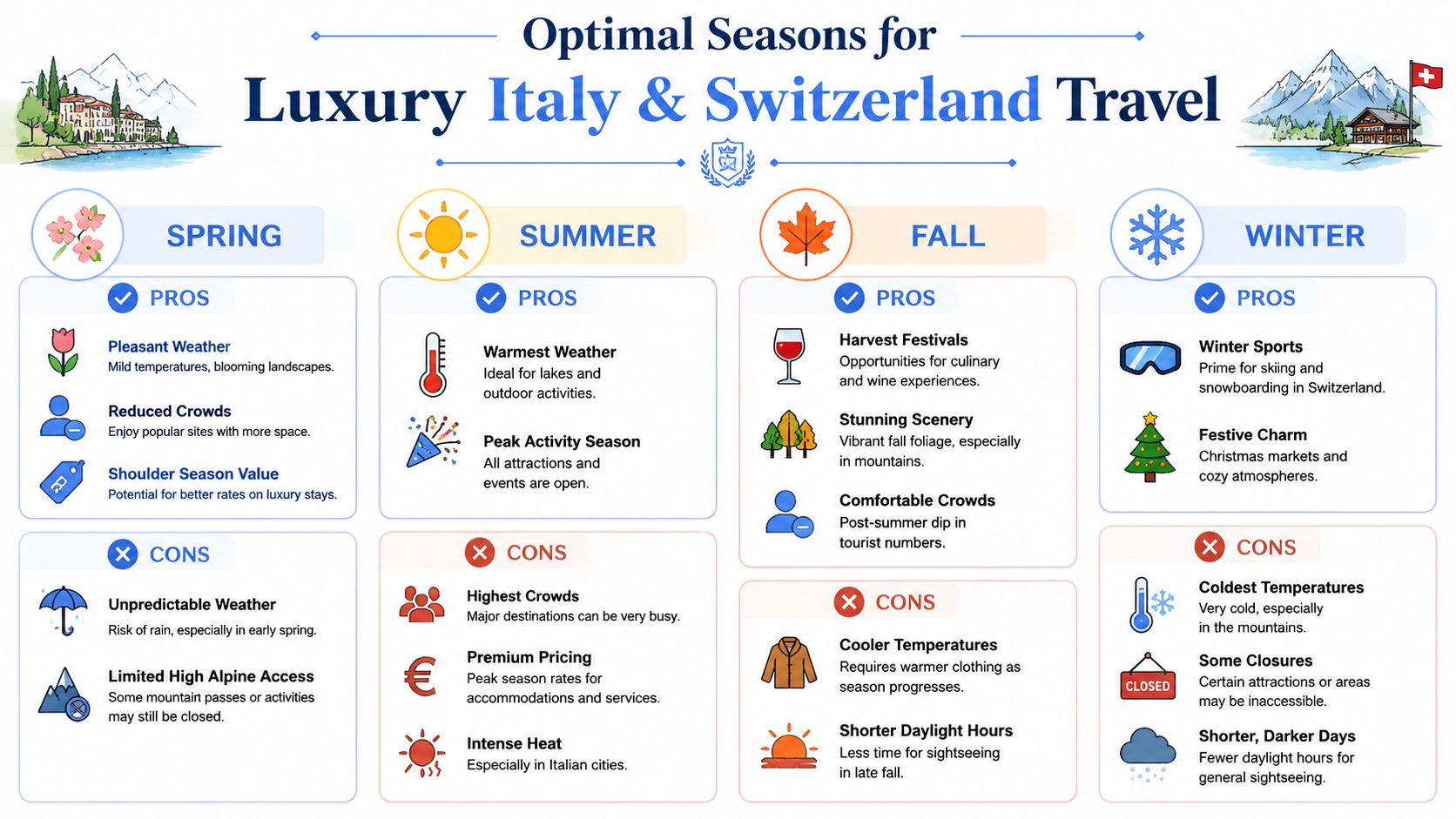
Timing Your Trip A Seasonal Guide for Luxury Travel
Peak summer gets the headlines. It is not automatically the best choice.
For a luxury Italy and Switzerland trip, I often prefer shoulder season. You get a calmer atmosphere, better breathing room, and a trip that feels more polished from check-in to dinner reservations. A key planning gap in most online advice is seasonal timing and crowd pressure, and a well-timed shoulder-season journey can offer greater comfort, value, and availability at luxury properties in both the Swiss Alps and Italian Lakes than the peak summer rush, as noted in this Italy and Switzerland itinerary guide focused on timing.
Why shoulder season is often the smartest answer
Late spring and early fall tend to suit discerning travelers better than midsummer. Hotels feel less frenetic. Scenic trains feel enjoyable instead of crowded. Italian lake towns have charm instead of churn.
You also get a better emotional experience. That matters. Luxury isn't only about the room. It's about how the entire trip feels when you move through it.
When summer still works
Summer is still appealing if your priority is maximum alpine access and long daylight hours. If you want the broadest range of mountain activities, summer is practical.
But go in with open eyes. Summer often brings more crowd pressure in both Swiss resort towns and Italian lakeside favorites. If you travel then, the answer is not to abandon the trip. It's to plan around the pressure with stronger hotel selection, strategic transfers, and tighter daily flow.
Winter is selective, but magical for the right client
Winter isn't the season for a broad “best of both countries” sweep. It's best when the trip is intentionally designed around alpine coziness, festive atmosphere, winter sports, and a more cinematic pace.
That means fewer stops, warmer logistics, and realistic expectations about mountain access and route availability.
- Choose spring or fall if you want balance, elegance, and fewer crowd headaches.
- Choose summer if alpine access is your top priority and you're willing to plan around heavier demand.
- Choose winter if the point is ambiance, snow, and a focused Switzerland-forward experience with an Italian city or lake component used selectively.
For a deeper look at Swiss seasonality before pairing it with Italy, read what month is the best time to visit Switzerland.
Curated Stays and Exclusive Experiences
The difference between a good trip and a memorable one usually isn't the country. It's the combination of hotel, room category, timing, and access.
A rushed itinerary makes even famous properties feel wasted. A well-paced trip lets the hotels carry part of the experience, which is exactly what should happen on a luxury Italy and Switzerland trip.
What the right hotel mix looks like
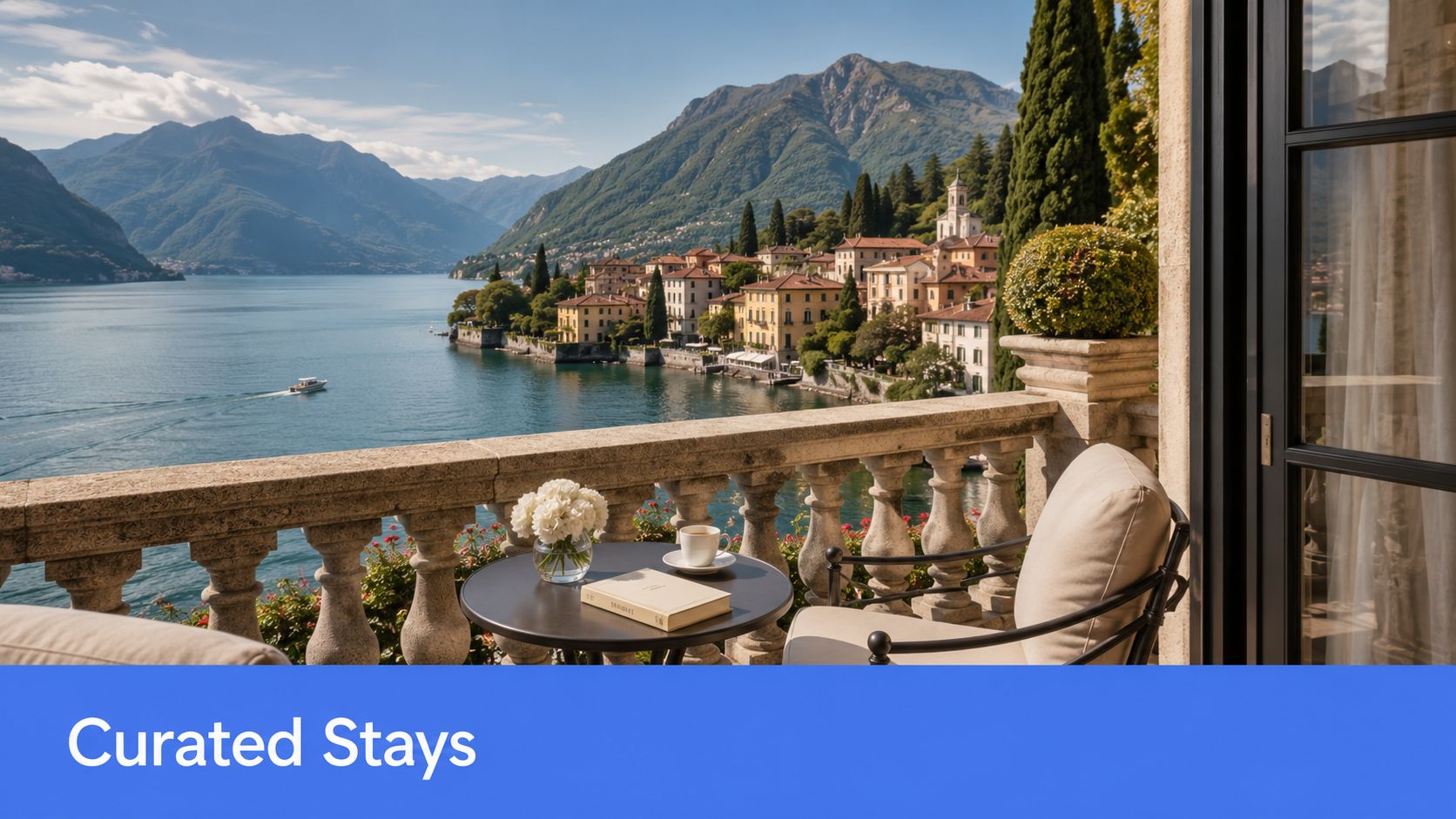
In Italy, I like a classic lakeside hotel that leans into glamour and service. Grand Hotel Tremezzo on Lake Como is the kind of property that suits this trip beautifully because it turns downtime into part of the destination. The view matters. The terrace matters. The ease of stepping into a boat transfer or settling into a long lunch matters.
In Switzerland, I usually steer clients toward a property with a distinct point of view rather than something merely efficient. A design-forward alpine retreat like The Omnia in Zermatt creates a very different mood from a traditional grand hotel. Neither is universally better. The right answer depends on whether you want understated contemporary calm or old-world mountain grandeur.
The experiences that justify the trip
The most satisfying itineraries don't overload the calendar. They choose a handful of high-quality moments.
- On Lake Como: A private boat outing is usually worth prioritizing over stacking villages into one day. You see the lake properly, arrive in style, and avoid turning the day into a ferry puzzle.
- In Switzerland: Scenic rail, a mountain lunch with a view, a private guide for a curated walking day, or a spa-focused afternoon often lands better than trying to check off every famous summit.
- In cities like Milan: A private driver for arrival and departure, a carefully chosen suite, and one excellent cultural experience often beat a packed list of attractions.
The luxury version of Europe is not constant activity. It's having the right experience at the right time, then leaving space around it.
Why advisor access changes the hotel equation
Preferred partner relationships can add value in ways travelers often underestimate. Think VIP amenities, complimentary breakfast, and consideration for enhanced room placement or added benefits when available. Not every stay delivers the same perks, and nothing should be framed as guaranteed, but the right booking strategy absolutely shapes the stay.
That's also why generic hotel lists aren't enough. A romantic Lake Como stop for a honeymoon couple should not be chosen the same way as a multigenerational family stay or a fast-paced anniversary trip pairing Milan with the Alps.
If your broader Italy planning also includes the coast, this roundup of hotels on the Amalfi Coast is a helpful comparison point for understanding how different Italian luxury stays create very different trip moods.
Advisor-Led Logistics From Luggage to Border Crossings
Trips like this rarely fall apart because of the headline destinations. They fall apart on transfer days.
Busy travelers usually do not worry about whether Lake Como is beautiful. They worry about dragging oversized bags onto a train, arriving in the Alps dressed for Milan, or building a route that looks polished on paper and feels tiring in real life. That concern is justified. The quality of this trip depends on how well the in-between pieces are set up.
Border crossings are rarely the problem
Italy and Switzerland both sit inside the Schengen Area, so routine tourist travel between them is generally straightforward. The primary decision is route design.
Choose rail corridors that reduce friction and protect your energy. Milan to Tirano works well if you want a scenic transfer into Switzerland. Milan to Brig or Spiez often works better if your priority is getting to Zermatt, Interlaken, or the Bernese Oberland with fewer moving parts. Clients waste time chasing the most famous train name instead of choosing the most efficient connection for their actual hotel sequence.
That is the advisor difference. The route should support the trip, not perform for it.
Pack for transfer days, not just dinner reservations
A dual-country itinerary needs discipline. Swiss mountain towns reward practical layers and shoes with grip. Italian cities demand a cleaner, sharper wardrobe, especially if you have top restaurants, grand hotels, or evening aperitivi on the calendar.
Do not pack as if every stop has the same climate, dress code, and terrain. It does not.
A smart packing framework looks like this:
- Bring one main suitcase per person. Two large cases for one traveler turns every platform, hotel stair, and station connection into unnecessary work.
- Build around layers. A light knit, compact waterproof, and versatile outer layer beat bulky cold-weather pieces that only serve one purpose.
- Keep transfer-day items with you. Medication, passports, chargers, jewelry, valuables, and a fresh change of clothes belong in your carry-on.
- Wear the right travel shoes. Cobblestones, station ramps, boat docks, and gravel paths punish bad footwear. This guide to the best shoes for walking in Europe is a practical reference before departure.
One rule is simple. If you dread lifting your suitcase onto a train, the bag is too big.
Luggage handling should be arranged in advance
Luxury travel is not about pretending luggage does not exist. It is about making sure it never becomes the main event.
On the right itinerary, bags are handled with a plan. That may mean a private vehicle on a key transfer day, hotels chosen for easier station access, porter assistance where available, or fewer one-night stops so you are not constantly repacking. Travelers who improvise this part usually lose time, patience, or both.
A well-run Italy and Switzerland trip feels calm because the logistics were edited early. Border formalities are usually simple. Bag strategy, routing, and transfer design are what determine whether the trip feels effortless or exhausting.
Plan Your Effortless Italy and Switzerland Trip
A great Italy and Switzerland trip doesn't come from more tabs open on your laptop. It comes from better decisions made earlier.
The right direction. The right number of stops. The right rail corridor. The right season. The right hotel mix. Those choices determine whether the trip feels elegant or exhausting.
If you're the kind of traveler who values time, comfort, and a well-run experience, this is exactly where professional planning pays off. The work isn't only in booking. It's in editing. Cutting the unnecessary stop. Protecting the arrival day. Choosing the hotel that fits the purpose of that leg, not just the destination name.
Even small details affect the trip more than people expect. For example, your footwear can make transfer days and city walking dramatically easier. If you want a practical style reference before departure, this guide to the best shoes for walking in Europe is highly useful.
If you want this trip designed properly, with polished logistics and a route built around how you like to travel, start here with Plan my luxury trip.
Author Bio
Hi, I'm Karrah, owner, founder, and lead travel advisor at Explore Effortlessly, a luxury award winning travel agency based in Miami.
I specialize in designing bespoke, high touch itineraries to bucket list destinations around the world. Every trip is curated with intention, insight, and efficient logistics from start to finish.
From luxury cruises and private villas to honeymoons, safaris, and once in a lifetime journeys, my role is to simplify the planning process while elevating every detail.
I work with clients nationwide through virtual consultations. I'm also a Circle of Excellence Advisor, Top 5 percent at Nexion, and a CLIA Accredited Cruise Counselor.
Frequently Asked Questions
Is 10 days enough for an Italy and Switzerland trip
Yes, but only if you cut aggressively. Ten days can work very well for a refined two-country itinerary with disciplined routing. It is not enough for a grand tour of both countries without fatigue setting in.
Should I do trains or private transfers
Usually both. Trains are often the best option for the scenic cross-border portions, especially on thoughtfully designed alpine routes. Private transfers are most useful for hotel-to-station movements, tricky arrival days, and reducing friction with luggage.
Do I need to worry about border control between Italy and Switzerland
In most cases, the bigger concern is logistics, not border drama. The trip should be planned with awareness of entry requirements and documentation, but travelers usually experience the journey more through connections and baggage handling than through border formalities.
How do I balance hiking in Switzerland with a more relaxed Italy portion
Don't split the trip evenly by country. Split it by energy. Put your active days together, then follow them with your slower lake or city days. That creates a much better rhythm than alternating strenuous and relaxed days every other stop.
What currency should I expect
Switzerland uses Swiss francs. Italy uses euros. Credit cards are widely accepted in major travel settings, but it's still wise to carry a small amount of local currency for minor purchases and incidental situations.
Is English enough for this trip
In luxury hotels, major rail corridors, and heavily visited destinations, English is commonly used. A few polite phrases in Italian or in the local Swiss context are always appreciated, but language usually isn't the part that complicates the trip.
If you're ready for a polished, high-touch journey through Italy and Switzerland without spending hours comparing hotels, trains, and transfer options, Explore Effortlessly can design and manage every detail. Start the conversation with Plan my luxury trip, and join the newsletter for more destination insight and planning guidance through Explore Effortlessly updates.