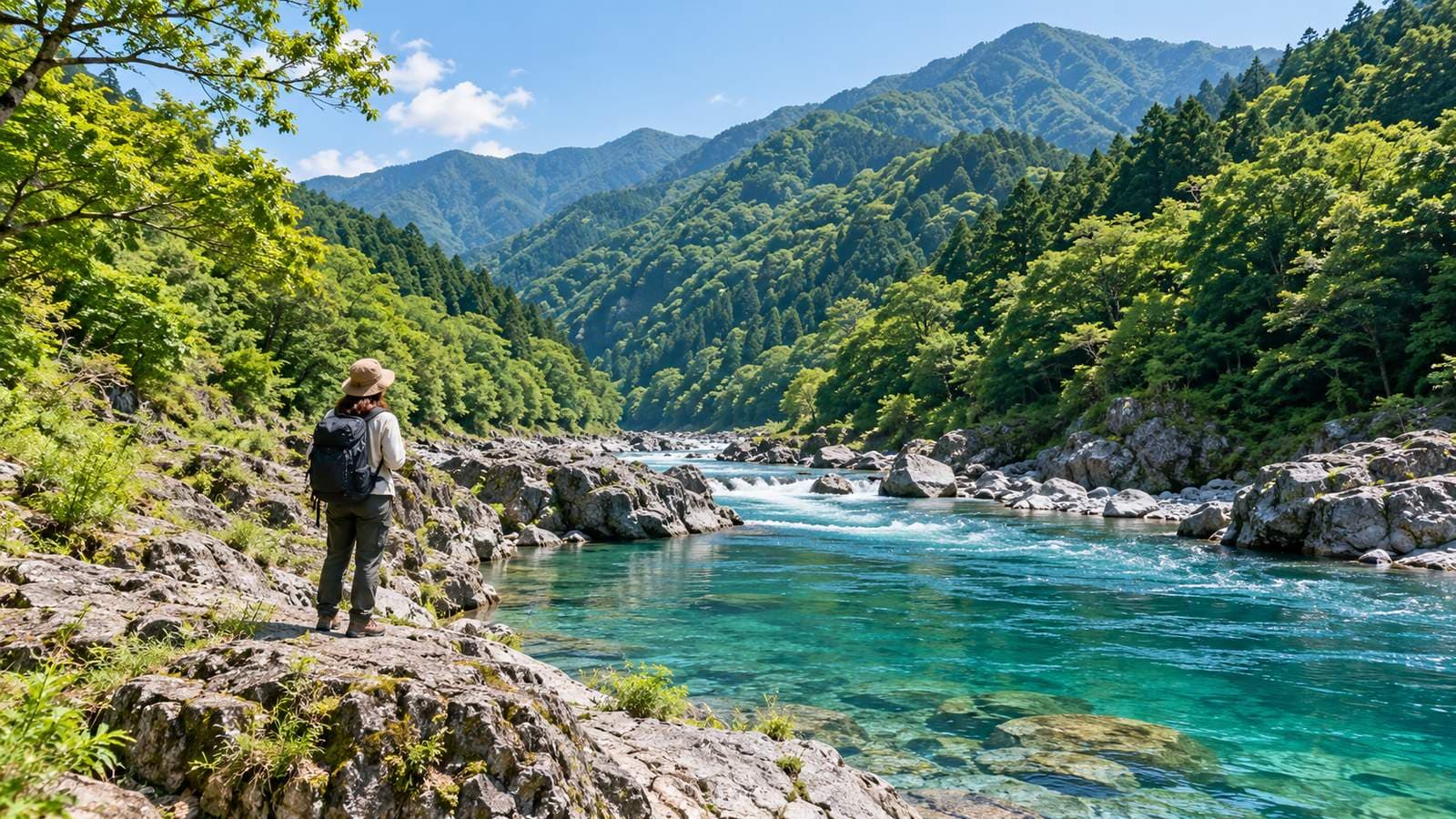
Kochi, Japan is a Pacific-facing prefecture on Shikoku that pairs a lively food-focused capital with river landscapes worth building a trip around. For a first visit, I would spend two nights in Kochi City, then choose either the Niyodo River for a focused nature day or the Shimanto area for a slower extension. Your pace decides.
The tricky part is not finding a photograph of blue water. It is deciding which river fits your route, how you will reach it, and whether a day trip leaves enough time to enjoy it. A map makes Kochi look compact; a trip can feel quite different once you connect stations, airport transfers, country roads, and a second hotel.
I think Kochi works best as a deliberate chapter in a longer Japan journey, not a hurried detour between famous cities. If you are also planning other regions, my guide to thoughtfully designed luxury Japan tours helps frame the larger itinerary before you start adding stops.
Where Kochi Fits in Japan
Kochi City is the capital of Kochi Prefecture, on the southern side of Shikoku. It is in Japan, not the Indian city of Kochi. The same name causes understandable confusion when you search for flights, hotels, or a map. Check the country and airport every time you compare routes.
The Japan National Tourism Organization's Kochi overview describes a Pacific coast, the Shimanto River, Kochi Castle, and local markets. Those places are not one walkable neighborhood. Think of Kochi City as a base for food and history, with the river areas as separate excursions or overnight stays.
My planning rule is simple: define the experience first. If you want a city evening and one excellent day outside it, keep a Kochi City base. If quiet river scenery is the main event, give the countryside its own time rather than counting it as a quick photo stop.
Choose a Base Before You Choose Activities
The first decision is whether you want to unpack once or move accommodations. In the city, you can build a gentle day around Kochi Castle, a market meal, and an unhurried dinner. In the countryside, the reward is slower time near a river, but every move creates a check-in, a transfer, and less flexibility if the weather changes.
Here is how I would compare the two main nature choices:
| Base or outing | Best for | Main planning tradeoff |
|---|---|---|
| Kochi City | First visits, food, history, easy evenings | River landscapes need a separate excursion |
| Niyodo River area | A concentrated nature day and gorge scenery | Local transport needs advance thought |
| Shimanto area | Travelers who want a slower rural chapter | It is better treated as an extension than a rushed stop |
A room choice matters here for different reasons than it would in Tokyo. If you expect several early departures, favor a convenient city location and a comfortable night's sleep over a room you will barely use. If you plan a countryside night, choose the property around the activity and transfer plan, not just the prettiest photograph.
Start With Kochi City, Its Castle and Its Food
Kochi Castle gives the city a strong anchor for a first morning. Japan's tourism organization identifies it as one of the castles with an original keep and notes that its original palace also remains. Hirome Market is another useful stop if tasting local dishes is part of your reason for coming.
Try katsuo no tataki, bonito seared on the outside and served with the inside less cooked. It is a local specialty identified in the tourism organization's prefecture guide. If you do not eat raw or lightly cooked seafood, tell your advisor and restaurant in advance rather than treating this as a mandatory experience.
A city day with room to breathe
I would allow a morning for the castle area, a flexible lunch, and an open afternoon rather than booking every hour. If your dates include a Sunday, consider the Sunday Market, but verify its current operation around holidays and festivals. I would not anchor an entire Kochi trip to a market without confirming the specific date.
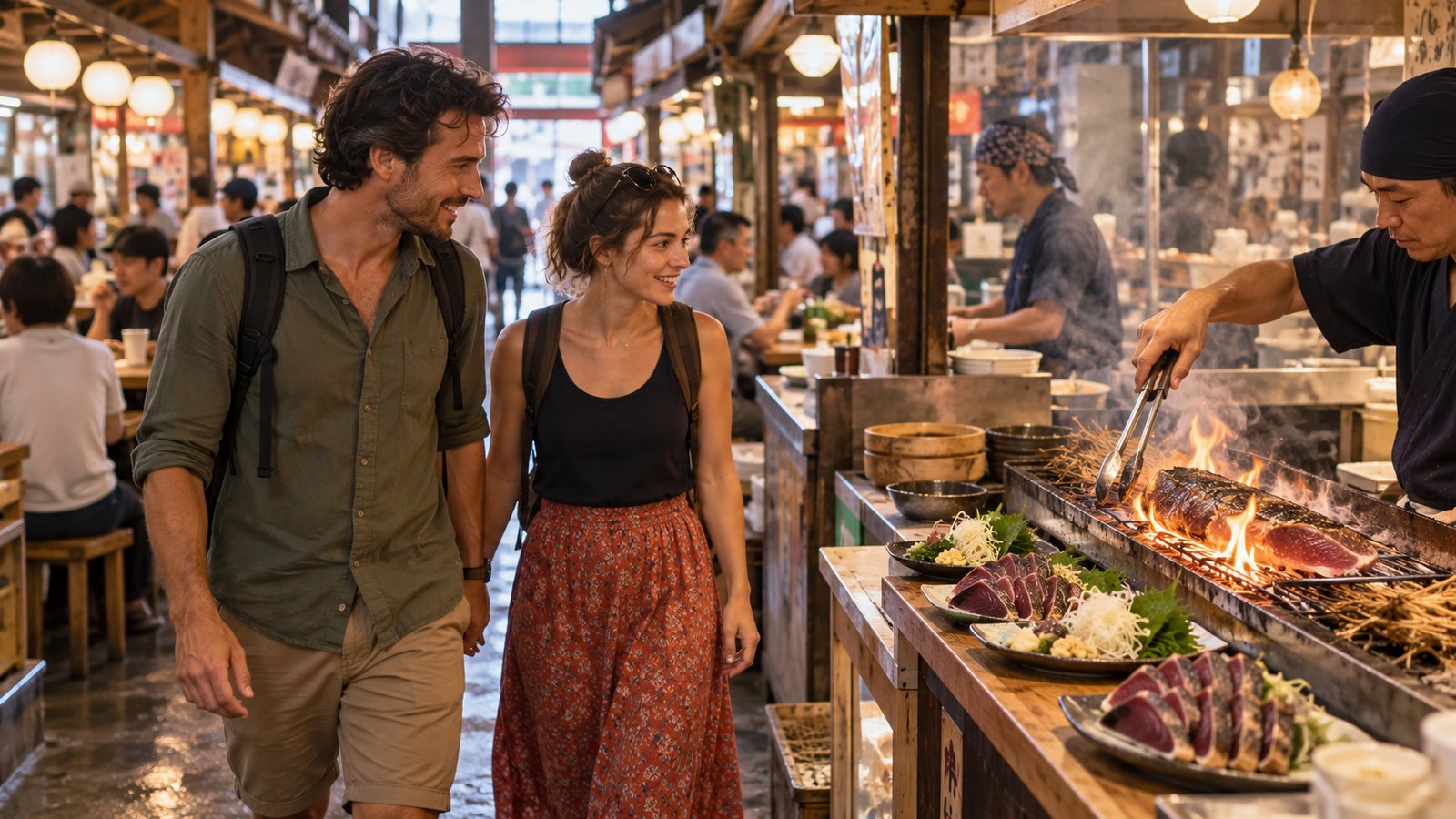
A food-focused traveler may prefer an extra city night to a second countryside outing. That is not a compromise. It is a cleaner trip if your best memories are likely to come from a lingering meal and a relaxed walk, rather than a checklist of distant viewpoints.
Niyodo River for a Focused Nature Day
The Niyodo River is the option I would usually examine first for a traveler staying in Kochi City who wants one substantial outdoor day. Its gorges and clear water offer a very different rhythm from the city. Kochi's official Niyodo River guide says the blue color can be seen year-round and is often most vivid from November through March. Light and conditions still affect what you actually see.
The transfer is the real planning issue. The tourism organization's Niyodo Blue access guide describes rail plus taxi or bus approaches and specifically recommends a prearranged charter taxi for difficult return connections. That is more useful than promising that every scenic spot is an easy spontaneous day trip.
If you want to walk a gorge trail, match the outing to your mobility and the day's conditions. The official guide warns that paths can be slippery and calls for appropriate shoes. It also explains that Nikobuchi is sacred locally and asks visitors not to enter the water. A thoughtful itinerary respects the site, not merely the photo opportunity.
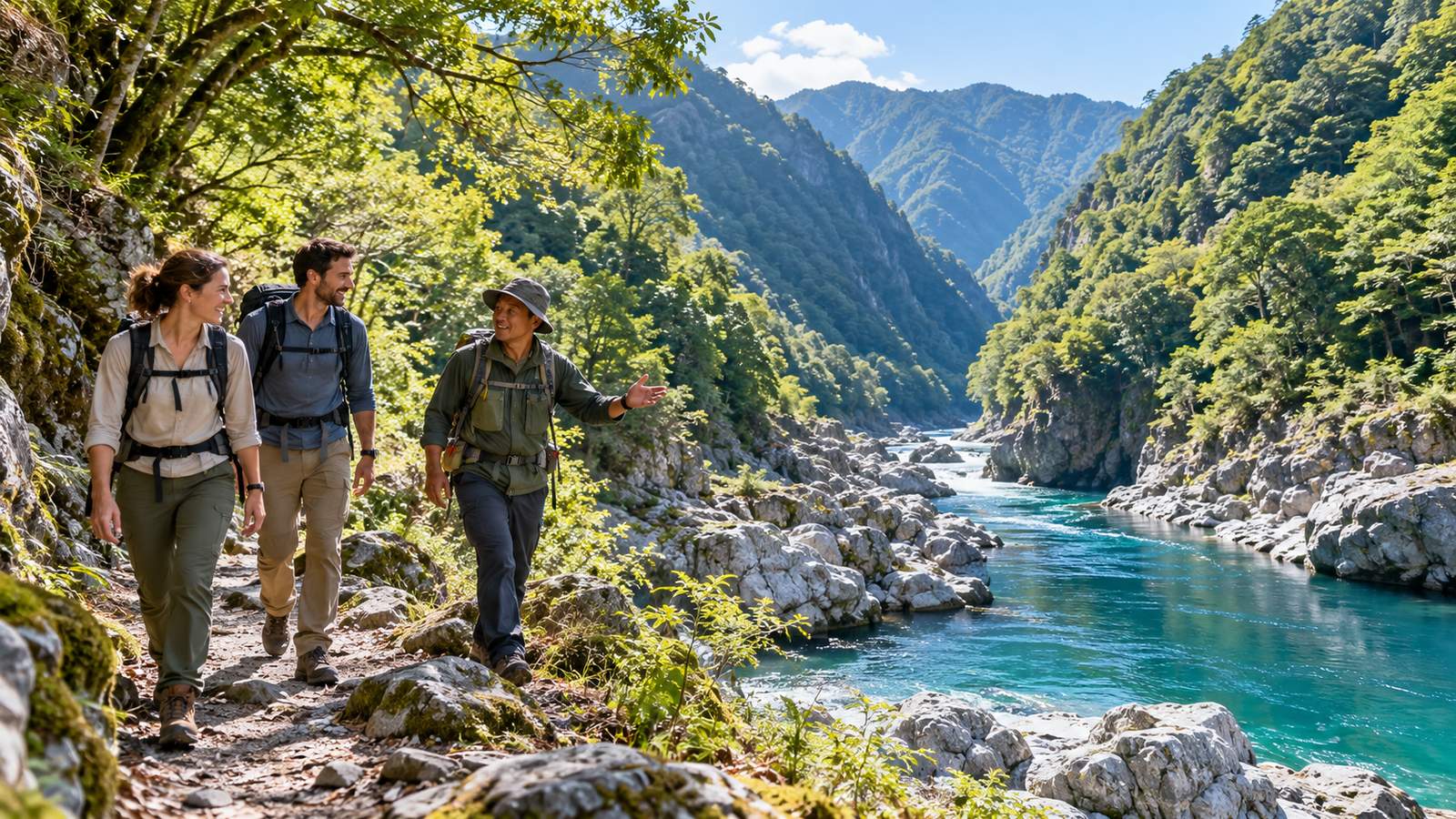
My planning rule: Pay for the right transfer if it turns a fragile sequence of rural connections into a day you can actually enjoy.
Shimanto River for a Slower Extension
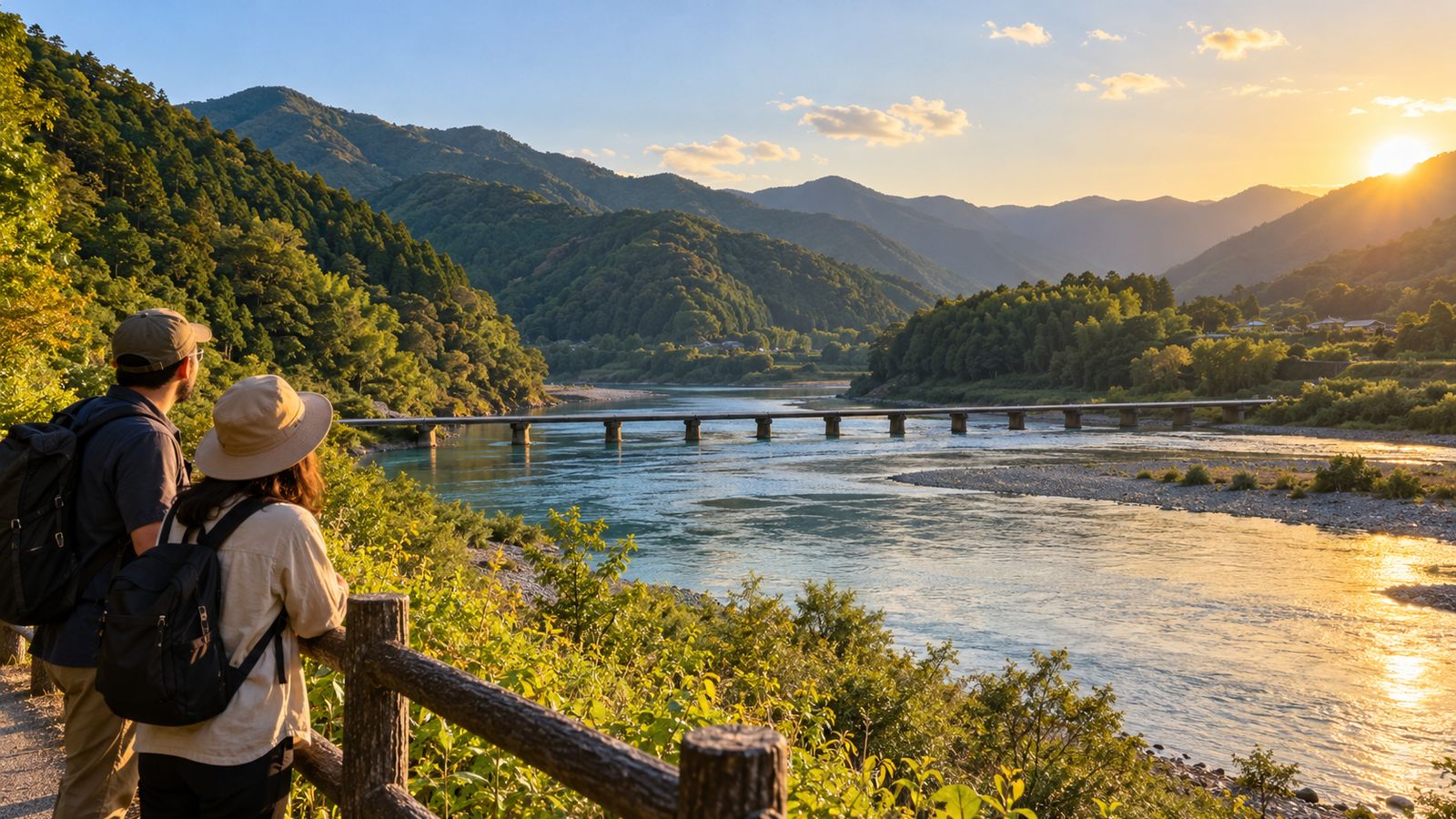
Shimanto makes sense when the river itself is the point of the journey. Its scenery rewards a slower pace, with space for a waterside walk or an activity suited to the season. It is not the stop I would squeeze between a long transfer and an evening flight.
The Kochi prefectural tourism driving guide places the Shimanto and Niyodo rivers in different parts of the prefecture. That is why I would not put both on one ambitious day. If you want both, add time or accept that travel, not sightseeing, will take the larger share of the schedule.
For a first-time visitor with only one day outside the city, Niyodo is often the cleaner choice. Choose Shimanto when you can slow down, especially if your idea of a good trip is a river morning with nothing urgent afterward.
Getting to Kochi Without Losing a Day
From Tokyo, a domestic flight to Kochi Ryoma Airport is one practical approach. Japan's tourism organization also describes a rail route via Okayama, with a change for Kochi. Which feels better depends on where your Japan itinerary begins and ends. A flight is not automatically the best choice if its airport transfers and timing break up two otherwise useful days.
Kochi's official transport guide lays out air, rail, bus, and car options. The prefecture also describes an airport shuttle bus or rental car for reaching Kochi City. For rural outings, compare a prearranged driver with a self-drive plan only after considering your comfort on unfamiliar roads and the amount of time you have.
- Arriving from Tokyo: Look at the full door-to-door day, not just the flight itself.
- Continuing through Shikoku: Place Kochi in a sensible geographic order rather than doubling back for a single sight.
- Adding a river day: Confirm the return transfer before you commit to the morning departure.
- Leaving Japan: Keep a sensible buffer between a regional leg and any international departure.
I would be especially careful with a complex multi-city ticket. A pleasant countryside finale should not depend on multiple tight connections all running perfectly.
When to Go and How Long to Stay
For a city-and-river introduction, I would plan three or four nights in the prefecture. Two nights in Kochi City and another night or two for a rural extension gives the trip some shape. If you have only two nights total, choose one well-planned nature outing rather than trying to cover both major rivers.
Spring and autumn can be attractive for a trip built around walking and food, but do not treat any month as a weather guarantee. The official Kochi climate data shows meaningful rainfall variation through the year. In summer, festival energy may appeal, but heat, rain, and potentially disrupted transport call for more flexibility. Japan's tourism organization notes that most Pacific typhoons form between July and October; that is a reason to monitor forecasts, not a reason to assume a trip will be affected.
If seeing Yosakoi is your priority, confirm the current festival schedule before arranging flights and hotels. If your priority is a quiet river day, I would choose dates around the outdoor experience first and leave a flexible city afternoon as a weather alternative.
What a Kochi Trip Costs
Pricing for a custom Kochi trip cannot be accurately estimated from a reliable published range. Hotel starting rates alone do not establish the cost of the trip you are actually considering, especially when the itinerary may include a Tokyo stop, a private countryside transfer, or additional days elsewhere in Japan. I would rather say that clearly than turn one room rate into a false total.
Your actual cost can vary significantly with the number of travelers, travel dates and season, trip length, the rest of your Japan itinerary, room category and hotel choices, international and domestic airfare, ground transportation, guides and experiences, dining, the level of comfort you prefer, and current availability. Any eventual estimate is not a quote or a guaranteed price. Ask for a plan priced around the route and pacing you actually want.
A worthwhile upgrade here is often transport that fits a specific rural day, not an automatic upgrade to the most elaborate room in every stop. If you love a long hotel afternoon, reverse that priority. The right investment depends on what you will use.
Frequently Asked Questions
Is Kochi in Japan the same place as Kochi in India?
No. This guide covers Kochi City and Kochi Prefecture on Japan's island of Shikoku. Kochi in India is a different destination. Check the country when you search for a flight, map, or hotel.
How long should I spend in Kochi, Japan?
I suggest three or four nights if you want the city plus time around a river. With less time, choose one countryside outing. With more, you can move at a calmer pace and fit Kochi naturally into a longer Japan itinerary.
What is Kochi Prefecture known for?
For travelers, its highlights include Kochi Castle, local food such as seared bonito, Pacific-facing scenery, and the Niyodo and Shimanto river areas. I would choose which of those genuinely interests you rather than trying to check off every landmark.
Do I need to speak Japanese to visit Kochi?
Japanese is the language to expect, and language support may vary outside major visitor areas. A translated address, confirmed transport instructions, and a guide when it adds real value can make rural days much easier. I would not build a tight itinerary that depends on resolving several last-minute transport questions.
What should I check before traveling to Japan?
Entry rules depend on your passport and can change. For U.S. travelers, review the U.S. State Department's Japan entry guidance and the relevant Japanese government guidance before departure. Each traveler is responsible for meeting the current entry requirements.
Plan Kochi as Part of Your Japan Journey
Kochi is a strong choice when you want a Japan trip with a little more breathing room and a clear reason to leave the main city circuit. Explore Effortlessly can help decide which river fits, coordinate the regional legs, and build a trip whose pace makes sense from arrival to departure.
If you are still comparing regions, my guides to places worth visiting across Japan and planning an October journey in Japan can help you weigh the bigger picture. When you are ready to put the pieces together, Start Planning My Japan Trip.
For more thoughtful trip ideas, join the Explore Effortlessly newsletter.
About the Author
Hi, I'm Karrah Kazravan, owner and lead travel advisor at Explore Effortlessly, an award winning Miami agency serving clients nationwide. I design custom journeys for busy travelers who want confident recommendations and thoughtful coordination. I have traveled to more than 67 countries across all seven continents and am a Nexion Circle of Excellence Top 5% advisor, ASTA Verified Travel Advisor, Certified Travel Associate, and CLIA Accredited Cruise Counselor.