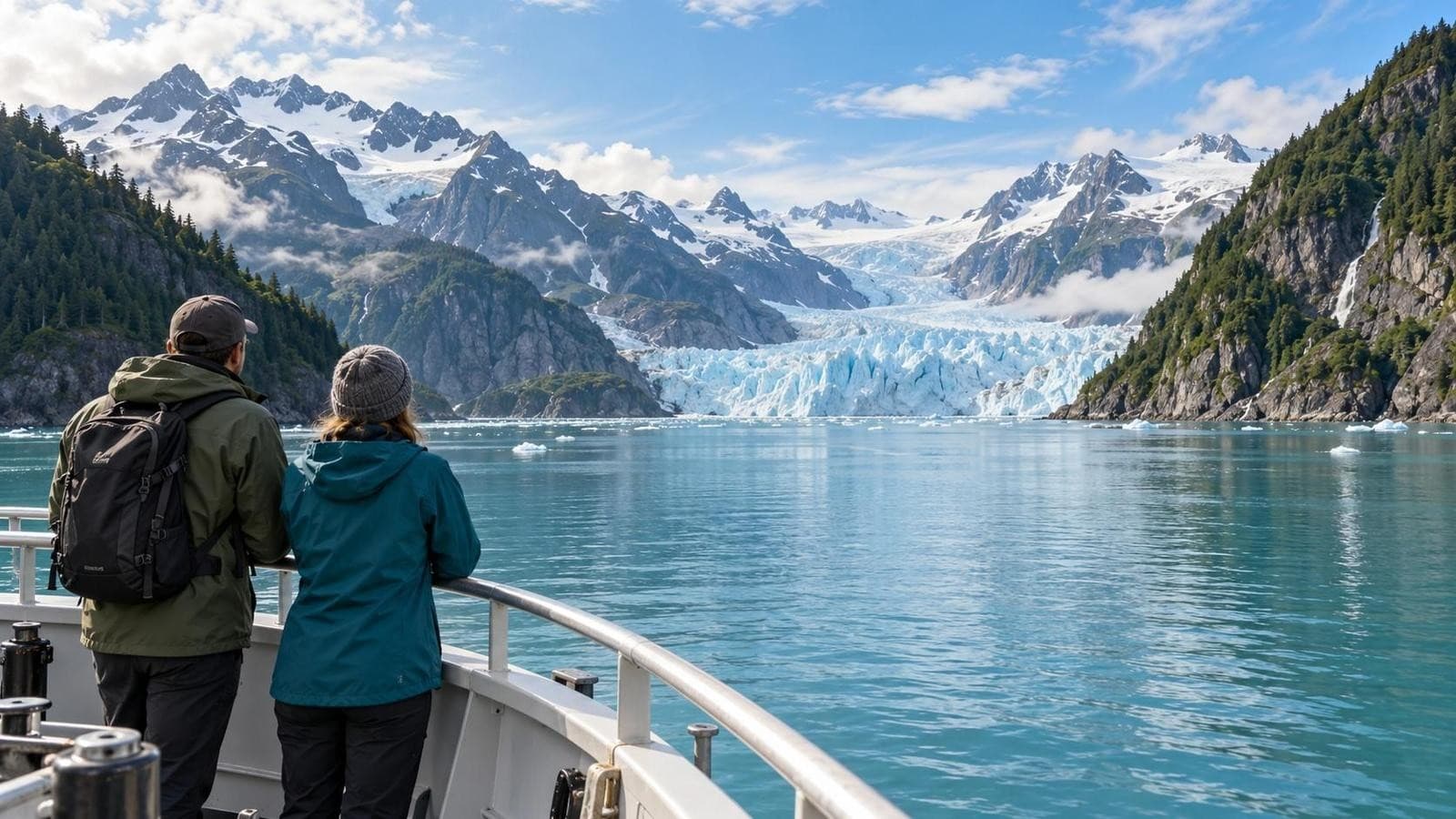
A National Geographic Alaska cruise is best for travelers who want a nature-focused expedition, with small-boat exploration, naturalists and active time ashore. National Geographic-Lindblad Expeditions offers different ships and routes, so the right choice depends on your activity preferences, cabin priorities, family needs and available travel time.
The confusing part is that two sailings can sound almost identical while delivering very different vacations. One may concentrate on Southeast Alaska between Juneau and Sitka. Another starts in Vancouver and travels toward Hubbard Glacier. Before comparing cabin prices, decide what you actually want your days to feel like.
Decide whether this expedition style fits you
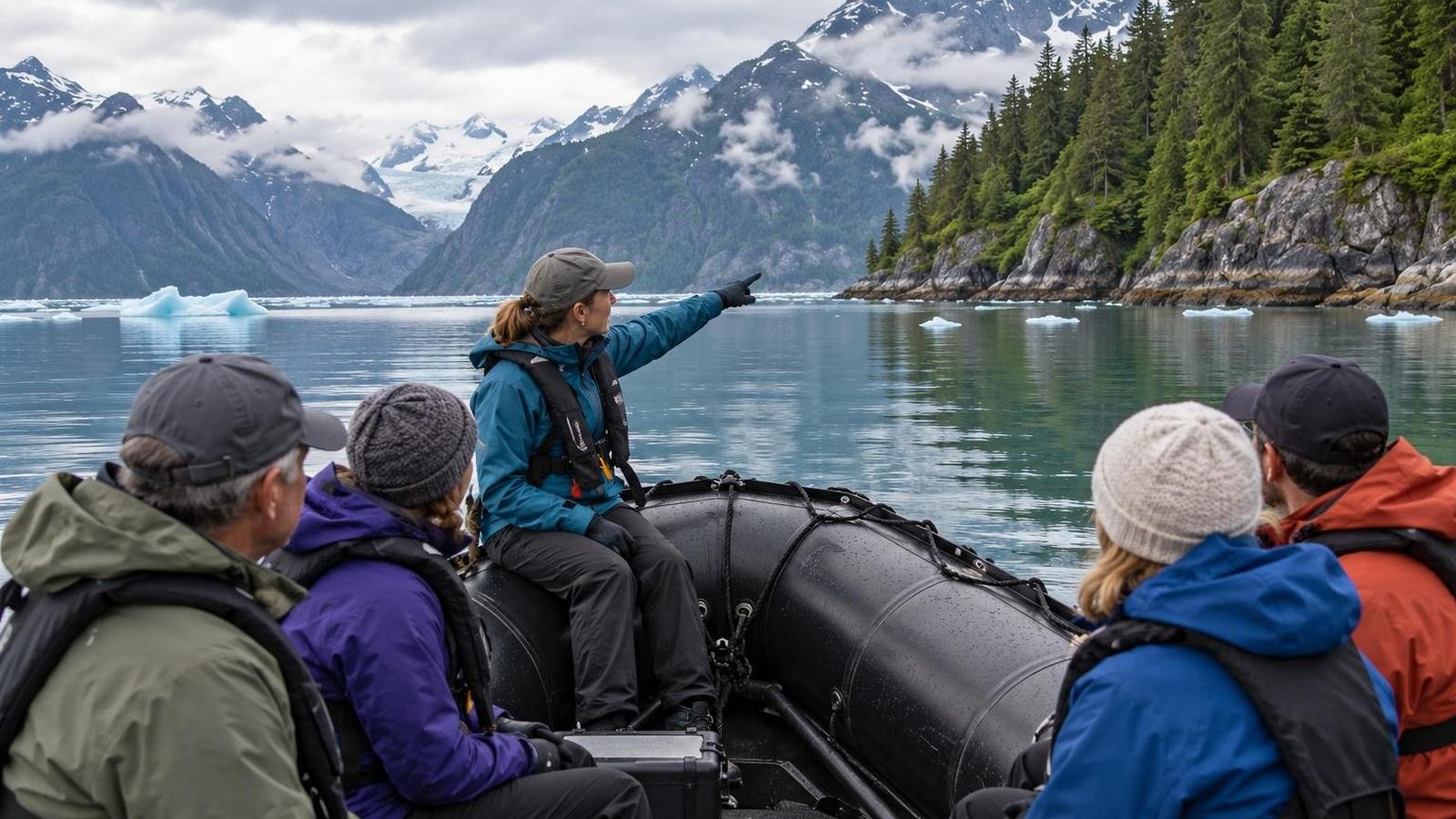
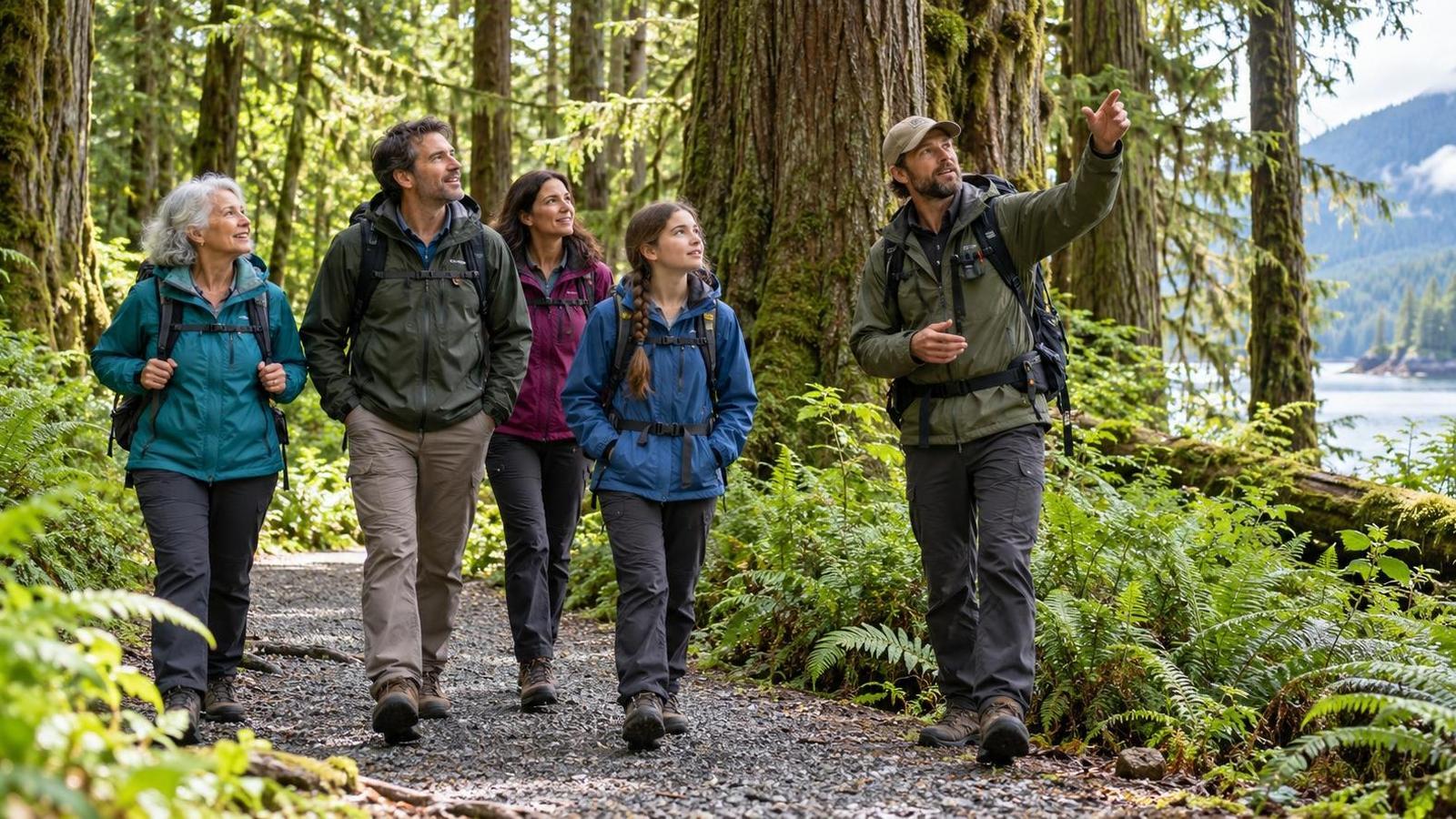
I would put this style of trip on your shortlist if a naturalist explaining a whale sighting sounds more appealing than a packed entertainment schedule. The attraction is participation: exploring by Zodiac, walking through coastal forest and learning why the landscape looks the way it does.
My recommendation is to separate expedition quality from resort-style luxury. You may value knowledgeable guides and access to smaller waterways more than an expansive suite. If your priority is multiple dining venues, evenings built around entertainment or long afternoons in your room, we should compare other cruise styles before choosing an expedition.
Start with our guide to choosing your Alaska cruise route if you are still deciding between an expedition and a more conventional sailing. The important question is not which experience has the longest list of amenities. It is which one you will actually enjoy.
Choose the Alaska route before the departure date
National Geographic-Lindblad's eight-day Alaska's Inside Passage itinerary operates between Juneau and Sitka, in either direction, aboard National Geographic Quest or National Geographic Venture. Its published program includes Southeast Alaska exploration such as Endicott Arm and Petersburg. Glacier Bay details require a careful look: the operator notes that exploration may involve the park or its outer coast, depending on the departure.
A different eight-day program, Alaska's Inside Passage and Hubbard Glacier, is listed from Vancouver to Sitka aboard Greg Mortimer. That itinerary includes British Columbia and a Gulf of Alaska segment toward Hubbard Glacier. These are not interchangeable versions of the same trip, even though both contain the words Inside Passage.
I would choose the Juneau-Sitka route when you want to concentrate your time in Southeast Alaska. Consider the Vancouver departure when the broader coastal journey and Hubbard Glacier are priorities. If Glacier Bay is your deciding factor, we should confirm the exact written itinerary rather than infer access from a photograph.
| Planning priority | Option to examine | Important check |
|---|---|---|
| Concentrated Southeast Alaska exploration | Eight-day Juneau-Sitka Inside Passage program | Departure direction and precise Glacier Bay arrangements |
| British Columbia and Hubbard Glacier | Eight-day Vancouver-Sitka program | Ship, Gulf segment and international travel requirements |
| More time along the coast | A longer Alaska and British Columbia expedition | Total vacation days, flight routing and time ashore |
Match the ship and cabin to your priorities
National Geographic Quest and National Geographic Venture each accommodate 100 guests in 50 cabins. The current Alaska collection also lists the 154-guest Greg Mortimer. Check the vessel attached to your actual departure, especially if you have been reading an older review of National Geographic Sea Bird or Sea Lion.
On Venture, public spaces include an observation deck, lounge, dining room and mudroom for expedition equipment. Those shared spaces matter because you do not need to watch Alaska solely from your cabin. I would assess the room alongside the spaces where you will spend the rest of your day.
A balcony and a suite solve different problems
The official National Geographic Venture ship details show why category names deserve attention. Category 4 has a private balcony. Category 5 suites emphasize interior space, large windows, a convertible sofa and a more spacious bathroom. Do not assume that the highest category automatically supplies the outdoor space you want.
I like a balcony for travelers who genuinely want private outdoor time between activities. I would investigate a larger interior layout for someone who cares more about moving around comfortably or accommodating a third guest where permitted. Confirm bed configuration, occupancy, cabin location and the current deck plan before making the upgrade decision.
Understand what an expedition day feels like
The published Alaska programs describe a mix of Zodiac outings, kayaking, forest walks and wildlife observation, shaped by conditions. Think in terms of opportunities rather than an appointment schedule that nature has agreed to follow. Wildlife sightings and specific landings are not guaranteed.
My planning rule is to decide whether you are comfortable with a flexible day before choosing a flexible itinerary. If you need a particular animal sighting to justify the entire vacation, the expectations need adjusting. If you enjoy learning from what appears, the expedition approach makes much more sense.
Lindblad's general information also distinguishes a certified photo instructor from a National Geographic Photography Expert. Do not assume every departure has a famous photographer or a particular guest speaker. If photography is central to your plans, we should verify the team and equipment support assigned to the sailing.
Choose the month around your priorities
There is no single best month for every traveler. I would begin by comparing June and July for a summer vacation, then weigh May or September if your calendar is more flexible. That is a planning preference, not a promise of better wildlife, calmer seas or clear skies.
Travel Alaska's overview of Alaska's seasonal weather describes May as generally the driest month and notes cooling temperatures in August and September. Regional averages do not predict the conditions on your sailing, and a wetter day need not make an expedition unsuccessful.
For the Inside Passage specifically, the official regional climate guidance puts typical summer daytime highs in the low to mid-60s Fahrenheit and advises being ready for rain. Choose a date you can enjoy in waterproof layers, not a date you need to behave like a beach holiday.
Plan carefully for kids and multiple generations
A National Geographic Alaska cruise can be a strong fit for curious children and teenagers who enjoy animals, outdoor discovery and asking questions. Lindblad currently describes its National Geographic Explorers-in-Training program for young travelers in Alaska. Confirm the arrangements for your specific ship and departure rather than relying on an older program name.
I would not treat a learning-focused family expedition as a substitute for supervised entertainment throughout the day. Adult accompaniment matters, and everyone needs a realistic picture of the available activities. Before we choose a sailing, discuss what happens when one child wants a break or one adult prefers a quieter outing.
For a multigenerational trip, the practical questions are personal: who can manage small-boat boarding, who is comfortable on uneven ground and who needs a particular sleeping arrangement? We should check the operator's activity eligibility requirements and available alternatives for the least mobile traveler, not build the whole trip around the most energetic person.
Pack for time outdoors rather than formal evenings
I would build your packing list around staying comfortable outside and protecting the items you use every day. Begin with the departure-specific equipment instructions. Do not buy bulky gear until you know what is supplied, what fits your activities and what you must bring.
- Weather layers: Pack a waterproof outer layer and adaptable insulation rather than relying on one heavy coat.
- Footwear: Follow the operator's instructions for walks and landings, and test anything new before traveling.
- Small day bag: Keep your camera, spare layer and personal essentials accessible, with suitable protection from rain or spray.
- Viewing equipment: Bring binoculars you enjoy using and enough camera batteries and storage for your own habits.
- Personal health: Carry medications and discuss motion-sickness concerns with a qualified clinician before departure.
I also suggest an easy place to store wet outerwear and a simple system for charging devices. Practical comfort makes a bigger difference than packing a different outfit for every evening. The goal is to be ready when an outing becomes available, without spending the morning sorting your luggage.
Protect the flights and land arrangements
My preference is to arrive in the embarkation city at least a day early when the flight plan allows. That extra night is a buffer, not protection against every disruption. It also gives you room to recover from travel before the expedition begins.
Match your hotels and flights to the route's actual endpoints. A Juneau-Sitka sailing needs a different air plan from a Vancouver-Sitka sailing. Confirm the supplier's arrival and departure windows before committing to flights, and check whether your transfer is included for those exact timings.
Adding Denali or another land component should be a deliberate second part of the vacation, not an afterthought squeezed around flight connections. I would protect time for the experience you care about instead of turning the end of the cruise into a series of rushed transfers. For any cross-border route, travelers are responsible for confirming and meeting the current official entry and document requirements.
Read reviews for fit rather than a verdict
National Geographic Alaska cruise reviews are most useful when you know the ship, route, season and expectations behind the opinion. A 2025 trip report is historical experience, not confirmation of a current itinerary, fare, program or cabin configuration.
If you are reading Reddit discussions or searching for Lindblad Expeditions complaints, I would pull out specific questions rather than adopt the writer's overall verdict. Did the cabin layout suit them? Were they happy with weather-dependent plans? Did they want a more conventional onboard experience? Anonymous comments can identify something to investigate, but they do not establish current supplier policy.
The same discipline helps when comparing expedition companies. Our guide to UnCruise in Alaska offers another starting point for considering the experience you want. Compare the full route and daily approach, not a star score detached from your priorities.
What a National Geographic Alaska Cruise Costs
For an early planning allowance, consider approximately $9,000 to $11,000 per person for the cruise fare on an eight-day sailing, using several currently displayed May and June 2027 starting fares as reference points. This is not a quote or a guaranteed price, and it is not an upper limit for premium cabins or your complete trip.
For context, the published Hubbard Glacier program currently displays starting fares of $9,000 per person for May 7, $9,500 for May 21 and $10,500 for June 4, 2027. The Juneau-Sitka Inside Passage program displays $10,000 per person for May 9 and May 15, and $11,000 for several later May departures. These are date-specific starting fares, not a claim that every cabin or summer departure falls in that range.
Your actual cost can vary significantly with the number of travelers, travel dates and season, trip length, exact route, ship and cabin category, airfare, hotels, transportation and transfers, land extensions, optional experiences, dining and beverage inclusions, preferred level of luxury and current availability. Price the full vacation rather than multiplying a headline fare and assuming you are finished.
Inclusions also differ by vessel. The operator's current expedition inclusions and exclusions list crew gratuities as excluded aboard Quest and Venture but included aboard Greg Mortimer. Airfare, extra hotel nights and private transfers are generally additional unless specified. I would compare a written, departure-specific breakdown before deciding which option represents the better value for you.
Frequently Asked Questions
Is a National Geographic Alaska cruise worth it?
I think it deserves consideration if you value naturalists, small-group exploration and a learning-focused vacation enough to prioritize them over resort-style features. If you mainly want spacious accommodation and onboard entertainment, we should compare a different cruise style before you commit.
Is a balcony worth it on an Alaska expedition?
It can be if private outdoor space is something you will use. It is not essential for seeing scenery from the ship's public viewing areas. On Venture, compare the actual Category 4 balcony layout with the Category 5 suite rather than assuming suite means balcony.
Is the Inside Passage worth including?
I would make it a priority for travelers drawn to coastal forest, fjords and exploration from the water. Confirm what each itinerary means by Inside Passage, because the phrase alone does not tell you the departure city, glacier access or time spent in each area.
Can children join a National Geographic Alaska cruise?
Lindblad welcomes families and describes an Alaska educational program for kids and teens. Suitability still depends on your child's interests, the selected sailing and the activity requirements. Confirm family occupancy and supervision expectations before choosing cabins.
Can I use a 2025 itinerary to plan a future sailing?
Use it for background only. Ships, routes, family programming, inclusions and fares can change. Future travel should be planned against the currently published departure and its written terms, not an archived schedule.
Bring your Alaska plans together
If your priority is a nature-focused Alaska vacation, the next step is to connect the right route with the right cabin, flight plan and pace. If a different goal is driving the trip, such as aurora viewing, review our Alaska northern lights cruise considerations before assuming an expedition sailing answers that need.
At Explore Effortlessly, we plan premium cruises and the arrangements around them. I help you weigh what matters, while our agency coordinates the selected travel components and checks the practical details. Bring your preferred dates, who is traveling and the experiences you care about most.
Start Planning My Alaska Cruise
For more thoughtful travel ideas, join the Explore Effortlessly newsletter.
About the Author
Hi, I'm Karrah Kazravan, owner and lead travel advisor at Explore Effortlessly, an award winning Miami agency serving clients nationwide. I design custom journeys for busy travelers who want confident recommendations and thoughtful coordination. I have traveled to more than 67 countries across all seven continents and am a Nexion Circle of Excellence Top 5% advisor, ASTA Verified Travel Advisor, Certified Travel Associate, and CLIA Accredited Cruise Counselor.