You're probably looking at a map of Washington and Oregon, opening ten tabs, and realizing the same thing my clients do. The Pacific Northwest looks simple until you try to make it comfortable, stylish, and efficient.
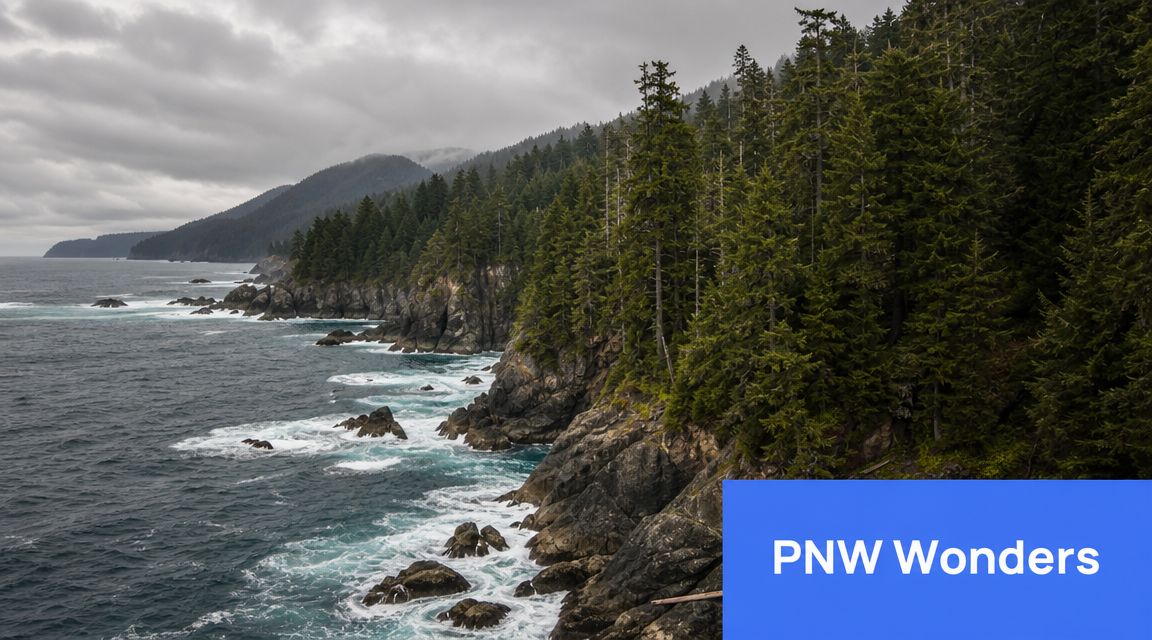
It isn't a one-hotel destination. It's a region of moody coastlines, design-forward cities, old-growth forests, vineyard country, island escapes, and lodge-style mountain stays. Done well, Pacific Northwest travel feels cinematic. Done poorly, it feels like hours in the car, mediocre room choices, and weather dictating the whole trip.
That's why I plan this region with a very clear rule. Luxury in the Pacific Northwest is not about squeezing in every famous stop. It's about building the right sequence, choosing the right style of stay, and knowing when comfort matters more than checking another landmark off a list.
An Effortless Guide to Pacific Northwest Luxury Travel
You land in Seattle expecting an easy, stylish week. Then the extensive planning begins. Which island is worth the transfer, which coastal hotel feels private, and how do you avoid spending half the trip packing, driving, and checking in?
That is the difference between a Pacific Northwest trip that feels polished and one that feels pieced together. This region rewards selectivity. The strongest itineraries are built around comfort, pacing, and access, not mileage.
Pacific Northwest luxury travel works best when you stop treating the region like a casual loop and start treating it like a collection of distinct stays. A city hotel, a vineyard retreat, a lodge on the water, and a quiet coastal finish can work beautifully together. The order matters. So does how you move between them.
What smart Pacific Northwest travel planning should solve
- A route that feels calm: The map looks manageable until ferry schedules, mountain drives, and hotel changes start eating into the trip.
- The right mix of settings: Seattle, wine country, islands, forests, and the coast all offer something different. Trying to do all of them usually weakens the experience.
- Weather strategy: The Pacific Northwest rewards travelers who plan around microclimates, shoulder season timing, and strong backup options.
- Comfort in transit: Private transfers, luggage handling, lounge access, and well-timed departures make a bigger difference here than many travelers expect.
- Experiences with actual access: Private tastings, guided wildlife outings, after-hours museum options, and standout dining reservations rarely come together well at the last minute.
- A trip shaped for the traveler: A honeymoon needs privacy and pace. A family trip needs space, logistics, and flexibility. An anniversary journey should feel intimate from start to finish.
My advice is simple. Do fewer stops and do them better.
The Pacific Northwest can feel cinematic. It can also feel tiring fast. Advisor-led planning solves that by setting the right base in each destination, trimming wasted transit time, and securing the kind of experiences that make the trip feel personal instead of generic.
Advisor perspective: The best Pacific Northwest itineraries are edited hard. You do not need more stops. You need the right ones, booked in the right order, with the right level of service.
The Best Time for Your Pacific Northwest Journey
You land to clear skies in July, then spend half the trip working around crowded hotel lobbies, booked-out dinner rooms, and overused scenic stops. Or you go a few weeks later, keep the same dramatic coastline and city polish, and enjoy a calmer, better-paced trip with stronger availability. For most luxury travelers, the second option wins.
Summer is the default advice. It is not the smartest advice.
Audley recommends May to October for the Pacific Northwest in its Pacific Northwest destination guide, and that broad window is useful. My strongest recommendation is narrower. Book late September through early October if you want the trip to feel more private, more atmospheric, and far less rushed than peak summer.
Summer is easy. It is also crowded.
Summer gives you long daylight hours, broad park access, and simple sightseeing logistics. That matters on a first visit.
It also brings the highest concentration of visitors, as noted earlier in the article. The result is obvious on the ground. Prime suites go first, the best tables disappear early, and popular routes feel busy at exactly the hours affluent travelers want quiet. If your priority is comfort, space, and polished service, midsummer often asks you to pay more for a weaker experience.
Late spring and early fall reward smart planning
Late spring feels fresh and green. Early fall feels edited and refined.
Both work well for travelers who want a polished trip rather than a rigid checklist. In these months, I build around properties that handle variable weather well. That usually means strong spas, excellent restaurants, private touring, museum time, winery appointments, and coastal or island stays where a moody forecast adds character instead of ruining the day. Travelers pairing the region with wine country or a river journey also do especially well in shoulder season. A few nights in the Columbia Gorge can fit beautifully with one of these Columbia River cruise itineraries.
Here is the cleanest way to choose:
| Season | What it gives you | What you need to manage |
|---|---|---|
| Late spring | Lush scenery, lighter crowds, strong value on premium rooms | More variable conditions in mountain and coastal areas |
| Summer | Classic sightseeing weather, longest days, simplest access | Higher rates, more competition, less privacy |
| Late September to early October | Fall color, richer atmosphere, calmer pacing, strong availability in many top properties | A trip that is built with indoor depth and weather-flexible touring |
Rain does not ruin a Pacific Northwest trip. Poor planning does.
That matters even more if you are adding private aviation, charter segments, or custom air connections within the region. Travelers using smaller airports and airfields should review local piloting resources in Oregon early, then match flight plans to the right lodge, wine country stay, or coastal base.
My recommendation
Choose summer if you want the classic first trip and care most about easy weather and maximum access.
Choose late September or early October if you want the Pacific Northwest at its most appealing for luxury travel. Better pacing. Better atmosphere. Better odds of getting the room, table, guide, and quiet you were hoping for.
Designing Your Ideal Pacific Northwest Itinerary
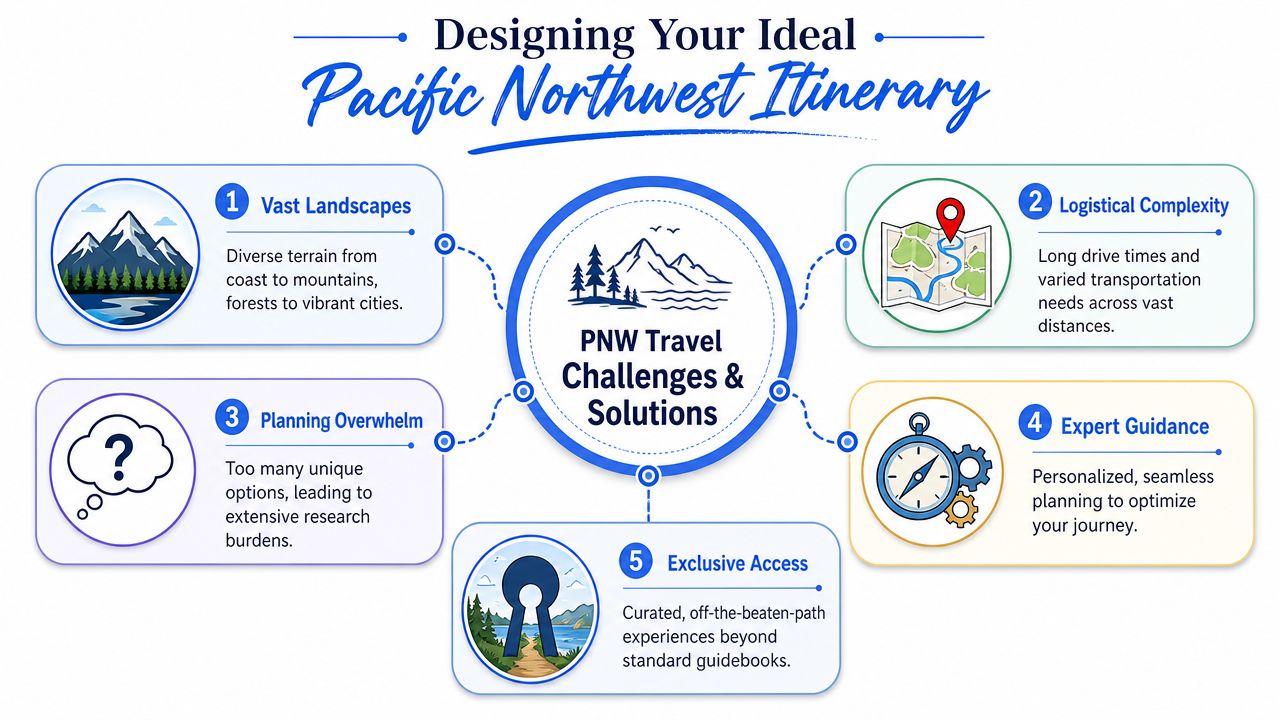
This region is where DIY planning starts to break down. Distances look manageable until you account for ferry timing, park access, scenic detours, hotel changes, and the simple fact that the Pacific Northwest is not a neat little cluster of attractions.
The broader PNWER Pacific Northwest region averages $71.4 billion per year in visitor spending, and historical research cited by PNWER also notes that 34% of Pacific Northwest visitors also visit California, which tells me many travelers already think in multi-stop West Coast terms. You can see that in PNWER's tourism resource overview. For luxury clients, that opens the door to a smarter view of the region. This trip often works better as part of a longer western journey, not a rushed standalone sampler. If you want to extend a western trip onto the water, consider cruising to Hawaii from Vancouver instead of adding another driving leg.
Think in zones, not in cities
I usually divide Pacific Northwest travel into four experience zones.
Urban refinement. Seattle and Portland give you the design hotels, private guides, galleries, waterfront dining, and easy arrival points.
Coastal drama. The Olympic Peninsula and Oregon Coast deliver the cinematic scenery people imagine when they say they want the Pacific Northwest.
Island escape. The San Juan Islands shift the pace. Slower, quieter, more private.
Mountain and wine country contrast. Depending on season and priorities, I may pull in the Cascades, Columbia River areas, or a wine-focused segment.
The itinerary becomes elegant when those zones are connected with restraint.
Why route logic matters more than wish lists
A credible benchmark route covers roughly 1,900 miles in 15 days, and specialist guidance says 2 to 3 weeks is the practical sweet spot for balancing driving, hiking, sightseeing, and downtime, based on this Pacific Northwest road trip guide. That's the clearest argument against trying to “do it all” in one rushed trip.
Long transfer legs are part of the equation too. One benchmark set of drive times shows Seattle to Olympic National Park at 110 miles and 2.5 hours, Olympic National Park to Portland at 162 miles and 3 hours, and Crater Lake to Redwoods National Park at 154 miles and 3 hours, according to Rand Publishing's route planning benchmarks. Mileage alone does not tell the story.
Practical rule: In the Pacific Northwest, I plan around transfer time first and sightseeing second. That's how clients avoid wasting premium travel days in the car.
For travelers using regional private aviation or combining commercial flights with shorter hops, this can be useful context too. I sometimes review piloting resources in Oregon when mapping broader transport options and regional access points.
The itinerary shapes I recommend most often
- City plus coast: Best for couples who want texture without too many unpack-and-repack days.
- City, islands, and lodge: Strong for anniversaries or milestone travel.
- Seattle south to wine country or river cruising: Ideal for travelers who want scenery with less driving intensity.
If the Columbia River appeals to you, pairing a regional land journey with one of these Columbia River cruise options can create a far smoother trip than forcing every scenic area into one driving loop.
Elevated Stays and Seamless Private Transfers
You arrive in Seattle after a long flight, check into a hotel that looked polished online, and realize the room faces a parking structure, the lobby feels chaotic, and tomorrow's transfer requires juggling luggage, ferry timing, and a rental car pickup. That is exactly the kind of friction a well-planned Pacific Northwest trip should avoid.
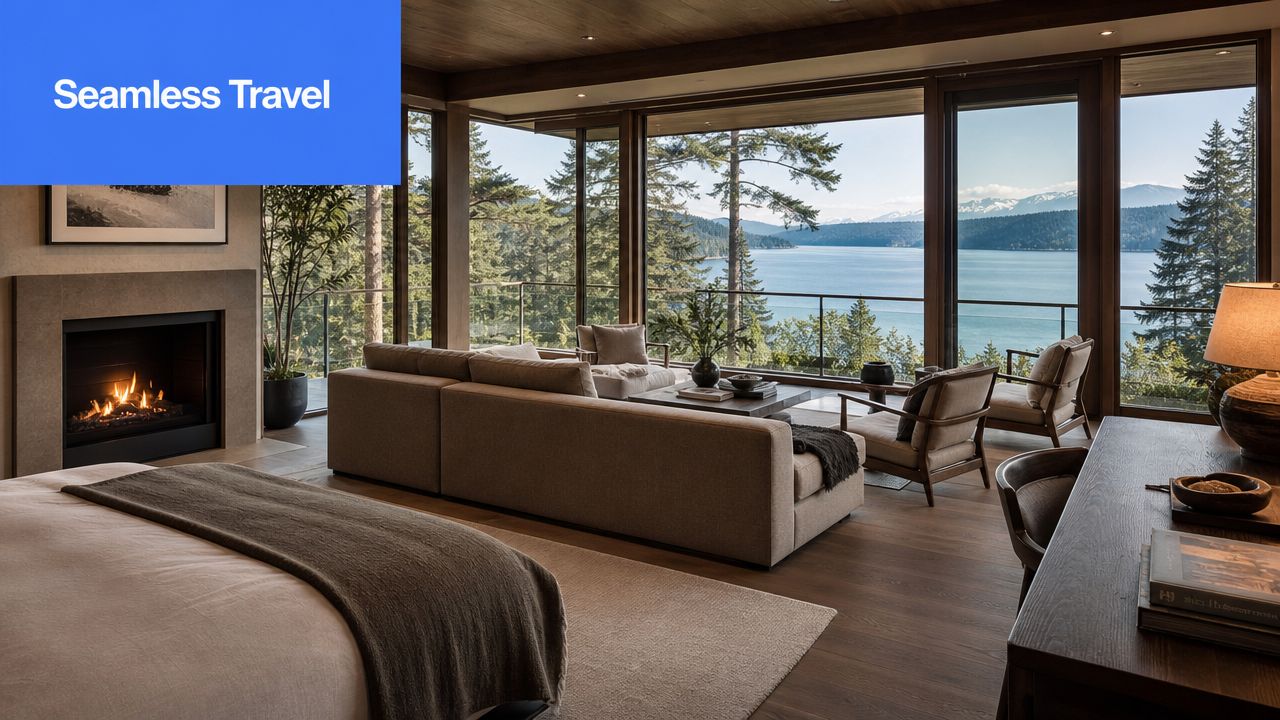
A strong luxury itinerary solves for comfort before it solves for volume. In this region, the best stays are not always the flashiest ones. They are the properties with the right setting, the right room category, and service that fits the pace of the trip.
What I prioritize in Pacific Northwest accommodations
I book hotels and lodges based on function, not marketing copy.
- In cities: Choose a polished hotel with strong service, quiet rooms, and a location that makes dining, waterfront walks, and private touring easy.
- On the coast: Prioritize privacy, strong views, and a property where stormy weather feels atmospheric rather than disappointing.
- In wine country or the mountains: Book a stay with a clear sense of place. Generic luxury misses the point here.
Room placement matters more than travelers expect. So does the feel of the property at night, the reliability of the staff, and whether the hotel supports the kind of trip you are on. Preferred partner benefits can improve the stay with better room assignment, breakfast, credits, and added recognition, but the bigger advantage is avoiding the polished options that underdeliver in person.
This becomes even more important on park-focused itineraries. If you are pairing lodges, scenic transfers, and higher-touch touring, this guide to planning a luxury national park trip lays out the standards I use.
When to drive yourself and when to hand it off
The Pacific Northwest rewards the right kind of independence. It also punishes the wrong kind.
A high-end self-drive works well on scenic routes where the pleasure comes from stopping for viewpoints, lingering over lunch, and setting your own pace. A private driver or driver-guide is the better call for wine days, ferry-linked logistics, airport-to-lodge transfers, and national park touring where local interpretation improves the experience.
Use this filter:
| Travel day type | Better fit |
|---|---|
| Scenic coast or island-hopping by car | High-end self-drive |
| Wine tasting day | Private driver |
| Multi-stop city transfer | Private transfer |
| National park day with interpretation | Driver-guide |
The handoff between hotel choice and transport plan matters. A spectacular lodge loses value if arrival feels cumbersome. Explore Effortlessly handles the planning side of these combinations, from hotel selection to transfer strategy, while trusted in-destination partners and suppliers provide on-the-ground support during travel.
Curated Experiences Beyond the Guidebooks
The Pacific Northwest doesn't need more generic “top things to do” lists. It needs better curation.
Luxury clients usually don't ask me for more stops. They ask for access, ease, and moments that don't feel mass-produced. That's where the region gets interesting.
What elevated Pacific Northwest travel can look like
A strong itinerary moves past the obvious public version of a destination.
One couple might spend a morning on a privately chartered yacht around the San Juan Islands, then come ashore for a chef-led lunch and a late-afternoon spa treatment at their lodge.
Another itinerary might center on a helicopter sightseeing experience over dramatic peaks, followed by a fireside dinner and a slow next day at a design-forward property rather than another aggressive sightseeing schedule.
Families often do best with private naturalist-led outings. The difference is huge. Children stay engaged, adults stop worrying about logistics, and the day has shape.
My favorite upgrade categories in this region
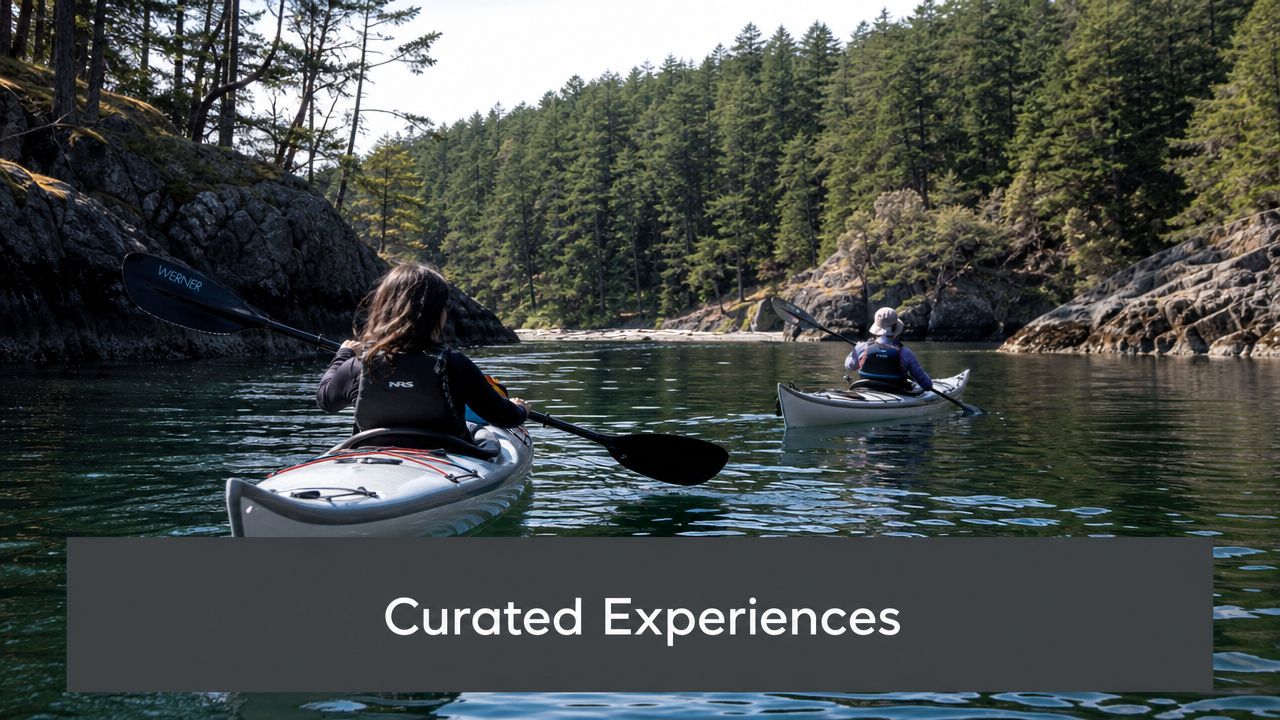
- Private wildlife and nature guiding: Better pacing, better storytelling, fewer group-tour compromises.
- Behind-the-scenes wine access: The right tasting feels personal and paced. Not transactional.
- Water-based exploration: Chartering the right vessel changes the entire tone of an island trip.
- Scenic aviation: Worth considering when time is limited or the occasion calls for it.
If your trip leans into parks and wilderness, my guide to planning a luxury national park trip is a useful next step because the same comfort-first planning principles apply here.
Some of the most successful Pacific Northwest trips are built around fewer activities, upgraded access, and better pacing. That's the opposite of how most people plan on their own.
Sample Luxury Itineraries Crafted for You
The right Pacific Northwest journey depends on who's traveling and how you want it to feel. I don't build rigid, hyper-scheduled vacations. I build frameworks that breathe.
The romantic coast and islands escape
This is ideal for couples who want a softer pace.
Arrive in Seattle for a stylish city stay, then shift to the San Juan Islands for quiet waterfront time, private boating, and long dinners. Finish at a coastal lodge where the room itself is part of the experience. This itinerary works especially well in early fall when mood matters more than high-season buzz.
The family version that still feels luxurious
Families need balance. Too much moving around and everyone gets cranky.
I'd build this around a city base with easy private touring, then move into one or two nature-driven stays with gentle hiking, beach time, and flexible guided experiences. You still get scenery and adventure, but with room service, comfortable suites, and enough breathing room to keep the trip enjoyable for adults too.
The milestone journey with a cruise element
For travelers celebrating a major birthday, anniversary, or desiring a more layered trip, I often recommend combining a land itinerary with a premium cruise component.
You might start with Seattle and the San Juan Islands, then continue with a river-focused journey for a more relaxed scenic finish. If that style appeals, this overview of luxury cruise lines worth considering helps clarify what level of onboard experience matches a high-touch Pacific Northwest trip.
My honest planning rule
If you have limited time, focus. Don't force both states, multiple national park areas, islands, wine country, and city time into one compressed trip. The Pacific Northwest punishes overambition.
The most luxurious itinerary is usually the one that leaves something for next time.
Plan Your Effortless Pacific Northwest Journey
You land in Seattle to rain, ferry timing changes, and a hotel that looked better online. That is how a Pacific Northwest trip starts to feel expensive without feeling luxurious.
The fix is strong planning before you leave home. In this region, comfort comes from smart routing, the right pace, and hotels that fit the trip instead of fighting it. An advisor handles those decisions early, so your time goes to the experience, not to constant course correction.
I work with clients nationwide through virtual consultations. We start with your priorities, travel dates, and preferred style of service. Then I shape the route, select the right hotels and transfer plan, manage bookings, and organize the details so the journey feels polished from arrival to departure.
My credentials include Circle of Excellence Advisor, Top 5 percent at Nexion and CLIA Accredited Cruise Counselor.
Author bio
Hi, I'm Karrah, owner, founder, and lead travel advisor at Explore Effortlessly, a luxury award winning travel agency based in Miami.
I design bespoke, high-touch itineraries for travelers who want excellent service, efficient logistics, and access to experiences they would not piece together on their own. That approach matters even more in the Pacific Northwest, where weather, distance, and seasonal availability can quickly turn a beautiful plan into an inconvenient one.
From luxury cruises and private villas to honeymoons, safaris, and once in a lifetime journeys, my role is to make planning easier and the trip itself better.
If you want expert help designing a Pacific Northwest journey that feels refined from start to finish, get in touch directly.
Join the newsletter for more destination insight and planning inspiration through Karrah's newsletter signup.
Frequently Asked Questions About PNW Travel
What should I pack for a luxury Pacific Northwest trip?
Pack for layering, not for one fixed forecast. I usually recommend refined casual pieces, a lightweight waterproof layer, comfortable walking shoes, and one polished evening look for city dinners or resort dining.
How much driving is too much in one day?
For most luxury travelers, the issue isn't the number on the map. It's how the driving affects the mood of the trip. If a transfer day crowds out meals, scenic stops, or downtime, it's too much.
Is it better to focus on one state or both Washington and Oregon?
That depends on your trip length and tolerance for movement. If you want a calmer trip with deeper experiences, one state often wins. If you have more time and want variety, both can work beautifully with the right route.
Can the Pacific Northwest work for a honeymoon or anniversary trip?
Absolutely. It's a strong fit for couples who want scenery, privacy, and a less obvious luxury destination. The key is choosing the right sequence of hotels and private experiences so the trip feels romantic rather than overly active.
If you want a Pacific Northwest itinerary that's customized to your style, timing, and comfort level, Explore Effortlessly can help you turn a complicated regional trip into one smooth journey.