You have seven days, a long list of ambitions, and a flight schedule that leaves no room for a missed connection. Peru rewards travelers who respect its geography, but it punishes itineraries built like a checklist. The polished version of this trip isn't the one with the most ruins or day trips. It's the one that gets you to Machu Picchu rested, acclimatized, and protected against the disruptions that can unravel a tightly packed week.
For luxury travelers, the right Peru itinerary 7 days begins with sleep altitude, fixed permits, and private logistics. Lima, the Sacred Valley, Machu Picchu, and Cusco can fit beautifully into one week, but only when the route is sequenced around how your body and the transport network work.
Why a Luxury Peru Itinerary 7 Days Needs Altitude First Planning
Arrive in Lima and resist the urge to chase every highlight. A luxury Peru itinerary 7 days should protect your energy before it fills the schedule. Lima is near sea level, Machu Picchu sits around 2,430 meters, and Cusco reaches approximately 3,399 to 3,400 meters above sea level. Cusco, Lima, and Machu Picchu altitude guidance shows why the order of your nights matters more than adding another ruin or museum.
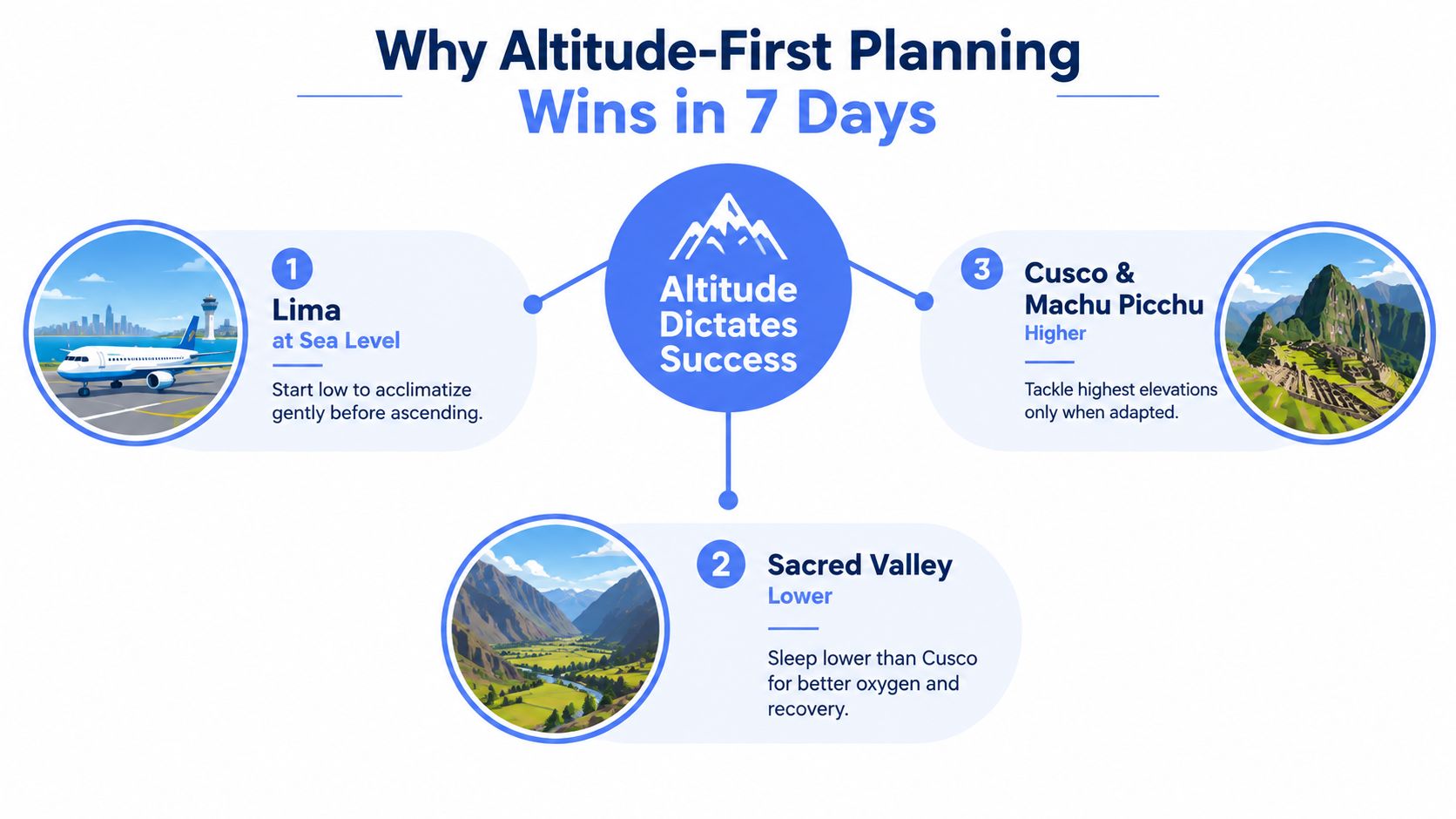
Use this sequence: Lima first, then the lower Sacred Valley, followed by Machu Picchu and Cusco. Sleeping in the valley gives your body a gentler Andean introduction before a night at Cusco's full elevation. Protect the first 36 to 48 hours with low exertion, hydration, and recovery. Do not combine arrival, steep streets, ruins, and a train transfer before you have adjusted.
Design around sleep altitude
The CDC identifies Cusco at 3,339 meters and Lake Titicaca at 3,812 meters as altitude-illness risk zones above 2,500 meters. Its guidance favors gradual ascent and recommends discussing acetazolamide prophylaxis with a clinician when appropriate. The route should therefore treat acclimatization as an operating requirement, not an optional wellness detail. Machu Picchu visitor recovery reporting adds useful context for planning around a high-demand destination, but it does not replace medical guidance.
Practical rule: Keep your first Andean day almost under-scheduled. Arrange a private transfer, take an easy lunch, and give the hotel time to do its work.
That restraint protects the rest of the week. A headache or bout of breathlessness can slow the next morning, threaten a train connection, cancel a private tour, or require an emergency descent. Premium planning also means reserving contingency around rail disruptions, with flexible transfer support and a well-chosen overnight base. Leave room for how the traveler responds to altitude.
Why the lower valley changes the whole week
Cusco deserves time, but it should rarely be your first Andean sleep on a short itinerary. Start in Lima, continue by private vehicle to the Sacred Valley, and use its quieter pace to acclimatize before tackling Cusco's cobblestones and higher sleeping altitude.
Peru welcomed about 3.26 million international visitors in 2024, according to the background data cited in the altitude guidance above. Demand, permits, trains, and local operating conditions all shape a compact week. A lower-valley first night gives your itinerary more resilience, while permit-first planning protects the experience that anchors the entire route, Machu Picchu.
Lock In Machu Picchu Permits Trains and Timing Before Anything Else
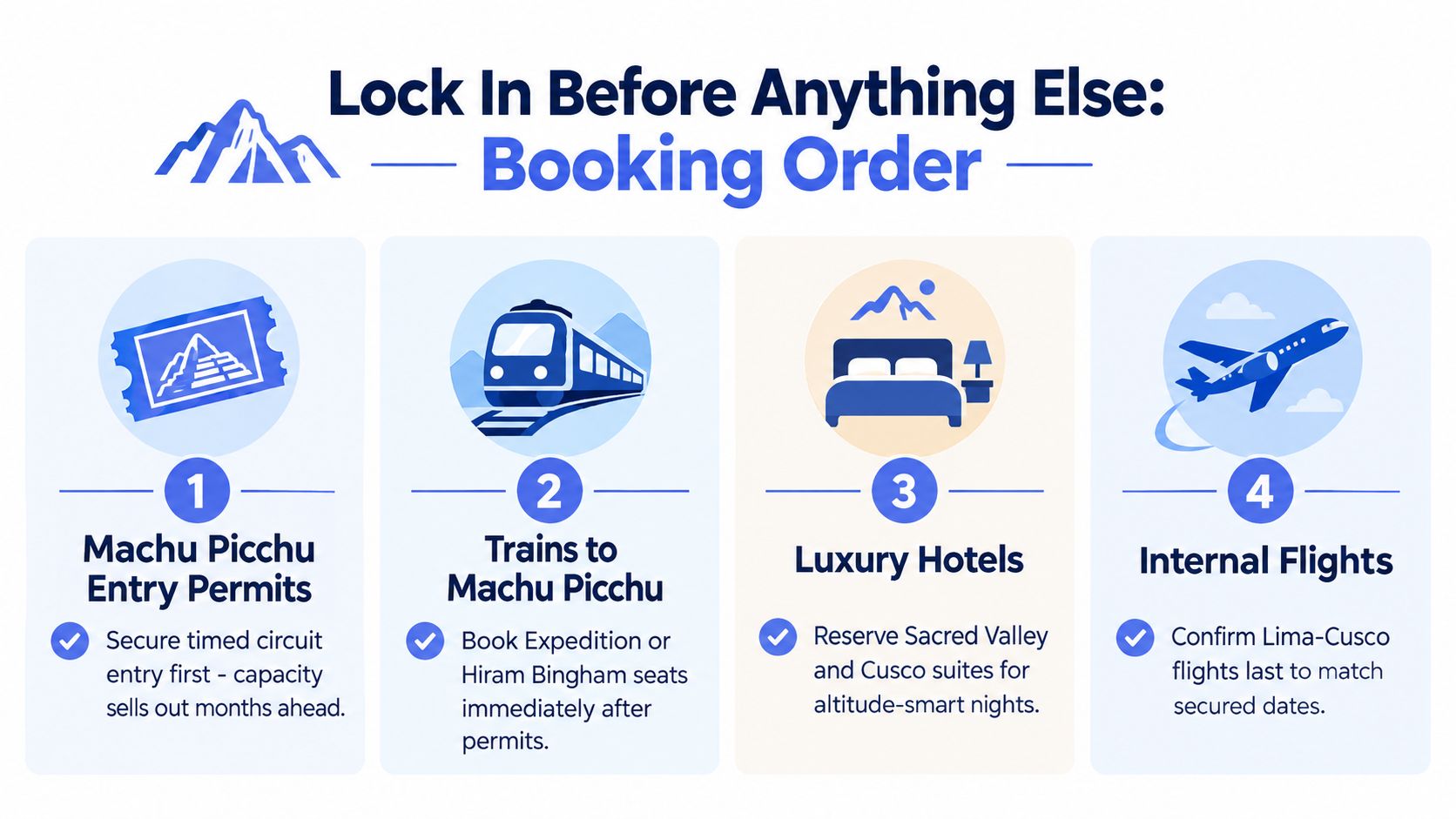
A seven-day Peru route should begin with Machu Picchu, not with hotel browsing. Secure the Machu Picchu entry slot first, reserve the Ollantaytambo to Aguas Calientes train second, then build hotels, flights, and excursions around those fixed commitments. This order protects the trip's anchor and lets the altitude sequence work properly.
Machu Picchu receives roughly 1.5 million visitors each year. Visitor numbers returned to pre-pandemic levels in 2024 after a 58% increase from 2023, while officials maintain a regular daily cap of 4,500 visitors and a high-demand cap of 5,600 on selected 2026 dates. Machu Picchu visitor figures and access controls makes the planning consequence clear: waiting to see what remains available can force compromises across the entire week.
The booking order that protects the route
Machu Picchu entry. Select the circuit, date, and time before choosing anything else. Official guidance requires advance booking, and tickets are not sold at the site entrance on arrival day. The entry ticket and Inca Trail permit are separate requirements, as explained in Machu Picchu permit guidance.
Train seats. Match the rail departure to the entry time, allowing for the journey from Ollantaytambo to Aguas Calientes. A benchmark train segment takes about 1.5 hours, while a domestic Lima to Cusco flight takes about 1 hour 20 minutes, according to 2026 Machu Picchu capacity and transport planning information.
Hotels and transfers. With the rail schedule confirmed, reserve a Sacred Valley base and a Cusco stay that support the altitude sequence. Schedule private drivers around the train and include assistance for luggage, station access, and any late operational change.
Flights and optional extras. Align Lima and domestic flights with the core reservations. Rainbow Mountain and Lake Titicaca belong only in the remaining space. Both add altitude, weather exposure, and schedule pressure to a short week.
When the Inca Trail is the priority
The Classic 4-day Inca Trail has 500 daily spaces total, including guides and support staff, so the number of traveler places is lower than the headline capacity suggests. The 2-day route has 250 daily spaces. Inca Trail permit availability supports a firm recommendation: secure the permit before arranging the rest of the route.
Train travelers should also protect the schedule with a buffer before departure whenever the itinerary allows. Protests, blockades, and track obstructions can interrupt rail service. In September 2025, more than 900 tourists were stranded near Machu Picchu after rocks blocked tracks and PeruRail halted service. Reporting on the Machu Picchu rail disruption shows why premium routing includes fallback time, flexible transfers, and an overnight base that can absorb disruption.
For a route centered on the citadel, review luxury Machu Picchu tours before committing to secondary excursions.
Your Day by Day Peru Itinerary 7 Days From Lima to Machu Picchu and Back
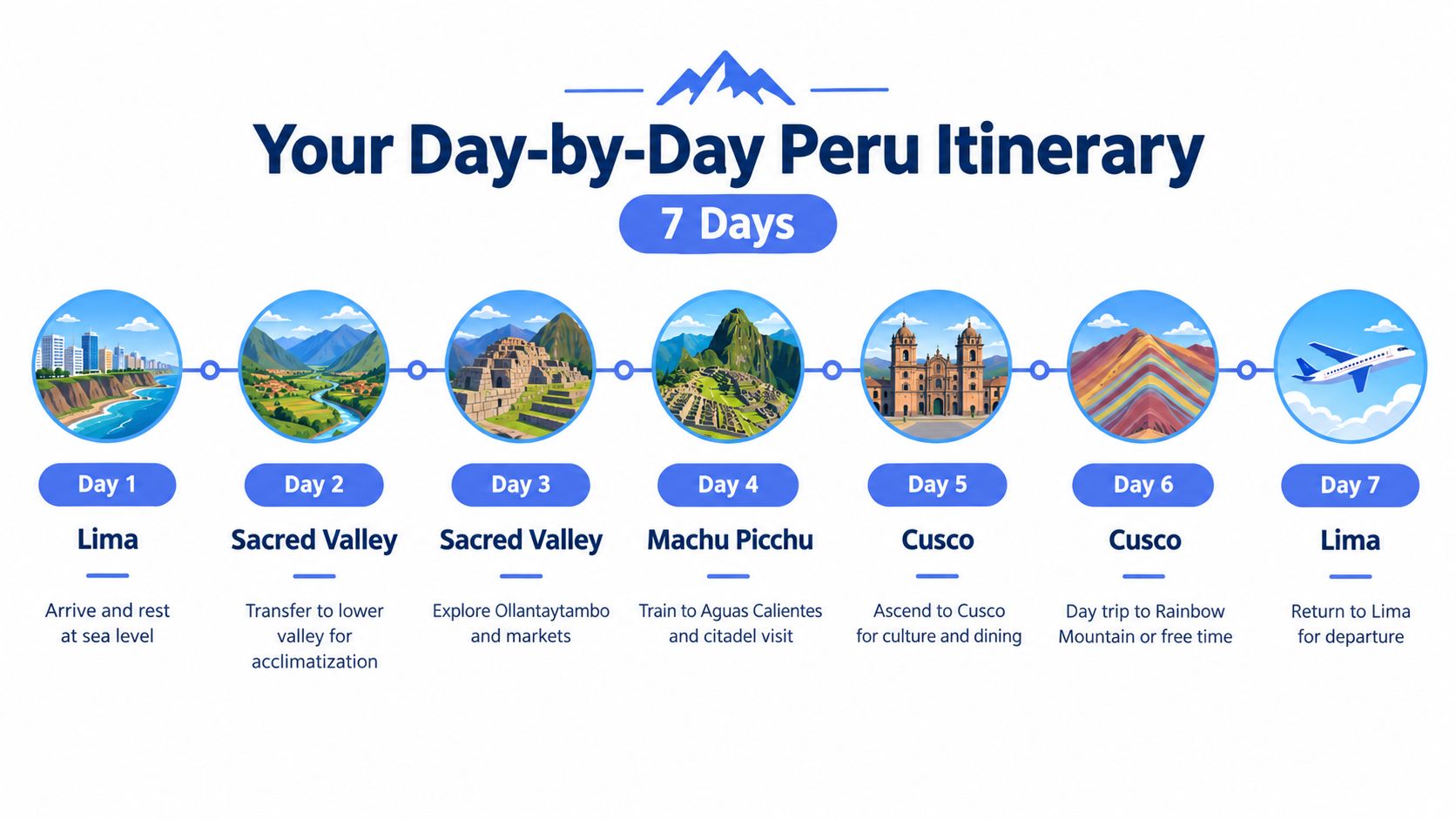
Arrive in Lima with the Andean sequence already protecting your week. The strongest seven-day route is Lima, Sacred Valley, Machu Picchu, Cusco, buffer, departure. It places the lower sleeping altitude first, reserves the citadel before the trip begins, and keeps one day available for rail, weather, or flight disruption.
Day 1, Lima arrival and a quiet start
Arrive in Lima and choose your overnight base according to the next morning's flight. Stay near the airport route when an early departure matters. If your arrival time allows a proper evening, Miraflores or Barranco offers a more refined setting.
Keep the first night restrained. Hydration, a calm dinner, and a full night's sleep will serve the Andean days better than a culinary marathon. With energy to spare, book one polished experience, such as a private introduction to Lima's colonial history or a curated meal. Crossing the city for several stops adds traffic without adding much value.
Day 2, Private transfer into the Sacred Valley
Fly from Lima to Cusco, then leave the city by private vehicle for the lower Sacred Valley. This sleep strategy gives your body a gentler first Andean night and avoids placing Cusco's higher elevation at the start of the route.
Use the afternoon for a scenic lunch, hotel spa time, and a short level walk. A driver-guide lets you pause, alter the route if altitude symptoms appear, and keep every transfer aligned with your reservations. For practical Spanish before departure, a language apps for travel review can help you select a useful communication tool.
Day 3, Ollantaytambo with breathing room
Explore Ollantaytambo and its archaeological complex with a private guide during the morning. Set a measured pace rather than climbing every terrace. The stonework and valley views deserve attention, while your energy remains a resource to protect for Machu Picchu.
Keep the afternoon open by design. Choose a slow lunch, time at the property, or a gentle artisan visit. This recovery window gives the itinerary more resilience than a sequence of tightly packed stops. Confirm passports, train details, reserved entry, and the next morning's departure with your trip team before dinner.
Day 4, Machu Picchu and Aguas Calientes
Take the train from Ollantaytambo to Aguas Calientes, then continue to the citadel for your reserved circuit. The journey takes about 1.5 hours, as noted in the access planning information reviewed earlier. Select a departure that leaves enough time for the station, boarding, and the onward connection without a rushed start.
After the visit, return to Aguas Calientes and board the train back when the schedule supports a reasonable evening. If that combination would create an exhausting day, stay near the rail connection instead. The decision should follow your entry time, train availability, and desired recovery before Cusco.
A premium plan also keeps a practical fallback available. If rail service changes, your local team should be ready with verified updates, alternative transfers where possible, and a clear decision about preserving the visit or simplifying the return.
Day 5, Cusco's historic heart
Move into Cusco after Machu Picchu and concentrate your sightseeing. A private guide can shape a walk through the historic center, the Plaza de Armas, and selected Inca and colonial landmarks without forcing you up every street in one afternoon.
Cusco rewards texture over volume. Leave time for a beautiful hotel breakfast, a measured museum visit, and an unhurried dinner. The evening should restore you after the citadel, not test how much activity you can tolerate.
Day 6, buffer day or carefully chosen excursion
Protect this day as the trip's pressure release. Use it for a delayed rail journey, weather change, altitude adjustment, or a slower start after Machu Picchu. If the week has run smoothly and you feel strong, choose one excursion after reviewing its timing and physical demands.
Rainbow Mountain requires an early start and can be punishing at elevation, so it is not an automatic luxury upgrade. For many travelers, free time in Cusco is the better choice. A spa appointment, private textile experience, or slower cultural tour often creates a more satisfying final Andean day.
Day 7, return for departure
Fly from Cusco to Lima and continue home, with the connection and luggage plan coordinated in advance. If your international departure requires a separate airport movement, build the routing around a realistic connection rather than a best-case schedule.
Your itinerary manager should monitor service changes before they affect you. The response should be specific: confirm local conditions, secure available transfers, and decide promptly whether to preserve the original experience or simplify the final movement.
Where to Stay and How to Move in Luxury Without Wasted Time
The hotel decision isn't just about room design. In Peru, the right property protects your sleep altitude, shortens transfer friction, and gives you somewhere restorative to be when you wisely choose not to add another excursion.
The Sacred Valley is my preferred first Andean base because it supports the altitude sequence and offers a quieter setting than immediate Cusco. Cusco then becomes the cultural finale, with a boutique property in or near the historic heart for access to guided walks, dining, and early departures.
| Option | Best For | Altitude and Time Advantage |
|---|---|---|
| Sacred Valley boutique retreat | Couples, honeymooners, and travelers who value wellness and privacy | Lower sleeping altitude before Cusco, with an easy base for Ollantaytambo |
| Ollantaytambo stay | Early train departures and travelers prioritizing rail convenience | Reduces the morning transfer to the station and keeps the rail day simple |
| Historic Cusco boutique hotel | Culture-focused travelers and clients who want walkable access | Places the city's architecture and dining close by, but requires more altitude awareness |
| Private vehicle with driver-guide | Families, couples, and travelers with fixed reservations | Protects door-to-door timing and allows the route to adapt |
| Premium train service | Honeymooners and clients who value scenery and a polished journey | Turns the rail connection into part of the experience instead of a logistical chore |
Train selection should follow the Machu Picchu entry time. A scenic premium carriage can be worthwhile, but it doesn't compensate for a badly matched departure or an exhausting return. The best train is the one that gives you a comfortable day and preserves the rest of the itinerary.
Hotels should also be chosen for practical luxury. Look for strong sleep quality, thoughtful breakfast timing, oxygen or altitude-aware guest support where available, private transfers, and a spa or quiet lounge. These details matter more than a long amenity list when your schedule includes elevation and early rail logistics.
If you're comparing advisor arrangements and hotel value, this guide to getting better hotel rates explains why the lowest public rate isn't always the most useful measure. Preferred partner perks, VIP amenities, and flexibility can matter more than a superficial price comparison.
Explore Effortlessly coordinates flights, hotels, private drivers, guides, and local partners before departure. Trusted in-destination suppliers provide on-the-ground support, while the advisor keeps the larger sequence visible.
Packing Health and Acclimatization Tips for a Smooth Andean Week
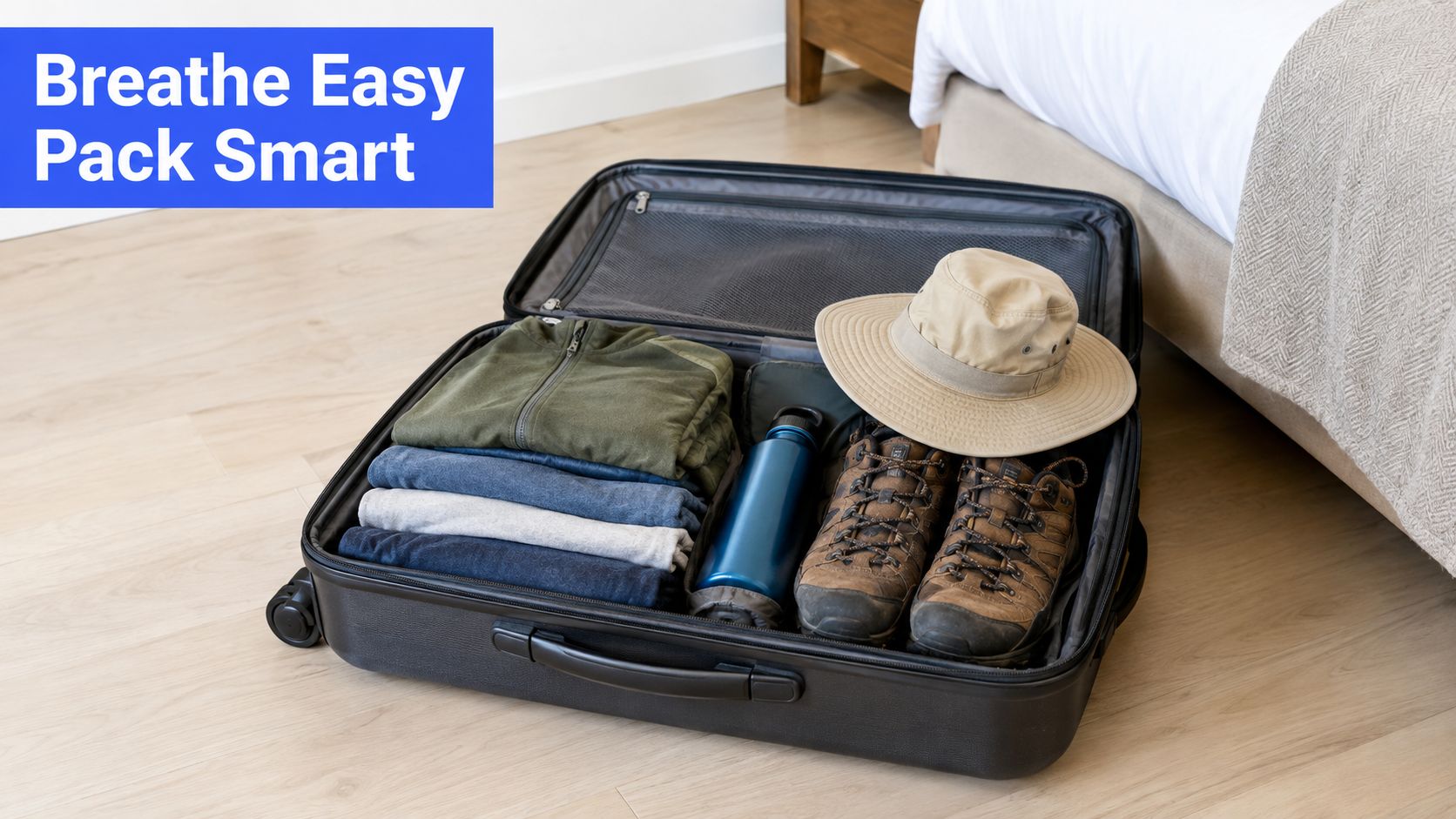
Your packing list should reflect Peru's changing elevations rather than a single climate. Bring light layers, a warm mid-layer, a rain shell, comfortable walking shoes with reliable grip, sun protection, and a hat. Andean sunlight can feel strong even when the air is cool, so sunscreen and sunglasses belong in your day bag.
Protect the first two days
Keep water accessible, eat lightly if your appetite changes, and walk at a pace that feels almost too easy. Don't schedule a demanding hike, a long uphill city tour, and a late dinner immediately after arriving in the Andes.
The CDC recommends gradual ascent and identifies acetazolamide prophylaxis as a consideration for travelers at risk. Discuss medication, existing conditions, and your personal altitude history with a qualified clinician before traveling. If you're researching destination health requirements, this yellow fever vaccine Leicester guide can be a starting point for general travel-health questions, but it shouldn't replace individualized medical advice.
A practical day bag
- Hydration: Carry water and keep sipping instead of waiting until you're thirsty.
- Layers: Pack pieces that can come off during sunny walks and return for cool evenings.
- Sun protection: Use sunscreen, sunglasses, and a brimmed hat.
- Personal medication: Keep prescriptions, clinician-recommended altitude medication, and essentials with you rather than in checked luggage.
- Comfort items: Add blister care, lip balm, and a small snack for transfer days.
Altitude symptoms deserve a calm response. Tell your guide and travel team early, reduce exertion, and seek medical advice if symptoms are concerning or worsening. A luxury service level means making that adjustment without embarrassment or pressure to “push through.”
Conditions can change, and situational awareness matters everywhere, including Peru and at home. I recommend checking official government travel advisories and local guidance before departure. Trips are arranged with vetted local operators, drivers, guides, and resorts as part of high service standards, but no itinerary removes the need to stay aware of your surroundings.
Design Your Effortless Peru Week With a Trusted Advisor
A successful seven-day Peru trip has less to do with how many experiences fit on the page than with how well the pieces protect one another. The right advisor starts with your fixed dates, preferred pace, health considerations, and priorities, then builds the route around Machu Picchu access, rail timing, sleep altitude, and realistic recovery.
When you work with Explore Effortlessly, the planning can include:
- Bespoke routing: A week shaped around your flight schedule, celebration, walking comfort, and preferred balance of culture and rest.
- Boutique hotel curation: Sacred Valley and Cusco properties selected for atmosphere, location, sleep quality, and practical logistics.
- Private guides and drivers: Local experts who can adjust the day, explain the history with context, and keep transfers coordinated.
- Dining and experience reservations: Thoughtful additions that complement the route instead of competing with it.
- Schedule protection: Buffer planning and coordination with trusted in-destination partners when rail or local conditions change.
- Advisor-managed details: Flights, hotels, transfers, trains, and experiences organized through one booking authority, Explore Effortlessly.
I work with clients nationwide through virtual consultations, so you don't need to be in Miami to receive a highly personal planning experience. I'm a Circle of Excellence Advisor and Top 5 percent at Nexion, as well as a CLIA Accredited Cruise Counselor, with planning experience across complex, high-touch journeys.
About Karrah
Hi, I'm Karrah, owner, founder, and lead travel advisor at Explore Effortlessly, a luxury award winning travel agency based in Miami.
I specialize in designing bespoke, high-touch itineraries to bucket-list destinations around the world. Every trip is curated with intention, insight, and meticulous logistics from start to finish.
From luxury cruises and private villas to honeymoons, safaris, and once in a lifetime journeys, my role is to simplify the planning process while elevating every detail.
For a route this time-sensitive, custom trip planning gives you a place to begin with your dates, travel style, and must-have experiences. Share your preferred travel window and whether Machu Picchu, the Inca Trail, or a slower luxury pace is the priority.
If you'd like ongoing destination ideas and planning guidance, you can also join the Explore Effortlessly newsletter.
Explore Effortlessly designs and manages luxury Peru itineraries with altitude-smart routing, private transfers, curated hotels, and schedule protection around Machu Picchu. Request a consultation to turn your seven days into a polished journey that feels spacious, personal, and properly protected.