You've got Lisbon's tiled streets, Porto's wine country, and the Azores' volcanic lakes competing for the same precious holiday days. The tempting solution is a packed loop, but that's exactly how an elegant trip starts feeling like a transfer schedule. A well-designed Portugal and Azores itinerary should create contrast, not logistical whiplash: polished city hotels, unhurried meals, and private guiding on the mainland, followed by ocean air, thermal bathing, and dramatic island vistas. If a shorter coastal trip suits your calendar better, compare this route with a five day Croatia itinerary before deciding where to spend your time.
The Azores now support a broader tourism infrastructure than many travelers expect. The archipelago recorded 3.8 million overnight stays and 1.2 million guests in 2023, increases of 15.1% and 14.8%, respectively, according to regional tourism reporting. That growth makes the islands more accessible, but it also makes sequencing, capacity, and weather planning more important.
Why a Combined Portugal and Azores Journey Works for Luxury Travelers
A busy couple may arrive in Lisbon wanting history and design, continue north for Porto's riverfront atmosphere, then fly into São Miguel hoping the pace will soften. The itinerary works beautifully when each destination has a clear role. Lisbon brings architecture, galleries, private culinary access, and an elegant introduction to Portugal. Porto adds intimacy and wine-country depth. São Miguel replaces schedules with crater lakes, ocean horizons, hot springs, and long lunches that don't need to be squeezed between landmarks.
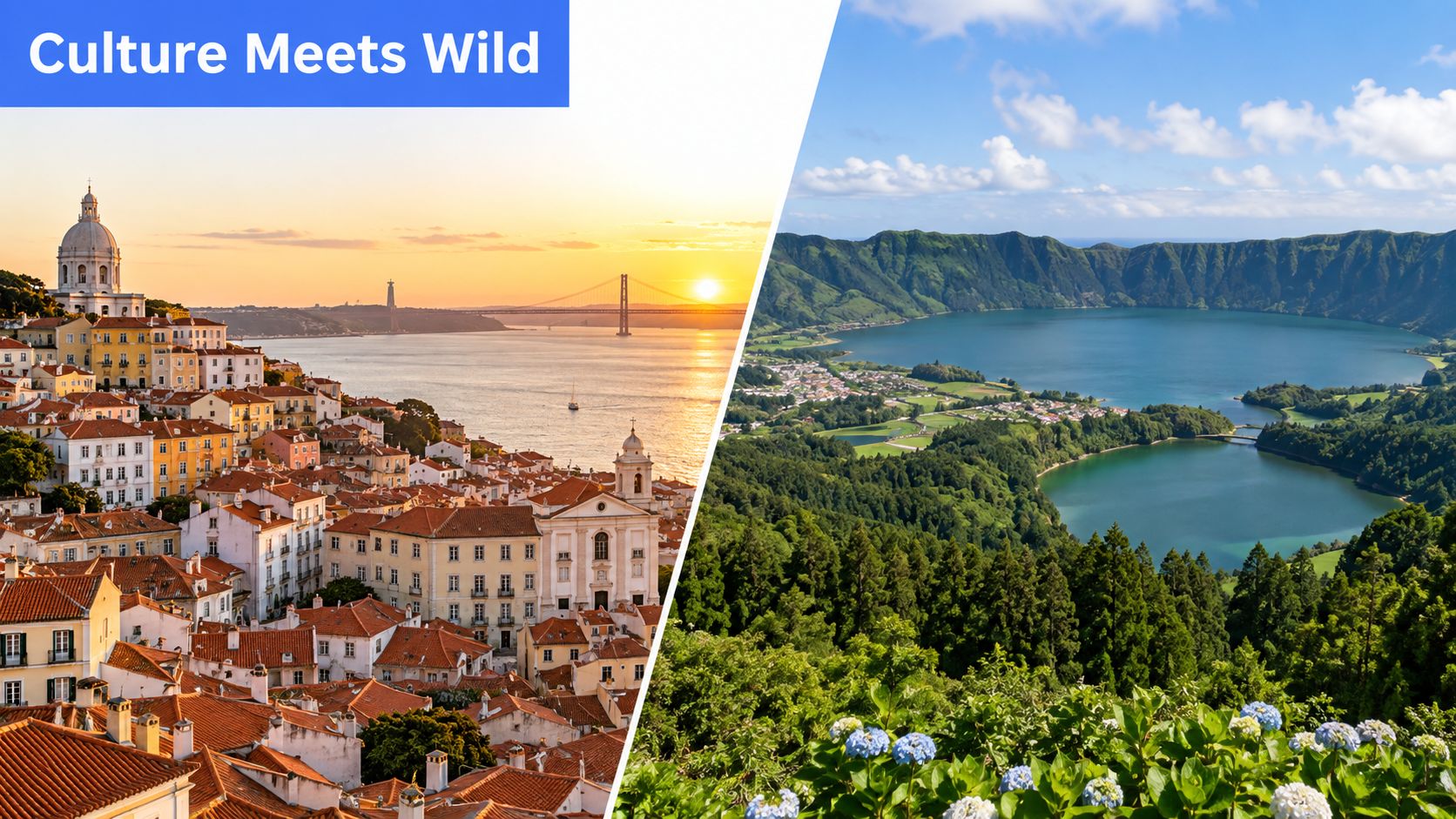
The contrast is the luxury. You can spend a morning with a private guide in Lisbon's historic quarters, pause for a refined lunch, and still have space for a treatment or cocktail before dinner. Later in the journey, a driver can take you toward Sete Cidades or Furnas while you focus on the scenery rather than narrow roads and changing weather. The experience feels expansive because the planning absorbs the friction.
Why São Miguel deserves real time
São Miguel is usually the strongest first island for a combined trip because it offers a broad mix of nature and restorative experiences without requiring constant hotel changes. Crater lakes, thermal pools, ocean excursions, gardens, and volcanic viewpoints can be arranged around one comfortable base. That matters after international travel and before a mainland return flight.
The islands also tend to support longer stays than Portugal overall. In August 2024, the average stay in the Azores was 3.17 nights compared with Portugal's national average of 2.8 nights, while the January-to-August average was 3.01 nights versus 2.58 nationally, according to Azores accommodation data. I read that as a useful design signal. The Azores shouldn't be treated as a decorative overnight add-on.
Advisor perspective: The best island itinerary leaves room for the destination to work on you. Nature needs breathing space, and luxury travelers notice when it gets it.
A private vineyard visit has the same appeal as a carefully selected tasting room visit in Sonoma Valley, but the setting here is distinctly Atlantic and volcanic. The point isn't to collect another reservation. It's to create a sequence of experiences that moves from culture to natural scenery without making you feel processed through either.
How Long to Spend and How to Sequence Your Itinerary
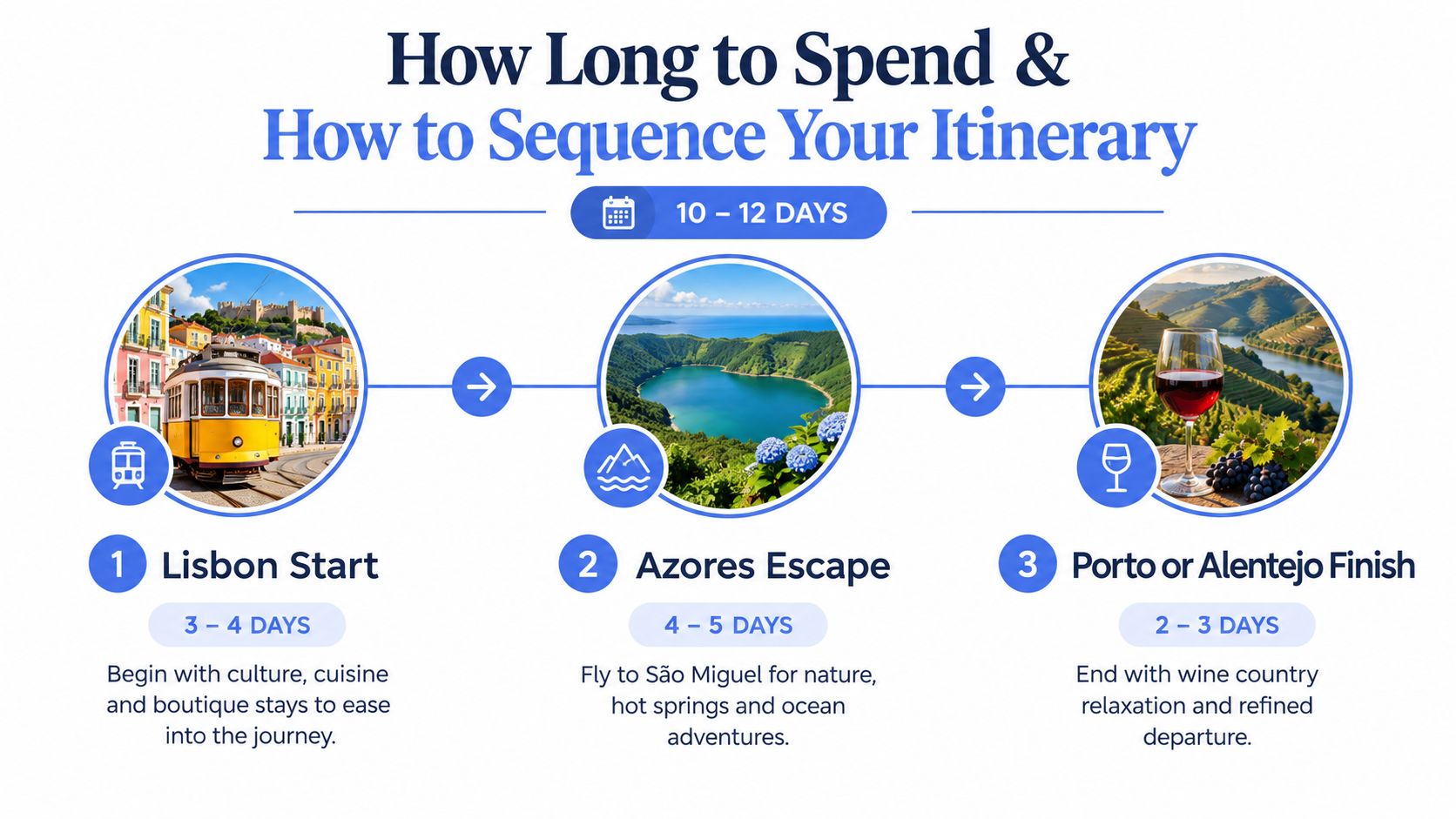
For most luxury travelers, 10 to 12 days is the practical sweet spot. It gives the mainland enough room to feel intentional and the Azores enough time to absorb weather changes, outdoor excursions, and slower mornings. I generally recommend 3 to 4 nights on the mainland and 4 to 6 nights in the Azores, with the remaining time used for arrival, departure, or a second mainland stop.
The simplest structure is:
- Begin in Lisbon. Start with culture, architecture, and a gentle adjustment to the time zone. Lisbon also makes a logical entry point for international flights.
- Fly to São Miguel. Use the island portion for nature, wellness, and ocean-based experiences rather than trying to replicate mainland sightseeing.
- Finish in Porto or Alentejo. End with wine, countryside, or a refined city stay before departure.
Choose one island or two
Stay on one island when the trip is shorter, the priority is restoration, or you want a polished base with minimal packing. São Miguel can carry a substantial portion of the experience on its own. Add a second island when you have at least several flexible nights and a clear reason, such as Pico's vineyards, Faial's maritime character, or São Jorge's dramatic coastal vistas.
Don't add islands just because the map makes them look close. A second island introduces another flight or ferry, another luggage movement, and another point where weather can interfere. For an anniversary or honeymoon, I'd rather give you one exceptional island stay than three rushed check-ins.
Protect the final departure
If your homebound flight requires a mainland connection, place the Azores before the final Lisbon night whenever possible. That arrangement gives you a recovery valve if sea conditions, weather, or an island connection changes. Ending in Lisbon or Porto also makes the departure day cleaner than trying to gamble on a same-day island-to-international sequence.
When to Go and What Demand Means for Availability
Plan the Azores around the experiences least tolerant of weather, then let the mainland fit around that decision. For outdoor-focused travel, June through October offers the most dependable window, with July and August generally bringing the warmest, sunniest conditions. From October through March, rain, wind, and unsettled seas require more flexibility for whale watching, hiking, ferries, and exposed viewpoints. See this seasonal climate guidance for the Azores before fixing island dates.
Demand rises with the better weather. The region recorded 3.8 million overnight stays in 2023 and passed 4.2 million overnight stays in 2024 for the first time. Hospitality revenue exceeded €187 million, while rural tourism revenue reached €18 million, according to official regional reporting. For a luxury itinerary, that momentum matters because the strongest rooms, private guides, drivers, and island connections are limited.
Match the month to the trip
Choose high season for longer daylight, more reliable outdoor conditions, and the widest operating rhythm for island experiences. Reserve early when the itinerary depends on a particular suite, rural retreat, private vehicle, or tightly timed connection. In a compact market, premium inventory can disappear before flights and mainland hotels feel urgent.
Shoulder travel gives you softer crowd levels and often more choice, provided you keep weather alternatives ready. Place the most weather-sensitive activity early in the island stay, leaving time for a second attempt if fog, rain, or wind intervenes. That buffer is more valuable than adding another excursion.
August requires especially firm planning. August accounted for 16.0% of all 2025 overnight stays, and summer demand was concentrated from June through September, as reported in this regional tourism analysis. The pressure reaches beyond accommodation. Flight choices, rental cars, ferry availability, and the ability to rearrange outdoor plans all narrow.
For the mainland portion, compare seasonal patterns in this guide to the best time to visit Portugal. Set the Azores dates first, secure the weather-sensitive components, and build Lisbon, Porto, or other mainland stays around that operational rhythm.
A Refined Day by Day Portugal and Azores Itinerary Flow
A strong itinerary should read like a journey, not a checklist. The following flow suits a 10 to 12 day trip, but it can be expanded or simplified depending on flight schedules and whether you add Porto, Alentejo, or a second island.

Days 1 to 3 in Lisbon
Arrive into Lisbon and keep the first day deliberately light. A private transfer, a beautiful hotel, and a guided walk through the historic center are more valuable than an ambitious museum race after an overnight flight. Build in time for a long lunch, a rest, and an evening that lets the city reveal itself gradually.
On the second day, add a private cultural experience shaped around your interests, perhaps architecture, art, history, or food. The third day can include a half-day excursion or a slower neighborhood immersion. Luxury is not seeing everything. It's having the right person and the right timing for what you do see.
Days 4 to 7 in São Miguel
Fly to Ponta Delgada and use the arrival day for a gentle orientation. Keep the first major outdoor experience flexible, then reserve a full day for Sete Cidades, with viewpoints and walking selected according to visibility. Another day can combine Lagoa do Fogo with thermal bathing, while Furnas deserves its own unhurried rhythm of geothermal scenery, gardens, and wellness.
Whale watching and other ocean excursions should never be placed beside a fragile departure connection. Give them room to move. Weather can turn a promising outdoor schedule into a spa morning, and a well-designed trip treats that as an elegant alternative rather than a failure.
Days 8 to 10 in Porto or Alentejo
Return to the mainland and choose your finale based on personality. Porto works for travelers who want architecture, river views, private wine experiences, and a lively but intimate city atmosphere. Alentejo suits those who prefer countryside, estates, slow meals, and a quieter close.
If you add another Azorean island, reduce the mainland finale rather than squeezing the island into a narrow gap. A second island should add texture, not create a frantic middle chapter. For further Porto inspiration, see this curated guide to things to do in Porto.
Getting Between Lisbon Porto and the Azores Without Wasted Time
The most important transport metric is not flight duration. It's door-to-door friction. Airport transfers, check-in, baggage handling, ferry boarding, vehicle collection, and weather buffers can turn a short hop into a large part of the day.
Mainland-to-Azores flights are usually the cleanest backbone for the itinerary. Compare Lisbon and Porto based on your wider route, not just the fare or departure time. Lisbon often simplifies the international arrival and return structure, while Porto can work well when it's the final mainland stop or when the schedule aligns better with the island sequence.
Lock the non-negotiables first
I use a fixed order when designing multi-island travel:
- Arrival island: Confirm where the mainland flight lands before choosing hotels or excursions.
- Homebound flight: Protect the connection that gets you back to the mainland and onward internationally.
- Critical island connection: Reserve the flight or ferry that makes the island sequence viable.
- Accommodation: Place stays around those immovable transport points.
- Optional ferries: Add them only when they reduce total movement or create a particularly worthwhile experience.
Inter-island ferries are most useful in the central group. A crossing can be as short as 30 minutes by ferry or flight, but that figure doesn't describe the full journey. As Azores island-routing guidance explains, ferry availability is seasonal, and the total time can change significantly once luggage and waiting are included.
Practical rule: Never build a nonrefundable island sequence around a ferry timetable until the date-specific schedule has been checked.
Cluster with intention
Pico, Faial, and São Jorge are natural candidates for a central-island cluster when the seasonal ferry network supports your dates. São Miguel is usually better treated as its own anchor rather than casually stitched to every other island. Smaller islands can deliver extraordinary atmosphere, but their accommodation and transport choices are less forgiving when a connection moves.
For the mainland flight architecture, this guide to booking multi-city flights can help clarify the difference between a clever open-jaw plan and an itinerary that creates unnecessary backtracking.
Where to Stay and How Luxury Experiences Elevate the Journey
Accommodation should reflect the job each destination is doing. In Lisbon, choose a luxury hotel that places you near the neighborhoods and experiences you care about, with service capable of arranging private guiding and smooth arrivals. Porto can be more intimate, with a focus on riverfront atmosphere, design, or easy access to the Douro Valley.
São Miguel calls for a different lens. Boutique retreats, rural estates, and ocean-view villas can make the island feel restorative, particularly when the property itself offers thermal facilities, gardens, wellness programming, or a strong sense of place. I favor a single base for a shorter stay unless changing hotels creates a meaningful geographic advantage.
The suite is only the beginning
A luxury room matters, but the surrounding logistics determine how luxurious the trip feels. Preferred partner relationships may provide VIP amenities, preferred treatment, or special benefits, but those should complement the itinerary rather than dictate it. A beautiful suite on the wrong side of an inconvenient transfer isn't an upgrade. It's a trade-off that needs to be deliberate.
Private drivers and guides create a different kind of value in the Azores. They can adjust the day around visibility, manage roads that may feel unfamiliar, and keep the focus on the scenery rather than navigation. For active travelers, vetted local partners can also shape hiking, whale watching, and ocean experiences around ability and conditions.
Design the invisible details
The best days have no awkward gaps. Dining reservations sit near the route, thermal bathing follows outdoor exploration instead of competing with it, and a driver knows when to pause at a viewpoint rather than rush toward the next programmed stop. Luggage transfers, arrival welcomes, and flexible cancellation terms deserve the same attention as the headline hotel.
When I design these trips for clients nationwide through virtual consultations, I'm not just matching hotels to dates. I'm balancing energy, privacy, transportation, weather exposure, and the emotional arc of the journey. That's what turns a list of excellent places into a trip that feels effortless.
Design Your Bespoke Portugal and Azores Escape with Explore Effortlessly
A Portugal and Azores journey becomes substantially more valuable when the design reflects the reason you're traveling. A honeymoon may need more privacy, thermal bathing, sunset timing, and room to do absolutely nothing. An anniversary can lean into private guiding, wine-country access, and a suite selected for atmosphere rather than square footage. A multigenerational trip needs shorter transfer days, clear room configurations, and experiences that allow different energy levels to coexist.
Premium and business class flights, private villas, yacht charters, and wellness touches can all be considered when they serve the itinerary. The point isn't to add luxury labels indiscriminately. It's to spend attention where it changes the experience, then remove friction everywhere else.
What an advisor manages
Working with a luxury travel advisor can include:
- Route architecture: Mainland cities, island order, flights, ferries, transfers, and buffer nights.
- Accommodation strategy: Suite placement, room configurations, rural retreats, villas, and preferred partner benefits.
- Experience curation: Private guides, vineyard visits, thermal bathing, whale watching, hiking, and ocean time.
- Trip coordination: Dining, arrival details, transport timing, and communication with trusted in-destination partners.
- Contingency planning: Alternate activities and revised timing when weather or transport conditions change.
The Azores' growth makes this coordination more important. The region surpassed 4.5 million overnight stays in 2025, up 4.1% year over year, while total hospitality revenue rose 9.6%, according to official 2025 reporting. In May 2026, tourist accommodation generated €24.6 million in total revenue, with revenue per available room at €96.24 and an average daily rate of €128.59, further supporting the destination's positioning as a higher-value luxury market rather than a low-cost stopover, as reported by Azores accommodation performance data.
I hold the credentials of a Circle of Excellence Advisor, Top 5 percent at Nexion, and a CLIA Accredited Cruise Counselor. My role is to coordinate the planning and logistics before departure, while trusted in-destination partners and suppliers provide on-the-ground support during the trip. Conditions can change anywhere, so travelers should remain aware of their surroundings and review official government travel advisories and local guidance before departure.
The result is a journey with a clear backbone and room for spontaneity. You know which connections matter, where the buffers belong, and which experiences deserve the best conditions. You also have one booking authority managing the moving parts instead of juggling disconnected confirmations.
Explore Effortlessly designs high-touch Portugal and Azores itineraries with coordinated flights, luxury stays, private experiences, and thoughtful weather buffers. I work with clients nationwide through virtual consultations, so Explore Effortlessly can turn your preferred pace, celebration, and island interests into a polished trip plan. Join the Explore Effortlessly newsletter for curated luxury travel inspiration and planning guidance.