Dreaming about South America usually starts the same way. You want the glaciers of Patagonia, a polished lodge deep in the Amazon, a few nights with altitude and history in the Andes, and maybe the Galápagos because if you're already flying that far, why not do it properly. If the real occasion is a wedding closer to home, compare these US destination wedding setting ideas before committing the group to long-haul flights.
However, practical challenges emerge. Internal flights don't line up neatly. Border crossings can wreck pacing. Seasonality changes by region. The lodge that looks perfect on paper may be completely wrong for the rhythm of your trip. What should feel exhilarating starts feeling like an unpaid second job.
That's where most luxury planning goes sideways. South America is not difficult because it lacks extraordinary experiences. It's difficult because the best experiences are scattered across huge distances, often in remote places, and they only feel luxurious when the logistics are stitched together with precision.
Your Guide to South America Luxury Travel
I'll be blunt. South America luxury travel is not the place to wing it if you care about comfort, pacing, and access. This is a continent where a beautiful idea can turn into an exhausting itinerary fast.
The upside is obvious. The region's luxury infrastructure is expanding quickly, with the Latin America luxury travel market projected to reach US$222,158.5 million by 2033 according to Grand View Research's Latin America luxury travel outlook. That matters because it means more polished lodges, more refined services, and stronger high-end experiences across the region.
If you're serious about a high-touch journey, start with a planning-first mindset, not a destination-first one. The order of operations matters. You define the trip style, then the route, then the pacing, then the right properties and transport layers that make it all feel effortless.
If you already know you want a fully customized itinerary, start with luxury travel planning support.
What matters most
- Trip design first: Decide whether this is a wildlife journey, a culture-heavy itinerary, a wellness escape, or a multi-icon bucket list trip.
- Pacing over bragging rights: More stops don't make a better trip. Better transitions do.
- Regional logic: Patagonia, the Amazon, the Andes, and the Galápagos don't belong in the same order for every traveler.
- Property selection: In South America, the right lodge or yacht often determines the entire success of the trip.
- Private ground handling: The difference between “luxury” and “stressful” is often the driver, guide, air schedule, and contingency planning.
Practical rule: If a South America itinerary looks great as a map but terrible as a calendar, it's not ready.
Busy clients usually come to me after they've realized the internet is excellent at inspiration and terrible at sequencing. They don't need another generic list of top places. They need a route that respects their time, energy, and standards.
That's the lens to use for the rest of this journey.
Defining Your South American Dream
Don't choose South America by country first. Choose it by identity. The best itineraries come from knowing how you want to feel on the trip, not from collecting famous names.
Luxury has shifted in that direction anyway. For 2026, travelers are prioritizing quiet luxury, with more emphasis on privacy, peace, wellness, and meaningful connection, as noted in this 2026 luxury travel trend report. That's exactly why the old “see everything” approach fails so often.
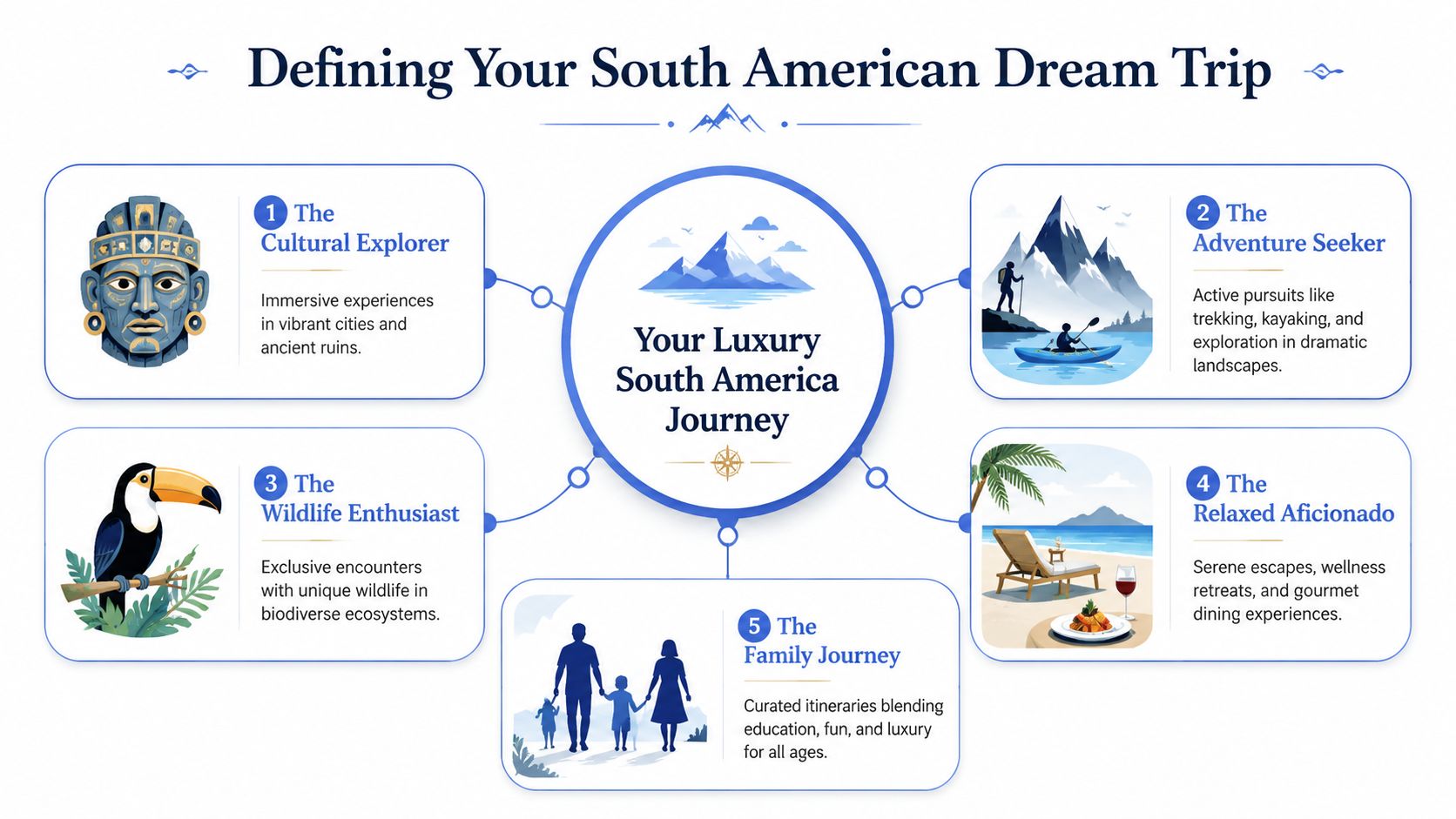
The Cultural Explorer
This traveler wants cities with texture, layered history, and private access that goes beyond standard touring. Think Lima and Cusco, but done intelligently. Long lunches, sharp guiding, refined hotels, and experiences that feel curated instead of processed through a tourist funnel.
If this is you, I'd build around depth. Fewer bases. Better guides. Stronger transitions.
The Adventure Seeker
This is not the same as “active traveler.” A luxury adventure client wants challenge without friction. Patagonia works brilliantly here, especially when each day is customized to your pace and interests rather than a group departure board.
The mistake I see most often is overcommitting physically. You don't need to prove anything. You need a trip that gives you drama in the scenery and recovery in the lodge.
The Wildlife Enthusiast
This traveler should be ruthless about quality. The Galápagos, the Amazon, and other biodiverse regions reward the right vessel, the right guide, and the right operating style. A smaller, more intentional experience usually wins.
The wildlife is the draw. The guide quality is what determines whether the trip feels extraordinary or merely expensive.
The Relaxed Aficionado
This is the client drawn to elegant stillness. Desert lodges, vineyard stays, wellness-forward retreats, and long private terraces with no pressure to perform leisure. Quiet luxury belongs here.
For this traveler, I watch for one thing above all. Don't let transit steal the calm. A serene property loses its magic if you arrive wrung out.
The Family Journey
Families need South America designed differently. The trip has to be educational without feeling academic, adventurous without being chaotic, and comfortable without becoming boring.
A strong family itinerary mixes spectacle with breathing room. Parents need service. Kids need momentum. Everyone needs smart logistics.
The Icons of South American Luxury
The classic names exist for a reason. Patagonia, the Galápagos, the Amazon, and the high Andes earn their place. But iconic doesn't automatically mean luxurious. The luxury version is about scale, privacy, and how the experience is delivered.
Patagonia done properly
Patagonia should feel vast, not rushed. The right way to do it is with a lodge that gives you private or highly personalized guiding, well-planned daily exploration, and enough built-in flexibility to pivot around weather and energy.
I don't like forcing Patagonia into a checklist. One exceptional lodge with excellent guiding usually outperforms multiple short stops. You want the freedom to wake up, assess conditions, and choose the day's experience without spending your trip repacking.
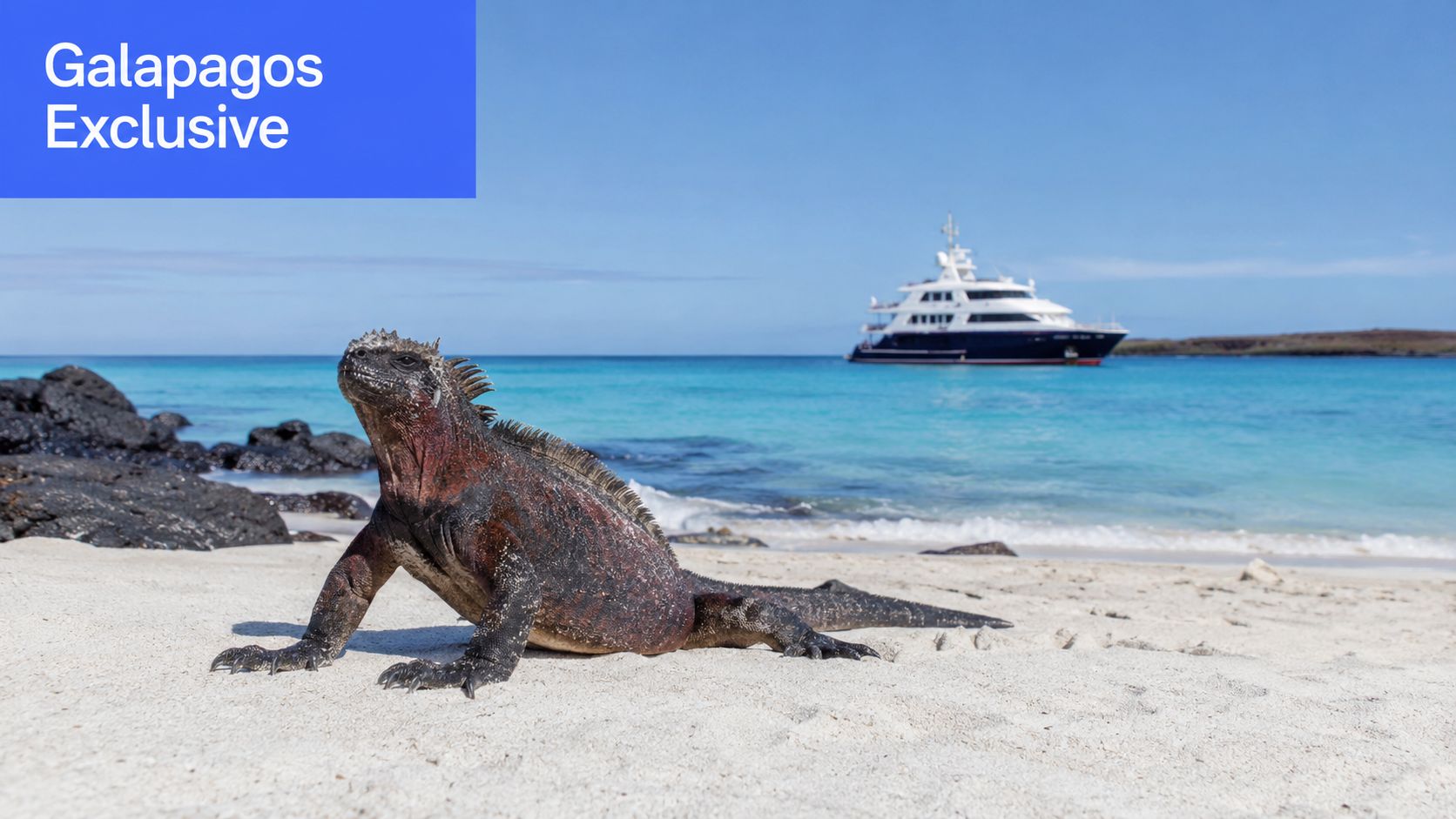
The Galápagos at a luxury standard
The Galápagos is where hardware matters. Small-capacity yachts with serious naturalist guiding create a completely different trip than a larger vessel with less intimacy. Service matters, but so does rhythm. You want smooth embarkation, a smart cabin choice, and an itinerary that balances wildlife immersion with actual comfort.
This region rewards travelers who value access over excess. The point isn't theatrical luxury. The point is getting closer to one of the world's most remarkable ecosystems without sacrificing polish.
The Amazon without compromise
The Amazon can be magical or mishandled. The difference is usually in lodge quality, guide standards, and how well the trip is staged. A remote eco-lodge can work beautifully. So can a luxury river cruise. The right answer depends on whether you want a rooted stay or a moving expedition.
Clients often underestimate how much the arrival sequence shapes the experience. If the handoff from city to air to boat to lodge isn't managed carefully, the romance disappears quickly.
What's emerging next
Luxury in South America isn't static. A standout example is Casa Gastón, scheduled to open in March 2026 near Jirira at the foot of Tunupa Volcano overlooking Salar de Uyuni. It's described as Bolivia's first luxury hotel museum in this South America 2026 travel preview. That's the kind of opening I watch closely because it signals where the region is heading next.
If Peru is part of your itinerary, I'd pair that broader regional thinking with a strong plan for luxury travel to Peru, especially if you want the Andes woven into a longer journey instead of treated as a standalone trip.
Curating Once in a Lifetime Moments
Expensive travel isn't automatically luxury travel. Luxury starts when the trip gives you access, privacy, and flow that you can't replicate by clicking around on your own.
The hotel matters. The suite matters. But those are table stakes. What clients remember are the moments that feel improbably smooth and discreetly exclusive.
What elevated access actually looks like
A strong South America itinerary might include a private tasting at an estate where the day is paced around conversation, not crowds. It might mean a privately guided cultural visit timed around your energy instead of a fixed group slot. It might mean arriving at a viewpoint, river dock, or trailhead without waiting around for everyone else to catch up.
Those touches sound subtle. They aren't. They change the emotional temperature of the trip.
I also care about what happens between the marquee moments. Your airport welcome, your room assignment, your transfer timing, and your dining reservations all shape whether the journey feels controlled or chaotic.
The luxury test I use
Here's my standard. If an experience is technically premium but still makes you work too hard, it's not luxury.
A polished itinerary should do three things well:
- Remove friction: No wasted transfers, awkward connection gaps, or unnecessary hotel changes.
- Create privacy: Space, pacing, and access that protect your time and attention.
- Reward taste: Experiences that align with your interests, not just expensive by default.
For food-led travelers, Peru often becomes a centerpiece. But I wouldn't reduce it to restaurant hype. The right culinary trip is about sequencing tastings, city stays, and cultural experiences intelligently. If Lima is on your shortlist, my advice is to treat dining as part of a larger design, not a standalone obsession, especially if you're building around Michelin-star restaurants in Lima.
The most memorable luxury moments rarely come from spending more. They come from planning better.
That's the part many travelers miss. They focus on what to buy instead of how to build.
Crafting a Seamless Multi Destination Itinerary
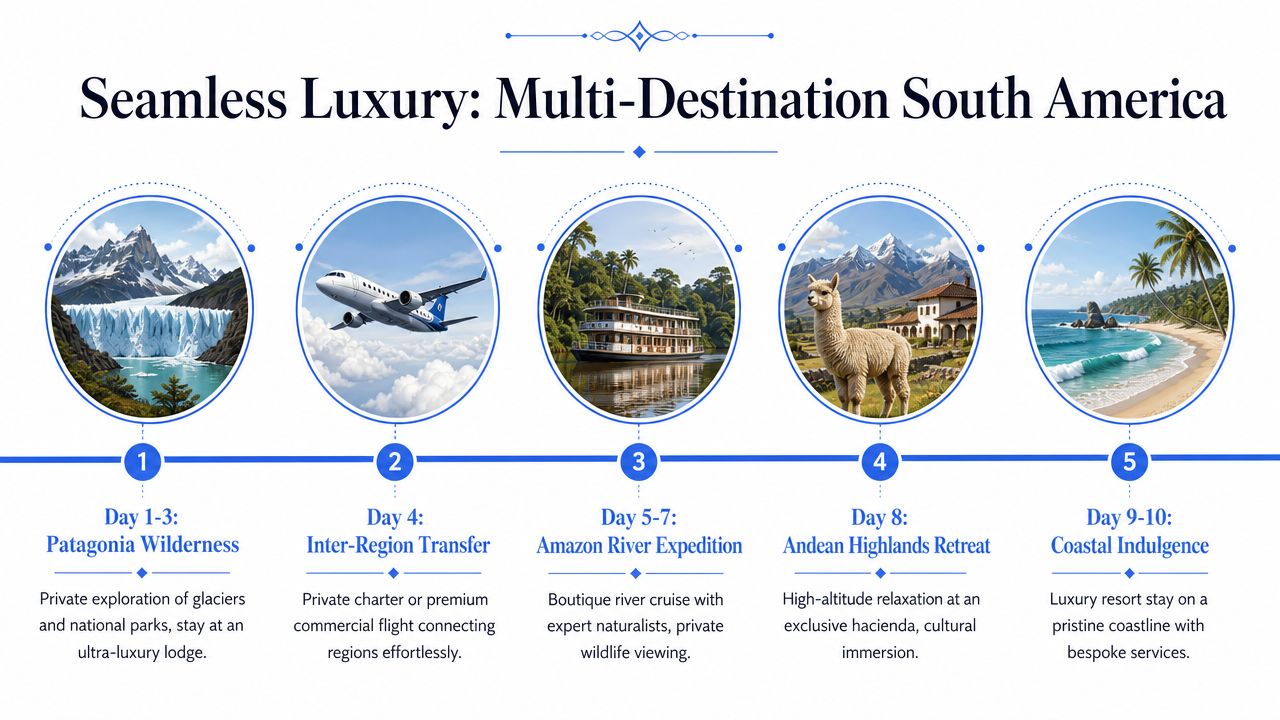
This is the main puzzle. Not choosing Patagonia. Not deciding whether the Amazon sounds appealing. The hard part is connecting South America's biggest experiences into one trip that still feels graceful.
A common question is how to connect Patagonia, the Amazon, and the Andes without sacrificing comfort. That challenge is real, and multi-country luxury trips often start at £13,500 to £25,000+ per person, according to Black Tomato's Latin America trip guidance. That spend only feels justified when the itinerary is stitched together properly.
The sequencing rule
Don't start by dropping dream destinations into a list. Start by identifying your long-haul anchors, then build around transit logic and recovery points.
Patagonia usually demands physical energy and weather flexibility. The Amazon can require layered transport and benefits from mental spaciousness. The Andes often introduce altitude considerations. The Galápagos works best when travelers arrive with enough buffer to transition smoothly into expedition mode.
That means the order matters.
Three sample blueprints
These aren't fixed itineraries. They're the kind of frameworks I use to test flow.
| Trip length | Best use | Smart structure |
|---|---|---|
| 7 days | One major region with depth | Patagonia plus one city, or Galápagos only |
| 10 days | Two contrasting experiences | Andes and Amazon, or Patagonia and Buenos Aires |
| 14 days | True multi-region journey | Patagonia, Andes, and Galápagos or Amazon |
A rushed 14-day itinerary can still fail. A disciplined 10-day itinerary can feel spectacular.
Where planning usually breaks down
The weakest South America itineraries usually suffer from one of these problems:
- Overstacked flight days: Too many air segments too close together.
- No acclimatization strategy: Travelers land at altitude and start touring as if nothing changed.
- Bad regional pairing: Destinations make sense emotionally, but not geographically.
- Poor room strategy: Clients move constantly and never settle in.
- No contingency thinking: Weather, operational shifts, and remote transfers aren't treated seriously enough.
Advisor note: If your itinerary includes multiple remote regions, every transfer needs a backup mindset even when everything looks simple on paper.
My preferred pacing logic
I like to alternate exertion and ease. If you've done a rugged active stretch, the next stop should feel restorative. If you've had several city days, a lodge stay should follow. Luxury is rhythm.
I also like each stop to earn its place. If a destination only appears because it's famous, I cut it. South America rewards conviction. Fewer places, chosen well, almost always produce the stronger trip.
A great itinerary doesn't show off how much ground you covered. It proves how intelligently the ground was covered.
Navigating Budget Safety and Logistics
Let's be practical. Luxury South America trips are worth the investment when the money goes toward comfort, access, and time saved. They become disappointing when the budget is swallowed by inefficient routing or properties that photograph better than they operate.
What drives the budget
Price moves quickly based on a few choices. Private guiding changes the day-to-day experience significantly. Remote lodges can justify their rates if they deliver true exclusivity and smooth operations. Premium cabin positioning on internal flights matters more than many travelers expect, especially when you're moving between demanding regions.
Online booking behavior is also transforming the market. In 2025, online booking channels accounted for 52.00% of South America's travel and tourism market and are projected to grow at a 10.01% CAGR through 2031, according to Mordor Intelligence's South America travel and tourism market analysis. That doesn't mean self-booking is the smarter luxury move. It means affluent travelers expect an effortless digital experience, but the actual trip still needs human judgment behind the scenes.
If you're planning a larger journey with staged payments, it's smart to automate your deposit schedule early so deadlines don't sneak up on you while flights, lodges, and permits are being finalized.
Safety needs maturity, not fantasy
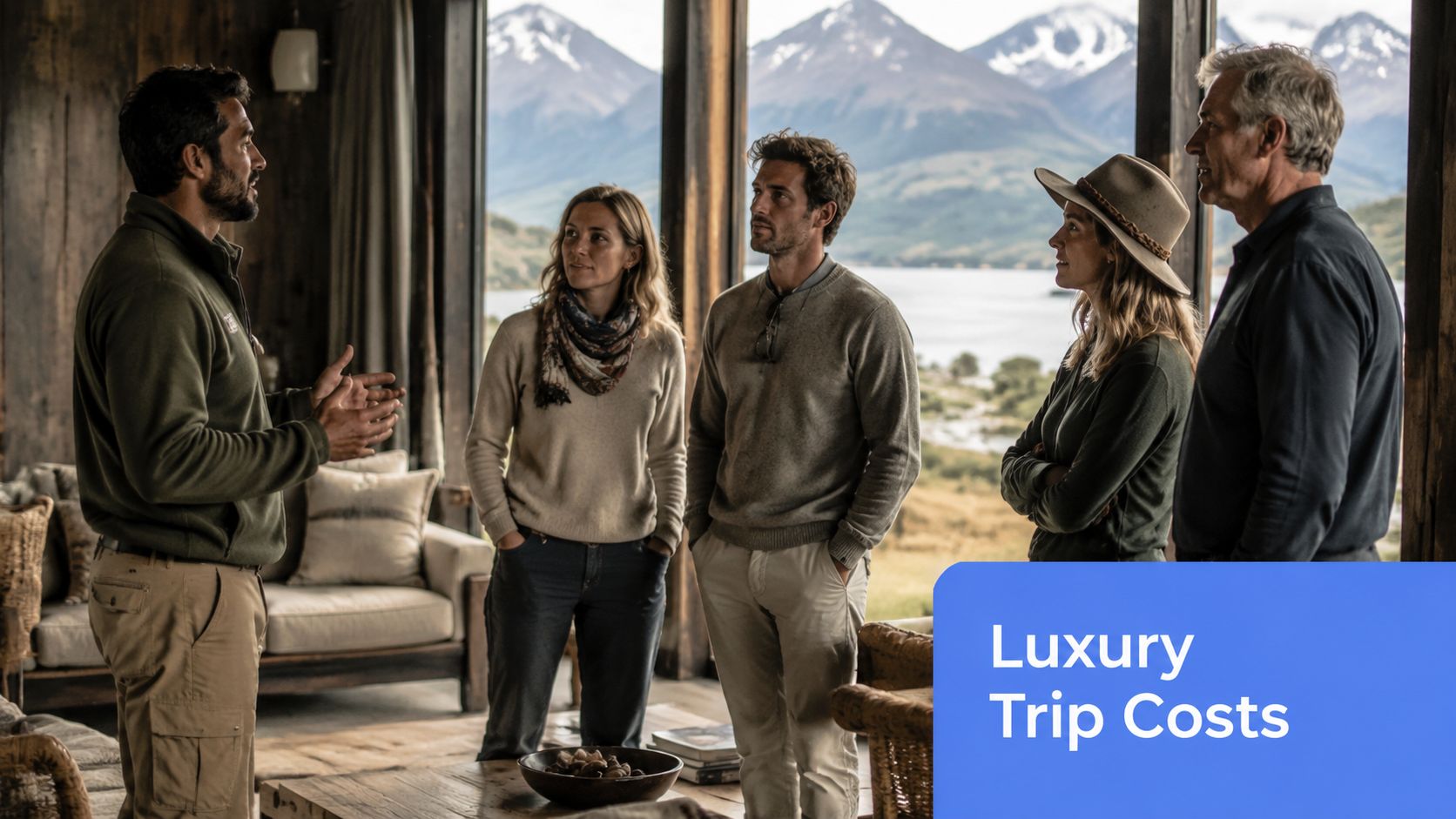
South America should be approached with awareness, not paranoia. No destination is risk-free, and I won't pretend otherwise.
A view I share strongly is this one: many glossy guides romanticize remote places but skip the operational questions that matter. That's why I agree with the approach described in Journey Latin America's piece on overlooked destinations, which emphasizes contingency planning, vetted private guides, and thoughtful security protocols for isolated stays.
Use trusted local operators, drivers, guides, and resorts. Maintain situational awareness everywhere. Check official government advisories and local guidance before departure. That is the responsible standard, whether you're traveling domestically or internationally.
Packing for multiple climates
South America punishes lazy packing. A polished city dinner, a chilly morning in Patagonia, a warm river excursion, and a high-altitude afternoon can all happen on the same itinerary.
Use a disciplined packing plan:
- Foundation layers: Neutral pieces that work across lodges, flights, and city hotels.
- Performance outerwear: Proper wind and weather protection for southern regions.
- Altitude basics: Hydration tools, easy layers, and comfortable daywear.
- Evening strategy: One or two refined looks that mix well instead of overpacking.
- Footwear split: One serious walking shoe, one sleek city option, one easy casual pair.
Seasonality also matters more than travelers think. If Brazil is part of your route, get specific about timing before you commit to the rest of the journey. I'd start with guidance on the best time to visit Brazil and build from there.
Your Journey Begins with Explore Effortlessly
If you've read this far, you already understand the point. South America isn't hard because it lacks luxury. It's hard because the luxury only works when someone has handled the sequencing, the transport logic, the regional pacing, and the access details with rigor.
That's where I come in.
I work with clients nationwide through virtual consultations, designing high-touch itineraries for travelers who want Patagonia, the Andes, the Amazon, the Galápagos, and other major South American experiences handled properly from the start. My role is to simplify the decision-making, protect your time, and shape a trip that feels cohesive from departure to return.
As a Circle of Excellence Advisor, Top 5 percent at Nexion, and CLIA Accredited Cruise Counselor, I bring both planning precision and strong industry relationships to the table. That can translate into preferred partner perks, VIP amenities, and special benefits where applicable. I don't promise upgrades. I do build trips with intention and utilize the partnerships that can add value.
If you're ready for a South America itinerary that's elegant, realistic, and personalized, use this link to Plan my luxury trip.
The best luxury trips feel easy for the traveler because someone else did the hard thinking first.
Author bio
Hi, I'm Karrah, owner, founder, and lead travel advisor at Explore Effortlessly, a luxury award winning travel agency based in Miami.
I specialize in designing bespoke, high touch itineraries to bucket list destinations around the world. Every trip is curated with intention, insight, and smooth logistics from start to finish.
From luxury cruises and private villas to honeymoons, safaris, and once in a lifetime journeys, my role is to simplify the planning process while elevating every detail.
Frequently Asked Questions
How far in advance should I plan a luxury South America trip
For complex, multi-stop itineraries, earlier is better. The best lodges, small ships, guides, and premium flight options don't wait around. If your trip includes remote regions or a narrow seasonal window, planning well ahead gives you better choices and a calmer build process.
Do I need travel insurance for this kind of trip
Yes. I consider it standard, not optional. South America itineraries often include multiple flights, remote regions, expedition elements, and weather-sensitive operations. A strong policy matters because disruption in one segment can affect the rest of the journey.
Can dietary needs be handled in remote lodges or onboard expeditions
Usually, yes, when they're communicated early and clearly. The key is advance coordination. Remote properties can often accommodate preferences and restrictions well, but they need notice and accurate details.
Is it realistic to combine Patagonia, the Amazon, and the Galápagos in one trip
Yes, but only if the pacing is disciplined. This is not a trip to overload with extra filler stops. The more ambitious the destination mix, the more carefully the transitions need to be managed.
Should I use miles for internal South America flights
Sometimes, but not blindly. I look at schedule quality first, then cabin comfort, then value. A “free” flight with bad timings can cost you more in fatigue, missed connections, or lost lodge time than it saves.
Do solo travelers work well in South America luxury travel
Absolutely. In fact, solo luxury travel is growing. Hilton's 2026 research found that over 25% of travelers plan solo trips, and two-thirds of travelers want to leave destinations better than they arrived, according to this summary of 2026 travel trends. South America works especially well for solo travelers when the itinerary is thoughtfully supported with strong guides, well-chosen properties, and the right balance of privacy and structure.
If you're ready for a polished, high-touch itinerary instead of a chaotic spreadsheet, Explore Effortlessly is where to start. When you're ready, use this link to Plan my luxury trip. If you'd rather stay in the loop first, join the newsletter through Explore Effortlessly updates.