
The honest answer to "when is the best time for a Tanzania safari?" is always another question: what do you hope to see and experience?
The classic, postcard-perfect safari season runs from June to October. This is the long dry spell, when the bush thins out and wildlife congregates around the few remaining water sources, making for absolutely phenomenal game viewing. But then there’s the ‘green season’—particularly January and February—which brings the jaw-dropping spectacle of the wildebeest calving in the lush southern plains of the Serengeti.
Each season tells a completely different story.
Key Takeaways for Planning Your Tanzania Safari
- Best Overall Wildlife Viewing: The dry season from June to October offers the highest concentration of animals around water sources and the iconic Mara River crossings.
- Best for Predator Action: January and February are unmatched for witnessing predator-prey dynamics during the wildebeest calving season in the Southern Serengeti.
- Best for Fewer Crowds: The "green season" months (January-March) and shoulder months (November-December) provide a more exclusive experience with lush landscapes.
- Advisor Insight is Key: Timing is everything. Working with a specialist ensures your itinerary aligns perfectly with wildlife movements and your personal travel style, avoiding costly mismatches.
Decoding Tanzania's Safari Seasons
Tanzania's rhythm is dictated by its two main seasons, the dry and the wet. Picking the "best" time really comes down to your personal vision for this trip. Are you dreaming of the high drama of a river crossing? Or maybe the heartwarming, yet intense, scenes of thousands of newborn wildebeest taking their first steps? Perhaps you'd prefer lush, green landscapes with far fewer safari vehicles around you.
My job as your travel advisor is to get to the heart of what you're imagining and then line it up perfectly with what's happening on the ground. It’s all about putting you in the right place at exactly the right time to see that vision come to life.
As a travel advisor specializing in bespoke African journeys, I've learned that timing is everything. A successful safari isn't just about seeing animals; it's about experiencing the pulse of the ecosystem at its most dynamic moments.
To get us started, let’s break down the broad strokes of the safari calendar:
- Peak Wildlife Viewing (Dry Season): From June to October, expect clear, sunny skies. The landscape is parched, forcing animals to gather at rivers and waterholes, which makes them much easier to find. This is prime time for first-timers and for witnessing the famous Mara River crossings in the Northern Serengeti.
- Calving Season (Green Season): January and February are pure magic in the Southern Serengeti. The plains turn a vibrant green, and hundreds of thousands of wildebeest give birth almost simultaneously, attracting predators in huge numbers. The action is incredible, and the crowds are noticeably smaller.
- Shoulder Seasons: Months like March, November, and December can be wonderful. They offer a great balance of value and unique sightings. You might get a few rain showers, but you'll also see the landscape in beautiful transition and share it with fewer people.
Getting a handle on these natural cycles is the first step toward crafting an unforgettable trip. To help you see how the year unfolds, I've put together a quick overview table.
Tanzania Safari Seasons At A Glance
This table provides a high-level summary of Tanzania's primary safari seasons. Think of it as a cheat sheet to help you quickly identify the period that best aligns with your travel goals, from peak wildlife viewing to unique seasonal events.
| Safari Season | Months | Key Highlights & Wildlife Action | Crowd & Price Level |
|---|---|---|---|
| Peak (Long Dry) Season | June – October | Excellent wildlife viewing as animals gather at water sources. Mara River crossings in the north (July-Oct). Clear skies, minimal rain. | High |
| Calving (Green) Season | January – February | Wildebeest calving in Southern Serengeti. High predator action. Lush, green landscapes. Great for photography. | Medium to High |
| Long Rains | March – May | Heavy rains, especially in April/May. Some camps may close. Excellent birding. Fewest crowds and lowest prices. | Low |
| Shoulder (Short Rains) Season | November – December | "Short rains" are often afternoon showers. Herds moving south. Great birding and beautiful scenery. | Medium |
This snapshot gives you a great starting point for deciding which season feels right for you. For a much more detailed look at the herd’s incredible journey, you can explore our complete guide to planning a Great Migration safari.
The Classic Safari Season: June to October
If you ask anyone when to go on safari in Tanzania, they’ll likely point to the dry season, running from June to October. There’s a good reason for this—it's the quintessential safari experience, predictable in the most spectacular way.
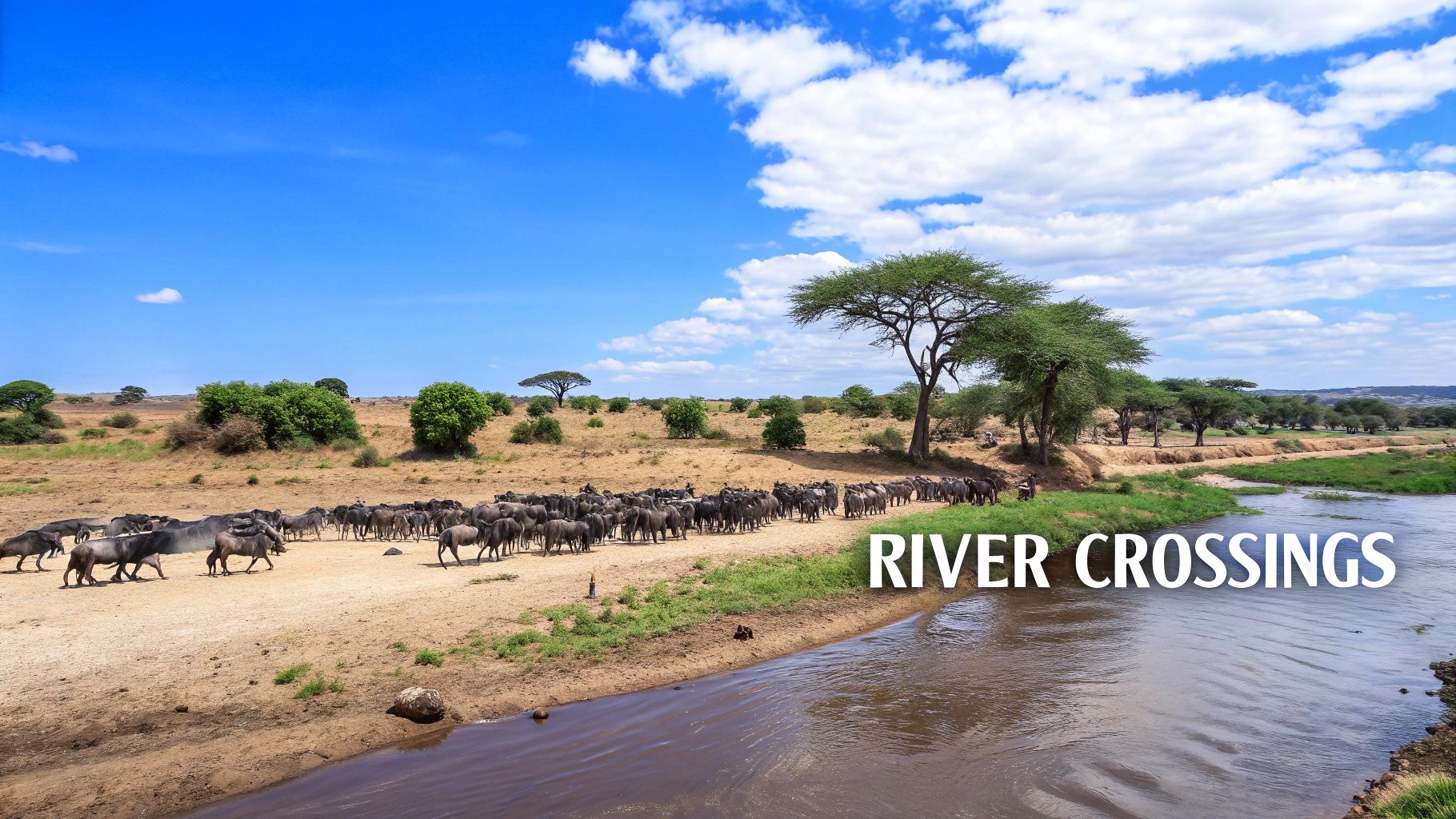
Think of the entire landscape as a giant funnel. As the smaller, seasonal water sources evaporate under the relentlessly sunny skies, wildlife is naturally drawn to the few remaining permanent rivers and waterholes. This concentration of animals is what makes game viewing so consistently phenomenal; they have no choice but to gather where there's water.
The Great Migration's Epic Climax
This is the season that hosts the Great Migration’s most heart-stopping event: the legendary river crossings in the Northern Serengeti. It's a breathtaking, life-or-death drama as hundreds of thousands of wildebeest and zebra plunge into the crocodile-filled waters of the Grumeti and Mara Rivers.
The tension is almost unbearable as the herds mass on the riverbanks, hesitating, before one brave animal finally takes the leap. What follows is pure, explosive action—a scene my clients relive for years. This is the safari you've seen in nature documentaries, but nothing prepares you for the raw power of witnessing it firsthand.
I often tell my clients the river crossings are like the Super Bowl of the safari world. The stakes are immense for the animals, and for us, the reward is an unfiltered, pulse-pounding moment of wildness that you simply never forget.
Perfect Viewing Conditions Everywhere You Look
Beyond the migration, the dry season offers up phenomenal conditions across Tanzania's entire northern circuit.
- Less Foliage: With the bush thinned out, spotting wildlife becomes much easier. Suddenly, that elusive leopard in a sausage tree or a lioness slinking through the golden grass is in plain sight.
- Animals on a Schedule: Knowing exactly where the water is gives our guides an incredible advantage. They can anticipate where to find large herds and, just as importantly, the predators trailing them.
- Beautiful Weather: You can expect warm, sunny days, with temperatures sitting comfortably around 20-30°C (68-86°F). The mornings and evenings are cool and crisp—just right for wrapping up in a blanket on those early game drives.
A Note on Crowds and Costs
The flip side of this incredible wildlife spectacle is that it’s peak season. The unmatched game viewing draws more travelers, which in turn means higher prices for the best lodges and camps.
July and August are the absolute peak months, especially for those hoping to witness the river crossings. The sight of 1.5 million wildebeest, 200,000 zebras, and 300,000 gazelles navigating the Mara River is a near certainty, along with all the predator action that accompanies it.
This is precisely where my meticulous planning makes all the difference. For my clients traveling during these months, the strategy is simple: book early. We're talking 9 to 12 months in advance to secure spots at the most exclusive luxury lodges and intimate mobile camps. Many of these are set in private concessions or tucked away in more remote corners of the park, giving you a front-row seat to the action without the crowds. It's how we ensure you experience the magic of the migration in a way that feels personal, private, and entirely your own.
January & February: The Serengeti’s Secret Green Season
If you're looking for a safari experience that goes beyond the classic, dusty plains narrative, let me tell you about a little secret: the Green Season. This window, from January through February, is when the safari story shifts south to the Ndutu region of the Serengeti for the incredible wildebeest calving season.
Forget the high-stakes drama of the river crossings for a moment. This is a chapter filled with new life, but it's just as packed with action. It's an intimate and powerful part of the Great Migration cycle that many travelers miss.
A Land Reborn
Imagine the endless golden plains you've seen in documentaries, now completely transformed. After the "short rains" of November and December, the southern Serengeti and Ngorongoro Conservation Area burst into life, blanketed in a vibrant, emerald-green carpet.
The scenery is simply stunning—almost ethereal. It’s a photographer’s dream, creating a beautiful contrast to the stark, sun-baked images of the dry season. The air is crisp and clear of dust, the skies are often filled with dramatic clouds, and the entire ecosystem hums with fresh energy.
The Miracle of Birth
This is the main event. From late January into February, an almost unbelievable 500,000 wildebeest calves are born within a frantic three-week period. At the peak, you can see over 8,000 calves a day taking their first wobbly steps.
It's a scene of profound tenderness and raw vulnerability. These newborns are on their feet and running within minutes—a skill they must learn instantly to survive. When I plan trips for this time, I focus on placing my clients in intimate, semi-permanent luxury camps right in the heart of these birthing grounds. You get a front-row seat to one of nature's greatest miracles.
Witnessing the calving season is profoundly moving. It's a powerful reminder of the fragility of life and the incredible resilience of the wild. The sheer scale of new life is something my clients talk about for years.
Unmatched Predator Action
Of course, where there's vulnerability, predators are never far behind. The calving season creates an unavoidable and massive feast for Tanzania's carnivores, leading to some of the most intense and thrilling predator action you will ever witness.
- Cheetahs: The wide-open, short-grass plains of Ndutu are their perfect hunting grounds.
- Lions: The resident lion prides are constantly on the prowl, taking full advantage of the endless supply of inexperienced calves.
- Hyenas: Large, intelligent clans of spotted hyenas patrol the herds, their complex social dynamics on full display.
- Leopards: While always elusive, they are also drawn to the promise of an easy meal.
This period, technically a "short dry" spell after the November rains, is a prime window for safari. The combination of fantastic weather and half a million newborns fuels an incredible bonanza for predators. It's a raw and unfiltered look into the circle of life, playing out right in front of you.
An Insider's Choice for a More Exclusive Safari
One of the best things about traveling during the Green Season is the feeling of having the place to yourself. While the peak dry season can get crowded, January and February offer a much more exclusive experience with far fewer vehicles around. This means your wildlife encounters feel more personal and unhurried.
This makes it the insider's choice for:
- Passionate Photographers: Who get the benefit of vibrant colors, dramatic skies, and cleaner shots without a convoy of other jeeps.
- Honeymooners: Who are looking for that romantic, private safari experience away from the peak-season crowds.
- Seasoned Safari-Goers: Who want to see a completely different side of the Great Migration story.
As an added bonus, the clear, dry skies during these months also provide perfect conditions for anyone wanting to add a Mount Kilimanjaro climb to their itinerary, creating the ultimate Tanzanian adventure.
Your Month-by-Month Expert Safari Planner
Figuring out when to go on safari is just as important as deciding where. In Tanzania, each month unfolds a completely different chapter of the wildlife story, and perfect timing is everything. It’s the difference between witnessing a dramatic river crossing and arriving a week after the herds have moved on.
This is where having an expert in your corner becomes invaluable. I know the nuances—which luxury camps might be closed for the rainy season, which remote airstrips are operational, and, most importantly, where the action will be. This calendar gives you a detailed look inside my playbook, ensuring we place you in the heart of the magic for a flawless and unforgettable journey.
To help you pinpoint the exact time of year that best matches your safari vision, from the Great Migration's precise movements to the climate you'll experience, I've put together a comprehensive table.
Monthly Safari Expectations Migration Weather and Highlights
| Month | Great Migration Location & Phase | Weather Overview | Advisor's Insight & Key Highlights |
|---|---|---|---|
| Jan | Southern Serengeti & Ndutu. Herds are massing. | Warm, mostly dry with dramatic skies. | The calm before the storm. Stunning green landscapes and a great time for photography before the peak calving crowds arrive. |
| Feb | Southern Serengeti & Ndutu. Peak Calving. | Warm and sunny, with a chance of afternoon showers. | The main event! Over 500,000 calves are born in about three weeks. Unbelievable predator action as lions and cheetahs take advantage. |
| Mar | Southern Serengeti & Ndutu. Calves growing. | Warm. Long rains begin late in the month. | Predator activity remains intense. Unobstructed views on the short-grass plains make for thrilling cheetah hunts. |
| Apr | Migrating North. Western Corridor. | The "long rains" are in full swing. Humid. | The "emerald season." A private, photographer's dream with lush landscapes and almost no crowds. A different kind of safari magic. |
| May | Migrating North. Western Corridor. | Peak of the long rains. | The parks feel wild and intensely alive. Perfect for serious safari enthusiasts and birders who want solitude. |
| Jun | Western & Northern Serengeti. Crossing the Grumeti River. | Rains subside, landscape starts to dry. Pleasant. | A dramatic shift. The migration is on the move in massive columns. The first of the river crossings begin. |
| Jul | Northern Serengeti. Crossing the Mara River. | Cool, dry, and sunny. Peak season. | High drama. Legendary Mara River crossings are in full swing. Wildlife viewing is superb across all northern parks. |
| Aug | Northern Serengeti. Mara River Crossings continue. | Excellent weather—dry and sunny. | The heart of peak season. Book well in advance. Animal sightings are at their best as wildlife gathers around water sources. |
| Sep | Northern Serengeti. Crossings continue. | Dry and clear. Landscape is at its most arid. | Phenomenal game viewing continues. Tarangire National Park becomes an elephant paradise—a must-see. |
| Oct | Northern Serengeti, herds begin to move south. | Dry season continues, hot and sunny. | Last chance for river crossings. Concentrated wildlife makes for easy spotting. One of the best overall months for a classic safari. |
| Nov | Moving south through Serengeti. | "Short rains" begin—light afternoon showers. | A beautiful transition month. The dust settles, the plains turn green, and migratory birds arrive. A great shoulder season. |
| Dec | Arriving in Southern Serengeti & Ndutu. | Landscape is vibrant and green. Clear air. | A magical, festive time. The herds are back where they started, preparing for the cycle to begin anew. Book early! |
This monthly breakdown serves as our strategic guide, but the real magic comes from tailoring it to your personal safari aspirations.
January to March: The Calving Season
January is the overture. The great herds of the migration pour onto the vast, nutritious grasslands of the Southern Serengeti and Ndutu plains. The landscape is a vibrant green, the air is clear, and it’s a stunning time for photographers looking to capture the calm before the beautiful storm.
Then comes February, the heart of it all. This is when over 500,000 wildebeest calves are born in a frantic, synchronized three-week period. The sheer spectacle of new life is staggering, but it’s a double-edged sword. This explosion of life draws in predators from every corner, making for some of the most raw and intense game viewing you will ever experience.
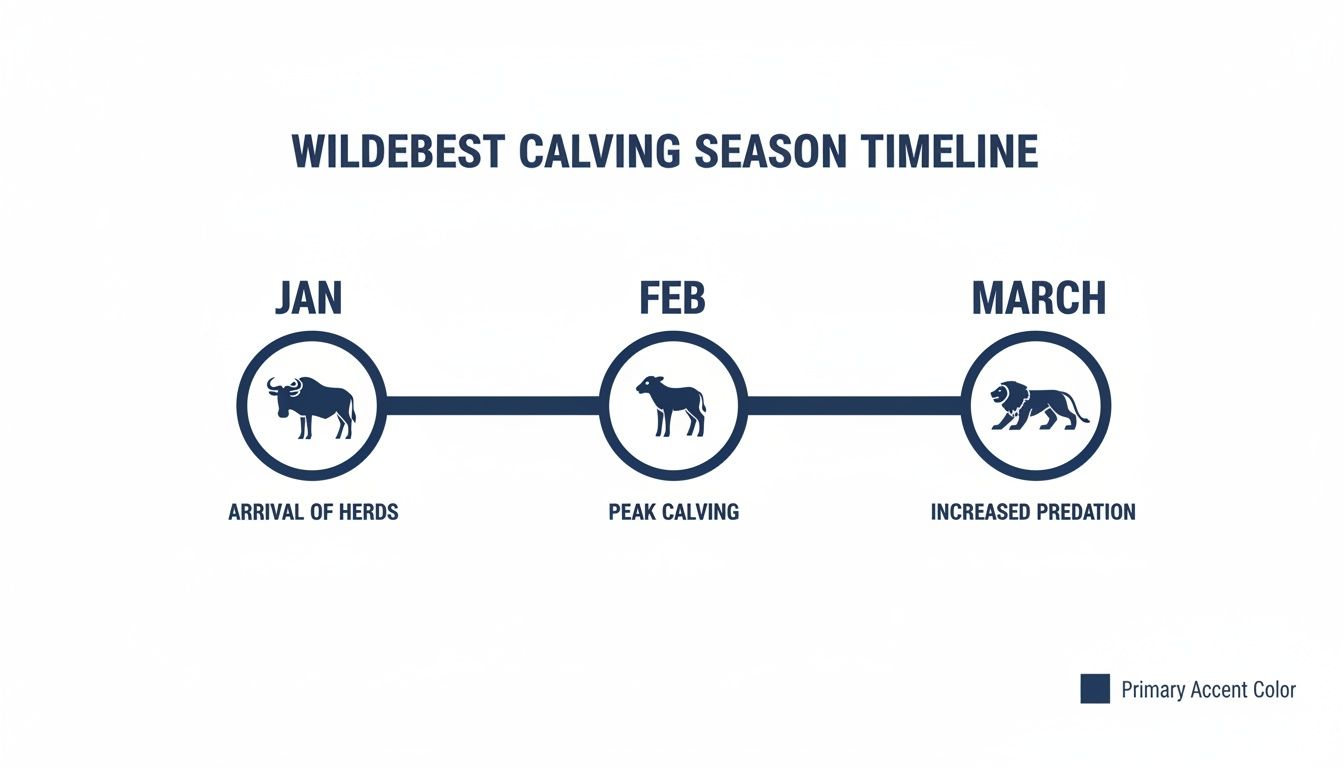
As you can see, the action is incredibly concentrated. January is for the gathering, February is the explosive peak of births, and by March, the predator activity is relentless as the young calves become a primary target.
In March, the plains are still buzzing with energy. The calves are finding their legs, but the pressure from lions, cheetahs, and hyenas is at its peak. As the month wears on, the first of the long rains often arrive, bringing dramatic afternoon thunderstorms that wash the dust from the air and leave the landscape sparkling.
April and May: The Long Rains
April and May are Tanzania's "emerald season," when the long rains arrive. While many travelers stay away, this period holds a powerful allure for the safari connoisseur. The parks are virtually empty, the scenery is breathtakingly lush, and it’s a paradise for birders, with migratory species showing off their brilliant breeding plumage.
For the serious safari enthusiast or repeat visitor, the "emerald season" is a revelation. The parks feel wild, private, and intensely alive. It's a different kind of safari, one focused on atmosphere, solitude, and the stunning beauty of a rejuvenated ecosystem.
It’s true that some remote luxury camps close down, and logistics require a seasoned hand due to the wet conditions. This is where my expertise comes in—I partner with the select properties that remain open and have the expert guides and robust vehicles to navigate the terrain, ensuring an exceptional and comfortable adventure.
June to October: The Peak Dry Season
June flips the switch. The rains stop, the sun comes out, and the landscape begins its transformation from green to gold. This is the cue for the Great Migration herds to start their epic trek north and west, moving out of the southern plains and through the Serengeti's Western Corridor in immense, dusty columns.
July and August are the blockbuster months. The herds finally reach the Northern Serengeti, setting the stage for the legendary Grumeti and Mara River crossings. This is the high-stakes drama safari is famous for. The weather is perfect—cool, dry, and sunny—and wildlife viewing is fantastic everywhere, as animals are forced to congregate around the few remaining water sources.
Statistically, the June to October dry season is the absolute best time for a classic Tanzanian safari. With sparse vegetation, spotting the Big Five becomes much easier, especially in the Serengeti and Ngorongoro Crater. The comfortable temperatures, hovering around 20-30°C (68-86°F), are ideal for spending the entire day out on game drives.
September and October keep the momentum going. The river crossings continue up north, and the parched landscape concentrates wildlife in predictable hotspots. Tarangire National Park, in particular, becomes an elephant sanctuary, with enormous herds drawn to the life-giving Tarangire River. It’s a truly magnificent sight and a perfect time for a multi-park itinerary.
November and December: The Short Rains
November brings a welcome change with the "short rains." These are usually just light afternoon showers that rarely get in the way of a safari. It’s a beautiful, transformative month—the first drops of rain settle the dust, and a fresh green shoots across the plains. This is the signal for the Great Migration to begin its long journey south again, leaving Kenya's Maasai Mara for the promise of fresh grass back in the Serengeti.
December is a fantastic and often underrated time for a safari. The landscape is lush, migratory birds are flocking in, and the herds are arriving back on the southern plains to begin the circle of life all over again. The holidays can be a busy period, but with proper planning, it’s a magical time to be on safari, enjoying the clear, vibrant scenery just before the calving season kicks into high gear.
Beyond the Serengeti: Timing Your Visit to Tanzania's Other Jewels
While the Serengeti understandably grabs the spotlight, a truly unforgettable Tanzanian safari is about more than just one park. It's a journey through a tapestry of completely different worlds. My job, and my passion, is to stitch these incredible places together into a seamless adventure, making sure you're in the right place at the right time.
Many of the families and couples I work with want to experience more than just the migration, and that’s when a nuanced understanding of the country's other micro-seasons becomes so important.
Ngorongoro Crater: A Year-Round Haven
The Ngorongoro Crater is a world unto itself. Think of it as a perfectly contained wildlife sanctuary, a natural Eden where the Big Five are reliably on display 365 days a year. Because it’s a caldera with its own ecosystem, the animals have no reason to leave.
That said, the experience does shift with the seasons. The dry months from June to October mean thinner vegetation, making animals easier to spot against the golden grasses. But the "green season" from November to May is breathtakingly beautiful, with lush landscapes, fewer crowds, and dramatic skies, even with the chance of an afternoon shower in April and May.
Tarangire National Park: The Elephant Paradise
Tarangire is a park of dramatic ebb and flow. While it's a wonderful place to visit anytime, it absolutely explodes with life during the long dry season, from July to October. This is when the Tarangire River becomes a magnet for wildlife from miles around.
You'll see staggering herds of elephants—some of the largest concentrations in all of Africa—congregating along the riverbanks. It's a truly powerful sight and makes these months, without a doubt, the prime time to visit if elephants are high on your list. It pairs beautifully with a Serengeti trip during this same window.
The Wild Southern Circuit: Ruaha and Nyerere
For those of you who have been on safari before or simply crave a more raw, untouched wilderness, Tanzania's southern parks are the answer. Places like Ruaha and Nyerere National Park are a world away from the northern crowds and operate on a much more seasonal rhythm.
The absolute best time to go is during the dry season, from June to October. The animals are drawn to the few remaining rivers and waterholes, creating incredible, intimate wildlife encounters with hardly another vehicle in sight. Come the wet season, the bush becomes thick and impassable, the animals scatter, and many camps simply shut down until the rains pass.
The Perfect Beach Finale: Zanzibar
Let's be honest, no epic Tanzanian adventure is truly complete without unwinding on the spice island of Zanzibar. The key is to time your beach escape to coincide with the best safari weather.
I always advise my clients to book their Zanzibar portion for either June to October or January to February. These periods promise those picture-perfect sunny days and calm turquoise waters ideal for diving, snorkeling, or just sinking your toes into the sand.
Weaving these different destinations and seasons together is where the magic happens. It’s about more than just booking flights and lodges; it’s about choreographing a journey that flows effortlessly from one incredible experience to the next.
Planning Your Effortless Tanzania Safari
Knowing when to go to Tanzania is just the first piece of the puzzle. The real art lies in weaving that knowledge into a perfectly executed, once-in-a-lifetime journey. Now that we’ve covered the best times and places, let’s talk about how we bring your vision to life, turning safari dreams into a seamless reality.
It all starts with a simple conversation. I need to understand what makes you tick—your travel style, your pace, and what you absolutely must see and do. Are you the type who wants to be out on game drives from sunup to sundown, chasing every possible sighting? Or do you imagine a more leisurely rhythm, with plenty of time to relax and soak in the views from a magnificent lodge?
From Vision to Reality
Once I have a clear picture of your ideal safari, I dive into the logistics so you don't have to. My job is to handle every complex detail, shielding you from the stress and uncertainty that can come with planning a trip of this scale. This is a full-service, concierge approach that covers everything:
- Securing Top Accommodations: I use my personal connections to book you into the most exclusive and perfectly situated luxury lodges and mobile camps—places I know and trust to deliver exceptional service.
- Arranging Private Logistics: This means your very own private 4×4 safari vehicle and a dedicated, expert guide for your entire adventure. No sharing, no compromises.
- Coordinating Internal Flights: I manage all the small bush plane flights that hop between parks, making sure your travel time is minimized and your itinerary flows without a hitch.
"Working with Karrah was the best decision we made. She handled every single detail, from the perfect lodges to our amazing private guide. We just showed up and experienced the magic of Tanzania without a single worry." – Jessica P., Recent Client
You can set off with absolute confidence. While I coordinate everything before you leave, my trusted in-destination suppliers and local partners provide 24/7 assistance, ready to handle any unexpected bumps in the road instantly.
My goal is simple: I take care of the complexities so you can be fully present, soaking in every magical moment of your safari. This is the core philosophy behind all of my luxury African safari trips.
Your Tanzania Safari Questions Answered
Over the years, I've found that a few key questions always come up when my clients start dreaming up their ideal safari. Let's tackle those right now to help you get a clearer picture of what to expect.
How far in advance should I book my Tanzania safari?
This is probably the most critical planning question. For the absolute best experience, especially during the peak seasons (June to October or the January-February calving season), you need to be thinking 9 to 12 months ahead. The top-tier lodges and the best-located camps—the ones right in the heart of the action—get snapped up incredibly fast. Booking well in advance isn't just a suggestion; it's the only way to secure those truly special spots. For any other time of year, a 6 to 9 month lead time usually gives us enough flexibility to put together a fantastic itinerary.
What is a realistic budget for a luxury safari in Tanzania?
A thoughtfully designed luxury safari is an investment, but it’s one that pays dividends in lifelong memories. As a general guide, my clients typically invest between $1,500 to $2,500 per person, per day. This comprehensive rate typically includes stays at exclusive lodges, a private vehicle and guide, all meals and drinks, park fees, conservation levies, and all internal flights and transfers. My role is to ensure that every dollar of your investment translates into unparalleled experiences and exceptional value, perfectly tailored to you.
How long should a Tanzania safari be?
To really do it justice and avoid feeling like you're just checking boxes, I always recommend a minimum of 7 to 10 days just for the safari portion. This gives you enough time to truly settle in and explore two or three completely different parks, like the vast plains of the Serengeti, the unique ecosystem of the Ngorongoro Crater, and the baobab-studded landscapes of Tarangire. If you're dreaming of ending your adventure with your toes in the sand, plan for a 12 to 14-day trip. This gives you the perfect amount of time for a comprehensive safari and a relaxing beach escape in Zanzibar.
About The Author
Hi, I’m Karrah, owner, founder, and lead travel advisor at Explore Effortlessly, a luxury award winning travel agency based in Miami.
I specialize in designing bespoke, high touch itineraries to bucket list destinations around the world. Every trip I plan is carefully curated with intention, insight, and logistics handled seamlessly from start to finish.
As the primary advisor, I work closely with each client to understand their travel style, priorities, and vision, then translate that into a thoughtful, elevated experience. From luxury cruises and private villas to honeymoons, safaris, and once in a lifetime journeys, my role is to simplify the planning process while elevating every detail.
For more travel insights and exclusive offers, join my newsletter.