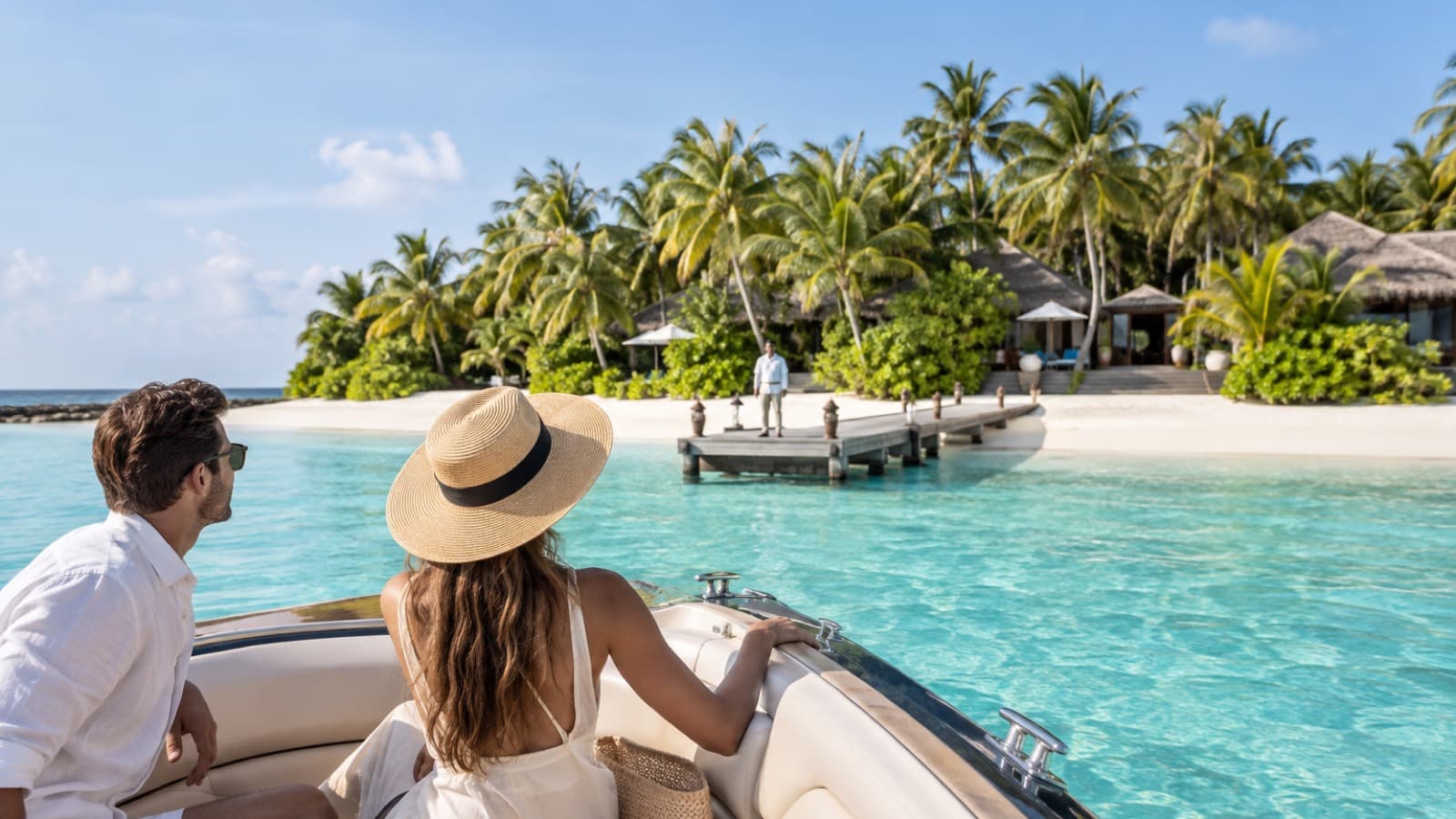
The Maldives is an independent island nation in the Indian Ocean, southwest of India and Sri Lanka. For a resort trip, the decision is not simply which photo looks prettiest. Choose the island, room, season and airport transfer as one itinerary, or a beautiful stay can begin with an awkward arrival and end with a rushed departure.
You may have dozens of gorgeous resorts open in your browser and no useful way to compare them. A lagoon villa, a lively reef and a quiet beach can mean very different days, even within the same country. I start by asking what you actually want to do between breakfast and sunset, then work backward to the right island.
Where the Maldives is and how the map helps
The official Maldives geography overview describes an Indian Ocean nation of 1,192 islands in a double chain of 26 atolls. Malé is its capital; the Maldives is not part of India. On a map, look for the resort's atoll and its distance from Velana International Airport, not just its position relative to the capital.
An atoll is a grouping of reef and islands, not a single hotel destination. You may see natural-atoll names, administrative-atoll names and abbreviations used differently on maps. The government's atoll directory is a useful orientation tool, but you do not need to memorize every atoll to make a good trip decision.
What matters to your holiday is which route gets you to your specific island, whether its lagoon suits swimming, and whether you want a quiet private-island stay or more excursions. One resort per stop is often a better starting point than trying to collect islands like passport stamps.
Choose the island for your actual trip
For a short, restorative escape, I would first consider an island reached by speedboat from the main airport. A more remote atoll may be worth another leg if you have the time and a specific reason to go there. Neither is automatically more exclusive or better for you.
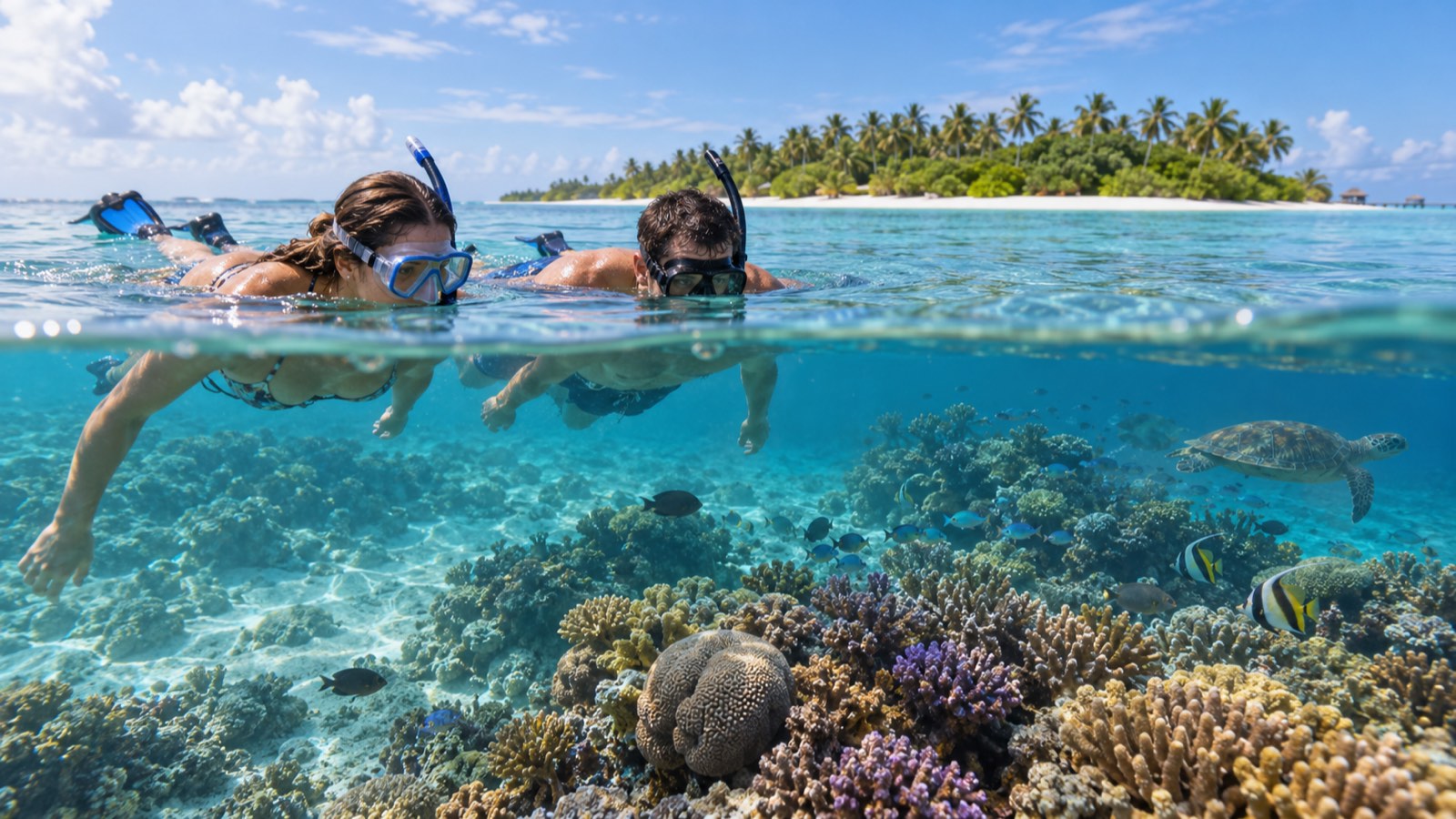
Baa Atoll is a compelling conversation for travelers focused on marine ecosystems. UNESCO identifies Baa Atoll as a biosphere reserve with reefs, seagrass and habitats for manta rays and whale sharks. That is a reason to research responsible marine experiences, not a promise that wildlife will appear during your stay.
| Island choice | Best for | Trade-off to discuss |
|---|---|---|
| Resort with a simpler airport connection | A shorter trip or travelers who dislike extra transit | Compare the island and rooms, not just the transfer |
| More remote resort island | A longer stay with a particular setting or activity in mind | Another flight or boat leg can constrain arrival and departure days |
| Inhabited local island | Travelers who want more exposure to everyday Maldivian life | Local customs and accommodation styles differ from a private resort island |
If this is a honeymoon, privacy and pace tend to matter more than fitting in every excursion. Our guide to Maldives honeymoon resort choices is a useful companion when you are deciding what kind of stay actually feels romantic to you.
Plan the transfer before choosing the resort
The Maldives tourism board's travel information explains the basic transport pattern: speedboats commonly serve resorts closer to the international airport, while other resorts use seaplanes or domestic flights. Your international arrival is therefore not necessarily the end of the journey.
Before selecting a resort, I would confirm the exact transfer arrangement for your dates and flight times with the property. Ask where you meet the transfer representative, whether another boat ride follows a domestic flight, what happens if your inbound flight runs late, and how early you need to leave the island on your last day. Schedules and operating conditions can change.
When a convenient transfer is worth more
On a brief stay, saving a complicated connection can give you more usable time at the resort. On a longer stay, a farther island may be the right trade-off if it offers the setting you value most. I would not commit to a tight same-day flight connection without understanding the resort's transfer plan and its fallback.
My planning rule: Compare the first and last travel days before comparing two room photographs. Those days can decide how much of the trip you actually enjoy.
Pick a room for how you will spend your days
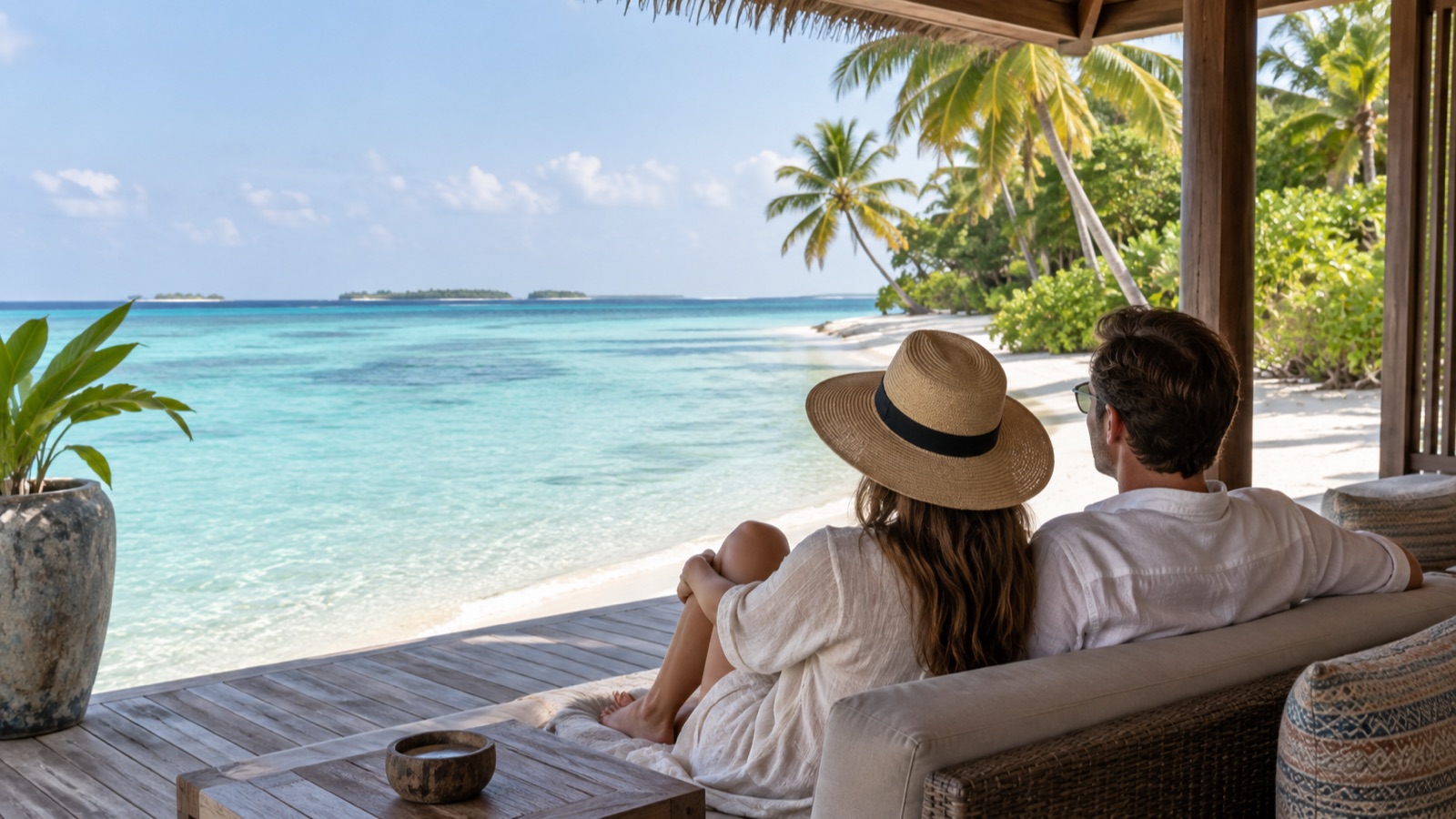
Overwater villas are visually striking, but the view alone is a poor reason to choose one. Ask about the orientation, privacy, access to the water, shade, wind exposure and walking distance to restaurants. A beach villa may suit travelers who want sand immediately outside, more greenery, or an easier route between room and beach.
The label on a room category does not tell you whether swimming from the deck is appropriate. Entry points, water depth, currents and reef proximity vary by property and conditions. Confirm the exact room category and safe-water guidance before paying more for direct water access.
- Couples who prize privacy: Prioritize sightlines from nearby villas and passing boats, not merely the room's square footage.
- Active snorkelers: Ask what marine access is actually available from the island and which activities require a boat.
- Families or cautious swimmers: Compare beach access, room layout and supervised swimming options rather than assuming an overwater villa is the best upgrade.
- Travelers who love a slow morning: Check the breakfast plan, shade and distance between your room and the places you will use every day.
I would put the extra investment into a room feature you will use daily, not a dramatic photo you will admire once. Resort facilities, inclusions and room configurations change, so confirm them against your actual offer.
Choose your season with honest expectations
The Maldives Meteorological Service climate guide describes the southwest monsoon, usually from mid-May to November, as the wetter period, and January to March as the northeast dry-season period. December and April are transitional months. This is more precise than pretending the weather changes neatly on the first day of a month.
For travelers whose main goal is long, bright beach days, I lean toward the drier period, while still treating every day as weather-dependent. If your dates fall in the wetter season, build a trip you would enjoy even if an excursion changes or a shower interrupts an afternoon. Rain does not mean every day is lost; sunshine does not mean the sea will always be calm.
The farther you travel for a very specific marine experience, the more carefully I would check its season, current operating rules and realistic odds with the relevant operator. Wildlife is not a scheduled amenity. A flexible plan with more than one satisfying way to spend the day usually feels better than a trip built around a single sighting.
Understand what drives the total cost
A nightly room figure tells you very little about the total investment. The right comparison includes international air, transfer to the island, room category, meals, drinks, selected experiences, applicable taxes and your cancellation terms. Ask for a like-for-like proposal rather than comparing two resorts with different inclusions.
Dining deserves particular attention on an island resort because you may spend most meals on the property. A meal arrangement can be a good fit if you genuinely intend to use it, but its value depends on the particular resort's terms and your habits. If your ideal day includes a long excursion, do not assume every included meal will be practical to use.
My usual upgrade test is simple: will you notice the difference every day? A better-located room or a smoother arrival may beat a more elaborate category with features you will barely touch. I would rather help you make that trade-off deliberately than push the most expensive villa.
Give the itinerary room to breathe
The Maldives works best when the rhythm is intentional. With a shorter stay, I generally favor one island and fewer transitions. With more time, two contrasting stays can work, but only if the transfer between them adds something you truly want and does not consume the heart of a day.
A good day might be as simple as a slow breakfast, time in the water when local conditions permit, a rest in the shade and an unhurried dinner. That is not a lack of planning. It is planning that protects the reason you came. Add a guided marine activity or another meaningful experience when it fits the conditions and your energy.
Leave room for weather or transport changes on either end. I also prefer discussing flight arrival windows before falling in love with a resort, since the transfer may dictate when the holiday can actually begin. Your advisor should connect these pieces, not present a hotel shortlist in isolation.
Respect the country beyond the resort
Resort islands and inhabited islands are different settings. The Maldives tourism board advises visitors to dress modestly on inhabited islands and notes that individual alcohol imports are not permitted. The UK government's Maldives safety guidance explains that the country is Islamic and sets out local rules and cultural expectations. Check current guidance before leaving the resort for an inhabited island.
Malé is the capital of a lived-in nation, not simply a transit point on the way to a villa. For perspective, the Maldives Bureau of Statistics reported 515,132 residents in its 2022 census summary, including resident Maldivians and foreign residents. That is a historical census count, not a current-year estimate.
If you want to include local culture, discuss a visit that respects the host community and fits naturally around your transfer and resort stay. I would not tack on a stop merely to make an itinerary look fuller.
Take safety and entry rules seriously
Beautiful turquoise water is not a safety assessment. The UK government's guidance warns of strong tidal currents and advises travelers to ask resort staff where swimming is safe, heed signs and use supervised areas. Conditions can change during your stay. Never assume a villa ladder, reef channel or photo-worthy sandbar is safe to use without local advice.
The U.S. State Department's Maldives advisory currently says to exercise increased caution due to terrorism. Review the latest advisory and your insurance, particularly medical evacuation coverage, before departure. No advisor or article can guarantee safety.
Maldives Immigration says tourist visas are granted on arrival subject to entry requirements. Its official tourist visa page is the right place to verify the current rules for your passport and trip. Travelers are responsible for meeting entry requirements, and these can change. Check the official declaration process as part of your predeparture checklist rather than relying on an old screenshot.
Frequently Asked Questions
Is the Maldives a country or part of India?
It is an independent country in the Indian Ocean, southwest of India and Sri Lanka. Its capital is Malé. For planning, the crucial geography is the atoll and island your resort occupies, plus the route from your arrival airport.
How many atolls are there in the Maldives?
Visit Maldives describes a double chain of 26 atolls, while government resources also use natural and administrative groupings with different counts. The naming is more complicated than one number suggests. I focus on the specific island, its airport connection and the experience available there rather than asking you to learn the full atoll map.
Is it safe to swim in the Maldives?
It can be enjoyable in suitable areas, but no beach or lagoon is automatically safe. Currents and conditions vary. Ask the resort team where swimming is permitted on the day, follow posted warnings and do not swim alone in unfamiliar water.
Where should I go in the Maldives for a first visit?
Start with your available nights and your tolerance for transfers. A convenient island can be excellent for a shorter break; a farther atoll may suit a longer stay or a particular marine interest. Then compare the actual beach, lagoon, room and dining options, not the atoll name alone.
Are Maldives hotels and resorts the same thing?
Not necessarily. Lodging on an inhabited island gives you a different setting and set of local customs from a private-island resort. Even among resorts, the room, reef access, meal terms and transfers can differ substantially. Tell me what you want your days to feel like before deciding which style fits.
Plan a Maldives trip that fits you
Explore Effortlessly designs custom trips for travelers who want confident choices and thoughtful coordination. We can work from your dates, travel pace and priorities to compare resorts, rooms and transfers as one trip. The initial consultation is part of our standard service; any additional service arrangements are discussed in the consultation.
Some travelers like to compare how destination timing shapes other journeys. My month-by-month Iceland travel timing guide shows why the calendar changes what a place offers. If your next trip is a cruise instead of an island stay, the guide to Rhine route and ship choices applies the same principle: choose the experience before the headline image. For an altogether different journey by water, my guide to planning an Antarctica cruise helps you compare the route and ship before deciding.
Ready to narrow the islands down to one trip that feels like yours? Start Planning My Trip.
For more thoughtful travel ideas, join the Explore Effortlessly newsletter.
About the Author
Hi, I'm Karrah Kazravan, owner and lead travel advisor at Explore Effortlessly, an award winning Miami agency serving clients nationwide. I design custom journeys for busy travelers who want confident recommendations and thoughtful coordination. I have traveled to more than 67 countries across all seven continents and am a Nexion Circle of Excellence Top 5% advisor, ASTA Verified Travel Advisor, Certified Travel Associate, and CLIA Accredited Cruise Counselor.