You're probably looking at tours from Prague to Vienna and Budapest because the idea is perfect on paper and annoying in practice. Three iconic capitals. Easy rail links. Gorgeous hotels. A trip that feels cultured and polished instead of frantic. Then planning begins, and suddenly you're comparing train classes, transfer times, hotel locations, and whether a “luxury tour” means luxury or just a nicer bus. If you would rather control the route yourself than connect three capitals by rail, my luxury Europe road trip ideas give you a different starting point.
That's the trap. This route only feels effortless when the logistics are tight and the experiences go beyond the public checklist. If you get those two things right, this is one of the smartest multi-city journeys in Europe. If you get them wrong, you lose entire days to transit friction and spend your trip doing the same sightseeing everyone else is doing.
The Imperial Heart of Europe A Perfect Trio
Prague, Vienna, and Budapest belong together. Not because they're close on a map, but because the journey has an arc. Prague gives you gothic drama and storybook streets. Vienna adds polish, ceremony, and imperial scale. Budapest finishes with a grand, cinematic flourish along the Danube.
These cities share a Central European rhythm shaped by empire, music, architecture, and old-world ritual. That's what makes this route feel like a coherent grand tour instead of three disconnected city breaks. You're not bouncing around Europe. You're following a cultural thread.
Why this route works so well
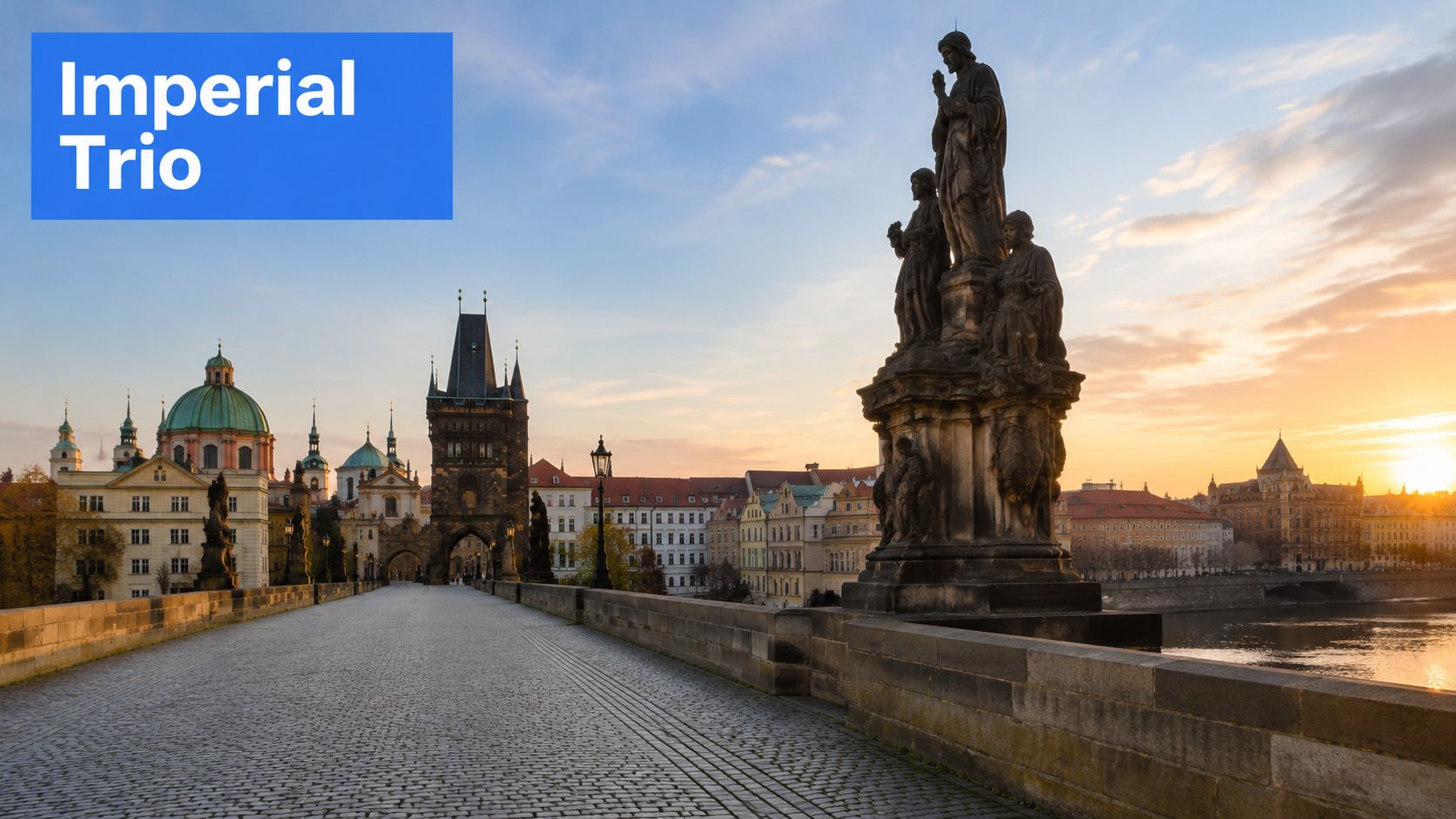
Prague is where many travelers fall hardest, and I understand why. It's atmospheric without trying. The lanes twist, the skyline is full of spires, and even a simple morning walk feels cinematic. Vienna shifts the mood. It's more refined, more structured, and unapologetically elegant.
Budapest is the city that gives the trip its final punch. The river setting is dramatic, the architecture is bold, and evenings there feel more sensual than formal. That contrast matters.
The best version of this trip doesn't treat the cities as equals. It lets each one do a different job.
What each city contributes
- Prague brings mood: old stone bridges, layered history, and a sense of romance that's hard to fake.
- Vienna brings refinement: palaces, concert culture, formal service, and the confidence of a city that knows exactly what it is.
- Budapest brings spectacle: hilltop views, Danube panoramas, and a more emotionally charged finish.
That's why tours from Prague to Vienna and Budapest continue to appeal to travelers who want a trip with substance. You get beauty, yes. But you also get progression. The route builds.
Smart Transit Between Capitals
You leave your Prague hotel after breakfast, lose an hour to a station scramble, arrive in Vienna tired, and realize half the day disappeared in the handoff. That is how a good itinerary turns average. On this route, transport is not a background detail. It decides whether the trip respects your time or wastes it.
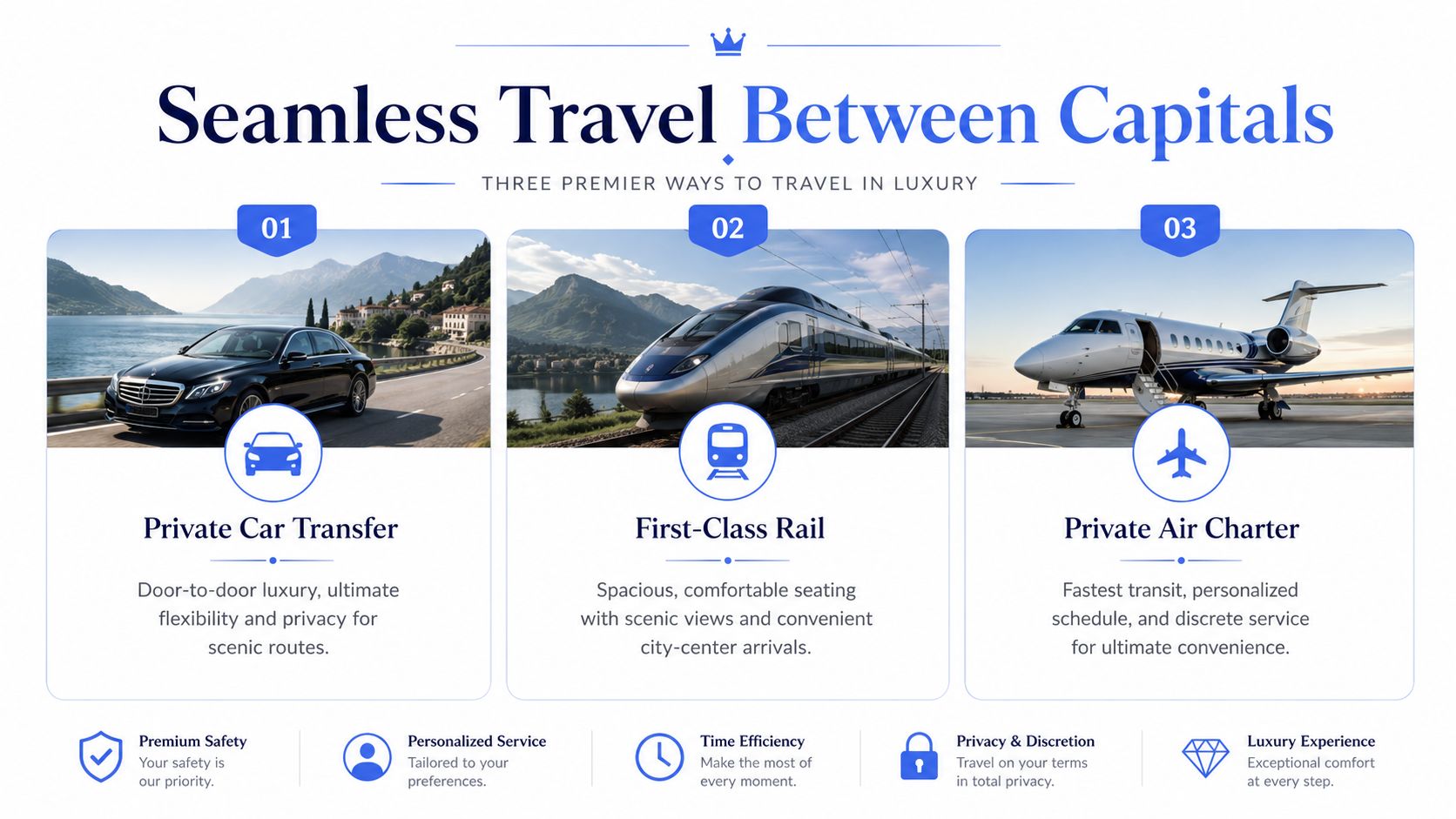
The right plan depends on what you value most. If you want the fastest city-center rhythm with the least friction, book first-class rail. If you want privacy, door-to-door handling, and the chance to add a worthwhile stop between capitals, use a private driver. Treat group coach transfers as a compromise, not a luxury solution. They operate on someone else's clock.
First-class rail is the smart default
For most travelers, rail is the best answer. You depart from the heart of one city and arrive in the heart of the next. That matters more than people expect. You cut out airport transfers, long security lines, and the dead time that makes short flights feel inefficient.
Rail also keeps the trip polished. You can work, read, or look out the window instead of managing checkpoints and baggage claims. On a route built for cultured, time-conscious travelers, that is usually the right trade.
Choose rail if you want:
- Clean city-to-city logistics: fewer transfers and fewer weak points.
- A comfortable travel day: proper seating, room to settle in, and no airport choreography.
- Predictable timing: ideal if museum entries, guides, or dinner reservations are booked in advance.
Private driver is worth it when the journey itself should feel curated
A chauffeured transfer earns its price when you want control. Not theoretical control. Real control over departure time, luggage handling, pace, and stops that standard itineraries cannot accommodate well.
This is the better choice if you want to leave Prague after breakfast, stop for lunch and a private visit in Český Krumlov, and still arrive in Vienna without feeling herded through the day. It is also the right answer for families, travelers with substantial luggage, and anyone who would rather skip platforms and station logistics altogether.
If your calendar is tight, buy back time first. Upgrade the transfer before you upgrade the suite.
For travelers who care about polished ground services in Europe, I like how The Algarve Experience explains private transfer expectations in Portugal. Different destination, same standard. Door-to-door only feels premium when timing, communication, and service are handled properly.
Private air has a place, but this usually is not it
Private air sounds like the luxury move. On this corridor, it often is not. The distances are short enough that terminal formalities and ground coordination can cancel out the time you hoped to save.
I recommend private air only for travelers with highly compressed schedules, security requirements, or a broader trip that connects these capitals to harder-to-reach destinations. Otherwise, rail or a chauffeur usually delivers a better experience with less friction.
Here is the practical comparison:
| Option | Best for | Main advantage | Tradeoff |
|---|---|---|---|
| First-class rail | Most couples and leisure travelers | Fast, comfortable city-center travel | Limited flexibility for scenic stops |
| Private driver | Travelers who want privacy and custom pacing | Door-to-door service and curated detours | More time on the road |
| Private air charter | Travelers with tightly packed schedules | Maximum scheduling control | Often less efficient than it sounds on this route |
One more point. The smartest version of this trip does not stop at choosing train versus car. It connects your ground plan to your arrival and departure strategy, so you are not undoing good local planning with clumsy flight choices. If you are coordinating open-jaw tickets, use this guide to the best way to book multi-city flights before you lock anything in.
The best luxury trips on this route are defined by two things: efficient transfers that protect your day, and access that ordinary booking sites do not provide. Get the transport right, and you create space for the part that matters. Private palace openings, after-hours cultural visits, and expert-led experiences that never happen on a standard schedule.
Crafting Your Perfect Central Europe Itinerary
You land in Prague on Sunday, lose half of Monday to fatigue, change hotels every other night, and spend more time checking in and out than enjoying the trip. That is the version I would avoid.
The right itinerary for Prague, Vienna, and Budapest protects your time first. Then it earns its luxury through access. If the schedule is too tight, you miss the private museum visit, the after-hours palace opening, the unhurried lunch that turns into the best memory of the trip. On this route, pacing is not a soft preference. It determines whether the trip feels polished or inefficient.
A strong plan usually gives Prague the longest stay, keeps hotel changes to a minimum, and leaves enough room for experiences that cannot be booked at the last minute. The European Best Destinations guide to Prague, Vienna and Budapest is a useful overview of how these capitals pair together, but the key difference comes from how you arrange the days.
The 7 day version for travelers short on time
A week can work. Keep your expectations disciplined.
This should be a highlights trip with very little wasted motion. I would split it across the three capitals only and refuse the temptation to add Cesky Krumlov, Salzburg, or a Danube detour. Those additions look appealing on paper and usually weaken the trip in practice.
A smart 7-day structure looks like this:
- Prague first: enough time for the Old Town, the castle district, and one private evening experience.
- Vienna second: a focused stay built around imperial history, one major cultural reservation, and a dinner worth dressing for.
- Budapest last: the strongest finish, with river-facing views, thermal bathing done properly, and a standout final night.
This format suits travelers who move efficiently, recover quickly from flights, and care more about momentum than downtime.
The 10 day version I recommend most often
This is the best balance for busy professionals. It fits into a real calendar and still leaves room for the parts of the trip that should never feel rushed.
With 10 days, each city gets enough breathing room to become distinct. Prague can include a slower second day instead of a forced sprint. Vienna can support both its grand public institutions and a harder-to-arrange cultural appointment. Budapest finally gets more than a quick river cruise and one dinner reservation.
That extra time matters because luxury on this route is not about adding more attractions. It is about better timing. You can schedule a late arrival day without losing the trip. You can hold space for a closed-door visit, a specialist guide, or a concert evening that ends properly instead of being cut short by an early train the next morning.
I also use this format to match the trip to the traveler, rather than forcing every client through the same template. A music-focused couple should build Vienna around performance dates. A family should give Prague more daylight flexibility and book suites that reduce friction. A food-driven itinerary may deserve longer dinners and fewer museums.
If you are juggling home logistics before departure, practical details deserve the same attention. I have had clients appreciate having trusted support arranged in advance, and a local contact like Vendulka, a pet sitter in Prague can be very useful for longer stays, relocations, or travelers managing pets around an extended itinerary.
The 14 day version for depth and discretion
Two weeks gives this route real sophistication.
You can add a meaningful stop between capitals, spend longer in one city without guilt, and build around experiences that standard tours cannot touch. That might mean a private estate visit outside Vienna, a specialist-led art day in Prague, or a slower Budapest finish with spa time, architecture, and exceptional dining spread over several evenings instead of compressed into one.
The 14-day version also fixes a common mistake. Travelers often confuse “seeing more” with “traveling better.” On this route, traveling better means fewer forced transitions, stronger hotel strategy, and enough margin for access that depends on timing and relationships.
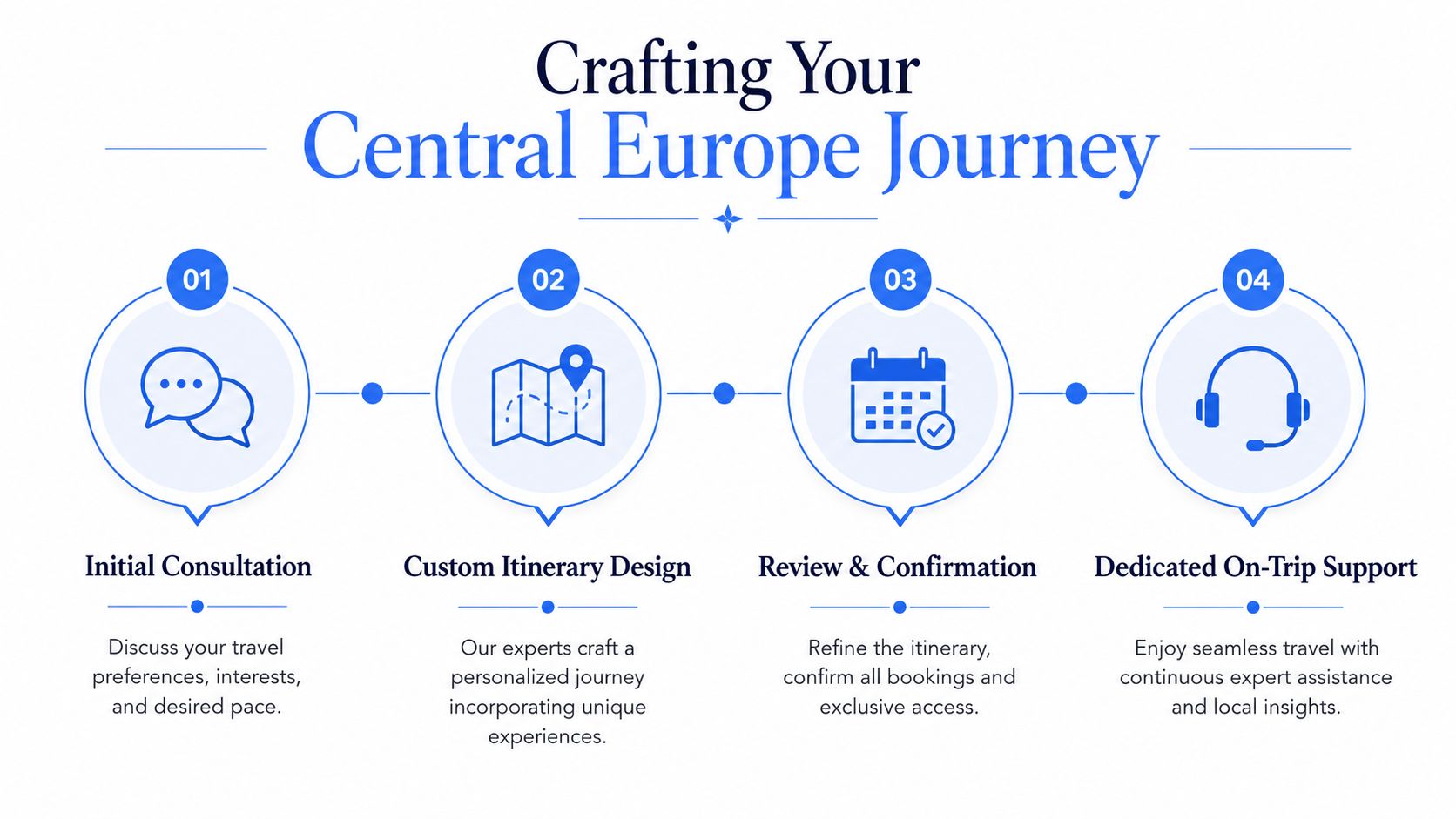
If you want the trip shaped around your priorities instead of a generic template, custom Central Europe itinerary planning is far more effective than adapting a fixed group tour built for someone else's pace.
Luxury Stays and Exclusive Access
A five-star hotel alone doesn't make this route luxurious. Plenty of travelers book beautiful rooms and still end up having a very standard experience. The difference is access, timing, and how the stay interacts with the city.
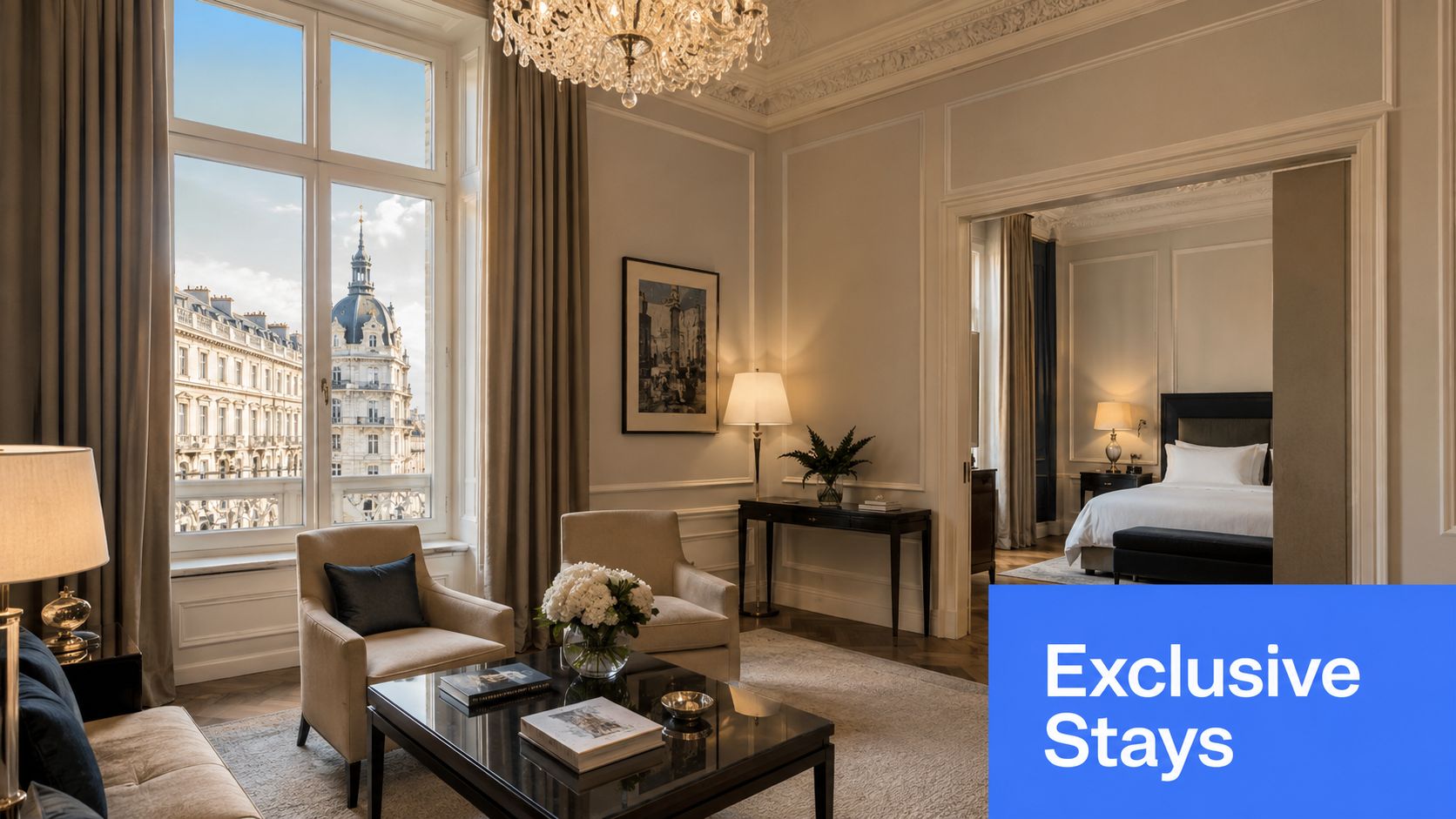
A strong hotel in Prague should give you a base that feels calm after the crowds. In Vienna, I want a property that leans into elegance without feeling stiff. In Budapest, I prefer hotels that make the river or landmark views part of the experience. The right room should change how your day begins and how your evening lands.
What elevated lodging should actually do
The hotel shouldn't just be “nice.” It should solve problems before they become visible. That might mean a smoother early arrival strategy, better room placement, or the kind of service team that understands discretion and pace.
I look for:
- Location that protects your time: being well placed matters more than having the flashiest lobby.
- Rooms with a point of view: not every suite needs to be oversized, but it should feel intentional.
- Service that reads the room: the best teams know when to be proactive and when to disappear.
The real luxury is behind closed doors
There's a genuine market gap for non-public cultural access. Many tours include the famous sites, but they stop at public entry. That's not enough for travelers who want the trip to feel distinctive. According to Road Scholar's Central Europe tour context, 65% of premium travelers seek “authentic access” such as private concerts or behind-the-scenes palace visits.
That number tracks with what affluent clients ask for. They don't want more landmarks. They want better entry points.
The memory you keep usually isn't the public tour. It's the hour before opening, the private performance, the tasting led by someone who actually shaped the menu.
In practical terms, that can mean:
- A private concert in a historic setting instead of standard evening entertainment.
- Behind-the-scenes access at a palace or archive rather than a crowded daytime visit.
- A chef-led tasting that feels like hospitality, not a reservation anyone could have made.
Tours from Prague to Vienna and Budapest either become forgettable or exceptional. Public highlights are easy. Thoughtful, non-public moments are what make the journey feel personal.
The Effortless Difference Planning with an Advisor
DIY planning sounds efficient until you're six browser tabs deep into rail classes, airport transfer timing, and whether your Vienna hotel is elegant or just heavily photographed. This route rewards expertise because the decisions are interconnected. One bad transfer choice can throw off an entire day. One poorly located hotel can make a city feel harder than it is.
That's why private-basis luxury tours on this route tend to be structured as 10-day itineraries departing daily, often including places like Cesky Krumlov and Szentendre, according to Artisans of Leisure's Prague, Vienna, and Budapest luxury tour format. The format works because it's flexible. It respects the traveler's pace instead of forcing everyone into a standardized rhythm.
What expert planning changes
A well-planned trip fixes the problems before they show up. It aligns arrival times with hotel strategy, matches transport to your actual priorities, and filters out experiences that look premium online but feel generic in person.
That's the value:
- You save planning time: no endless comparison spiral.
- You get vetted combinations: hotels, guides, and drivers that work well together.
- You travel with more confidence: trusted in-destination partners handle local support while logistics are coordinated before departure.
I work with clients nationwide through virtual consultations, and this kind of Europe itinerary is exactly where that process pays off. Busy professionals don't need more options. They need the right ones, assembled properly.
Credentials matter when complexity increases
This kind of trip looks easy because the map is compact. It isn't. Multi-stop Europe requires sequencing, supplier coordination, and judgment. That's where credentials should mean something.
I'm a Circle of Excellence Advisor, Top 5 percent at Nexion, and a CLIA Accredited Cruise Counselor. Those aren't decorative lines. They reflect experience handling layered itineraries where flights, hotels, ground services, and special experiences all need to click.
If you want a route like this designed around your schedule and priorities, custom trip planning is the smarter move than trying to patch together a luxury trip one booking at a time.
Frequently Asked Questions
How much should I expect to spend on tours from Prague to Vienna and Budapest
Luxury on this route has a wide range. Premium tour packages start at approximately $3,499 per person for 11-day itineraries, while hyper-luxury rail options can be $17,999+, as shown in Collette's pricing context for Central Europe tours. That range is useful because it shows how broad the category is.
My advice is simple. Don't ask only what the trip costs. Ask what level of ease, privacy, and access you want built into it. That's what moves the number.
Is rail or private transfer better for this route
Usually, rail wins on efficiency and simplicity. Private transfer wins on flexibility and privacy. If you want to move cleanly between capitals, rail is excellent. If you want scenic stops or don't want to deal with station logistics, private transfer is often the better investment.
The wrong answer is choosing based on headline price alone. On this route, wasted time is expensive.
How far in advance should I plan
Earlier is better, especially if you care about top hotels, strong guide availability, or seasonal travel such as Christmas market periods. This itinerary attracts travelers who want polished, high-touch experiences. Those are the pieces that tighten up first.
I'd rather build a great trip with options than try to rescue a compromised one after the best inventory is gone.
What's usually included when working with a luxury travel advisor
That depends on the trip, but typically it means the itinerary is designed as a whole rather than booked in fragments. Flights, hotel strategy, private transfers, touring pace, and special requests are coordinated together. Trusted in-destination partners and suppliers provide on-the-ground support, while the planning framework is handled before departure so the trip runs cleanly.
That's the difference between having reservations and having a plan.
Are group tours a good fit for this route
Sometimes, yes. But many travelers who start with a group-tour mindset are looking for a private journey with less waiting and more customization. Group departures work best if you enjoy a shared pace and don't mind trading flexibility for structure.
If you care about timing, room category, private cultural access, and not losing chunks of the day to coach logistics, private planning is usually the better fit.
Why do FAQs matter so much in travel planning
Because high-end travel decisions usually stall over practical questions, not inspiration. I like clear FAQ frameworks because they help travelers identify what they need to ask before committing. Even outside Europe, a resource like Another Side Of Los Angeles Tours FAQs shows how useful it is when travel information answers operational questions directly instead of hiding behind marketing language.
The same principle applies here. The clearer the planning conversation, the better the trip.
If you want this trip done properly, with the right hotels, the right pacing, and logistics that respect your time, plan my luxury trip with Explore Effortlessly. I work with clients nationwide through virtual consultations and design high-touch itineraries that remove the planning burden without flattening the experience. You can also join the newsletter for more luxury travel insight and inspiration through the Explore Effortlessly newsletter.
Author Bio
Hi, I'm Karrah, owner, founder, and lead travel advisor at Explore Effortlessly, a luxury award winning travel agency based in Miami.
I specialize in designing bespoke, high touch itineraries to bucket list destinations around the world. Every trip is curated with intention, insight, and smoothly executed logistics from start to finish.
From luxury cruises and private villas to honeymoons, safaris, and once in a lifetime journeys, my role is to simplify the planning process while elevating every detail.