Italy is easiest to enjoy when you travel in a shoulder season, choose fewer regional bases, reserve high-demand experiences early, and outsource complex transfers when your time matters. With 133.6 million tourist arrivals in 2023 and 458.4 million nights spent in tourist accommodation in 2024, Italy rewards planning far more than improvisation.
The most popular advice about Italy is to see as much as possible. I recommend the opposite for busy travelers. Italy offers too many compelling cities, regions, restaurants, museums, vineyards, and coastlines to fit comfortably into one rushed itinerary. A trip that moves every night may look impressive on paper, but it often turns meaningful experiences into luggage transfers and station platforms. If Italy is part of a bigger milestone wish list, I would compare these once-in-a-lifetime travel experiences around the world before settling on the route.
The smarter approach protects four things: comfort, access, pacing, and energy. Travel when demand is easier to manage, establish regional bases, reserve experiences that depend on capacity, and use private logistics where a missed connection would disrupt the rest of your trip.
I've traveled to more than 65 countries across all seven continents, and I know how quickly coordination becomes the trip. Explore Effortlessly designs custom international journeys for travelers who value clear recommendations over endless research. If you're weighing Rome, Florence, Venice, Tuscany, or the Amalfi Coast, you can start a conversation about your Italy trip before the best rooms, guides, and arrival services are committed.
1. Time Your Visit to Avoid Peak Crowds and Heat
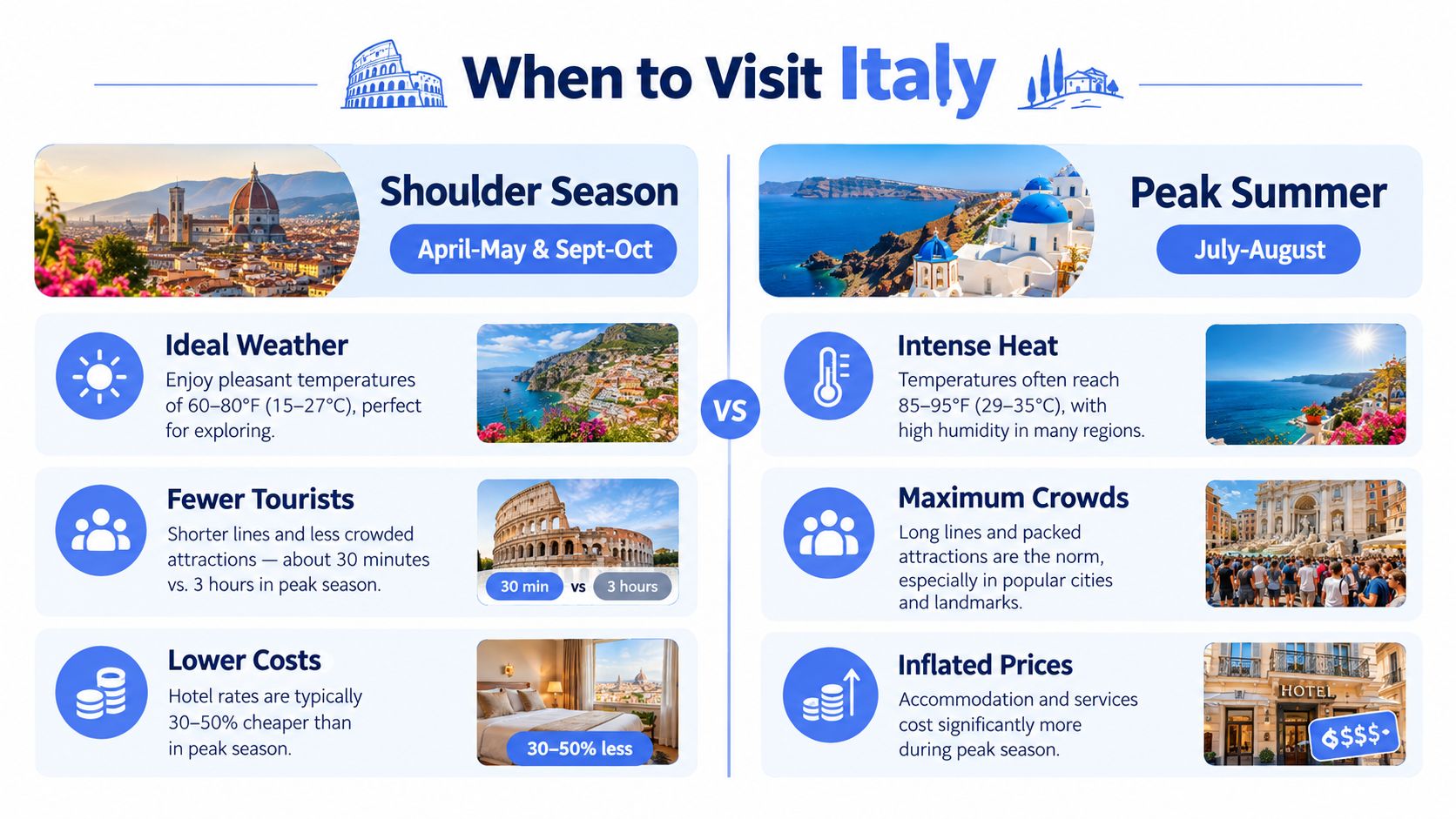
For most premium travelers, April to May and September to October offer the most balanced conditions for Italy. You'll have more comfortable days for walking, a better chance of enjoying outdoor dining and countryside excursions, and a more manageable rhythm than during the busiest summer period.
Summer can still be the right choice for school calendars, yacht time, or a specific event, but it requires stronger advance planning. Major destinations consistently draw substantial international demand. Italy recorded 133.6 million tourists in 2023, including 67.9 million international visitors, according to official Italian tourism statistics. That volume affects museum access, hotel inventory, restaurant availability, and the general feel of central neighborhoods.
Winter can bring quieter city visits, but smaller towns may operate with reduced schedules or occasional closures. I prefer spring and fall for first-time itineraries that combine cities with Tuscany, the lakes, or the coast.
Make the calendar work harder
Reserve major attractions and sought-after dining well ahead, even outside summer. For museums, weekday morning entries usually create a calmer start, while late afternoon can work well when your schedule includes a long lunch or a slower morning.
Pack layers. Mediterranean weather can shift between cool mornings and sunny afternoons, and a polished itinerary shouldn't require returning to the hotel every few hours.
Practical rule: Avoid holiday periods when quiet access matters. A shoulder season alone won't make a destination quiet if your dates overlap with Easter week, school holidays, or a national holiday.
2. Secure Private Transfers When Time Matters
Public transportation can be an excellent part of an Italy itinerary, especially on well-served high-speed routes. It becomes less attractive when you're moving with several bags, arriving late, connecting to a villa, or coordinating multiple travelers with different mobility needs.
A private transfer protects the transition between places. Your driver can meet you at the agreed point, manage luggage, and take you directly to a hotel, villa, or port without asking you to decode a local connection after a long flight. That convenience matters most on arrival days, when a small delay can affect check-in, dinner reservations, and the next morning's departure.
Venice is a good example. A pre-arranged motorboat transfer can deliver you directly to a waterfront hotel, while a bus and vaporetto combination may involve more walking, luggage handling, and navigation. In Tuscany or along the Amalfi Coast, private driving also lets you build in scenic stops without turning the day into a transportation puzzle.
Choose the right transport for the route
Use high-speed rail for efficient city-to-city movement when stations and schedules align with your itinerary. Choose a private driver for rural routes, villa stays, coastal transfers, and days when flexibility is more valuable than the lowest transport cost.
For multi-day driving, ask for a daily service structure rather than treating every movement as a separate transfer. Confirm the driver's contact details, vehicle information, hotel address, and luggage needs before departure. Build extra time into airport departures because traffic can be unpredictable.
Italy also has a recurring disruption risk from transport strikes and rail interruptions. Rail Europe's Italy disruption guidance advises checking live updates, using guaranteed services where appropriate, and allowing generous transfer buffers. For a premium itinerary, I build those protections into the design instead of treating them as an afterthought.
3. Dine Beyond the Tourist Zones
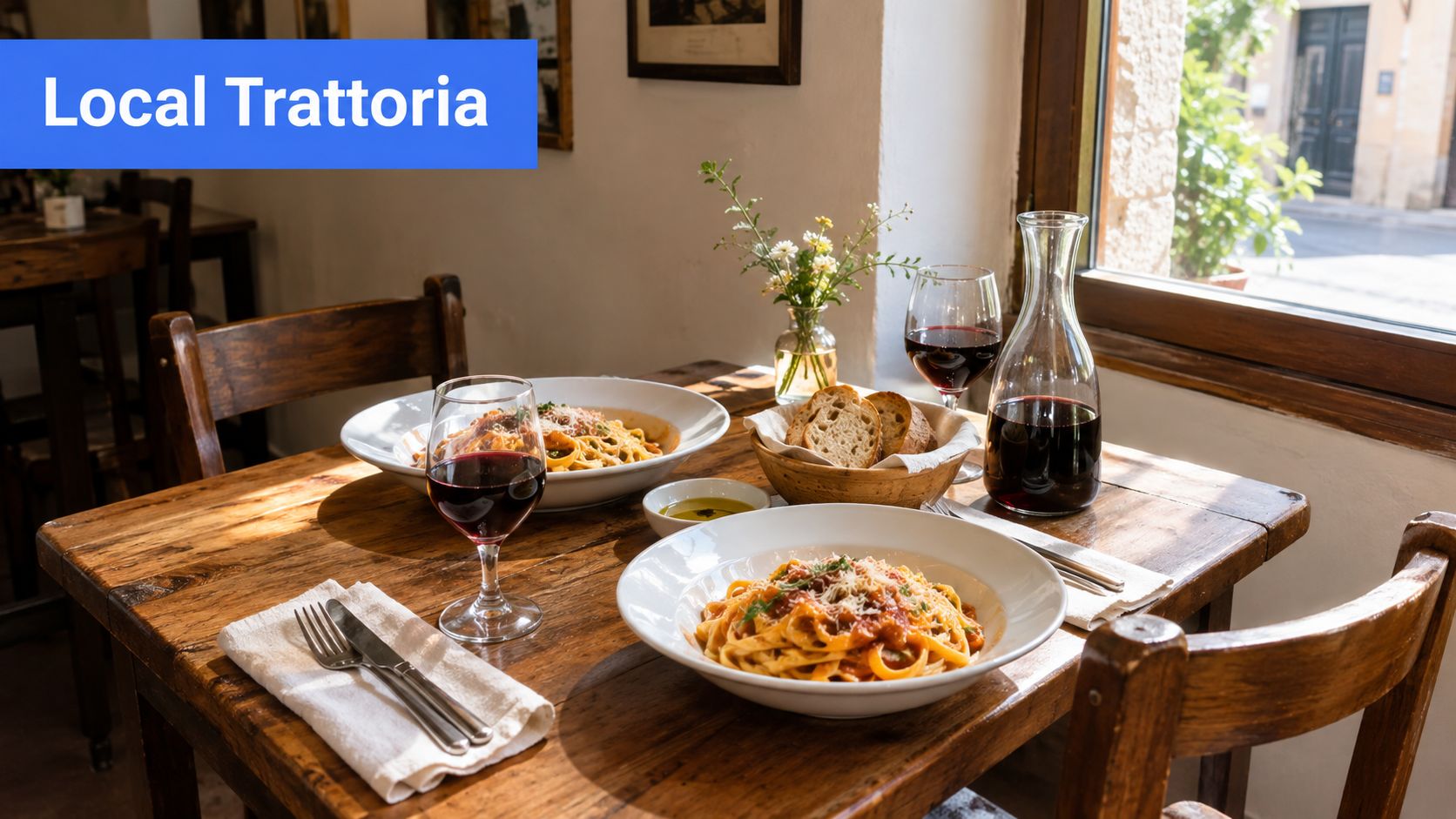
The restaurant with the most prominent view isn't automatically the right choice. In Rome, Florence, Bologna, and Venice, I'd rather place at least some meals in residential neighborhoods where the menu reflects local habits instead of a visitor's expectation of Italy.
Testaccio in Rome can provide a more grounded setting for Roman specialties. Cannaregio offers a different Venice experience from the busiest lanes near major landmarks. In Bologna, handmade pasta and regional cooking make the neighborhood as important as the dining room itself.
The trade-off is that smaller trattorias may offer fewer substitutions, less polished English-language service, and menus that change with availability. That's part of the appeal, but travelers with allergies or strict dietary requirements should communicate those needs before confirming a reservation.
Plan for the local rhythm
Ask your hotel concierge or villa coordinator for recommendations based on the kitchen and neighborhood, not a list of famous restaurants. Share your preferences clearly, then allow some flexibility. The best meal may be a modest trattoria selected because it fits the route and the day's energy.
Timing also affects the experience. An early or later seating can create a calmer meal, while the busiest dining period may feel more hurried. Learn a few basic phrases, including “Che consiglia?” when asking what the restaurant recommends.
For advisors and hospitality teams refining their own dining programs, these actionable insights for restaurant wine offer useful context. For travelers, the practical lesson is simple: reserve restaurants that matter, but leave room for one or two spontaneous neighborhood meals.
4. Arrange Museum Entry and Private Guides Early
Italy's headline museums are access-dependent experiences. Arriving without a confirmed entry can force you to choose between waiting, changing your schedule, or skipping a collection you specifically traveled to see.
I recommend reserving major museums and private guided visits before finalizing the rest of the day. A knowledgeable guide changes the experience from looking at a sequence of masterpieces to understanding why a work matters, how a space was built, and what details most visitors miss.
Florence's Uffizi and Accademia, Rome's Vatican Museums, and other major institutions deserve different strategies. You may want a Renaissance-focused guide in Florence, an art and restoration specialist in Rome, or a shorter visit built around one collection rather than an exhausting museum marathon.
Match the guide to your interests
Ask for a specialty guide when you care about Renaissance restoration, sculpture, architecture, religious art, or a particular period. Early morning slots usually offer the most comfortable start, but the right timing depends on your arrival, sleep schedule, and other reservations.
Allow enough time for security, walking between rooms, and conversation. Booking several museums on the same day often produces diminishing returns, especially after a long flight or an intensive walking tour.
For Rome-specific planning, this guide to what to see in Rome can help you decide which landmarks deserve dedicated time. I'd rather see fewer collections with context than race through every famous room.
Advisor perspective: Advance access isn't just about skipping a line. It protects the time you've already invested in getting to Italy.
5. Choose a Villa or Agriturismo for Longer Regional Stays
A city-center hotel is convenient, but it isn't always the best setting for a multi-day regional experience. A villa or boutique agriturismo can give you outdoor space, privacy, a slower morning, and a stronger connection to the local countryside.
This works particularly well for families, couples celebrating a milestone, and groups who want shared meals without spending every evening in a restaurant. A Tuscan villa can support countryside days and long outdoor dinners. An agriturismo near the Amalfi Coast can connect a stay to gardens, local food, and the family running the property.
The trade-off is logistics. Rural accommodations often require a car or private driver, and a beautiful setting can become inconvenient if every meal or excursion involves a long transfer. I always plan transportation at the same time as the villa, not after.
Treat the property as part of the itinerary
Stay several nights rather than using a villa as a one-night photo opportunity. Ask about housekeeping, meal preparation, local coordination, arrival instructions, and access to nearby restaurants. A property coordinator can also help align the day with weather, market schedules, and preferred activities.
A villa doesn't automatically offer better value, and a rural stay isn't right for travelers who want to walk out of the lobby into a dense cultural district. The decision depends on how you want your mornings, evenings, and recovery time to feel.
For travelers who want this style of stay, Explore Effortlessly's luxury villa rental planning can connect accommodation decisions to drivers, dining, staffing, and day trips.
6. Build Regional Bases Instead of Daily City Hops
A strong Italy itinerary usually has fewer hotel changes than the traveler first expects. Use a base that supports the purpose of the region, then explore from there.
Florence works well for Tuscany because it combines cultural depth with access to countryside excursions. Sorrento can support Amalfi Coast visits and archaeological sites while giving you one consistent place to return to. Venice is better enjoyed when you aren't treating it as a brief stop between other cities.
Let the base do practical work
Choose a neighborhood with a good dining scene, sensible arrival access, and a location that reduces repeated transit. A hotel near the wrong station or far from evening restaurants can create friction every day, even if the room itself is excellent.
For rural excursions, decide between a rental car and a private driver based on confidence, parking, route complexity, and whether you want to drink during a tasting. Private multi-day driving can cost more, but it may protect energy and allow the itinerary to remain flexible.
A regional base also creates room for a real rest day. Use it for a spa appointment, a long lunch, a pool afternoon, or an unstructured morning. That isn't wasted time. It's what lets you enjoy the next guided visit instead of enduring it.
For a more complex Alpine combination, review this Italy and Switzerland trip planning guide before adding another country to the route. Geographic logic matters more than collecting destinations.
The most valuable upgrade may be one fewer move.
7. Reserve Wine and Culinary Experiences as Structured Visits
A walk-in tasting can be pleasant, but it rarely gives you the same depth as a planned producer visit or chef-led class. When food and wine matter to you, design the experience around the host, the setting, and the level of access you want.
In Piedmont, you might prefer a family producer who can explain the vineyards and compare wines with regional food. In Tuscany, a market visit followed by hands-on cooking creates a stronger connection to the ingredients than a demonstration viewed from the edge of a crowded room. In Venice, a class focused on cicchetti and Adriatic seafood can make the city's cuisine feel specific rather than generic.
Advance planning also helps with dietary requirements. Ask about substitutions, cross-contact, and the format of the meal before confirming. Some traditional experiences are naturally flexible, while others depend on a fixed menu or a particular market visit.
Build an educational arc
Schedule a culinary class after you've had time to adjust to Italy's pace. A private wine tasting can then reinforce what you've learned about a region, rather than becoming another disconnected appointment.
Request producer recommendations based on your preferences. Do you like structured reds, crisp whites, traditional methods, or food-focused pairings? Those answers help an advisor match you with the right experience instead of choosing the most visible option.
If you want to cook a regional dish at home after returning, these kitchen-tested gnocchi al gorgonzola ideas can extend the trip into your own kitchen. The best culinary souvenirs are often techniques and context, not another packaged item.
8. Protect Your Feet and Your Daily Pace
Italy rewards walking, but historic cities also bring cobblestones, uneven paving, stairs, hills, and long stretches without a convenient place to sit. The mistake I see most often is not packing unattractive shoes. It's packing shoes that haven't been tested under real walking conditions.
Bring comfortable, broken-in footwear and alternate pairs. Test them before departure on substantial walks, then pack quality socks and blister protection. New shoes can turn an otherwise excellent private tour into a shortened outing.
Design the day around energy
Don't schedule a major museum, a long walking tour, and a late dinner immediately after an arrival flight. Put the most access-dependent experiences at the time of day when you'll be alert, and use a slower meal or spa appointment to create recovery space.
Choose accommodations based on practical positioning, not only the room. Being close to your preferred evening neighborhood can save unnecessary walking and make it easier to return for a break. In coastal destinations, discuss elevation and stair exposure before selecting a hotel or excursion.
A mobility-conscious itinerary can still feel rich. Use a private car for difficult sections, select viewpoints with practical access, and give travelers permission to split up when interests or energy levels differ.
Comfort is part of the itinerary, not a reward for finishing it.
9. Confirm Every Arrival Transfer Before Departure
A transfer reservation isn't finished when it appears in an itinerary. It needs a final operational check that accounts for flight details, luggage, hotel access, driver contact, and delays.
Confirm private arrival and departure transfers before leaving home. Share a current mobile number with the driver or coordinating team, and make sure the hotel knows about a late arrival when relevant. If you're staying at a villa, confirm where the driver can stop and how keys or local introductions will work.
Give the transfer room to absorb reality
Airports can take longer than expected after landing. Baggage collection, customs, and meeting-point navigation all affect the arrival time, so don't schedule a restaurant reservation too tightly after an international flight.
The same discipline applies on departure. Build traffic conditions and airport procedures into the pickup plan, especially when leaving a coastal town or traveling during a busy period. If your itinerary includes a time-sensitive train or flight, use a generous buffer rather than hoping every segment runs perfectly.
For travelers comparing premium arrival options, this Seattle to Milan premium flight planning resource provides useful context for thinking about the air portion alongside ground coordination. The flight, transfer, hotel, and first evening should function as one arrival plan.
10. Use an Advisor When Coordination Becomes the Trip
You can book individual pieces of an Italy vacation yourself. The harder question is whether the pieces work together when flights change, a villa sits outside town, a museum requires a timed entry, and a private driver must connect several regions without exhausting you.
That's where professional planning earns its place. An advisor can align flights, hotels, private transfers, guides, dining, regional bases, and recovery time around your priorities. The benefit isn't just having more reservations. It's avoiding a beautiful itinerary that fails in the transitions.
Share the details that change the design
Tell your advisor about mobility needs, dietary restrictions, preferred hotel style, must-see sites, sleep preferences, celebration dates, and the amount of structure you want. Ask for written confirmations and local contact information for each supplier.
Explore Effortlessly is a fit for travelers who value time, comfort, and one trusted planning relationship.
The advisor's job is to make decisions clearer, protect the pacing, and keep the logistics connected from the first consultation through the return home.
10 Italy Travel Tips Comparison
| Strategy | Implementation Complexity | Resource & Time Requirement | Expected Outcome / Quality | Ideal Use Cases | Key Advantages / Tips |
|---|---|---|---|---|---|
| Time Your Visit to Avoid Peak Crowds and Heat | Low, choose shoulder months; simple calendar planning | Low, potential cost savings (hotels 30–50% cheaper); book attractions 4–6 weeks | High, better weather, fewer queues, improved access | Leisure travelers, photographers, museum-goers seeking comfort | Book major sites and restaurants 4–6 weeks ahead; avoid Easter week |
| Secure Private Transfers Over Public Transport and Taxis | Medium, arrange in advance, select vendor/vehicle | Medium–High, €50–150 per transfer; book 2–3 weeks ahead | High, predictable timing, luggage security, door-to-door service | Groups, multi-city itineraries, travelers with lots of luggage | Use reputable companies; confirm vehicle & driver 24–48 hrs prior |
| Dine at Family-Run Trattorias in Residential Neighborhoods | Medium, requires local knowledge and reservations | Low, meals often 40–60% cheaper than tourist restaurants; reserve 2–3 days | High, authentic regional dishes and interactions | Food-focused travelers, cultural immersion seekers | Ask concierge for local picks; learn basic Italian phrases; book ahead |
| Arrange Museum Entry & Private Guided Tours to Skip Lines | High, secure credentialed guides and timed slots | Medium–High, €60–120 pp for private tours; book 4–6 weeks ahead | Very high, deep learning, priority access, less time wasted | Art/history enthusiasts; short itineraries needing efficiency | Book early; request specialty guides and early-morning slots |
| Stay in Villas or Boutique Agriturismos Instead of City Hotels | Medium, coordinate transport, staff, provisioning | Medium, similar nightly cost to premium hotels but better per-person value; book 3–4 months for peak | High, privacy, space, authentic rural living | Families/groups, long stays, travelers seeking downtime | Arrange car/driver with booking; use villa coordinator for logistics |
| Plan Multi-Day Regional Explorations Rather Than Daily City Hops | Low–Medium, requires hub selection and day-trip planning | Medium, car rental or driver costs (may be offset by fewer relocations) | High, less fatigue, deeper local engagement | Families, slow-travelers, region-focused trips | Base 3–4 nights; include rest days; choose hubs within 30–60 min |
| Book Wine Tastings & Culinary Classes as Structured Experiences | Medium, pre-book single-producer experiences | Medium, €80–150 pp; book 3–4 weeks ahead | High, personalized education and memorable meals | Food and wine enthusiasts, experiential travelers | Schedule mid-trip; request English-speaking hosts and producer matches |
| Invest in Appropriate Footwear & Pace Itineraries Around Walking Comfort | Low, purchase and break in shoes pre-trip | Low–Medium, footwear $150–250; break-in time 2–3 weeks | High, preserves mobility and enjoyment, prevents injury | All travelers, especially city-heavy itineraries | Test shoes on 5–10 mile walks; pack two pairs; schedule rest days |
| Arrange Private Airport Transfers and Confirm Arrival Details 24–48 hrs Before Flights | Low, confirmation step; logistics check | Low, small time investment; transfers cost extra | High, reduces arrival stress, prevents missed-driver issues | Late arrivals, complex multi-stop trips, travelers needing reliability | Have advisor or supplier confirm 48 hrs; share WhatsApp contact info |
| Engage a Travel Advisor for Pre-Trip Coordination & Tailored Services | Low (to traveler), delegate planning; medium to set up | Medium, advisor fees; saves time and reduces risk | Very high, consolidated support, VIP access, stress reduction | Busy professionals, multi-gen groups, complex itineraries | Share non-negotiables early; request references and written confirmations |
Turn Good Italy Advice Into a Cohesive Journey
The strongest Italy trips don't come from adding more reservations. They come from making the right decisions in the right order.
Start with timing. If your calendar allows, spring and fall can make walking, dining, and regional exploration more comfortable. If you must travel in peak periods, reserve capacity-dependent experiences earlier and expect popular locations to require more patience. Italy closed 2024 with 458.4 million nights spent in tourist accommodation, up 2.5% from the prior record year, according to ISTAT's tourism release. That sustained demand is why central hotels, premium rail segments, timed museum entries, and sought-after restaurants shouldn't be left to the final days.
Next, choose bases that match the purpose of the trip. Rome, Florence, Venice, Tuscany, the Amalfi Coast, and the lakes all deserve time, but they don't all belong in the same itinerary. A regional base can replace repeated packing with deeper excursions, better meals, and a slower start to the day.
Then protect access and energy. Reserve the experiences that depend on capacity, use private guides when context matters, and plan transportation around luggage and geography. Choose footwear you've already tested, schedule recovery time, and don't mistake a full calendar for a meaningful trip.
Private transfers are most worthwhile when they eliminate a difficult connection, protect a late arrival, or support a rural stay. High-speed rail remains useful for efficient city-to-city travel, but regional driving, villas, ports, and complex multi-stop routes benefit from a coordinated ground plan. Italy's inbound demand is strongly international, with Germany, the United States, and France identified as leading origin markets in EU tourism data. That broad demand reinforces the need to plan around busy corridors instead of relying on same-day availability.
Explore Effortlessly works best with busy travelers who have a realistic premium budget and want one advisor to align the details. We can coordinate flights, hotels, drivers, dining, guides, villas, and special arrangements, while keeping your preferences and pacing visible across the itinerary. VIP support includes two additional scheduled calls, dining, spa, and special-arrangement assistance, plus extended evening and weekend help for canceled flights and missed connections. That support doesn't guarantee an immediate or 24-hour response, and clients also receive supplier contacts for urgent real-time assistance. Standard business hours are Monday through Friday from 10:00 a.m. to 6:00 p.m. Eastern.
Italy planning FAQs
When is the best time to visit Italy?
I generally recommend April to May or September to October when your schedule allows. These periods often support comfortable walking and a more manageable pace, but specific holidays and local events can still affect availability.
How far ahead should I reserve major experiences?
Reserve popular museums, private guides, premium rail segments, important restaurants, villas, and specialized culinary or wine experiences before the trip is close. The more fixed your dates and the more exclusive the experience, the earlier I'd place it.
When are private transfers worth the investment?
Use them for airport arrivals, villa access, coastal routes, luggage-heavy travel, late arrivals, and connections where a delay would affect the rest of the itinerary. For straightforward city-center rail routes, public or high-speed rail may be the more efficient choice.
How do regional bases affect pacing?
They reduce packing and repeated check-ins, making room for longer meals, rest, and deeper excursions. A base works when it's geographically suited to the destinations you want to visit. It doesn't replace every transfer, but it prevents unnecessary ones.
Start Planning My Trip when you're ready for a clear Italy itinerary built around your dates, priorities, comfort, and preferred level of support.
Join the Explore Effortlessly newsletter for practical travel guidance and destination inspiration.
Explore Effortlessly designs personalized Italy journeys for busy professionals, couples, families, and travelers planning complex multi-stop trips. Visit Explore Effortlessly to connect your flights, hotels, private drivers, dining, guides, and pacing through one professional planning process.