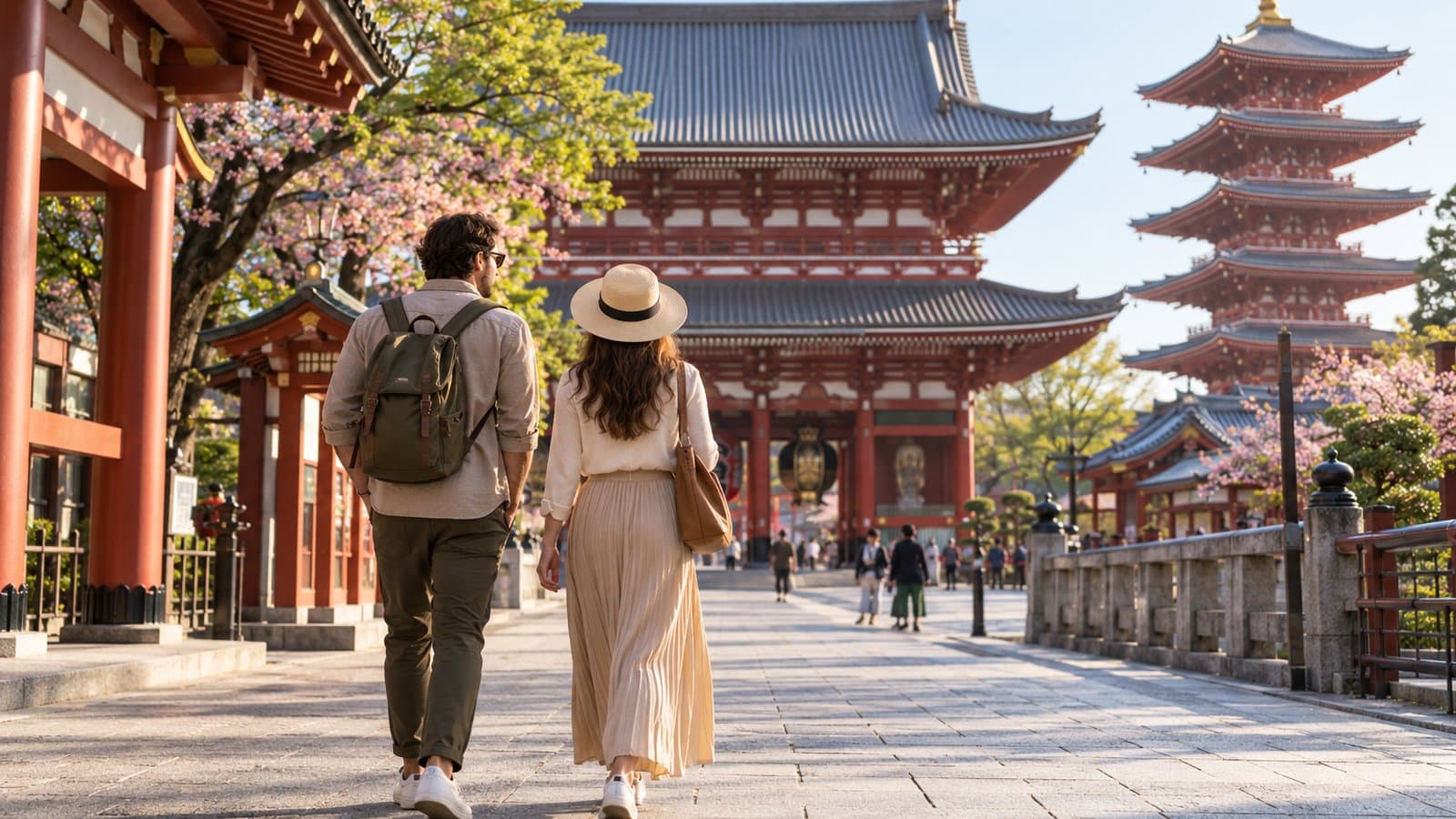
The best 3 day Tokyo itinerary groups your sightseeing by area: Asakusa and Ueno on day one, Meiji Jingu, Omotesando and Shibuya on day two, then digital art and Ginza on day three. I recommend three full sightseeing days, one well-chosen hotel, and an arrival day that stays deliberately light.
Tokyo can make even a confident traveler second-guess every choice. You want the temples, the food, the city views and the little discoveries, but not three days spent chasing reservations across town. The answer is not a longer checklist. It is a route that leaves you enough energy to enjoy what you came for.
Your three days in Tokyo at a glance
I would use this itinerary for a first visit within a longer Japan journey, particularly for couples and families who want thoughtful private guiding and a comfortable hotel base. Count the days after you have arrived. An afternoon landing followed by two sightseeing days is a different trip, even if your calendar shows three dates.
The plan has one main focus each morning and a flexible afternoon. That gives you room to browse, stop for lunch, or return to your hotel before dinner. If you already know that you prefer a slower introduction, my five day Tokyo itinerary guide gives the city more breathing room.
| Day | Main focus | My recommended priority | What to avoid adding |
|---|---|---|---|
| One | Asakusa and Ueno | A guided introduction to traditional Tokyo | Several distant shopping districts |
| Two | Meiji Jingu, Omotesando and Shibuya | Shrine grounds, design and contemporary city life | Both a late night and an early dinner commitment |
| Three | Azabudai Hills and Ginza | One art experience and a relaxed final meal | An out-of-town excursion |
Choose your hotel around the evenings you want
Before choosing a room, decide what you want to do after sightseeing. My preference for this route is a hotel in the Ginza, Hibiya or Marunouchi area if your evenings center on dinner and a comfortable return. If browsing Shibuya and spending longer in the western neighborhoods matter more, I would compare a western base instead.
Do not choose on the city-view photograph alone. Ask about the actual room category, bed configuration, occupancy limit, breakfast arrangements and how the entrance connects to your planned transport. For a family, a confirmed connecting layout may be worth more than a higher floor. For a couple, enough space to unpack and rest can matter more than another hotel restaurant.
I would keep one hotel throughout these three days. A move between two Tokyo properties adds packing and check-in decisions without giving this short itinerary much in return. Save a change of atmosphere for the next destination in Japan.
Day one explores Asakusa and Ueno
Start with Sensoji and the surrounding streets of Asakusa. Kaminarimon and the Nakamise approach give the morning a clear focus, rather than sending you straight into a list of unrelated stops. The official Tokyo three day neighborhood guide also groups Asakusa with Ueno and highlights nearby Kappabashi for kitchenware browsing.
My recommendation is to use a private guide for this first morning if you enjoy understanding what you are seeing. Tell the guide your interests before the trip: temple traditions, architecture, food or crafts. A useful introduction should help you notice more, not simply move you through the landmarks faster.
Choose one afternoon direction
After lunch, choose Ueno for a park and museum-focused afternoon, or spend longer around Asakusa and Kappabashi if browsing appeals more. Treat Akihabara as an alternative for a traveler with a strong electronics or anime interest, not another compulsory stop. I would rather you remember one neighborhood clearly than photograph four in a blur.
Keep dinner near your hotel on the first sightseeing night if you are still adjusting to the time change. Avoid putting the most elaborate meal of the trip here by default. You want to enjoy that evening, not spend it trying to stay awake through the final courses.
Day two pairs Meiji Jingu with Omotesando and Shibuya
Begin at Meiji Jingu, then shape the rest of the day around Harajuku, Omotesando and Shibuya. This is the day I would use for the contrast between shrine grounds and contemporary Tokyo. Keep the morning unhurried, and leave space for the shops or architectural details that catch your attention.
Check Meiji Jingu's monthly opening hours before settling the order. The shrine's hours follow the seasons, with a published December closing time of 4 p.m. A plan that saves it for late afternoon can therefore work poorly in winter.
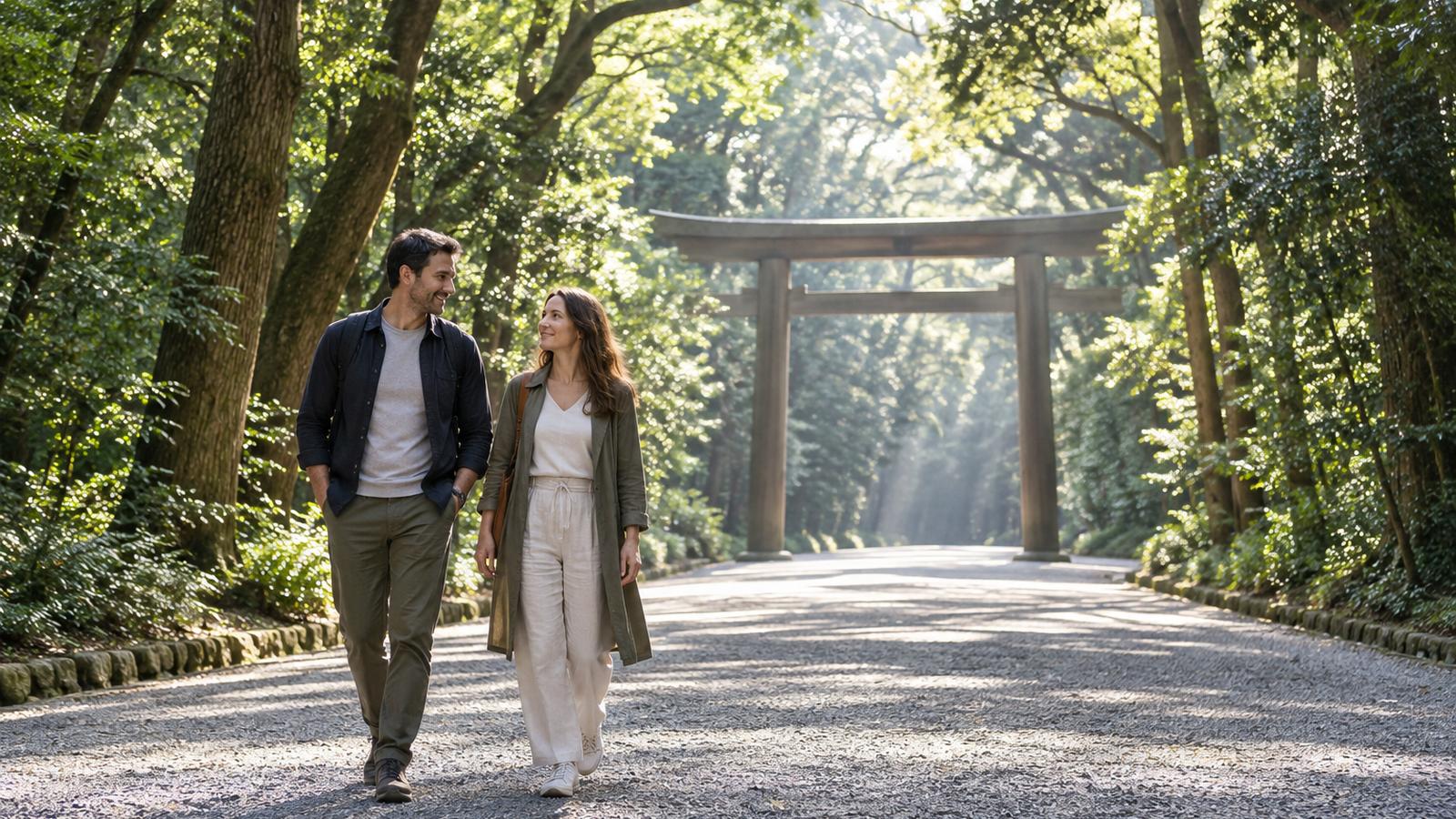
I would choose Omotesando for a design-led lunch and browsing break, then continue toward Shibuya. Harajuku can take more of the afternoon if youth fashion is a priority. For an adult couple with different interests, agree on a meeting place and give each other a little independent browsing time rather than making every shop a joint decision.
In Shibuya, see the crossing and choose whether a skyline experience matters enough to structure the evening around it. Do not add an observation deck just because it appears on every checklist. If you want Shinjuku's city lights instead, make that a deliberate substitution for the late afternoon and evening, not another full neighborhood squeezed into the same day.
Day three balances digital art and Ginza
For your final full day, I would choose one indoor art experience, followed by a generous lunch and time in Ginza. teamLab Borderless is in Azabudai Hills, not its former Odaiba location. Its official Borderless visitor information explains the museum's digital artworks and open-ended layout, with no fixed route through the spaces.
Plan this around confirmed admission rather than assuming the day you want will remain available. I would allow a substantial part of the morning instead of putting a tight lunch reservation immediately afterward. If digital art does not interest you, replace it with a museum that does. There is no prize for choosing the attraction everyone else chose.
Use Ginza for the afternoon if shopping and a polished final dinner appeal. Keep the shopping list short enough that it does not become an assignment. If the weather or your energy suggests a hotel break instead, take it. A final meal you are present for is a better ending than one more tired hour on your feet.
My planning rule: Give the last full day one firm anchor, not three. It should be easy to adjust without unraveling the rest of your trip.
Make arrival transfers and guiding earn their place
Both Haneda and Narita serve Tokyo, but Narita sits farther outside the city. I would compare the entire journey to your hotel, including flight times and luggage, rather than choosing on airfare alone. Do not build a precise sightseeing appointment around your expected airport exit time.
A private arrival transfer is an upgrade I would consider for families, travelers with several bags, or anyone who wants fewer decisions after a long flight. Confirm the vehicle capacity, luggage allowance, meeting instructions and what happens if the flight is delayed. A transfer only adds convenience when those details match your actual party.
For sightseeing, my preference is a guided first morning followed by more independent time, unless you genuinely want a guide throughout. Ask for routing that mixes walking and transport around your comfort level. I would not automatically buy three full days of driving when the experience you want is exploring individual neighborhoods on foot.
Adapt the itinerary for couples, teens and younger children
A 3 day Tokyo itinerary for couples should have room for shared interests, not just romantic restaurant reservations. Choose one dinner you both care about, leave another evening flexible, and decide in advance how much shopping belongs in the trip. One person should not discover on arrival that half the holiday is department stores.
For teens, give each traveler a meaningful choice before the itinerary is fixed. Harajuku fashion, Akihabara electronics or digital art can become the afternoon's focus. I would trade out an adult shopping stop rather than attaching the teen's choice to an already full day.
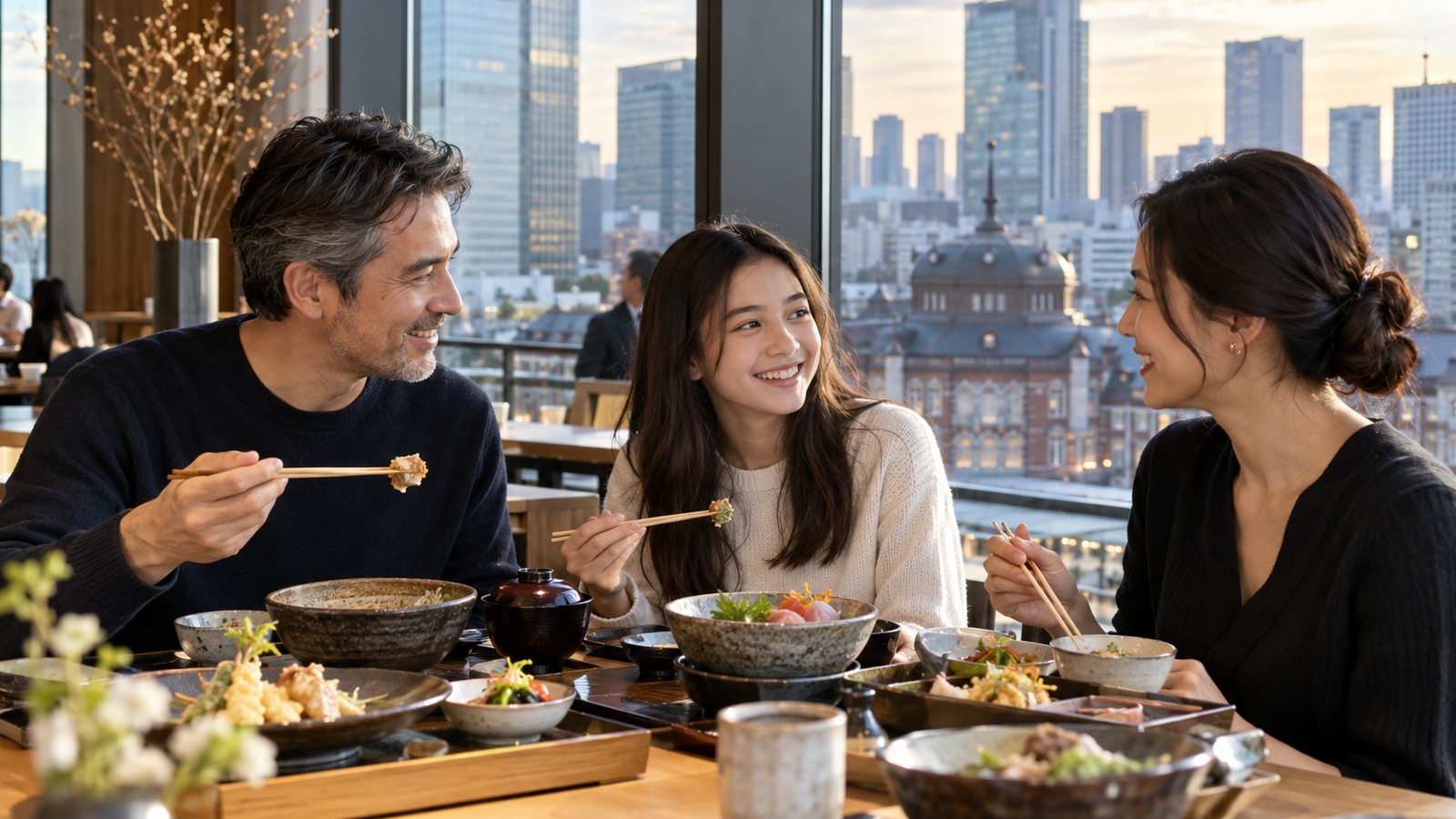
For younger children, shorten the guided sections and protect a hotel break. Check room occupancy and dining suitability before committing, particularly for meals that require everyone to sit for a long time. These details are more important than making the route look impressive on paper.
- Couples: Prioritize one special meal and time to wander without appointments.
- Teens: Build a genuine interest into the route instead of offering it as a reward after sightseeing.
- Younger children: Keep a flexible afternoon and choose transport around energy and luggage needs.
- Mixed generations: Agree on walking tolerance before deciding how much of each day stays together.
Adjust winter days and leave room for the weather
For a Tokyo itinerary of three days in winter, I would put shrine visits and longer outdoor walks earlier, with art, shopping and a warm meal later. The official Tokyo winter travel guide recommends warm layers and highlights seasonal illuminations. Check the dates of any particular display rather than assuming it runs throughout winter.
Over the New Year period, shrine visits need a different crowd and timing conversation. I would not treat those dates as an ordinary version of the same three-day route. Review the actual opening calendars for museums, restaurants and other priorities before fixing your daily order.
In any season, leave a swap available between the outdoor and indoor portions of the trip. If blossoms, foliage or a particular event are your main reason for coming, let that priority lead the date discussion. Do not promise yourself a specific natural display on one fixed afternoon.
What a three day Tokyo trip costs
Selected published hotel examples suggest roughly $2,300 to $4,300 per room for three nights, before using that figure to build the rest of a premium Tokyo stay. This is an accommodation benchmark from two high-end properties, not an all-in trip estimate or a general average for every Tokyo hotel.
At the time of checking, The Peninsula Tokyo advertised a Superior Room example from JPY 121,640 per night including taxes and service charges for selected dates, with remaining advertised dates January 3 through 31, 2027. That example requires advance purchase, is nonrefundable and has restrictions. Mandarin Oriental, Tokyo displayed an average nightly rate of JPY 221,575 for its Mandarin Grand Room. The figures have different conditions and are not equivalent date-specific quotes; inclusions and tax treatment need reconfirmation.
For the rounded dollar comparison, I used the Federal Reserve's published yen exchange rate of JPY 156.87 per dollar for October 23, 2026. Exchange rates and payment-provider charges can change the dollar amount. The hotel examples illustrate scale only and do not imply Explore Effortlessly can reproduce a restricted promotional rate. This estimate is not a quote or a guaranteed price.
The total trip cost cannot be accurately estimated from those room rates alone. Your actual cost can vary significantly with the number of travelers and rooms, dates and season, three versus four or more nights, your wider Japan itinerary, hotel and room category, airfare, private transfers, guiding, admission, dining, level of luxury and current availability. I would price those choices together before treating any accommodation figure as your travel budget.
Choose three or four days before adding an excursion
Three full days are my choice for a focused first taste within a longer Japan itinerary. Four are better if you want a slower morning, more museum time or a substantial shopping afternoon. For 3.5 days in Tokyo, use the half day as breathing room near your hotel instead of making it carry another major reservation.
If you have a fourth day, add what you actually missed. That might be Shinjuku and its garden, more time in Ueno, or a return to a favorite neighborhood. I would not make a distant excursion the default before you have decided what you want from Tokyo itself.
A three-day trip from Tokyo is a separate planning decision, not a day trip squeezed into this route. Decide how many nights it needs, what happens to your luggage and how it connects to your onward travel. Remove days from Tokyo only if you are comfortable changing the balance of the overall journey.
This is the same pacing question I explore in my Rome Florence and Venice itinerary: adding another stop means accepting another transition. If you are still comparing destinations, my Portugal and Azores itinerary guide offers another example of balancing a city stay with a contrasting second setting.
Frequently Asked Questions
Is three days in Tokyo enough for a first visit?
It is enough for the introduction I recommend here, provided you have three full sightseeing days and choose your priorities. It is not the right plan for seeing every major district. Add a day if shopping, multiple museums or slower mornings are important to you.
Should I include Tsukiji in a three day itinerary?
I would consider it if a food-focused morning matters more to you than one of the existing activities. Make it a replacement, not another early start before an already full day. The strongest short itinerary reflects your interests rather than a universal list.
Do we need a guide every day?
Not necessarily. I would start by considering a private introduction on day one, then decide how much support your interests and comfort level justify. A guide should add context, access where confirmed, or useful coordination, not simply accompany you everywhere.
Can this work with an arrival afternoon and two full days?
Yes, but reduce the plan. I would keep Asakusa and the western neighborhood day, then choose between art and Ginza according to your interests. Leave the arrival afternoon flexible rather than depending on it for a timed experience.
Plan Tokyo as part of your Japan journey
At Explore Effortlessly, we can help connect your Tokyo priorities with the hotel, arrival arrangements and wider Japan route. The useful conversation is not how many landmarks we can fit into three days. It is which choices will make those days feel like your trip.
Tell me who is traveling, how much time you have in Japan and what you most want to experience. Start Planning My Japan Trip so we can begin with the right questions.
For more thoughtful travel ideas, join the Explore Effortlessly newsletter.
About the Author
Hi, I'm Karrah Kazravan, owner and lead travel advisor at Explore Effortlessly, an award winning Miami agency serving clients nationwide. I design custom journeys for busy travelers who want confident recommendations and thoughtful coordination. I have traveled to more than 67 countries across all seven continents and am a Nexion Circle of Excellence Top 5% advisor, ASTA Verified Travel Advisor, Certified Travel Associate, and CLIA Accredited Cruise Counselor.