You're probably in the same spot as most busy travelers who start looking at Argentina wine in Mendoza. You know you want the Andes views, the long lunches, the private tastings, and a proper glass of Malbec that tastes nothing like the one you opened at home last month. Then the planning starts, and suddenly you're juggling winery regions, driving times, altitude, transfers, and the question nobody answers well: how do you do this elegantly instead of spending half the trip in a car? If the mountain scenery matters more to you than vineyard time, my Arizona and Utah national parks itinerary explores another landscape-led trip.
That's the difference between a standard wine trip and a well-built one. Mendoza rewards travelers who plan for pace, geography, and access. It punishes people who assume they can casually string together a few wineries and figure out the rest later.
Your Journey to Argentina's Premier Wine Country
You land in Mendoza before lunch, the Andes are sharp against the sky, and by early afternoon you could be on a sunlit terrace with a serious glass of wine in hand. Or you could be stuck in a car, crossing the region badly, arriving late to a generic tasting that should never have made the cut. Mendoza rewards travelers who get the structure right from the start.
Treat this as a luxury wine journey with moving parts, not a loose collection of winery bookings. The region stretches across distinct areas, the best properties are not clustered neatly together, and the most memorable experiences often happen outside the standard public schedule. Private winemaker dinners, custom blending sessions, after-hours cellar access, and long lunches that flow into sunset all depend on timing, geography, and the right introductions.
Mendoza's standing among the world's top wine destinations is well established. What matters more for your trip is what that status creates on the ground: ambitious estates, polished hospitality, and a wide gap between what any visitor can book online and what a well-connected advisor can arrange through privileged access behind the scenes.
Start with a disciplined plan:
- Choose one base with intention: Stay where your priority visits are, instead of burning hours on transfers.
- Book fewer wineries: Two excellent visits with real access will outperform a rushed day of back-to-back tastings.
- Reserve private transport from the outset: Mendoza is spread out, and good pacing depends on a dedicated driver.
- Protect your lunches: The best tables, menus, and vineyard settings deserve time.
- Ask for experiences, not just reservations: The strongest itineraries include moments that are not listed on the public tasting page.
If you want a better model for that style of planning, start with these bespoke travel experiences. Mendoza is at its best when every transfer, tasting, and meal feels easy for you, even though someone has handled the complexity properly in advance.
The right trip feels unhurried, polished, and private. That result is never accidental.
Understanding Mendoza's High-Altitude Terroir
If you care about wine, you need to understand why Mendoza tastes like Mendoza. Otherwise, you're just collecting labels.
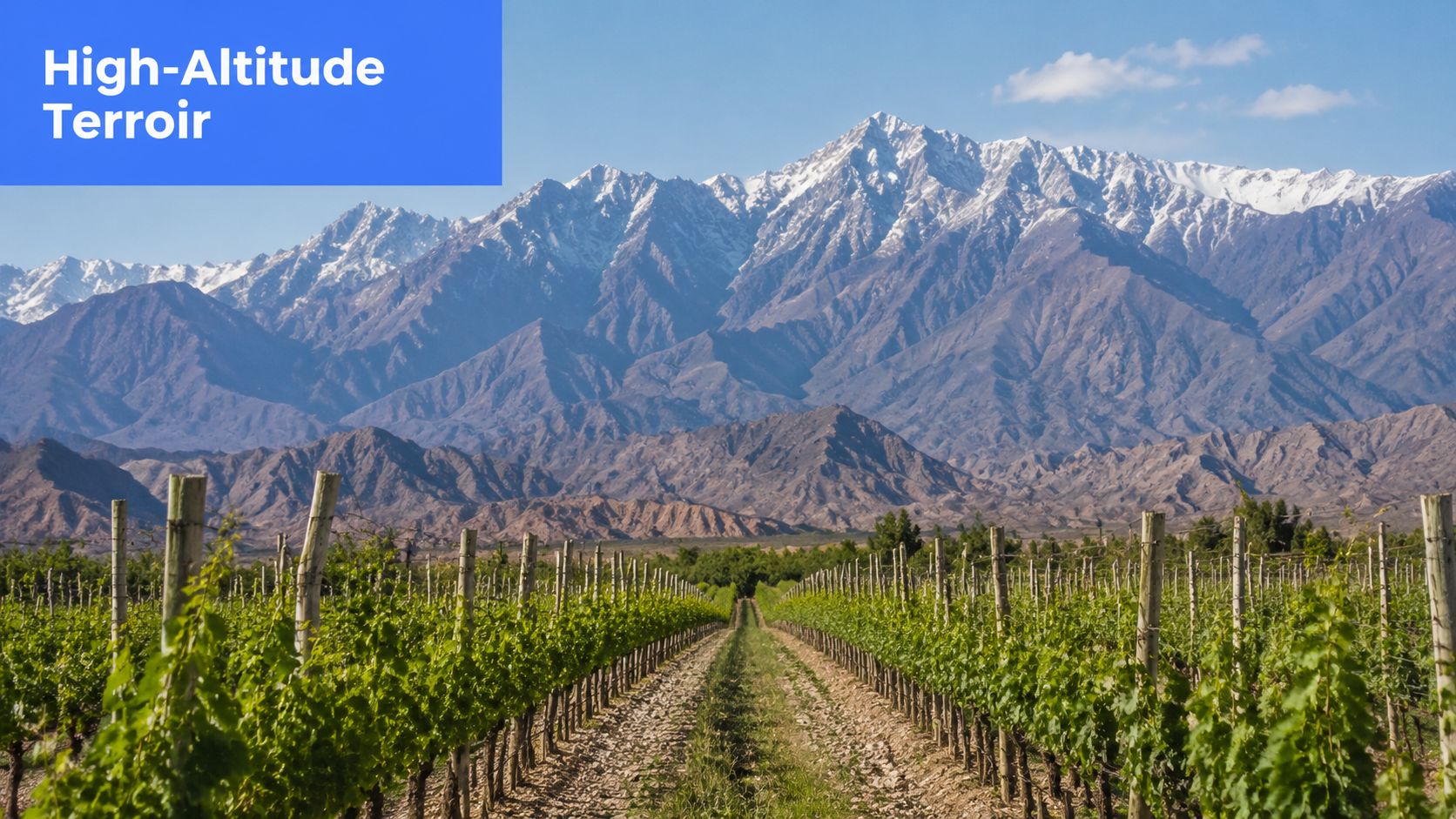
Altitude changes the wine in the glass
Mendoza's vineyards sit at serious elevation. The high-altitude vineyards, ranging from 600 to over 2,000 meters, create intense solar radiation for full phenolic ripeness, while dramatic diurnal temperature variation preserves acidity, resulting in wines with concentrated fruit and firm tannins ideal for aging, as noted in this overview of Mendoza high-altitude vineyard conditions.
That's the technical explanation. Here's what it means when you're tasting.
At altitude, the grapes get strong sun during the day. That helps develop depth, color, and concentration. Then the nights turn cold, which slows sugar accumulation and helps the grapes keep freshness. The result isn't just “big red wine.” It's power with shape.
Why serious travelers should care
If you're spending good money on a luxury wine trip, you shouldn't book wineries blindly. Elevation, climate, and site matter because they directly affect style.
Here's a simple perspective:
| Vineyard factor | What it does | What you notice in the wine |
|---|---|---|
| Higher elevation | Increases sun exposure and slows ripening overnight | More lift, structure, and aromatic precision |
| Hot days and cold nights | Preserves acidity while allowing full ripeness | Freshness instead of heaviness |
| Arid conditions | Forces careful irrigation and vine discipline | More concentration and definition |
| Sandy soils with clay patches | Influences water retention and root behavior | Tension, texture, and flavor intensity |
That last point matters more than many travelers realize. Mendoza is dry. The vines don't get lazy. They work for it. That stress is part of the magic.
The regions feel different for a reason
Not every Mendoza tasting room tells this story clearly, and they should. A polished itinerary connects the tasting to the natural environment so you know why one Malbec feels floral and taut while another feels darker and broader.
Practical rule: If you love elegance, freshness, and detail, spend more time in higher-altitude zones. If you prefer richer, more immediately generous reds, include lower and warmer sites too.
This is also why I don't recommend trying to “sample everything.” Mendoza rewards focused tasting. Once you understand altitude, you can choose wineries with intention instead of chasing brand recognition alone.
The Signature Wines of Mendoza
Malbec is the icon, and rightly so. But travelers who stop at “Mendoza equals Malbec” miss the point. The region's real appeal is range.
Malbec is the star, but style depends on place
Mendoza's Malbec exhibits a New World profile with big, bold, vibrantly fruity characteristics, often showing notes of black fruit, spice, and white pepper, driven by the plant stress of the arid, high-altitude environment.
That's the baseline. Then place takes over.
A Malbec from Luján de Cuyo often leans more powerful and fruit-driven. It can feel plush, dark, and generous. A Malbec from the Uco Valley often shows more tension, floral lift, and precision. If you want a tasting day that feels refined and cerebral, Uco usually wins. If you want something rounder and more classic at the table, Luján de Cuyo is often the right play.
Don't ignore the supporting cast
Mendoza also rewards travelers who ask for wines beyond the flagship pour. The region's key varieties include Bonarda, Cabernet Sauvignon, Syrah, Pedro Giménez, and Chardonnay, with Bonarda noted as the second most planted variety in Mendoza in this industry overview from Wines of Argentina.
Here's how I'd think about the lineup if you want a smarter tasting strategy:
- Malbec: Your anchor grape. Essential, but compare styles across valleys.
- Bonarda: Worth trying if you want something less obvious and often more relaxed in profile.
- Cabernet Sauvignon: Useful when you want structure and a more familiar frame of reference.
- Syrah: A good choice for travelers who like spice and depth.
- Chardonnay: Don't skip high-altitude whites. They can be crisp and impressively focused.
What to ask for in a tasting
A luxury tasting should be guided, not passive. Don't just accept the default flight.
Ask for:
- A single-varietal Malbec and a Malbec blend
- A comparison between valley expressions
- One white wine, even if you think you're only there for reds
- A library or reserve pour if the estate offers it privately
If a winery can't explain why its wines taste the way they do, the visit usually isn't worth prime itinerary real estate.
The best Argentina wine Mendoza experiences aren't just about drinking excellent wine. They sharpen your palate. You leave understanding the region, not just consuming it.
Curated Winery Experiences Beyond the Tasting Room
Standard group tastings are fine. They are not the reason to fly to Mendoza for a luxury trip.
The best visits are built around access. That means time with the right host, the right setting, and the right format. Not a crowded bar, not a rushed pour, and certainly not three back-to-back generic cellar tours.
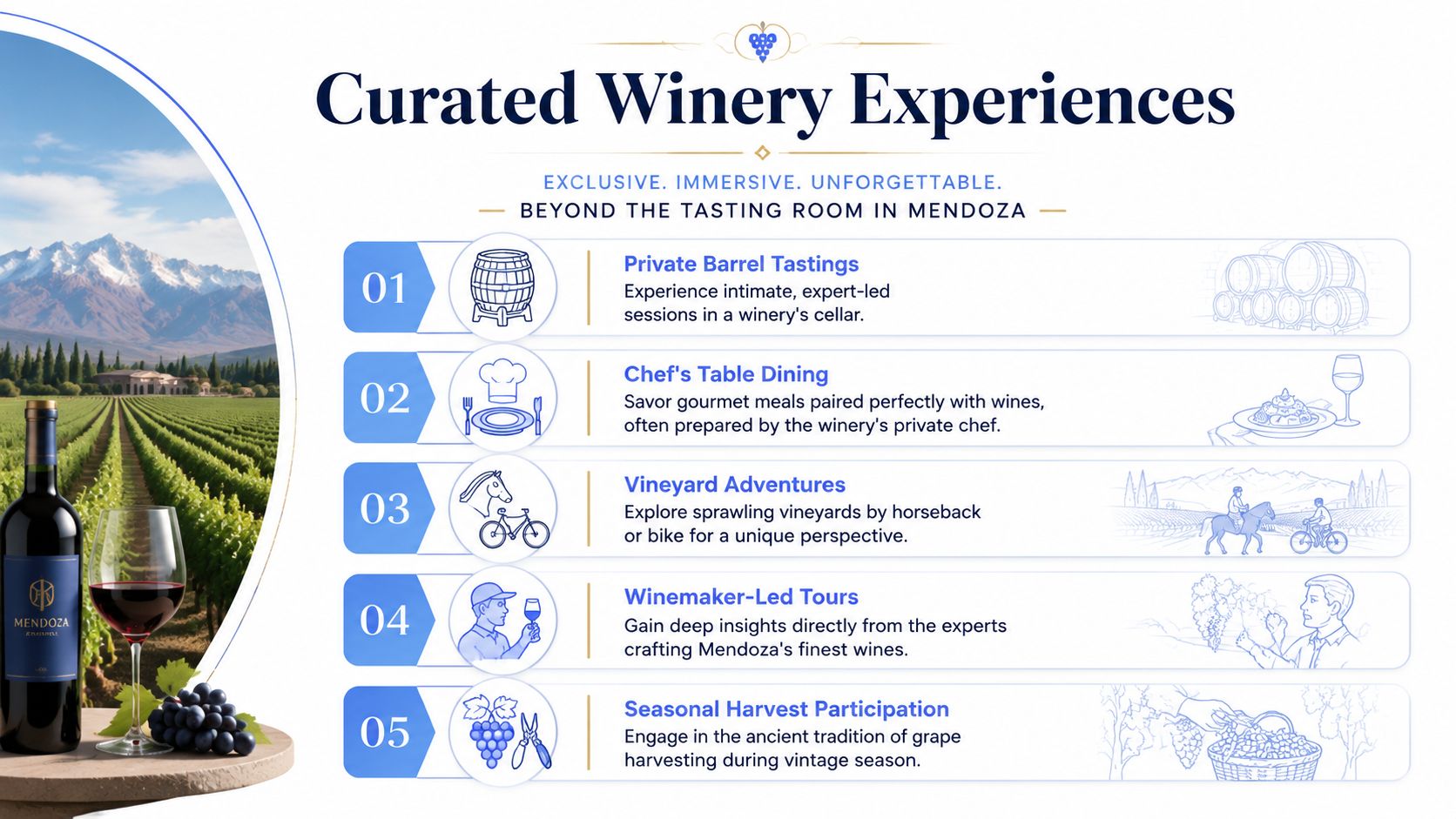
The experiences worth building a trip around
Recent trends reveal a surge in demand for hidden gem vineyard experiences, such as private asado dinners at high-altitude estates, artisanal Malbec-blend workshops with local winemakers, and eco-tourism safaris linking vineyards to Patagonian wildlife, which go beyond standard tastings.
That tracks exactly with what discerning travelers want now. Less performance. More intimacy.
The formats I'd prioritize:
Private barrel tastings
These work best for travelers who already know wine and want depth. You taste in the cellar, talk vintages, and get more nuance than you ever will in a public flight.Chef-led winery lunches
Mendoza does lunch exceptionally well. A proper midday meal with thoughtful pairings often becomes the emotional center of the day.Blending sessions
These aren't gimmicky when done properly. They're one of the fastest ways to understand structure, fruit, tannin, and balance.Winemaker-hosted visits
If you can get them, take them. The difference in quality of conversation is obvious within the first ten minutes.Seasonal harvest experiences
During harvest season, the energy in the vineyards changes completely. That's when the region feels alive, not staged.
Match the experience to the traveler
Not every luxury client wants the same version of Mendoza. That's where curation matters.
A honeymoon couple may want a private sunset tasting and candlelit dinner in the vines. A collector may want older vintages and a technical tasting. A multigenerational family may need one estate with beautiful grounds, relaxed pacing, and a private room for lunch.
Here's the mistake people make. They choose wineries by reputation alone. I choose by hospitality style, pacing, scenery, and whether the visit earns its slot.
The right winery for you isn't always the loudest name. It's the one that fits how you like to travel.
If your trip also includes Peru before or after Argentina, this guide to Michelin-star restaurants in Lima pairs well with a broader South America food and wine itinerary.
What I'd skip
I'd skip any day that stacks too many similar visits. I'd skip rigid tasting menus with no room for customization. And I'd skip wineries that look beautiful on social media but deliver a transactional, impersonal experience on the ground.
Mendoza shines when the day feels layered. One strong tasting. One memorable meal. One standout conversation. That's enough.
Crafting Your Perfect High-End Mendoza Itinerary
Most trips often fall apart. Travelers frequently underestimate distance, overbook tastings, and overlook the essential rhythm of wine travel. In Mendoza, logistics are not a side note. They are the trip.
My preferred way to structure the trip
With vineyards spread across a vast area and 68% of premium travelers abandoning tours due to poor transport planning, navigating Mendoza's dispersed, high-altitude vineyards safely and effortlessly without a pre-arranged private driver and curated schedule is a significant challenge.
That's exactly why I don't recommend improvising your days. If you want a luxury experience, book the transport first, then the wineries, then the meals. Not the other way around.
A polished itinerary should do three things:
- Minimize backtracking
- Balance tasting intensity with downtime
- Pair the right region with the right length of stay
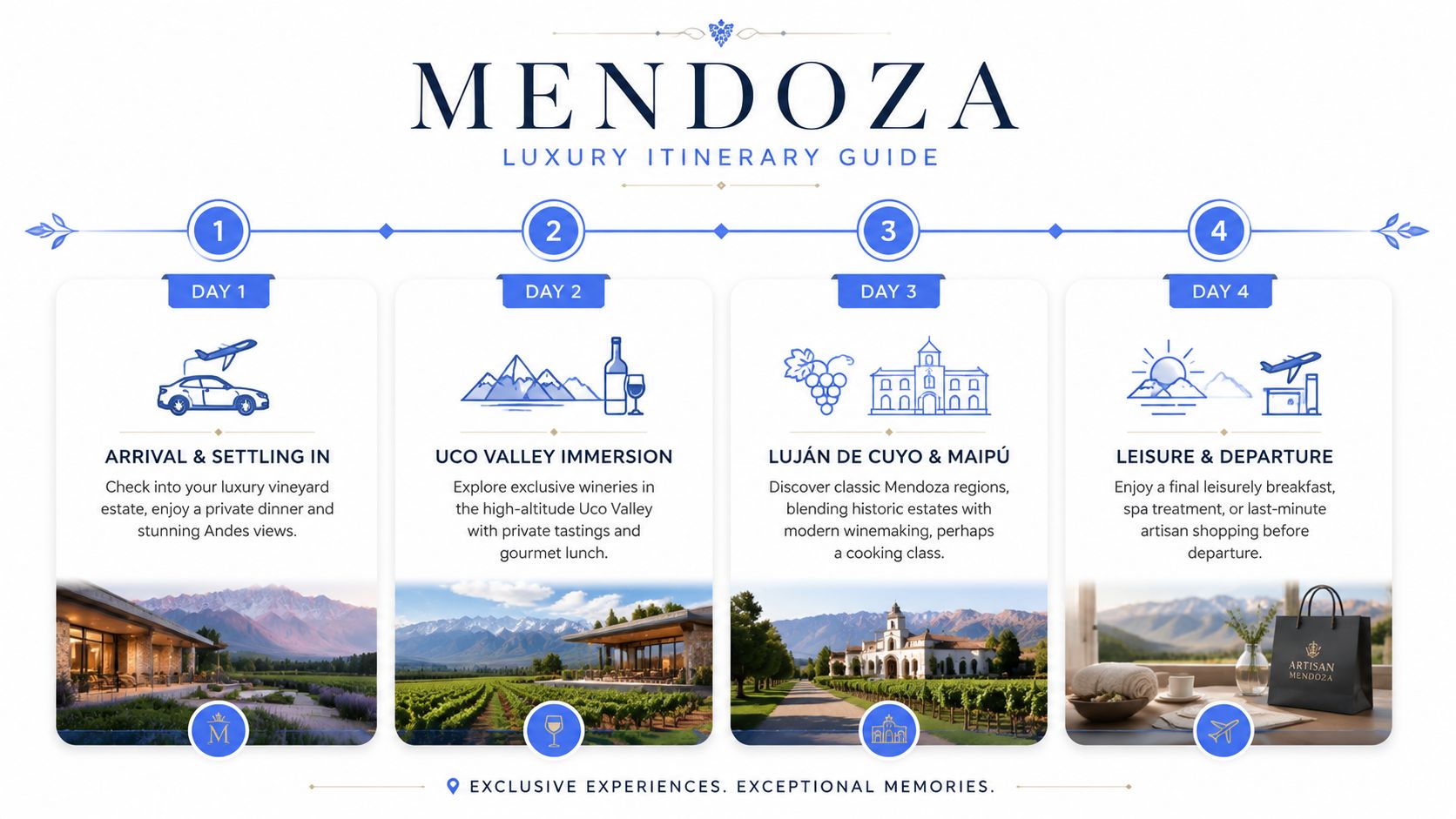
A strong four-day version
This is ideal for travelers who want impact without rushing.
Day one should be easy. Arrive, settle into a vineyard lodge or polished boutique property, keep the evening light, and resist the urge to schedule a tasting immediately.
Day two belongs to the Uco Valley. Go deep, not wide. I'd choose a private morning visit, a long winery lunch, then one more experience in the afternoon if energy is still high.
Day three works well for Luján de Cuyo. The mood shifts. The wines often feel broader, the estates can feel more historic, and a private cooking or blending session fits beautifully here.
Day four should stay soft. Breakfast with mountain views, perhaps a spa treatment or gentle local shopping, then departure.
For travelers planning a fully personalized version, custom trip planning is the right place to start.
A longer six-day version
If you have more time, split your stay. That's the move.
Spend part of the trip near the vineyards, then consider a second base with easier access to another sub-region. This avoids long repeated drives and changes the mood of the trip in a good way. One property can feel secluded and immersive. Another can feel social, polished, and connected to a different set of estates.
A few planning notes I insist on:
- Never overload the first full day: Travel fatigue and altitude don't mix well.
- Anchor each day with lunch: Mendoza's winery lunches aren't filler. They shape the pace.
- Limit serious tastings: After a point, palate fatigue wins.
- Leave room for gifting: Many clients like to return with thoughtful host gifts or celebratory surprises. If you're building a special occasion around wine, these thoughtful gifts featuring wine are a tasteful reference point.
Advisor note: Mendoza days should feel unhurried on paper. That's what allows them to feel luxurious in real life.
Essential Logistics for a Smooth Journey
Luxury Mendoza works best when the car is waiting on arrival, lunch reservations are timed to the drive, and your most desirable winery visits are confirmed before you board the flight. Get those details right and the trip feels polished from the first hour. Leave them loose and even beautiful hotels and famous estates start to feel inefficient.
Timing matters more than people think
Harvest draws plenty of attention for good reason. The region feels busy, cellars are active, and the atmosphere has real energy. I prefer it for travelers who enjoy momentum and don't mind planning early. Shoulder months are better for guests who want quieter properties, easier restaurant bookings, and a more relaxed pace between visits.
Book your ground logistics before you finalize the winery list.
Mendoza is spread out in a way that surprises first-time visitors. Uco Valley, Luján de Cuyo, and Maipú do not combine neatly if you build each day around random reservations. Arrange a vetted private airport transfer in advance, then reserve a dedicated driver for tasting days. That is how you keep timing tight enough for private cellar access, long lunches, and appointments that start behind closed doors rather than at the public bar.
Stay where the trip works best
Your hotel should support the itinerary, not fight it. Choose your base by routing and mood, not by pretty photography alone.
| Stay style | Best for | Why it works |
|---|---|---|
| Luxury vineyard lodge | Couples and honeymooners | Immersive setting, privacy, and easy access to estate experiences |
| Private casita or winery residence | Travelers who want discretion | Fewer transitions, personalized service, and a more residential feel |
| Boutique base in Chacras de Coria | Guests mixing wine with dining and city access | Refined atmosphere, strong restaurant options, and simpler access to multiple areas |
What experienced travelers do differently
They build days around geography first. One sub-region per day is usually the right call. That leaves room for what makes Mendoza special at the top end. Unhurried lunches, private tastings, blending sessions, barrel samples, and dinners hosted by the people making the wine.
They also avoid the standard mistake of chasing famous labels without checking transfer times. A celebrated estate loses its appeal quickly when it requires a badly timed cross-region drive and cuts into a private appointment later in the day.
Mendoza's wine culture runs deep, with roots going back centuries, and that history matters more when you experience it in the right setting. Use logistics to get access, not just transportation. The best trips here are not built around how many wineries you can tick off. They are built around how intelligently the days are arranged.
Frequently Asked Questions About a Luxury Mendoza Trip
How many days do you need in Mendoza?
For a high-end trip, I like four to six days. Less than that can work, but only if you stay disciplined and don't try to cover every sub-region. Mendoza rewards restraint.
Is Malbec the only reason to go?
No. It's the headline, not the whole story. Mendoza is compelling because the wines are tied so closely to altitude, climate, and place. Malbec gets you there. The full experience keeps you interested.
Do you need a private driver?
Yes, if you want the trip to feel smooth. Mendoza's wine areas are dispersed, and the best days depend on efficient routing, punctual arrivals, and flexible timing. This is not the destination for self-driving between long tastings and winery lunches.
What kind of experiences are worth paying more for?
Private tastings, winemaker-led visits, long winery lunches, and bespoke blending sessions. Those experiences create memory. Standard tasting bars usually don't.
Is Mendoza good for honeymoons and milestone trips?
Absolutely. The setting is romantic, the hotels can be beautifully intimate, and the pace suits travelers who want celebration without frantic movement. The key is careful planning, because a luxury trip here should feel smooth, not busy.
What's the biggest planning mistake?
Trying to do too much. The second biggest is choosing wineries before sorting out geography and transfers.
If you want your Mendoza trip handled with the kind of precision busy professionals appreciate, work with an advisor who plans the route, books the right style of stay, coordinates vetted on-the-ground partners, and secures the experiences that don't show up in generic travel guides.
If you're ready for a Mendoza itinerary that feels polished from the moment you land, Plan my luxury trip with Explore Effortlessly. I work with clients nationwide through virtual consultations, designing bespoke wine journeys with smart pacing, private transfers, standout stays, and curated access that goes far beyond standard tours. I'm Karrah, owner, founder, and lead travel advisor at Explore Effortlessly, a luxury award winning travel agency based in Miami. I specialize in designing bespoke, high touch itineraries to bucket list destinations around the world. Every trip is curated with intention, insight, and smooth logistics from start to finish. From luxury cruises and private villas to honeymoons, safaris, and once in a lifetime journeys, my role is to simplify the planning process while elevating every detail. As a Circle of Excellence Advisor and Top 5 percent at Nexion, I bring the planning depth high-income travelers need for complex trips like this. Join the newsletter for more luxury travel inspiration and planning insight at Explore Effortlessly newsletter.