The most popular advice about a destination wedding in Aruba is also the least useful: choose a beach package, send the invitations, and let the resort handle the rest. That works for a simple symbolic ceremony. It doesn't adequately prepare an affluent couple for civil paperwork, venue restrictions, guest movement, vendor access, weather decisions, or the actual cost of turning a ceremony into a polished wedding weekend.
Aruba is highly workable, but it isn't effortless by default. The island rewards couples who separate the legal process from the celebration design, choose a venue around the guest experience, and build a precise operational plan before anyone boards a flight. Aruba's wedding market is substantial, accounting for 6.1% of all room nights in a 2017 Aruba Tourism Authority study, with 47.5 guests per wedding, an average stay of 6.3 nights, and estimated direct wedding spending of US$107.3 million. Aruba Tourism Authority romance-tourism research makes the point clearly. This isn't a niche add-on to the island's tourism economy.
Why Aruba Rewards Couples Who Plan Beyond the Brochure

A resort brochure sells a setting. It doesn't necessarily solve the decisions that determine whether the wedding feels personal, private, and beautifully paced. Couples who accept the first package presented to them can encounter restrictions around outside vendors, ceremony locations, setup windows, music, lighting, and guest access. None of those details ruins a wedding, but each one can narrow the creative brief after deposits have already been paid.
The smarter approach treats Aruba as a compact event destination with several distinct personalities. A couple might choose a refined resort celebration for a larger group, a private villa for a more controlled atmosphere, or an off-property setting near the California Lighthouse or Arikok National Park for a setting that feels unmistakably Aruban. The island's desert-meets-ocean character gives a luxury celebration more visual range than a standard strip-of-sand ceremony.
The difference between a package and a celebration
A package can be perfectly appropriate when the priority is simplicity. It becomes limiting when the couple wants a custom menu, a particular floral language, live entertainment, a private welcome event, or a guest itinerary that feels connected rather than merely scheduled.
My recommendation is to decide early which experience you're buying:
- Resort convenience: Best for couples who value built-in catering, accommodations, and a familiar guest flow.
- Boutique intimacy: Better for a smaller group that cares about atmosphere, privacy, and a quieter setting.
- Private-event flexibility: The strongest choice for a couple with a defined design vision and the budget to coordinate independent vendors.
Aruba's tourism infrastructure and compact geography make these options practical, but the best results come from early coordination. Venue access, civil requirements, transportation, and guest accommodations should be considered together, not handled as separate purchases.
Legal Requirements and Document Timelines
A legal wedding in Aruba is a document project first and a ceremony project second. Couples typically need long-form birth certificates with apostilles, passports, a Certificate of No Impediment, and, when applicable, divorce or death records. Aruba's official wedding requirements recommend submitting or arranging official review roughly one month or 6 to 8 weeks before the ceremony, depending on the document and process.
Treat paperwork as the critical path
Start with the documents, not the flowers. A missing apostille or incomplete witness file can delay the civil filing after the venue, flights, and room block are already committed. Non-Dutch documents may also require translation, so couples should confirm the current requirements with the local authority and their licensed wedding planner before ordering or mailing anything.
A practical sequence looks like this:
- Choose the ceremony type. Decide whether Aruba will host the legally binding civil ceremony or a symbolic celebration following a legal marriage at home.
- Request long-form records. Order the required birth certificates and identify any divorce or death documentation that applies.
- Obtain apostilles and translations. Complete authentication and translation requirements before submission, not after the file reaches Aruba.
- Confirm witness documentation. Verify the required IDs and availability of witnesses with the local officiant or planner.
- Submit for review. Build the official submission window into the wedding calendar, with time to correct errors.
- Confirm the ceremony location and signing process. Legal civil ceremonies are distinct from beach ceremonies, which are generally symbolic unless the civil process has been completed.
- Collect the marriage certificate. Confirm how the signed certificate will be issued and delivered after the ceremony.
Practical rule: If legal paperwork feels like the most stressful part of the wedding, complete the legal marriage at home and make Aruba's ceremony symbolic.
Some licensed wedding planners can help eligible couples address residency-related requirements, including a 15-day residency waiver, but this is exactly the kind of detail that must be verified for the couple's circumstances rather than assumed from a package page. Independent Aruba wedding guidance also states that civil ceremonies are handled at the Civil Town House on Wednesdays through Fridays, with Saturday availability carrying a $150 surcharge, and that documents should be submitted about one month before the wedding date. Destination Wedding Details' Aruba guidance provides that operational context.
Use a dedicated destination wedding planning timeline to track document requests, apostilles, translations, witness details, venue deposits, and final confirmations in one place.
Choosing the Right Venue for Your Guest Count and Style
The right venue isn't the prettiest one in a gallery. It's the venue whose operating model matches your guest count, design expectations, and tolerance for coordination.
Large resorts such as The Ritz-Carlton, Aruba and Hyatt Regency Aruba Resort, Spa and Casino can suit substantial celebrations because they combine event infrastructure with room-block potential and on-site food and beverage. The trade-off is control. Resort menus, preferred vendors, setup rules, and event spaces may be more standardized than a luxury couple expects.
Boutique properties such as Bucuti & Tara Beach Resort and Manchebo Beach Resort & Spa create a more intimate mood. They're compelling for smaller celebrations where the guest experience matters more than ballroom scale, but their capacity and event format may be less flexible for a large production. Private villas and off-site locations around Seroe Colorado or Tierra del Sol provide the most customization, although every element, from catering to power, transport, rentals, and weather backup, needs active management.
| Venue Tier | Ideal Guest Count | Catering Flexibility | Minimum Spend Range | Best For |
|---|---|---|---|---|
| Large resort | Larger groups | Moderate, usually venue-led | Property-dependent | Convenience, room blocks, and established event operations |
| Boutique property | Intimate celebrations | Moderate to high, subject to property rules | Property-dependent | Atmosphere, privacy, and a quieter guest experience |
| Private villa or off-site venue | Tailored small to mid-size events | High, with independent coordination | Property and production-dependent | Bespoke design and full creative control |
Make the decision by priority
Choose a large resort if guest logistics are your main concern. Choose a boutique property if privacy and ambiance lead the brief. Choose a villa or off-site venue if the wedding needs to feel unmistakably yours and you're prepared to pay for the coordination that makes that freedom work.
Accommodation selection also shapes the wedding weekend. Palm Beach suits guests who want resort amenities and activity access, while Eagle Beach can feel calmer and more residential. My Aruba hotel guidance helps couples evaluate the accommodation base alongside the ceremony venue instead of treating the hotel as an afterthought.
Realistic Budget Tiers and Hidden Cost Factors
Luxury couples should stop using the ceremony package as the wedding budget. The package may cover the visible moment, but the total celebration includes accommodation strategy, guest transportation, florals, photography, entertainment, dining, design, and the cost of correcting decisions made too late.
The most useful published planning ranges vary widely. One 2026 Aruba wedding guide estimates micro-weddings at about $3,000 to $8,000, intimate weddings at $15,000 to $35,000, and full destination weddings at $35,000 to $100,000 or more. The Aruba wedding guide from One Happy Island also notes that other coverage places some intimate elopement packages near $1,500, while fuller celebrations can reach roughly $15,000 depending on inclusions. Those ranges aren't contradictory. They describe different guest counts, venues, production standards, and definitions of “wedding.”
| Wedding Tier | Guest Count | Estimated Total Cost | Key Inclusions | Common Hidden Costs |
|---|---|---|---|---|
| Micro-wedding | Under 30 | About $3,000 to $8,000 | Ceremony, basic florals, cake, limited reception elements | Photography upgrades, outside-vendor fees, transport |
| Intimate wedding | 30 to 60 | About $15,000 to $35,000 | Reception, enhanced design, photography, entertainment | Private-event minimums, premium bar, lighting |
| Full destination wedding | Larger celebration | About $35,000 to $100,000 or more | Expanded dining, décor, entertainment, guest logistics | Room-block complexity, transfers, production, weather changes |
The broader budget question is guest economics. Bringing more people increases not only catering, but also room blocks, airport transfers, welcome events, rehearsal logistics, and the number of decisions that require individual communication. A smaller guest list can create a more generous experience, with better suites, more private dining, and stronger design detail.
Where the budget quietly expands
Ask for a written list of exclusions before signing. Resort packages may leave out premium bar upgrades, specialty lighting, late-night food stations, expanded floral installations, photography coverage, and independent vendor access. Outside guests may face resort access charges, beach ceremonies may incur overtime when the event runs beyond the agreed window, and custom décor shipped to the island can introduce import-related costs.
Saturday ceremonies may also carry a premium. The legal Saturday surcharge referenced by independent Aruba guidance is $150, separate from the broader cost of a reception or venue.
I advise couples to keep a contingency reserve for weather-related venue changes and guest-count adjustments, but I won't assign a percentage without a confirmed production budget. The appropriate reserve depends on the venue contract, the number of independent vendors, and how elaborate the weather backup needs to be. For a deeper planning framework, review the average cost of a destination wedding before you compare packages.
Seasonal Timing and Weather Strategy
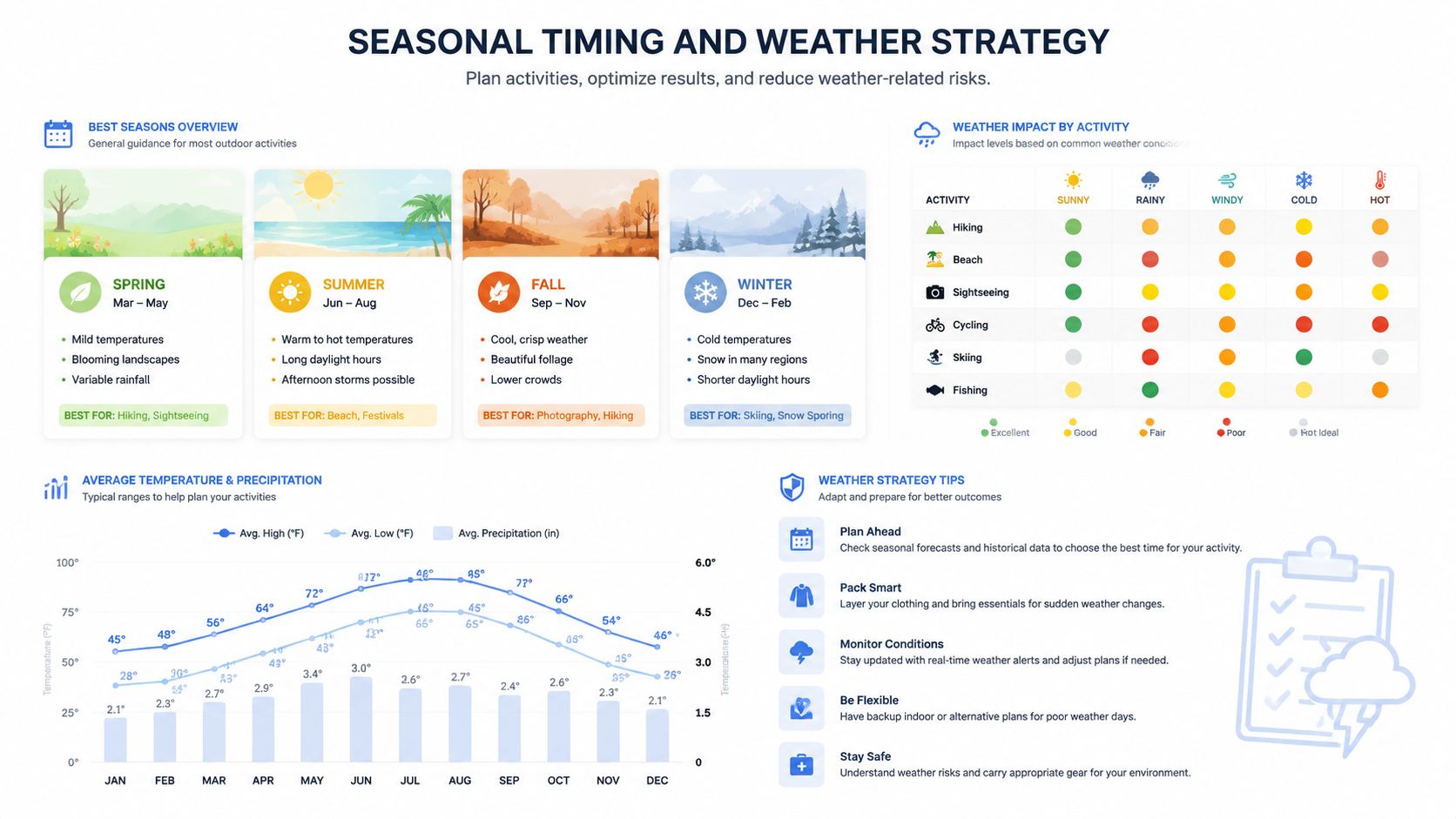
Aruba's climate makes seasonality a planning advantage, but it doesn't eliminate weather decisions. The island's dry season runs roughly from February through June, while the rainy season runs from September through January, according to Aruba climate guidance. The dry season generally offers warm temperatures and consistent trade winds, which support outdoor ceremonies and guest comfort. Aruba's official destination manual provides the seasonal context planners should use when building the date strategy.
The Atlantic hurricane season runs from June 1 through November 30. Aruba sits on the southern edge of the hurricane belt, and direct impacts are relatively uncommon compared with many Caribbean destinations, but uncommon doesn't mean impossible. Couples should review travel insurance terms and current official travel guidance before finalizing a date.
Match the date to the trade-offs
The most popular Aruba wedding months include October, September, June, August, May, and July, while the average bride and groom in the cited romance-tourism material were 29 and 31 years old, respectively. Aruba's romance-tourism profile helps explain why couples should reserve preferred dates and venues early rather than assuming every season offers the same availability.
For winter dates, I favor a ceremony that leaves enough daylight for portraits and a comfortable transition into cocktails. In warmer months, schedule the ceremony later in the afternoon and build a rain and heat plan into the run of show. Beach wind matters, too. Eagle Beach can feel more exposed to trade winds than sheltered resort coves, which affects arches, veils, menus, candles, sound, and table settings.
A good backup plan isn't a generic indoor room. It should preserve the visual identity of the wedding, protect guest movement, and allow vendors to pivot without rebuilding the entire event from scratch.
Guest Logistics and Vendor Coordination
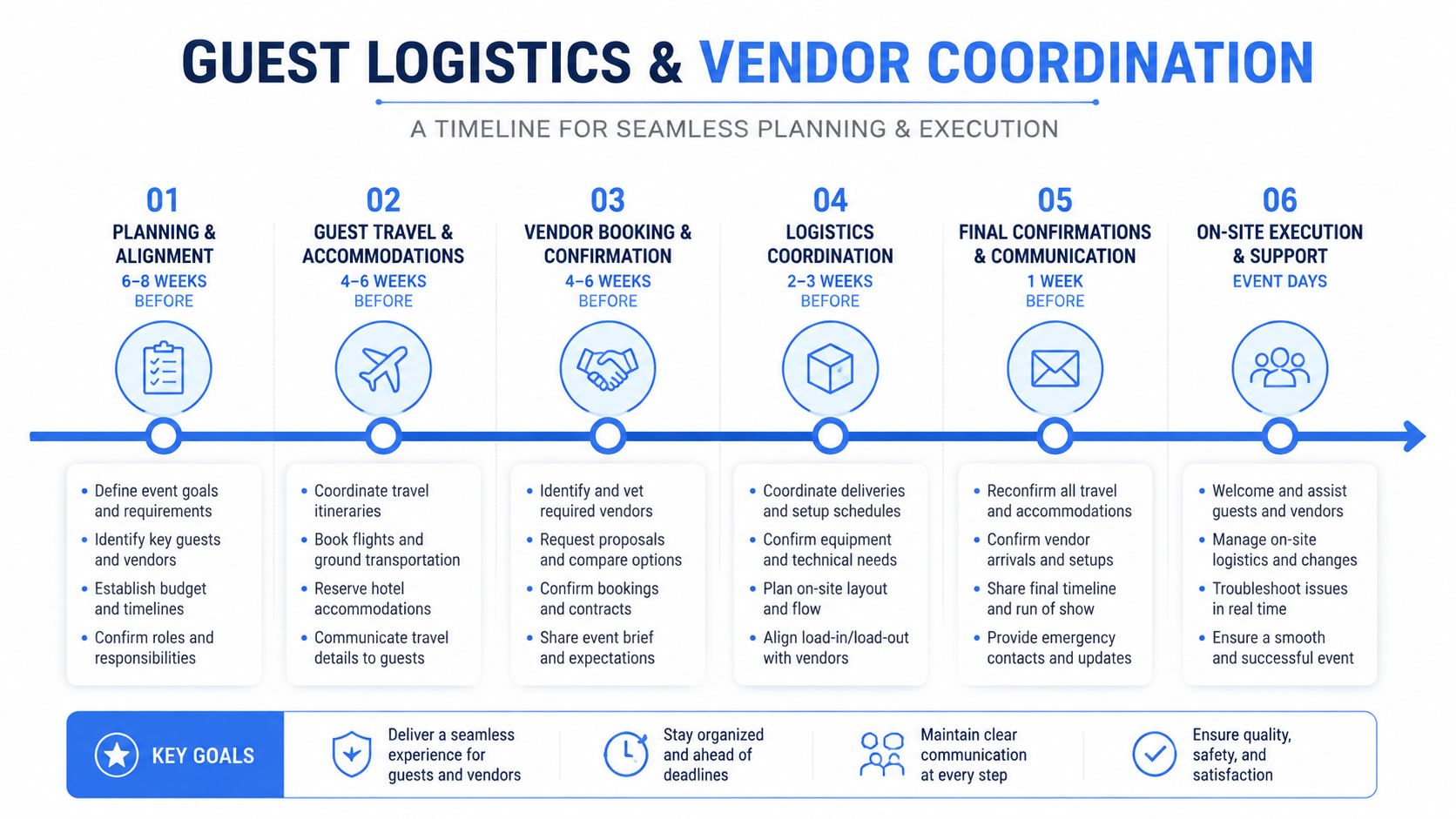
A destination wedding succeeds when guests experience a clear journey from invitation to departure. The couple should never become the help desk for passport questions, room assignments, airport arrivals, restaurant confirmations, or transportation gaps.
Room blocks need careful negotiation around release dates, attrition, deposits, and guest payment schedules. International guests may also need to confirm visa requirements and passport validity rules well before departure. Those checks belong in the guest communication plan, not in a last-minute reminder.
Build one operating system for the weekend
Resort-preferred vendors usually offer convenience and familiarity with property rules. Independent specialists may provide a more distinctive creative result, but they require coordination around access, load-in, insurance, timing, and payment. The right choice depends on the venue contract and the importance of creative control.
A dedicated wedding concierge should manage:
- Vendor access: Confirm arrival windows, loading routes, equipment needs, and teardown responsibilities.
- Rehearsal timing: Keep the ceremony party focused while the venue coordinates setup.
- Guest movement: Align airport transfers, welcome events, ceremony transportation, and departure plans.
- Communication: Route questions through one point of contact so the couple isn't answering calls during hair and makeup.
- Seating and flow: Use a practical wedding seating chart to organize family dynamics and reception movement before the final floor plan is issued.
Book high-demand vendors early, especially photographers, hair and makeup teams, and specialty entertainment. The exact timing depends on the date, venue, and vendor availability, so I treat each booking as part of the same master schedule rather than as an isolated task.
Welcome bags should be useful rather than excessive. Local treats, a concise weekend schedule, transfer instructions, and emergency contact details are more valuable than decorative items guests won't use. Schedule one shared excursion, then leave open time for beach visits, spa appointments, and independent plans.
Sample Wedding Week Itinerary
A polished Aruba wedding week gives guests structure without turning the trip into a group tour. The following format works well for a couple who wants the wedding to feel like a full celebration rather than a single event surrounded by logistics.
Day 1, arrivals and a relaxed welcome
Guests arrive, check in, and receive welcome details at their accommodations. Schedule beachfront welcome cocktails around sunset, either at the resort or through a private event arrangement, with enough flexibility for staggered arrivals. Keep speeches short and dinner optional so guests who traveled later aren't forced into a formal evening.
Day 2, rehearsal and local flavor
Offer an optional morning or afternoon activity for early arrivals, then protect the wedding party's energy. A private villa rehearsal dinner creates control over timing and menu, while a casual local seafood experience can give the group a less formal taste of Aruba. Transportation should run on a published schedule, with one contact managing late arrivals.
Day 3, the wedding
The wedding party starts with spa treatments, breakfast, and a quiet getting-ready schedule. Keep guest activities light so everyone arrives rested. A late-afternoon ceremony, around 5:30 PM for the sample itinerary, creates a natural transition from ceremony to cocktails and portraits, subject to the date, sunset, venue rules, and weather.
The production schedule should already assign responsibility for:
- Attire and personal items
- Floral delivery and installation
- Music and sound checks
- Family photographs
- Cocktail-hour transitions
- Dinner service and speeches
- Late-night food and transportation
Day 4, recovery and exploration
A chartered catamaran outing toward Boca Catalina can give guests a social recovery day, while a planned visit to Arikok National Park offers a stronger experience. Neither should be mandatory. Guests who want a quiet beach day should have that option without feeling they missed the official wedding itinerary.
Day 5, farewell and departures
A farewell brunch should be timed around flight patterns, not the couple's preferred breakfast hour. Confirm luggage storage, airport transfer windows, and late departures before the brunch invitation is sent. Guests extending their stay can receive a separate set of suggestions, keeping the core wedding schedule uncluttered.
How Explore Effortlessly Manages Every Detail
An Aruba wedding requires one person or team to see the entire system. That means tracking civil documents and apostilles, comparing venues by guest count, reviewing room-block terms, coordinating transfers, checking vendor access, and keeping guests informed without making the couple manage every conversation.
Explore Effortlessly works with clients nationwide through virtual consultations. The planning process can include a vision consultation, venue shortlisting, resort and accommodation strategy, legal-document tracking, vendor curation, guest travel coordination, and day-of logistics through trusted in-destination partners and suppliers.
The value is practical. A central planning process reduces the risk of missed submission deadlines, conflicting vendor arrival times, transportation gaps between ceremony and reception, and guest communication overload. It also creates room for the details that make a wedding feel considered, such as welcome bags, dietary information, VIP airport transfers, and a realistic weather backup.
Couples who want a separate planning reference can browse 2026 wedding planner tools, but tools don't replace venue judgment, document oversight, or local coordination. My credentials include Circle of Excellence Advisor, Top 5 percent at Nexion, and CLIA Accredited Cruise Counselor, with planning support delivered virtually to clients nationwide.
Explore Effortlessly designs and manages luxury destination weddings in Aruba, from venue selection and guest travel to legal-document tracking and on-island coordination. If you want a celebration that feels effortless because the difficult work was handled early, visit Explore Effortlessly to begin your consultation, and join the newsletter for curated luxury travel guidance.