‘We want to see the migration, and elephants, and maybe gorillas. Can we still end at the beach?’ Yes, we can talk about all four! But first, how much of your vacation do you want to spend zipping up a duffel bag?
For a first East African safari, pick Kenya for elephants and the Maasai Mara, or Tanzania for the Serengeti and Ngorongoro Crater. I like combining them when you can give each country several nights without racing through either one.
The hard part about comparing East African safari tours is that the most exciting one on paper can also have the most days in transit. And it’s really hard to take something off the list when the thing you’re cutting is a gorilla. I get it!
| Safari plan | Makes sense if | Doesn’t make sense if |
|---|---|---|
| Kenya only | Elephants are your number one, and the Mara gives you the other wildlife days you want. | Southern Serengeti calving is the whole reason you picked those dates. |
| Tanzania only | You want both big open plains and a day down in the crater. | You’ve got your heart set on Amboseli and don’t want to swap it out. |
| Kenya and Tanzania | Each country gives you something different you’d happily use a travel day for. | You’ve got one week and want to come home rested enough to remember it. |
Pick Kenya if elephants are the big wish
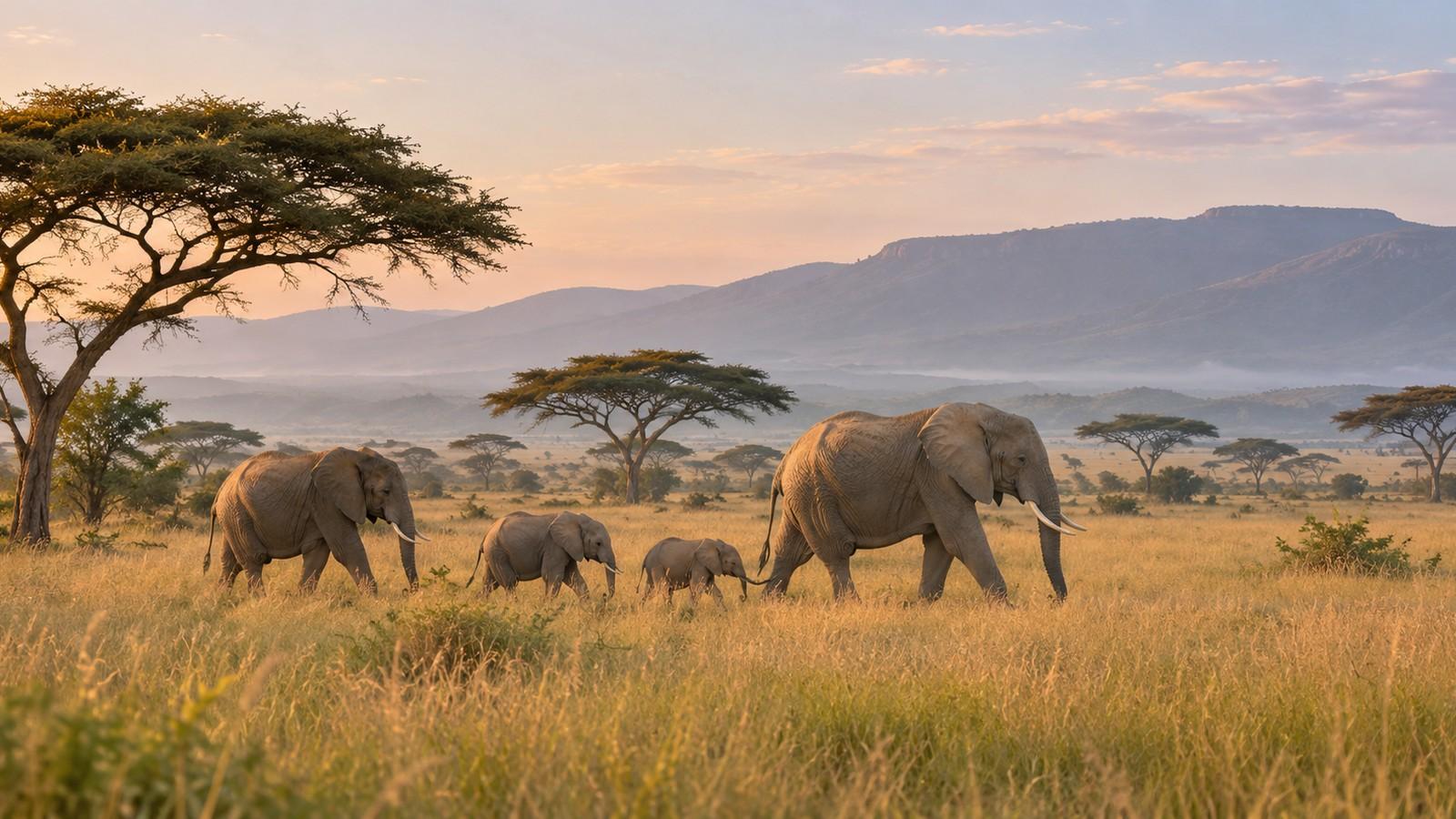
If you’ve been sending your partner elephant videos for six months, let’s not make elephants a footnote! Put Amboseli on the itinerary. The Kenya Wildlife Service guide to Amboseli describes the elephants that gather around its swamps, with Kilimanjaro behind them on clear days.
I’d give Amboseli a couple of nights rather than pinning all your hopes (and the mountain photo) on a single drive. Clouds don’t care how far you’ve come. And if a photographer and a kid with a twenty-minute attention span are sharing a row, tell me that now, not after someone has said ‘Can we go?’ for the fifth time.
Then give the Maasai Mara the longer stay. I like the contrast: go from watching elephants at the wetlands to looking out across the Mara’s open grassland. If you’re not particularly attached to Amboseli and mostly want a few slow days with a good guide, it’s also fine to give the Mara more of the trip and leave the second camp off altogether.
Take a look at my guide to Kenya safari tours if you’re already leaning that way. And when you look at any camp, ask where the game drives actually go. ‘Near the Mara’ doesn’t tell you which area you’ll be exploring with your guide.
Pick Tanzania for the Serengeti and a crater day
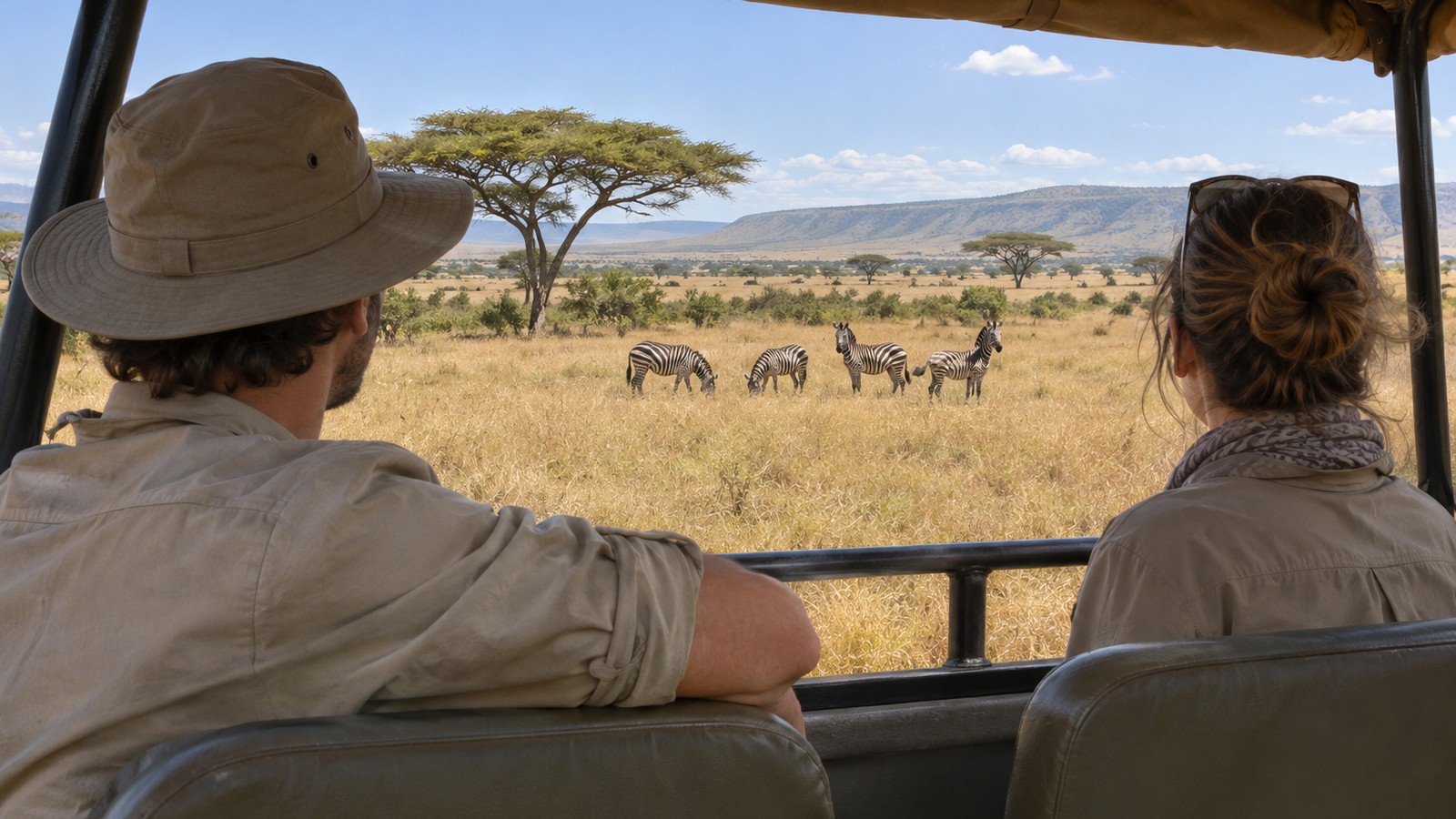
Tanzania is my first choice when you want two very different safari days without adding a second country. Picture an open stretch of Serengeti where you can watch a herd for a while, then a day looking for wildlife down inside the Ngorongoro Crater’s volcanic caldera. That’s a change of scenery worth moving camp for.
And please don’t start with the tent photos. I know, the one with the tub is very persuasive! But the Serengeti isn’t one place to sleep. A camp in the north doesn’t put you on the southern plains. Pick the part of the park that fits your dates, then pick the room you want to come back to.
For the crater, look at where you’re sleeping relative to the descent you’ll use. A room with a view is a nice extra if you’ll have time to enjoy it. If you’re arriving late, driving early and moving on, I’d rather spend that money on the right camp for the next three nights.
Choose your migration dates before you choose a camp
Do you mean ‘I want to see the big herds’ or ‘I want to see a river crossing’? Those are different requests! One is a good reason to pick a region for a particular month. The other can turn a fabulous trip into a long wait for a very particular thing to happen.
For the Mara, Kenya’s tourism board migration guide points to July through October as the broad window for the herds in Kenya. For newborn wildebeest, I look to the southern plains in January or February, the calving window highlighted in Tanzania National Parks’ Serengeti guide. The animals move for water and grazing. They don’t know you’ve got a flight on Thursday.
If you’re working around school holidays or fixed vacation days, start with your real dates. I’d rather tell you what that month does well than squeeze you into a route built for a completely different season. And if you’re flexible and the crossing isn’t a priority, April and May are worth discussing for lower camp rates. The trade-off is rain, so pick a place you’d be happy to come back to if the afternoon turns wet.
Put the transfers on the itinerary before you add a camp
Here’s the line I want you to look for on the flight plan: which Nairobi airport? Some Mara flights use Wilson, not Jomo Kenyatta International. That means getting your bags and crossing town before you check in again, not walking to another gate. Safarilink’s transfer and baggage FAQs also explain its soft-bag rules and the 15 kg allowance on many routes, including hand luggage. Check the rules for the flight you’re actually taking (yes, that includes what’s in the camera bag!).
My preference after a long international flight is one night in the gateway city, especially if the next leg leaves from a different airport. And if you’re crossing from Kenya to Tanzania, write down the whole day: camp to airstrip or road pickup, border formalities, onward transfer, and the ride to the next camp. If you’re still getting there when the afternoon drive leaves, it’s a travel day. That’s okay! Just don’t count it as a full day on safari.
How I’d use 12 nights across two countries
Here’s a starting point, not a set departure. The handoff between the two countries is the part I’d build around the flights, not the other way around.
- One night in Nairobi to arrive, eat something and sleep.
- Three nights in the Maasai Mara so a single morning doesn’t have to do all the work.
- One night for the transition into Tanzania if the connections call for it.
- Three nights in the Serengeti and two in the crater area.
- Two nights to play with: put them into the camps you’re excited about or use one for an easier connection home.
If you want Zanzibar to feel like a beach vacation, add real beach time or drop a safari stop. One afternoon by the pool is a nice afternoon. It isn’t three days at the beach, no matter how good the pool is.
The upgrade I’d buy before a bigger tent
A private vehicle, if you have a reason to use it! You can linger with the zebras instead of polling the back row, or head in early if your youngest is done. If you’re happy to share a guide and go with the group’s pace, put that money toward an extra night instead.
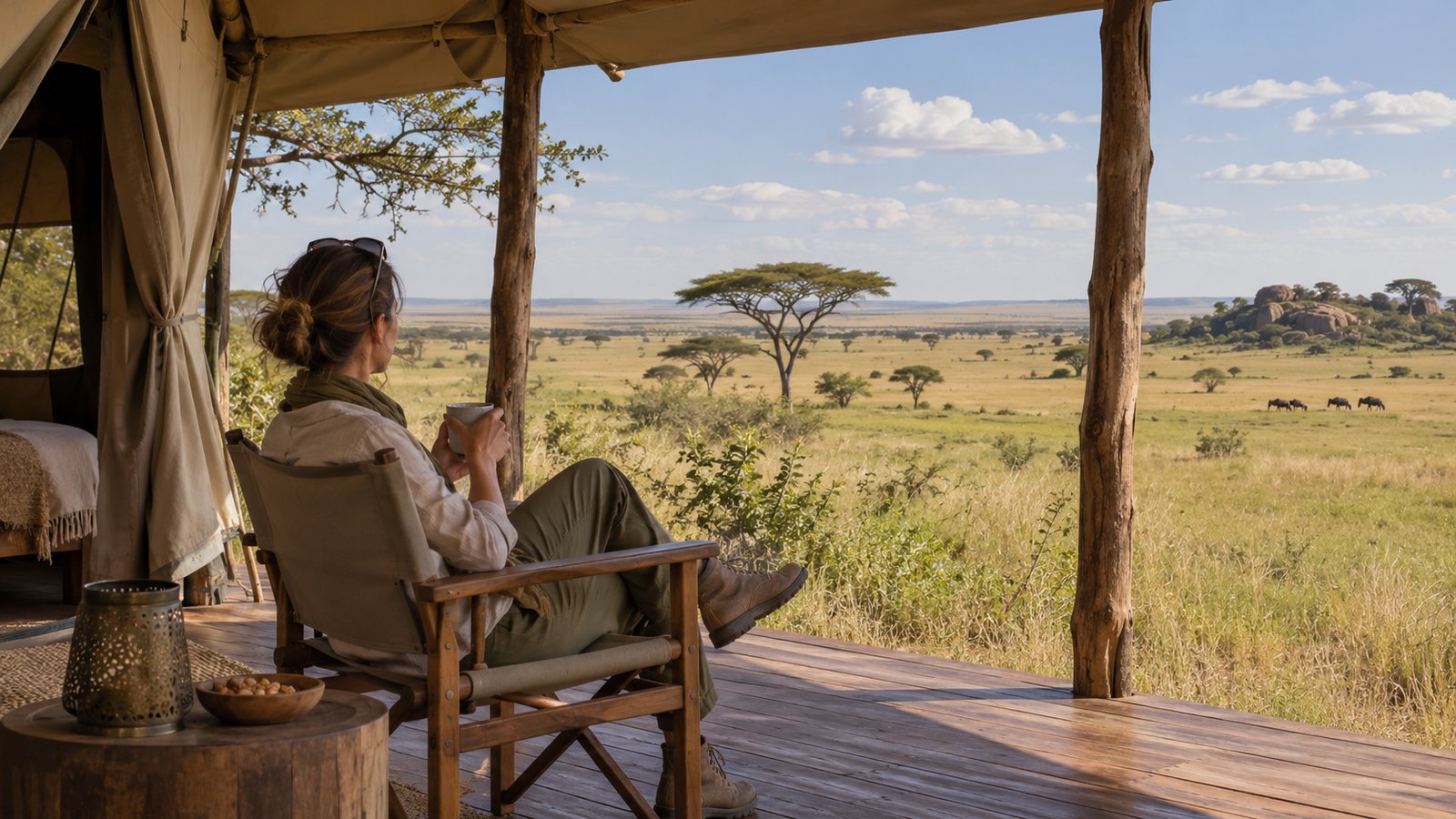
For the room itself, ask two questions before you pay for a category upgrade: Where does everybody sleep, and how far is it from where you’ll eat? A bigger room isn’t much help if it doesn’t have the beds you need. And if you’re traveling with kids, give me their ages so we can check camp and activity policies before you get attached to any property.
Add gorillas or Zanzibar for a good reason
Gorillas are worth shaping a trip around. They’re not a quick detour. In Rwanda, Visit Rwanda’s gorilla tracking guide explains that permits are limited and the hike in Volcanoes National Park can take several hours. Uganda’s Bwindi has different trekking sectors, so the sector matters when you choose a lodge. Give the trek its own days, and be honest about how you feel about a long uphill walk. If that sounds like something you’d endure rather than enjoy, a few more safari mornings might make you happier.
Zanzibar is my pick if you want to sleep past breakfast. Decide if you want to walk through the lanes of historic Stone Town or spend the time by the water. Both sound good to me! But if you’ve got three nights and what you really need is a nap, pick one hotel instead of splitting the stay. Zanzibar has its own mandatory inbound travel insurance. Requirements can change, and you’re responsible for meeting the rules that apply to your trip.
What East African safari tours cost
For an idea of what the camps can cost, think roughly $650 to $1,900 per person, per night, with two people sharing, for a standard tent or room with meals at selected Kenya and Tanzania camps in January 2027. That’s a starting point, not a quote or a price for the whole safari. One camp may include shared drives and the local airstrip pickup, while another prices those separately.
That’s why I don’t want you comparing two numbers until you know whether they’re paying for the same day! Look for park and conservation charges, the guide and vehicle, airstrip transfers, regional flights and international airfare. Then look at the extras you actually want. Are you paying for a second room for the kids, a private vehicle for a photographer, or a few beach days at the end? All reasonable choices. All different trips.
Your dates and trip length will do a lot of the work here, along with who’s coming and what rooms we need. My advice on where to spend first? Get yourself in the right part of the park, give yourself time there, then get picky about the room. Once we’ve narrowed down your dates, group size and room setup, I can put together a custom quote so you know what your version costs. My guide to African safari costs gives you more context if you’re still deciding where you want to put the money.
Frequently Asked Questions
Which country is best for a first East African safari?
Kenya if you’re picturing Amboseli’s elephants and big mornings in the Mara. Tanzania if your picture is the Serengeti and the crater. With one week on the ground, I’d pick one! You can have a full safari without trying to fit two countries into your first one.
Can I wear white or red on safari?
Yes, there’s no blanket ban. I’d save bright red for dinner rather than a game drive, and white is going to show the dust (probably before lunch). Pack olive, tan or muted gray for drives, and follow your guide’s advice if you’ll be out on foot. My packing guide for African safaris will help you decide what actually earns space in that duffel.
How much does an elephant safari cost?
If elephants are your priority, I’d price an Amboseli stay rather than hunt for a separate ‘elephant safari’ price. The useful number is what you’ll pay for the room, the park and enough time out with your guide. Ask what the camp includes before adding a private vehicle, so you’re paying for time you’ll actually use.
Let’s start with what you can’t wait to see
Tell me which thing you’d get up before sunrise for. And tell me which thing you added because somebody said it was a must. I have a feeling they aren’t always the same!
At Explore Effortlessly, we build custom safaris around the way you want to spend your days, then fit the camps, guides and flights together. If you’re ready to talk about your dates and the trip you’re picturing, Start Planning My East African Safari.
Want more advice like this? Join the Explore Effortlessly newsletter.
About the Author
Hi, I'm Karrah Kazravan, owner and lead travel advisor at Explore Effortlessly, an award winning Miami agency serving clients nationwide. I design custom journeys for busy travelers who want confident recommendations and thoughtful coordination. I have traveled to more than 67 countries across all seven continents and am a Nexion Circle of Excellence Top 5% advisor, ASTA Verified Travel Advisor, Certified Travel Associate, and CLIA Accredited Cruise Counselor.