The best Kenya safari tours match your wildlife priorities with the right camps, travel dates and transfers, rather than squeezing in the most parks. For a first luxury safari, I would start by comparing a Maasai Mara stay with a thoughtfully paced Mara-and-Amboseli itinerary, then decide between flying and a private road-based journey.
The hard part is that two packages can look almost identical while delivering very different trips. One includes shared game drives and an airstrip transfer; another leaves activities and transport outside the advertised price. A beautiful tent tells you very little about how the days will actually work.
Here is how I would narrow the choices so you spend your time looking forward to Kenya, not decoding a stack of itineraries.
Choose the Safari Format Before the Camps
I would make the transport and guiding decision first. It shapes your daily rhythm, your luggage plan and how much control you have over wildlife outings. If you are still deciding what level of support you want, our guide to planning luxury safaris explains the broader choices.
A private itinerary does not automatically mean a private vehicle at every camp. You might travel as a couple on a custom route and still join other guests for game drives. Ask what is exclusive to your party, on which days, and whether the guide stays with you between properties.
| Safari format | Who I would consider it for | What to clarify |
|---|---|---|
| Fly-in safari with camp-based guiding | Travelers who prefer to build the journey around selected camps and air connections | Shared or private drives, baggage limits and the correct arrival airstrip |
| Private road-based safari | Families or friends who want their own vehicle and a route designed around their group | Driving stages, vehicle configuration and guide continuity |
| Small-group departure | Travelers comfortable sharing the daily schedule with others | Group size, departure rules, room arrangements and flexibility |
For a milestone trip, my first question is not whether a tour is labeled luxury. It is whether its operating style fits you. A couple who wants quiet mornings and flexible photography stops may value an exclusive vehicle more than a larger tent.
Start Kenya Safari Tours From Nairobi Carefully
For Kenya safari tours from Nairobi, review the arrival day as closely as the wildlife itinerary. Safarilink identifies Wilson Airport as its Nairobi base and distinguishes it from Jomo Kenyatta International Airport. Its official airport and connection guidance also highlights the surface transfer between them.
That is not a terminal change. If your international arrival and safari departure use different airports, the plan needs immigration, baggage collection, a driver, road travel and another check-in. I would not approve a connection simply because the flight times appear to leave a gap.
My preference after a long international journey is to consider a Nairobi overnight before continuing to camp. That is a pacing recommendation, not a requirement for every traveler. If you prefer a same-day connection, I would review the actual flights and the consequences of a delay before recommending it.
My planning rule: Treat the first and last days as part of the safari, not empty spaces around it. Every airport transfer and hotel night should have a clear purpose.
Make the Maasai Mara the Anchor of the Trip
The Maasai Mara is the natural starting point for this comparison if your picture of Kenya includes open grassland and big wildlife moments. The Kenya Tourism Board's official Maasai Mara overview describes its grassland ecosystem, Big Five wildlife and association with the Great Migration. That makes it a strong candidate for an anchor stay, not a promise of particular sightings.
For Mara-focused Kenya safari tours, I would compare the exact camp locations before comparing tent photographs. Ask where your drives operate, how the airstrip transfer works and whether any special activity requires an additional transfer or a separate charge.
I would usually rather give a first-time visitor several nights at one well-matched camp than divide a short stay between similar properties. Moving only earns its place if it changes something you care about, such as the setting, guiding arrangement or permitted activities. A second set of packing and check-in formalities is not an experience in itself.
If a balloon outing, guided walk or evening activity is important, make it an explicit planning request. Do not assume that something available somewhere in the wider destination is available from every camp or included in your package.
Add Amboseli Only When It Earns Its Place
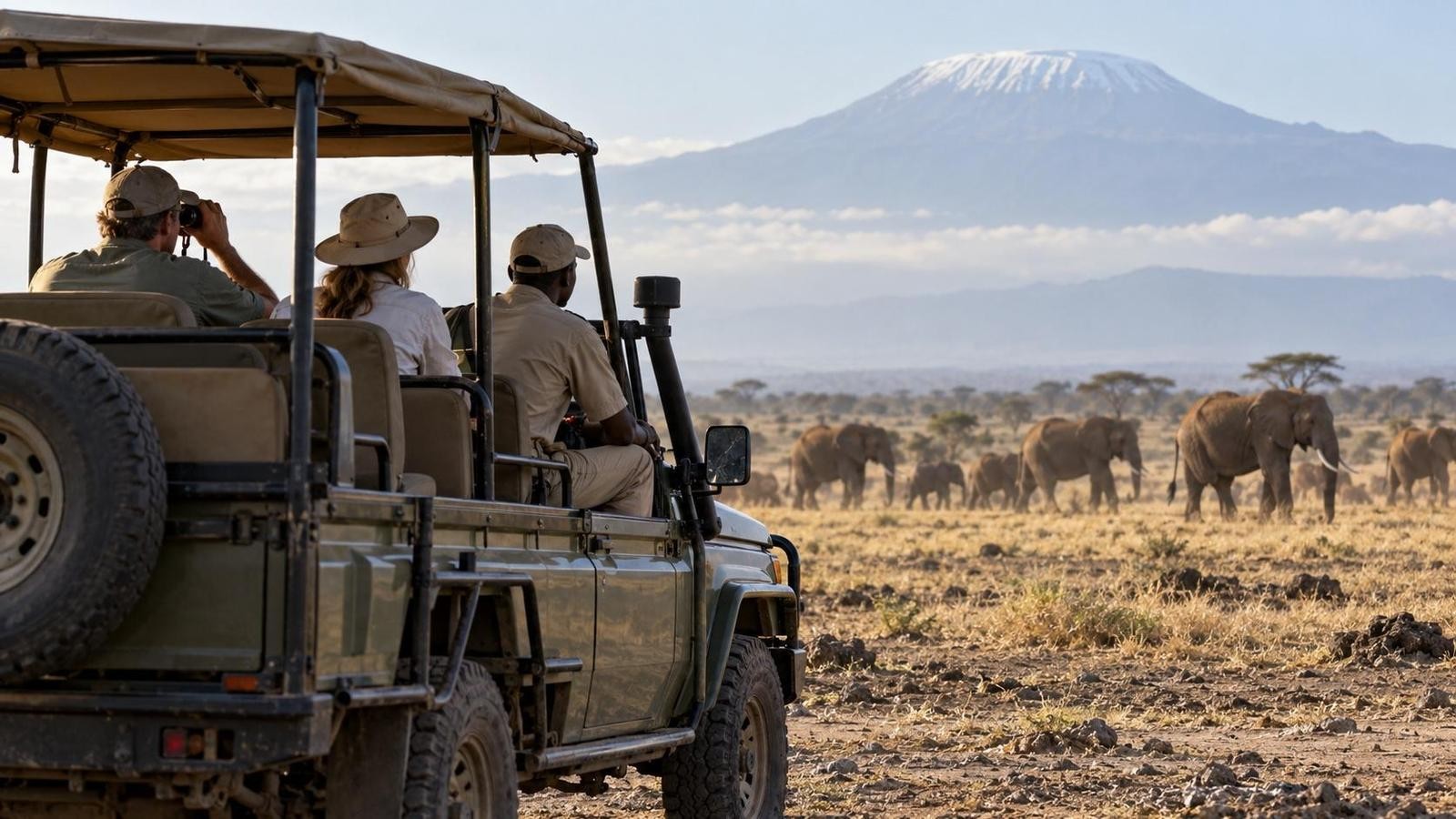
Amboseli makes sense when elephants and a different landscape are genuine priorities. Kenya Wildlife Service's Amboseli guide highlights its elephant herds and Mount Kilimanjaro backdrop. The mountain view depends on conditions, so I would not build the value of the stay around one photograph.
My recommendation is to add Amboseli because you want time there, not because a Kenya package feels incomplete without another park. For a shorter trip, a well-paced Mara stay can be a better fit than an itinerary that spends too much of its available time moving.
For a two-area safari, I would ask to see the entire transfer sequence between camps. Road access and air access are different planning tools, and the practical choice depends on the exact properties and travel dates. Avoid treating a line between two destinations on a map as a confirmed connection.
Match the Season to the Experience
If the Great Migration is your main reason for choosing Kenya, begin with the Kenya Tourism Board's explanation of the migration cycle. It identifies July through October as the typical Mara migration period and explains that the herds move in search of water and grazing. That is a seasonal planning window, not a river-crossing appointment.
Rain needs equal attention. The Kenya Meteorological Department identifies March through May with the long rains and October through December with the short rains in its climate reporting. Check the department's current forecasts and advisories when planning; a seasonal label does not tell you what a particular week will deliver.
Choose the compromise you actually want
If migration viewing is non-negotiable, I would prioritize an appropriate seasonal window and camp location before choosing a room upgrade. If your dates are flexible, I would compare alternative months on the full experience: weather expectations, confirmed camp operations, the activities you want and the actual rate for your stay.
I would not choose a lower-priced period on price alone, nor reject it automatically. The useful question is whether its tradeoffs suit you. A traveler comfortable with flexibility may make a different decision from someone whose entire trip depends on one particular wildlife objective.
Give the Itinerary Room to Breathe
As a starting design, I would consider seven nights in Kenya split between a Nairobi arrival night, two nights in Amboseli and four nights in the Mara. This is an illustrative allocation, not a scheduled departure or a claim that those connections operate on your dates. The transport sequence still has to be checked.
For travelers who prefer fewer moves, I would instead build around an arrival stay and a longer Mara stay. For a family, I would review the children's ages, room configuration and tolerance for early starts before deciding whether a second camp adds enough value.
- Arrival night: Leave room to recover and prepare for the next stage.
- First camp: Give yourself time to settle into the daily rhythm rather than planning only a quick stop.
- Second camp: Add a genuinely useful contrast, not another version of the same experience.
- Departure day: Check the connection to your international flight and whether a hotel room or overnight would improve the plan.
If you want a beach extension or another country afterward, I would build it into the route from the beginning. Do not add it as a final flourish before checking flights, luggage compatibility and the number of nights left for the safari itself.
Choose a Camp for the Way You Travel
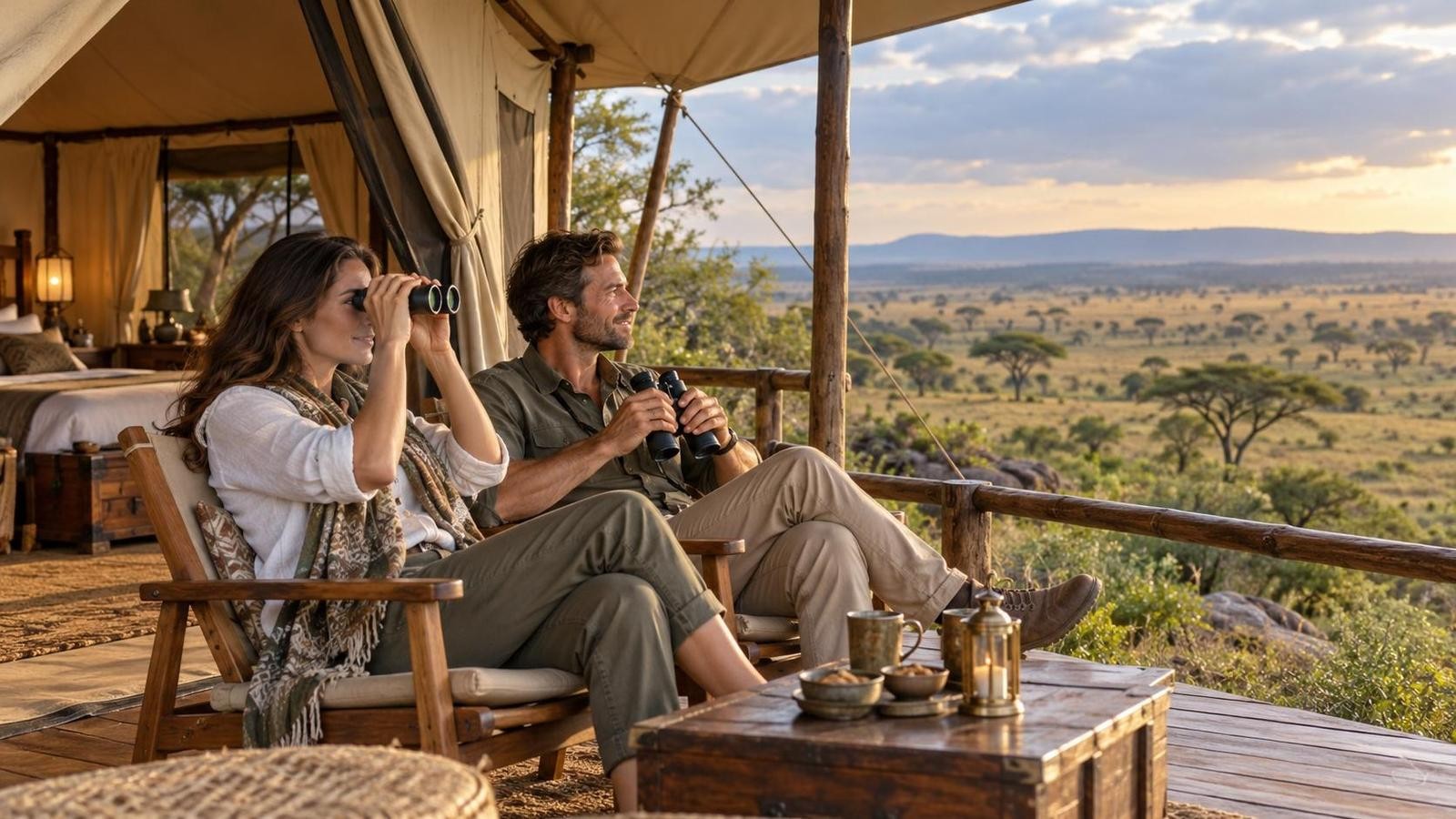
I look beyond the word tent. Ask about the sleeping arrangement, bathroom setup, distance to communal areas, steps, family configuration and the experience between game drives. Those are useful questions, not features to assume from the accommodation category.
For a concrete example, Elewana's Tortilis Camp property overview describes en suite tents and a conservancy location bordering Amboseli. It also distinguishes the Private House and Family Tent from the main camp and notes that they share a pool. That is exactly the level of detail worth checking before interpreting a room name as exclusive use.
For couples, I would prioritize the combination of privacy, outlook and guiding over a long amenities list. For multigenerational groups, I would start with who sleeps where and how everyone reaches the main areas. A property can be appealing and still be the wrong match for your particular group.
Read All-Inclusive Safari Packages Line by Line
An all-inclusive description is not a substitute for an inclusion list. Elewana's published 2026 rates, for example, distinguish full board from game packages. The game packages add scheduled shared drives and designated airstrip transfers, while flights and applicable park or conservancy fees remain among the exclusions.
I would compare Kenya safari packages on a common basis before judging their value. Put the exact dates, number of nights, room type and vehicle arrangement side by side. Then list what you will still need to pay for. A lower headline amount may reflect a different product rather than better value.
- Guiding: Are drives shared, and what would exclusive vehicle use change?
- Transport: Which airport, airstrip and hotel transfers are included?
- Access charges: Are park entry, conservancy and community charges included or separate?
- Meals and drinks: Which meals and drinks are covered, and what attracts supplements?
- Experiences: Are special outings confirmed, optional or subject to availability?
My approach to value is to simplify the right things. I would consider fewer camp changes or a different tent category before removing something central to the trip, such as appropriate guiding or enough time in your priority destination. Affordable should mean a sensible fit for your investment, not an itinerary you have to repair later.
What Kenya Safari Tours Cost
For a seven-night camp stay, a useful illustrative range is approximately $3,600 to $9,000 per person sharing for accommodation and scheduled shared safari activities, not the complete journey. This is calculated from published 2026 Elewana game-package rates: Tortilis Camp lists $517 to $915 per person sharing per night, while Sand River Masai Mara lists $856 to $1,276. The endpoints represent different camps and seasons, not interchangeable offers.
As a separate forward-looking comparison, Governors' Camp publishes 2027 luxury-tent rates of $476 to $1,048 per person sharing per night across its seasons. Its listed inclusions cover meals, selected drinks, game drives and Musiara airstrip transfers, but exclude park and community fees. Do not compare that figure with another camp without reconciling the year, dates and exclusions.
These estimates are not a quote or a guaranteed price. Actual pricing can vary significantly with the number and ages of travelers, season and dates, trip length, itinerary, camp and room category, level of luxury, shared versus private guiding, international and domestic airfare, transport and transfers, tours, meals, drinks and current availability. The seven-night illustration is a pricing comparison, not the total for the sample itinerary above.
A complete trip total cannot be accurately estimated from these nightly rates alone because the flight sectors, extra hotel nights, applicable access charges and requested experiences have not been specified. Our guide to African safari costs helps explain the broader cost structure. I would evaluate a dated, fully itemized trip rather than stretch a camp rate into an unsupported all-in estimate.
Prepare the Practical Details Before Departure
Luggage is a planning decision, not just a packing task. Safarilink's published baggage rules limit most routes to 15 kilograms per person, including hand baggage, in soft bags, with different allowances for specified destinations. Confirm the allowance for every actual flight; your international airline's allowance does not establish the safari aircraft limit.
For entry, check the Kenyan government's official eTA eligibility information for your nationality and circumstances. Its current list identifies United States passport holders as requiring an eTA, while exemptions apply to other travelers. Requirements can change, and travelers are responsible for meeting all applicable entry and transit requirements.
I would also discuss mobility needs, dietary requirements, medication storage and emergency-assistance arrangements before confirming properties. Do not assume remote accommodation offers a particular facility without written confirmation. Review appropriate medical advice and insurance for your individual circumstances.
Once the route is set, our African safari packing essentials guide can help you prepare. If you are still comparing accommodation, our guide to luxury Kenya lodges gives you another way to assess the stay, not just the destination name.
Frequently Asked Questions
How many days should I allow for a Kenya safari?
For a first trip, I would begin by exploring roughly a week in Kenya, then add time if you want more than two wildlife areas or a beach extension. That is my pacing recommendation, not a requirement. Count arrival and departure logistics separately from full days available for wildlife outings.
Are fly-in Kenya safari tours private?
Not necessarily. Flying to a camp does not establish whether your vehicle, guide or excursions are exclusive to your party. Ask for that distinction in writing. If private guiding matters, make it part of the initial trip design rather than an assumed feature of the room rate.
Is the Maasai Mara enough for a first safari?
It can be. I would favor a well-matched Mara stay over a rushed multi-park circuit when your time is limited. Our guide to planning Mara tours takes a closer look at that option. Add another destination when it offers a contrast you genuinely want.
Do Kenya safari packages include international flights?
Only if the particular proposal says so. Check international airfare, domestic flights, airport transfers and airstrip pickups separately. An included airstrip transfer is not the same thing as an included flight, and full board does not by itself establish what wildlife activities are covered.
How far ahead should I start planning?
I would start once you know your likely dates, group size and main wildlife priority, particularly if a specific camp or family arrangement matters. There is no universal booking deadline that fits every Kenya trip. Let confirmed availability guide the decision rather than assuming every room type remains possible until flights are chosen.
Plan a Kenya Safari That Fits Your Priorities
The best starting point is a short list of what matters most: your wildlife interests, travel dates, preferred pace, comfort needs and who is coming. I would use those answers to decide what belongs in the trip and what can be left out.
At Explore Effortlessly, we design custom journeys around those priorities and coordinate the camps, flights and transfers as one plan. You get recommendations with reasons behind them, not simply a list of places that look appealing in photographs.
Start Planning My Kenya Safari and tell us what you want this journey to feel like.
For more thoughtful travel ideas, join the Explore Effortlessly newsletter.
About the Author
Hi, I'm Karrah Kazravan, owner and lead travel advisor at Explore Effortlessly, an award winning Miami agency serving clients nationwide. I design custom journeys for busy travelers who want confident recommendations and thoughtful coordination. I have traveled to more than 67 countries across all seven continents and am a Nexion Circle of Excellence Top 5% advisor, ASTA Verified Travel Advisor, Certified Travel Associate, and CLIA Accredited Cruise Counselor.