Dreaming of France? Let's design your perfect 10 days.
Planning a trip to France usually starts with a beautiful idea and then turns into open tabs, conflicting advice, and too many route options. Paris sounds obvious, but then Provence calls. The Riviera looks glamorous, but Loire Valley châteaux are hard to ignore. Somewhere in the middle, you realize your vacation can disappear into train schedules, transfer timing, and restaurant reservation windows.
That's where expert planning changes the experience. I work with clients nationwide through virtual consultations, and my role is to turn a complicated multi-stop trip into something polished, personal, and easy to enjoy. For travelers building a France itinerary 10 days long, pacing matters more than ambition. The best trips don't try to force everything in. They move well, feel spacious, and still leave room for pleasure.
If you love French culture before you even land, French stories is a lovely pre-trip read.
Below are three distinct, fully realized itineraries for different styles of luxury travel. Each one is designed around the part most travelers underestimate: how the trip flows.
1. The Classic Luxury Paris, Loire Valley and Provence
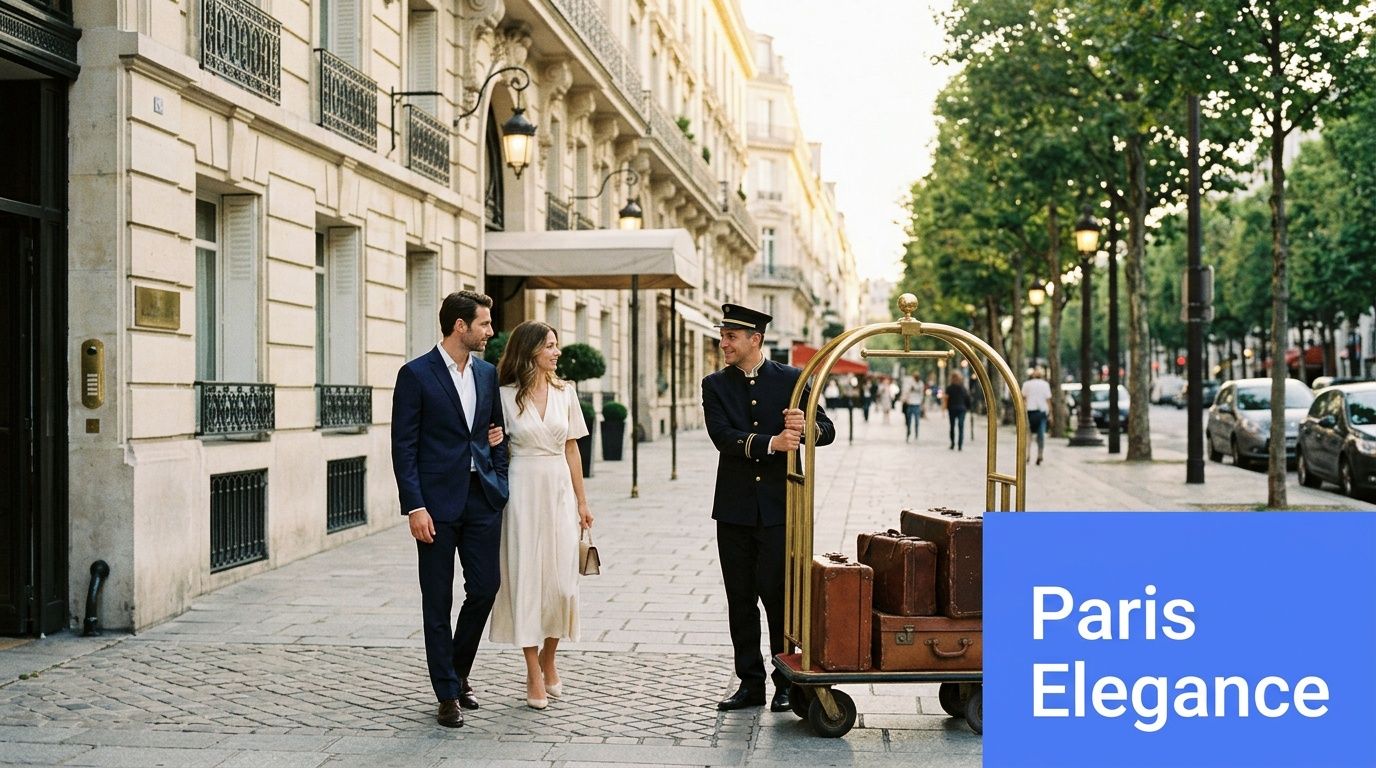
You land in Paris to a car waiting on the tarmac-side pickup, spend three nights in the capital without wasting half your stay in lines, shift into the Loire with your bags handled and lunch arranged en route, then finish in Provence where the pace finally drops. That is how this trip should feel.
I recommend this route for first-time France travelers who want the country's greatest hits without turning a luxury vacation into a transport exercise. Paris gives the trip its cultural backbone. The Loire adds château grandeur and wine country calm. Provence closes with warmth, space, and the kind of afternoons that should stay open.
Route choice decides whether this itinerary feels polished or exhausting. Rick Steves notes that Paris already deserves several days, and that adding too many regions quickly eats up a short trip's time (Rick Steves France itinerary guidance). He is right on the pacing, but for a 10-day luxury trip I would take the Loire over the Riviera every time if your priorities are beauty, privacy, and atmosphere over beach clubs and scene-driven stops.
Days 1 to 3 in Paris
Give Paris three nights minimum. Stay at Le Bristol or Plaza Athénée if you want classic palace service and a strong address. Choose a smaller five-star hotel if you care more about discretion, easier arrivals, and a quieter rhythm.
Paris works best with shape. One private museum morning. One neighborhood-focused afternoon with a guide who can read the room and adjust. One serious dinner reservation. That is enough to make the city feel rich, not rushed. If you want a longer city stay on another trip, my Paris itinerary for 7 days breaks down how to use your time well.
Book top restaurant tables early. I start those requests months ahead for clients because the right reservation can define an evening, and the wrong time slot can throw off the whole day.
If you stay near the Champs-Élysées or Golden Triangle, I also like to map out lower-key nearby options so every meal does not become a formal event. This curated guide to Arc de Triomphe restaurants is a useful starting point.
Days 4 to 6 in the Loire Valley
Do not default to a train connection here unless the hotel and station logistics line up perfectly. A private driver from Paris is usually the smarter choice. You leave after breakfast, stop for a château or tasting on the way, have a proper lunch, and arrive at your countryside hotel without handling luggage more than once.
That transfer day matters.
I usually place clients in a refined château hotel or manor house where the grounds are part of the experience, not just a place to sleep. Then I keep the sightseeing selective. Two standout château visits beat four rushed ones. A private or after-hours visit changes the tone completely. A tasting with a small producer beats a crowded cellar stop built for bus groups.
Why this middle section works so well
The Loire gives you a genuine reset after Paris without asking you to sacrifice style. You unpack, settle in, and still have access to architecture, gardens, and excellent wine. That balance is what makes the itinerary feel expensive in the right way.
I also build in one unscheduled morning here. Clients use it well. Terrace breakfast runs long. Someone wants a walk on the grounds. A market stop appears. Those are often the moments people remember most because they were not forced into a timetable.
A well-planned Loire day usually looks like this:
- Morning: early or private château visit before the main crowds arrive
- Lunch: estate lunch, polished village bistro, or chef-led tasting depending on your style
- Afternoon: scenic driving through vineyards or river towns with no hotel change
- Evening: aperitifs in the garden, a slow dinner, and tomorrow already handled
Days 7 to 10 in Provence
For the final stretch, move south and let the trip open up. I prefer one base near Gordes, Saint-Rémy, or Avignon depending on whether you want a villa feel, a grand hotel, or easier rail access. Do not hop around Provence on a short trip. One address, one driver if needed, and a clean plan for day outings will always feel better.
The Paris-to-Provence framework works because the rail connection is fast enough to protect your time, and it keeps the final days from disappearing into road travel. I use that same logic here after the Loire segment. The exact transfer mix depends on your hotel choices, but the principle stays the same. Long travel days should still feel comfortable and useful, not lost.
In Provence, keep the program elegant and restrained. Visit Gordes well-timed, not at peak crush. Add a market village, an olive mill or winery, and one special private experience at your hotel or villa. If this southern style is what you want to build a future trip around, start with this South of France honeymoon retreat guide, even if you are not planning a honeymoon. The property style and pacing principles apply beautifully here too.
The mistake I see most often is overloading the last three days. Provence should feel generous. Leave room for the pool, a late lunch, and an unplanned detour that your driver suggests because the lavender field is perfect that afternoon. That is the difference between seeing France and moving through it well.
2. The Ultimate Honeymoon Paris and a Private Provençal Retreat
You wake up in Paris after a late dinner on the Left Bank, spend the afternoon behind the scenes at one museum instead of racing through three, then a few days later you are having breakfast under the trees at a private Provençal estate with nowhere urgent to be. That contrast is what makes this honeymoon route work. It gives you a polished first act and a second one that offers profound privacy, with logistics built to protect the mood instead of interrupting it.
I plan this version of France for couples who want romance with structure. Not a packed checklist. Not a lazy free-for-all. You need the right reservations, the right transfer plan, and enough open space for the trip to breathe.
Paris should feel polished, not overprogrammed
Give Paris three or four nights and spend them well. I would build each day around one headline experience and one indulgence: a private guide at a major site before the crowds build, a long lunch, a hotel spa treatment, or a properly timed Seine cruise at dusk. That pacing keeps the city exciting without turning your honeymoon into an endurance test.
Rough Guides notes that pre-booked river cruises and private touring are among the most valued parts of a well-planned France trip, especially when the route is personalized to reduce friction (France itinerary planning insights from Rough Guides). That matches exactly what I see. Couples remember the cadence of the day, the room they returned to, and whether the evening felt effortless.
Say “honeymoon” or “anniversary” at the start of planning. That affects room category strategy, dining priority, amenity notes, and whether I push for a terrace, Eiffel Tower view, or a quieter suite facing an interior garden.
One well-sequenced evening can carry the entire Paris stay.
For example, I would rather arrange a private cruise, a serious dinner reservation, and a slow next morning than stack two museums, a shopping appointment, and a midnight cocktail bar into the same day. Paris rewards restraint.
Provence works best as a private retreat, not a second city stop
The mistake here is choosing another urban base and calling it variety. For a honeymoon, the second half should change the tempo completely. Provence does that beautifully when you commit to one exceptional property and let the region come to you.
I prefer a private villa or intimate estate with strong service, outdoor living space, and the option for on-property experiences. That setup gives you privacy without isolation. It also makes the travel day easier to justify. Once you arrive, you can settle in for several nights instead of repacking again.
The route itself matters. Open-jaw flights and a clean southbound progression keep this itinerary comfortable. Paris first, Provence second, then depart from Nice if the schedule and hotel plan support it. If you want to extend into the coast after Provence, use this French Riviera itinerary for a polished onward route. If you plan to continue into Italy, my travel tips for planning Italy can help you think through that next leg.
How I would structure the Provençal days
Keep one planned highlight per day. That is enough.
A private cooking lesson at the property works better than driving across the region for a class. A winery visit with a driver and a long lunch is stronger than trying to fit in three tastings. A market morning paired with an empty afternoon by the pool often feels more luxurious than a full-day outing.
Here is the framework I recommend most often:
- Choose one base: Stay put for the Provençal portion. Gordes, Saint-Rémy, and the countryside outside Avignon all work well depending on hotel style and transfer priorities.
- Use private transport selectively: Airport and rail transfers should be pre-arranged. Day touring can be mixed between a driver, e-bikes, and simple hotel-led outings.
- Bring special moments on-property: Chef dinners, couples' treatments, olive oil tastings, and floral styling for a terrace dinner all save time and keep the trip intimate.
- Protect your best hours: Do not fill every afternoon. Provence is at its best when you have time to swim, nap, dress slowly for dinner, and follow the light.
That is where luxury actually shows. In the pacing.
I also shape these trips around the couple, not around a standard list. If you are active, I can add a guided hike, a vineyard cycling day, or a scenic drive through the Luberon. If you want pure retreat mode, I would cut the movement and put the budget into a better suite, stronger dining, and private experiences at the property.
What generic honeymoon guides usually miss
Southern France rewards depth. Couples who split a short trip across too many stops usually spend their honeymoon checking out, checking in, and sitting in transit. Couples who choose one outstanding base in Provence get the version of the region that feels romantic.
That is also why I keep the Paris half edited. You do not need to “do” everything in the capital before earning the countryside. You need a Paris stay that feels glamorous and a Provençal stay that feels personal.
If that is the balance you want, my South of France honeymoon planning page shows the property style and trip design approach I use for couples traveling this way.
The best honeymoon hotel is not always the flashiest one. It is the one that gives you privacy, strong service, and a setting that makes staying in feel like a plan, not a compromise.
This is the 10-day France itinerary I recommend for couples who want the trip to feel calm, beautiful, and intelligently paced. Paris gives you occasion. Provence gives you space. Put together properly, the logistics disappear and the trip feels exactly as it should.
3. The Multi-Generational Family Journey Paris, Loire Valley and Côte d'Azur
By day four, the trip usually reveals whether the plan was smart. Grandparents are tired of stairs, children are done with museums, parents are managing everyone else, and the vacation starts to feel like logistics. A strong multi-generational France itinerary avoids that slide from the start. It builds in comfort, short transfer days, and enough independence that every age group can enjoy France without being dragged through someone else's ideal schedule.
This route works because each stop does a different job. Paris delivers the headline sights while energy is highest. The Loire Valley slows the pace and gives the family space. The Côte d'Azur ends the trip on easy mode, where a good hotel, a pool, and simple coastal outings do as much work as any formal sightseeing.
Start with the smartest sequence
I front-load Paris and keep it tightly edited. Families do better with three nights than with an overstuffed city stay that asks too much of children and older travelers. Book connecting rooms or a proper family suite early, because the best configurations disappear first, especially in centrally located luxury hotels.
Daily planning matters just as much as hotel choice. I recommend one major outing and one softer one each day. That might mean the Louvre with a child-focused private guide in the morning, then a river cruise or chauffeur-driven neighborhood tour in the afternoon so grandparents can enjoy the city without a punishing amount of walking.
The point is simple. Paris should feel exciting, not exhausting.
Use the Loire Valley to reset the family
The Loire is the recovery chapter that keeps the trip strong. After Paris, families need gardens, fresh air, and hotels where people can spread out. This is also the best place to use a château stay well. Pick one with good grounds, an indoor-outdoor rhythm, and dining that does not require turning every meal into an event.
Children usually respond well to the Loire because the setting is visual and easy to grasp. Towers, moat-side walks, formal gardens, and storybook rooms hold attention better than another dense urban museum day. Adults get the payoff too. The region is beautiful, calmer than Paris, and far easier for a mixed-age group to enjoy at its own pace.
I often split the day here. One group tours a château with a private guide. Another lingers over lunch or stays back at the hotel. Reuniting for aperitifs or dinner works better than forcing eight people through the same timetable from breakfast onward.
Shared travel does not require shared every minute. The best family trips give people room.
Finish on the Côte d'Azur, where the trip gets easier
For a multi-generational itinerary, the Riviera is a stronger final stop than another inland region. Everyone understands how to enjoy it. Children want the beach or pool. Parents want low-friction days. Grandparents usually appreciate sea views, good terraces, and the option to join selectively rather than keep up constantly.
Choose one base and stay put. Antibes, Saint-Jean-Cap-Ferrat, and quieter corners near Nice usually work better for families than a flashy see-and-be-seen address with small rooms and a hectic scene. A villa can be excellent for privacy, but only if you also solve staffing, transport, and meal service properly. For many families, a resort with suites, dependable concierge support, and easy beach access is the cleaner choice.
If you want help choosing the right coastal base, my French Riviera itinerary guide breaks down which part of the coast fits which travel style.
The logistics I would not leave to chance
Multi-generational travel succeeds or fails on setup. The routing, room plan, and transfer strategy matter more than adding one more attraction.
Here is what I prioritize:
- Room configuration first: connecting rooms, multi-bedroom suites, or a villa layout with genuine privacy
- Short transfer days: private drivers, station assistance, and minimal hotel changes
- Split-programming options: private touring for one group, downtime for another, then a shared dinner
- Mobility planning in advance: step counts, lift access, walking surfaces, and car-to-entrance ease
- Meal timing that suits the family: earlier reservations, hotels that handle dietary needs well, and lunch plans that do not derail the day
- Childcare support if wanted: vetted sitters arranged through top hotels or trusted local partners
I also build in at least one true off-duty window for the parents. That may be a adults-only dinner, a spa afternoon, or a boat outing while children stay with a sitter and grandparents rest at the hotel. Families remember that breathing room.
The best 10-day France itinerary for multiple generations is not the one with the longest checklist. It is the one that feels easy to live with. Paris gives you the icons, the Loire gives you space, and the Côte d'Azur gives the whole family a graceful finish.
10-Day France Itineraries: 3-Way Comparison
| Itinerary | Implementation Complexity | Resource Requirements | Expected Outcomes / Impact | Ideal Use Cases | Key Advantages |
|---|---|---|---|---|---|
| The Classic Luxury: Paris, Loire Valley & Provence | High : multi-region routing, 3+ hotel moves, coordinated private transfers | High : palace hotels, private drivers, top guides, Michelin reservations; 6–9 months planning; est. $12k–$18k pp | Very high : immersive cultural & culinary depth, relaxed pacing, elevated guest satisfaction | Discerning travelers, executives wanting structured luxury with countryside downtime | Seamless private access, curated dining, trusted local partners, balanced itinerary |
| The Ultimate Honeymoon: Paris & A Private Provençal Retreat | High : bespoke romantic elements, exclusive charters, villa-only experiences | Very high : private Seine charter, exclusive-use villas, personalized amenities; early booking; est. $15k–$25k pp | Exceptional : highly intimate, memorable moments, strong privacy and personalization | Honeymoons, anniversaries, milestone celebrations seeking seclusion & romance | Tailored romance, private villas/charters, special perks and surprise moments |
| The Multi-Generational Family Journey: Paris, Loire Valley & Côte d'Azur | High : coordinating diverse ages, mobility/diet needs, flexible daily plans | High : spacious vehicles, family suites/connecting rooms, vetted babysitters; 9–12 months planning; family budgets vary $15k–$25k+ | Strong : shared experiences across generations, adaptable pacing, broad appeal | Family reunions, multi-gen celebrations, groups with children and elders | Flexibility, family-focused activities, private transport, child-friendly dining options |
Your Effortless French Journey Awaits
You land in Paris after an overnight flight. Your driver meets you at arrivals, your hotel already knows you prefer a quiet room, your first afternoon stays intentionally light, and your dinner reservation fits your neighborhood instead of sending you across the city at rush hour. That is what smart France planning looks like in practice.
The best 10-day France trips are defined by flow. Not by how many stops you squeeze in, but by how well each stop connects to the next. The difference between a good itinerary and an excellent one usually comes down to route order, station choice, transfer timing, hotel fit, and knowing when to leave breathing room in the day.
Advisor-led planning matters most in those details. France looks simple on paper, but the critical work is in the handoffs. Which arrival day pairs best with Paris. Whether the Loire makes more sense by private driver or rail plus car. How to time Provence so you are not losing half a day to check-ins and road transfers. The right structure makes a luxury trip feel easy from start to finish.
When clients work with me, I handle the parts that usually create friction:
- Custom Itinerary Design: I build the trip around your priorities, pace, and preferred style of travel.
- Flights and Ground Logistics: I book the best flight options, including premium and business class, and coordinate private transfers and rail strategy.
- Hotel and Villa Selection: I use preferred partner relationships to secure VIP amenities such as room upgrades, hotel credits, and daily breakfast at top properties, when available.
- Private Access and Reservations: I arrange guides, exclusive experiences, and hard-to-get dining bookings that shape the trip in meaningful ways.
I'm Karrah, owner, founder, and lead travel advisor at Explore Effortlessly. I work with clients nationwide through virtual consultations, designing high-touch journeys for busy professionals, couples, families, and milestone travelers who want thoughtful planning and polished execution. I customize the structure to the traveler, then refine the logistics until the trip feels smooth, personal, and well judged.
If you want France done properly, start with a clear plan and the right pacing.
Frequently Asked Questions about Planning a Trip to France
Q1: How much does a 10-day luxury trip to France cost?
Cost depends on season, room category, villa versus hotel, dining preferences, and how many private services you want included. The biggest variables are usually accommodations, private touring, and flight cabin. I customize the structure around the experience you want, then match the properties and logistics to that brief.
Q2: When is the best time to visit France for a luxury vacation?
Spring and fall are the strongest choices for most travelers. You get pleasant weather, strong cultural access, and a more comfortable pace than peak summer. For southern France, I also look at local events, harvest timing, and coastal traffic patterns before finalizing the route.
Q3: Why should I use a travel advisor for my France itinerary?
Because France is easy to overbuild. I handle sequencing, hotel fit, transfer logic, reservation timing, and overall pacing, so the trip feels polished instead of pieced together.
Q4: Is Paris, Provence, and the Riviera too much for 10 days?
It works if the route is disciplined. A one-way itinerary with smart rail planning and selective private transfers can make that combination feel efficient and enjoyable. Adding extra regions usually weakens the trip.
Q5: Is the Loire Valley better than the Riviera for a first trip?
Choose the Loire if you want château hotels, wine country atmosphere, and a quieter rhythm. Choose the Riviera if you want a glamorous coastal finish, beach time, and more outdoor afternoons.
About the Author
Hi, I'm Karrah, owner, founder, and lead travel advisor at Explore Effortlessly, a luxury award winning travel agency based in Miami.
I specialize in designing custom, high-touch itineraries to bucket list destinations around the world. Every trip is curated with intention, insight, and smooth logistics from start to finish.
From luxury cruises and private villas to honeymoons, safaris, and once in a lifetime journeys, my role is to simplify the planning process while improving every detail.
Join the Newsletter
For more luxury travel insights and inspiration, I invite you to join my exclusive newsletter.
Explore Effortlessly is the advisor-led way to plan France well. If you want a polished itinerary with the right hotels, transfers, private experiences, and pacing already handled, Explore Effortlessly is an excellent place to begin.