
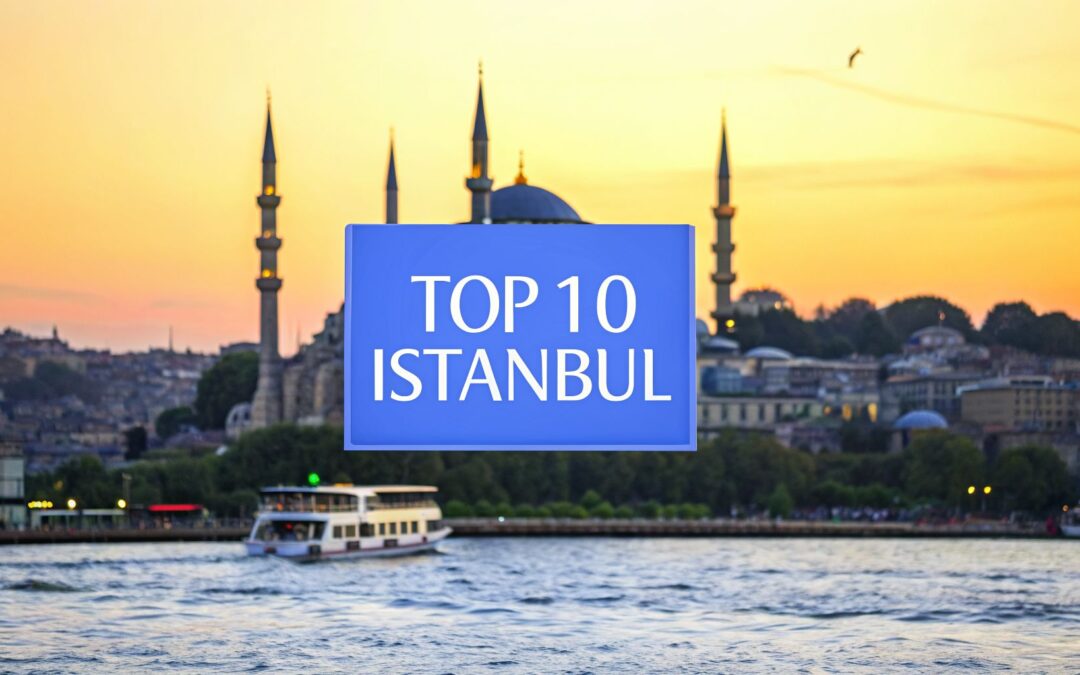
Istanbul is a city that doesn't just span two continents; it bridges millennia. Each corner tells a story, from the echoes of Byzantine chants in ancient basilicas to the vibrant haggling in centuries-old bazaars. For the discerning traveler, navigating this sprawling metropolis requires more than a simple map—it demands a strategy. As a luxury travel advisor, my role is to design bespoke Istanbul itineraries where the key is approaching its landmarks not as a checklist, but as chapters in a grand, epic novel.
This guide is built from that experience. We will go beyond the obvious, providing the insider knowledge you need to experience these iconic sites with seamless logistics and depth. Forget the long lines and common tourist traps; we'll focus on the best times to visit, exclusive access opportunities, and how to weave these historic marvels into a cohesive, luxurious, and truly effortless travel experience. I work with clients nationwide through virtual consultations to craft these perfect journeys, ensuring every detail is handled with precision. By exploring the essential landmarks in Istanbul with this level of insight, you can connect with the city's soul in a way that typical tours simply cannot offer. Ready to start planning? My Turkey in 10 days itinerary service page shows how we can begin designing your trip.
1. Hagia Sophia
A monumental testament to faith, power, and architectural genius, Hagia Sophia is one of the most significant landmarks in Istanbul and a structure that has shaped human history. Originally commissioned by Emperor Justinian I and consecrated in 537 CE, its vast interior and groundbreaking dome were designed to project the sheer power of the Byzantine Empire. For nearly a millennium, it stood as the largest cathedral in the world, a marvel of engineering that still captivates architects and historians today.
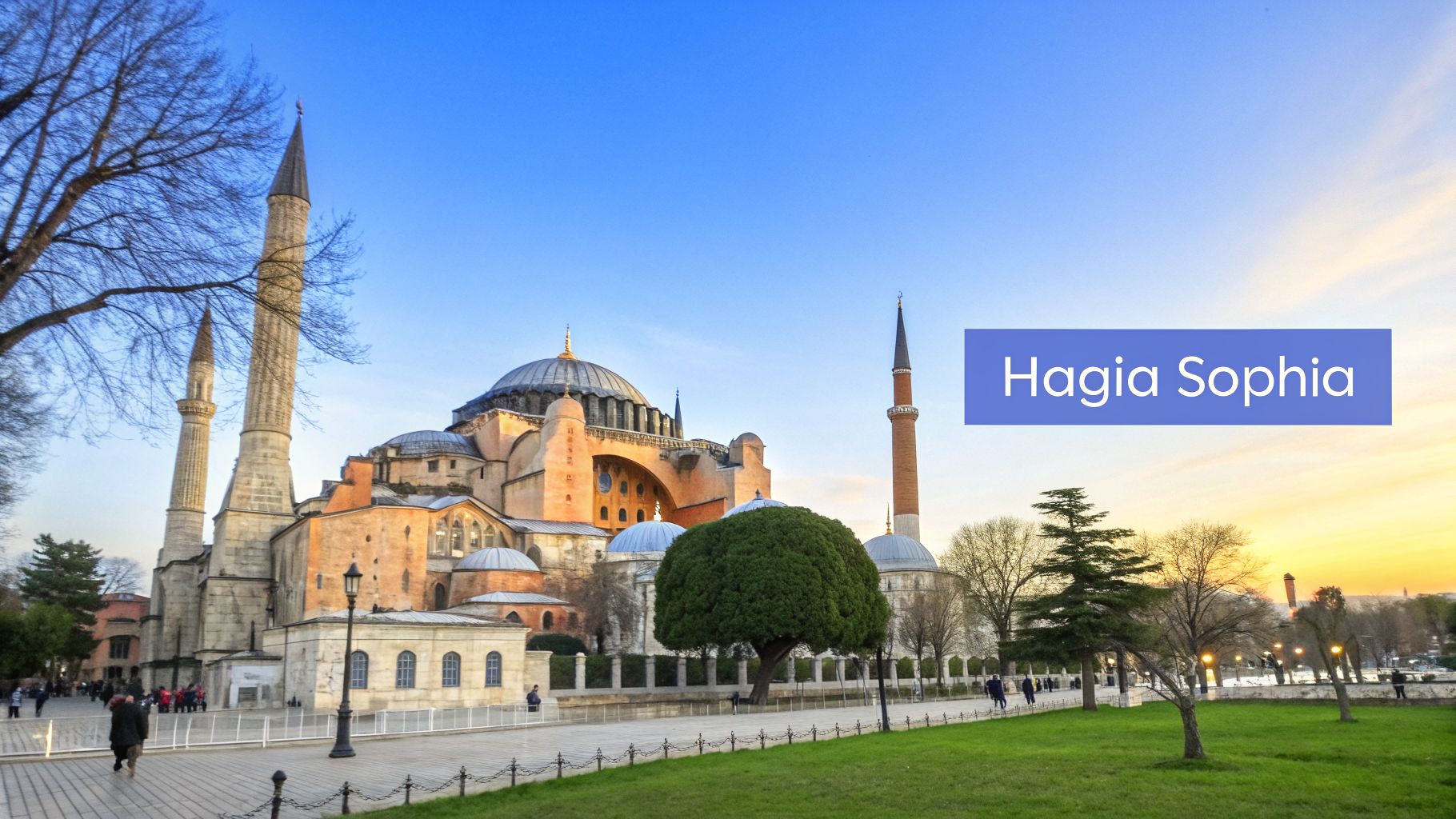
Its story is one of transformation: from an Orthodox cathedral to a Roman Catholic one, then an imperial mosque after the Ottoman conquest in 1453, a secular museum in 1935, and back to a functioning mosque in 2020. This layered history is visible everywhere, with shimmering Byzantine Christian mosaics peeking out from behind magnificent Islamic calligraphy. This visual dialogue between two of the world's great religions makes a visit a profound cultural experience.
Insider Access & Planning Insights
To make the most of your visit, timing is everything. As it is an active mosque, Hagia Sophia is closed to non-worshippers during the five daily prayer times.
- Optimal Timing: Arrive at the 9 AM opening or plan your visit for the late afternoon. This helps you avoid the largest tour groups and the midday cruise ship crowds that converge on Sultanahmet Square.
- Dress Code: As a place of worship, a modest dress code is strictly enforced. Women must cover their hair, and both men and women need to ensure their shoulders and knees are covered. Scarves are available at the entrance, but bringing your own stylish pashmina is a more comfortable option.
- Expert Guidance: The sheer historical and artistic depth can be overwhelming. I arrange for my clients to have a licensed private guide who provides not only priority access but also a rich, narrative-driven tour that brings the building's complex past to life. This is a key part of crafting a seamless Turkey in 10 days itinerary.
2. Blue Mosque (Sultan Ahmed Mosque)
An icon of Ottoman architectural prowess, the Blue Mosque stands directly opposite Hagia Sophia, engaging in a silent, centuries-old dialogue of design and grandeur. Officially the Sultan Ahmed Mosque, it was completed in 1616 under Sultan Ahmed I with the ambitious goal of surpassing its Byzantine neighbor. Its exterior is a symphony of cascading domes and six slender minarets, a feature unique for its time, creating one of Istanbul's most recognizable and unforgettable silhouettes.
The mosque earns its famous nickname from the more than 20,000 hand-painted İznik tiles that adorn its vast interior. Bathed in the soft light filtering through 260 stained-glass windows, these intricate blue-toned floral patterns create an atmosphere of ethereal calm and spiritual reflection. Unlike Hagia Sophia, the Blue Mosque has been a continuous place of active worship since its inauguration, and its design masterfully balances imperial splendor with sacred function, making it one of the most vital landmarks in Istanbul.
Insider Access & Planning Insights
As a functioning mosque, visiting the Blue Mosque requires thoughtful planning around prayer times, when it is closed to tourists. The experience is well worth the coordination.
- Optimal Timing: Plan to visit between prayer sessions. The best windows are typically mid-morning after the first prayer or late afternoon. Visiting in the evening offers a quieter experience with the interior beautifully illuminated.
- Dress Code: A strict dress code is in place. Women must cover their hair, and all visitors need to ensure their shoulders and knees are covered. It's wise for women to carry a lightweight scarf. Wear slip-on shoes, as you will need to remove them before entering the carpeted prayer hall.
- Expert Guidance: Navigating prayer schedules and understanding the rich symbolism within the mosque's architecture can be complex. For my clients, I secure a licensed private guide to provide context on the building's artistic details and religious significance, ensuring a respectful and deeply informative visit without the stress of logistical planning.
3. Topkapi Palace
A sprawling city-within-a-city, Topkapi Palace was the heart of the Ottoman Empire for nearly 400 years. More than just a residence, this vast complex served as the seat of government, a military barracks, and the empire's most sacred sanctuary. Commissioned by Sultan Mehmed II shortly after his conquest of Constantinople in 1453, the palace sprawls across a strategic hill overlooking the Bosphorus and Golden Horn. Its series of courtyards, opulent pavilions, and mysterious Harem offer a stunning glimpse into the public ceremonies and private lives of the sultans and their court.
Wandering from the public First Courtyard to the private inner sanctums feels like stepping back in time. The palace showcases some of the finest examples of Ottoman architecture, from intricate Iznik tilework and mother-of-pearl inlays to breathtaking hand-painted domes. The Imperial Treasury houses a jaw-dropping collection of jewels, including the famous Topkapi Dagger and the 86-carat Spoonmaker's Diamond. Visiting this UNESCO World Heritage site is essential for understanding the power, wealth, and intricate culture that defined one of history's greatest empires.
Insider Access & Planning Insights
The sheer scale of Topkapi can be daunting, so strategic planning is crucial for a rewarding visit. With four main courtyards and the separate Harem section, you'll want to prioritize what you see.
- Optimal Timing: Arrive right at the 9 AM opening to head straight for the Imperial Treasury and the Harem before the crowds build. Alternatively, a late afternoon visit around 4 PM often means fewer tour groups, especially in the Harem.
- Time Allocation: Budget a minimum of 3.5 to 4 hours. For a truly unhurried experience, I sometimes advise clients to split the visit across two different days. This approach feels less rushed and more immersive, similar to how one might tackle the immense collections when exploring what there is to see in Rome.
- Expert Guidance: The Harem is a labyrinth of stories and secrets that a simple walk-through can't reveal. I arrange for my clients to tour with a private guide specializing in Ottoman history. They provide priority access and, more importantly, contextualize the spaces, explaining the complex social hierarchy and daily life within the palace walls, making it one of the most memorable Istanbul landmarks.
4. Bosphorus Strait Cruise
While not a singular building, the Bosphorus Strait is one of the most defining landmarks in Istanbul, offering an experience that stitches the city's narrative together. This 31-kilometer waterway separates Europe from Asia and provides a unique vantage point to witness the grandeur of palaces, fortresses, and waterside mansions (yalı) that line its shores. A cruise along this historic strait is an essential Istanbul activity, revealing the city’s geography and architectural splendor from a perspective you simply can't get on land.
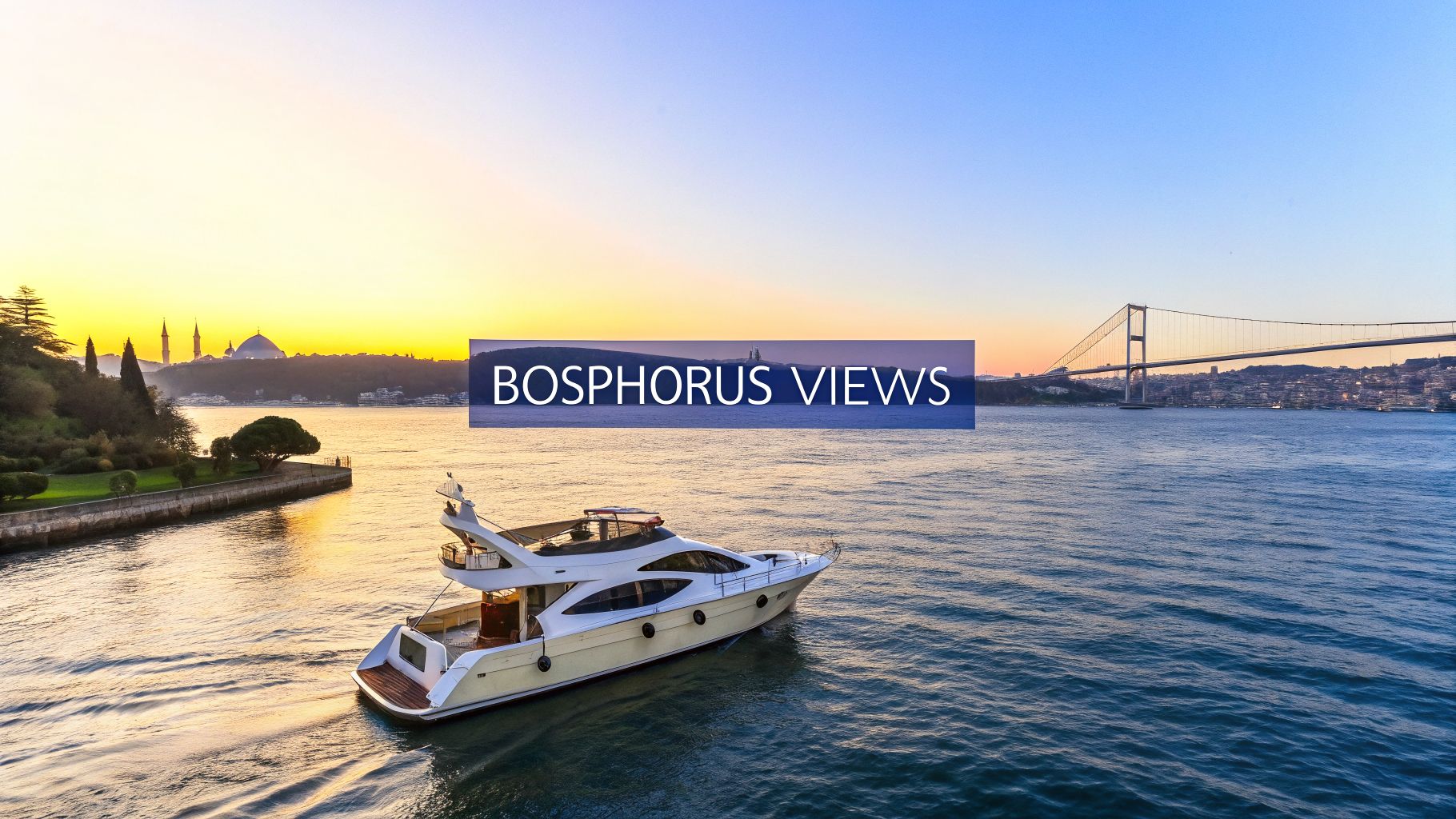
From the deck of a vessel, you glide past iconic sights like Dolmabahçe Palace, Çırağan Palace, and the Rumeli Fortress. The journey showcases the dynamic blend of historic neighborhoods and modern life, offering unparalleled views of both European and Asian shores. It's a key part of any luxury travel itinerary and can be a fantastic way to experience the city, particularly when considering broader journeys like European cruises.
Insider Access & Planning Insights
A private yacht charter is the only way to truly appreciate the Bosphorus. It moves you beyond the crowded public ferries and into a world of personalized luxury.
- Optimal Timing: Schedule a private yacht for sunrise (around 6:30 AM) or sunset (around 7 PM). The golden light creates a magical atmosphere, and you'll avoid the midday chop and traffic on the water.
- Expert Guidance: I arrange for my clients to have a private yacht with a captain who is also an expert on Ottoman history. They can point out hidden details and share stories about the families who have lived in the waterside mansions for generations.
- Elevated Experience: For a milestone celebration or a romantic evening, I can include champagne service or a full dinner on board prepared by a private chef. For those wanting a more in-depth exploration, a full-day cruise to the Black Sea entrance reveals a different side of the region.
5. Grand Bazaar (Kapalı Çarşı)
A dizzying, exhilarating maze of commerce and culture, the Grand Bazaar is one of the world's oldest and largest covered markets and a true heart of Istanbul. Established in 1461, it has been the city's commercial core for centuries. With over 4,000 shops spread across 64 arched streets, this sprawling marketplace is not just a place to shop; it's a living museum of Ottoman trade, craftsmanship, and daily life. The energy is palpable, with merchants calling out, the scent of spices and leather in the air, and a sensory overload of colors and textures at every turn.
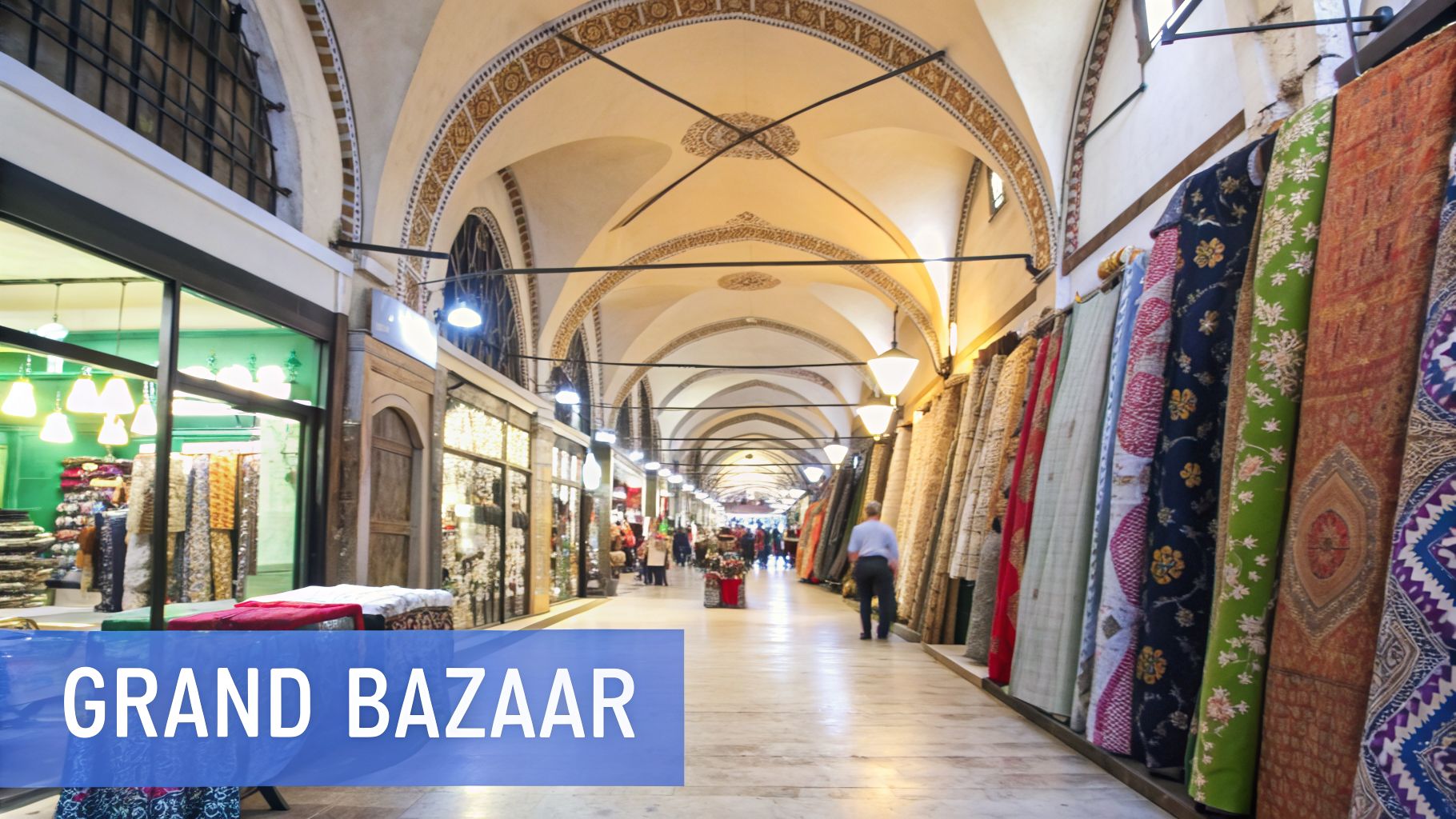
Wandering through its labyrinthine corridors is like stepping back in time. You'll find everything from handwoven carpets and intricate Iznik ceramics to gleaming jewelry, soft pashminas, and traditional handicrafts. The bazaar's organization into themed lanes, a practice dating back centuries, adds to its charm, whether you're exploring the jewelry section or the alleyways dedicated to leather goods. This is one of those essential landmarks in Istanbul where the experience of getting lost is part of the adventure.
Insider Access & Planning Insights
Navigating the Grand Bazaar requires a strategy to avoid being overwhelmed by the scale and the skilled merchants. The right approach turns a potentially stressful visit into a delightful cultural immersion.
- Optimal Timing: Arrive right at the 9 AM opening. You'll witness merchants setting up shop and can experience a more authentic, less crowded atmosphere before the midday tourist surge.
- Smart Navigation: Instead of wandering aimlessly, which leads to fatigue, focus on specific sections. Plan to visit the nearby Spice Market first, then dedicate time to the carpet, jewelry, or textile areas within the Grand Bazaar itself. A 2 to 3-hour visit is typically sufficient.
- Expert Guidance: The sheer size and art of negotiation can be intimidating. I connect my clients with a private local guide who has established relationships with trusted, reputable merchants. This not only ensures fair pricing and quality but also helps you navigate directly to the best artisans, sidestepping the tourist traps. It's an indispensable part of creating a seamless shopping experience.
6. Dolmabahçe Palace
A breathtaking display of late Ottoman grandeur, Dolmabahçe Palace served as the empire's administrative heart and the sultans' residence during its final, turbulent decades. Built between 1843 and 1856 along the Bosphorus, its opulent design was a deliberate turn towards European architectural styles. The palace is an immense, 600-room testament to a changing world, blending Baroque, Rococo, and Neoclassical elements with traditional Ottoman features. It was here that the last vestiges of Ottoman sovereignty officially ended, and where Mustafa Kemal Atatürk, the founder of the Turkish Republic, spent his final days.
The sheer scale is staggering, from its 600-meter-long facade on the water to its lavish interiors. Visitors are mesmerized by the Ceremonial Hall, which holds the world's largest Bohemian crystal chandelier, a 4.5-ton gift from Queen Victoria. The Crystal Staircase, Baccarat crystal, and priceless paintings create an atmosphere of almost overwhelming luxury. A visit to Dolmabahçe Palace provides a fascinating look into the immense wealth and Western-facing aspirations of the 19th-century Ottoman court, making it one of the most compelling landmarks in Istanbul.
Insider Access & Planning Insights
The palace's size and popularity demand a strategic approach. It's a vast complex and requires significant walking, so thoughtful planning is essential.
- Optimal Timing: Weekdays, particularly Tuesday through Thursday, see fewer crowds. Aim for the first entry of the day to enjoy the halls before the large tour groups arrive. An afternoon visit can also be strategic, especially when paired with a sunset cruise.
- Dress Code: While not a religious site, smart casual attire is appropriate. Most importantly, wear comfortable, high-quality walking shoes, as you will be on your feet for at least two hours exploring the sprawling grounds and interiors.
- Expert Guidance: To truly appreciate the history, I arrange private tours with expert guides fluent in Ottoman history. This provides not only deeper context but also a more personalized and efficient visit. An early morning tour before the standard 9 AM opening offers an exclusive atmosphere and superior light for photography, which I can coordinate for my clients. After the visit, a sunset Bosphorus cruise departing from the nearby Beşiktaş pier is a perfect way to conclude the experience.
7. Galata Tower & Balat Neighborhood
Rising with medieval authority over the vibrant Beyoğlu district, the Galata Tower offers a breathtaking counterpoint to the old city's skyline. Built by Genoese merchants in 1348, this iconic stone cylinder provides a stunning 360-degree panorama of Istanbul. From its observation deck, you can trace the Bosphorus, the Golden Horn, and the sprawling city, making it an essential first stop to grasp the city's immense scale and one of the most photographed landmarks in Istanbul.
Pairing the tower's popular viewpoint with the nearby Balat neighborhood creates a perfect day of contrasts. Balat, one of Istanbul's oldest districts, feels like a world away from the polish of Sultanahmet. Here, you'll find steep cobblestone streets, colorful but wonderfully ramshackle wooden houses, and a palpable sense of community. Its raw, unglamorous authenticity offers a genuine glimpse into a different side of Istanbul life, rich with history and local character.
Insider Access & Planning Insights
To properly experience these two distinct areas, a bit of strategic planning is key. Combining the iconic views from the tower with the atmospheric streets of Balat requires an appreciation for timing and comfortable shoes.
- Optimal Timing: For the Galata Tower, arrive right at its 8:30 AM opening or plan a visit for sunset to capture magical light and avoid the longest queues. For Balat, an early morning visit between 8-10 AM is ideal, as the streets are quieter and you can see local life unfold.
- Smart Dining: The restaurant at the top of the Galata Tower is best avoided. Instead, enjoy the view and then descend to one of the many charming street-level cafés in the Galata neighborhood for a much better and more authentic meal or drink.
- Expert Guidance: The winding, hilly streets of Balat can be confusing to navigate. I connect my clients with a private local guide for a walking tour, ensuring they discover hidden courtyards, historic synagogues, and the best local photo spots that most tourists miss. Sturdy, comfortable footwear is non-negotiable for this part of the city.
8. Basilica Cistern (Yerebatan Sarnıcı)
A descent into the Basilica Cistern is a journey into Istanbul's surreal, subterranean world. Known as Yerebatan Sarnıcı or the "Sunken Palace," this remarkable feat of Byzantine engineering was constructed in 532 CE under Emperor Justinian I. It once held up to 100,000 cubic meters of water, piped in via aqueducts from distant forests to serve the Great Palace, making it one of the most essential and impressive landmarks in Istanbul. The space is an underground cathedral of water, with 336 marble columns rising from the depths to support the vaulted ceiling, creating a mesmerizing and atmospheric experience.
This ancient reservoir has captivated imaginations for centuries, its ethereal beauty enhanced by modern lighting and artistic installations. The famous Medusa head carvings, one placed sideways and the other inverted at the base of two columns, add to the mystery. Their exact origins and placement are subjects of legend, but they make for a haunting and unforgettable sight. The combination of grand-scale engineering, classical art, and an almost otherworldly ambiance makes the cistern a truly unique stop.
Insider Access & Planning Insights
A visit to the cool, quiet depths of the cistern offers a welcome respite from the city's surface-level hustle, but a little planning goes a long way. The space is relatively small, and crowds can build up quickly.
- Optimal Timing: Arrive at the 9 AM opening to experience the cistern in relative tranquility, or visit in the late afternoon between 4 PM and 5 PM after the main tour groups have departed.
- Dress Code & Comfort: There is no strict dress code, but practical considerations are key. Wear comfortable, slip-resistant walking shoes as the pathways are damp. I also recommend a light jacket; the temperature stays at a consistent 12-13°C (around 55°F), which feels brisk compared to the outside warmth.
- Expert Guidance: To appreciate the nuances of this engineering marvel, from the varied column capitals to the legends of the Medusa heads, a private guide is invaluable. I arrange for my clients to explore the cistern as part of a curated morning that includes Hagia Sophia and the Blue Mosque, ensuring a seamless flow and a deeper understanding of the Byzantine heart of the city.
9. Chora Church (Kariye Museum)
While Istanbul's grand imperial mosques and palaces command attention, the Chora Church offers a more intimate yet equally profound encounter with the city's Byzantine soul. Tucked away in the historic Edirnekapı district, this former monastery church houses what are widely considered the most exquisite surviving Byzantine mosaics and frescoes in the world. Dating to the 14th century, its art represents the last great creative flourishing of the Palaeologan Renaissance, a moving testament to faith and artistic brilliance just before the empire's fall.
Like many of Istanbul's sacred landmarks, Chora's story is one of layered identities. It was converted into the Kariye Mosque after 1453, later became a museum, and recently reverted to a mosque. Its small scale allows for a deeply personal and contemplative experience, as you stand surrounded by gold-leafed panels and vivid frescoes depicting biblical scenes with an emotional depth rarely seen in art of this period. For art and history lovers, this landmark is an essential pilgrimage.
Insider Access & Planning Insights
The intricate narrative of the mosaics can be difficult to decipher without expert context. The location, away from the main Sultanahmet tourist hub, also requires a bit more planning.
- Optimal Timing: Arrive right at the 9 AM opening on a weekday (Tuesday-Thursday is best) to enjoy the space before crowds build. The small interior can feel packed by late morning, so an early start is critical.
- Dress Code: As an active mosque, modest attire is required. Women should bring a headscarf, and all visitors must have shoulders and knees covered. Wear slip-on shoes for easy removal before entering the prayer halls.
- Expert Guidance: The artistic program at Chora is incredibly complex. I strongly recommend a private tour with an art historian who specializes in Byzantine art. They can illuminate the symbolism and stories within the mosaics, transforming your visit from a simple viewing into a rich educational experience. This level of detail is a highlight I often build into custom itineraries for clients fascinated by art history.
10. Spice Market (Mısır Çarşısı) & Eminönü Waterfront
A sensory explosion of color, scent, and sound, the Spice Market, or Mısır Çarşısı (Egyptian Bazaar), is the aromatic heart of old Istanbul. Built in 1660 as an extension of the New Mosque complex, its L-shaped arcaded halls have long been a hub for commerce. Heaps of vibrant spices, mountains of dried fruits and nuts, glistening Turkish delight, and countless herbal remedies create a truly intoxicating atmosphere that feels deeply connected to the city's trading past.
The market's energy spills out onto the adjacent Eminönü waterfront, a bustling district that offers a raw and authentic slice of Istanbul life. Here, the hum of ferry terminals, the calls of street food vendors selling fresh fish sandwiches, and the sight of local fishermen casting their lines from the Galata Bridge combine into an unforgettable scene. It's a vibrant counterpoint to the more tourist-focused Grand Bazaar and a must-see among the many landmarks in Istanbul.
Insider Access & Planning Insights
To properly experience the market's dual identity as both a local hub and a visitor attraction, a bit of strategic planning is essential. This area can be crowded, but the rewards are well worth it.
- Optimal Timing: Arrive between 8 AM and 10 AM to witness the market in its most authentic state, as locals do their shopping before the main tourist crowds descend. It's best to schedule no more than two hours here and avoid the midday summer heat.
- Situational Awareness: This is a bustling area. I advise clients to remain aware of their surroundings. Wear a crossbody bag kept in front of you and be mindful of your valuables. Comfortable shoes are a must for navigating the cobblestones and crowds.
- Expert Guidance: I connect my clients with a local guide who has deep relationships with the vendors. This ensures you’re not only getting the best quality but also understanding what you're buying, from a special saffron to a unique spice blend. They will help you taste samples and arrange for vacuum-sealed packages perfect for travel. This experience can be paired with a street food tour, creating a perfect afternoon in a Turkey in 10 days itinerary.
Comparison of 10 Iconic Istanbul Landmarks
| Site | Access & Complexity 🔄 | Time & Effort ⚡ | Quality & Impact ⭐ | Ideal Use Cases 📊 | Quick Tips 💡 |
|---|---|---|---|---|---|
| Hagia Sophia | Moderate — active mosque hours, restoration work, heavy crowds | 2–3 hours — queuing likely | ⭐⭐⭐⭐⭐ — unparalleled historical & architectural significance | Milestone trips, architecture & history immersion | Visit early or at sunset; avoid prayer times; consider private guide |
| Blue Mosque (Sultan Ahmed) | Moderate — strict dress/shoe rules and prayer closures | 1–2 hours — efficient visit if timed | ⭐⭐⭐⭐ — iconic İznik tilework and serene interior | Cultural exploration, photography, spiritual visits | Wear modest clothing/headscarf; check visitor hours; arrive early |
| Topkapi Palace | High — large complex, uneven terrain, Harem bottlenecks | 3.5–4.5 hours — half to full day | ⭐⭐⭐⭐ — comprehensive Ottoman imperial collection & views | History buffs, families, museum-style exploration | Allocate half-day; hire guide for Harem/Treasury; arrive at opening |
| Bosphorus Strait Cruise | Low — many options (public → private); weather-dependent | 1.5–8 hours — highly flexible | ⭐⭐⭐⭐ — excellent scenic & photographic impact | Romantic evenings, milestone celebrations, relaxed sightseeing | Book sunset or private yacht for best light and fewer crowds |
| Grand Bazaar (Kapalı Çarşı) | Moderate — labyrinthine layout, skilled merchants, situational awareness | 2–3 hours — mentally tiring | ⭐⭐⭐⭐ — high authenticity and shopping value | Souvenir shopping, artisan encounters, cultural immersion | Go early; hire a trusted local guide; keep valuables secure |
| Dolmabahçe Palace | Moderate — mandatory guided tours with fixed schedules | 3.5–4 hours — structured visit | ⭐⭐⭐⭐ — opulent late-Ottoman grandeur and photography subjects | Luxury architecture enthusiasts, comparative palace visits | Book early private tour; visit weekdays for smaller groups |
| Galata Tower & Balat | Low–Moderate — easy tower access; steep cobbled streets in Balat | 2–3 hours — compact neighborhood stroll + tower time | ⭐⭐⭐ — superb panoramic views and authentic neighborhood charm | Sunrise/sunset photography, neighborhood exploration | Arrive at sunrise/sunset; wear sturdy shoes; be aware of surroundings |
| Basilica Cistern | Low — compact site but uneven, slippery surfaces; limited capacity | 45–60 minutes — concise visit | ⭐⭐⭐ — unique atmospheric engineering and photo ops | Unique architecture, cool respite, intimate photography | Visit at opening or late afternoon; wear slip-resistant shoes |
| Chora Church (Kariye) | Moderate — off-center location, irregular hours, modest dress required | 1.5–2 hours — focused art visit | ⭐⭐⭐⭐ — exceptional Byzantine mosaics and frescoes | Art-history specialists, contemplative visitors, photographers | Book a morning art-historian guide; bring low-light camera gear |
| Spice Market & Eminönü Waterfront | Low — compact but busy at commute times; lively waterfront | 1.5–2 hours — quick, sensory visit | ⭐⭐⭐ — strong culinary and market atmosphere | Culinary enthusiasts, street-food exploration, spice shopping | Go early (8–10 AM); taste before buying; avoid ferry peak hours |
Let's Design Your Effortless Istanbul Itinerary
You've now journeyed through the heart of Istanbul, getting acquainted with the city's most iconic and essential landmarks. But a list of places is just the beginning. The real art is in weaving these sites into a seamless, personalized narrative that reflects your travel style, pace, and passions. This is where a blueprint transforms into a bespoke experience.
The difference between a good trip and an exceptional one lies in the details. It's knowing the best time to visit the Blue Mosque to witness the light streaming through its windows without the peak crowds. It’s securing a table at a rooftop restaurant with a direct view of the Galata Tower at sunset. It’s understanding how to combine a morning at Topkapi Palace with an afternoon exploring the Spice Market and Eminönü waterfront, all orchestrated with a private, air-conditioned vehicle waiting for you.
My role as your travel advisor is to handle these very logistics. I bridge the gap between inspiration and implementation, ensuring your time is spent absorbed in the culture, not wrestling with maps or waiting in lines.
From List to Lived Experience
Transforming this list of landmarks in Istanbul into your reality involves a strategy built on expertise and insider access. Here’s a glimpse into how we can elevate your journey:
- Intelligent Pacing: We won't just cram these ten landmarks into a few days. We'll group them geographically and thematically. For instance, a "Sultanahmet Day" could focus on Hagia Sophia, the Blue Mosque, the Basilica Cistern, and Topkapi Palace, all within walking distance, punctuated by a relaxing lunch at a hidden garden cafe.
- Exclusive Access: Imagine experiencing Dolmabahçe Palace with a private historian guide who can illuminate the stories behind its opulent rooms, or arranging a Bosphorus cruise on a private yacht instead of a crowded ferry. My connections with trusted local partners make these exclusive moments possible.
- Curated Accommodations: Your home base sets the tone for your entire trip. Whether you envision a grand hotel on the Bosphorus with historic pedigree or a chic boutique hotel in Karaköy, I can secure accommodations that come with added benefits. As a Circle of Excellence Advisor, I can often provide perks like complimentary breakfast, potential room upgrades, or resort credits through established relationships.
- Seamless Logistics: The most overlooked aspect of luxury travel is often the most critical: transfers. We'll arrange for vetted, professional drivers to handle your airport pickups, hotel transfers, and transportation between sights. You’ll never have to worry about navigating traffic or haggling with taxis; your only focus is enjoying the view. While I handle the planning and logistics before you depart, trusted in-destination partners provide on-the-ground support.
Ultimately, mastering an itinerary of Istanbul landmarks isn't about seeing everything; it's about experiencing the right things in the best possible way. It’s about feeling the history, tasting the flavors, and connecting with the city’s vibrant pulse without the stress of planning. My expertise, as a CLIA Accredited Cruise Counselor and a top advisor, is dedicated to this single purpose: simplifying the entire process so you can have an extraordinary, effortless vacation.
Istanbul is a city that rewards thoughtful exploration. Safety conditions can change anywhere in the world, and it's always important to remain aware of your surroundings, whether at home or abroad. I recommend that all travelers check official government travel advisories before their trip. As your advisor, I plan your trip with vetted local tour operators, drivers, and guides as part of my commitment to high service standards.
Ready to experience the magic of Istanbul without the logistical headaches? Let’s create an itinerary that is as unique and unforgettable as the city itself.
Hi, I’m Karrah, owner, founder, and lead travel advisor at Explore Effortlessly, a luxury award winning travel agency based in Miami.
I specialize in designing bespoke, high-touch itineraries to bucket list destinations around the world. Every trip is curated with intention, insight, and seamless logistics from start to finish. I work with clients nationwide through virtual consultations.
From luxury cruises and private villas to honeymoons, safaris, and once in a lifetime journeys, my role is to simplify the planning process while elevating every detail. As a Circle of Excellence Advisor and a CLIA Accredited Cruise Counselor, I leverage my expertise and relationships to craft extraordinary trips.
Ready to experience the magic of Istanbul? Plan my luxury trip.
Join the newsletter for more luxury travel inspiration: https://exploreeffortlessly.myflodesk.com/linkinbio