You're probably in the exact place most couples reach out from. You have a beautiful idea, a busy calendar, too many tabs open, and a growing suspicion that planning a wedding in another country is starting to look like a second full-time job.
That instinct is correct.
A destination wedding at a high level isn't just a party in a prettier location. It's travel design, event production, guest logistics, vendor management, budget control, and creative storytelling happening at the same time. When couples underestimate that, they end up hiring someone who can coordinate a timeline but can't lead a production.
Key takeaways
- A true luxury destination wedding planner does two jobs at once. They shape the vision and run the operation.
- Luxury and ultra-luxury are not the same thing. One is polished and curated. The other is fully bespoke.
- Pricing needs scrutiny. Percentage fees often don't include the creative work behind an original concept.
- Your timeline matters early. Venue, guest flow, legal structure, room strategy, and transport decisions all affect the final experience.
- The right planner protects your time. That's often the most valuable return on the investment.
The Planner as Your Wedding's Creative Director and COO
You approve a beautiful design deck for a villa in Lake Como. Two weeks later, the florist flags import limits, the venue restricts install hours, the welcome party now conflicts with guest arrivals, and your rooming plan no longer supports the weekend flow. That is what happens when no one is leading both the vision and the operation.
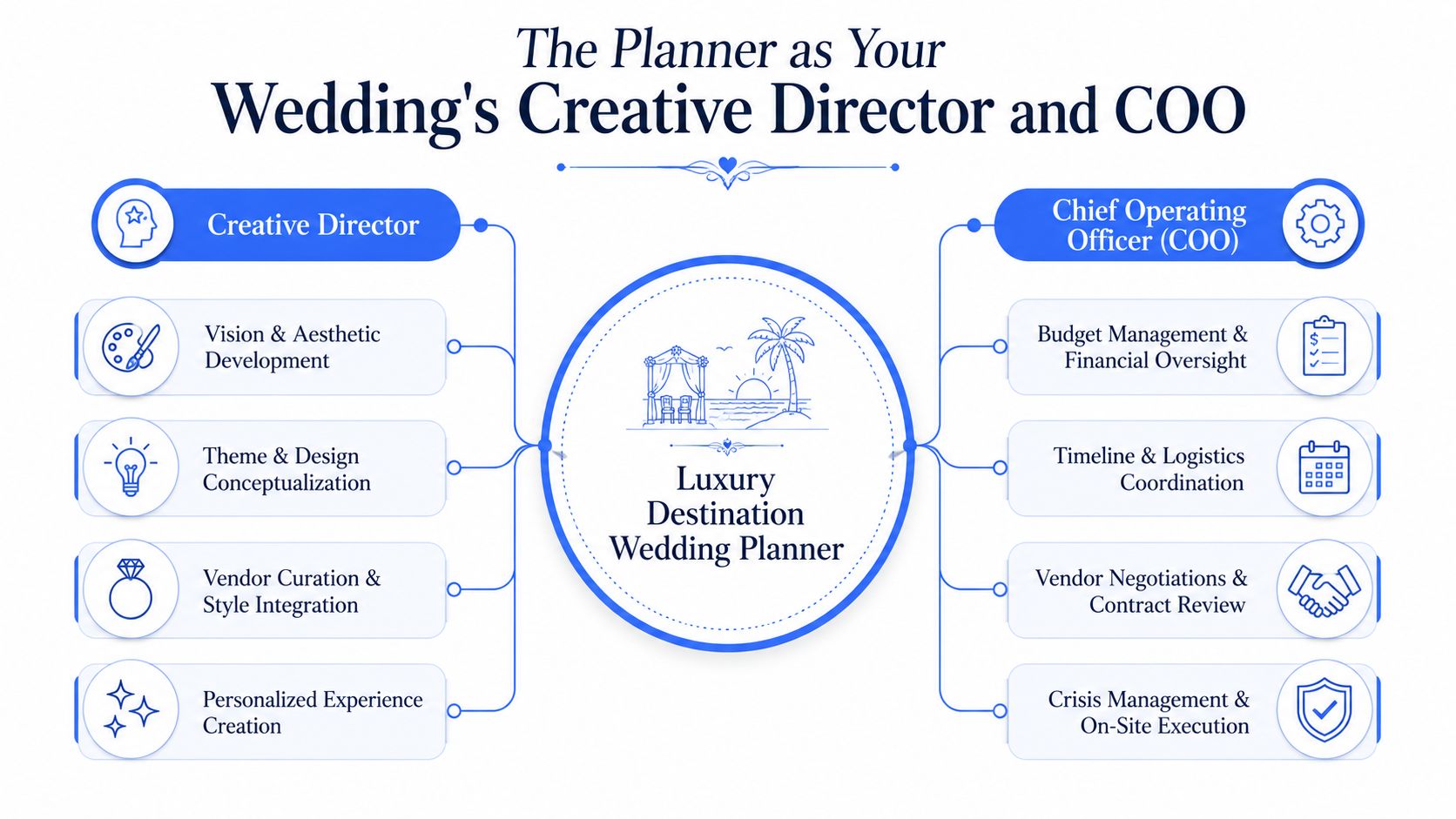
A strong luxury destination wedding planner serves as your wedding's creative director and COO at the same time. They set the point of view, build the right team, protect the budget, pressure-test every decision, and keep the entire production aligned. That dual role is the difference between a wedding that looks polished in photos and one that feels considered from the first arrival to the last farewell.
Luxury and ultra-luxury are not the same job. Luxury is curated elegance. It means refined choices, strong editing, and a guest experience that feels polished and intentional. Ultra-luxury is bespoke production. It often involves custom builds, complex installs, multiple event environments, higher staffing demands, and far more technical oversight. If you are planning at either level, hire for leadership, not basic coordination.
What the creative director side means
Creative direction starts well before flowers and tabletop details. It begins with judgment.
Your planner should shape a clear event identity based on your relationship, the destination, the property, the guest profile, and the atmosphere you want people to feel. They should know when a concept is strong, when it is derivative, and when a beautiful idea will fail in that specific setting.
That work includes:
- Concept development: a defined perspective, not a collage of saved images
- Visual cohesion: color, texture, scale, lighting, floral direction, and material choices that belong together
- Experience design: events that feel distinct across the weekend and build emotional momentum
- Team curation: selecting partners whose styles, standards, and working methods fit the brief
If a planner can discuss aesthetics but cannot explain guest flow, timing, energy, or how design choices affect production, you are not hiring a creative director. You are hiring someone to source pretty things.
For couples comparing titles and responsibilities, this guide on choosing the right event professional is a useful reference. Coordination, planning, and production are different scopes of work.
What the COO side means
The operational side is where expensive mistakes are prevented.
Your planner should run the wedding like an executive managing a high-stakes launch. That means contracts, payment schedules, rooming strategy, transportation planning, staffing plans, load-in timing, rain plans, local vendor communication, guest movement, and contingency decisions all stay under one clear system. Good planners do not wait for problems to appear. They see pressure points early and solve them before they affect cost, timing, or guest comfort.
Analysts at Fortune Business Insights project strong growth in the wedding planner market and expect the full-service segment to lead. That tracks with real destination weddings. Complex celebrations require management, not piecemeal help.
What you should expect from the role
Use this standard when you assess a planner:
| Role | What you should see |
|---|---|
| Creative Director | Original concept, aesthetic discipline, a clear point of view |
| COO | Budget control, contract oversight, scheduling precision, decision management |
| Guest Experience Lead | Smart rooming, transportation logic, communication that keeps the weekend easy |
| Production Lead | Calm problem-solving, vendor accountability, backup plans that protect the event |
If your life is busy and your standards are high, this role matters more than any single design choice. The right planner protects your time, sharpens your decisions, and keeps the full celebration working as one well-run production.
Your Destination Wedding Timeline From Yes to I Do
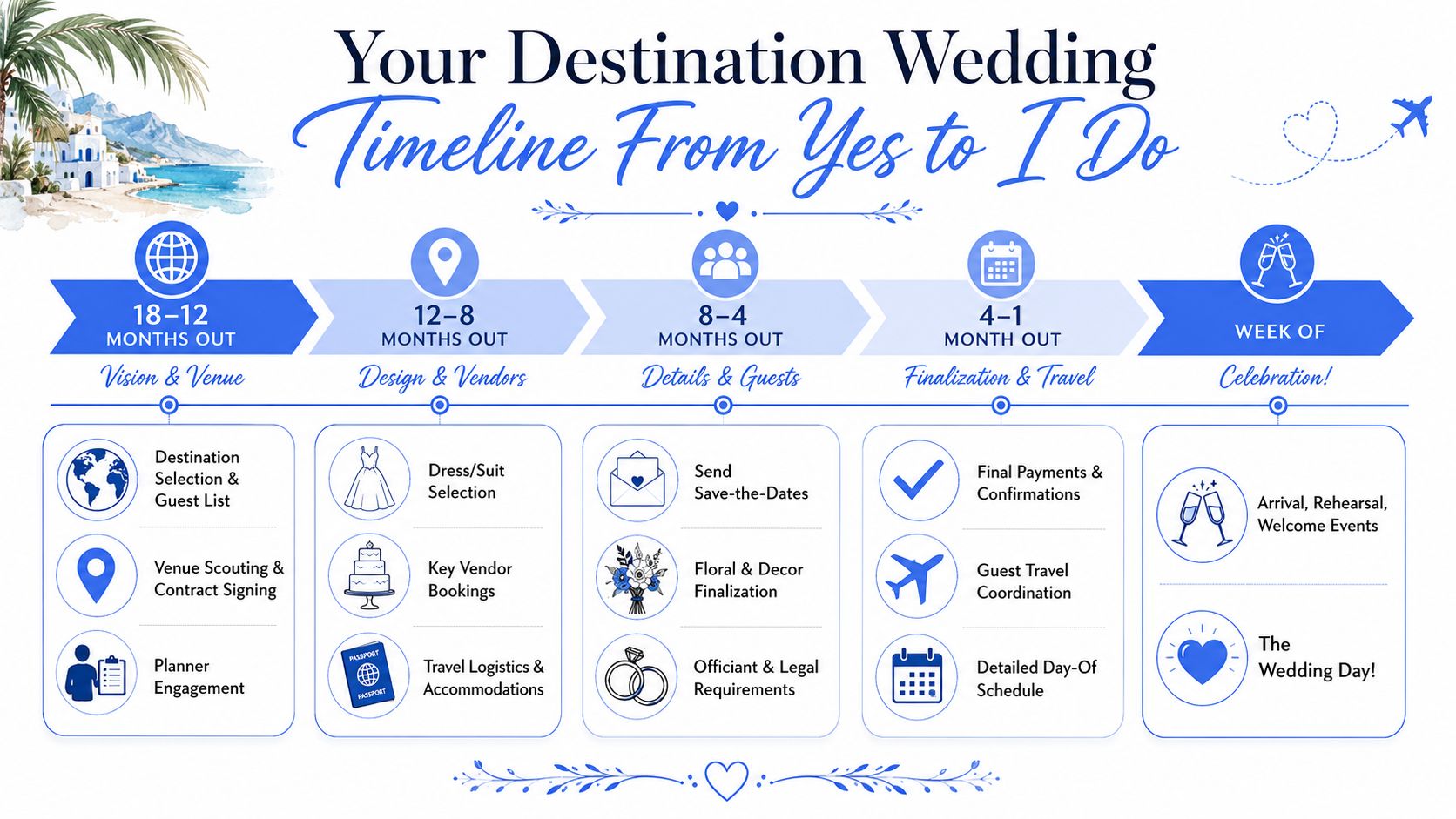
The easiest way to reduce stress is to stop thinking about planning as one giant blur. A destination wedding moves in phases. Each phase has a job. Miss the job, and the next phase gets harder and more expensive.
The most successful weddings don't feel rushed because the couple made fast decisions. They feel calm because the right decisions were made in the right order.
Early phase and foundational decisions
At the beginning, your planner should lock in the structural pieces first. That means destination fit, venue fit, seasonality, and guest practicality.
You're not just asking, “Do we love this property?” You're asking whether your guests can get there smoothly, whether your event spaces support your vision, and whether the property can handle your wedding at the level you expect.
Focus on these first:
- Destination selection: Match climate, travel ease, and style to your guest list
- Venue contracting: Understand exclusivity, noise restrictions, setup windows, and buyout terms
- Planning model: Decide early whether you want curated luxury or a fully bespoke production
- Event structure: Wedding day only, or multi-day experience with welcome and farewell events
Middle phase and moving parts
Once the venue is secured, the project starts gaining speed. This is when your planner assembles the core team and starts translating broad ideas into specific decisions.
That usually includes creative partners, guest accommodations, transportation mapping, and early communication. It's also where many couples make a costly mistake. They start obsessing over minor decor details before solving the guest journey.
Guests remember friction before they remember flowers. If arrivals are messy, transport is unclear, or room assignments are confusing, the entire celebration feels less polished.
A practical planning reference for reception flow is this reception blueprint for event coordinators. It's useful because it shows how much sequencing matters once guests are in the room.
Final phase and execution
Closer to the wedding, the work becomes less glamorous and far more important. Final counts, seating logic, rehearsal timing, local vendor confirmations, rain plans, day-of schedules, transfer manifests, and welcome materials all need precision.
Use this stage to tighten, not reinvent.
- Confirm all guest-facing logistics so nobody is chasing basic information while traveling.
- Finalize production details with exact install times, strike plans, and vendor responsibilities.
- Protect your own energy by arriving early enough to settle in, greet key guests, and handle any final approvals calmly.
That's the difference between a wedding that feels effortless and one that merely looks good on Instagram.
Demystifying the Investment in a Seamless Celebration
Let's talk about fees plainly, because couples quickly become confused.
The first issue is that many planners price in a way that sounds simple but isn't. The second issue is that couples often compare proposals that are not offering the same thing at all. One planner may be quoting management. Another may be quoting management plus design oversight. Another may be pricing for access, curation, and intensive customization.
The three common pricing models
Most luxury planning fees fall into a few buckets.
| Pricing model | What it usually covers | Where couples get caught off guard |
|---|---|---|
| Percentage fee | Planning tied to total wedding budget | Creative direction may not be fully included |
| Flat fee | Defined scope of planning and management | Scope creep can become a problem |
| Creative fee plus planning fee | Original concept work plus execution | Couples may not expect to pay separately for ideas |
The Think Splendid breakdown of wedding planner percentage pricing notes that the industry standard is often around 18% of the wedding budget, but that this often excludes the intellectual cost of original concepts. That's exactly where many couples misunderstand the proposal in front of them.
A planner may be charging to run the machine, while you think you're also paying for the invention of the machine.
Why the creative fee matters
If you want a wedding that looks polished and luxurious, a traditional percentage model may work.
If you want something with an original point of view, custom guest experiences, and a design story that doesn't feel copied from a familiar Pinterest board, ask directly whether concept development is included. If it isn't, that isn't a red flag. It's a different business model.
The fairest fee is the one that clearly tells you what you're buying. Confusion is what costs couples money.
Ask for clarity on these points:
- Concept ownership: Are you paying for original design thinking or just execution of known preferences?
- Revision rounds: How many rounds of design development are included?
- Budget stewardship: Who is tracking changes when your ideas evolve?
- Vendor markups: Are there any layered fees hidden inside sourcing or production?
What good value actually looks like
A planner's fee should buy more than a spreadsheet and a calm voice.
It should buy judgment. It should buy sequencing. It should buy relationships with partners who show up prepared. It should buy fewer expensive mistakes. It should buy a wedding that feels coherent from the airport arrival to the final breakfast.
If you want a grounded sense of the broader spend behind the celebration, this guide to the average cost of a destination wedding is worth reading alongside planner proposals.
The right way to evaluate a fee isn't to ask, “Can we pay less?” It's to ask, “Does this structure match the level of originality, management, and complexity we want?”
Key Questions to Ask Before Hiring Your Planner
Treat planner interviews like executive hiring, because that's what you're doing. This person will influence your money, your guest experience, your schedule, your stress level, and the final standard of the event.
Don't waste time asking questions that produce polished but meaningless answers. Ask the kind that reveal how they think under pressure and how they build a wedding from the inside out.
Questions that expose real capability
Start here:
- How do you approach a destination that has logistical constraints? Listen for specifics around access, transport, vendor timing, and guest management.
- How do you build a planning process for clients with demanding jobs? You want structure, not just availability.
- What happens if a key vendor underdelivers or travel disruptions affect arrival schedules? Strong planners answer this calmly and concretely.
- How do you handle contracts and scope changes during planning? This tells you how disciplined they are financially.
- What parts of the wedding do you believe couples usually underestimate? Their answer will reveal experience quickly.
A weak planner talks about being passionate and organized. A strong one talks about systems, communication cadence, decision windows, and contingency thinking.
Ask whether they are luxury or ultra-luxury
This distinction matters more than most couples realize.
Some planners deliver beautiful, refined, highly polished weddings within an established formula. That's luxury. There is nothing wrong with it. In fact, many couples want exactly that because it's elegant, efficient, and proven.
Ultra-luxury is different. It is slower, more custom, more demanding, and far less template-driven. The discussion on luxury versus ultra-luxury planning makes a critical point. A planner operating at the ultra-luxury level may produce only 4–6 events annually to preserve complete customization and avoid repetition.
That should change your expectations immediately.
If you want a wedding nobody has seen before, don't hire a planner whose business model depends on repeating what already works.
Listen for partnership, not performance
The best interviews feel less like a sales pitch and more like strategic thinking in real time.
Ask them to walk you through how they'd shape your weekend. See whether they ask good questions back. Notice whether they push back intelligently when an idea sounds beautiful but impractical. You do not need blind agreement. You need discernment.
Good signs include:
- They challenge vague goals and help define what luxury means to you
- They discuss guest experience naturally, not as an afterthought
- They separate aesthetics from production reality
- They speak clearly about boundaries, lead times, and decision-making
Charm is nice. Judgment is better.
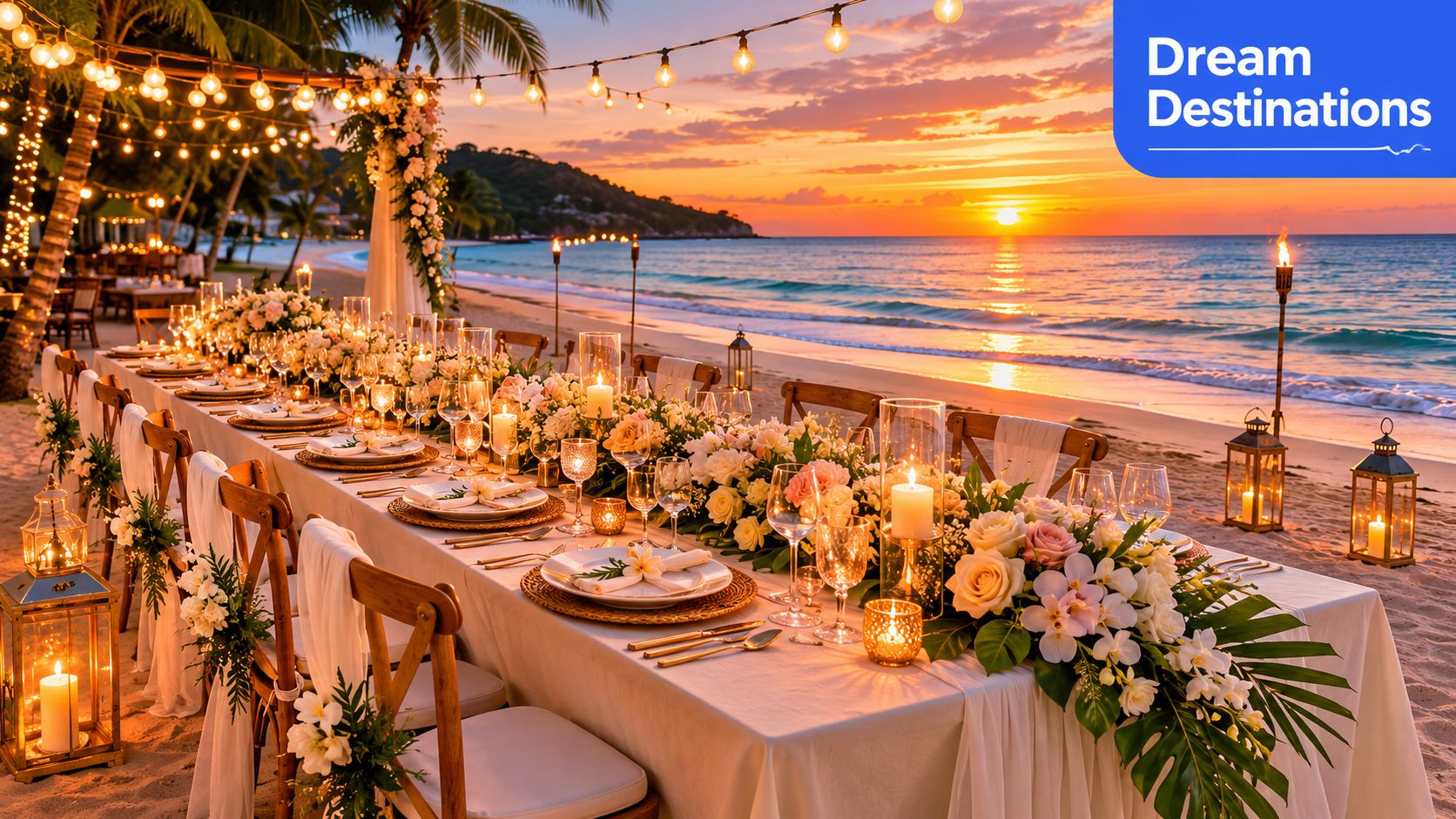
Inspiration Highlights from Dream Destinations
Great destination weddings feel rooted in place. Not themed. Not gimmicky. Rooted.
That's why the best celebrations don't copy a hometown wedding and move it overseas. They borrow the atmosphere of the destination and fold your story into it.
Three ways this can look when it's done well
A yacht celebration in the Greek islands works best when it stays intimate. The ceremony is timed for soft late-day light, guests move from deck cocktails into a candlelit dinner ashore, and the whole event feels fluid rather than overprogrammed. The luxury isn't excess. It's control of pace, privacy, and atmosphere.
A French chateau weekend succeeds for a different reason. It invites scale and structure. Welcome drinks in the garden. A rehearsal dinner with regional wines and long conversation. A wedding day that moves from formal architecture into a softer evening under lights and music. The point is contrast. Grandeur at the start, warmth by the end.
A Caribbean resort buyout creates a third kind of mood. Relaxed but still highly designed. Guests arrive into an easy rhythm, there's less transport friction, and the planner can shape the weekend around shared time rather than constant movement. For many couples, that balance is ideal, especially when they want both sophistication and simplicity. If that style appeals to you, these best all-inclusive wedding resorts are a smart place to begin evaluating fit. If Aruba is on your shortlist, my Aruba destination wedding planning guide helps you think through that island choice.
Why these weddings keep growing
Destination weddings are not a niche indulgence anymore. The Dataintelo destination wedding market report values the global market at $40.6 billion in 2025 and projects it will reach $87.3 billion by 2034. The same report says these weddings average $35,000 and cost 20% more than domestic ceremonies, which tells you exactly what couples are buying. Not just a location. A premium experience.
That premium should be felt from the first guest arrival to the final goodbye.
Your Partner in Planning for Professionals Who Value Time
If you're a couple with demanding careers, planning this alone is rarely a noble act. It's usually an inefficient one.
You do not need more tabs, more group texts, or more vendor calls squeezed between meetings. You need someone who can absorb complexity, make smart recommendations, and keep the entire celebration moving without asking you to become experts in hospitality, production, and international logistics.
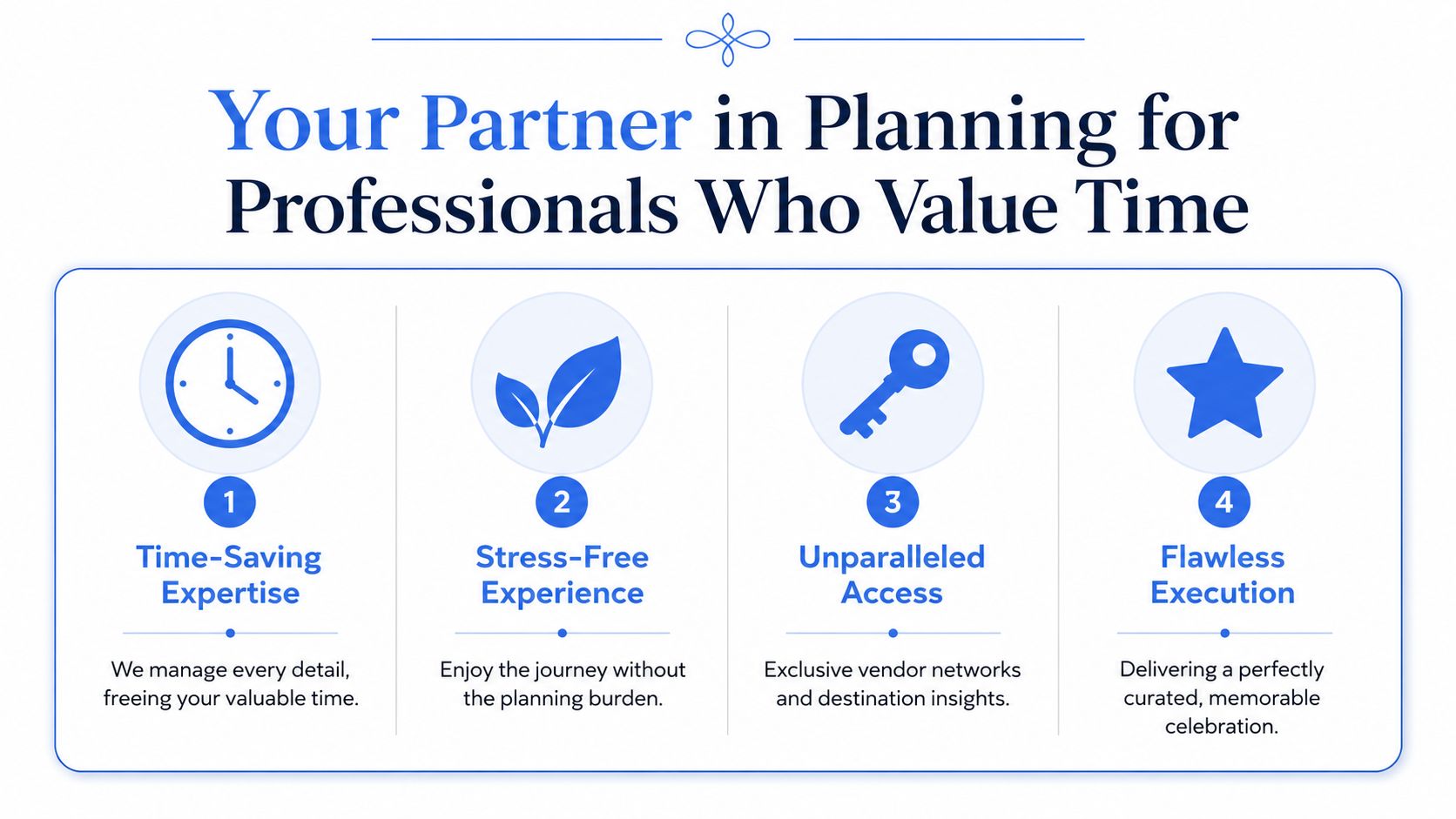
What busy couples are really buying
The value isn't just convenience.
It's protected time. It's cleaner decision-making. It's a guest experience that feels cared for. It's avoiding the hidden drag that comes from chasing details you shouldn't be managing in the first place.
For professionals who want a wedding trip handled with the same rigor as a complex luxury itinerary, bespoke custom trip planning is often the clearest model for what high-touch support should feel like.
The right planner gives you room to be the couple getting married, not the unpaid operations team for your own event.
Karrah works with clients nationwide through virtual consultations, which is exactly how busy professionals prefer to plan. She is a Circle of Excellence Advisor, Top 5 percent at Nexion, and a CLIA Accredited Cruise Counselor. Those credentials matter because destination celebrations rarely stop at the ceremony. They often include premium travel, layered logistics, and high expectations across the entire trip.
Frequently Asked Questions
Do I need a local planner in the destination
Not always. What matters is who can lead the project well. Some couples benefit from a planner based where they live who understands their communication style and planning expectations, then collaborates with trusted in-destination partners. Others prefer a planner rooted in the destination. The right answer depends on language, legal needs, and how complex the guest travel is.
Is a destination wedding automatically smaller
Often, yes, but don't confuse smaller with simpler. Destination weddings usually involve more moving parts because travel, accommodations, arrivals, and multiple events shape the experience. A tighter guest list can create more intimacy, but the logistics often become more complex, not less.
Should we do the legal ceremony abroad
Many couples choose to handle the legal paperwork at home and keep the destination ceremony symbolic. That route is often cleaner and less stressful. If doing the legal ceremony abroad matters to you, verify the requirements early and treat it as an administrative project, not an afterthought.
How early should we hire a planner
As early as possible once you know you want a destination wedding. The early decisions carry the most weight. Venue terms, event flow, room strategy, and seasonality all affect the final result. Bringing in a planner after those choices are made can limit your options.
How can we tell if a planner is too volume-driven for us
Ask how many weddings they take on each year, who leads your event day, and whether your design will be custom or based on an existing framework. If you want a wedding with a distinct point of view, volume matters. A planner handling too many events may still deliver polish, but true customization requires time and focus.
What support should we expect beyond the wedding itself
For destination celebrations, support should extend into the travel experience. That includes accommodation guidance, transfer planning, vetted local partners, and coordinated logistics before departure. On the ground support should come from trusted local partners and suppliers, while your advisor manages the planning framework and pre-travel coordination.
Author Bio
Hi, I'm Karrah, owner, founder, and lead travel advisor at Explore Effortlessly, a luxury award winning travel agency based in Miami.
I specialize in designing bespoke, high touch itineraries to bucket list destinations around the world. Every trip is curated with intention, insight, and flawless logistics from start to finish.
From luxury cruises and private villas to honeymoons, safaris, and once in a lifetime journeys, my role is to simplify the planning process while elevating every detail.
If your wedding involves travel, multiple events, high guest expectations, and no appetite for doing this the hard way, Plan my luxury trip with Explore Effortlessly. I work with clients nationwide through virtual consultations and design high-touch celebrations and travel experiences with vetted partners, thoughtful logistics, and a polished guest experience from start to finish. You can also join the Explore Effortlessly newsletter for more luxury travel inspiration and planning insight.