You’re probably in one of two camps right now. You’ve either decided Botswana is the safari, and now you’re sorting through a blur of glossy camp names. Or you already know sanctuary chief's camp is on your shortlist, but you want to know if it’s worth building the trip around.
My view is simple. If your priority is serious wildlife, polished luxury, and a camp that feels iconic without feeling dated, Sanctuary Chief’s Camp deserves attention. Not because every luxury safari article says it does, but because the location works, the scale of the accommodations matters, and the style of safari here suits travelers who want both comfort and action.
This is not the camp I recommend for people who want a purely water-based Delta experience. It is the camp I recommend for clients who want Botswana at its most cinematic, with expansive views, strong daytime sightings, and a property that feels indulgent the second you return from a drive.
Your Definitive Guide to Sanctuary Chief's Camp
- Best for predator-focused safaris: sanctuary chief's camp sits on Chief’s Island in the Moremi Game Reserve, an area widely associated with standout predator viewing.
- The rooms are a real differentiator: the camp has 12 luxury bush pavilions, and the refurbishment dramatically increased their size and privacy.
- The experience is not one-note: game drives lead the program, with seasonal mokoro excursions adding a softer, more atmospheric side to the stay.
- This trip is logistics-heavy: timing, small-aircraft transfers, luggage strategy, and camp pairing all matter more here than most travelers expect.
The classic safari fantasy usually starts with East Africa. Endless plains. A distant lion. A sundowner in warm light. Then discerning travelers start looking closer and realize Botswana plays a different game.
The Okavango Delta feels more exclusive, more layered, and more rewarding for travelers who care as much about how a safari is structured as the sightings themselves. Sanctuary Chief’s Camp sits in that sweet spot. It gives you the kind of polished luxury high-end travelers expect, but its main appeal is that the camp is anchored in one of the Delta’s most coveted wildlife areas.
Advisor view: If you want one Botswana camp that feels easy to understand and easy to love, start here. Then decide what to pair around it.
The Soul of the Okavango A Legendary Location
Chief’s Camp works because Chief’s Island works.
That sounds obvious, but it’s the part most generic travel guides flatten into a bland line about “great game viewing.” The location is the story. The camp sits on Chief’s Island, the largest island in Botswana’s Okavango Delta, and that matters because this is one of the most storied regions in Southern Africa.

Why the setting matters
Chief’s Island is not some random patch of dry land in the Delta. It historically served as a royal hunting ground for the Batawana chiefs before the area shifted to photographic safaris, and the island sits within the Okavango Delta, a UNESCO World Heritage Site that spans approximately 22,000 square kilometers. That background is noted in this overview of Chief’s Camp and Chief’s Island.
That history gives the area a different feel. There’s legacy here. Not staged exclusivity. Real exclusivity rooted in geography, tradition, and conservation.
The Okavango itself is unlike the usual safari setting people picture. It’s an inland delta. Seasonal floodwaters reshape the terrain, and the ecosystem shifts through the year in ways that keep the experience dynamic rather than repetitive.
What you feel on the ground
This part of Botswana doesn’t impress in a loud way. It impresses through texture.
You have floodplains, channels, islands, and pockets of woodland that create variety over the course of a single game drive. One hour can feel open and sunlit. The next feels quiet and enclosed. That variety is a major reason travelers leave saying the safari felt richer than expected.
A few things stand out here:
- The sense of scale: the Delta is vast, so the experience feels expansive rather than crowded.
- The rhythm of water: even when you’re staying at a camp known for land-based game viewing, the surrounding ecosystem shapes everything.
- The conservation legacy: Chief’s Island carries a protected, privileged aura that modern safari design hasn’t diluted.
This is the kind of location that justifies a long-haul journey. You don’t come here for one good drive. You come here because the whole setting feels rare.
Why high-end travelers respond to it
Busy professionals and experienced luxury travelers usually want two things at once. They want the romance of the African bush, and they want a destination with enough substance to justify the time and spend.
Chief’s Island delivers that substance. It isn’t just scenic. It’s meaningful.
For clients planning a honeymoon, that translates into atmosphere and privacy. For families, it means the safari feels educational without becoming homework. For repeat safari travelers, it means you’re not just checking into another pretty lodge. You’re entering one of Botswana’s headline wildlife areas with a strong sense of place.
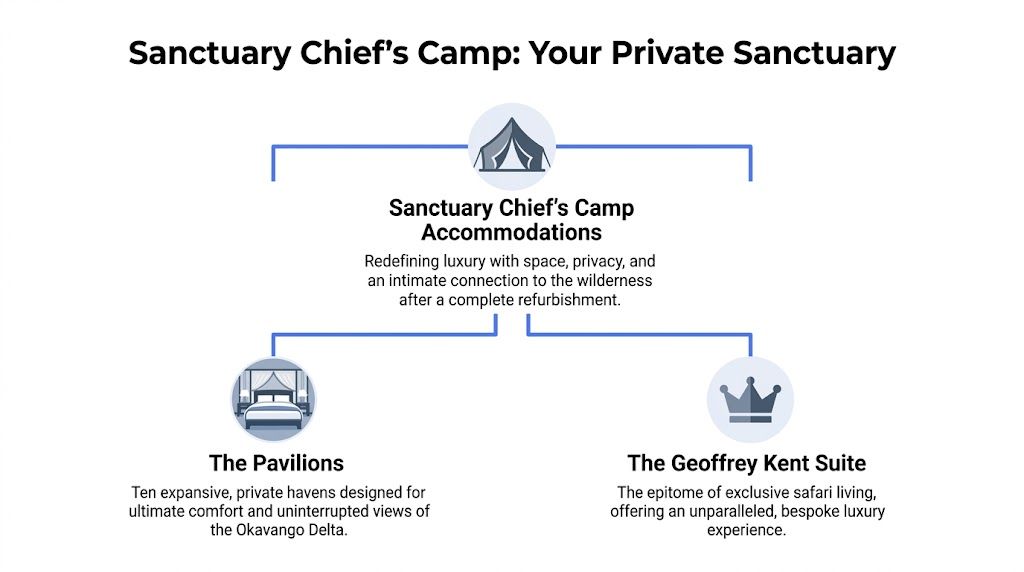
Your Private Sanctuary The Pavilions and Geoffrey Kent Suite
A lot of safari camps use the word luxury very loosely. Sanctuary Chief’s Camp doesn’t have that problem.
The accommodations are a core reason people book this property. Not a side note. Not a “nice after the drive” detail. The pavilions shape how the whole stay feels.
What changed after the refurbishment
This camp underwent a major redesign, and the most important upgrade was space. The 12 luxury bush pavilions were expanded from 51 square meters to 140 square meters each, with features including private plunge pools and floor-to-ceiling windows designed to maximize panoramic views over the floodplain, as described in this property overview.
That jump in size isn’t a throwaway statistic. It changes the mood of the stay.
A cramped safari room can make even a premium camp feel transitional, like you’re only there to sleep between drives. A much larger pavilion creates the opposite effect. You linger. You watch. You reset properly between activities.
Why these rooms work so well
The design leans into openness. Floor-to-ceiling glass and folding doors push your eye outward, which is exactly what you want in a wildlife-heavy setting. You’re never fully cut off from the natural surroundings.
The best safari rooms don’t compete with the bush. They frame it.
Here’s what makes these pavilions especially strong:
- Private decks: useful for slow mornings, private coffee, and the simple luxury of staying put.
- Plunge pools: not gimmicky here. They make hot afternoons more enjoyable.
- Outdoor bathing elements: a smart safari indulgence when done well.
- Expansive interior footprint: enough room to unpack mentally, not just physically.
My room-selection advice
Not every traveler should book the same category or use the space in the same way.
For couples
Book a pavilion and treat it as part of the safari, not just accommodation. Leave downtime in the itinerary. If you stack every moment with game drives and extras, you underuse one of the property’s strongest assets.
For honeymooners, privacy matters more than people admit. You want a room that feels self-contained enough for afternoon pauses, private dining, and those quiet stretches where nothing is scheduled.
For families or small groups
The Geoffrey Kent Suite offers a compelling option. It’s the right move for travelers who want more autonomy and a more residential feel.
A private setup can dramatically improve a family safari. Parents don’t need to force children into the rhythm of unrelated guests, and multi-generational groups get breathing room instead of polite logistical friction.
Practical rule: If your group values flexibility, private space is worth paying for before almost any decorative extra.
For seasoned safari travelers
If you’ve done safari before, you’ll notice quickly that this camp gets the room equation right. The rooms don’t feel like an afterthought attached to a great wildlife area. They feel intentionally scaled for travelers who expect both immersion and comfort.
The real luxury here
It’s not marble for the sake of marble. It’s not over-designed glamour dropped into the bush.
The luxury is that you can come back from a serious game drive and still feel like your private space has presence. You can sit on your deck, look over the floodplain, and still feel plugged into the reason you came to Botswana in the first place.
That’s the difference between a good camp and a camp that earns a premium.
The Predator Capital Experience Safari Activities and Wildlife
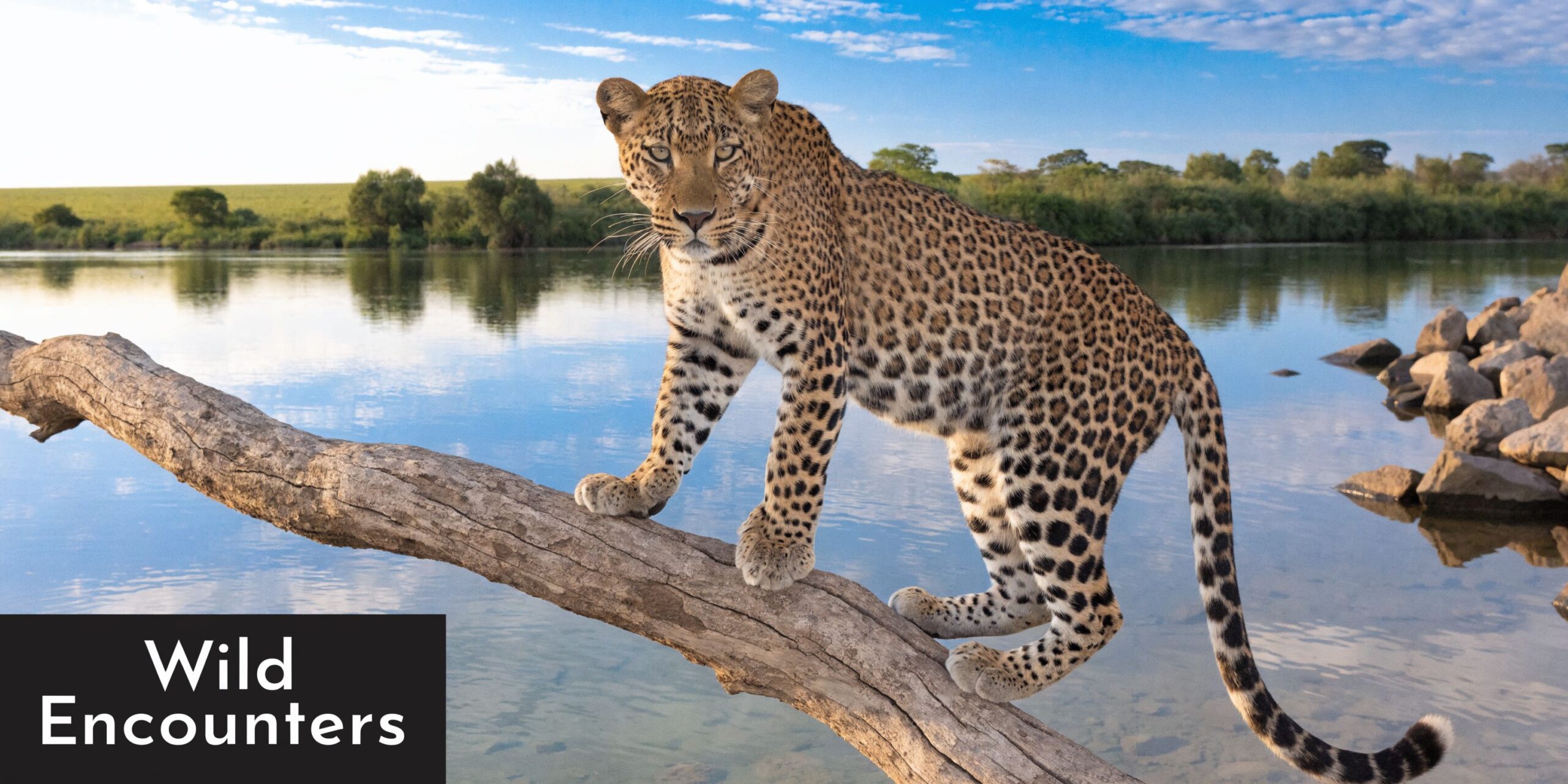
Sanctuary Chief’s Camp is often tied to the idea of the “Predator Capital.” I think that reputation is useful, but only if you understand what it should mean to you as a traveler.
It should not mean guarantees. No serious safari planner promises those.
It should mean this. If your top priority is seeing Botswana’s predator-rich side, sanctuary chief's camp is one of the strongest places to focus your budget and time.
What the activity structure means in practice
The camp sits within the Moremi Game Reserve, in the predator-rich Mombo area, and that comes with a specific operating style. Activities are generally restricted to on-road driving, and night drives are not permitted. The tradeoff is consistent daytime wildlife viewing and seasonal mokoro trips, as outlined in this summary of Sanctuary Chief’s Camp in Moremi.
Some travelers see “no night drives” and panic. They shouldn’t.
Night drives are wonderful in the right place, but they are not the sole measure of a great safari. At Chief’s Camp, the quality of the land and the strength of daytime sightings are the point.
Why I still recommend it strongly for wildlife-first clients
Because the camp doesn’t rely on gimmicks. It relies on location.
Open-sided vehicles, excellent guiding, and an environment that naturally draws game create a safari style that feels productive rather than frantic. You are not constantly chasing complexity. You are spending time in an area where a lot can happen in daylight.
That works especially well for:
- First-time Botswana travelers who want a high-confidence wildlife experience
- Honeymooners who want strong sightings without a hyper-rugged pace
- Photographers who prefer reliable light and clean viewing lines during prime daytime hours
- Families who may not want very late nights and heavily segmented activity schedules
If you want a broader look at how I structure high-end safari journeys, my approach to luxury safari tours goes much deeper into camp pairing and route design.
Game drives versus mokoro
In this aspect, some travelers get lazy in their planning. They assume every Okavango safari delivers the same blend of land and water. It doesn’t.
At Chief’s Camp, game drives are the main event. That’s good news if your heart is set on predators, plains game, and a classic vehicle-based safari. When water levels allow, mokoro excursions add a different register altogether. Slower, quieter, more reflective.
I love that contrast.
On game drives
You’re here for concentration and momentum. The roads and reserve rules shape how the driving works, but the overall experience is still rich because the wildlife area itself does the heavy lifting.
On mokoro excursions
These are not a replacement for drives. They’re a mood shift.
You trade the search for a more intimate encounter with the ecosystem. Birdlife, reeds, channels, and the sensation of moving through the Delta all add depth to the trip.
If you’re choosing this camp, choose it for land-based excellence first. Treat mokoro as a bonus, not the deciding factor.
A smart expectation to keep
The mistake I see most often is this. Travelers want Chief’s Camp to be everything at once. Top predator camp, top water camp, top family camp, top honeymoon camp, top photographic camp.
It can serve several of those goals well, but not identically.
My opinion is firm. Book sanctuary chief's camp when you want a polished, premium, wildlife-driven safari anchored by one of the Delta’s most respected locations. If you also want a water-centric Okavango stay, pair it with a second camp rather than forcing one property to do two jobs.
Designing Your Perfect Stay Sample Itineraries
The smartest way to book sanctuary chief's camp is to decide what the trip is trying to do for you.
Not every luxury traveler wants the same Botswana. Some want privacy and romance. Some want a family memory that doesn’t feel chaotic. Some want to spend as much time in the field as possible and come home with serious wildlife images.
The honeymoon version
This is the easiest fit.
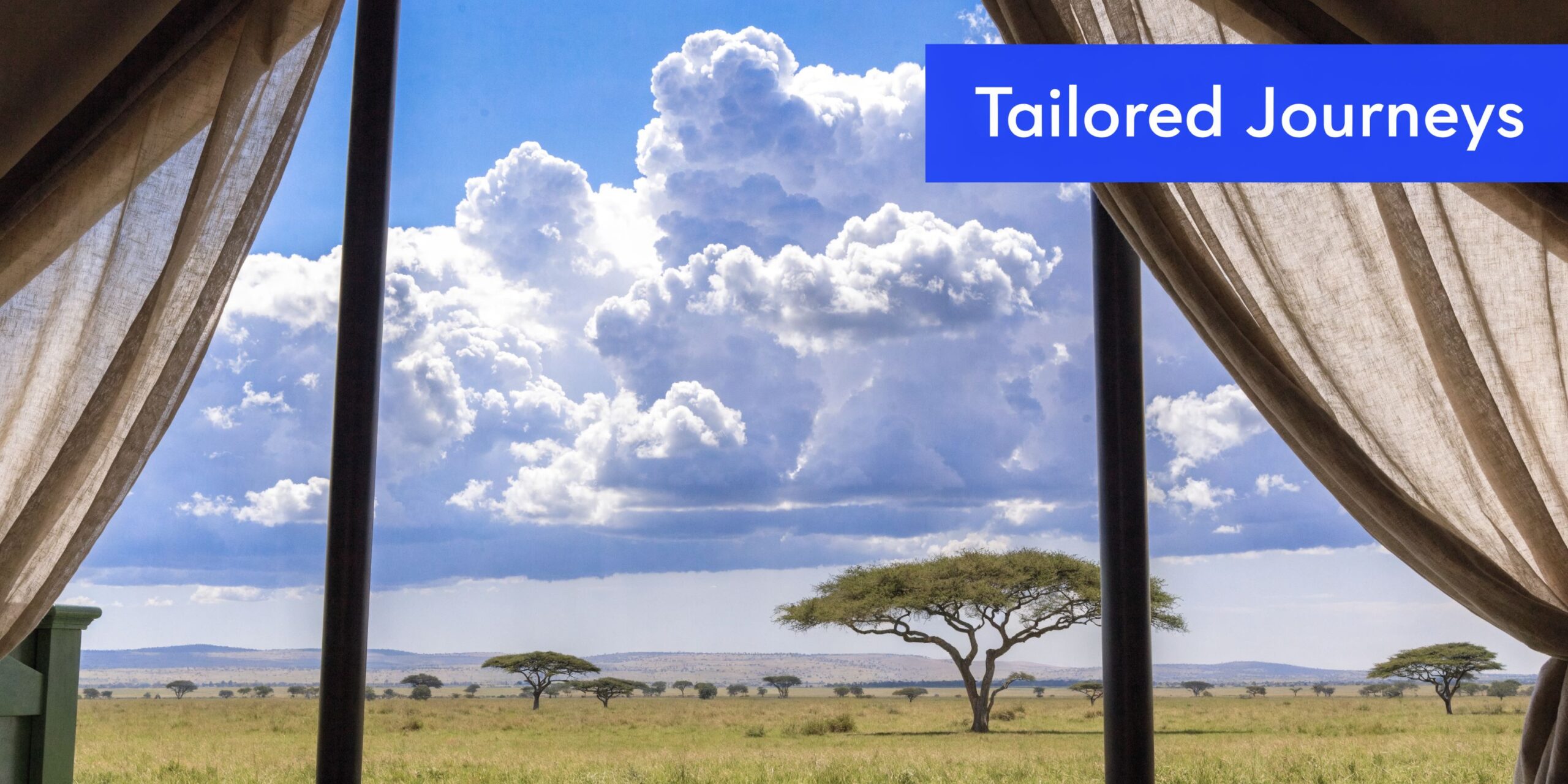
Chief’s Camp suits couples because the pavilions have enough privacy to feel special without needing theatrical add-ons. You wake up in the bush, head out for a drive, come back for a long lunch, disappear into your room for the afternoon, then re-emerge for sundowners and dinner. That rhythm is relaxed, elegant, and romantic in a way that doesn’t feel manufactured.
A strong honeymoon structure usually includes:
- A light arrival day: don’t land and immediately over-schedule yourselves.
- Room to linger: the pavilion should be used, not wasted.
- At least one private moment arranged in camp: private dining is often more memorable than another transfer-heavy add-on.
- A second destination that contrasts well: think Victoria Falls or a more water-oriented Delta camp.
For couples planning a more customized trip, personalized travel itineraries are the difference between a good trip and a great one.com/personalized-travel-itineraries/) are the difference between a good safari and a honeymoon that flows.
The family version
A family safari here can be excellent, but only if you structure it realistically.
This is not the place to pretend young children will happily tolerate long, adult-paced game drives every day. Families need pacing. Breaks matter. Privacy matters. Space matters.
That’s why this property works better than many camps for family groups with discerning tastes. The room footprint helps, and a more exclusive suite setup can keep everyone happier.
Here’s how I’d shape it:
| Traveler type | Best approach at Chief’s Camp |
|---|---|
| Parents with older children | Focus on wildlife-rich drives and shorter downtime gaps |
| Multi-generational groups | Prioritize private space and a more tailored daily rhythm |
| Families mixing safari with downtime | Pair Chief’s Camp with a softer second stop for reset time |
The key is not to make every day identical. Two strong drives and a lot of pressure to “maximize” every sighting can drain a family trip quickly.
A family safari succeeds when the adults don’t feel they’re managing a military campaign.
The wildlife-first version
Chief’s Camp particularly distinguishes itself.
For travelers who care most about sightings, guiding, and time in a high-value area, the camp is a powerful anchor. I wouldn’t necessarily make it the only stop, but I would often make it the most important one.
A serious wildlife itinerary built around this camp should do three things:
- Start with Chief’s Camp or place it centrally in the trip
- Leave enough nights to settle into the area properly
- Pair it with a contrasting ecosystem, not a duplicate
That final point matters. Don’t spend heavily to hop between camps that deliver a similar mood and similar game-driving style. Use Chief’s Camp for what it does best, then let another region widen the story.
My clearest recommendation
If you’re torn between building a whole trip around one famous camp or creating a broader Botswana route, choose the broader route. Use sanctuary chief's camp as the star, not the entire cast.
That gives you stronger overall variety, keeps the trip from feeling repetitive, and makes the spend feel more intelligent.
The Art of Planning Logistics Seasonality and Insider Tips
You land in Maun late, your light aircraft is weight-restricted, one bag is wrong, and your first afternoon in the Delta turns into admin. That is how expensive safaris start badly. Chief’s Camp rewards precision.
This camp sits in one of Botswana’s most coveted wildlife areas, but the value only shows if the trip is built properly. Dates change the feel of the concession. Flight timing affects how much safari time you get. Even your bag choice matters more here than at a beach resort or a city hotel.
Choose the season for your priorities
Chief’s Camp works across different parts of the year, but the experience is not interchangeable.
If you want a classic Botswana safari with easier visibility, more concentrated wildlife movement, and a stronger sense of momentum on drives, target the drier period. If you care just as much about atmosphere, photography, dramatic skies, and a greener Delta, the shoulder and greener months can be very rewarding. You may trade some predictability for mood, light, and lower pressure.
The point is simple. Stop asking for the “best” month. Ask what version of the Okavango you want to buy.
Three filters make the decision easier:
- Wildlife focus: choose drier periods if sightings are your main objective
- Visual style: choose greener periods if scenery and photography matter as much as density
- Booking pressure: top dates go early, especially for couples wanting prime suites or families needing the right room setup
Handle the flight logistics properly
Getting to Chief’s Camp is straightforward once someone has set it up correctly. It becomes irritating when travelers assume bush logistics will forgive sloppy planning.
You will usually route through a Botswana gateway, then continue by light aircraft into the Delta. That final sector comes with baggage limits, operational timing, and very little tolerance for overpacking. Hard cases create problems. So do outfit-heavy packing lists and poorly timed international arrivals.
My advice is blunt. Pack for the aircraft first, then for the photos.
A short prep list keeps things clean:
- Use soft-sided luggage that can be loaded easily on bush flights
- Wear simple neutral clothing and repeat pieces without overthinking it
- Keep medications, documents, and camera gear accessible
- Do not pack “just in case” outfits you will never wear in camp
If you want a sharper starting point, use this packing list for safari.
Budget for the whole safari, not just the headline camp
Chief’s Camp is firmly top-tier. You should expect premium pricing, and you should only pay it if you intend to use the camp properly within the broader trip.
The common mistake is building the budget around one famous name, then compromising the rest of the itinerary. That usually leads to too many short stays, too many flights, and a route that feels expensive rather than polished. The better approach is to let Chief’s Camp carry the high-luxury, high-wildlife portion of the safari, then pair it with one or two contrasting stops that broaden the trip without duplicating it.
Fewer camps. Better pacing. Smarter spend.
Insider guidance that improves the trip
Give it enough nights
Chief’s Camp is not a one-night trophy booking. You need time for the concession to open up, for guiding patterns to make sense, and for the camp itself to feel worth the rate.
Protect your transfer days
Do not stack long-haul flights, regional connections, and bush flights too tightly. Leave margin. In Botswana, a calm itinerary usually performs better than an aggressive one.
Pair it with contrast, not status
Another expensive Delta camp is not always the right follow-up. A salt pan, a drier private reserve, or even Victoria Falls can add more range to the trip than a second property offering a similar drive rhythm.
Use the room
If you book a premium pavilion or the Geoffrey Kent Suite, schedule time to enjoy it. High-net-worth travelers often overspend on accommodation they barely occupy because they treat every day like a race. At Chief’s Camp, part of the value is privacy, space, and the ability to slow the pace without sacrificing quality.
The Explore Effortlessly Difference
A Botswana safari at this level is won or lost in the planning. Chief’s Camp is excellent, but excellence alone does not guarantee the right trip. I see the same expensive mistakes repeatedly. Clients book it for the name, shorten the stay to protect budget, add too many flights, then wonder why the safari feels fragmented.
My job is to prevent that.
I advise clients privately through virtual consultations and build Botswana itineraries around fit, pacing, and purpose. Chief’s Camp can be a brilliant centerpiece, but only if the rest of the journey supports it. Honeymooners usually need privacy, a slower rhythm, and one strong contrast camp. Families need the right room category, fewer transitions, and a routing that does not exhaust everyone by day two. Travelers chasing predators need realistic expectations, strong guiding, and enough nights to let the concession deliver instead of treating one drive like a verdict.
What you get from me
- Customized itinerary design: built around your priorities, whether that is a polished honeymoon, a family safari, or a wildlife-first Botswana circuit
- Flight and transfer planning: camp sequence, bush flights, and arrival timing arranged to reduce wasted time and avoid fragile connections
- Preferred partner advantages: where available, I secure added value and special treatment that are rarely obvious on booking sites
- Straight advice: where to spend, where to save, how seasonality changes the experience, and which camp pairings improve the trip
Safari planning looks simple online. It is not.
Chief’s Camp sits in a prime part of the Delta, but its primary value comes from using it correctly. I help clients decide whether it deserves three nights or four, whether to pair it with another Delta property or something drier and more contrasting, and whether the celebrated predator reputation matches their style of travel. That last point matters. There is no neat scoreboard proving one camp beats every rival on sightings. Good planning accounts for that and sets expectations around habitat, guiding, season, and time in the field.
About your advisor
I’m Karrah, founder and lead travel advisor at Explore Effortlessly, a luxury travel agency based in Miami.
I design high-touch itineraries for travelers who want the trip done properly the first time. That includes honeymoons, multigenerational journeys, private villa stays, cruises, and complex safaris where the sequence matters as much as the properties themselves.
I am also a Circle of Excellence Advisor with Nexion.
If Sanctuary Chief’s Camp is on your shortlist, I will tell you directly whether it belongs in your itinerary, how long to stay, and what to pair with it so the overall trip feels deliberate, refined, and worth the spend.
Frequently Asked Questions
Is Sanctuary Chief’s Camp good for solo travelers
Yes. Solo travelers who want a polished Botswana safari without the social isolation of an ultra-private villa setup tend to do very well here. You get privacy in camp, but game drives and shared spaces still create an easy rhythm for conversation if you want it.
Is this camp best for honeymooners or families
Chief’s Camp is stronger for honeymooners. The style is romantic, the setting feels indulgent, and the camp works beautifully as a first Botswana stop for couples who want luxury without sacrificing serious wildlife time.
Families can still do very well here, but only with the right structure. I recommend it for older children who will appreciate longer drives, polished service, and a more refined camp atmosphere. For younger children, I usually prefer a setup with more flexibility and a clearer family focus.
Are night drives offered at Sanctuary Chief’s Camp
No. The camp sits within the Moremi Game Reserve, so activities are generally limited to daytime game drives on designated roads. Seasonal mokoro excursions add variety, but if night drives are a priority, pair Chief’s Camp with a private concession elsewhere in the itinerary.
What should I know about health and entry requirements for Botswana
Requirements depend on your passport and they change. Confirm entry rules with official government sources before departure.
The Okavango Delta is a malaria area. Speak with your doctor or a travel clinic well before the trip so you have time to sort prescriptions, prevention, and any destination-specific health advice.
Is Sanctuary Chief’s Camp sustainable
It is positioned as a low-impact luxury camp, and that matters in practical terms. Botswana’s model depends on protecting habitat through high-value, lower-volume tourism, not mass-market density. For many clients, that conservation approach is part of the reason the country justifies the price.
How far in advance should I plan
Plan earlier than you think. Chief’s Camp is the sort of property that works best when it is placed precisely within a wider safari, not dropped into whatever dates are left.
For peak dates, the best camp combinations and light aircraft connections often go first. If you want the trip to feel deliberate, with the right number of nights here and a smart contrast elsewhere, start planning well ahead.
If Chief’s Camp is on your shortlist, treat it as one piece of a well-built Botswana itinerary, not the whole answer. The right pairing, timing, and room choice will determine whether it feels merely expensive or worth it.
For more exclusive travel insight and inspiration, join my newsletter.