You start with the obvious pieces. A palace hotel in Rajasthan. Sunrise at the Taj Mahal. A tiger safari. A few nights in Kerala. Then the main difficulty appears. The flights do not line up cleanly, the driving times are longer than they look, the best guides are not interchangeable, and one bad transfer can throw off three days of an otherwise beautiful trip.
That is the difference between luxury on paper and luxury in practice.
A great luxury india trip is not built by collecting famous names and hoping the route works. It is built by controlling the details that drain your time and energy. Flight timing, airport handling, realistic pacing, the right private drivers, restaurant planning, guide quality, room selection, backup plans, and clear decisions about where to spend and where not to bother. India is generous with extraordinary experiences. It is less forgiving of lazy trip design. For another remote itinerary where pacing and logistics matter, I would approach a luxury Patagonia trip plan with the same care.
My rule is simple. If the logistics are visible, the trip is not truly luxurious.
Key takeaways
- Luxury in India starts with smart orchestration, not just beautiful hotels and big-ticket sights.
- The best trips are designed around flow, with each stop earning its place instead of filling out a standard checklist.
- North India often anchors a first trip, but the strongest journeys usually combine iconic highlights with a second layer of depth, whether that means wildlife, wellness, textiles, food, or the South.
- The hardest part of India travel is coordination, especially across multiple cities, airports, and styles of accommodation.
- Expert planning removes friction at every handoff, so the country feels rich and stimulating instead of complicated and tiring.
If you are short on time and unwilling to waste any of it fixing preventable mistakes on the ground, India is one place where meticulous planning pays for itself fast.
The Soul of a Luxury India Trip
You land in India after a long flight. A car is waiting, your room is right, dinner is held for your late arrival, and tomorrow starts at the hour that suits your energy, not the supplier’s schedule. That is the soul of a luxury India trip. Not display. Control.
The old symbols of luxury still have their place. Palace suites, polished marble, vintage cars, silk-lined dining rooms. India does those beautifully. But the core difference is what you do not have to think about while you are there. No clumsy handoffs. No wasted afternoons. No contrived “local” experiences sold as insider access.
Luxury in India should feel personal, not performative. You are not coming for a staged highlight reel. You are coming for access, context, privacy, and ease. The trip should bring you into the country through people who belong to it, while protecting your time from the friction that ruins lesser itineraries.
What real luxury looks like
A strong luxury India trip gives the headline sights the right framing and then goes further.
You still see the great monuments. You should. But they matter more when the trip is built around timing, access, and the right hosts. A privately guided walk through an old quarter before it fills up. A dinner in a heritage home that feels generous and natural, not arranged for applause. Time with an artisan whose work has meaning in that region, and who is being paid and presented with respect.
That standard matters. A glossy experience is easy to buy. A well-vetted one takes work.
Practical rule: If an experience photographs well but no one can clearly explain who hosts it, why it matters, and how it is run, skip it.
Current luxury travel marketing loves the language of “hidden gems” and “authentic encounters.” I care more about how those moments are selected, who is introducing you, and whether the interaction feels dignified for everyone involved. That is what turns cultural access into something memorable rather than extractive, as discussed in this discussion of off-beat tours in India.
The experiences worth paying for
I would spend more on experiences with three clear traits:
- They are rooted in place. A cooking session in Kerala should reflect local ingredients, family recipes, and regional rhythm, not a generic hotel activity that could happen anywhere.
- They are led by real hosts. The best experiences come from scholars, naturalists, artists, chefs, and families with genuine ties to the place.
- They protect privacy. India is stimulating enough without adding crowds to every meaningful moment. Private access changes the quality of the day.
This is also why I often recommend less moving around and more depth. India does not reward box-ticking. It rewards editing.
The mistake I’d avoid
Do not build the trip by collecting famous stops and calling it luxury. Delhi, Agra, Jaipur, Udaipur, Varanasi, Ranthambore, Kochi, Kumarakom, Goa. Any of them can work. All of them in one sweep usually does not.
A refined India journey has a point of view. Maybe it is royal Rajasthan with one exceptional wildlife lodge. Maybe it is Delhi, Agra, and Jaipur followed by wellness in the Himalayas. Maybe it is textile traditions, contemporary design, and great food. The best version is not the longest list. It is the one that feels calm, coherent, and intelligently arranged.
A flawless India trip feels edited. The finest luxury comes from removing what drains the experience, then perfecting what remains.
When to Go and Where to Explore
A well-designed luxury India trip can feel calm and beautifully paced. The same trip, scheduled a month wrong or spread across the wrong regions, turns into heat, delays, haze, long drives, and too much recovery time in great hotels you barely enjoy.
That is why timing is one of the first decisions I make. In India, season determines more than weather. It affects how pleasant the cities feel, how far you can comfortably move in a day, what wildlife you may see, how clear the light will be for monuments and scenery, and whether a route feels polished or tiring.
North India
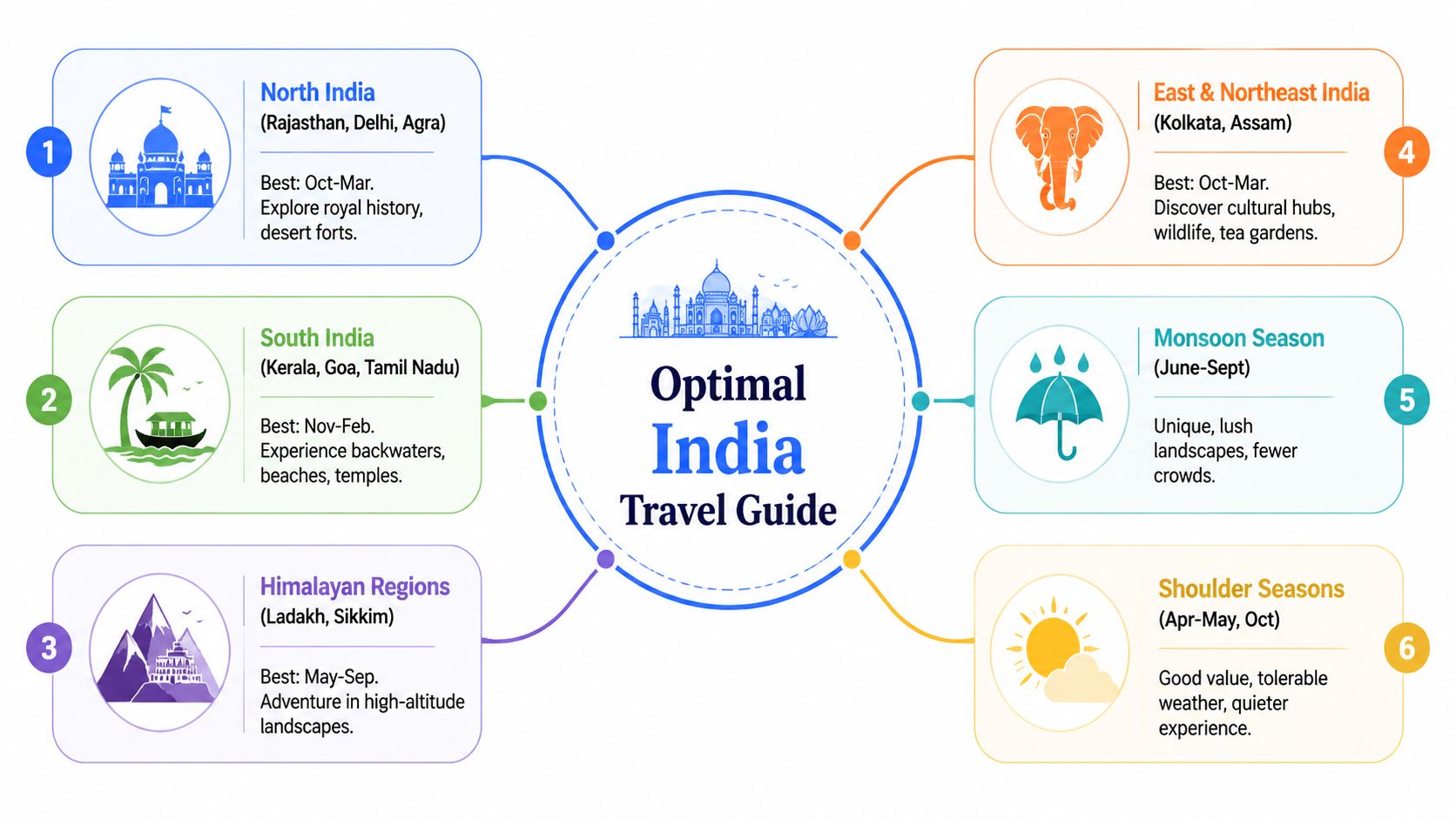
North India is still the smartest first trip for many travelers. Delhi, Agra, Jaipur, and often Udaipur give you a strong concentration of what people come to India to see: Mughal architecture, royal history, major monuments, exceptional hotels, craftsmanship, and dramatic contrast between cities.
Go from October through March if you want the trip to feel comfortable and polished. Those months suit monument visits, private guides, market walks, terrace dinners, and heritage hotels with open courtyards and outdoor spaces you will use.
I avoid building palace and city itineraries deep into late spring unless there is a very specific reason to do it. Heat changes everything. A beautiful schedule on paper can become a series of short outings surrounded by long stretches indoors.
South India
South India suits travelers who want India in a more restorative register. Kerala gives you backwaters, coastal culture, spice-growing hills, and some of the country’s best wellness stays. Tamil Nadu is stronger for temple architecture, sacred geography, classical music and dance, and a longer historical arc. Goa works best as a final exhale, not as a substitute for the rest of India.
For Kerala, Goa, and much of the south, November through February is the cleanest window. You get better conditions for houseboats, private villa stays, beach time, garden hotels, and long outdoor lunches without building the day around humidity and rain.
This is also the region where season has to match style. If you want Ayurveda, monsoon can be appealing. If you want sunshine, water, and outdoor living, choose the dry months and keep the trip simple.
Himalayan regions and East India
The Himalayas need their own logic. Ladakh, Sikkim, and other mountain routes are not add-ons I casually tack onto a classic north India circuit. They demand different pacing, different packing, and a traveler who wants altitude, remoteness, and a stronger expedition feel.
I prefer these regions in May through September, when access is more reliable and the scenery is at its most appealing.
East and Northeast India are excellent for travelers who have already seen the standard circuit or have no interest in it. Assam works well for tea country and wildlife. Kolkata rewards travelers who care more about literature, food, design, and layered urban history than palace grandeur. For many eastern routes, October through March is the easiest planning window.
Monsoon and shoulder season decisions
Monsoon can be beautiful. It can also ruin an overstuffed itinerary.
I recommend it only when the trip is built for it. That means fewer stops, flexible outdoor plans, and hotels that feel good even when you stay in for part of the afternoon. Kerala handles this style especially well. Rajasthan usually does not deliver the same payoff for first-time luxury travelers during wetter or hotter periods.
Shoulder season can be excellent too, but only if the route is edited properly. In such cases, custom planning matters most. A trip that works in January may need different cities, shorter drives, later starts, or more nights in one place in April. If you want a route shaped around those tradeoffs instead of a fixed package, a personalized India itinerary built around your travel style is the right approach.
| Region | Best general timing | Best for |
|---|---|---|
| North India | Oct to Mar | First trips, palaces, heritage circuits |
| South India | Nov to Feb | Backwaters, beaches, wellness, temples |
| Himalayan regions | May to Sep | Remote landscapes, mountain culture, high-altitude journeys |
| East and Northeast | Oct to Mar | Tea country, wildlife, culture-led itineraries |
My rule is simple. Match the region to the season, then match the pace to the region. That is how luxury in India stays enjoyable instead of logistically exhausting.
Inspiring Itineraries Awaiting Your Personal Touch
You have ten or twelve days, a full calendar, and no interest in spending the trip recovering from the travel itself. That is why itinerary design matters so much in India. The right route makes the country feel rich, varied, and surprisingly easy. The wrong one turns a luxury trip into a chain of transfers, early alarms, and expensive fatigue.
I plan India trips by shape first, not by checklist. The point is to control pace, reduce friction, and build each stop so it earns its place. A great luxury India trip feels effortless because someone has edited it hard behind the scenes.

If you want a route designed around your pace, priorities, and tolerance for movement, a custom luxury itinerary built around your travel style is the right place to start.
The classic first trip done properly
For a first visit, I like a clean north India arc. Delhi, Agra, Jaipur, then Udaipur.
It works because each stop changes the mood without forcing constant logistical resets. Delhi gives you energy and contrast. Agra delivers the Taj without pretending the city needs a long stay. Jaipur adds design, craftsmanship, and royal history. Udaipur slows the trip down and gives you a graceful finish.
This route suits:
- First-time visitors who want the icons without burning themselves out
- Couples celebrating a honeymoon, anniversary, or major milestone
- Design-minded travelers who want architecture and hotels to carry equal weight
The mistake is adding too much. Skip the urge to cram in Jodhpur, Ranthambore, and Varanasi just because they fit on a map. Four well-paced stops almost always beat seven rushed ones.
Rajasthan and Varanasi for travelers who want emotional depth
This route works for travelers who want more than polished beauty.
Keep Rajasthan selective. Jaipur and Udaipur are the usual anchors. Jodhpur is a strong third stop if you want more texture and a bolder atmosphere. Then fly to Varanasi only if you are ready for a sharper, more introspective turn.
Varanasi needs preparation. The right hotel matters. The right guide matters more. So does your timing within the wider trip. Dropped in carelessly, it can feel jarring. Placed well, it becomes the stop people talk about long after the palaces blur together.
Go to Varanasi for meaning, not completion.
Kerala and Goa for softer luxury
This is the route I recommend to busy professionals who want India to restore them, not test them.
Start in Kochi for history and character. Then move into the backwaters or the hill country for slower days, greener surroundings, and hotels that encourage you to stay put for a while. Finish in Goa with space, sun, and a few nights that ask almost nothing of you.
The appeal is obvious. Fewer hard touring days. Less packing and unpacking. More time to enjoy where you are.
It is a strong fit for:
- Burned-out professionals who want a gentler introduction to India
- Wellness-focused travelers who care about privacy, nature, and recovery
- Repeat visitors who are done with the standard Golden Triangle script
Tigers, scenery, and a more cinematic India
Wildlife trips in India need discipline. One park is often enough. Two can work. More than that usually becomes a transfer-heavy chase that weakens the whole experience.
I prefer a city arrival, one cultural stop, then a focused wildlife stay in central India. That gives you time for multiple drives, better guiding, and the patience tiger country rewards. You are not trying to collect sightings. You are building a trip with suspense, quiet, and a completely different kind of luxury.
These journeys feel less decorative and more elemental. They suit travelers who want privacy, space, and a strong sense of place.
Luxury trains when travel days should feel part of the trip
A luxury train can solve a specific problem well. It turns movement into part of the experience instead of a day lost to airports and road transfers.
I rarely recommend rail for the entire trip. It works better as a middle chapter, especially if you want ceremony, comfort, and continuity without changing hotels every night. Used well, it adds style and reduces friction. Used poorly, it can make the trip feel packaged.
My rule is simple. Choose one dominant lens for the trip, then let everything else support it.
- Heritage
- Wildlife
- Wellness
- Spiritual depth
- Food and local culture
That is how a luxury India trip feels personal, polished, and easy to live with once you are on the ground.
Your Private Sanctuaries Palaces Hotels and Villas
You land in India after a long-haul flight, clear the airport, and reach your hotel late. If the property is wrong, the country feels louder, harder, and more tiring than it should. If the property is right, your shoulders drop the moment you arrive.
That is why hotel choice carries so much weight on a luxury India trip. It sets the pace, protects your energy, and decides whether each stop feels restorative or draining.
Palace hotels are not interchangeable
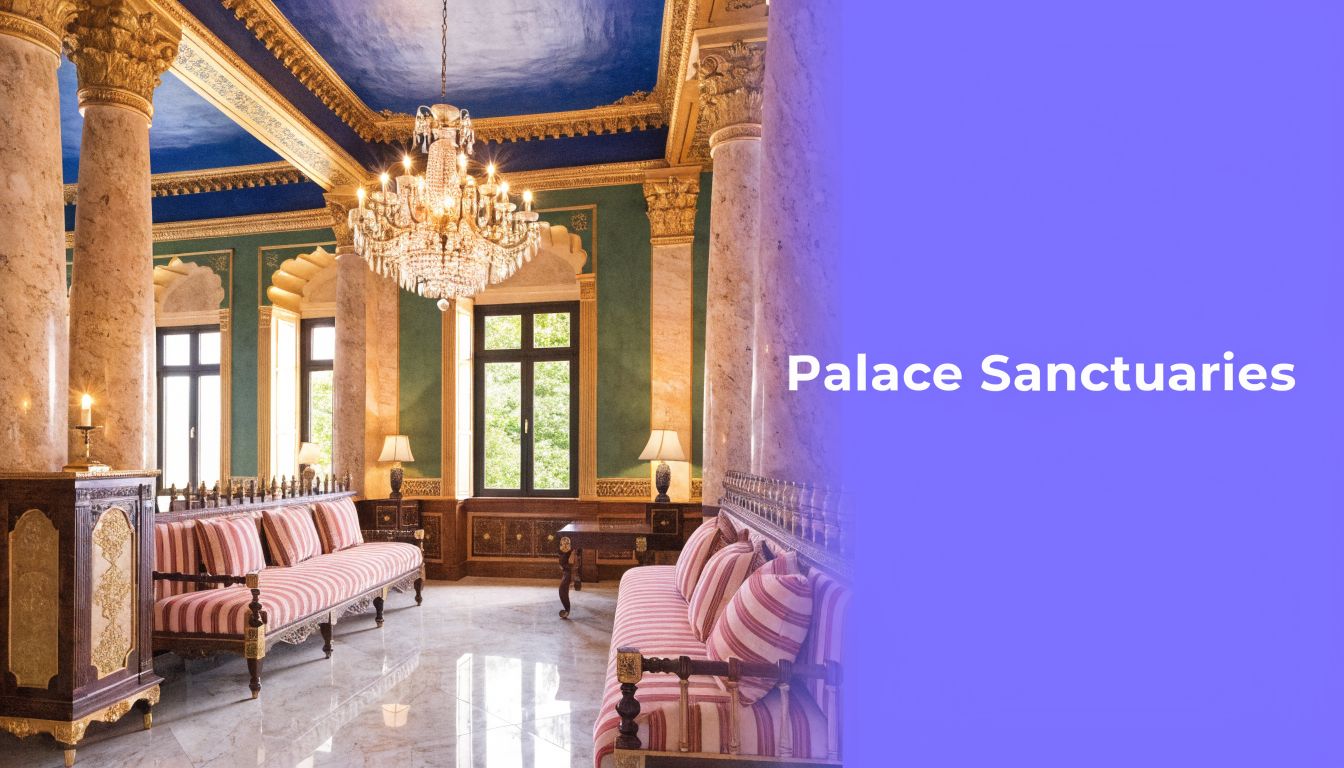
India’s best palace hotels can be extraordinary. They give you scale, history, ceremony, and the kind of service that makes a stay feel memorable before you have even seen the room.
But I do not build entire trips around grandeur alone.
Too many ornate hotels in a row flatten the experience. The trip starts to feel staged. I prefer one or two iconic heritage stays, then I shift the mood with a quieter retreat, a polished boutique hotel, or a villa that gives you space to breathe. India is richer in contrast, and your hotels should reflect that.
Boutique properties and villas often feel better
A famous name helps with reassurance. It does not always create the best stay.
Many experienced travelers are happier in a smaller heritage residence, a refined haveli, or a private villa with a strong sense of place. The reasons are practical. Better privacy. Less lobby traffic. More personal service. A calmer rhythm at breakfast, by the pool, and in the evening when you want the trip to feel easy.
That difference matters even more in India, where days can be full and stimulating. Your hotel should absorb that intensity, not add to it.
Advisor instinct: I will choose the property that protects the flow of the trip over the one that looks best on a brand list.
How I choose the right stay
I match the property to the role it needs to play.
- Choose a palace hotel for one of the signature stops, where history and ceremony add real value to the trip.
- Choose a boutique heritage hotel when character, intimacy, and thoughtful service matter more than scale.
- Choose a private villa for families, couples who want discretion, or anyone who values space and quiet.
- Choose a wildlife lodge based on guiding, location, and room comfort together, not design alone.
- Choose city hotels with discipline, because traffic, airport access, and neighborhood feel can affect the day more than thread count.
If you are heading south, a well-paced South India luxury tour approach works best when each stay changes the mood. Coast, backwaters, plantation country, and city culture should not all feel like versions of the same hotel.
Good hotel curation fixes problems before you feel them
This part is easy to underestimate. The best properties are not beautiful alone. They fit the routing, the arrival times, the length of stay, and the tone of that chapter of the trip.
A one-night stop needs efficiency. A recovery stop after internal flights needs quiet and service that is fast and intuitive. A family villa needs staff who understand children without making the experience feel childish. A palace stay needs to feel iconic without forcing too much formality into the schedule.
That is the difference between a luxury India trip that photographs well and one that feels effortless to live with. The same discipline applies to people, not just places. Standards around staffing, discretion, and service matter, which is why I care about details similar to vetting and onboarding chauffeurs. You feel the result in privacy, consistency, and peace of mind.
The right hotel should feel inevitable once the trip is built. Not famous for the sake of it. Right for that exact stop, on that exact journey.
The Art of Seamless Travel Your Invisible Support System
India is where bad logistics become visible fast.
This is why glossy itinerary ideas are easy, but a flawless luxury India trip is not. Existing luxury India content rarely addresses the hidden logistics of multi-stop itineraries, especially the coordination burden around visas, domestic flight connections, and private driver continuity across states, as highlighted in this discussion of off-the-beaten-track India planning.
The chaos most travelers underestimate
Let’s be blunt. India is not hard because it lacks luxury. It’s hard because it has scale, density, and moving parts.
You may need one flight to connect to another region, a road transfer that only works if timing is tight, a guide who understands the tone you want, and a driver handoff that doesn’t feel like a downgrade in service. Add restaurant reservations, monument timing, early departures, changing local conditions, and special requests, and the trip becomes operationally heavy very quickly.
That’s why I care so much about the invisible framework:
- Arrival sequencing so the first days aren’t punishing
- Transfer logic that reduces dead time
- Driver and guide consistency where possible
- Backup planning when weather, road conditions, or timing shifts
- Reservation layering so special meals and private experiences happen
What good support looks like
The client should not feel the machinery.
That doesn’t mean there isn’t one. It means someone has done the work to choreograph the experience before departure and trusted local partners are handling on-the-ground support where it counts.
The same thinking applies to ground transport standards. If you’re curious about what thoughtful vetting and onboarding chauffeurs can look like in another service context, it’s a useful parallel. The principle is the same. Reliability, discretion, consistency, and professionalism don’t happen by accident.
The smoother the trip feels, the more work happened behind the scenes.
For travelers who want this level of trip architecture, a luxury travel concierge approach makes the most sense. India is one of the clearest cases for it.
Understanding the Investment in Your Bespoke Journey
A polished India trip can look effortless on paper and still be badly built. The actual difference in price is not decoration. It is how much complexity has been removed from your plate before you ever board the flight.
That is the part many travelers underestimate.
For a bespoke India journey, I look at investment through three filters. How privately you want to travel. How ambitious the routing is. How much hands-on orchestration you want behind the scenes. Those choices shape the experience far more than a headline nightly rate.
Two investment levels worth understanding
A well-planned luxury trip in India often starts in the premium range, with strong hotels, private touring, and a high level of comfort on a simpler route such as Delhi, Agra, and Jaipur. That works well for travelers who want classic highlights done properly, without paying for maximum exclusivity at every step.
The higher tier is different in substance, not just style. It adds palace suites, top guiding, villa stays, chartered elements, harder-to-secure experiences, and tighter operational support across multiple regions. If your time is limited and your standards are high, this is usually the smarter buy.
You are not paying for more stuff. You are paying for less friction, better judgment, and tighter control over the parts of India travel that can go wrong.
Where the money actually goes
The biggest cost drivers are usually:
- Accommodation. Heritage palaces, design-led boutique hotels, private villas, and wildlife lodges all price very differently.
- Route design. A single-region trip is much easier to execute than an itinerary that jumps between cities, desert, jungle, and coast.
- Transport. Private drivers are standard at this level, but domestic flights, lounge support, premium rail handling, and complex transfer choreography raise the investment.
- Guides. The best guides do far more than recite facts. They control pacing, read the room, and improve every day on the ground.
- Access. Private dining, special openings, curated shopping, meaningful cultural encounters, and well-timed experiences cost more because they are better.
This is why “luxury without the logistics” matters so much in India. Two trips can share the same room category and still feel completely different. One runs cleanly. The other burns time in airports, lobbies, traffic, and preventable confusion.
Spend on the parts that change the trip
Analysts continue to track strong growth in India’s luxury travel market, and that lines up with what discerning travelers are already doing. They are spending more selectively. Better food. Better wildlife. Better access. Better use of time.
I agree with that approach.
Do not overspend on generic upgrades that photograph well and add little. Put the budget into the pieces that make India feel easy: the right arrival sequence, the right hotel in the right city, the right guide, the right transfer plan, and the right pacing between major moments.
A large budget can still produce a clumsy trip. Careful allocation produces the trip people come home talking about.
Begin Your Effortless India Adventure
A luxury India trip should expand you, not drain you.
Done well, India feels layered, elegant, and intensely personal. Done badly, it feels like a blur of long transfers, overpacked days, and beautiful hotels pasted onto a weak plan. That’s why expert curation matters more here than in almost any other destination.
Hi, I’m Karrah, owner, founder, and lead travel advisor at Explore Effortlessly, a luxury award winning travel agency based in Miami.
I specialize in designing bespoke, high touch itineraries to bucket list destinations around the world. Every trip is curated with intention, insight, and smooth logistics from start to finish.
From luxury cruises and private villas to honeymoons, safaris, and once in a lifetime journeys, my role is to simplify the planning process while elevating every detail.
I work with clients nationwide through virtual consultations. As a Circle of Excellence Advisor. Top 5 percent at Nexion and a CLIA Accredited Cruise Counselor, I bring the same concierge-level planning discipline to complex land journeys that I do to cruises, safaris, and milestone trips.
If you want India without the stress spiral, the next step is simple. Start with a conversation, outline your travel style, your must-haves, and your absolute essentials, then let the itinerary get built around the way you want to travel.
Frequently Asked Questions About Luxury India Travel
How far in advance should I plan a luxury India trip
Earlier is better, especially if your itinerary includes palace hotels, sought-after wildlife lodges, or travel during the most comfortable seasonal windows. India rewards early planning because the best trips rely on a chain of well-timed moving parts, not just one reservation.
What should I pack for India
Pack for range, not just glamour. You may move between cities, wildlife areas, cooler mornings, warm afternoons, and more conservative cultural settings. I recommend breathable daytime clothing, one or two polished evening looks, comfortable closed-toe shoes for walking, and layers for early starts or higher-altitude regions.
Is a bespoke trip really better than a pre-packaged tour
Yes, especially in India.
A pre-packaged tour usually forces you into someone else’s pace, hotel mix, and route logic. A bespoke trip lets you adjust for energy, interests, privacy preferences, and how you want the trip to feel. That matters in a destination where too much movement can ruin the experience.
If two travelers both want “India,” but one wants textiles and design while the other wants wellness and tiger safaris, they should not be on the same itinerary.
What kind of health preparation should I consider
Speak with your doctor or a travel medicine professional well before departure. They can advise on vaccines, medications, food and water precautions, and any destination-specific guidance based on your route and health history. I’d never rely on general internet advice for this.
Can India work for honeymooners and first-time luxury travelers
Absolutely, if the trip is edited carefully. Honeymooners usually do best with a balanced route that mixes iconic experiences with calm, romantic stays. First-time travelers often need fewer stops than they initially think.
What makes a luxury India trip feel exceptional
Three things. A clear point of view, properties with real atmosphere, and logistics that disappear into the background. Add meaningful cultural access and the trip stops feeling expensive and starts feeling rare.
If you’re ready to stop piecing together a complicated itinerary on your own, Plan my luxury trip with Explore Effortlessly. I design smooth, high-touch journeys for busy professionals and discerning travelers who want India done properly. You can also join the newsletter for more luxury travel inspiration and planning insight through this Explore Effortlessly newsletter sign-up.