Many travelers search Splendeur of the Seas thinking they're about to find a current Royal Caribbean booking page. That's the wrong first move. If you're planning like a serious traveler, the question isn't what this ship once was, it's what the vessel is now, who operates it, and whether the experience still makes sense against newer premium cruise options. If you are comparing different ways to see a region from the water, my Ama river cruise advisor review offers a useful counterpoint to this ship.
The ship's legacy name still pulls traffic because people remember Royal Caribbean's Vision-class era, but the live product sits in a different commercial reality. It was renamed, re-sold, and repositioned, which means the old nostalgia is interesting, but it's not enough to make a buying decision. If you're sensitive to motion at sea, it's also worth reviewing practical advice like avoid seasickness on a cruise before you choose a sailing or a cabin.
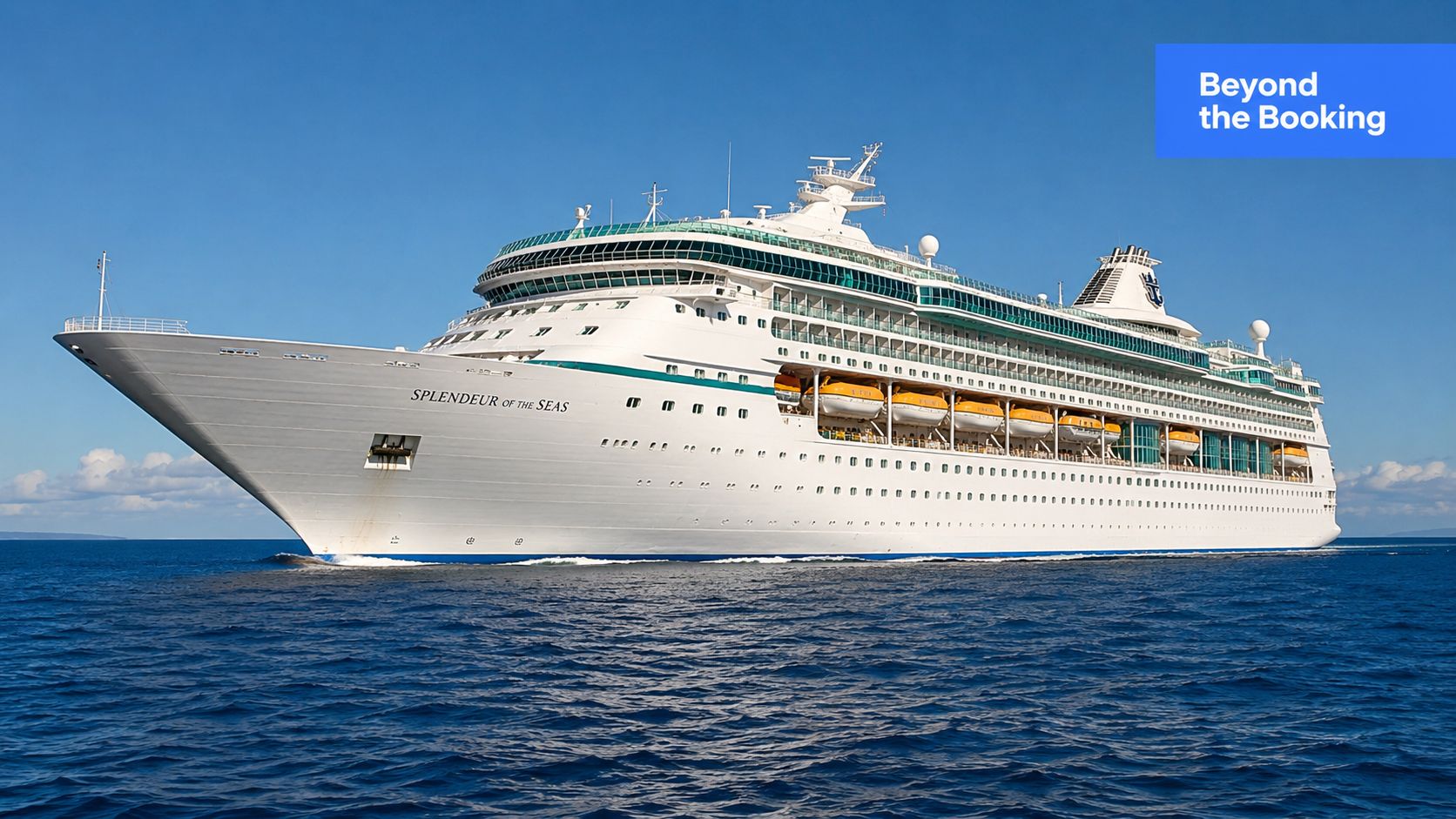
What follows is the planning version, not the nostalgia version. I care less about ship lore for its own sake and more about whether this kind of mid-sized vessel still suits couples, families, or solo travelers who want a polished cruise without chasing the newest floating spectacle.
What Travelers Get Wrong About Splendeur of the Seas
The biggest mistake is assuming Splendeur of the Seas is still sailing as a Royal Caribbean ship. It isn't. Royal Caribbean said the ship would leave its fleet in 2016 after finishing scheduled itineraries, and it was then sold for operation by TUI Cruises, with a later identity under Marella Cruises (Orlando Sentinel, Sherman Travel).
That matters because most search results are still built around the old name. Travelers land on legacy pages, then make cabin, itinerary, and pricing assumptions that don't reflect the current ship at all. In practice, you're not evaluating a Royal Caribbean sailing from the 1990s, you're evaluating a later-life cruise product that needs fresh questions about condition, refit history, and onboard fit.
Why the current identity changes the planning conversation
The live reality is more useful than the old headline. The ship was built in 1996, carried 1,830 guests in Royal Caribbean service, and moved out of that fleet after a long run in the Vision-class lineup (Orlando Sentinel). That tells me this is a mature ship, not a brand-new splashy product, so I'd never recommend it on name recognition alone.
The smart way to approach it is simple.
- Confirm the current operator: Don't rely on the old ship name. Make sure you're looking at the present-day sailing identity.
- Judge the ship by category, not nostalgia: Mid-size ships can be elegant, but they're a different proposition from newer resort-style vessels.
- Match the sailing to your priorities: If you care about port access, manageable crowds, and a more contained onboard feel, this class of ship can still make sense.
- Ask about refit history: Older ships live or die by updates, maintenance, and how well the public spaces still feel.
Practical rule: If a ship's name has changed, your first job is not to romanticize it. Your first job is to identify the actual product you're booking.
The Ship's Identity and History in Plain English
For a 2026 booking decision, Splendeur of the Seas matters less as a nostalgia piece and more as a live question, what kind of mid-sized legacy ship still makes sense for your itinerary, your cabin choice, and your tolerance for older hardware. The name itself points to a layered history, and that is exactly why travelers get confused before they even compare sailings.
The cleanest way to read the ship is as a family tree, not a fixed label. She made her maiden voyage in 1995 and was part of the Vision-class group for Royal Caribbean (Cruise Passenger). She was also built in 1996, which explains why different ship histories can look inconsistent. They are often describing different milestones, not different ships.
Her Royal Caribbean chapter ended in the usual commercial way, with the vessel leaving the fleet after completing scheduled itineraries and then moving into a new ownership and operating structure through TUI and later Thomson Cruises (Orlando Sentinel, Sherman Travel). That shift is the reason older write-ups can mislead today's traveler. If you are comparing current cruise value, you need to separate the ship's past from the product sold now.
What survived the rebrand and what didn't
The basic platform stayed the same. The ship remains a mid-size, Panamax-era cruise ship built for mainstream international markets, with a hull form and scale that favor flexibility over mega-ship volume (Cruise Passenger, Quetalviajar). That matters because the underlying architecture still shapes how the ship feels at sea, how quickly spaces fill up, and how easy it is to use the public areas without a lot of friction.
What changed is the experience layer. The onboard brand, itinerary style, and guest expectations shifted with the operator, which means old comments about the ship need to be read carefully. I separate ship architecture from current guest experience every time. The first can remain relevant for years. The second can change with a refit, a new sailing program, or a different market.
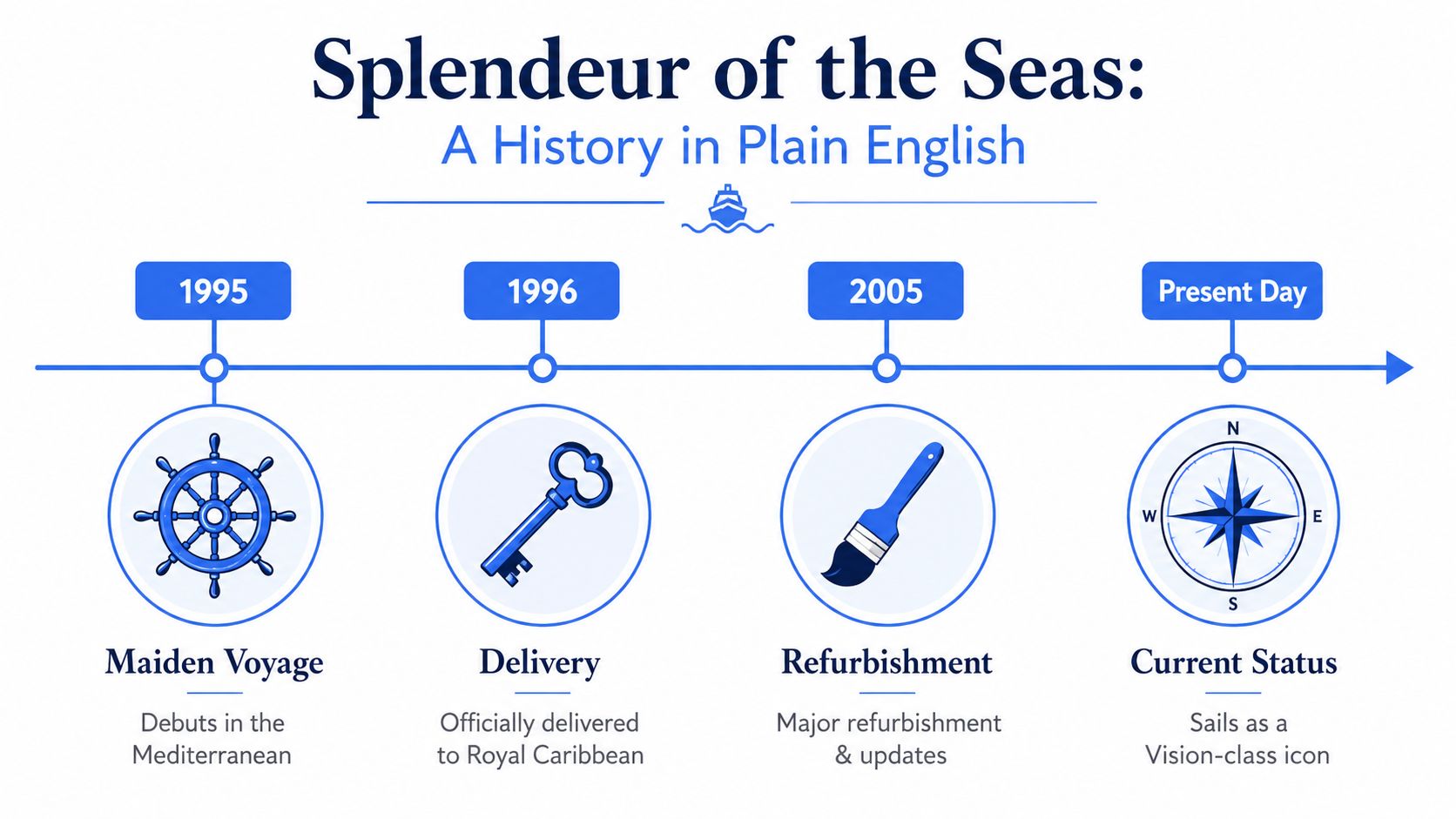
For planning, I keep the timeline simple.
- 1995: Maiden voyage
- 1996: Built and delivered into service
- 2016: Leaves Royal Caribbean
- Later life: Repositioned under new operators and renamed
That is the practical lens. It keeps you from booking on sentiment alone and forces the right question, whether this legacy platform fits the trip you want to take. The attached timeline visual makes that progression easy to see at a glance.
Scale, Layout, and What the Numbers Mean On Board
I care about the numbers here because they describe how the ship behaves on a sailing day. Independent deck data places Splendeur of the Seas at about 69,000 gross tons, with 915 staterooms, capacity for up to 2,196 passengers, and a crew of about 735 (CruiseDeckPlans, YouTube deck-planning source). That profile points to a mid-size ship with a concentrated service style, not the sprawling feel of a newer mega-ship.
The staffing ratio is the detail I watch first. With roughly 3:1 passengers to crew, the ship has the kind of service density that can still feel personal on paper, especially compared with larger resort ships where scale can make everything feel more generic (CruiseDeckPlans, YouTube deck-planning source). I do not call that luxury by default. I call it a better starting point for attentive onboard handling.
Why the Panamax footprint still matters
Technical references place the ship at roughly 264–279 meters in length, about 32–37 meters in beam, and around 7.46 meters draft, with service speed near 22 knots. That shape tells me two things immediately. It was built around a Panamax-era footprint, and that footprint still gives the ship route flexibility that larger vessels lose (Quetalviajar).
My advisor view: I favor ships like this when the itinerary matters more than the onboard spectacle. The design gives you access and efficiency, not the oversized sense of scale newer ships use as their main selling point.
Interior cabin sizes reportedly range from 138 to 172 square feet. That is workable if you choose the right category and do not expect an interior to perform like a suite (YouTube deck-planning source). On a ship of this era, the cabin choice changes the trip more than the branding on the funnel.
Cabin and Suite Categories Worth Choosing
On a ship like this, I don't treat every cabin category as equal. The best choice depends on whether you care more about view, privacy, sleep quality, or getting the best use of your budget without sacrificing comfort. The published cabin sizes for interiors, roughly 138 to 172 square feet, tell you this is a ship where smart category selection matters from day one (YouTube deck-planning source).
My category view by traveler type
If I were advising a couple, I'd push hard toward an oceanview or balcony only if the itinerary really rewards time in the room. Otherwise, a well-placed interior can be a very efficient choice on a mid-size cruise ship, especially if you're planning to spend your time in lounges, dining rooms, and ports. For families, the conversation shifts to layout and sleeping flexibility. For solo travelers, the priority is less about square footage and more about whether the room feels calm and workable for multiple days at sea.
Here's the short version.
| Cabin Category | View | Privacy Level | Best For |
|---|---|---|---|
| Interior | None | High if well placed | Solo travelers, value-focused couples |
| Oceanview | Sea or port views | Moderate | Travelers who want daylight without balcony pricing |
| Balcony | Open-air access | Strong | Couples, longer sailings, scenic routes |
| Higher-tier suite | Best available position and space | Strongest | Guests who want separation, comfort, and a more elevated onboard feel |
I'd be opinionated here. If you're booking for romance, choose the room that gives you privacy and light, not just the lowest category that happens to be available. If you're traveling with children, don't overbuy space unless the cabin layout improves daily life.
A few practical rules guide me every time.
- Light sleepers should avoid high-traffic zones: I look for locations away from noisy connectors and late-night circulation.
- Privacy seekers should prioritize balcony placement: Better positioning matters more than size alone.
- Solo travelers should value efficiency over excess: A calm, functional room beats a mediocre larger one.
- Suite buyers should ask about privileges carefully: Priority services can be meaningful, but the value depends on how you cruise.
The right cabin on this ship feels intentional. The wrong one feels like a compromise you'll notice every afternoon at sea.
Dining, Entertainment, and Family or Solo Feel
The onboard rhythm on a ship this size is less theatrical than a mega-ship and more social, which I prefer for the right client. You're not buying spectacle first. You're buying a manageable ship where dining, lounges, and public rooms define the mood more than giant signature attractions. That makes the experience easier to handle, especially for travelers who dislike feeling lost in a floating city.
What the day actually feels like
Dining is about flow. Main dining remains the anchor, buffet-style meals fill the casual gaps, and any specialty venues that survive a refit become the places I'd target first for a memorable evening. I'd book reservations early for anything limited, because older mid-size ships often have less room for error when popular dining windows fill up.
Entertainment works best when you stop comparing it to Broadway. Think production shows, live music, lounge acts, and the casino as the ship's social glue. On a vessel like this, the point is not overwhelm. It's to give you a few polished places to return to every night without overcomplicating your choices.
The best sailing on a mid-size ship is one where you can have a full dinner, catch a show, and still know exactly where to meet your group afterward.
Families usually do well when the itinerary supports a balanced routine. Kids' spaces and teen areas matter, but so does the pool deck flow and how crowded the common spaces feel on sea days. Solo travelers should look for ships like this when they want a social but not chaotic atmosphere. It's easier to settle into a lounge scene, recognize faces, and avoid the anonymous feeling bigger ships can create.
For travelers who care about rituals, this ship suits repeatable habits. Coffee, lunch, a sea-view lounge, dinner, a show, bed. That kind of structure is a feature, not a limitation, for many affluent travelers who want ease more than novelty.
Sample Itineraries and the Ports That Matter Most
The itinerary should decide the ship, not the other way around. That's especially true with Splendeur of the Seas, because a mid-sized legacy vessel can still be a strong choice when the route fits the ship's strengths. The best sailings tend to be the ones where port access, manageable embarkation, and a more contained onboard experience matter more than flashy onboard features.
Where this ship makes the most sense
I'd look first at Mediterranean sailings, where seasonal routes can reward travelers who want a mix of culture and sea days. If you like the rhythm of waking up in a new port, the ship's size can feel efficient rather than old-fashioned. For a deeper planning lens on that region, I'd use this Mediterranean cruise itinerary guide as the framework for deciding which routes deserve private touring and which ones are fine for a simple walk-off day.
Caribbean winter sailings are the other obvious fit. The appeal there is less about novelty and more about relaxed sequencing. If you're looking for warm-weather cruising that doesn't demand a complicated onboard strategy, that can be a smart use case.
Shorter European getaways are also worth a close look, especially for travelers who want a cruise to feel like a stylish passage rather than an expedition. I'd reserve pre-booked private guides for ports where cultural depth matters and leave easier towns for spontaneous exploration. Weather windows matter more on shoulder-season sailings, so don't assume every port day will feel the same.
Which traveler should book which sailing
- Honeymooners: Choose sailings with scenic sea days and a strong balcony case.
- Multigenerational families: Favor routes with simple embarkation and port days that don't require elaborate logistics.
- Explorers who want balance: Pick itineraries with enough ports to stay engaged, but not so many that every day becomes a transfer day.
- Couples seeking value: Look for routes where the ship is a means to an elegant itinerary, not the only attraction.
The smartest bookers use the ship as a tool. They don't treat it like the destination.
Why Booking Through an Advisor Changes the Experience
A ship like this is exactly where a good advisor earns the fee. Not because booking is mysterious, but because the details are easy to get wrong if you're juggling cabins, ports, transfers, and timing on your own. I care about the gap between a decent cruise and a polished one, and that gap is usually filled by planning discipline.
What the advisor layer actually does
I look at cabin placement first, because that's where comfort starts. Then I coordinate embarkation timing, transfer logistics, and any private touring that should happen around the sailing rhythm. I also pay attention to accessibility, travel health considerations, and responsible planning around destination conditions, because travelers should always stay situationally aware and check official government travel advisories and local guidance before departure.
Preferred partner relationships can provide access to VIP amenities, onboard credits, and curated touches, but I never promise upgrades. I'm more interested in the parts that can be directly controlled. The wrong port day, the wrong arrival window, or the wrong cabin zone can ruin the feel of a cruise faster than almost anything else.
For travelers who like to dig into lifestyle and work-travel balance, I often point them toward resources like Discover Madeira Remote Coliving when they're planning a longer, more flexible pre- or post-cruise stay. That kind of context matters when a voyage is part of a broader premium travel pattern, not a one-off trip.
My blunt view: If you're spending serious money on a cruise, don't outsource your judgment to a search result. Use an advisor who can translate the ship into a real plan.
If you want the practical version of my process, I break it down in what a travel agent actually adds. That's where the value becomes obvious for travelers who care about time, calm, and clean execution.
Packing, Embarkation, and Shore Excursion Highlights
Pack for a cruise like this with restraint and intention. You'll want polished daywear, one or two sharper evening looks, and shoes that can handle cobblestones, terminal floors, and tender days without turning into a nuisance. My packing guide on what to bring on a cruise covers the basics, but the luxury-travel answer is simple, pack fewer pieces, better chosen.
Embarkation is where advisor coordination saves time and friction. Arrive with documentation sorted, transfers confirmed, and your first-day plan clear enough that you're not improvising in a terminal with luggage in hand. I prefer to handle those logistics before you ever get near the dock.
For shore time, I'd think in categories, not sales pitches.
- Cultural touring: Best for ports with layered history and walkable old towns.
- Scenic highlights: Best when the route itself is the attraction.
- Food and wine moments: Best for travelers who want a local lens without overcommitting to a rigid tour.
- Active outings: Best when the port rewards movement and good footwear.
When I plan these days, I use vetted local partners and suppliers to keep the flow tight. That's not the same thing as promising safety, it's how high-service travel is planned responsibly, with situational awareness and local guidance always part of the equation.
If you want help deciding whether Splendeur of the Seas is the right fit, or whether a similar mid-sized cruise would serve you better, Explore Effortlessly can design the sailing around your cabin preferences, itinerary style, and transfer needs. I work with clients nationwide through virtual consultations, and I'll build the trip so the ship feels like a smart choice, not a guess. Join the newsletter too at Explore Effortlessly updates for more luxury cruise planning insight and destination guidance.