You're probably doing what most busy, high-income travelers do when this trip first gets serious. You open a dozen tabs, save a few lakefront hotels, compare train routes you don't fully trust, and then realize the Switzerland portion looks calm and elegant while the Italy portion looks crowded and chaotic. Add inter-country rail tickets, mountain transfers, lake ferries, and premium room categories, and suddenly your romantic two-country escape feels like project management.
That's exactly why a trip to Switzerland and Italy needs more than inspiration. It needs pacing, sequencing, and logistics that work in real life.
I work with clients nationwide through virtual consultations, and this is one of those itineraries where the difference between “beautiful” and “effortless” comes down to details most travelers never see until something goes wrong.
Crafting Your Dream Switzerland and Italy Escape
The classic fantasy is easy to understand. A few days in the Alps. A grand hotel by a lake. A train through the mountains. Then a shift into Italy for style, art, wine, and warmer evenings. It sounds obvious on paper.
It rarely is.
What goes wrong for most travelers
The usual mistakes are predictable. People try to squeeze too much into one week. They choose hotels in the wrong order. They assume a scenic rail line is always the smartest route. It isn't. They also underestimate how annoying luggage becomes once you add mountain towns, station changes, and lake transfers.
Then there's Italy. It's hugely popular for good reason, but popularity changes how you should plan. Italy welcomed a record 65 million international visitors in 2024 and ranked as the fifth-most visited country in the world, according to Italy travel trends and tourism statistics. That level of demand means a good Italy segment requires strategy, not guesswork.
Key Takeaways
- Choose fewer bases: Three or four regions is usually stronger than trying to cover every icon.
- Prioritize flow: Swiss mountain towns and Italian lake destinations don't always connect neatly, especially without a car.
- Use rail selectively: Scenic trains are wonderful when they fit the itinerary. They're not mandatory on every leg.
- Build around immersion: Luxury travel feels better when you stay long enough to relax into a place.
- Plan the border details: Ticketing rules, transfer timing, and station logistics matter more than people think.
- Keep booking centralized: Flights, hotels, rail, drivers, and lake transfers should be designed as one system.
A polished itinerary isn't a list of pretty places. It's a sequence that protects your time and energy.
I'm opinionated about this because I've seen the difference. The travelers who love this trip most aren't the ones who “see the most.” They're the ones who move well, stay well, and never feel like they're chasing the itinerary.
The Art of Pacing a Two-Country Itinerary
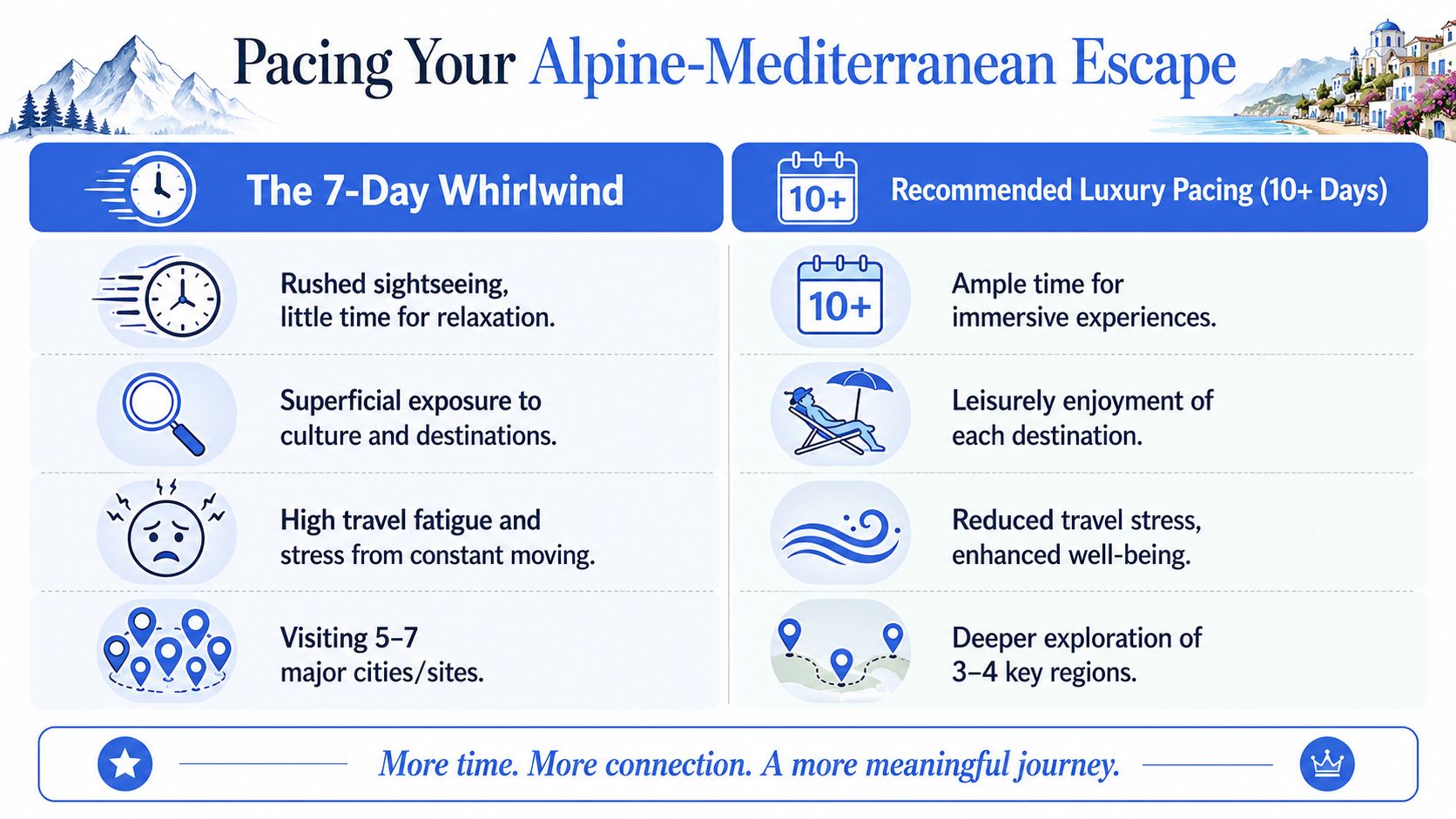
A rushed 7-day Switzerland-and-Italy trip isn't luxurious. It's expensive movement.
Most standard itineraries sell speed as efficiency. I disagree. Luxury is staying long enough to enjoy your hotel, your surroundings, and your meals without watching the clock.
Why slower wins
There's a reason more discerning travelers are stepping away from the frantic model. Demand has grown for 10 to 14 day itineraries that allow 3 to 4 days of deeper immersion in one region, which reduces transit fatigue and creates more meaningful engagement, as noted in this analysis of Switzerland and Italy 7-day tour patterns.
That approach isn't lazy. It's smarter.
A strong trip to Switzerland and Italy usually means choosing one Swiss mood and one Italian mood, then connecting them gracefully. For example, Alpine stillness pairs beautifully with Lake Como or Lake Lugano. Zermatt can pair well with Milan if you want style after scenery. Lucerne can transition nicely into northern Italy if you want the trip to feel polished, soft, and scenic rather than athletic.
My pacing rule
I prefer this pattern for most clients:
| Trip Length | Recommended Shape | Better For |
|---|---|---|
| 10 days | 2 Swiss bases and 1 Italian base | Couples, first-timers, milestone trips |
| 14 days | 2 Swiss bases and 2 Italian bases | Honeymoons, families, deeper cultural travel |
| Longer stays | Add transitions slowly, not more hotel hops | Travelers who want variety without chaos |
The worst version of this trip is five one-night stays. The best version usually gives you enough time to settle in.
Season matters more than people admit
Switzerland and Italy shouldn't be planned in isolation. They have to be paired intentionally. For a trip with several moving parts, personalized vacation planning across two countries helps protect the pace between stops.
- Winter trips: Best when Switzerland is the star. Think ski access, snowy village atmosphere, and then a refined Italian city finish.
- Summer trips: Strong for lakes, panoramic rail, terraces, and long lunches.
- Shoulder seasons: Often the sweet spot for clients who want beauty without the heaviest summer pressure.
- Fall: Ideal if you want the Italian side to lean food, wine, and culture rather than peak-lake buzz.
Advisor perspective: Don't ask, “How much can I fit in?” Ask, “Where do I want to actually exhale?”
That question changes everything. Once pacing improves, hotel choices improve. Transfers improve. Even the dining feels better because you're not arriving late and leaving early every day.
Seamless Travel The Key to a Flawless Journey
You land in Zurich, board what looked like the perfect train online, change platforms with luggage twice, miss a lake connection in Italy, and arrive at your hotel wrung out. That is not luxury. Good planning removes friction before the trip starts.
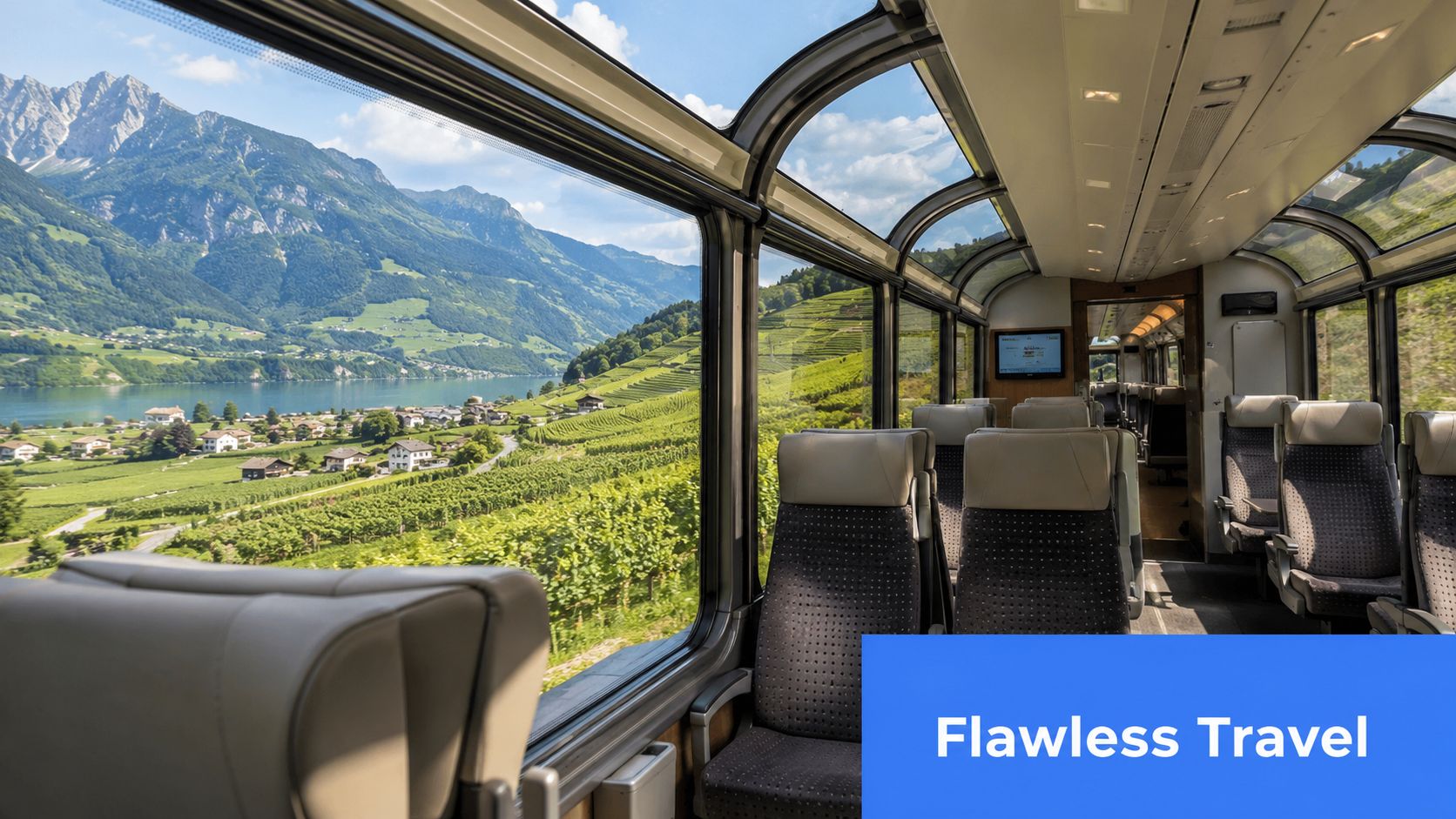
The question is never whether a train exists. It is whether the full chain works. Hotel location, porter access, platform changes, ferry timing, car pickup points, luggage volume, and your appetite for transit all matter. A panoramic rail route can be glorious. It can also be the wrong choice if it turns one elegant transfer into four irritating ones.
When rail is brilliant
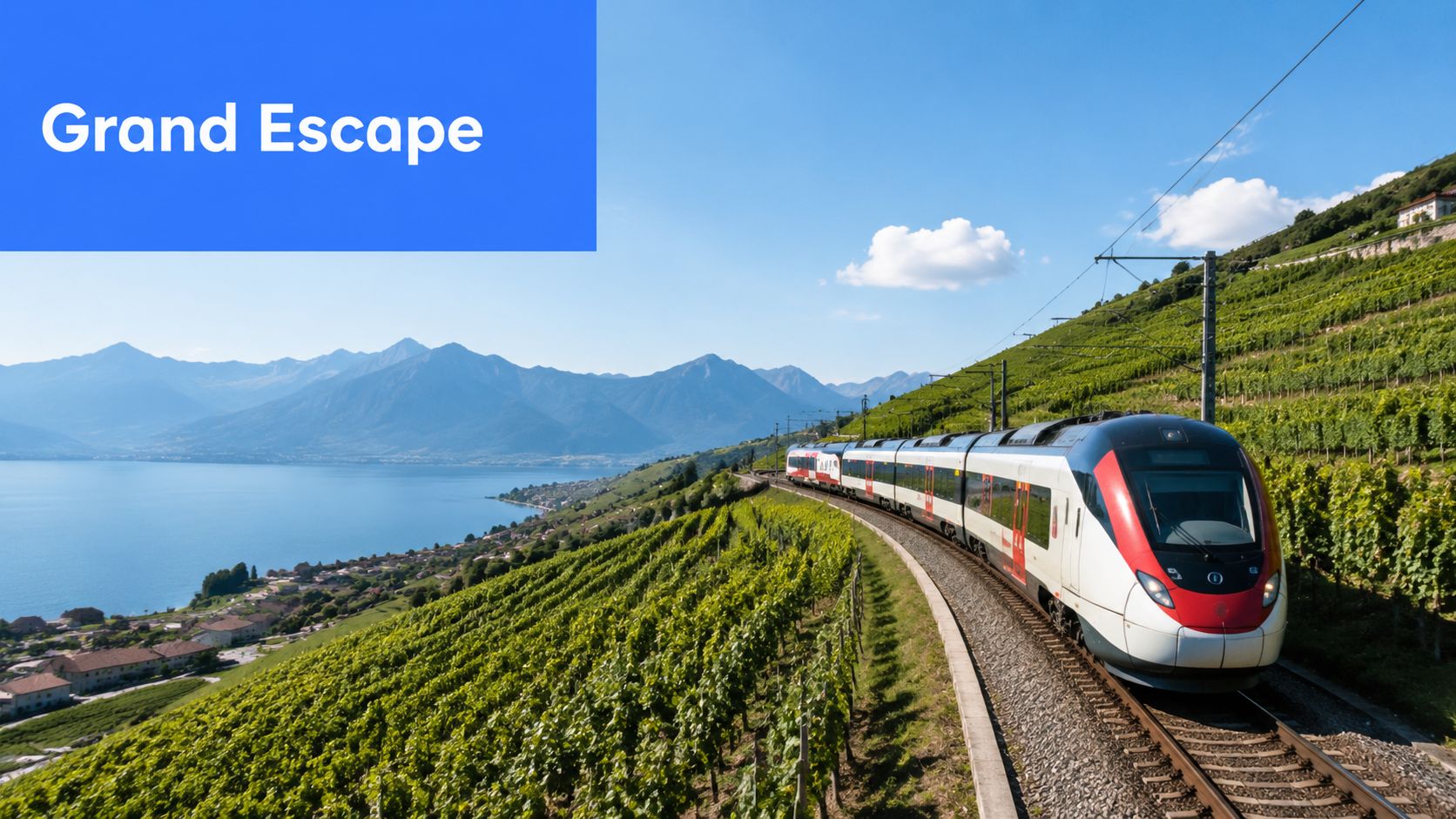
Rail earns its place when the journey itself is part of the experience and the stations serve your actual hotel well. On major city pairs, it is often the smartest option. The team at The Man in Seat 61 lays out practical Zurich connections into Italy, including direct and one-change routes to cities such as Milan, Venice, Florence, and Rome. That is exactly where premium rail shines. Comfortable boarding, good scenery, no airport dead time, and arrival in the city center.
I recommend rail for clients traveling between major hubs, especially when they want a civilized travel day rather than an airport day.
When private transfers are the better call
Generic guides fail on the last third of the route.
Swiss mountain villages and Italian lake towns often look close on a map and behave badly in real life. If you are staying in Wengen, Mürren, Lauterbrunnen, Varenna, Bellagio, or a tucked-away estate above the lake, the weak point is rarely the international rail leg. It is the handoff. The wrong plan creates stairs, docks, station changes, and dead time in the heat.
I regularly reroute clients away from the obvious online option if it creates too many moving parts. A driver to the right rail station, then first-class train, then a managed ferry or hotel transfer usually feels far better than forcing a theoretically scenic route that burns half the day.
That is the standard I use. Pleasant beats merely possible.
Border details travelers miss
Crossing from Switzerland into Italy is usually straightforward, but easy does not mean careless. Switzerland participates in the Schengen Area, and the European Commission's Schengen overview explains why routine internal border checks are generally absent. You still need to carry valid travel documents.
The other mistake is ticket coverage. Swiss rail passes do not automatically cover every Italian segment after the border. That matters when one reservation includes a Swiss train, an Italian high-speed train, and a separate lake boat or hotel car. If those pieces are booked in isolation, small errors compound fast. Missed reservations, wrong class coverage, and unnecessary platform stress are common.
I plan these crossings as one operation. Air, rail, driver, ferry, porter, and hotel all need to connect cleanly.
If your trip includes open-jaw flights, build the flight plan and ground plan together. Do not lock in airfare first and force the rest around it. My guide to booking multi-city flights without creating transfer headaches explains how to structure those arrivals and departures properly.
My practical hierarchy
- Choose scenic rail when the train adds real value to the trip.
- Book a private driver when the route is hotel-specific, luggage-heavy, or awkward on public transit.
- Use flights only when overland travel steals too much of the trip.
- Confirm every handoff. Station assistance, dock transfers, arrival timing, and hotel pickup matter more than travelers expect.
Curated Itineraries for Discerning Travelers
Good itineraries aren't built by destination alone. They're built around how you want to feel.
That's why I don't hand every client the same Switzerland-Italy formula. The right trip for honeymooners is not the right trip for a family with grandparents and children, and neither should resemble a solo traveler's journey.
The Alpine lakeside honeymoon
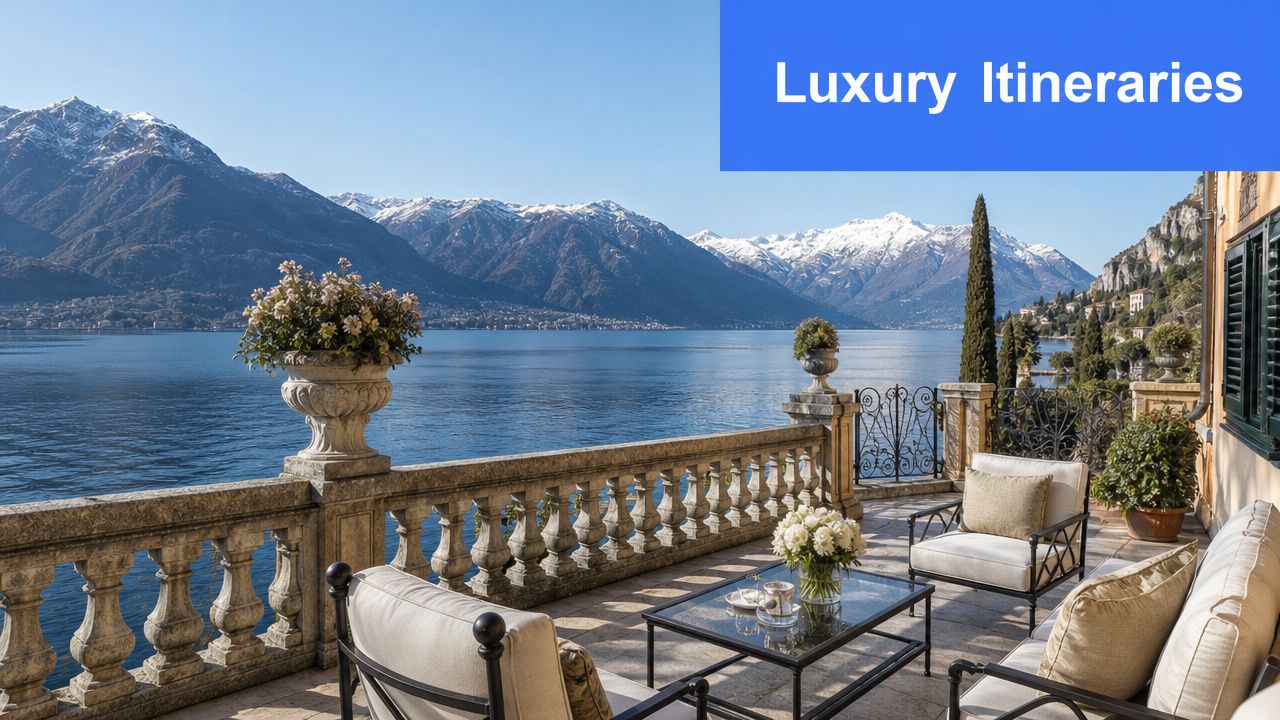
This is for couples who want privacy, elegance, and enough breathing room to enjoy the trip instead of documenting it.
I'd start with a Swiss lake or mountain base that feels cinematic but calm. Then I'd transition into northern Italy for polished romance. A well-shaped 10-day luxury itinerary can include a private shopping tour in Milan's Quadrilatero della Moda, a private boat cruise on Lake Lucerne, and an ascent of Mount Pilatus on the world's steepest cogwheel railway, according to this luxury Switzerland and Italy itinerary example.
For honeymooners, I'd adapt that energy toward slower mornings, suite categories with proper outdoor space, and one or two signature private experiences rather than nonstop sightseeing.
A sample flow might look like this:
- Swiss arrival with recovery built in: Lakefront property, spa time, one scenic excursion.
- Mountain immersion: A village or resort setting where the natural scenery does the work.
- Italian finale: Lake Como, Lake Lugano, or Milan with a strong room category and private transport built around the hotel.
If Milan is part of the plan, my notes on where to stay in Milan for a polished luxury base help narrow the right neighborhood and hotel style.
The multigenerational family version
Family luxury requires a different skill set. Space matters. Transfer times matter even more. So does avoiding a schedule that leaves children overtired and adults irritated.
I'd usually anchor this version with one Swiss region that offers broad appeal, then move to an Italian lake or villa-style stay where the group can spread out. This is where curated access matters. Some families want private boat time and easy promenades. Others want gentle mountain experiences, family-friendly activities, and accommodations that don't force everyone into tiny rooms.
The best family itineraries protect downtime. Nobody remembers the sixth landmark. Everyone remembers the afternoon that felt easy.
This version often works best with a combination of premium rail and private drivers. Not because trains aren't enjoyable, but because station changes with multiple generations can drain the energy right out of the trip.
The active solo journey
Solo luxury travel isn't about filling silence. It's about thoughtful structure.
For a solo traveler, I'd design a route that feels independent but supported. Think a refined Swiss base with guided hikes or wellness experiences, then a clean shift into Italy for art, style, or culinary focus. The sweet spot is enough activity to create momentum, with enough private time to let the trip breathe.
This kind of itinerary often includes:
- A hotel that suits solo dining and relaxed evenings
- Pre-arranged touring on selected days, not every day
- Transfers that remove friction without making the trip feel over-managed
- One or two standout experiences that feel personal, not packaged
That's the point. A bespoke itinerary should feel like it understands the traveler, not the trend.
Beyond the Postcard Exclusive Highlights
Iconic sights are easy. Thoughtful access is harder.
Anyone can put Jungfrau, Lake Como, Milan, Florence, or Lucerne on a list. The value comes from deciding how to experience them so they feel refined instead of overrun. That matters even more now because Switzerland recorded 42.8 million overnight stays in 2025, the highest in 50 years, and leisure activities accounted for 54% of visits, according to these Switzerland tourism figures. In a destination that busy, access strategy matters.
What elevated planning changes
A standard trip gives you famous names. A well-designed trip gives you context, timing, and privacy.
That might mean booking a quieter mountain base rather than the most obvious one. It might mean structuring your lake day around the best light and least hectic traffic on the water. It might mean placing Florence at the right point in the itinerary so you arrive ready for culture, not exhausted from transit. If Florence is on your list, I'd narrow your priorities first, then shape touring around them. My guide on what to do in Florence, Italy for a more thoughtful luxury stay is a useful starting point.
Experiences worth prioritizing
Here's where luxury becomes tangible:
- Private art access: Better pacing, stronger guides, and a quieter experience than standard touring.
- Small-production wine experiences: Not generic tastings. Proper appointments with depth and setting.
- Classic lake cruising: A private boat changes the tone of an entire stay.
- Hotel-led downtime: Spa afternoons, terraces, and room categories that make staying in feel like part of the trip.
The most memorable part of a two-country trip is rarely the busiest day. It's usually the one with the least friction.
That's why I push clients away from checklist planning. The postcard version is easy to find. The polished version takes judgment.
Your Journey Designed by Explore Effortlessly
You should not be fielding train questions from a hotel concierge in Lucerne while your driver waits in Milan and your dinner reservation slides. That is what happens when a two-country trip is treated like a stack of separate bookings instead of one properly built journey.
My clients hire me because time is expensive, and mistakes in pacing are expensive too. A Switzerland and Italy itinerary needs more than good taste. It needs the right order of stops, the right transfer method on each leg, and enough breathing room that the trip feels polished instead of overmanaged.
I design the full trip before a single reservation is confirmed. That means flights, hotel sequencing, rail when it makes sense, private transfers when rail is the wrong tool, and touring arranged through trusted local partners who know how high-level travelers expect to move. If you already use household or executive support, this guide to private personal assistant makes the same point clearly. Smart people delegate complexity so they can stay focused on everything else.
What working with me includes
- Itinerary architecture: Routing, pacing, and hotel order built around your priorities and energy level
- Booking oversight: One coordinated plan instead of disconnected reservations across multiple platforms
- Preferred access and added value: Partner amenities and client perks where they apply
- Pre-departure preparation: Clear guidance on timing, arrivals, departures, and transition days
- Local coordination: Trusted in-destination partners handle on-the-ground support within a well-managed planning framework
For travelers who want one point of accountability, Explore Effortlessly plans and books complex multi-stop journeys with clarity and precision.
About Karrah
Hi, I'm Karrah, owner, founder, and lead travel advisor at Explore Effortlessly, a luxury travel agency based in Miami.
I design bespoke, high-touch itineraries for bucket-list destinations around the world, with a strong focus on logistics that online booking platforms routinely oversimplify. My job is to simplify the planning process while improving every detail, from hotel fit to transfer flow to the tone of each stop.
My work spans luxury cruises, private villas, honeymoons, safaris, and milestone trips that need to feel easy from the first flight to the final pickup. I'm also a Circle of Excellence Advisor, Top 5 percent at Nexion, and a CLIA Accredited Cruise Counselor. I work with clients nationwide through virtual consultations.
If you want Switzerland and Italy done properly, plan it as one integrated journey. That is how you get a trip that feels calm, intentional, and worth the investment.
Frequently Asked Questions
How many days do I actually need for a luxury trip to Switzerland and Italy
For most travelers, 10 to 14 days is the right range if you want the trip to feel calm instead of compressed. That gives you enough time for a Swiss base, a scenic transition, and an Italian finish without turning every other day into a transit day.
Is train travel always better than hiring a private driver
No. Rail is excellent on the right corridors, especially when scenery is part of the point. A private driver is often the better choice for hotel-specific pickups, luggage-heavy transitions, awkward lake connections, or multigenerational travel where ease matters more than the rail experience itself.
Do I need to carry my passport between Switzerland and Italy
Yes. There are no formal border checks because both countries are in the Schengen Area, but travelers should still carry valid passports since random checks can happen.
Should I use one currency for the whole trip
No. Switzerland uses Swiss francs, and Italy uses the euro. Your card strategy should be set up before departure so spending across both countries feels smooth. I also recommend carrying a small amount of local currency for incidental purchases, but most luxury travel expenses can be handled by card.
How should I pack for this kind of itinerary
Pack for variation, not volume. Switzerland can feel cooler and more alpine, while Italy may feel softer and warmer depending on the season and region. The right wardrobe is built around layers, smart day shoes, polished evening options, and luggage that's manageable across transfers.
When should I start planning
Earlier than you think. For premium room categories, top lakefront hotels, and well-timed multi-country logistics, I prefer to start planning as soon as your travel window is serious. The best options go first, especially for high-demand periods.
If you're ready for a trip that feels elegant, well-paced, and intelligently routed, Plan my luxury trip with Explore Effortlessly. I'll help you shape the right Switzerland and Italy itinerary, manage the details, and turn a complicated multi-country plan into one smooth journey. You can also join the newsletter for more luxury travel insight and inspiration.