For most travelers, the best time to visit the Amalfi Coast is May or September. May favors comfortable days for walking and long lunches; September favors a stronger beach-and-boat focus. I would choose the month around what you actually want to do, then choose your base, room and transfers accordingly.
The challenge is that a beautiful photograph tells you nothing about how the trip will feel. A cliffside hotel can have a gorgeous view but a complicated arrival. A ferry can be an enjoyable way to change towns, yet it should not be your only plan for an important departure. The right month makes these choices easier, but it does not make them disappear.
May or September Is the Best Starting Point
If this is your first visit, I would start with May. You can give Positano, Amalfi and Ravello room to breathe without structuring every day around swimming. September is my pick when being on the water matters most. Neither month promises empty streets or perfect weather, and the better choice depends on which experiences would disappoint you if they fell through.
Think of the Amalfi Coast as a set of small, distinct places, not a single resort. Italy's tourism overview of the Amalfi Coast describes the villages, coves, coastal terraces and inland routes that make a short stay surprisingly layered. If you are deciding between Southern European trips more broadly, my month by month guide to Spain is a useful companion when comparing spring and autumn plans.
- Choose May: Put village walks, gardens and dining first.
- Choose September: Build in flexible time for a boat day.
- Choose winter: Plan for a quieter, land-based stay and check openings.
| When | Best fit | Tradeoff to plan around |
|---|---|---|
| May | Walking, villages, gardens and terrace meals | The water may not be the focus of every day |
| June through August | Swimming and a lively coastal atmosphere | More competition for rooms, restaurants and transfers |
| September | Boat time balanced with village days | Keep a weather-flexible boat day |
| November through March | A quieter, land-based coastal stay | Check each hotel and activity's operating dates |
January Through March for a Quiet Land-Based Trip
January and February
I would only recommend these months to someone who genuinely likes a quiet town more than a beach itinerary. Italy's tourism board specifically describes the coast in winter as calmer, with a mild climate compared with many colder destinations. That is an invitation to explore villages, not a promise of warm swimming days. See its official guide to winter on the Amalfi Coast for the kind of trip this season supports.
For a winter anniversary, I would make the hotel itself a deliberate choice. Ask what is open for your dates, where you will eat, and how you will reach nearby towns before falling for a room photograph. Staying longer in one base is more comfortable than building a different town into each night.
March
March can work beautifully if your goals are scenery, a relaxed meal and time together. It is not the month I would select for someone whose trip hinges on beach clubs or a reliable boat outing. Make an appealing land plan first, then treat any suitable day on the water as an option rather than a promise.
My rule for a March itinerary is simple: keep the arrangements cancellable where possible, and check each property and experience for the precise dates you are considering. A general climate description does not tell you whether your preferred rooftop restaurant or seasonal amenity will be operating.
April and May for Walking and Easy Pacing
April
April is an excellent month to prioritize the villages and landscape. Italy's national tourism site highlights the gardens of Villa Cimbrone in Ravello, the Path of the Gods and the small towns between Positano and Vietri sul Mare. If those are your anchors, you can build the trip without requiring a perfect beach day.
Do not mistake a mild climate for uniform conditions. Bring layers for a boat crossing and for an evening away from the waterfront. I would schedule a more demanding walk early in the stay, keeping a second day available if the weather does not cooperate.
May
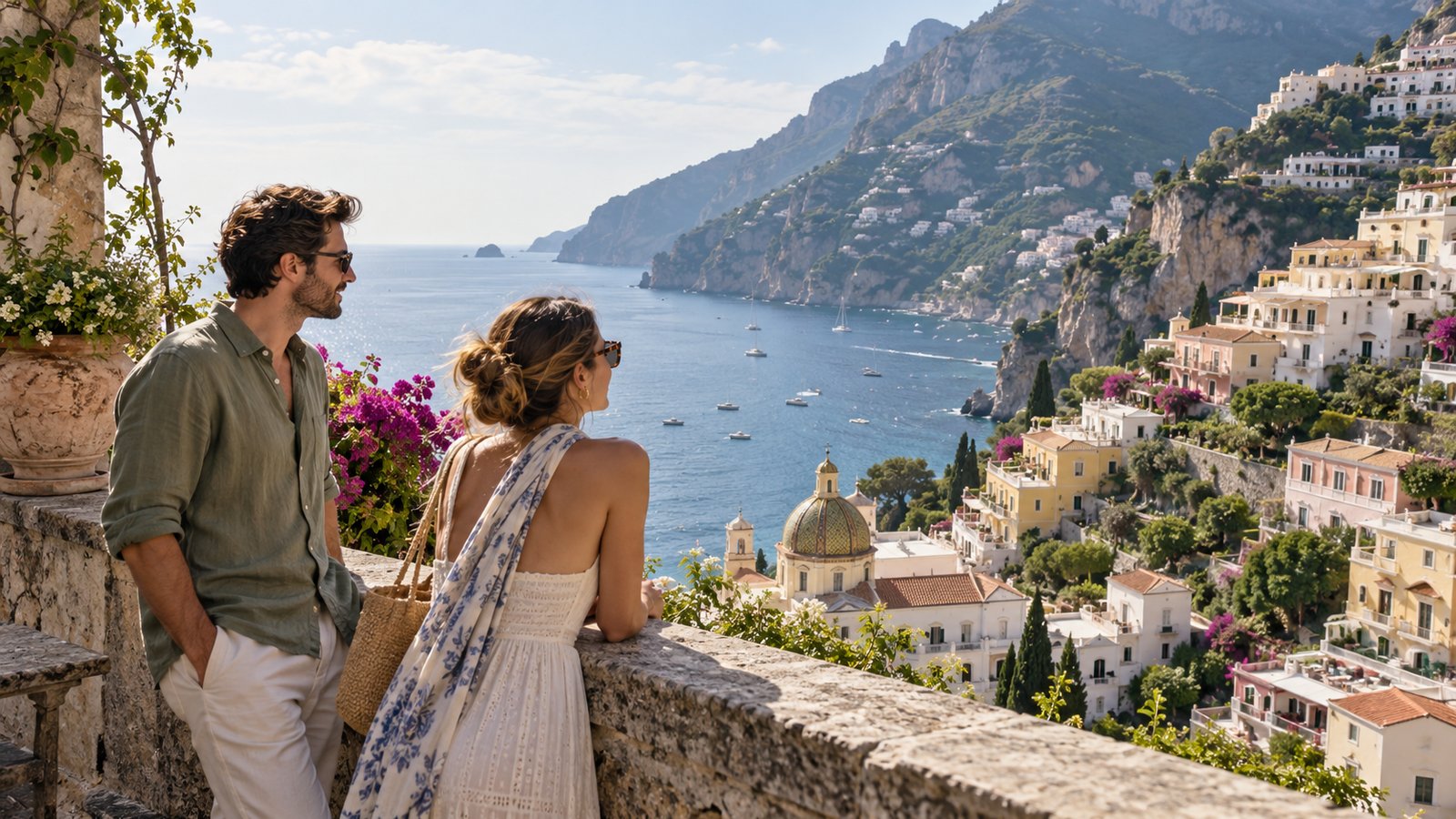
May is my first pick for a couple who wants to see more than one town but still have afternoons with no agenda. In Positano, plan around the hillside rather than assuming everything is a level stroll. The town's sloping streets lead toward Marina Grande and Fornillo, with paths above the coast. The photographs are real; so are the stairs.
What is the weather like in Positano in May? The sensible planning answer is generally pleasant for walking, but not reliably identical from one day to the next. Italy's tourism board describes Campania's mild Mediterranean climate, not a guarantee for your exact dates. I would bring a light layer, allow a little weather flexibility and choose a hotel location you will enjoy even if you do not spend the afternoon on the beach.
June Through August for Beach Time and Longer Days
June
June is the month I would consider when you want more time outdoors and beach time is higher on your list than garden walks. It is also a good point to decide exactly how much of the coast you want to see. Two carefully chosen bases can work, but an extra hotel change is not automatically a richer trip.
One practical upgrade is a room whose outdoor space you will actually use. A sea view from a window and a terrace with a place to sit are different experiences. Compare the exact room category and its location on the property, especially if steps are a consideration.
July and August
Choose July or August deliberately, not because those were the only weeks left on your calendar. These months suit travelers who want the coast at its most energetic and who are comfortable planning sought-after accommodations and experiences early. I would protect your time by building fewer cross-coast transfers into each day.
In a busy summer itinerary, a private road transfer may be worth the investment for the arrival and departure, particularly if you have luggage or a tight onward connection. A boat outing is an experience, not a dependable substitute for every transfer. Your exact plans should be checked against the current operating schedules and conditions.
September and October for a More Flexible Coast
September
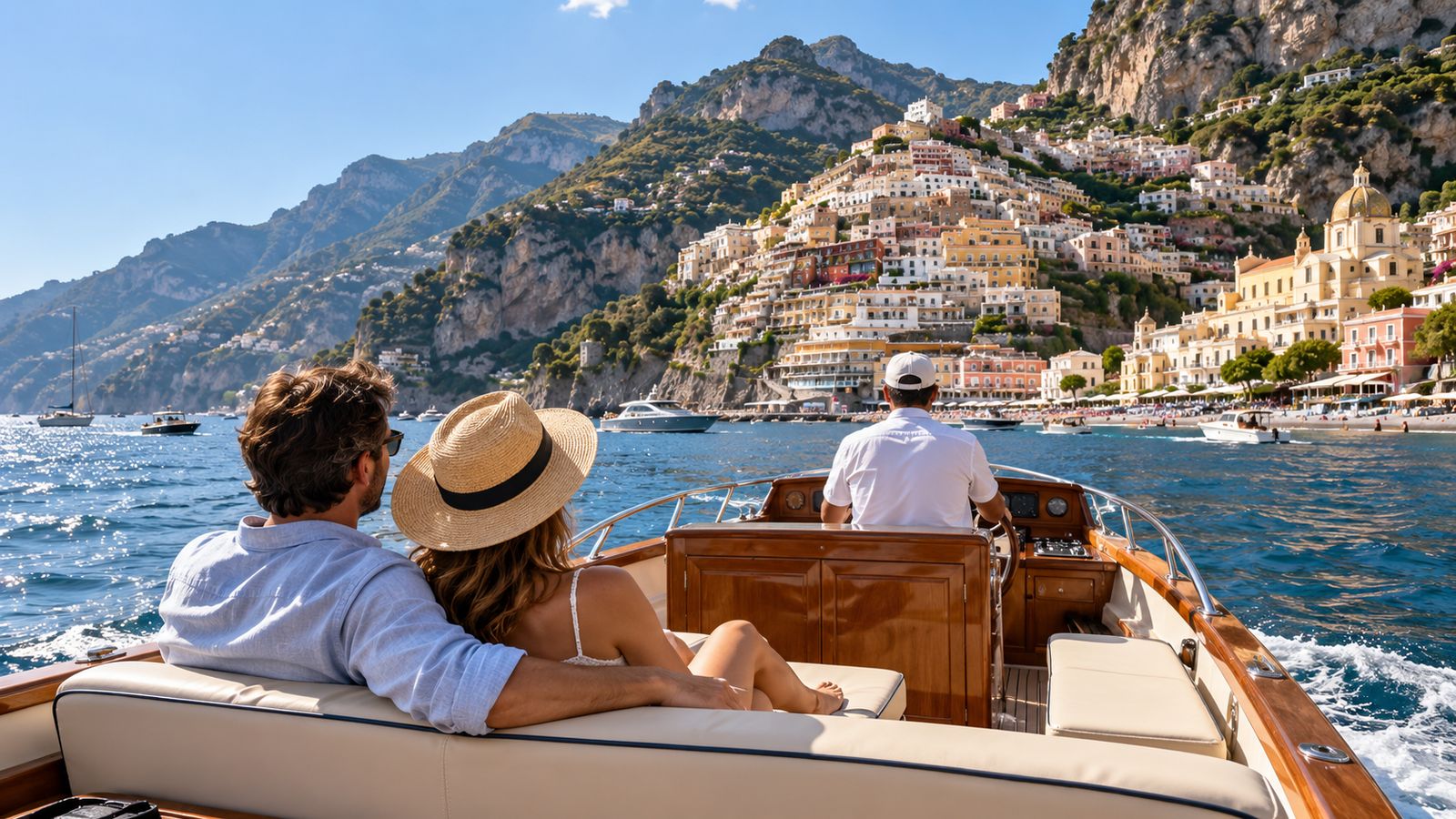
September is my favorite choice when a scenic boat day is central but you also want to explore the towns on foot. I would book a trip long enough to move the boat outing if conditions require it. That flexibility is worth more than trying to pack every coastline view into one afternoon.
For a culture-focused stay, look at what Ravello has on your exact dates. The Fondazione Ravello's current program publishes event news and Villa Rufolo visitor information, but schedules change from year to year. Choose an event only after the dates are confirmed.
October
October is attractive if the trip is primarily about views, culture and unhurried meals, and beach time is optional. I would put any boat excursion earlier in the itinerary rather than on your final day. The later your travel dates, the more important it is to confirm operating dates for your particular hotel and local experiences.
If you are comparing Mediterranean autumn travel, the decision is not simply which destination has the prettier forecast. It is whether the parts you care about will be available on your dates. My guide to choosing Morocco travel dates offers another perspective on planning by experience rather than a single seasonal label.
November and December for Atmosphere Over Swimming
November
November asks you to trade a classic seaside itinerary for a gentler, more local rhythm. I would build the days around a comfortable hotel, a town you can enjoy on foot and a small number of confirmed outings. Do not assemble a week around ferries without checking current service.
A winter timetable is not the same as a summer timetable. One operator has published its ferry ticket and routing FAQ, including a useful reminder that stopping in Amalfi on a Salerno to Positano journey calls for separate segments. Check the actual timetable and conditions for your dates rather than assuming a summer route applies all year.
December
December is a good fit for someone who wants a festive, quieter Italian coast rather than a swim-and-sun escape. Italy's winter guide describes Christmas lights in Amalfi and local celebrations, but your specific program and opening hours need confirmation before travel. I would select one base and plan any day trips around it.
That is the wider lesson of the off-season: the best month is the one that supports your priorities. If a sunset from your room and a thoughtful dinner matter more than a beach club, winter can be a lovely choice. If swimming is nonnegotiable, choose another time.
Choose a Base That Matches Your Days
Positano works when the iconic hillside setting and being close to the waterfront are your priorities, and you are comfortable with vertical streets. Amalfi suits a traveler who wants a lively town base with options for outings. Ravello puts gardens, views and a quieter hilltop setting first; it is not a beach-front substitute. These are planning distinctions, not promises that one town is universally better.
I would rather give you several good nights in the right place than two nights each in three photogenic hotels. Ask yourself where you want to wake up, how much walking you enjoy and whether a room with a terrace is worth more to you than changing hotels. The answer changes the entire shape of the trip.
Give Transfers and Excursions Some Breathing Room
A coast trip works best when arrival, hotel location and daily outings are designed together. If you land tired after an international flight, the most beautiful scenic transfer may not be the most comfortable first move. If you have an onward train or flight, I would avoid relying on a single boat departure as the only way off the coast.
Travelmar's published FAQ is also a reminder that a ferry journey is not necessarily a hop-on, hop-off pass. A stop may require separate tickets. Timetables can change and sea conditions can affect plans, so verify the operating route close to departure and leave a road alternative when timing matters.
My planning rule: One memorable outing a day is usually enough here. Leave room for the terrace, the view and the lunch you did not want to rush.
What an Amalfi Coast Trip Costs
Pricing for a custom Amalfi Coast trip cannot be accurately estimated as a single reliable dollar amount without dates and a defined itinerary. Published hotel offers are tied to specific room types and availability, and they do not give a dependable $ total for the transfers, flights and experiences that make the trip work. I would rather tell you that plainly than pass off an attractive room rate as the cost of a complete trip.
For a couple sharing a room, your actual total trip cost can vary significantly with the season, length of stay, hotel and room category, the number of travelers, airfare, road and boat transfers, private guiding, dining and current availability. A May garden-focused stay and a peak-summer sea-view stay are not interchangeable. Any discussion of costs here is not a quote or a guaranteed price; a realistic estimate needs your dates and priorities first.
Frequently Asked Questions
How many days should we stay on the Amalfi Coast?
I would start with four or five nights for a first visit. That is an itinerary recommendation, not a rule: it gives you time for your chosen base, another town and a flexible boat or garden day without treating every afternoon like a race. Add nights if you want genuine downtime or if this is one part of a longer Italian journey.
Is the Amalfi Coast a good place to visit in March?
Yes, if you want villages, views and a quieter pace and can be flexible with weather and openings. No, if the trip you picture depends on beach swimming and a packed boat schedule. Check the exact hotel and experience dates before making March your choice.
Is May or September better for Positano?
May gets my vote for walking the hillsides and building a varied coast itinerary. September gets my vote if an afternoon on the water is your main event. Either way, I would choose the room and transfer plan before adding a string of day trips.
What is the lowest-cost month to visit Italy?
There is no useful single month for every Italian itinerary. Italy's tourism board describes winter on the Amalfi Coast as quieter and notes lower hotel prices than summer, but a lower room rate is not the full cost of a well-planned trip. If your priority is value, look at the complete itinerary and what will actually be open, not just the headline rate.
Plan the Amalfi Coast Around Your Priorities
At Explore Effortlessly, we can shape a custom Italy itinerary around the month you can travel, the experiences you will remember and the logistics that make the trip comfortable. I will help you compare bases and room types, then coordinate the hotels, transfers and outings so the days feel like yours.
If you are still deciding between European and North African timing, you might also like my month by month guide to Egypt. For your Amalfi Coast trip, Start Planning My Trip.
For more travel ideas and practical planning notes, join the Explore Effortlessly newsletter.
About the Author
Hi, I'm Karrah Kazravan, owner and lead travel advisor at Explore Effortlessly, an award winning Miami agency serving clients nationwide. I design custom journeys for busy travelers who want confident recommendations and thoughtful coordination. I have traveled to more than 67 countries across all seven continents and am a Nexion Circle of Excellence Top 5% advisor, ASTA Verified Travel Advisor, Certified Travel Associate, and CLIA Accredited Cruise Counselor.