Most advice about Italy in September is wrong.
It's not a sleepy shoulder season where you drift into Rome, Florence, or the Amalfi Coast and expect easy reservations, empty museums, and last-minute villa choices. September is when Italy looks its best, feels its best, and attracts travelers who know exactly that. The weather is appealing, the sea is still warm, harvest season is underway, and the clients competing for the best suites and private experiences are often honeymooners, milestone travelers, and high-end leisure guests.
That's why September rewards strategy, not spontaneity. If you want the polished version of Italy, private transfers that fit smoothly, vineyard access worth having, and hotels that suit your travel style instead of what happens to be left, this is the month to plan properly. If you want a more personalized Europe journey, my custom trip planning service is where that process starts.
Your Essential Guide to a Luxury Trip to Italy in September
September is one of the smartest times to visit Italy, but only if you understand what you're walking into. The country is shifting out of peak summer heat, La Vendemmia is underway, the light is gorgeous, and the social calendar is full. That combination makes the month exceptionally attractive to luxury travelers.
It also makes it competitive.
A polished September itinerary in Italy isn't built by stringing together famous places and hoping logistics sort themselves out. It's built by choosing the right regions, balancing city time with countryside breathing room, and protecting the trip from the most obvious mistakes. Those mistakes are predictable. Too many hotel changes. Overreliance on public timing for high-value days. Booking headline destinations without a plan for crowd management. Assuming a great room category will still be available late.
What matters most in September
A strong September trip usually gets three things right:
- Pacing: Don't try to “do Italy.” Pick a lane. Tuscany and Florence. Puglia and Matera. Venice with Friuli wine country. Amalfi with a southern extension.
- Access: The difference between a nice trip and a memorable one is often private access, priority timing, and vetted local partners.
- Positioning: In September, hotel location matters as much as the hotel itself. A beautiful property in the wrong spot can waste hours.
Advisor perspective: The best luxury itineraries in September feel calm on the client side because someone has already handled the pressure points before departure.
Who should go in September
This month works especially well for travelers who want style without midsummer fatigue:
| Travel style | Why September works |
|---|---|
| Honeymoons | Romantic weather, harvest atmosphere, strong villa and wine-country appeal |
| Milestone trips | Beautiful conditions for private touring, yacht days, and celebratory dining |
| Families with flexibility | Better rhythm than high summer, especially with thoughtful routing |
| Food and wine travelers | Harvest season changes the entire texture of the trip |
Italy in September is excellent. It's just not casual.
The September Myth Why Italy's Best Month Is Also Its Busiest
September is sold as shoulder season. For luxury travel in Italy, that advice is wrong.
In Rome, Florence, Venice, the Amalfi Coast, Lake Como, and the most wanted corners of Tuscany, September functions like prime time. Honeymooners want the light and the romance. Multigenerational families want better temperatures. Food and wine travelers arrive for harvest. Fashion clients time Milan around the shows. Everyone has the same idea, and they are all competing for the same suites, tables, drivers, guides, and private access. If your route includes Liguria, my guide to things to do in Genoa Italy may help you decide how much time to give it.
Analysts in this September travel analysis make the point clearly. September no longer behaves like a quiet in-between month in Italy's headline destinations. It behaves like a high-demand period with premium pricing and very little room for casual planning.

That is exactly why discerning travelers should go then.
September gives you Italy at full expression. Beach clubs still have energy. Hotels are fully staffed. Villas are in motion. Vineyards are active. Outdoor dining feels civilized again. The mistake is assuming excellent conditions mean easy access. They do not. The best of Italy is available in September, but only to travelers who plan early and route intelligently.
Why September books so hard
Demand rises because the month combines comfort, atmosphere, and status. Clients get warm days, polished evenings, and the social buzz that disappears later in autumn. Harvest season adds another layer. Private vineyard visits, cellar tastings, truffle-focused meals, and estate lunches become far more appealing when the countryside is working.
September also carries a dense calendar of cultural events. Venice's Regata Storica brings serious attention to the city. Milan's Women's Fashion Week changes hotel and restaurant availability fast. Regional festivals and vendemmia programming pull affluent travelers into wine country at the same time city demand remains high.
Online booking platforms do not solve this. They show inventory. They do not tell you which lakefront suite gets road noise, which Tuscan estate can arrange a serious private tasting, or which arrival pattern saves a day from traffic and crowds.
What busy September actually looks like
The pressure points are predictable, and they cost real time and money if you ignore them:
- Top suites disappear first. The best rooms are not just larger. They have the right views, terraces, privacy, and positioning.
- Restaurant access tightens early. Prime tables in Capri, Florence, Milan, and along the Amalfi Coast are often spoken for well before arrival.
- Private guides and drivers get booked out. The strongest local talent is not sitting around waiting for last-minute requests.
- Crowds cluster in obvious places at obvious times. The issue is rarely Italy as a whole. It is poor timing within a specific itinerary.
- Transfers become strategic. A badly placed hotel or lazy routing can turn a beautiful day into a logistical grind.
September rewards precision. It exposes amateur planning.
The right approach is not to avoid the month. It is to treat it as a premium season and build around that reality. Stay in the right places. Secure the right partners. Use private access where it matters. Shift major sightseeing to smart hours. Put your splurge nights where they buy privacy and calm, not just a famous name.
That is the September story in Italy. It is one of the best months to go, and one of the easiest months to get wrong.
What to Expect from Italy's September Weather and Climate
September weather in Italy is one of the biggest reasons the month commands such strong demand. You still get warmth, but the country begins to soften. Days are easier for sightseeing, outdoor lunches feel civilized again, and evenings invite a better wardrobe than “whatever survives the heat.”
A practical baseline comes from this Italy in September climate overview. Daytime highs range from 75°F (24°C) in northern areas like Milan to 82°F (28°C) in southern areas like Naples, and sea temperatures remain warm. Evenings become notably cooler, requiring a light jacket or cardigan for extended outdoor dining.
How this changes your planning
In northern Italy, September is ideal for travelers who want cities, lakes, and wine country without oppressive summer temperatures. Milan is more comfortable for fashion-focused stays and private shopping appointments. Piedmont and Veneto feel especially polished this time of year.
Central Italy, especially Tuscany and Florence, often delivers the version of Italy most clients think they want. Sunlit afternoons, vineyard lunches, and evenings cool enough for terraces and countryside dinners. To ensure comfort, packing strategically is essential. You need daytime pieces that can handle warmth and evenings that call for structure.
Regional rhythm at a glance
| Region | Typical feel in September | Best matched travel style |
|---|---|---|
| North | Mild days, cooler evenings | Cities, wine, design-focused itineraries |
| Central | Warm afternoons, crisp nights | Villa stays, art, food and wine |
| South | Warmer days, lingering beach weather | Coastlines, yachts, slower luxury escapes |
What to pack like you know what you're doing
A strong September wardrobe in Italy should be deliberate, not bulky.
- For daytime touring: Breathable fabrics, proper walking shoes, and polished sun protection.
- For evenings: A light jacket or cardigan is not optional if you plan on lingering outdoors.
- For the coast: Swimwear still earns its place, especially in southern Italy where the sea holds summer warmth.
- For city hotels: Smart layers matter more than overpacking. September can still surprise you with heat in urban settings.
One more point. September doesn't mean cool all day, every day. Some cities can still run warm, so itineraries need breathing room. Clients enjoy Italy more when mornings are used for high-demand touring, afternoons are protected for slower lunches or downtime, and evenings are reserved for the atmosphere Italy does better than almost anywhere.
Curating Your Itinerary Beyond the Overcrowded Hotspots
Most travelers default to the same shortlist. Amalfi Coast. Cinque Terre. Florence. Venice. Those places are famous for good reason, but fame and fit aren't the same thing, especially in September.
The better question is this: do you want bragging rights, or do you want a trip that feels expensive in the right way? Because those are not always identical outcomes.
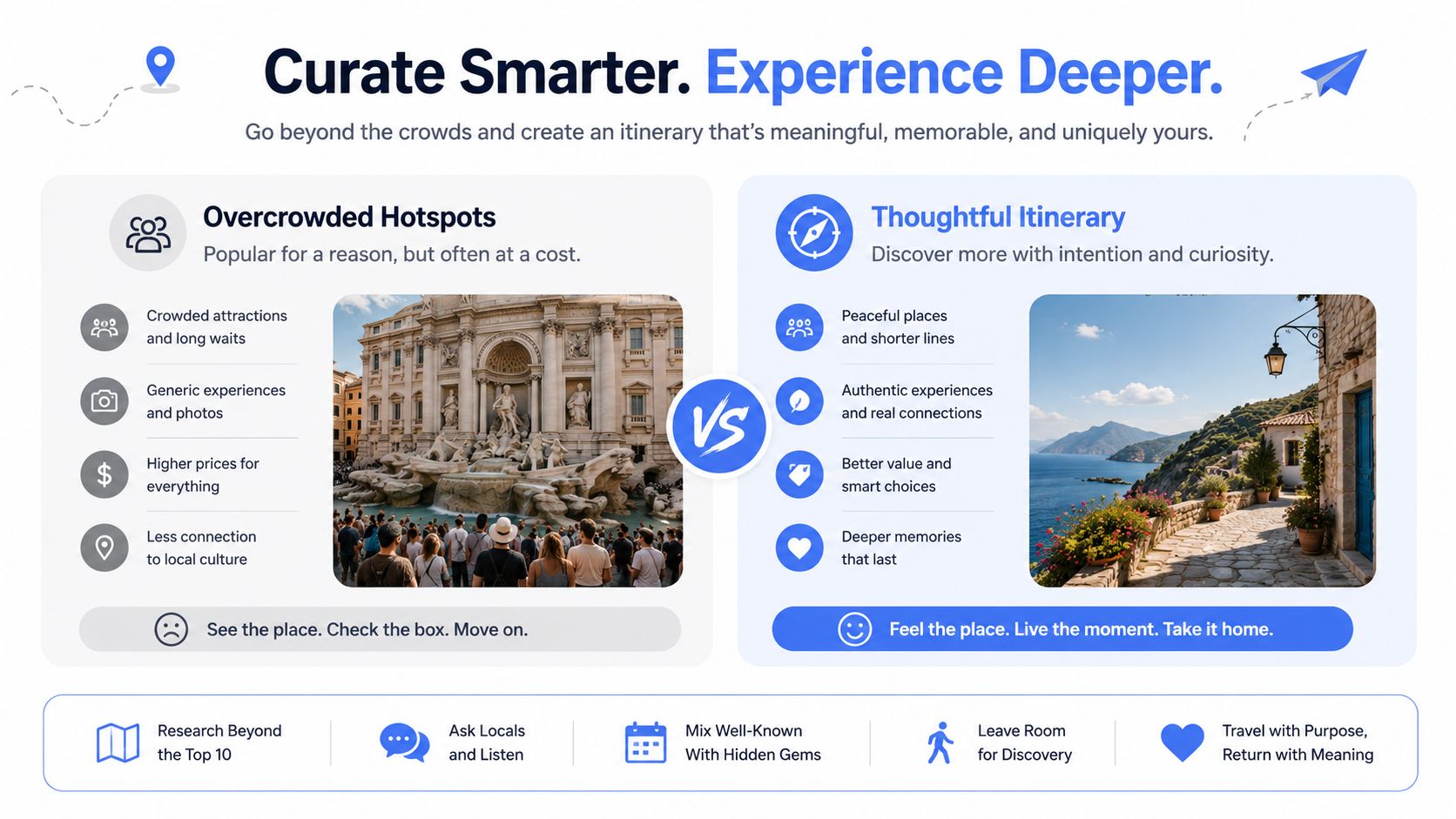
A useful correction comes from this discussion of less touristy Italian destinations. Most travel guides focus on overcrowded destinations like Cinque Terre, neglecting underserved regions such as Abruzzo, Puglia (Bari, Monopoli, Matera), and the Friuli-Venezia Giulia area, which offer high value, low tourist density, and authentic experiences.
Smarter alternatives for September
If a client wants coastal beauty without the same pressure points, I look hard at Puglia. The region gives you elegant masserie, access to towns with personality, and a very different pace from the marquee west coast circuit. Monopoli and the broader Valle d'Itria rhythm suit travelers who want style without theater.
Abruzzo is an even stronger pick for clients who care less about social media geography and more about space, natural beauty, and authenticity. It's excellent for travelers who want mountains, Adriatic access, and a trip that feels grounded instead of overproduced.
Friuli-Venezia Giulia is the connoisseur's move. This is for travelers who are over the obvious wine-country story and want something more nuanced. Trieste gives intellectual energy. The wine areas offer sophistication without the crowds that dominate more familiar tasting routes.
Popular versus well-matched
| If you're considering | Think about instead | Why it may work better |
|---|---|---|
| Cinque Terre | Puglia | More breathing room, richer hotel variety, easier pacing |
| Amalfi Coast only | Amalfi plus a quieter southern extension | Keeps the icon, loses some fatigue |
| Tuscany only | Tuscany plus Friuli or Puglia | Better contrast and a more layered trip |
For travelers still committed to coastal Italy, this guide to the best coastal towns in Italy is a useful starting point.
The strongest September itinerary isn't always the most famous one. It's the one that matches your tolerance for crowds, your appetite for movement, and the kind of luxury you actually enjoy.
The luxury mistake is assuming exclusivity comes from price alone. In Italy, it often comes from choosing the right region in the first place.
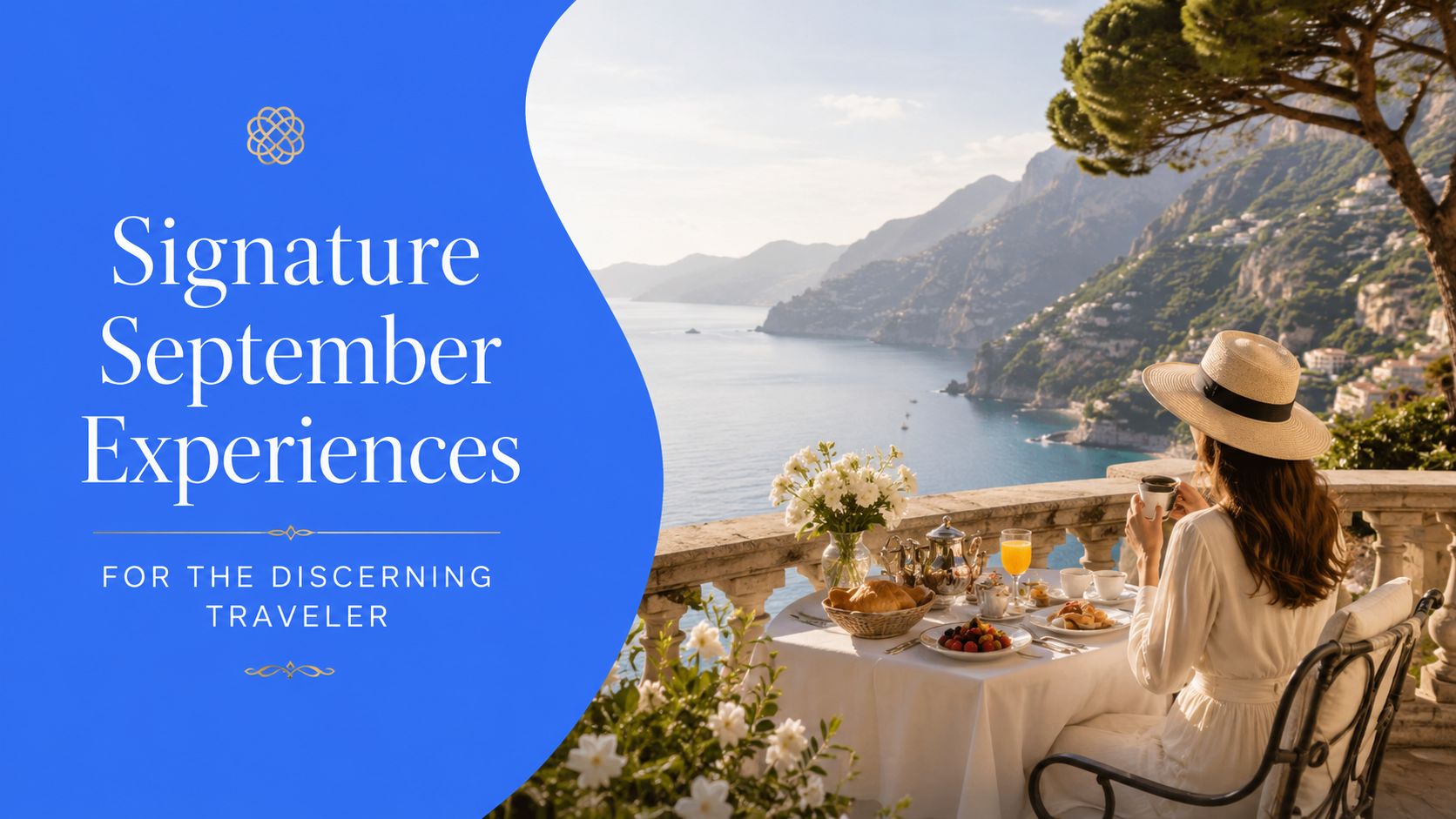
Signature September Experiences for the Discerning Traveler
September rewards travelers who book for access, not volume. This is the month when Italy looks easy online and gets complicated on the ground. Harvest calendars shift. The best estates protect their guest lists. The smartest coastal days depend on timing, boat selection, and where you start.
That is why generic booking platforms underperform in September. They can sell a tasting. They cannot secure the right producer, the right hour, or the kind of welcome that makes the day feel private.
The experiences worth prioritizing
Start with harvest access. September is La Vendemmia, and there is a major difference between joining a standard winery circuit and spending time at an estate that treats you as a guest rather than a booking slot. The best version includes a private cellar visit, a serious tasting paced properly, and lunch on the property while the vineyards are still active around you. If wine matters to you, this should be one of the anchors of the trip.
Then use September for coastal Italy, but do it selectively. Sea days are still glorious, especially in the south, yet the wrong marina, departure time, or overnight base can turn a glamorous plan into a crowded one. Clients considering the coast should pay close attention to hotel positioning and boat logistics, especially if they are choosing among the best luxury hotels on the Amalfi Coast.
Private cultural access also earns its place in September. Cities are active again. That means the ordinary touring windows are weaker. Early-entry guiding, after-hours access where available, and museum planning built around crowd patterns matter far more this month than travelers expect.
Where luxury actually shows up
The strongest September experiences usually include:
- Harvest days with the right producer: Not a busier tasting room, but an estate visit tied to the rhythm of the vintage.
- Private access in cultural cities: Tours scheduled around the crowd, not inside it.
- Villa dining done properly: Long lunches, outdoor dinners, and chefs who understand the setting as much as the menu.
- Well-timed sea days: Beautiful coastal cruising with the right launch point, crew, and pacing.
One exceptional day does more for a September trip than three filler reservations.
That is the luxury standard in Italy this month. Fewer bookings, better access, and a trip designed around moments you cannot replicate once you are there.
Sample High-Touch Itineraries Crafted for September
The best September itineraries aren't built around how many stops you can squeeze in. They're built around flow. Clients with the strongest trips move through Italy in a way that protects energy, reduces friction, and gives each region space to land properly.
That's the difference between “we saw a lot” and “that trip was exceptional.”
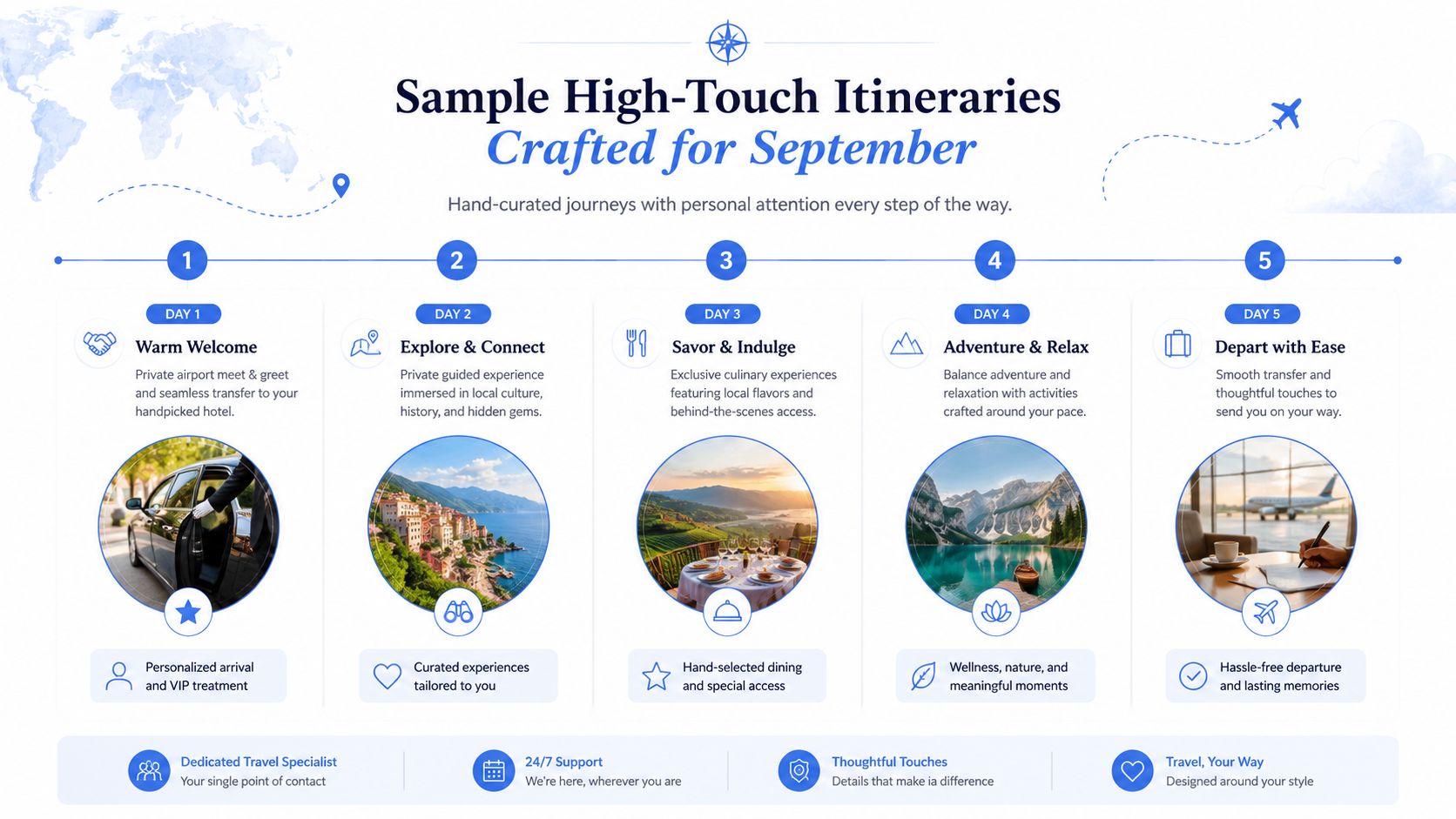
Seven days for Tuscan harvest and Renaissance style
This itinerary works for couples, honeymooners, or milestone travelers who want culture and wine without overcomplicating the route.
Start in Florence with a hotel that gives you easy access to early touring and polished evenings. Spend the first part of the trip on art, architecture, and private guiding done at the right hours. Then shift into the countryside for a villa or estate stay with room to breathe.
The value is in the contrast. City first, then countryside. Structured mornings, slower afternoons, and one standout harvest-focused wine day instead of trying to sample every label in the region.
A sample flow might include:
- Florence arrival and recovery: Private transfer, gentle first evening, no heavy touring on arrival day.
- Cultural core: Guided access to major sights in the morning, lunch tucked into the day properly, then downtime.
- Tuscany transition: Move once. Settle into a countryside stay with space, views, and strong food.
- Harvest experience: One meaningful vineyard day with lunch and a well-timed return.
- Departure logistics: Final night positioned sensibly for onward travel.
Fourteen days for Amalfi and southern Italy done properly
This is for clients who want icon-plus-depth. Keep the Amalfi Coast, but don't let the whole trip collapse under one high-profile destination.
Start with a short city anchor or direct coastal transfer depending on flight timing. Use the Amalfi Coast for scenery, sea access, and a suite worth enjoying. Then extend into southern Italy for a richer second act. Puglia works especially well here, as does Matera for travelers who appreciate atmosphere and design.
This kind of route gives the trip range:
| Trip phase | Focus | Why it works |
|---|---|---|
| Opening stay | Recovery and orientation | Prevents arrival-day burnout |
| Amalfi segment | Coast, views, private boating | Delivers the icon moment |
| Southern extension | Food, architecture, slower rhythm | Adds contrast and authenticity |
| Final nights | Easy departure setup | Keeps the end seamless |
If you're comparing where to stay on one of Italy's most requested coastlines, this roundup of hotels on the Amalfi Coast helps clarify the hotel options.
Planning Your Effortless Italian Escape
September is not Italy's quiet little shoulder season. It is one of the hardest months to book well if you want the right suite, the right villa, the right guide, and access that still feels private once you arrive.
That is the mistake DIY planners make. They assume better weather and post-summer timing mean easier logistics. In practice, September brings serious demand across Rome, Florence, the Amalfi Coast, Tuscany, Lake Como, Sicily, and the major wine regions. The trip only feels easy when the structure is right from the start.
A strong September plan starts with restraint. Pick fewer bases. Protect your best rooms early. Build around private access instead of public bottlenecks. Put your arrival and departure nights where they serve the trip, not where a booking engine happened to show the lowest rate.
What expert planning actually changes
The difference is not “hotel versus no hotel.” The difference is whether the trip has been engineered to feel polished on the ground.
An advisor handles details that booking platforms flatten or ignore:
- Entry and exit strategy: Open-jaw flights, realistic transfer times, and final-night positioning that support the itinerary instead of fighting it.
- Hotel and villa selection: The right property for your travel style, not just a famous name with good photography.
- Access and timing: Private vineyard appointments, boat days, after-hours guiding, and restaurant reservations placed where they make sense.
- Pacing: Fewer unpack-and-repack days, less time in transit, and better use of high-demand destinations.
- Local coordination: Drivers, guides, fixers, and on-the-ground relationships that matter once September pressure hits.
If you want a trip built around those decisions, custom Italy trip planning for September travel is the right place to start.
For families planning at this level, it also helps to compare luxury family travel providers before choosing who will manage a multi-stop itinerary.
Why online booking underperforms in September
September exposes weak planning fast.
A trip can look excellent on paper and still fail in execution. The lake hotel is glamorous but awkward for the rest of the route. The Amalfi stay has beautiful imagery but no practical car access. The vineyard visit is technically available, yet scheduled on a transfer-heavy day that turns lunch into a rushed obligation. The city hotel is stylish, but the room category booked online faces a loud street and the property has no relationship-based flexibility once you arrive.
Luxury travel in Italy is not about collecting reservations. It is about combining the right ones in the right order.
That is why expert planning matters most in September. The month rewards precision. It punishes overstuffed itineraries, late booking, and generic hotel selection.
Karrah is a Circle of Excellence Advisor, Top 5 percent at Nexion, and a CLIA Accredited Cruise Counselor. She works with clients nationwide through virtual consultations, designing high-touch itineraries with trusted partners and well-planned logistics from the outset.
Clients work with her for destination matching, hotel and villa selection, itinerary design, transportation planning, and curated experiences that reflect how they like to travel. Preferred partner perks and VIP amenities may also be available through established relationships, depending on the property and booking.
Author bio
Hi, I'm Karrah, owner, founder, and lead travel advisor at Explore Effortlessly, a luxury award winning travel agency based in Miami.
I design bespoke, high-touch itineraries to bucket-list destinations around the world. Every trip is curated with intention, insight, and smooth logistics from start to finish.
From luxury cruises and private villas to honeymoons, safaris, and once-in-a-lifetime journeys, my role is to simplify planning while improving every detail.
FAQs
Is September a shoulder season in Italy
Not for luxury travel. September is a prime month, and the best hotels, villas, and private experiences are often under pressure well before arrival.
Is Italy still hot in September
Often, yes. Southern Italy usually stays warmer longer, while northern regions tend to feel milder. Evenings can cool off, so pack for warm days and lighter layers at night.
Where should I go in Italy in September if I want fewer crowds
Choose smarter combinations instead of the most obvious route. Puglia, Abruzzo, Friuli-Venezia Giulia, parts of Piedmont, and less-exposed corners of Sicily can feel far more spacious than the standard Rome-Florence-Amalfi lineup.
Is September good for a honeymoon in Italy
Yes, especially if you want vineyard stays, private boat days, and long outdoor lunches without midsummer heat. Book early. The romance is real, and so is the competition.
How far in advance should I plan a luxury Italy trip for September
Start early. The best suites, villas, and harvest-season experiences do not sit around waiting for late decisions.
If you want a September trip to Italy that feels polished from the first airport transfer to the final night, skip the DIY scramble and let a professional design it properly. Plan my luxury trip with Explore Effortlessly. And if you'd like more destination insight and planning advice, join the Explore Effortlessly newsletter.