Patagonia sits on many wish lists for years. Then life gets busy, calendars fill, and the trip remains a tab you mean to come back to. By the time most travelers are ready to go, they're staring at a maze of Chile versus Argentina decisions, park permits, lodge choices, flight connections, and weather windows that can make a beautiful idea feel oddly exhausting.
That's the moment when Patagonia stops being a dream and starts becoming a logistics project.
For a high-end traveler, that's usually the breaking point. You don't need more blog noise. You need judgment. You need someone who understands that Patagonia is remote, dramatic, and worth doing properly, with the right pacing, the right properties, and the right sequencing so the journey feels expansive rather than frantic.
I work with clients nationwide through virtual consultations, and this is exactly the kind of trip where expert planning matters. As a Circle of Excellence Advisor, Top 5 percent at Nexion, I look at Patagonia through a different lens. Not only where to sleep and what to see, but how to move through the region comfortably, where to slow down, and which experiences deserve the extra investment.
Answering the Call of the Wild South
One client came to me after trying to piece together Patagonia on her own over several late nights. She had a spreadsheet. She had a shortlist of lodges. She also had no idea how to reconcile trekking permits, cross-border transfers, and the fact that the places she most wanted to stay were nowhere near each other in practical travel terms.
That's Patagonia in a nutshell. The scenery is cinematic. The planning is not.
The draw is obvious. Jagged granite towers. Glacial lakes in impossible shades of blue. Wide-open plains that feel prehistoric. Wind that reminds you this is still a wild place. Patagonia rewards travelers who want scale, silence, and the kind of natural beauty that make every other destination feel edited.
But this region doesn't tolerate sloppy planning.
Practical rule: Patagonia is not the trip to “figure out as you go” if you care about comfort, pacing, and access to the best experiences.
Flights often require careful stitching between major South American gateways and smaller southern airports. Signature treks require advance planning. The best lodges book early. Border crossings between Chile and Argentina introduce another layer of coordination. And if you get the sequence wrong, you can spend a premium budget on a trip that still feels rushed.
That's why I'm opinionated about Patagonia trip planning. I don't recommend trying to squeeze it into a short, overstuffed itinerary. I don't recommend chasing too many regions in one go. And I definitely don't recommend choosing properties based only on pretty photos. In Patagonia, location, transfer time, and operational reliability matter just as much as design.
The goal isn't merely to visit Patagonia. It's to experience it with room to breathe, with private guiding where it makes sense, with excellent lodges that soften the rugged edges, and with every moving part aligned before you leave home.
Timing Your Trip When to Go and for How Long
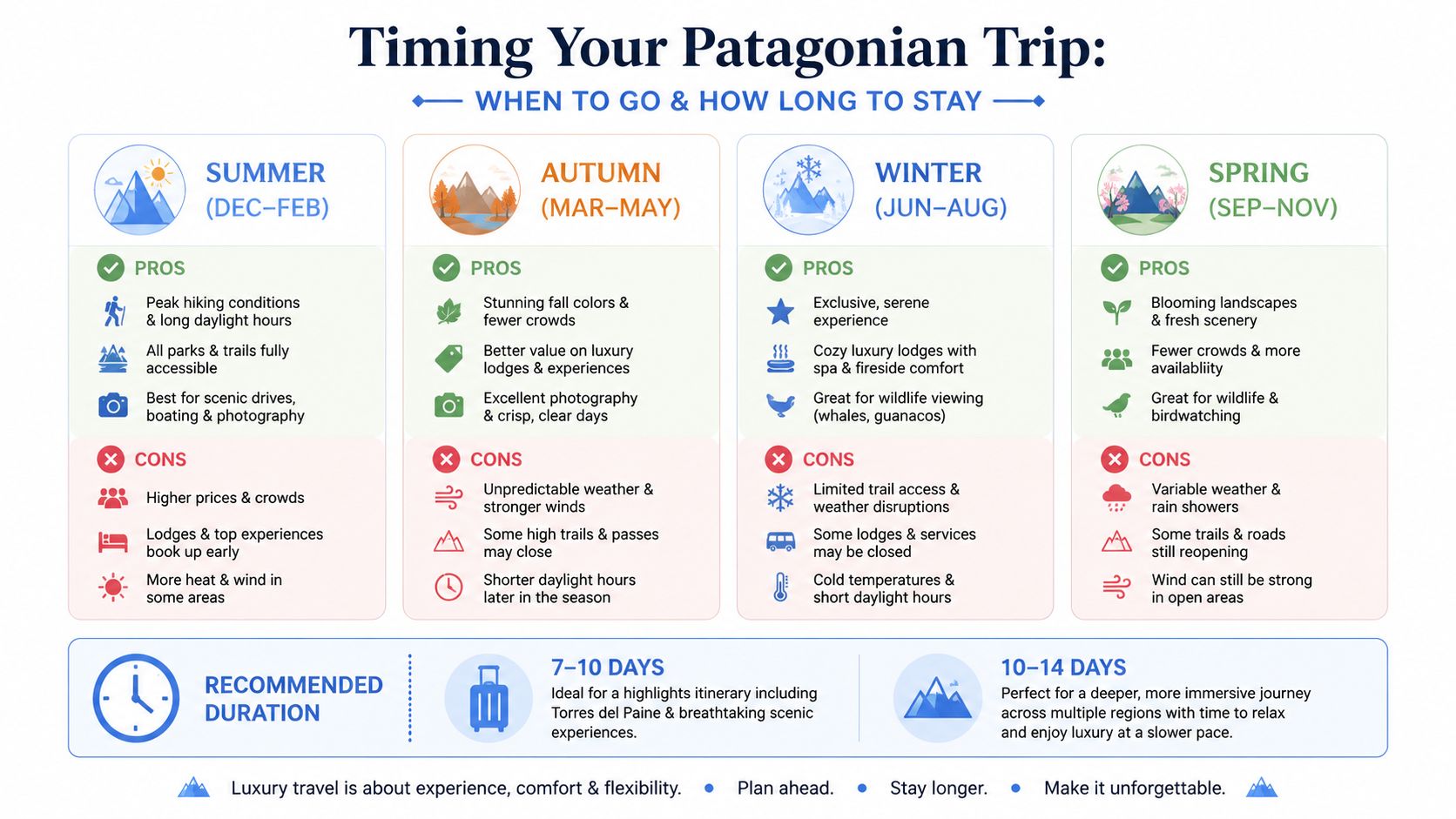
Patagonia rewards timing. Get it right, and you'll have long light, strong access, and a smoother rhythm. Get it wrong, and even a luxury trip can feel like a battle against weather, availability, and transit fatigue.
The seasons that matter most
Summer from December through February is the classic window. That's when most travelers go for peak hiking access, long days, and the fullest range of services. It's also when demand is highest, and the marquee experiences need to be secured well ahead of time. For major trekking routes, permits and reservations must be booked months in advance during peak season, according to this Patagonia planning guidance.
Spring in November is a strong choice if you want a little more breathing room. You'll often find a fresher, quieter feel, and it's a beautiful season for travelers who care as much about atmosphere as checklists.
March is another excellent sweet spot. The mood shifts. The light softens. Crowding eases. For clients who don't need to travel at absolute peak holiday periods, this is often where I'd steer them first.
Winter is a different product entirely. It can be compelling for the right traveler, but it's not what I'd recommend for a first high-end Patagonia trip unless you're building the journey around a very specific purpose.
How long you should actually stay
Here's the recommendation I give most often. Do not plan Patagonia as a quick hit.
A minimum of 3 nights per destination is the right benchmark because the first day often disappears into arrival and settling in, especially in a region with long transfer times and substantial distances between places like Puerto Natales, Torres del Paine, and El Calafate, as noted in this same Patagonia trip planning source. That advice matters because rushed transitions create fatigue fast in an environment that already demands energy.
A properly comfortable trip usually lands in the 10 to 14 day range. If trekking is central to the experience, the bar rises further. The same source recommends at least 14 days total to comfortably incorporate premier routes such as the W Trek, which takes 4 to 9 days, or the O Circuit, which takes 7 to 9 days with mandatory permits and lodging reservations on route.
The fastest way to ruin Patagonia is to underestimate distance and overestimate how much “usable” time you'll have each day.
My direct recommendation
If you want lodge-based hiking with a polished pace, shoulder season is often smarter than peak holiday crush. If you want marquee trekking and the broadest operational ease, go in summer and book early. If you want the region to feel luxurious rather than relentless, give it the days it deserves.
Choosing Your Patagonian Regions
Most travelers don't need all of Patagonia in one trip. They need the right Patagonia. That decision shapes everything from hotel style to transport flow to how physically active the journey feels.
A useful place to start is with the style of experience you want most. If you're also considering a broader South America journey, this is exactly the kind of routing I refine in custom regional planning.
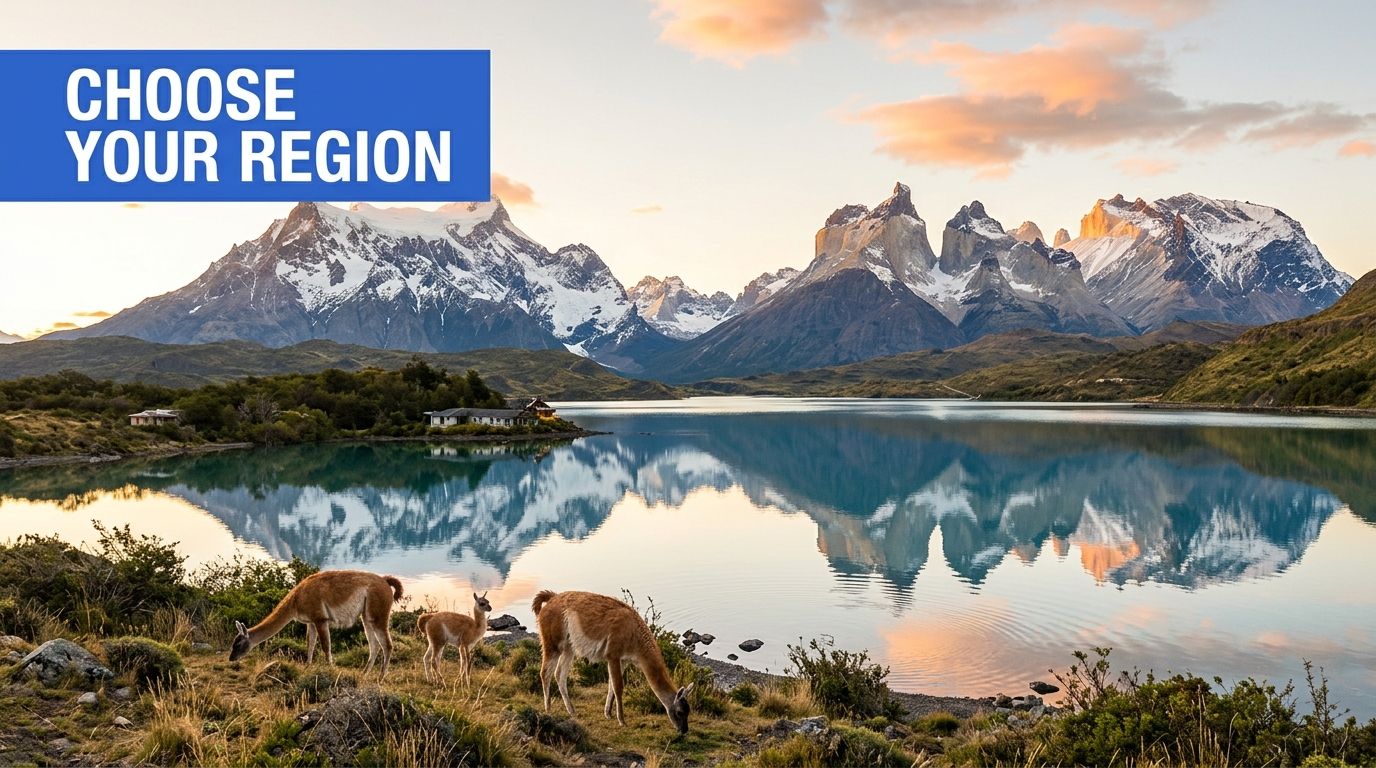
Torres del Paine for iconic drama
Torres del Paine is the postcard. If your vision of Patagonia includes granite spires, sweeping lakes, and striking eco-lodges with serious design credentials, this is usually the anchor.
This region works beautifully for travelers who want a blend of guided adventure and lodge comfort. You can spend your days on private hikes, scenic drives, or boat outings, then come back to a proper property with polished service, excellent cuisine, and views that do half the work for you.
It's also the better match for travelers who want structure. The park is highly organized, and that's not a bad thing. It creates predictability in an environment that can otherwise feel unruly.
El Chaltén for active travelers who want flexibility
El Chaltén feels more independent and more mountain-town in spirit. It suits travelers who want immediate trail access and a more active daily rhythm. This is Patagonia for people who like waking up, checking conditions, and stepping directly into the natural surroundings without elaborate transfer choreography.
From a luxury perspective, El Chaltén works best when it's balanced properly. I like it for clients who value strong hiking days but still want tasteful accommodations, good guiding, and a sensible cadence.
As of October 2024, an entrance fee is mandatory for hiking trails within Los Glaciares National Park in El Chaltén, and camping fees apply for multi-day treks that should be secured online before arrival to avoid denial of entry, according to this Patagonia planning reference. That's one more reason this region benefits from advance coordination.
For travelers extending through El Calafate, I often suggest a glacier-focused day with context beyond the standard viewpoint stops. A good overview of that experience is Discover Perito Moreno Glacier.
Tierra del Fuego and Ushuaia for the end-of-the-world feel
Ushuaia and Tierra del Fuego appeal to a different type of traveler. This is less about pure trekking prestige and more about atmosphere, maritime scenery, wildlife, and expedition energy. The scenery shifts from soaring inland peaks to channel views, forests, and a distinctly southern-edge mood.
For some clients, Ushuaia is the Patagonia add-on. For others, it's the threshold to something bigger. If Antarctica is in the conversation, this region becomes strategically important.
| Region | Best for | Luxury style |
|---|---|---|
| Torres del Paine | First-time Patagonia travelers, lodge-based adventure | Remote eco-lodges, guided excursions, dramatic scenery |
| El Chaltén | Active travelers who want hiking flexibility | Boutique stays, trail access, mountain-town energy |
| Tierra del Fuego and Ushuaia | Expedition-minded travelers, coastal landscapes | Refined base before or after southern cruising |
My blunt advice is simple. Don't choose based on what's most famous. Choose based on how you want your days to feel.
Sample Luxury Itineraries What Your Journey Could Be
The best Patagonia trips don't read like a packing list of landmarks. They unfold. One place sets the tone. Another deepens it. The finale gives you space to absorb what you've seen instead of racing to the airport tired and underwhelmed.
The highlights journey
A classic high-end itinerary starts with arrival in Chile or Argentina, then moves efficiently into lodge-based Patagonia without wasting energy on awkward transitions. You might begin in Torres del Paine with a luxury wilderness lodge as your base.
Days there are best spent on a mix of private guiding and curated softness. One morning could be a scenic hike to a major viewpoint. Another might focus on wildlife watching, photography, or a slower overland exploration that keeps the effort level moderate while the scenery stays grand. Evenings should feel restorative, with good wine, proper meals, and the kind of room that makes weather part of the theatre rather than part of the problem.
From there, I like to shift the journey into Argentine Patagonia. El Calafate gives you glacier access and a different visual language. El Chaltén works if the travelers are active and actually want serious hiking, not just the idea of it.
A bespoke luxury Patagonia itinerary can begin at $25,000 per passenger for a private party of two on a 9-day journey, according to Blue Parallel's Patagonia luxury tour pricing. That's the right benchmark for travelers expecting private service, strong logistics, and premium access.
The deeper adventure
The stronger version is longer and more layered, making Patagonia trip planning much more than hotel selection.
You could combine El Chaltén with Torres del Paine in a way that separates effort from recovery. Start with Argentina for immersive hiking and dramatic day routes. Then move into Chile for a more structured lodge stay with broad scenic payoff and less daily decision-making.
For travelers with trekking ambition, this is also where smart design matters most. A trip can incorporate a marquee trail experience and still feel luxurious if the pacing is disciplined and the support is appropriate. That might mean mixing high-touch lodge nights with select trail segments, rather than forcing the entire journey into one mode.
The best bespoke itinerary doesn't try to make every day epic. It makes the whole arc memorable.
Some clients pair Patagonia with Antarctica while they're already this far south. If that's on your radar, start with my guide to the best Antarctica expedition cruises. It's one of the most natural and rewarding extensions for this region.
What bespoke planning changes
The core value is invisible. It's in the sequencing. The room categories chosen for recovery after active days. The transfers that don't waste daylight. The guide match. The border timing. The decision to skip one stop so the rest of the trip feels richer.
That's what turns Patagonia from an impressive trip into a beautifully run one.
Navigating Entry and Transport Logistics
Patagonia looks simple on a map until you try to move through it well. Then you realize the trip depends on a chain of flights, road transfers, and border logistics that need to work together cleanly.
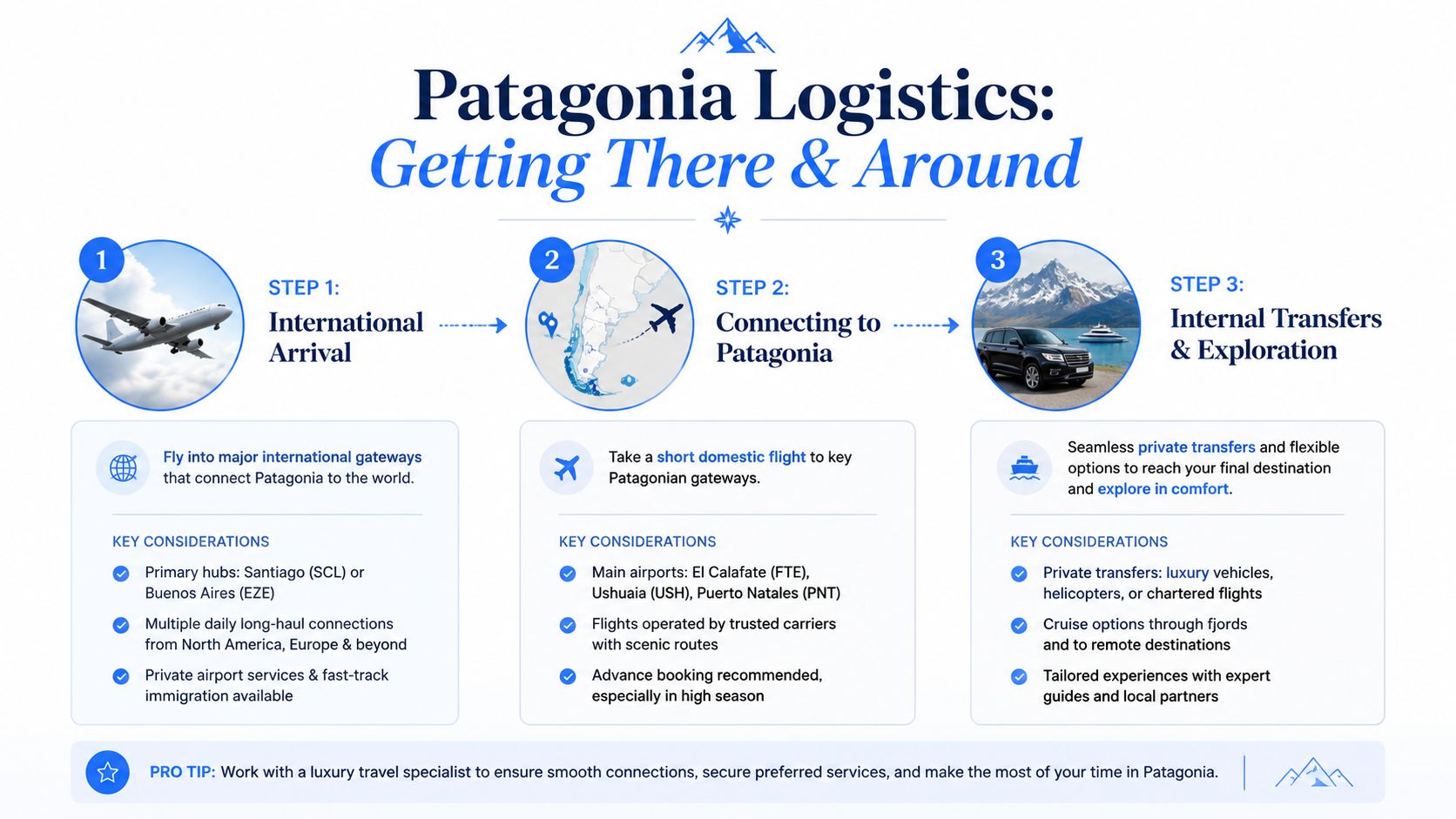
The flight pattern
Most international arrivals route through major South American gateways before connecting south into Patagonia. From there, the trip usually branches toward airports serving places like Puerto Natales, El Calafate, or Ushuaia.
That sounds straightforward. It isn't always.
Schedules can force overnight timing decisions. Baggage coordination matters when your trip includes technical gear. Airport choices affect how much road time you'll absorb later. Good planning reduces friction before the journey even begins.
The ground reality
Once you're in Patagonia, roads matter. A lot.
According to Worldly Adventurer's Patagonia packing and planning guide, the region includes significant ripio, or gravel road sections, which require reduced driving speeds because of flying stones and the risk of cattle collisions. The same source notes that fuel gaps outside major cities mean you should top up whenever possible, and rental agencies may restrict Argentina border crossings without explicit approval.
That's exactly why I prefer vetted private transfers and well-managed local arrangements over casual improvisation. It's not about drama. It's about protecting the trip from preventable friction.
What tends to go wrong without coordination
- Mismatched airport choices that create long, draining transfer days
- Border paperwork issues that slow or derail a cross-country route
- Self-drive assumptions that ignore fuel planning or road conditions
- Loose transfer timing that chips away at lodge time and key excursions
Patagonia rewards travelers who outsource the puzzle instead of trying to solve it on vacation.
For luxury travelers, transport should feel deliberate. Private drivers who know the roads. Timed transfers that respect daylight and weather. Domestic flights selected for routing logic, not just price. That's how you preserve the feeling that the trip is expansive, not operational.
Packing and Preparing for Your Adventure
Patagonia punishes bad packing faster than most destinations. If your gear is wrong, you'll feel it by breakfast. Wind, fast weather shifts, strong sun, and rugged trails don't care how beautiful your suite is.
That doesn't mean you need to pack like you're heading into survival mode. It means every item should earn its place.
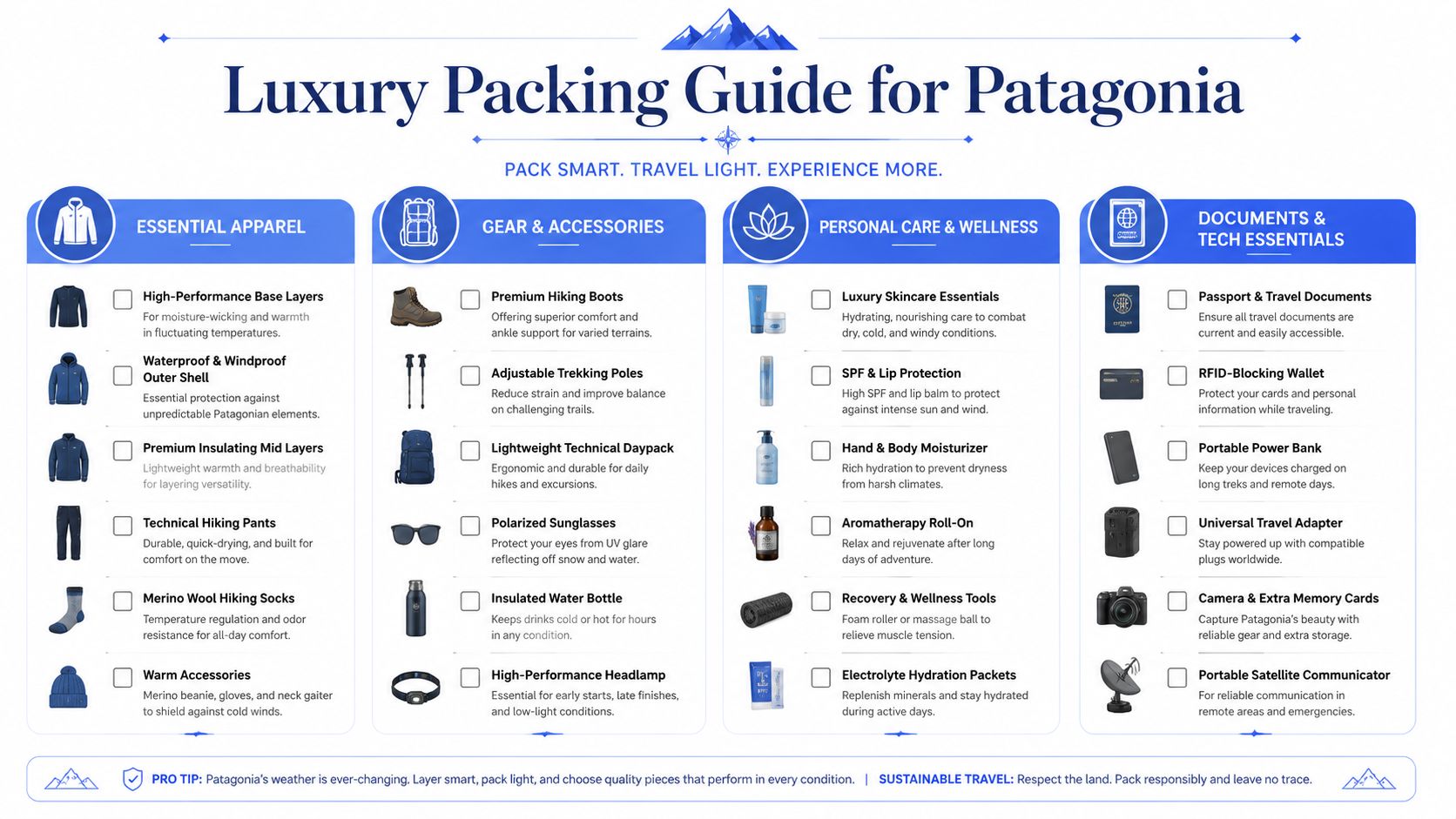
What matters most
The right strategy is layering. Not one heroic jacket. Not bulky single-purpose pieces. Layers.
For full camping gear on multi-day treks, a 60-litre rucksack is the optimal size, while a 40-litre pack is suitable only for day hikes or refugio stays, according to Worldly Adventurer's Patagonia packing list. The same source is equally clear that a layered system, including a windproof jacket and durable hiking shoes, is essential for comfort and safety in Patagonia's unpredictable conditions.
That's the standard I use. If a client is lodge-based, packing can stay more efficient. If the trip includes serious trail time, capacity and technical quality matter far more than aesthetics.
My packing priorities
- Outerwear first: Your shell should handle wind and wet conditions without fuss. Patagonia is not the place for fashion-forward compromise.
- Shoes before outfits: Broken-in hiking shoes or boots matter more than anything else you wear below the neck.
- Sun protection always: The light can be intense, even when temperatures feel cool.
- Trekking support: Poles are worth it on steeper trails and long descents.
- Pack by trip style: Lodge-based travelers need less volume. Multi-day trekkers need room for real gear, not wishful editing.
If Antarctica is part of the broader journey, my Antarctica cruise packing list is a useful companion for the expedition side of the equation.
Preparation beyond your suitcase
A well-run trip also includes sensible risk awareness. I plan with vetted local partners, drivers, guides, and properties because that supports a high service standard and smoother execution. It does not remove uncertainty, and no advisor should pretend otherwise.
If safety is a concern, check official government travel advisories and local guidance before departure. Conditions can change anywhere, and situational awareness still matters whether you're in a major city or on a remote trail.
Bring fewer things. Bring better things.
That advice works especially well in Patagonia.
Budgeting and Booking Your Bespoke Journey
Luxury Patagonia travel is expensive. It should be. The region is remote, operationally complex, and heavily dependent on timing, transport, and specialized local execution.
For tailor-made luxury Patagonia trips, expect daily costs from $400 to over $1,000 per person, covering private transport, premier eco-lodges, and guided experiences, based on Quasar Expeditions' Patagonia pricing guidance. That's a useful baseline for travelers considering a custom journey rather than a standard hotel-and-transfer arrangement.
Where the investment goes
The premium is rarely about one flashy line item. It's the sum of what makes the trip run well.
- Private transport: Critical in a region where distances are long and transitions affect the quality of each day
- Top lodges: The best properties combine location, service, and operational reliability
- Guiding: The right guide changes the experience from scenic to meaningful
- Advance securing of space: High-demand rooms and signature experiences don't wait
This is also why lead time matters. The best Patagonia trip planning starts early, particularly if your trip falls in the busiest travel window or includes permit-sensitive trekking. Waiting too long means you're no longer choosing the best options. You're choosing what's left.
If you're mapping out the broader financial side of a major trip, this essential hiking gear checklist is helpful for thinking through gear categories, and I also like practical budgeting frameworks such as custom trip planning support when travelers want the logistics and investment aligned from the start.
If Patagonia is on your list, the smartest move is to begin planning before the destination starts feeling urgent. That's when you have the most control over pacing, access, and overall quality.
For more travel inspiration and planning insight, join the newsletter here.
Frequently Asked Questions About Patagonia Travel
| Question | Answer |
|---|---|
| Is Patagonia a good fit for a honeymoon or anniversary trip? | Yes, if you want a milestone trip with drama, privacy, and meaningful adventure rather than a fly-and-flop beach week. The key is balancing active days with exceptional lodges and enough downtime. |
| Should I do Chile, Argentina, or both? | Both can be wonderful, but not by default. If your schedule is limited, choose the side that best matches your travel style instead of trying to collect countries. |
| Do I need to be an intense hiker to enjoy Patagonia? | No. Many travelers experience Patagonia beautifully through guided scenic excursions, softer walks, glacier viewing, wildlife outings, and lodge-based exploration. |
| How far in advance should I start planning? | Earlier is better, especially for top properties and high-demand travel windows. Patagonia rewards travelers who lock in the right pieces before availability tightens. |
| What if I'm still saving for a bucket-list trip like this? | That's sensible. A structured approach helps. If you want a practical framework, Koru's vacation savings guide offers a useful way to think about building toward a major trip intentionally. |
If you're ready to stop researching and start designing a Patagonia journey that fits your travel style, I'd love to help. Explore Effortlessly plans bespoke, high-touch trips for clients nationwide through virtual consultations, handling the complex logistics, curated accommodations, and smooth flow that this destination demands. Plan my luxury trip through the contact page.
Author Bio
Hi, I'm Karrah, owner, founder, and lead travel advisor at Explore Effortlessly, a luxury award winning travel agency based in Miami.
I specialize in designing bespoke, high touch itineraries to bucket list destinations around the world. Every trip is curated with intention, insight, and efficient logistics from start to finish.
From luxury cruises and private villas to honeymoons, safaris, and once in a lifetime journeys, my role is to simplify the planning process while elevating every detail.