Your calendar is full. Your inbox is louder than it should be. You've probably done the polished resort weekend, the work trip with one decent dinner, the “vacation” that somehow still required you to coordinate everyone else's preferences.
At a certain point, that stops feeling rewarding.
What many high-performing professionals want isn't more downtime. It's a reset with substance. Something that asks more of you than a pool chair but gives more back than another overpacked itinerary. That's where solo adventure travel comes in, and no, I don't mean hostel bunks, chaotic transfers, or figuring it out as you go.
I mean a well-designed journey that gives you room to think, move, breathe, and come home sharper than when you left.
I'm Karrah, a luxury travel advisor, Circle of Excellence Advisor and CLIA Accredited Cruise Counselor, and this is the version of solo adventure travel I recommend to busy professionals who want the trip to feel expansive, not exhausting.
The Call for Something More Than a Vacation
There's a specific kind of traveler I see all the time. She's successful, capable, and completely over group decision-making. He's hit the point where “someday” has started to sound like a bad strategy. Both want a trip that feels personal, but neither has time to spend nights comparing routes, room categories, transfer options, and cancellation terms.
That's usually the moment solo adventure travel starts making sense.

The appeal isn't just independence. It's precision. You get to build a trip around your own energy, your own appetite for challenge, and your own definition of luxury. That might mean hiking by day and returning to a refined wilderness lodge. It might mean an expedition with expert guides, excellent food, and enough structure to feel supported without feeling managed.
If you're still deciding whether going solo is the right move, this guide on the benefits of solo travel is a smart place to start.
Solo travel is often the first trip people take purely for themselves. That's exactly why it can be so powerful.
The professionals who do this well aren't chasing chaos. They're choosing clarity. They want fewer compromises, cleaner logistics, and experiences that don't get diluted by other people's schedules. I agree with that instinct. A smart solo adventure isn't indulgent. It's efficient, highly memorable, and often far more restorative than a conventional vacation.
Redefining Solo Adventure for the Modern Professional
The old backpacker version of solo travel is outdated. For my clients, solo adventure travel means curated independence. You move through the world on your own terms, but with thoughtful planning behind every handoff, every arrival, and every decision point.
That distinction matters.
Solo doesn't mean stripped down
A lot of travelers hesitate because they assume “adventure” means discomfort. It doesn't have to. A strong solo itinerary can include private transfers, beautifully located lodges, expert local guides, smart pacing, and enough unscheduled time to absorb where you are.
That's why this category is growing with professionals. Travelers aged 25 to 40 account for 44.2% of total solo travel market revenue, and female solo travelers captured 54.6% of industry revenue, according to Grand View Research's solo travel market report. That tells me the market has already moved well beyond the gap-year stereotype.
What these travelers want is obvious. They want freedom without friction.
The real luxury is control
When you travel solo, you eliminate the most common source of trip compromise. Other people.
You don't have to negotiate wake-up times, activity levels, meal choices, or whether this is a museum day or a boat day. You can stay longer where it feels right and skip what doesn't. That level of control is rare in daily life, especially for people whose careers require constant responsiveness.
Here's what solo adventure travel does especially well for busy professionals:
- It restores decision-making autonomy so the trip feels like yours from start to finish.
- It creates space for personal challenge through hiking, wildlife, sailing, diving, expedition cruising, or cultural immersion.
- It sharpens the experience because you're not splitting your attention between the destination and someone else's expectations.
Advisor perspective: The best solo trips aren't packed to the edge. They leave room for weather shifts, energy changes, and the occasional spontaneous yes.
Risk needs management, not denial
I never recommend pretending risk doesn't exist. That's amateur planning.
Adventure travel, especially in remote or unfamiliar destinations, requires good judgment. The answer isn't to avoid the trip. The answer is to build it intelligently with vetted guides, sensible routing, realistic activity sequencing, and trusted in-destination partners. You should also check official government travel advisories and local guidance before departure, because conditions can change anywhere.
That's the luxury angle people often miss. Luxury isn't excess. It's thoughtful design. It's the difference between “I hope this goes smoothly” and “this was arranged properly.”
Curated Destinations for the Discerning Solo Traveler
The best solo adventure destinations aren't just beautiful. They match your temperament, time constraints, and tolerance for complexity. I don't start with a list of trendy places. I start with the kind of experience you want to have.
If you're exploring options, this roundup of best solo travel destinations is a useful companion to the planning decisions below.
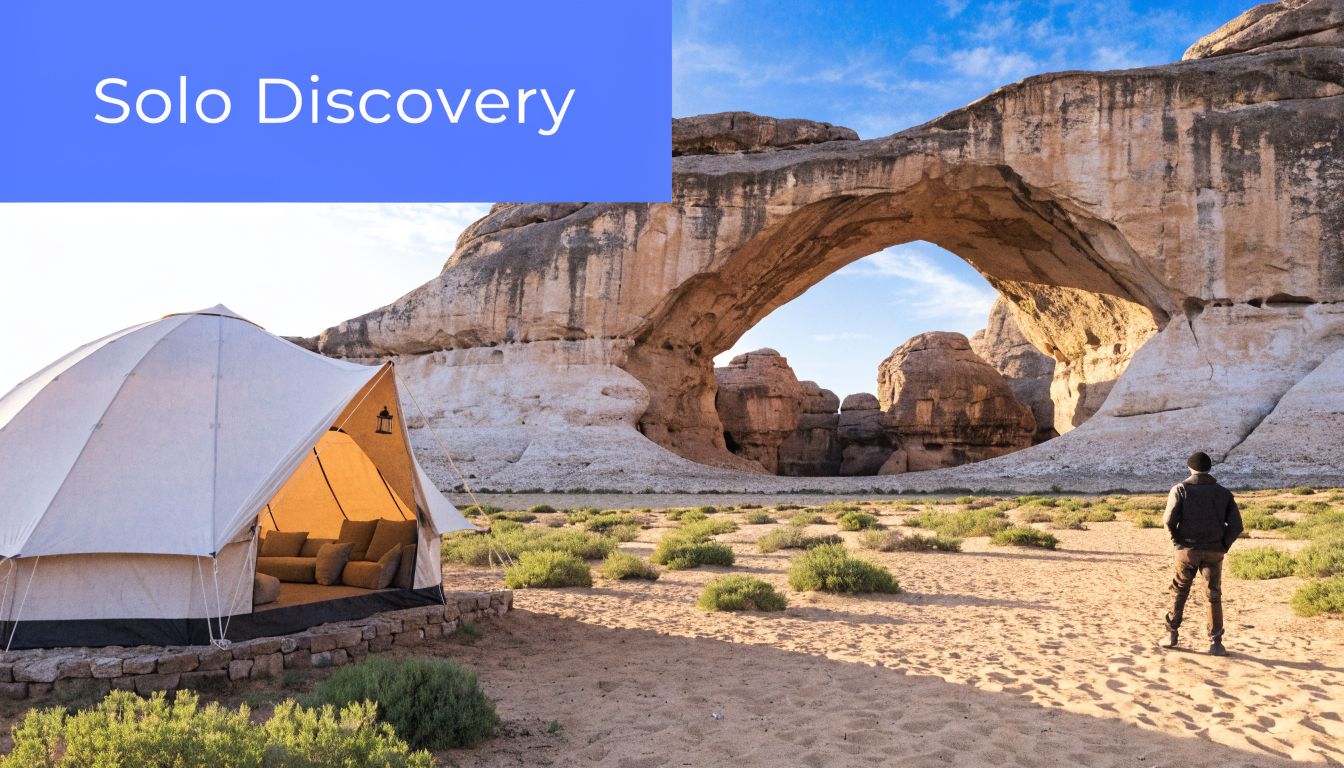
The remote wilderness lodge
This is for the traveler who wants silence, scenery, and physical movement. Think Patagonia, the Canadian Rockies, or a polished desert camp where the setting feels cinematic and the service feels calm.
These trips work well solo because the day naturally has shape. Guided hikes, wildlife viewing, horseback riding, or scenic drives give you engagement without forcing constant social interaction.
A few practical notes matter here:
- Shoulder season often wins if you want fewer crowds and a quieter atmosphere.
- Private transfers are worth it when distances are long and arrivals are staggered.
- One-base itineraries can be smarter than lodge-hopping if your real goal is decompression.
Situational awareness matters everywhere, including at high-end properties. I recommend destinations and partners based on service standards and planning quality, not blanket safety promises.
The cultural deep-dive
Some solo travelers want movement, but not necessarily adrenaline. Japan fits this beautifully. So do destinations where ritual, craftsmanship, food, and design become part of the journey.
This style of solo adventure works because you can have structure without heaviness. A private guide one day. Independent exploration the next. A ryokan stay, a temple visit, a cooking experience, or a rail journey that feels elegant rather than exhausting.
A good solo itinerary alternates intensity and ease. If every day requires effort, the trip starts to feel like work.
The mistake I see most often is overloading the route. Busy professionals assume they need to “maximize” the time away. Usually, the opposite is true. Fewer stops create a better trip.
The elegant expedition
This is the boldest version of solo adventure travel. Antarctica and the Galápagos sit firmly in this category, along with select expedition-style sailings and remote wildlife-focused journeys.
These trips appeal to professionals who want scale, perspective, and the kind of stories that don't sound interchangeable with everyone else's vacation. They also require disciplined planning. Cabin selection, flight timing, pre-cruise hotel strategy, activity tolerance, and medical considerations all matter more here than they do on a simple city break.
Here is a brief perspective on the matter:
| Destination style | Best for | Main planning priority |
|---|---|---|
| Remote wilderness lodge | Reset and reflection | Transfers and pacing |
| Cultural deep-dive | Depth and autonomy | Route simplicity |
| Elegant expedition | Big adventure with structure | Timing and logistics |
If you want solo adventure travel to feel luxurious, choose a destination that supports your energy instead of testing it at every step.
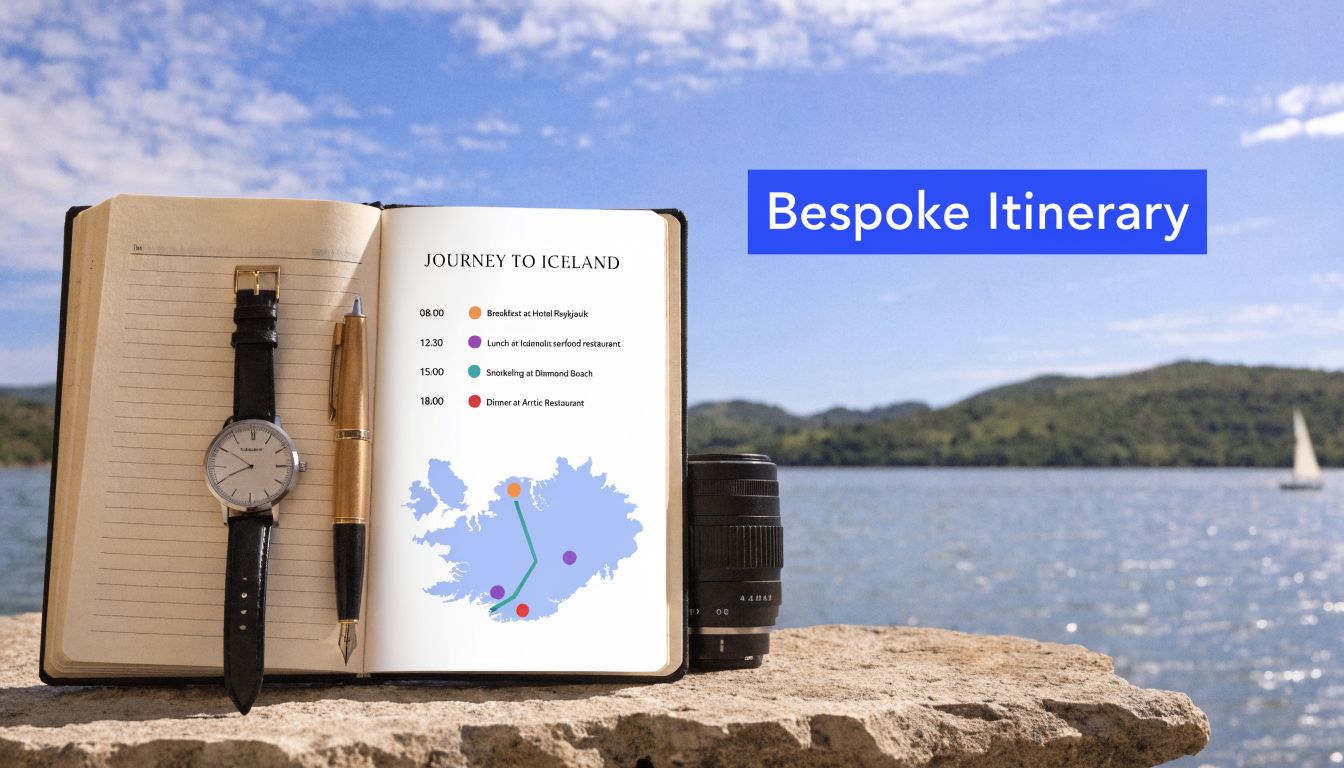
From Dream to Itinerary What a Bespoke Journey Looks Like
Travelers often don't struggle with dreaming up the trip. They struggle with making the trip work. That's where itinerary design changes everything.
A strong solo adventure itinerary feels smooth because someone has already solved the friction points. Transfers line up. Activity days make sense. The room category fits the experience. Downtime is intentional, not accidental.
A week of rewilding in Costa Rica
This is a great first solo adventure for a professional who wants nature, comfort, and momentum.
The trip might begin with a polished arrival experience and a private transfer into a lush inland setting. You spend the first days easing in. Guided volcano walks, hanging bridges, maybe zip-lining if you want that rush, balanced by a private villa or suite with its own outdoor space. Good solo travel needs contrast. Adrenaline in the morning. Stillness by late afternoon.
Then I'd shift the mood. A few nights by the coast or in the rainforest with a slower tempo, perhaps wildlife excursions, a spa treatment, or a private yoga session on-property. You're active, but not overprogrammed. That's the sweet spot.
A bold safari with zero logistical drag
Safari is one of the best luxury solo adventures if it's planned correctly.
You're not meant to piece together bush flights, road transfers, lodge styles, and game-viewing rhythms on your own after a workday. A bespoke safari should handle those details cleanly. That means selecting camps that suit solo travelers well, arranging smooth transitions between regions, and ensuring the experience feels immersive rather than operational.
The difference is dramatic. Instead of worrying about baggage limits, timing, or whether a remote handoff will work, you arrive and move through the journey with confidence. Your focus stays where it should. On the wildlife, the scenery, and the fact that you did this for yourself.
The rising favorite of luxury-minded solo travelers
Not every adventure has to happen on land. A 2026 CLIA Outlook report noted a 37% surge in eco-certified solo cruise bookings, as described in this piece on sustainable luxury cruise options for solo explorers. That trend makes sense to me.
For a first solo adventure, an upscale cruise or expedition-style sailing can be a smart entry point. You get a private space of your own, curated social opportunities when you want them, and a strong logistical backbone. For the right traveler, a river journey through Southeast Asia or a refined ocean voyage can deliver adventure with less operational stress than a fully land-based multi-stop itinerary.
If you want to see what this level of personalization looks like in practice, explore these bespoke travel experiences.
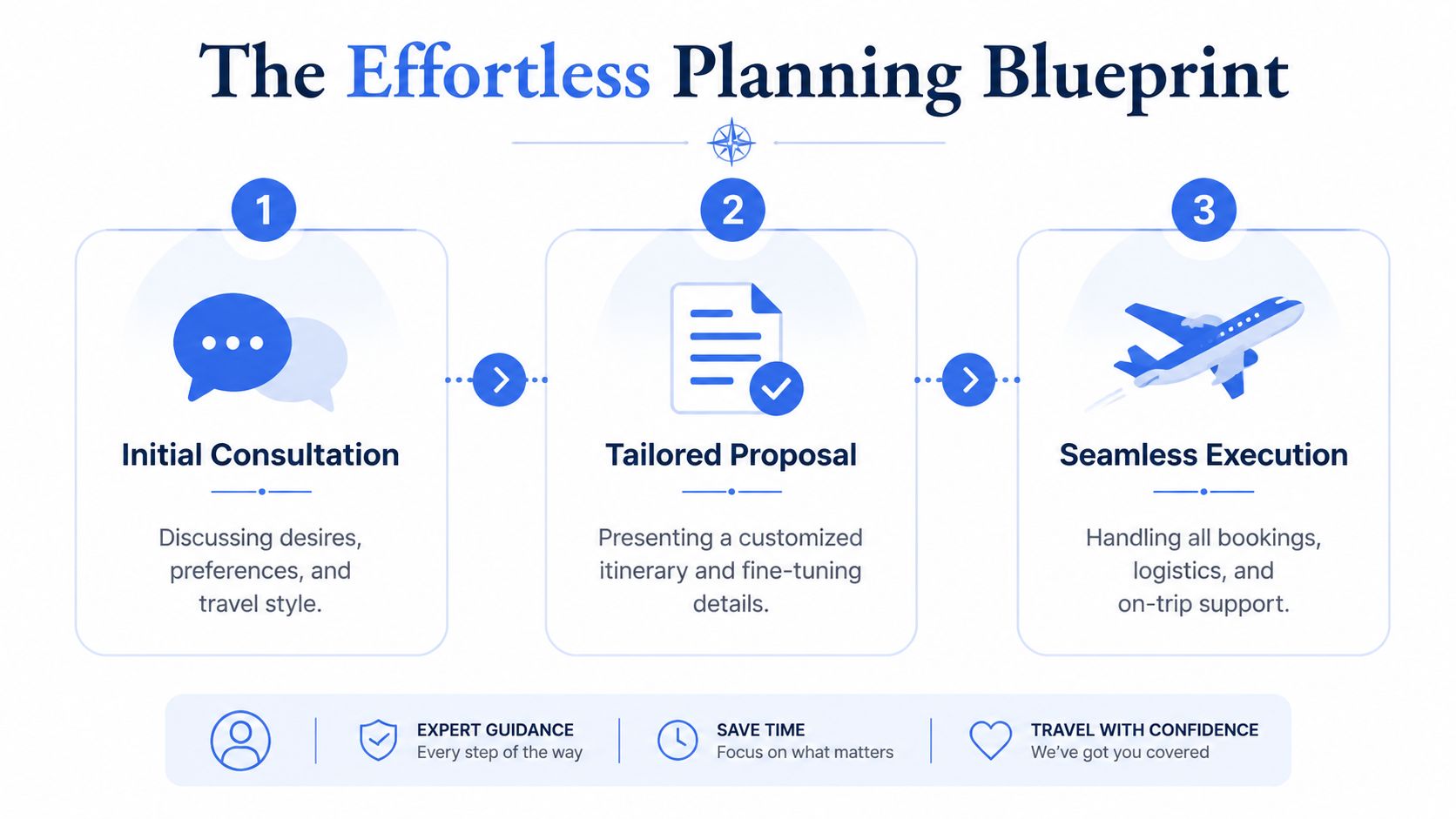
The Effortless Planning Blueprint for Busy People
Busy professionals don't need more travel content. They need a clean decision process.
That starts with accepting one simple truth. Time is your most expensive travel currency. If a trip requires hours of research, second-guessing, and patchwork bookings, it's already costing more than it should.
Budget for ease, not just the room rate
The first budgeting mistake is focusing too narrowly on nightly cost.
For solo adventure travel, value comes from the full structure of the trip. Private drivers, smart flight timing, well-chosen guides, pre-arranged experiences, and properties that fit your pace all matter more than shaving down one line item. Cheap logistics get expensive fast when they waste your energy.
I tell clients to budget around outcomes:
- Ease of movement through private transfers and realistic connections
- Experience quality through better guides and better located stays
- Recovery time through pacing that doesn't leave you depleted
That's how luxury earns its place. Not through excess, but through reduced friction.
Pack for transitions
Most solo travelers overpack because they're planning for every possible version of themselves. Don't.
Pack for the actual structure of the trip. If you're moving between climates or activity types, build around a tight wardrobe system, one reliable day bag, and footwear that can do more than one job. If the itinerary includes bush flights, expedition landings, or rail transfers, luggage strategy matters even more.
Use this quick framework:
- Base layer of neutrals so everything works together
- One statement piece for dinners or city evenings
- Activity gear that earns its place instead of “just in case” items
- A document system that keeps passports, insurance details, and transfer instructions accessible
The point of packing well isn't aesthetics. It's mobility.
Pack so you can manage your own things without frustration. Independence feels better when your luggage isn't fighting you.
Build discreet safety into the design
Discerning travelers do not want performative safety theater. They want smart support.
That lines up with current demand. A recent survey found that 68% of high-income solo travelers prioritize discreet safety enhancements such as vetted local guides and 24/7 on-the-ground support contacts, according to this report on off-the-beaten-path solo travel considerations.
For me, that translates into practical planning choices:
- Use vetted local partners for guiding, driving, and destination-specific logistics.
- Avoid unnecessarily exposed routing when late arrivals or complex handoffs can be improved.
- Require travel insurance that fits the destination and trip style.
- Share the right support contacts before departure so you know who handles what if something shifts.
That doesn't remove risk. Nothing does. But it does make the trip more resilient, and that's exactly what a first solo adventure should be.
Your Partner in Adventure The Explore Effortlessly Difference
You do not need another browser tab open at 11:30 p.m. comparing guides, transfer options, room categories, and cancellation policies for a trip you barely have time to plan.
You need a clear point of view, a well-built itinerary, and someone who knows which details deserve attention before they become problems during the trip. That is the difference between booking solo travel and doing it well.
What it's like to work with me
I start by getting specific. I want to know how you travel under pressure, how active you want to be, what level of privacy feels right, and where comfort makes the biggest difference for you. A solo adventure should stretch you in the right ways, not waste your energy on avoidable friction.
From there, I design the trip around your schedule and decision-making style. I handle the reservations, coordinate the suppliers, and shape the pacing so the experience feels polished from the start. That can include hotels, camps, expedition or cruise elements, private drivers, guided experiences, and the behind-the-scenes logistics that busy professionals should not have to piece together on their own.
My clients also benefit from established partner relationships that can include VIP amenities or added value. Those perks are nice. The core value is judgment. You save time, avoid weak-fit choices, and leave with a trip that feels considered from every angle.
If your trip includes diving, I also make sure the operator, conditions, and pace fit your actual experience level, not your aspirational one. Practical resources such as these dive tour common questions can help set expectations before we finalize the right fit.
Nationwide service with a high-touch process
I work with clients nationwide through virtual consultations, so the process is personal without requiring you to be local.
My role is to reduce decision fatigue and turn a big idea into a trip you can step into with confidence. Before departure, I coordinate the major moving parts and confirm that the plan makes sense as a whole. On the ground, trusted destination partners deliver the local support, while you get to focus on the experience itself.
That is how solo adventure travel becomes realistic for a busy professional. It stops feeling like a second job and starts feeling like the kind of journey you will be glad you did now, not someday.
Frequently Asked Questions About Solo Adventure Travel
| Question | Answer |
|---|---|
| Is solo adventure travel a good idea for a first solo trip? | Yes, if the trip is designed with the right level of support. I usually recommend a destination with strong infrastructure, clear logistics, and a balanced mix of guided experiences and private downtime. |
| Do I have to choose something extreme for it to count as adventure? | Not at all. Adventure can mean expedition cruising, guided wildlife viewing, hiking, diving, sailing, or deep cultural immersion. The key is that the trip stretches you a bit and feels meaningful, not that it looks dramatic on social media. |
| Is solo travel lonely? | Usually, no. A well-built itinerary gives you control over when you want privacy and when you want interaction. Many solo travelers find the experience more connecting than isolating because they're more present. |
| What's the smartest first step if I'm short on time? | Decide on your travel window, ideal climate, and your tolerance for movement between destinations. Those three factors eliminate a lot of bad-fit options quickly. |
| How should I think about solo travel if I want to dive? | Diving can be an excellent solo adventure if conditions, operator quality, and your certification level align. For destination-specific preparation, I like practical resources such as these dive tour common questions, which give a useful sense of what travelers should clarify before getting in the water. |
| Do I need travel insurance for a luxury solo adventure? | Yes. For remote, expeditionary, or multi-stop trips, I consider it essential. Coverage should fit the destination, activity level, and overall trip complexity. |
The best first solo adventure is the one you'll actually enjoy, not the one that sounds most impressive at a dinner party.
Hi, I'm Karrah, owner, founder, and lead travel advisor at Explore Effortlessly, a luxury award winning travel agency based in Miami.
I specialize in designing bespoke, high touch itineraries to bucket list destinations around the world. Every trip is curated with intention, insight, and smooth logistics from start to finish.
From luxury cruises and private villas to honeymoons, safaris, and once in a lifetime journeys, my role is to simplify the planning process while elevating every detail.
Join the newsletter for more destination insight, planning advice, and luxury travel inspiration at Explore Effortlessly updates.
Ready to trade your to-do list for a bucket list? Plan my luxury trip with Explore Effortlessly.