You’re probably staring at a map of Venice right now, wondering how a city this beautiful can also feel so inconvenient. That tension is real. Two days sounds romantic until you add crowds around San Marco, confusing alleyways, boat logistics, and the risk of wasting prime time on lines instead of experiences.
That’s exactly why most rushed Venice trips disappoint. People treat the city like a checklist, then spend half their visit backtracking, waiting, and overpaying for the wrong things.
A smart two days in venice needs structure. Not rigid, tour-bus structure. Strategic structure. You want iconic Venice, but you also want the version that still feels atmospheric, intimate, and worth the airfare.
Your Effortless 48 Hours in Venice
You land with 48 hours to work with, and Venice will either feel impossibly glamorous or maddeningly inefficient. The difference comes down to choices made before you start walking.
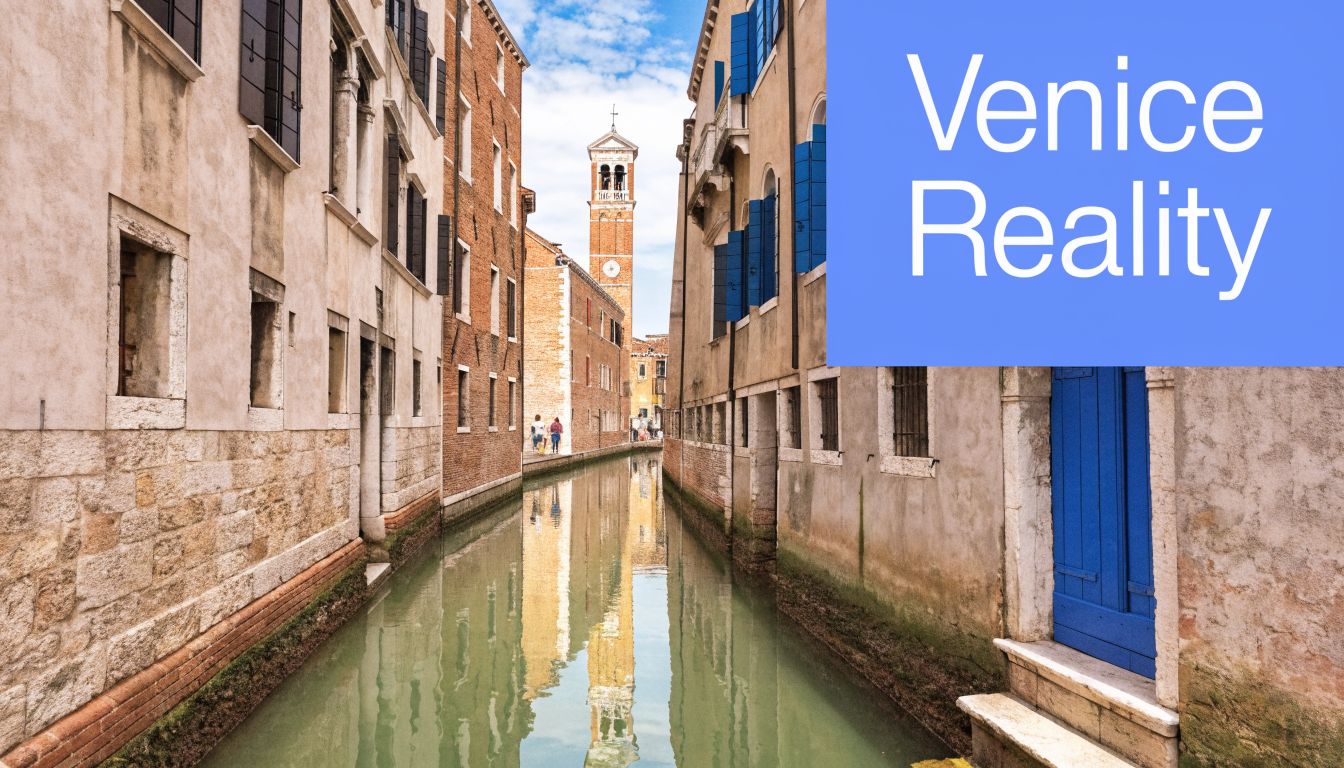
A strong two-day plan is not about cramming in more stops. It is about protecting your best hours. I would structure Venice with one focused day around its grand set pieces, then a second day built around places that still feel lived-in, textured, and worth lingering in. That balance gives you the Venice you came for, without spending the entire trip in queues and crowded lanes.
My recommendation is straightforward. Give San Marco and the Grand Canal their proper place, but do them at the right times and on the right route. Then shift your attention to quieter pockets, island craftsmanship, and meals that feel chosen rather than convenient. That is how a short stay starts to feel considered instead of rushed. If you enjoy that quieter approach, I would also explore hidden gem travel destinations for luxury travelers when planning the next trip.
What I prioritize for clients on a short Venice trip
- Reserve the headline sites before you arrive: Venice rewards planning and punishes last-minute decisions at the wrong attractions.
- Stay in the historic center: Your hotel should reduce transit friction, not create it.
- Use boats with purpose: Save them for high-value moves and views, not every transfer.
- Build in one private or specialist-led experience: A well-connected guide, a private boat, or a serious cicchetti crawl changes the tone of the trip.
- Protect your feet from day one: Venice is beautiful and physically demanding, so choose footwear for European cobblestones before you pack for style alone.
Venice rewards precision. Hotel placement matters. Reservation timing matters. Even flight design matters if you are pairing Venice with another Italian stop, which is why I suggest reviewing the best way to book multi-city flights before you lock in your route.
My planning approach starts with friction points first, then layers in beauty. Arrival flow. Hotel position. Monument entry times. Boat strategy. Lunch reservations. Evening pacing. That is what gives Venice its polished, easy feel, and it is exactly why an advisor-led plan outperforms a generic checklist every time.
Essential Venice Logistics for a Seamless Stay
Venice rewards people who respect the mechanics of the city. Everyone else ends up dragging bags over bridges, boarding the wrong boat, and wondering why their “easy weekend” feels like a relay race.
Arrival decisions that shape the whole trip
If you’re staying at a top hotel on the canals, I strongly prefer arranging arrival so the transfer feels like an entrance, not an errand. A private water taxi from the airport creates exactly the kind of first impression Venice should deliver. You glide in, step off near your hotel, and skip the mental clutter of navigating a new city while tired.
Public options exist, of course, and they’re workable if budget is the priority. But for a short stay, your most valuable asset is time. Two days in venice is not the moment to play amateur transport strategist after a long-haul flight.
Know when to use vaporetto and when not to
Venice runs on the vaporetto, and you do need to understand it. A single journey costs €9.50, and it’s the primary mass-transit option for longer distances and island connections, according to Very Hungry Nomads’ Venice transport overview. That same source notes that a round trip to Murano or Burano can take up to 2 to 3 hours including transit time, which is exactly why island day planning goes wrong for so many travelers.
Use the vaporetto for practical point-to-point movement when timing is flexible. Don’t use it for every decision just because it’s available.
A better split looks like this:
| Transit choice | Best use | My view |
|---|---|---|
| Vaporetto | Longer rides, island connections, scenic transit | Useful, but slow if overused |
| Private water taxi | Arrival, departure, select premium transfers | Worth it when time matters |
| Traghetto | Quick Grand Canal crossing | Clever and efficient |
| Walking | Neighborhood discovery | Essential, if your shoes cooperate |
For quick crossings, the traghetto is one of the few local tricks that still feels practical. It costs €2 and gives you an authentic standing gondola ferry ride across the Grand Canal. It’s not a substitute for a private gondola, but it is a very smart way to move.
Venice is not a city where “we’ll figure it out when we get there” works well for busy travelers.
What most people underestimate
Venice is physically demanding in small, annoying ways. Bridges, stone lanes, sudden turns, no easy car access. Bring proper footwear for European cobblestones, because elegant suffering is still suffering.
If you’re pairing Venice with other stops, flight sequencing matters too. Open-jaw and multi-city routing often makes the whole Italy itinerary cleaner than forcing a round-trip structure. I break down the logic in my guide to the best way to book multi-city flights.
Day 1 Grand Canals and Hidden Quarters
Day one should feel sharp, not frantic. You’re tackling the icons, but you’re doing it with timing that protects your energy for later. That’s the difference between seeing Venice and enjoying it.
Morning in San Marco done properly
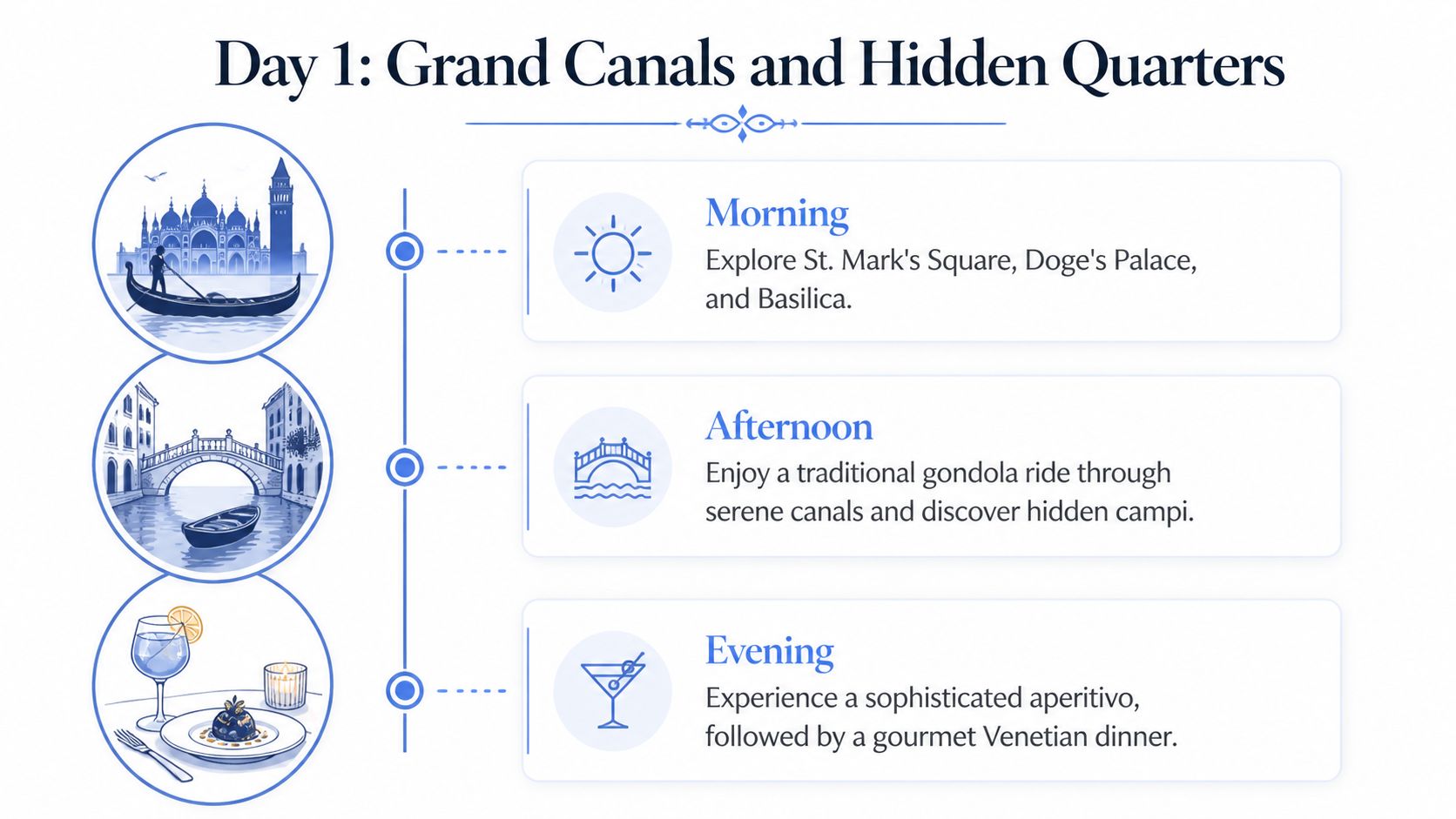
Start early and go straight to St. Mark’s area before the city fully wakes up into its daytime version. Most travelers know they want the basilica and Doge’s Palace. Fewer realize that St. Mark’s Basilica now requires advance booking, and without a pre-booked slot or private tour, wait times can become a serious waste of your morning, as noted in Careergappers’ Venice itinerary analysis.
That’s why I’m opinionated here. Do not leave St. Mark’s to chance. Secure a timed entry or arrange private access. If available for your dates, an exclusive evening or after-hours format is often the most impactful way to see it. Less noise, less compression, more actual awe.
Pair the basilica with the Doge’s Palace while you’re already in position. It keeps the morning efficient and prevents a return later when the area is more congested.
Afternoon with better texture
After lunch, leave the hard crowds behind. Shift toward Dorsoduro, where Venice immediately feels more graceful. The pace changes. The edges soften. You can hear the city again.
This is the moment for art and wandering, not more queueing. The Peggy Guggenheim Collection fits beautifully into this slot, especially for travelers who want a cultured counterweight to the ceremonial grandeur of San Marco. Afterward, walk the smaller lanes and pause in a quiet campo rather than forcing another “must-see.”
A well-run cicchetti stop belongs here too. Not a frantic bar crawl. A polished tasting route with thoughtful wine and a guide who knows where quality still outweighs location.
The best Venice itineraries change tempo on purpose. Grand in the morning, intimate in the afternoon, romantic by evening.
If you want a broader look at how I structure neighborhood flow and sightseeing priorities, my guide on what to do in Venice goes deeper.
Evening that earns the fantasy
Visitors often make Venice feel tacky. They book a gondola in the most crowded corridor at the busiest hour, then wonder why the experience felt performative.
A gondola is worth doing. But route selection matters. Timing matters. The launch point matters. I prefer sunset or early evening, away from the densest congestion, where the canals feel quieter and the experience regains some elegance.
For dinner, book one of the tables people usually fail to secure because they waited too long or relied on luck. In Venice, a top reservation is part planning exercise, part access game. A short trip deserves at least one meal that feels celebratory, not improvised.
A strong first day should leave you impressed, fed, and not remotely exhausted. If you’ve done it right, you’ll still want to walk after dinner just to see the reflections on the water.
Day 2 Island Colors and Artistic Soul
Day two is where Venice gets interesting. The city stops performing for you, and starts revealing itself. You’ll move beyond the postcard core and into places that feel more layered, more specific, and frankly more memorable.
Morning on the lagoon
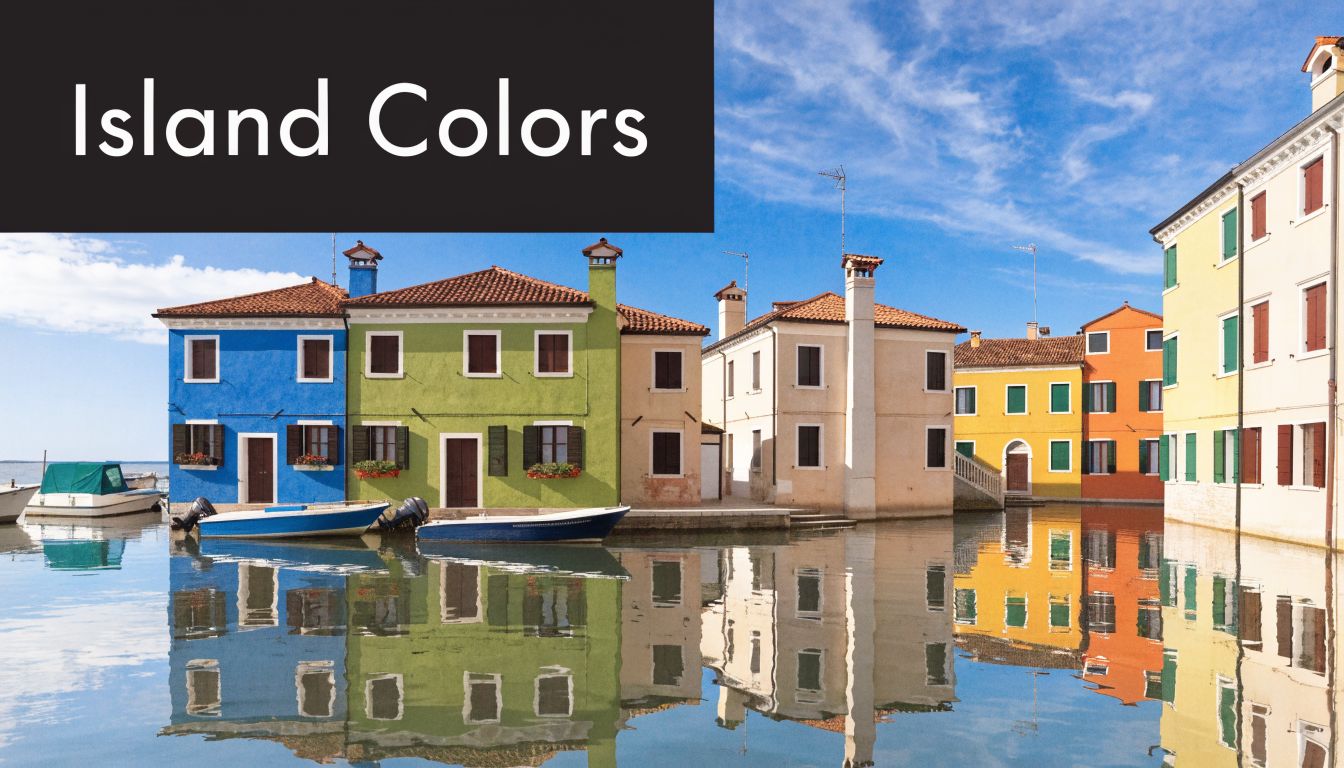
Murano and Burano deserve the morning, when the light is softer and your attention span is still intact. I prefer a private boat for this segment if the budget allows, because it removes the drag of waiting, crowding, and rigid public routing. It also lets you frame the experience around quality, not volume.
Murano is worth doing if you have access to the right artisan setting. Not a generic tourist demonstration. A proper introduction to glassmaking with context and craftsmanship. Burano brings a different pleasure, with its color, reflections, and cheerful visual rhythm. It’s photogenic, yes, but it can also feel calm if you don’t arrive in the thick of the rush.
The mistake is trying to cram too much into the islands. You don’t need to “conquer” the lagoon. You need a refined half-day that feels distinct from the city center.
Afternoon in Cannaregio
After lunch back in Venice, head to Cannaregio to slow everything down and trade spectacle for substance. The district has one of the city’s most rewarding atmospheres, especially if you want a side of Venice that still feels lived-in.
The Venetian Ghetto is essential here. It was established in 1516 as the world’s first ghetto, and by the 17th century, more than 5,000 residents lived within just 0.2 square kilometers, which led to buildings rising up to 8 stories high, according to Roaming Historian’s account of the Venetian Ghetto. A guided walk changes this from a quick pass-through into one of the most meaningful experiences in the city.
Venice is at its strongest when beauty and history sit in the same frame. Cannaregio does that better than almost anywhere.
This is also where independent travelers often lose time. Venice’s “just wander” advice sounds romantic, but in practice, the city’s layout can be maddening when you’re on the clock. In a neighborhood like Cannaregio, a strong private guide doesn’t just explain history. They remove friction and reveal details you’d never identify alone.
The right final evening
Your last dinner should feel conclusive. Not flashy for the sake of it, but confident. A canal-facing table works if the restaurant deserves the view. Otherwise, I’d take a better kitchen in a quieter setting over a mediocre room with water frontage.
For a final walk, keep it simple. Cross a few softly lit bridges, let the city empty out around you, and resist the urge to turn the evening into one more agenda item. Venice ends best when you stop chasing it.
Curated Stays and Unforgettable Dining
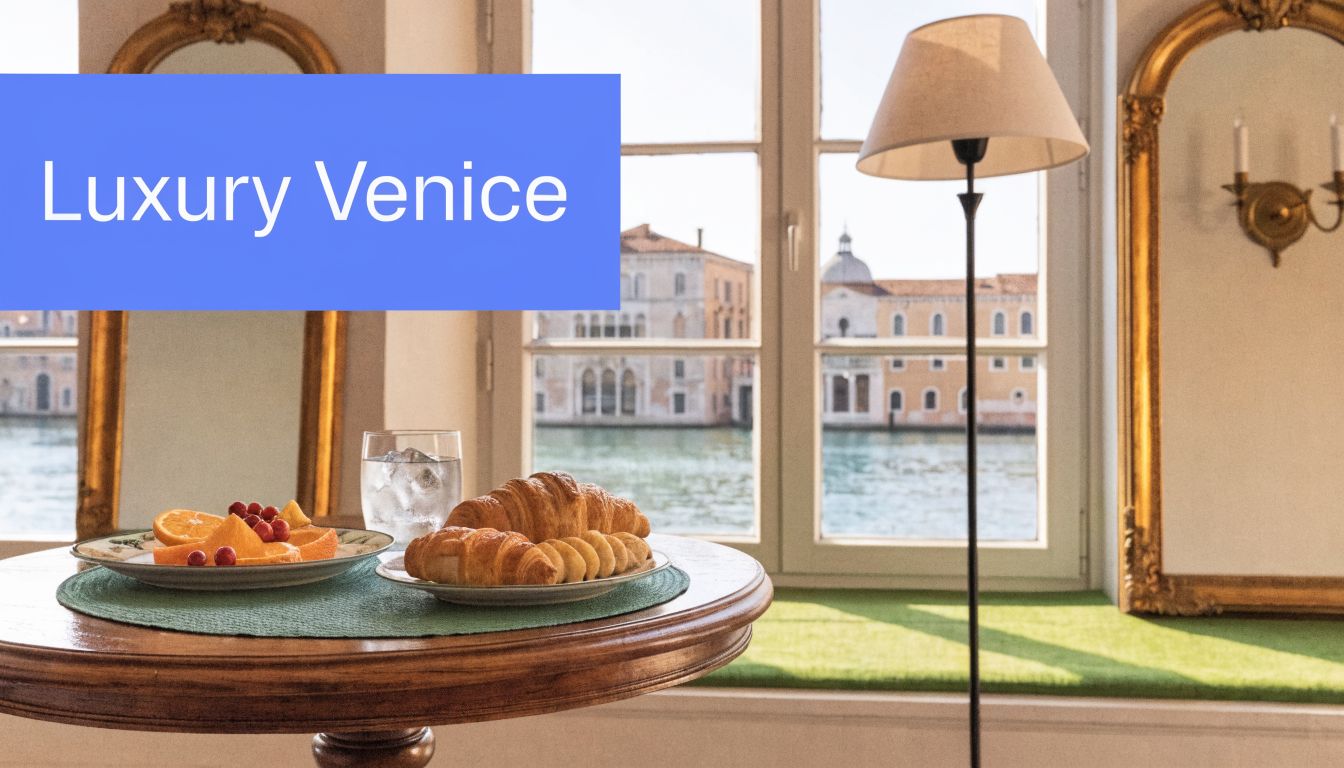
Hotel choice matters more in Venice than in many cities. The wrong hotel creates friction from the moment you arrive. The right one gives you atmosphere, efficient positioning, and the feeling that the city is opening gracefully instead of resisting you.
Where I’d place different clients
Aman Venice suits travelers who want privacy, design, and a quieter kind of glamour. It’s ideal for honeymooners, anniversary trips, and clients who care as much about mood as sightseeing.
The Gritti Palace works for people who want classic Venetian grandeur and a famously polished service style. If the dream is old-world Venice with serious presence, this is a strong match.
Belmond Hotel Cipriani is for clients who want breathing room and a more secluded feel, while still keeping the city within easy reach by boat. It’s especially attractive for travelers who don’t want to sleep in the middle of the busiest foot traffic.
The St. Regis Venice is often a smart fit for travelers who want a contemporary edge without losing a sense of place.
Dining needs the same level of curation
In Venice, restaurant planning can’t be an afterthought. High-demand tables book up. Overrated rooms coast on location. And a city this visited has no shortage of mediocre meals sold through excellent views.
My rule is simple:
- Secure one destination dinner: Make it elegant, memorable, and reservation-worthy.
- Balance it with one relaxed local meal: Venice shines at lower-key moments too.
- Use aperitivo intentionally: Don’t waste sunset on a forgettable bar.
- Match neighborhood to schedule: Convenience matters at the end of a long walking day.
Why advisor booking changes the stay
Professional planning becomes tangible through careful consideration of various elements. The hotel is only part of it. Room category strategy, arrival coordination, reservation timing, preferred partner amenities, and realistic pacing all shape the final experience.
I also help clients think beyond headline rates. My article on how to get better hotel rates explains why value in luxury travel often comes from the structure of the booking, not just the sticker price.
For travelers who want one point of coordination for flights, hotels, restaurant reservations, and private experiences, Explore Effortlessly handles those itinerary elements as part of custom trip design.
A luxury Venice trip should feel edited. Not crowded with expensive options, but sharpened down to the right ones.
Tailoring Your Perfect Venice Itinerary
Start with the main question. What kind of Venice do you want in 48 hours?
The right answer changes everything. A couple celebrating an anniversary should not follow the same plan as a family with younger children or a solo traveler who wants culture without wasted time between stops. Venice rewards precision. Get the pacing right, and the city feels intimate, cinematic, and surprisingly easy to handle. Get it wrong, and two days disappear into lines, backtracking, and overpriced filler.
For couples, I design the trip around privacy, timing, and access. Book a private mask-making workshop instead of another crowded museum slot. Choose a chef-led market visit near Rialto if you want lunch to feel personal rather than performative. If Venice is one stop on a longer northern Italy trip, continue into the Prosecco hills or the lakes only if the transfer fits cleanly. Forced add-ons weaken a short itinerary.
Families need structure with breathing room. A guide who knows how to keep children engaged matters more than a guide with the longest art history lecture. Gelato making, rowing demonstrations, and artisan studio visits usually work better than stacking churches and palaces back to back. Hotel location matters even more here. A beautiful address loses its appeal fast if every break requires a long walk over bridges.
Solo travelers do best with decisions made in advance. Venice is safe and very manageable, but it can be inefficient if you leave too much to chance. I recommend locking in airport arrival strategy, daily route logic, one or two strong dining choices, and any private guiding before you go. That preparation gives you freedom on the ground, not rigidity.
Season matters more in Venice than many travelers expect.
- Spring: Strong light, comfortable walking weather, and a good balance between energy and manageability.
- Summer: Best handled with early starts, long midday pauses, and evenings reserved for the city at its most atmospheric.
- Shoulder season: My top choice for clients who want style, substance, and fewer logistical headaches.
- Winter and holiday periods: Best for travelers who care about mood, cultural depth, and quiet corners more than warm-weather pleasures.
I’m a Circle of Excellence Advisor, Top 5 percent at Nexion, and a CLIA Accredited Cruise Counselor. I work with clients nationwide through virtual consultations, and I design each itinerary around priorities, pace, and the kind of access that turns a standard Venice visit into one that feels well judged.
If your version of Venice calls for different priorities, adjust boldly. Keep the icons, cut the filler, and build the two days around how you travel.
Two Days in Venice Your Questions Answered
Two days in Venice can feel polished and indulgent, or crowded and wasteful. The difference is not budget. It is timing, route logic, and knowing which experiences deserve a reservation before you land.
Is two days in venice enough?
Yes, for a first visit done properly. You have enough time for the major icons, one beautiful evening, a strong meal or two, and a quieter pocket of the city that gives Venice real character.
You do not have enough time to improvise badly. Every inefficient transfer, mistimed queue, and poorly placed hotel cuts into the experience fast.
What’s the best transfer from the airport?
Book the transfer based on your hotel, not on habit. If you are staying on or near the Grand Canal, a private water taxi is the right call. It saves time, reduces hassle with luggage, and starts the trip with the arrival Venice deserves.
If your hotel sits down a smaller canal or in a quieter quarter, I often prefer a coordinated car transfer to Piazzale Roma followed by a porter service and short private boat segment, or a direct escorted transfer arranged through the hotel. The public options work. After a long flight, they rarely feel polished.
Should I do a gondola ride or skip it?
Do it. Just choose it with care.
The right gondola ride is early evening or early morning, away from the thickest traffic around St. Mark’s. Ask for a route through quieter canals with only a brief stretch on the Grand Canal if you want atmosphere instead of a photo-op conveyor belt. This is one of those classic Venice experiences that feels overpriced only when it is handled lazily.
Is Venice a good fit for families?
Yes, if you keep the pace sensible. Families do best with a central base, shorter sightseeing blocks, reliable snack stops, and one hands-on activity such as mask decorating, rowing instruction, or a boat-focused day that breaks up churches and museums.
Venice is harder with strollers, multiple hotel moves, and overpacked days. Keep it simple and it works beautifully.
How far ahead should I plan?
Earlier than many travelers expect. The small details disappear first. The best canal-view rooms, private guides who can shape the day around crowd patterns, sought-after tables, and polished arrival services all book well ahead.
If you want Venice to feel easy, make the key decisions early and leave only the pleasurable gaps unplanned.
What does working with a travel advisor include?
A good advisor does more than book a hotel. The work includes matching you to the right neighborhood, setting up transfers that fit your exact arrival point, building each day in the right order, securing dining that suits your taste, and arranging private touring or special access where it matters.
That coordination is what keeps a short Venice stay from turning into a series of disconnected bookings. Explore Effortlessly plans trips with that full-picture approach, which is exactly what this city rewards.
If you want more destination insight and planning ideas, join Explore Effortlessly updates.
Author bio
Hi, I’m Karrah, owner, founder, and lead travel advisor at Explore Effortlessly, a luxury award winning travel agency based in Miami.
I specialize in designing bespoke, high touch itineraries to bucket list destinations around the world. Every trip is curated with intention, insight, and smooth logistics from start to finish.
From luxury cruises and private villas to honeymoons, safaris, and once in a lifetime journeys, my role is to simplify the planning process while improving every detail.