You have two weeks, a short list of cities, and one goal. Spend your time in Italy enjoying Italy, not managing it.
Planning 2 weeks in Italy falls apart when every decision looks reasonable on its own. Rome feels necessary. Florence feels easy to add. Venice still makes the list. Then the Amalfi Coast enters the conversation, followed by Lake Como, a Tuscany stay, and a dozen versions of the “best route.” What looked exciting quickly turns into hotel comparisons, train timing, airport logistics, museum reservations, and a calendar full of friction.
Italy rewards smart pacing and punishes amateur logistics. The actual cost of a poorly built itinerary is not only money. It is time lost to station changes, hotel check-ins, ticket lines, delayed starts, and the mental drag of constantly being in transit. This analysis of Italy itinerary tradeoffs shows why travelers who use private drivers and advance-entry planning often gain back meaningful vacation time that free online guides ignore.
That is the luxury most travelers miss. Private transfers, well-timed routes, and curated access are not indulgences for their own sake. They buy back hours you can spend on a long lunch in Florence, an unhurried afternoon in Rome, or a boat ride that starts from the right dock instead of a stressful transfer chain.
Busy professionals feel this immediately.
You are not crossing the Atlantic to wrestle luggage over cobblestones, guess whether a connection is realistic, or waste half a day on a transfer that looked simple on a map. The best Italy trips protect your time first, then improve comfort, access, and pace. That is how a good vacation becomes an exceptional one.
Dreaming of Italy but Dreading the Details
The clients who come to me for Italy usually aren't unsure about wanting to go. They're stuck on how to do it well.
They know they want Rome. They probably want Florence. Venice still feels like a must-see, even if they're worried it might be too touristy. Then the questions start. Is Amalfi worth the detour? Should they split time between Tuscany and the coast? Is it better to arrive in Rome and leave from Venice? How many hotels are too many? Which transfers are worth upgrading?
That overwhelm is justified. Italy rewards good planning and punishes sloppy pacing.
The mistake most travelers make
Most free online itineraries treat every stop like it costs nothing to add. In reality, every extra base has a price. You unpack again, repack again, check out, wait for a car, wait for a train, find the next hotel, and lose the rhythm that makes Italy feel seductive in the first place.
Practical rule: If your trip feels like a checklist, you've planned too many stops.
A well-designed trip should feel settled, not frantic. You should have enough time to learn the neighborhood around your hotel, return to a favorite piazza at night, and say yes to a long lunch without worrying that you've ruined the day's logistics.
What effortless really looks like
Effortless doesn't mean passive. It means the hard decisions happen before you leave home.
That includes choosing the right route, sequencing cities intelligently, using trains where they're superior, using private transfers where they save your day, and locking in access for the experiences that routinely waste travelers' time. The point isn't extravagance for its own sake. The point is preserving the limited hours you have in Italy.
For most discerning travelers, the best trip is not the one with the most pins on the map. It's the one that feels polished from touchdown to departure.
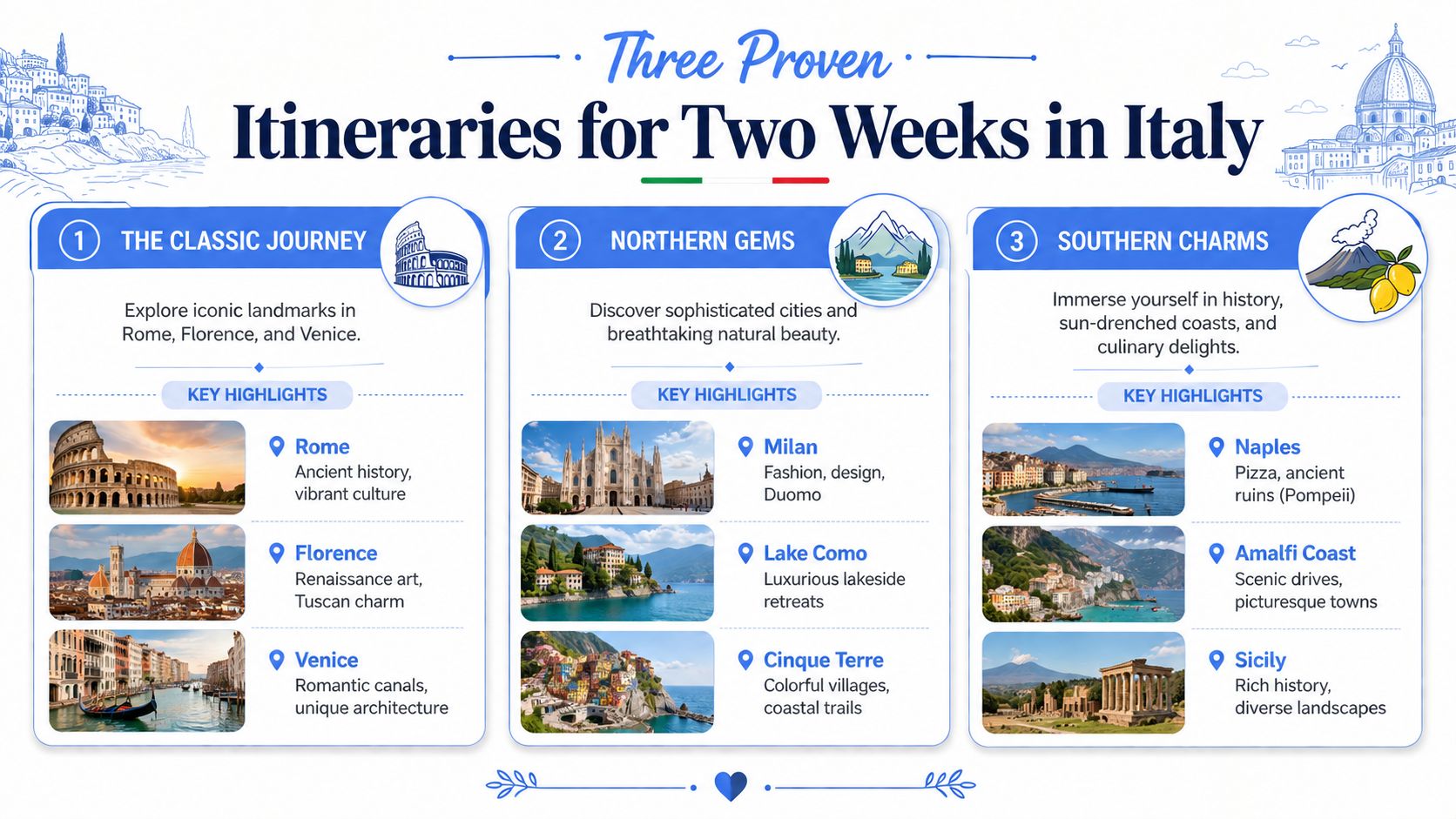
Three Proven Itineraries for Two Weeks in Italy
Fourteen days in Italy can feel generous on paper and surprisingly tight once trains, hotel changes, and museum entry lines start taking bites out of it. The smartest itinerary is the one that protects your hours. I build these trips around the 3-2-2 principle: at least three nights in major cities and two in smaller stops. That structure keeps the trip settled, limits wasted transfer days, and gives you more time to enjoy Italy instead of managing it.
The classic journey
This is the best first trip. Rome, Florence, and Venice deliver the Italy people come for, and they do it in the right order.
Rome opens big. Florence refines the pace and sharpens your attention. Venice ends the trip with pure atmosphere. The routing is efficient, the rail connections are easy, and the experience feels richer because you are not constantly resetting in a new hotel. If you want iconic Italy without wasting time, choose this.
Northern gems
This route suits travelers who care as much about setting and hotel quality as they do about major sights. Milan, Lake Como, and a final stop on the Ligurian coast or in wine country create a polished trip with fewer hard edges. If you choose the Ligurian coast, I would consider things to do in Genoa Italy before setting the pace of that leg.
It works especially well for couples, repeat visitors, and anyone pairing Italy with the Alps. If that is your plan, an Italy and Switzerland itinerary that flows naturally between the two usually makes more sense than forcing too many Italian stops into the same two weeks.
Southern charms
Choose this version for warmth, texture, and a more sensual rhythm. Naples, the Amalfi Coast, and Sicily can be extraordinary together, but only if you respect the logistics.
Southern Italy rewards commitment to fewer bases. Private drivers, ferries chosen carefully, and well-timed arrivals matter more here because a sloppy plan can burn half a day without warning. Done properly, this route gives you sea views, long lunches, ancient ruins, and the kind of evenings people remember for years.
Which route fits you best
| Which Two-Week Italy Itinerary is Right for You? | Key Destinations | Best For | Pace |
|---|---|---|---|
| The Classic Journey | Rome, Florence, Venice | First-timers, art lovers, couples who want iconic Italy | Balanced |
| Northern Gems | Milan, Lake Como, Cinque Terre | Sophisticated travelers, scenery seekers, design lovers | Relaxed |
| Southern Charms | Naples, Amalfi Coast, Sicily | Sun seekers, food-focused travelers, coastal romantics | Leisurely with strategic transfers |
My direct recommendation
For a first visit, book the Classic Journey.
For a second or third trip, choose Northern Gems if your priorities are lakeside glamour, strong hotels, and a calmer pace. Choose Southern Charms if you want coastal beauty, serious food, and a trip built around pleasure rather than museum counts.
One clear route always beats an overstuffed fantasy itinerary. In luxury travel, time is the asset worth protecting most. The right plan buys it back.
A Day by Day Look at The Classic Journey
The Classic Journey works because it respects pace. It doesn't try to prove anything. It gives each city room to unfold.
Days 1 to 4 in Rome
Arrive in Rome and keep the first day light. The goal isn't to “push through.” It's to land gracefully, settle in, and let the city begin with pleasure instead of fatigue. A walk through the historic center, an unhurried dinner, and an early night do more for the trip than forcing in major sights half-awake.
On your first full day, focus on ancient Rome. Private guiding especially shines here, given the importance of context. The Colosseum and Roman Forum are impressive on their own, but they become far more compelling when someone can connect the stories, politics, and physical space in a way that makes the ruins intelligible.
The next day belongs to the Vatican. Early access changes the experience completely. Instead of entering with a wall of noise and bodies, you move through with a sense of calm that lets you absorb what you came to see.
Rome rewards early mornings and slow evenings. Do the heavy cultural lifting first, then give the city your appetite after dark.
Use the fourth day for breathing room. That might mean a long lunch in Trastevere, a private food walk, or time to wander neighborhoods that aren't on every postcard.
Days 5 to 9 in Florence and Tuscany
Florence is compact, elegant, and much easier to get around than Rome. That's why it belongs in the middle of the trip. It resets your energy.
Take the high-speed train north and check into a hotel where you can walk easily to the major sites without feeling planted in the busiest crush. Spend your first afternoon with a gentle orientation. Cross the Arno, browse artisan shops, and save the major museums for the next morning.
One day should be dedicated to Florence's artistic core. Another should move outward into Tuscany. That could be a driver-led day through hill towns, a winery lunch, or a cooking class in the countryside that gives the trip some softness after all the museum intensity.
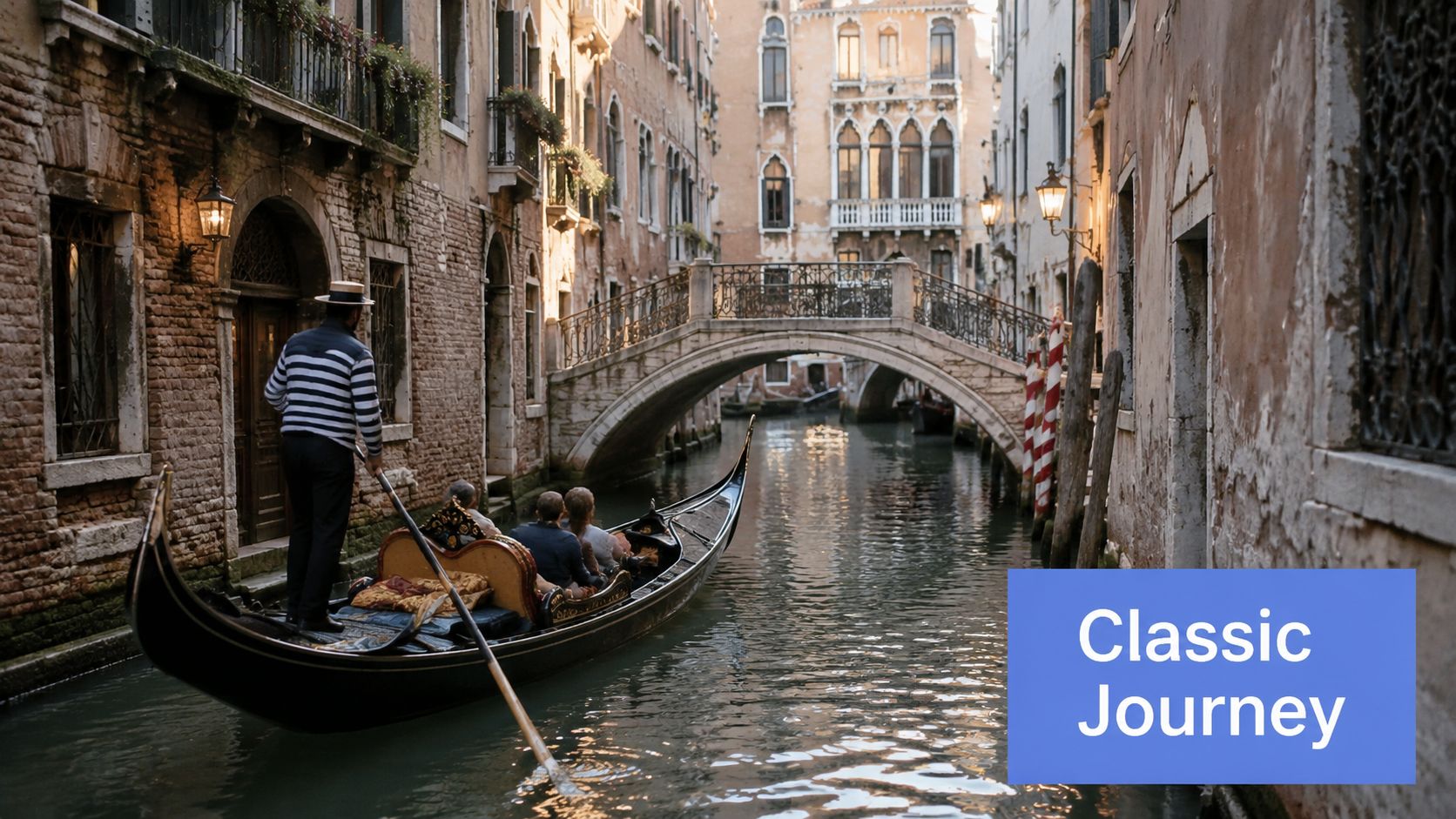
If Venice is your finale, don't shortchange it. My guide to two days in Venice shows how to make that last stretch feel far more elegant and less chaotic.
Days 10 to 14 in Venice
Venice should be your closing chapter because it asks for a different state of mind. Florence still invites activity. Venice invites surrender.
Arrive by train if possible. Walking out toward the canals creates a much stronger first impression than arriving by road. Spend the first evening doing very little. A canal-side drink, a quiet dinner, and a twilight stroll are enough.
The next day is for St. Mark's area and the great landmarks, but true luxury in Venice is selective timing. The city improves dramatically when you avoid the heaviest rush windows and move with intention. By the final days, shift into smaller lanes, quieter neighborhoods, and experiences that let the city feel personal rather than performative. A gondola at sunset still works, especially if it's handled thoughtfully and not as a last-minute tourist scramble.
Why this itinerary works
The Classic Journey succeeds because each city does a different job.
- Rome opens with drama and gives the trip gravitas.
- Florence refines the experience and creates a more intimate rhythm.
- Venice ends with atmosphere and leaves you with memory, not exhaustion.
That sequencing matters. Good Italy planning isn't just about geography. It's about emotional pacing.
Mastering Your Travel Between Italian Cities
Here, most self-planned trips tend to wobble. Travelers spend weeks obsessing over hotels and almost no time thinking through how they'll move between them.
That's backward. In a multi-city Italy trip, transportation shapes the feel of every day.
When the train is the best answer
For city pairs like Rome to Florence, high-speed rail is usually the smartest move. It's fast, direct, and avoids the airport nonsense that wastes half a day. For major city connections, train travel is often the cleanest, most civilized option.
The mistake is assuming that because trains work beautifully on one leg, they're the right answer everywhere. They aren't.
When a private transfer is worth every penny
Private drivers are most valuable when the destination itself creates friction. Coastal roads, hotel access points, luggage-heavy days, or a transfer that includes stops all become dramatically easier with a driver.
That's especially true when you want your travel day to still feel like part of the vacation. A professionally arranged road transfer can turn a move between properties into a scenic experience with lunch, winery visits, or a stop in a hill town. DIY logistics rarely pull that off gracefully.
The right question isn't “What's the cheapest way to get there?” It's “What preserves the shape of the day?”
The flight strategy most travelers miss
Your international air matters just as much as your ground plan. For Italy, I often advise travelers to use an open-jaw structure so they arrive in one city and depart from another instead of backtracking just to catch a return flight.
That single decision can remove unnecessary movement from the whole itinerary. If you're trying to sort out the air piece before the rest of the trip, my guide on the best way to book multi-city flights will help you think about it correctly.
A cleaner way to think about logistics
Use this rule of thumb:
- Choose trains for major city-to-city legs where stations are central and timing is reliable.
- Choose private drivers for coasts, countryside, hotel-intensive routes, and any day when comfort matters more than squeezing savings.
- Choose fewer bases so transportation supports the trip instead of dominating it.
Spending more on better logistics rarely leads to regret. The true regret is spending vacation time in transit.
Elevating Your Itinerary with Curated Experiences
The difference between a good Italy trip and an exceptional one usually shows up at 10:30 a.m. You can be standing in a hot queue outside a headline sight, watching your day disappear, or you can already be inside with a guide who knows how to move you through the rooms that matter and past the ones that do not.
That is the primary value of curated travel. It buys back time.
Well-planned access changes the shape of the day, especially in Rome, Florence, and Venice where crowd pressure can drain your energy fast. This luxury-focused Italy itinerary analysis shows how private guiding and timed entry keep far more of your daylight focused on the experience itself instead of waiting, backtracking, and decision fatigue.
The upgrades that actually matter
Some upgrades are cosmetic. A few materially improve the trip.
I rate these highest:
- Private expert guiding: You get context, pacing, and smarter routing through busy places. You also avoid wasting prime hours figuring things out on the fly.
- Thoughtful room selection: The right view, a quieter position in the hotel, or a better suite category changes your mornings, your sleep, and your recovery between touring days.
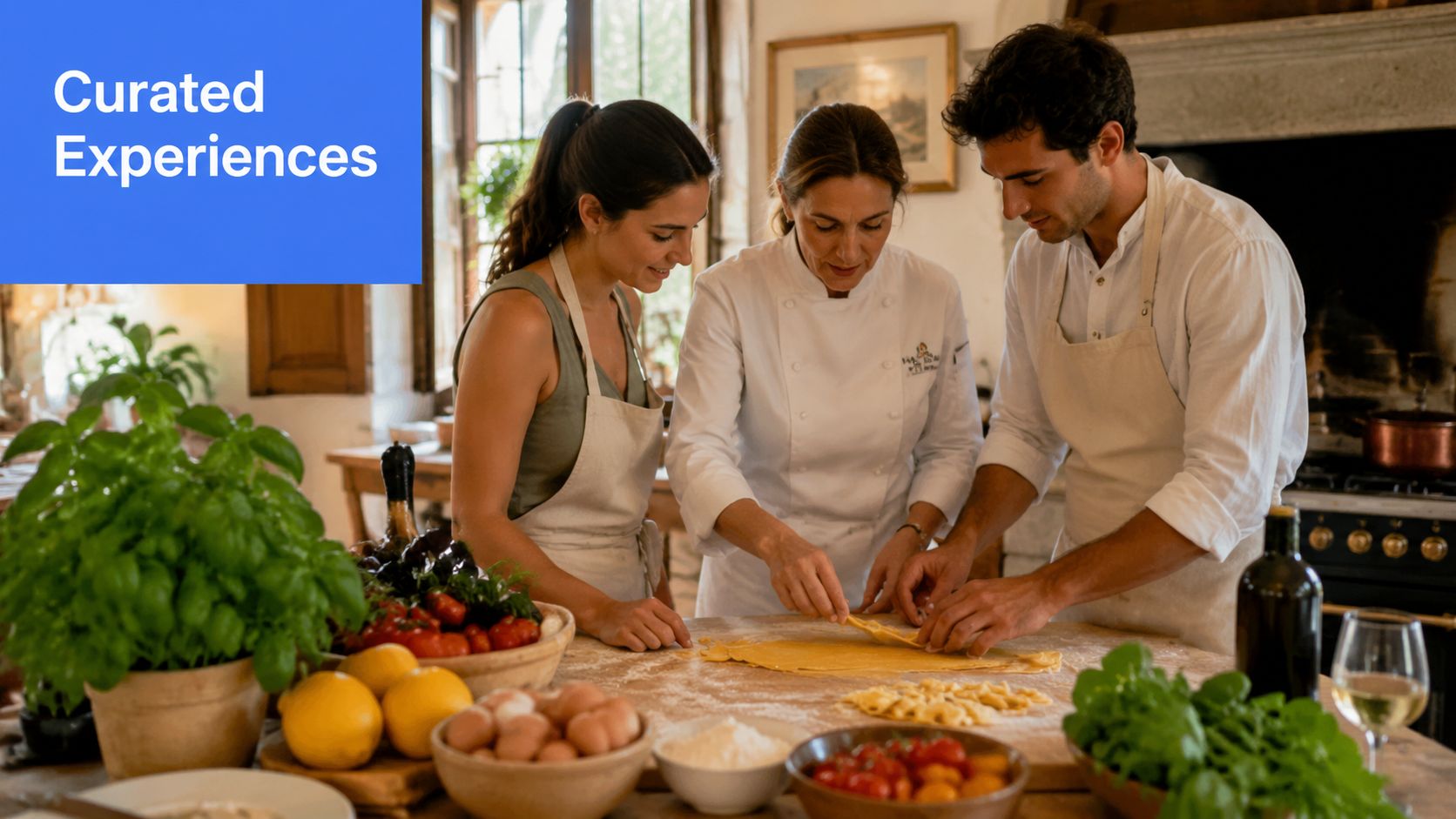
- Curated food and wine experiences: A private winery visit, a serious cooking lesson, or a long countryside lunch often becomes the memory that outlasts the famous monuments.
- Advance access planning: Early-entry and timed-entry reservations spare you the worst part of peak-season Italy and protect the rhythm of the day.
If Tuscany is on your route, context matters as much as quality. Reading about understanding premium Tuscan olive oil before a villa stay, market visit, or private tasting makes those culinary experiences far richer.
Tailoring the trip to the traveler
A honeymoon should feel private and spacious. A family trip should keep children engaged. A food-driven itinerary should build around markets, kitchens, vineyards, and the right tables.
For couples, I favor privacy, strong pacing, and a few high-impact moments. A suite with a meaningful view, a private vineyard lunch, and a boat day away from the crowds usually delivers more than trying to cram in every famous stop.
For families, interactive experiences win. Children remember making pasta, climbing a tower, or meeting a local artisan far more vividly than a string of formal museum visits.
For serious food travelers, Florence and Tuscany often deserve more room in the schedule. That is where ingredient-focused experiences, tastings, and hands-on classes turn the trip into something personal.
Why credentials matter
Advisor judgment matters more than enthusiasm in these situations. Anyone can assemble a list of famous sights. Far fewer people know which ones merit private access, which are overhyped, and which substitutions will improve the trip for a specific traveler.
As a Circle of Excellence Advisor. Top 5 percent at Nexion and a CLIA Accredited Cruise Counselor, I focus on trips that feel smooth, intentional, and well edited.
The best Italy itineraries feel generous with your time.
Let Me Plan Your Effortless Trip to Italy
You land in Rome after an overnight flight, tired but excited. The driver is waiting, hotel check-in is already handled, your first lunch is booked somewhere worth your time, and the next two weeks flow exactly as they should. That result is not about adding more luxury for its own sake. It is about buying back hours you would otherwise lose to bad routing, weak hotel choices, sold-out tickets, and preventable mistakes.
A well-planned Italy trip should feel refined before you even leave home. The hotels should match how you travel. The route should respect geography. Transfers should be well coordinated. The right experiences should be confirmed early, so your vacation is spent enjoying Italy instead of fixing Italy.
What working together looks like
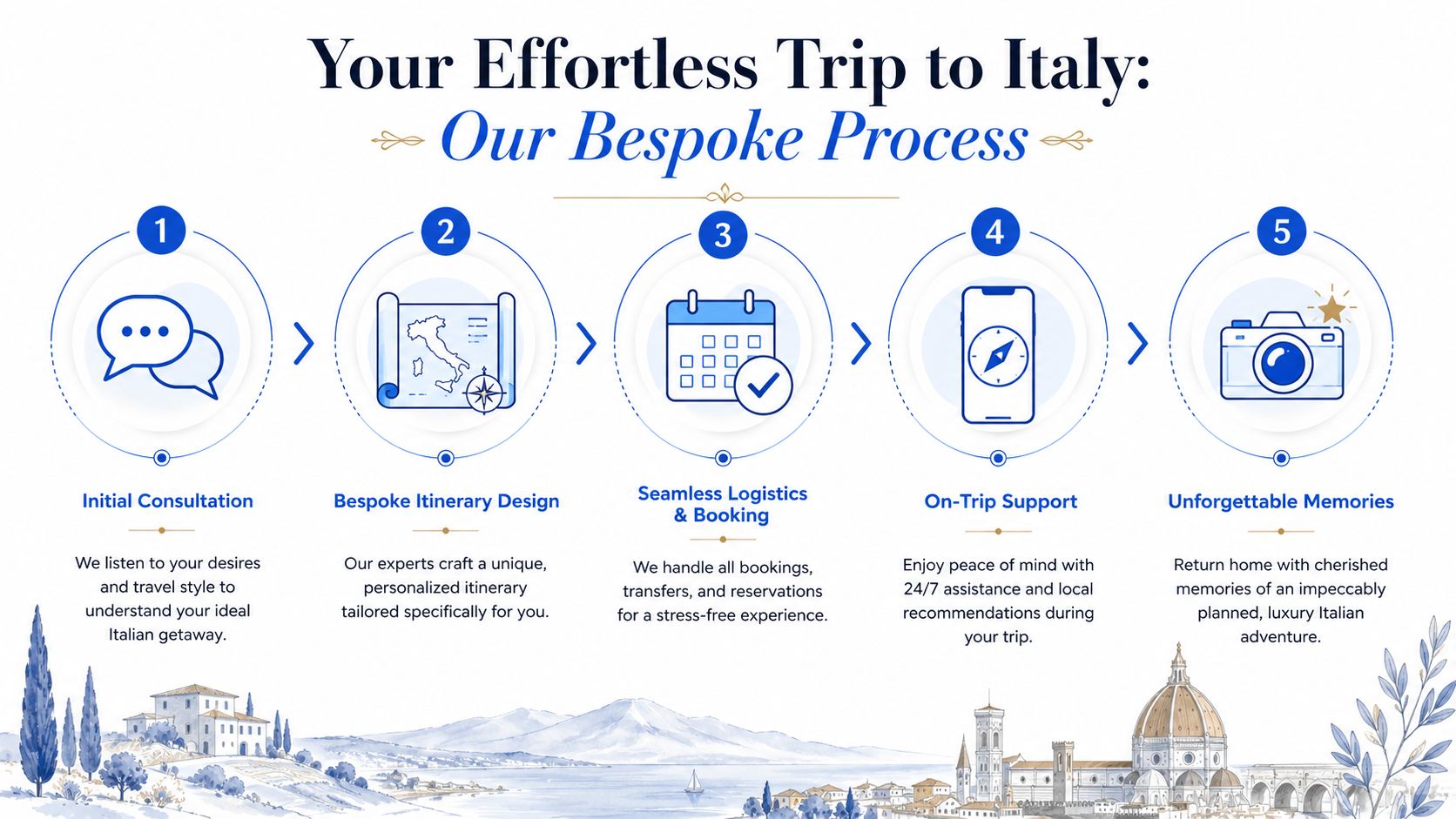
I work with clients nationwide through virtual consultations. We start with your pace, priorities, and standards. Then I build the trip around them. That includes the route, hotel selection, private transfers, key reservations, and the practical details that waste time when no one has thought them through properly.
My role is to edit the trip hard. Italy offers too many options, and too many travelers lose valuable days trying to do everything. I help you spend your time where it pays off most.
Trusted in-destination partners and vetted local suppliers handle on-the-ground services, while I coordinate the planning and pre-departure details so the trip is cohesive from start to finish.
Why advisor-booked luxury travels better
A strong advisor does more than reserve a nice hotel. Its value is time. Better arrivals. Smarter connections. Fewer handoff problems. Better rooms in the right properties. Access that saves you from spending your best hours in lines, transit confusion, or disappointing restaurants chosen in a rush.
Advisor-booked stays can also include preferred partner benefits such as daily breakfast for two, a property credit, and priority for room upgrades when available. This overview of advisor hotel perks explains that direct online bookings generally do not include those advantages.
Used properly, those benefits improve the trip in practical ways. Breakfast at the hotel saves time each morning. A credit can cover lunch, spa time, or drinks you would have paid for anyway. A better room changes how the trip feels every single day.
If you want an Italy trip that is polished, efficient, and worth the investment, you can Plan my luxury trip.
Frequently Asked Questions About Planning an Italy Trip
What is a realistic luxury budget for 2 weeks in Italy
A true luxury trip in Italy adds up quickly. This Italy trip cost breakdown points to a starting budget above $20,000 for a couple once you factor in strong hotels, private transfers, and well-chosen experiences.
That number makes sense. In Italy, luxury is not just nicer décor or a bigger room. It is time saved at every step. A driver waiting at the station. A hotel in the right location, not just a pretty one online. Early or private access that lets you spend your best hours enjoying Italy instead of standing in line.
How many cities should I include in a 14-day Italy trip
Three cities is the sweet spot for most two-week Italy trips.
Four can work if the routing is tight and one stop is light. Five is where the trip usually starts wasting your time. You lose hours to packing, transfers, check-ins, and the mental friction of constantly restarting. Luxury travel should feel calm and well paced, not like a race with better hotels.
When is the best time to go
Go in spring or fall if you want Italy at its best.
You get better weather, a smoother pace, and a far more pleasant experience in cities that can become exhausting in peak summer. Summer still works, but only if you plan around heat, crowds, and heavy demand. That means earlier starts, smarter hotel choices, and reservations locked in well ahead.
What should I pack for a multi-city Italy trip
Pack less.
The client who packs one excellent carry-on and a smart day bag almost always has the better trip. Italy involves stairs, uneven streets, tight hotel elevators, and train platforms where no one is coming to rescue three oversized suitcases. Even with private drivers, lighter luggage keeps arrivals faster and transitions easier.
Do I need a visa for a two-week trip
These Italy travel entry guidelines and tourism statistics confirm that U.S. citizens can stay in Italy for up to 90 days without a tourist or business visa. You still need a valid passport, and it should have enough validity remaining for international travel.
If you want a trip that feels polished, personal, and easy from start to finish, professional planning pays for itself in time, energy, and better on-the-ground decisions. Join the newsletter for more travel insight and inspiration through the Explore Effortlessly newsletter.
Author bio
Hi, I'm Karrah, owner, founder, and lead travel advisor at Explore Effortlessly, a luxury award winning travel agency based in Miami.I specialize in designing bespoke, high touch itineraries to bucket list destinations around the world. Every trip is curated with intention, insight, and smooth logistics from start to finish.
From luxury cruises and private villas to honeymoons, safaris, and once in a lifetime journeys, my role is to simplify the planning process while improving every detail.